Orthopedic Board Review MCQs (2026 Edition) - Part 9
Orthopedic Board Review MCQs (2026 Edition) - Part 9
Comprehensive 100-Question Exam
00:00
Start Quiz
Question 1
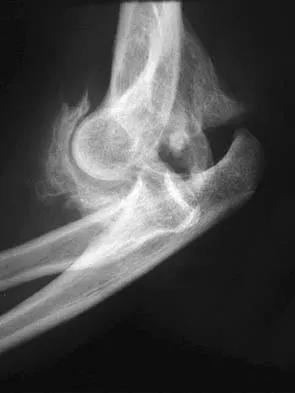
A 28-year-old man sustained a severe closed head injury and an elbow dislocation. After 1 month, he has pain and stiffness, with the radiograph shown. Management includes open reduction, heterotopic bone excision, and capsular releases. What is the primary role of the dynamic hinged fixator in this setting?
Explanation
Correct Answer: C
In a young individual with a chronic dislocation of the elbow and heterotopic bone formation, the treatment of choice is open reduction, heterotopic bone excision, anterior and posterior capsular releases, and a dynamic hinged fixator to begin protected early postoperative range of motion. It is important to understand that the fixator protects the reconstruction and allows early range of motion, but it does not maintain the reduction and should not be expected to do so. Pin fixation across the elbow delays early motion and is not recommended.
Question 2
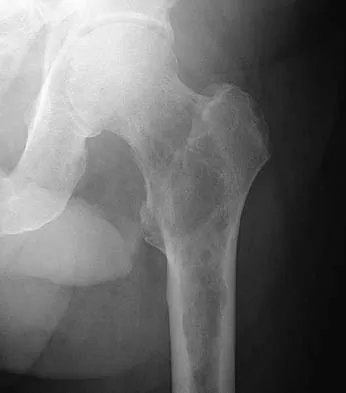
A 70-year-old man presents with left thigh pain and a monoclonal gammopathy. The AP radiograph is shown. Which of the following is the most appropriate definitive orthopedic management to prevent a pathologic fracture in this patient?
Explanation
Correct Answer: B
The underlying diagnosis is multiple myeloma. Because the patient has a large lucent lesion in the peritrochanteric region of the left proximal femur, the risk of pathologic fracture is high. Consideration should be given to prophylactic internal fixation with a locked intramedullary rod. The lesion does not appear to be a sarcoma requiring wide resection and endoprosthetic reconstruction. Neither chemotherapy nor radiation therapy alone is likely to result in long-term stabilization of the proximal femur.
Question 3
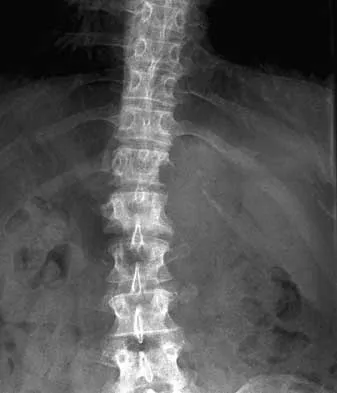
A patient presents with back pain. An AP radiograph of the thoracolumbar spine is shown. The 'winking owl' sign observed is most characteristic of which of the following pathologic processes?
Explanation
Correct Answer: C
The figure shows the missing pedicle or 'winking owl' sign that is characteristic of tumor involvement of the cortical bone of the pedicle. None of the other pathologic processes commonly gives this radiographic picture. Thinned, but not missing pedicles, have been described as a normal variant.
Question 4
The clinical photograph shows a classic claw toe deformity. Which of the following best describes the muscular imbalance responsible for the hyperextension at the metatarsophalangeal joint?
Explanation
Correct Answer: B
The dynamic forces acting to maintain the position of the proximal phalanx at the head of the metatarsal are a balance between the extensor digitorum longus and the weaker intrinsic muscles. With hyperextension at the metatarsophalangeal joint, the intrinsic muscles become less efficient as plantar flexors. Consequently, the hyperextension deformity progresses in the metatarsophalangeal joint as the opposition of the intrinsic muscles to the extensor tendon lessens.
Question 5
A 14-year-old patient presents with anterior knee pain. Imaging and biopsy are performed. Histologic examination reveals sheets of small round blue cells. Which of the following genetic translocations is most consistently associated with this diagnosis?
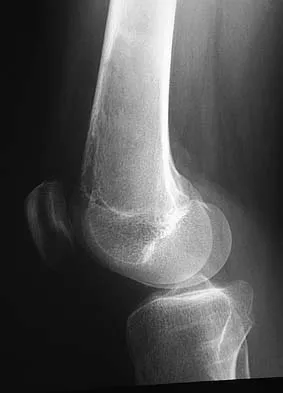
Explanation
Correct Answer: B
The histology shows small round blue cells that are typical of Ewing's sarcoma. Ewing's sarcoma has been noted to have a consistent genetic translocation t(11;22). Although Ewing's sarcoma frequently occurs in the diaphysis, it can occur in the metaphysis.
Question 6
A 72-year-old woman presents with thigh pain after a fall. She has a history of increasing thigh pain prior to the fall. The radiograph shows a midstem periprosthetic fracture. What is the most likely underlying etiology contributing to this complication?
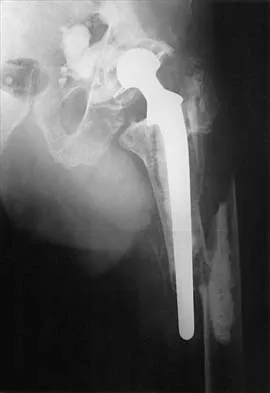
Explanation
Correct Answer: C
The patient has a midstem periprosthetic fracture, which commonly results in loosening of the prosthesis. Although the patient reported a fall, her history is also consistent with preexisting loosening of the prosthesis. Chronic infection has been shown in up to 16% of these fractures; however, the patient's work-up revealed no infection.
Question 7
A patient presents with profound weakness in external rotation and isolated atrophy of the infraspinous fossa, as seen in the clinical photograph. The supraspinous fossa has normal muscle bulk. Entrapment of the suprascapular nerve is most likely occurring at which of the following anatomic locations?
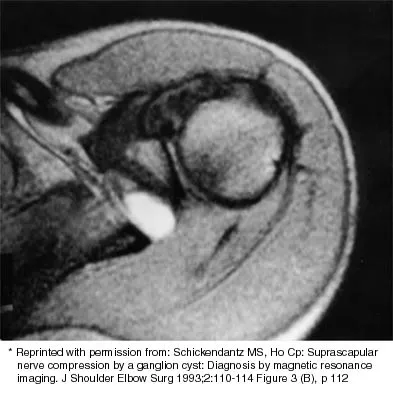
Explanation
Correct Answer: B
Compression of the suprascapular nerve by a ganglion cyst is a well-documented cause of pain and weakness in the shoulder. Isolated involvement of the infraspinatus indicates that the area of entrapment is at the spinoglenoid notch and not the suprascapular notch. The suprascapular nerve innervates the supraspinatus before passing through the spinoglenoid notch to innervate the infraspinatus.
Question 8
A 16-year-old girl is evaluated for an asymptomatic proximal femur lesion discovered incidentally after a fall. Biopsy reveals spicules of woven bone without osteoblastic rimming in a bland fibrous background. Which of the following is the most appropriate management for this asymptomatic lesion?
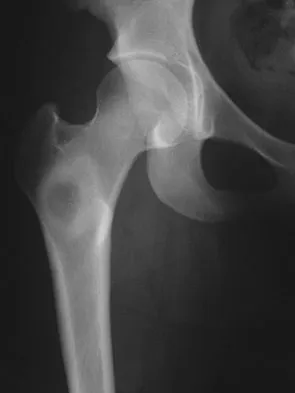
Explanation
Correct Answer: D
The histologic finding of spicules of woven bone without osteoblastic rimming in a bland fibrous background is diagnostic of fibrous dysplasia. Observation is indicated in the absence of symptoms, impending fracture, or deformity. Fibrous dysplasia most commonly occurs in the proximal femur.
Question 9
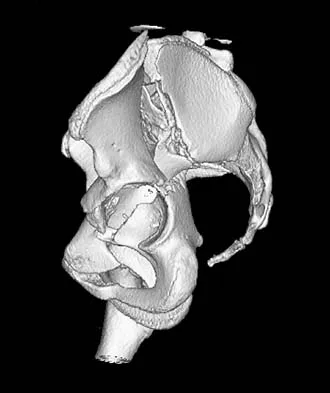
A 13-year-old girl sustains a pelvic injury. 3D CT reconstructions demonstrate an acetabular fracture with extension into the sacroiliac joint and comminution along the posterior column. The defining feature that classifies this as a both-column fracture is:
Explanation
Correct Answer: C
The fracture is a both-column fracture in the Judet/Letournel classification. Both the anterior and posterior columns are separately broken and displaced. However, the defining feature of a both-column pattern is that all articular fragments are on fracture fragments and no joint surface is left intact to the axial skeleton above.
Question 10
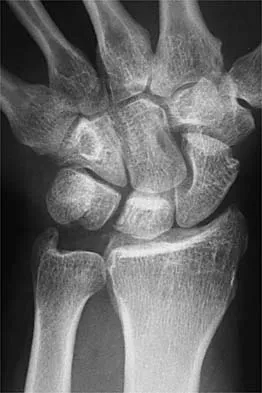
A 32-year-old man presents with a 4-month history of increasing right wrist pain and boggy dorsal swelling. Radiographs show increased density and fragmentation of the lunate. This condition is classically associated with which of the following anatomic variants?
Explanation
Correct Answer: B
The patient has Kienbock's disease (osteonecrosis of the lunate), which presents with boggy synovitis of the wrist, decreased range of motion, and often normal radiographs early on. This disease process is classically associated with an ulnar-negative variant. An MRI scan, revealing a low-intensity signal in the lunate, is the best diagnostic tool for early Kienbock's disease.
Question 11
A 28-year-old man presents with a chronic elbow dislocation and heterotopic ossification following a severe head injury, as shown in the radiograph. He is scheduled for open reduction, heterotopic bone excision, and capsular releases. What is the primary biomechanical purpose of applying a dynamic hinged elbow fixator in this setting?
Explanation
Correct Answer: C
In a young individual with a chronic dislocation of the elbow and heterotopic bone formation, the treatment of choice is open reduction, heterotopic bone excision, anterior and posterior capsular releases, and a dynamic hinged fixator. The primary purpose of the fixator is to protect the reconstruction and allow early protected range of motion. It does not maintain the reduction on its own and should not be expected to do so. Rigid immobilization or pin fixation across the joint delays early motion and is contraindicated.
Question 12
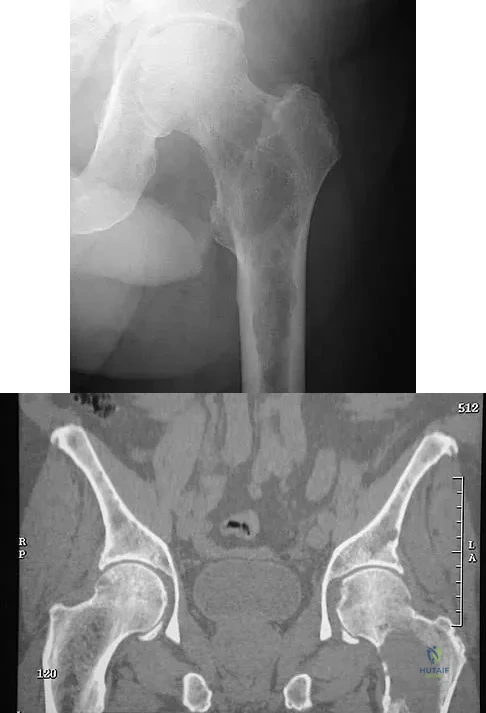
A 70-year-old man with left thigh pain is found to have the lesion shown in the provided imaging. Serum protein electrophoresis confirms a monoclonal gammopathy. Following prophylactic internal fixation with a locked intramedullary rod, which of the following medical therapies is most appropriate to decrease the risk of future pathologic fractures?
Explanation
Correct Answer: B
The underlying diagnosis is multiple myeloma, presenting with a large lucent lesion in the peritrochanteric region of the proximal femur. After prophylactic internal fixation to address the impending pathologic fracture, postoperative treatment with bisphosphonates and radiation therapy is indicated to decrease the risk of future pathologic fractures. The patient should also be referred to a medical oncologist for comprehensive medical management.
Question 13
The provided radiograph demonstrates a 'winking owl' sign. This radiographic finding is most directly caused by tumor involvement and destruction of which of the following anatomical structures?
Explanation
Correct Answer: D
The 'winking owl' sign is characteristic of tumor involvement of the cortical bone of the pedicle, leading to a missing pedicle on an AP radiograph. None of the other pathologic processes or anatomical structures commonly give this specific radiographic picture. Thinned, but not missing, pedicles have been described as a normal variant, but complete absence is highly suspicious for metastatic disease or tumor.
Question 14
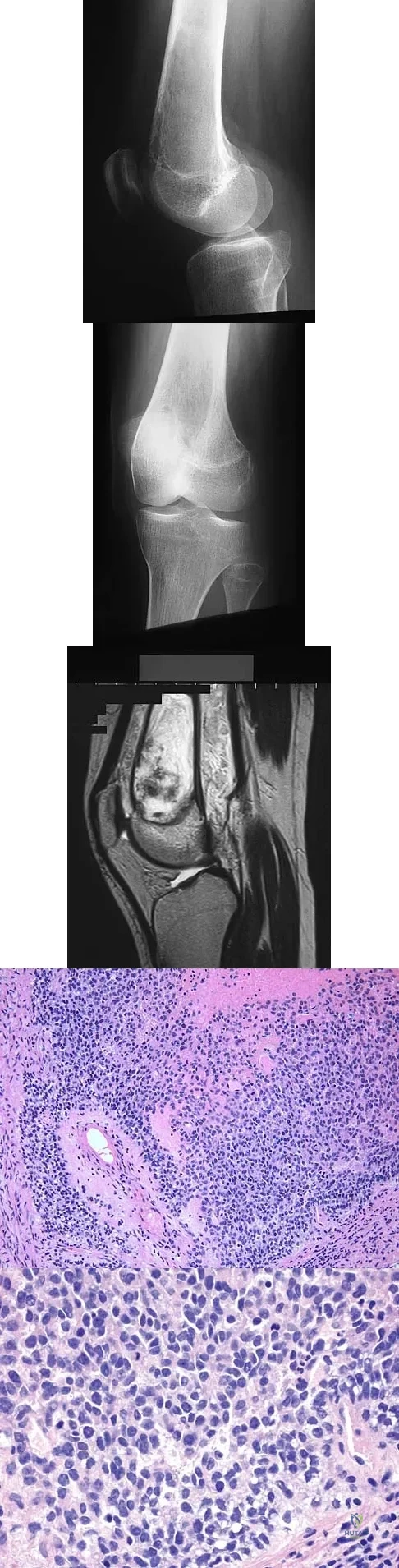
A 14-year-old patient presents with anterior knee pain. Imaging and biopsy specimens are shown. Histology reveals small round blue cells. Which of the following genetic translocations is most characteristically associated with this diagnosis?
Explanation
Correct Answer: A
The imaging and histology (small round blue cells) are diagnostic of Ewing's sarcoma. Ewing's sarcoma is characteristically associated with the t(11;22) genetic translocation. Other translocations listed correspond to different sarcomas: t(X;18) is seen in synovial sarcoma, t(12;16) in myxoid liposarcoma, and t(2;13) in alveolar rhabdomyosarcoma.
Question 15
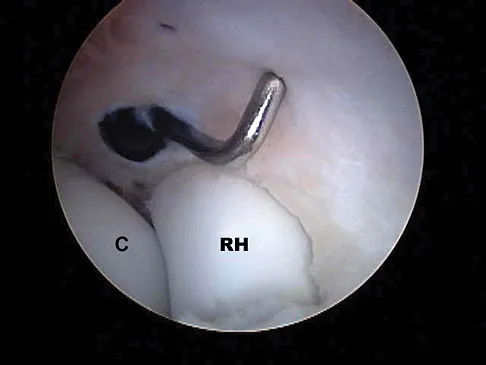
The provided arthroscopic view of the radiocapitellar joint is obtained from an anterior medial portal. When performing a capsular excision in the midportion of the capitellum, which of the following nerves is at greatest risk of iatrogenic injury?
Explanation
Correct Answer: C
The radial nerve lies directly on the anterior elbow capsule at the midportion of the capitellum. It is at significant risk for injury when capsular excision or release is performed in this specific region during elbow arthroscopy.
Question 16
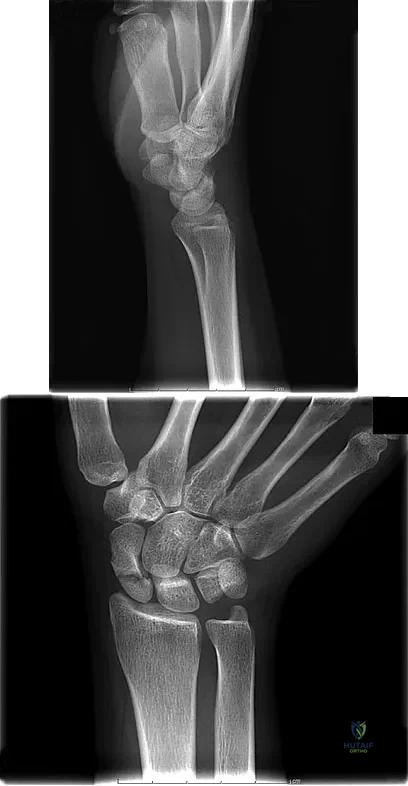
A 19-year-old woman sustained the injury shown in the radiographs 6 weeks ago. A decision is made to proceed with surgical fixation. Why is a dorsal approach preferred over a volar approach for this specific fracture pattern?
Explanation
Correct Answer: B
The radiographs demonstrate a proximal third (proximal pole) scaphoid fracture. Proximal pole fractures are optimally approached via a dorsal approach to ensure proper reduction and allow for a compression screw to be placed perpendicular to the fracture plane. Fractures of the scaphoid waist can be approached either volarly or dorsally.
Question 17
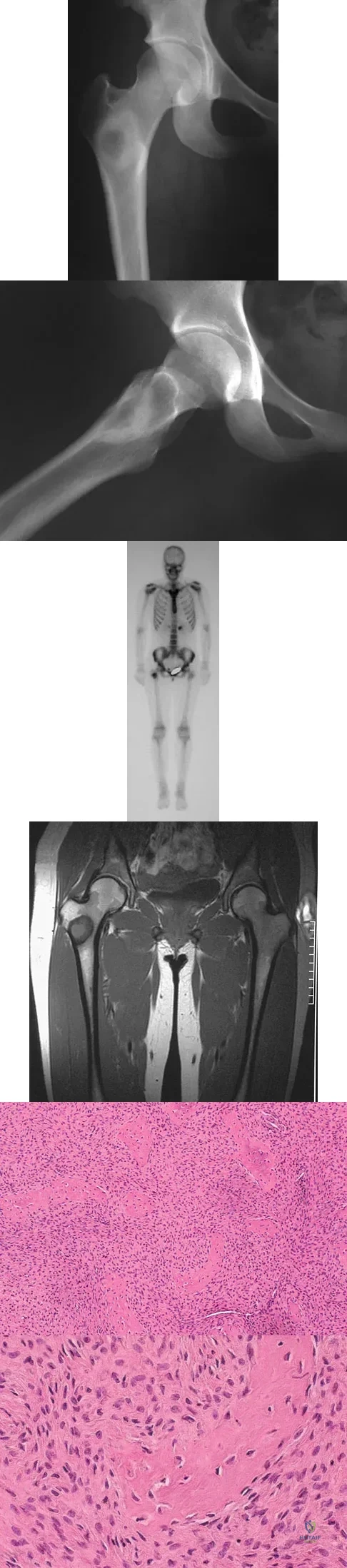
A 16-year-old girl is evaluated for an asymptomatic hip lesion discovered incidentally after a fall. Imaging and biopsy are provided. Which of the following histologic features is considered the hallmark of this condition?
Explanation
Correct Answer: B
The imaging and histology are diagnostic of fibrous dysplasia. The classic histologic finding of fibrous dysplasia is spicules of woven bone (often described as 'Chinese characters') without osteoblastic rimming, set in a bland fibrous background. Observation is indicated in the absence of symptoms, impending fracture, or severe deformity.
Question 18
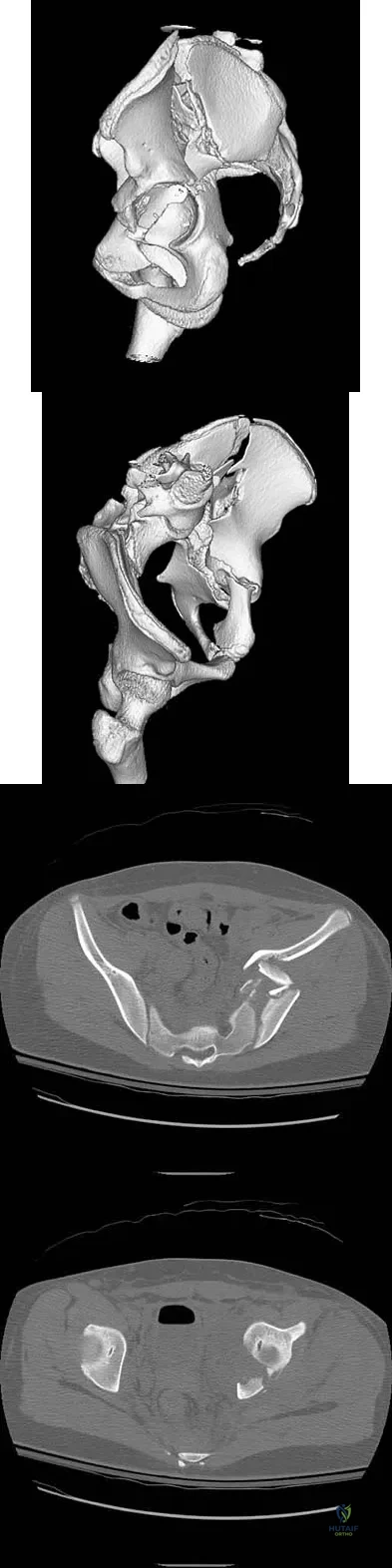
A 13-year-old girl sustained the pelvic injury shown in the provided 3D CT reconstructions. According to the Judet and Letournel classification, what is the defining radiographic feature that distinguishes this both-column fracture from other acetabular fracture patterns?
Explanation
Correct Answer: C
The defining feature of a both-column acetabular fracture is that all articular fragments are detached from the intact axial skeleton (ilium/sacrum). While both the anterior and posterior columns are broken, the complete dissociation of the articular surface from the intact ilium is the hallmark of this specific fracture pattern.
Question 19
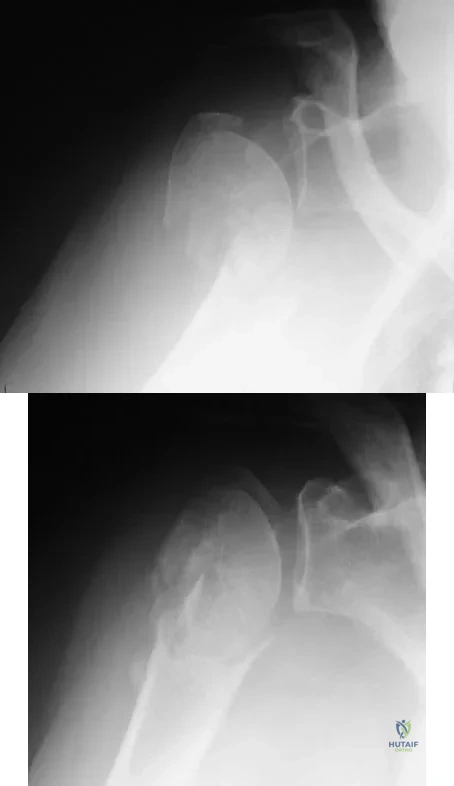
An 82-year-old woman presents with the shoulder injury shown in the radiographs. She lives independently. A cemented hemiarthroplasty is planned. Which of the following factors is the primary reason for choosing hemiarthroplasty over open reduction and internal fixation (ORIF) in this specific patient?
Explanation
Correct Answer: C
The patient has a displaced four-part proximal humerus fracture. Given her advanced age and the presence of osteopenia, the risk of osteonecrosis of the humeral head and failure of internal fixation is high. Therefore, a cemented hemiarthroplasty is the treatment of choice. ORIF may be indicated in younger individuals with good bone quality.
Question 20
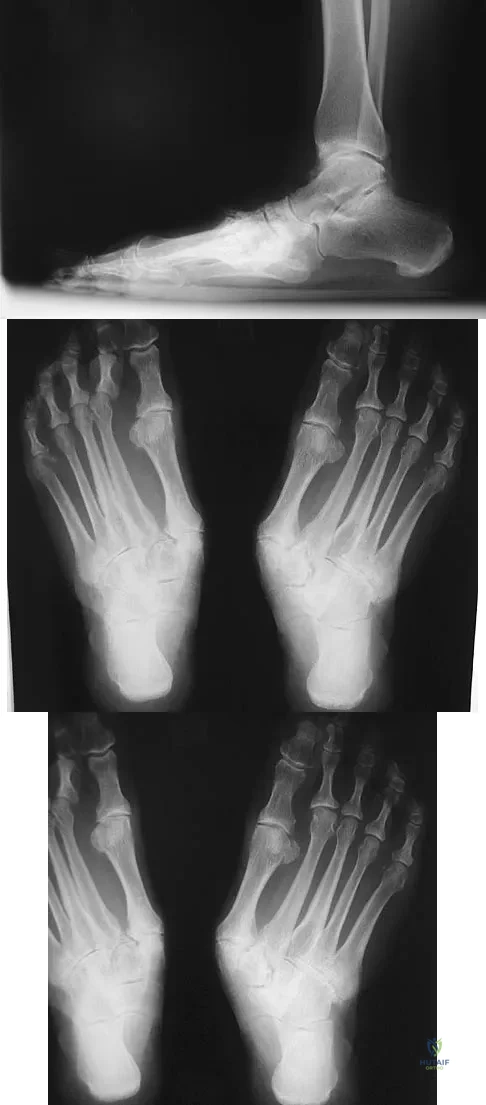
A 55-year-old patient presents with a painful flatfoot deformity that has failed conservative management. Based on the provided radiographs, the primary site of degenerative collapse and deformity is located at which of the following articulations?
Explanation
Correct Answer: D
The radiographs demonstrate a degenerative collapse of the midfoot through the tarsometatarsal joints with significant forefoot abduction. Because the primary pathology and deformity are at the tarsometatarsal articulation, a midfoot arthrodesis is the required surgical intervention. Procedures targeting the hindfoot (like triple arthrodesis or lateral column lengthening) would not address the primary site of arthritis and deformity.
Question 21
A 28-year-old man with a history of severe traumatic brain injury presents with a stiff, painful elbow one month after a closed reduction of an elbow dislocation. Radiographs show extensive heterotopic ossification. What is the primary role of the hinged elbow fixator in the definitive surgical management of this condition?
Explanation
Correct Answer: C
In the surgical management of chronic elbow dislocation with heterotopic ossification (HO), the treatment of choice is open reduction, HO excision, capsular release, and application of a dynamic hinged fixator. The fixator's primary role is to protect the soft-tissue reconstruction and allow early protected range of motion. It does not maintain the reduction itself, nor does it prevent HO recurrence. Pin fixation across the joint would delay early motion and is contraindicated.
Question 22
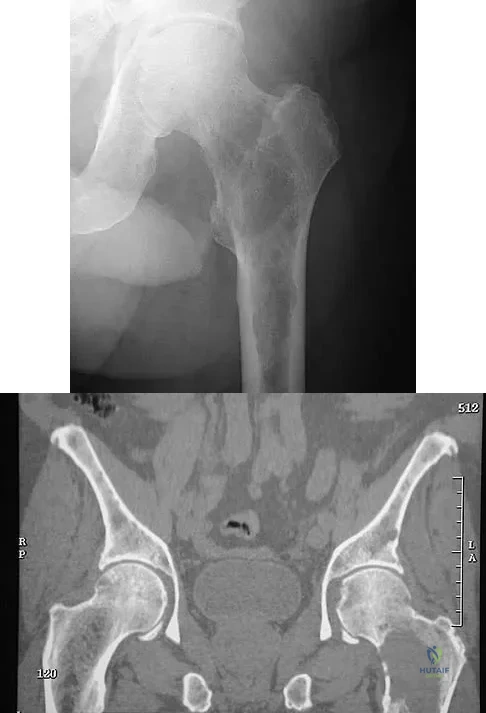
A 70-year-old man presents with left thigh pain. Serum protein electrophoresis reveals a monoclonal gammopathy. Radiographs and CT (Figures A and B) show a large lucent lesion in the peritrochanteric region. Which of the following adjuvant medical treatments is most appropriate postoperatively to decrease the risk of future skeletal-related events?
Explanation
Correct Answer: B
The patient has multiple myeloma with an impending pathologic fracture of the proximal femur, which requires prophylactic internal fixation with a locked intramedullary nail. Postoperatively, treatment with bisphosphonates and radiation therapy is indicated to decrease the risk of future pathologic fractures and provide local tumor control. Bisphosphonates inhibit osteoclast-mediated bone resorption, which is heavily upregulated in multiple myeloma.
Question 23
A 65-year-old man presents with insidious onset of back pain. An AP radiograph of the thoracolumbar spine is shown. The radiographic 'winking owl' sign observed is most characteristic of which of the following pathophysiologic processes?
Explanation
Correct Answer: C
The 'winking owl' sign on an AP radiograph of the spine is caused by the absence or destruction of a pedicle. This is highly characteristic of tumor involvement (often metastatic) destroying the cortical bone of the pedicle. Infections and inflammatory processes typically involve the disc space and endplates rather than isolated pedicle destruction.
Question 24
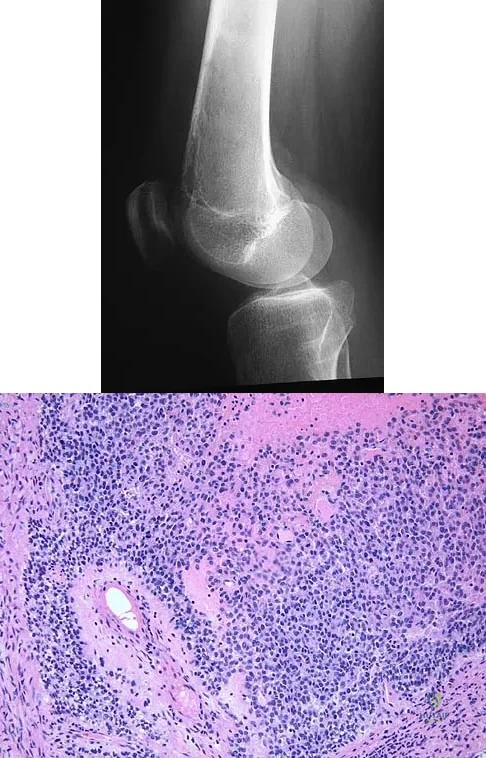
A 14-year-old boy presents with anterior knee pain. Imaging and biopsy are performed (Figures A and B). Histologic examination reveals sheets of small round blue cells. Which of the following genetic translocations is most consistently associated with this diagnosis?
Explanation
Correct Answer: A
The clinical, radiographic, and histologic findings (small round blue cells) are diagnostic of Ewing's sarcoma. Ewing's sarcoma is characterized by the t(11;22) chromosomal translocation, which results in the EWS-FLI1 fusion protein. t(X;18) is seen in synovial sarcoma, t(12;16) in myxoid liposarcoma, and t(2;13) in alveolar rhabdomyosarcoma.
Question 25
A 32-year-old volleyball player presents with profound weakness in external rotation of the shoulder. Examination reveals isolated atrophy of the infraspinous fossa, with normal supraspinatus muscle bulk. An MRI is shown. The compressive lesion responsible for this presentation is most likely located at which of the following anatomic sites?
Explanation
Correct Answer: B
The patient has isolated infraspinatus atrophy and weakness in external rotation, which indicates compression of the suprascapular nerve after it has innervated the supraspinatus. This occurs at the spinoglenoid notch. Compression at the suprascapular notch would affect both the supraspinatus and infraspinatus muscles. The MRI shows a paralabral ganglion cyst, which is commonly associated with labral tears.
Question 26
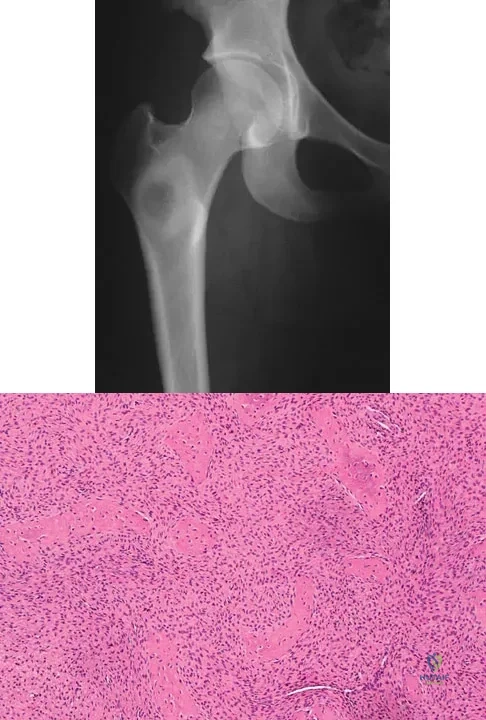
A 16-year-old girl undergoes radiographic evaluation after a minor fall, revealing an incidental proximal femoral lesion (Figure A). A biopsy is performed (Figure B). The histologic presence of spicules of woven bone without osteoblastic rimming in a bland fibrous stroma is pathognomonic for which of the following conditions?
Explanation
Correct Answer: C
The histologic description of 'Chinese character' spicules of woven bone lacking osteoblastic rimming, set within a bland fibrous background, is the classic hallmark of fibrous dysplasia. While the radiographic appearance can sometimes mimic other lesions, the histology is diagnostic. In asymptomatic patients without impending fracture, observation is appropriate.
Question 27
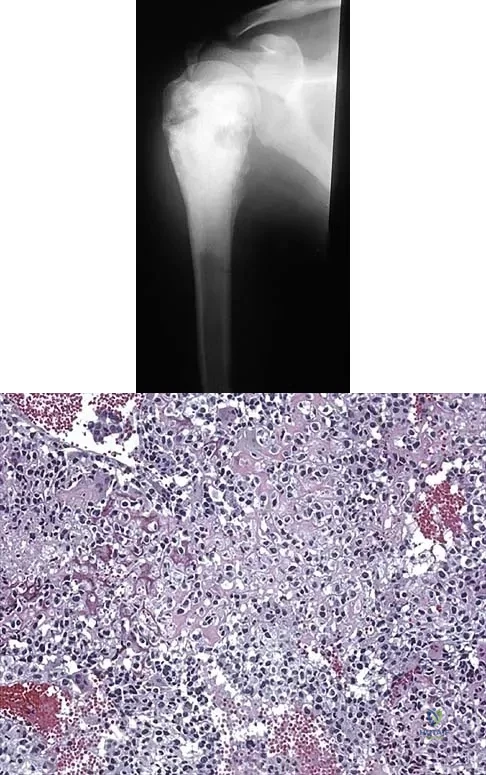
A 13-year-old girl presents with a firm, painful mass in her right shoulder. Radiographs and biopsy specimens are obtained (Figures A and B). The histologic section demonstrates highly pleomorphic spindle cells directly producing an amorphous, eosinophilic extracellular matrix. This matrix is best identified as:
Explanation
Correct Answer: B
The diagnosis is osteosarcoma. The defining histologic feature of osteosarcoma is the direct production of osteoid (immature, unmineralized bone matrix) by malignant mesenchymal cells. The radiograph shows an aggressive, bone-forming lesion in the proximal humerus, typical of osteosarcoma in a pediatric patient.
Question 28
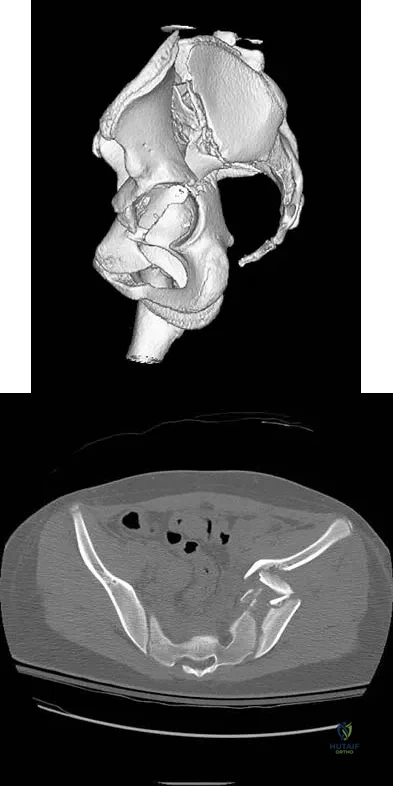
A 13-year-old girl sustains a pelvic injury in an ATV accident. 3D CT reconstructions are shown. According to the Judet-Letournel classification, which of the following is the defining characteristic of the fracture pattern demonstrated?
Explanation
Correct Answer: C
The images demonstrate a both-column acetabular fracture. The defining feature of a both-column fracture in the Judet-Letournel classification is that all articular fragments are detached from the intact axial skeleton (the intact portion of the ilium attached to the sacrum). The 'spur sign' is often seen on the obturator oblique view, representing the intact portion of the ilium.
Question 29
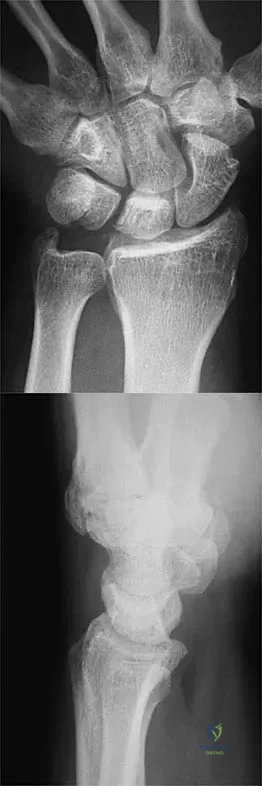
A 32-year-old man presents with chronic dorsal wrist pain and decreased grip strength. Radiographs (Figures A and B) demonstrate sclerosis and fragmentation of the lunate. This condition is most classically associated with which of the following anatomic variants?
Explanation
Correct Answer: B
The patient has Kienböck's disease (avascular necrosis of the lunate). This condition is classically associated with ulnar negative variance, which is thought to increase the shear and compressive forces transmitted across the radiolunate joint, predisposing the lunate to microtrauma and subsequent avascular necrosis.
Question 30
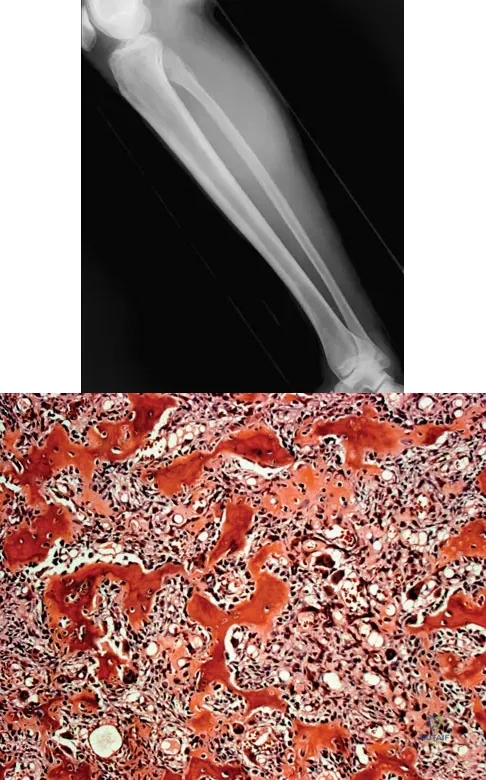
A 23-year-old man presents with right posterolateral knee pain that is worse at night and relieved by NSAIDs. Imaging and histology are shown. The histologic specimen demonstrates a nidus of vascular, cellular stroma with immature woven bone trabeculae. What is the currently preferred minimally invasive treatment for this lesion?
Explanation
Correct Answer: B
The clinical presentation (night pain relieved by NSAIDs), radiographic appearance (cortically based lucent nidus with surrounding sclerosis), and histology (vascular stroma with plump osteoblasts and woven bone) are diagnostic of an osteoid osteoma. Percutaneous radiofrequency ablation (RFA), typically performed under CT guidance, has become the preferred and highly successful minimally invasive treatment for most osteoid osteomas.
Question 31
A 28-year-old man presents with a chronic elbow dislocation and heterotopic ossification following a severe head injury, as seen in the radiograph. He is scheduled for open reduction, heterotopic bone excision, and capsular releases. What is the primary biomechanical purpose of applying a dynamic hinged elbow fixator in this setting?
Explanation
Correct Answer: B
In a young individual with a chronic dislocation of the elbow and heterotopic bone formation, the treatment of choice is open reduction, heterotopic bone excision, anterior and posterior capsular releases, and a dynamic hinged fixator to begin protected early postoperative range of motion. It is important to understand that the fixator protects the reconstruction and allows early range of motion, but it does not maintain the reduction and should not be expected to do so. Pin fixation across the elbow delays early motion and is not recommended.
Question 32
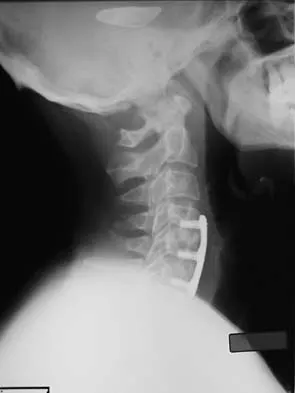
A 24-year-old professional football player underwent a two-level anterior cervical diskectomy and fusion (ACDF) 9 months ago. His current radiograph is shown. He is asymptomatic with full range of motion and a normal neurologic exam. Which of the following findings would be an absolute contraindication to his return to collision sports?
Explanation
Correct Answer: B
Patients with one- or two-level anterior cervical diskectomies and fusions that have healed fully can return to play. Any loss of motion, persistent neurologic deficit, or significant adjacent segment degeneration may preclude a player from returning. The presence of hardware or a solid fusion is expected and does not contraindicate return to play.
Question 33
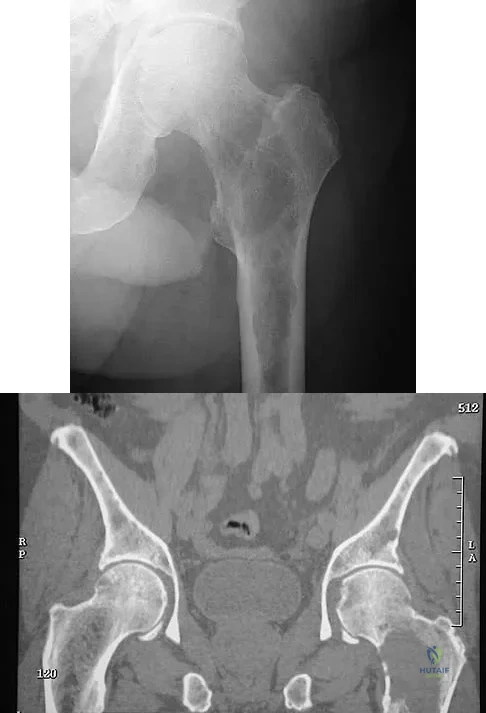
A 70-year-old man presents with left thigh pain and a monoclonal gammopathy. Radiographs and CT (shown) reveal a large lucent lesion in the peritrochanteric region. Following prophylactic internal fixation with a locked intramedullary rod, which of the following adjuvant therapies is most appropriate to decrease the risk of future pathologic fractures in this patient?
Explanation
Correct Answer: B
The underlying diagnosis is multiple myeloma. Because the patient has a large lucent lesion in the peritrochanteric region of the left proximal femur, the risk of pathologic fracture is high. Consideration should be given to prophylactic internal fixation with a locked intramedullary rod. Postoperative treatment with bisphosphonates and radiation therapy is indicated to decrease the risk of future pathologic fractures. The lesion does not appear to be a sarcoma requiring wide resection and endoprosthetic reconstruction.
Question 34
The AP radiograph of the spine shown demonstrates the 'winking owl' sign. This radiographic finding is most characteristically caused by which of the following pathophysiologic processes?
Explanation
Correct Answer: C
The figure shows the missing pedicle or 'winking owl' sign that is characteristic of tumor involvement of the cortical bone of the pedicle. None of the other pathologic processes commonly gives this radiographic picture. Thinned, but not missing pedicles, have been described as a normal variant.
Question 35
A patient presents with the toe deformity shown in the clinical photograph. The pathophysiology of this deformity involves hyperextension at the metatarsophalangeal (MTP) joint and flexion at the interphalangeal (IP) joints. Which of the following best describes the muscular imbalance at the IP joints in this condition?
Explanation
Correct Answer: B
The dynamic forces acting to maintain the position of the proximal phalanx at the head of the metatarsal are a balance between the extensor digitorum longus and the weaker intrinsic muscles. With hyperextension at the metatarsophalangeal joint, the intrinsic muscles become less efficient as plantar flexors. In the interphalangeal joints, the stronger flexors overpower the weaker intrinsic muscles, which act as the extensors. This combination of events leads to hyperextension at the metatarsophalangeal joint and flexion deformities at the interphalangeal joints, resulting in claw toe.
Question 36
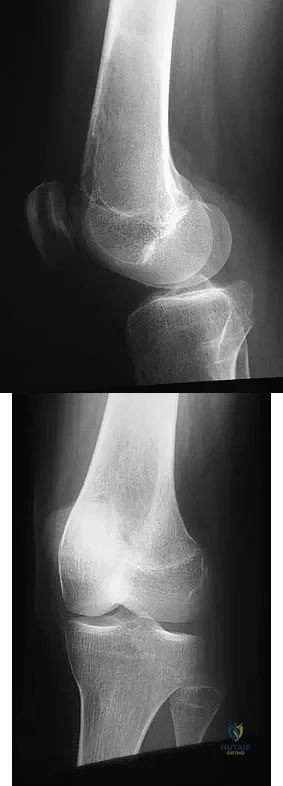
A 14-year-old patient presents with anterior knee pain. Imaging and biopsy specimens are shown. The histology demonstrates small round blue cells. Although this tumor frequently occurs in the diaphysis, the imaging demonstrates its presence in which anatomic region of the bone?
Explanation
Correct Answer: B
The histology shows small round blue cells that are typical of Ewing's sarcoma. Although Ewing's sarcoma frequently occurs in the diaphysis, it can occur in the metaphysis, as demonstrated in the provided imaging studies.
Question 37
The arthroscopic view of the elbow shown is taken from an anterior medial portal, visualizing the radiocapitellar joint. When performing a capsular excision in the midportion of the capitellum, which neurovascular structure is at greatest risk of iatrogenic injury?
Explanation
Correct Answer: C
The image shows a view of the radiocapitellar joint from an anterior medial portal. The radial nerve lies on the elbow capsule at the midportion of the capitellum. It is at risk for injury when capsular excision is performed in this region.
Question 38
A patient presents with profound weakness in external rotation and atrophy of the infraspinous fossa, as shown in the clinical photograph. The supraspinous fossa has normal muscle bulk. This specific pattern of isolated infraspinatus involvement indicates nerve entrapment at which of the following anatomic locations?
Explanation
Correct Answer: B
Compression of the suprascapular nerve by a ganglion cyst is a well-documented cause of pain and weakness in the shoulder. Isolated involvement of the infraspinatus indicates that the area of entrapment is at the spinoglenoid notch and not the suprascapular notch. Entrapment at the suprascapular notch would affect both the supraspinatus and infraspinatus muscles.
Question 39
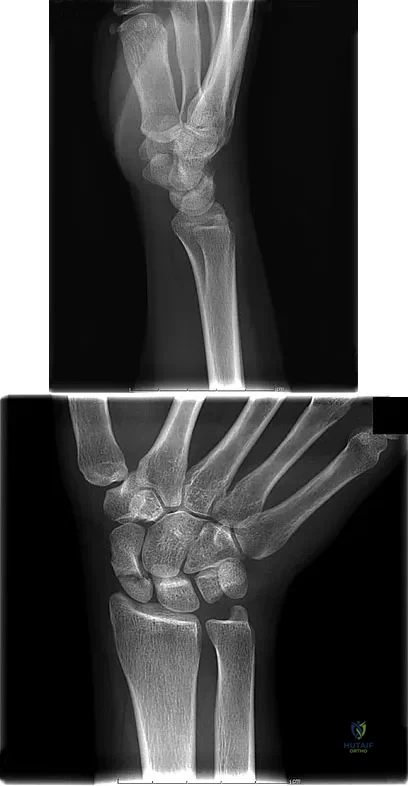
A 19-year-old woman sustained the wrist injury shown in the radiographs 6 weeks ago. A decision is made to proceed with surgical fixation. Why is a dorsal approach preferred over a volar approach for this specific fracture pattern?
Explanation
Correct Answer: B
Displaced fractures of the scaphoid are best treated with compression screw fixation. Proximal third (proximal pole) fractures, as seen in this patient, are optimally approached via a dorsal approach to ensure proper reduction and compression. Fractures of the scaphoid waist can be approached either by a volar or a dorsal approach.
Question 40
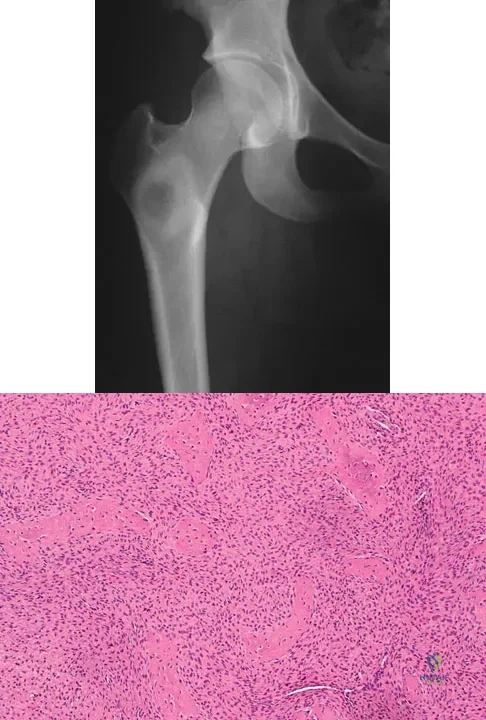
A 16-year-old girl is incidentally found to have the proximal femoral lesion shown in the imaging studies. Biopsy is performed. Which of the following histologic descriptions is most characteristic of this patient's diagnosis?
Explanation
Correct Answer: B
The imaging studies demonstrate fibrous dysplasia. Although the classic radiographic appearance of fibrous dysplasia is one of a central metaphyseal lesion with ground glass matrix, it is not unusual to see either a more radiodense-appearing lesion or a more peripheral location. The histologic finding of spicules of woven bone without osteoblastic rimming in a bland fibrous background is diagnostic of fibrous dysplasia.
Question 41
A 28-year-old man presents with a chronic elbow dislocation and heterotopic ossification following a severe head injury, as shown in the radiograph. He is scheduled for open reduction, heterotopic bone excision, and capsular releases. What is the primary purpose of applying a dynamic hinged elbow fixator in this setting?
Explanation
Correct Answer: C
In a young individual with a chronic dislocation of the elbow and heterotopic bone formation, the treatment of choice is open reduction, heterotopic bone excision, anterior and posterior capsular releases, and a dynamic hinged fixator to begin protected early postoperative range of motion. It is important to understand that the fixator protects the reconstruction and allows early range of motion, but it does not maintain the reduction and should not be expected to do so. Pin fixation across the elbow delays early motion and is not recommended.
Question 42
A 24-year-old professional football player underwent a two-level anterior cervical diskectomy and fusion (ACDF) 9 months ago. His current radiograph is shown. He is asymptomatic with a normal neurologic examination and full range of motion. Which of the following findings would be an absolute contraindication to his return to play?
Explanation
Correct Answer: B
Patients with one- or two-level anterior cervical diskectomies and fusions that have healed fully can return to play. Any loss of motion, persistent neurologic deficit, or significant adjacent segment degeneration may preclude a player from returning. The presence of instrumentation or a solid fusion are not contraindications to return to play.
Question 43
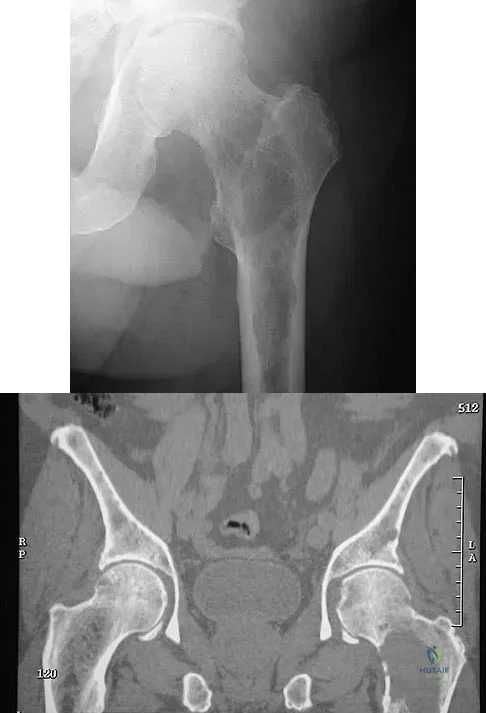
A 70-year-old man with multiple myeloma presents with a large lucent lesion in the peritrochanteric region of the left proximal femur, as shown in the imaging studies. He undergoes prophylactic internal fixation with a locked intramedullary rod. Which of the following adjuvant therapies is most appropriate to decrease the risk of future pathologic fractures in this patient?
Explanation
Correct Answer: B
Because the patient has a large lucent lesion in the peritrochanteric region of the left proximal femur, the risk of pathologic fracture is high, and prophylactic internal fixation with a locked intramedullary rod is indicated. Postoperative treatment with bisphosphonates and radiation therapy is indicated to decrease the risk of future pathologic fractures. Neither chemotherapy nor radiation therapy alone is likely to result in long-term stabilization of the proximal femur.
Question 44
A patient presents with back pain, and an AP radiograph of the spine is obtained, as shown. The radiograph demonstrates the 'winking owl' sign. This radiographic finding is most characteristic of which of the following pathologic processes?
Explanation
Correct Answer: D
The figure shows the missing pedicle or 'winking owl' sign that is characteristic of tumor involvement of the cortical bone of the pedicle. None of the other pathologic processes commonly gives this radiographic picture. Thinned, but not missing pedicles, have been described as a normal variant.
Question 45
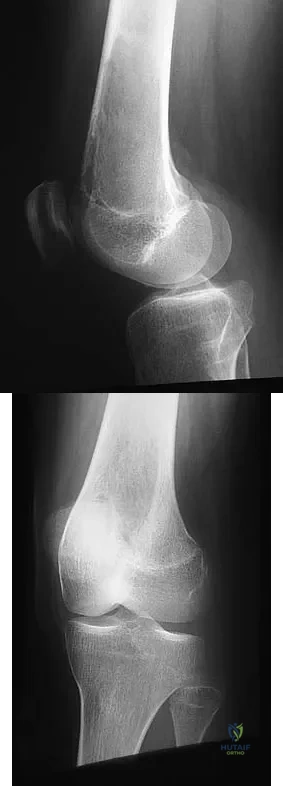
A 14-year-old patient presents with anterior knee pain. Imaging and biopsy specimens are shown. The histology demonstrates small round blue cells. Which of the following genetic translocations is most consistently associated with this diagnosis?
Explanation
Correct Answer: A
The imaging studies and histology showing small round blue cells are typical of Ewing's sarcoma. Ewing's sarcoma has been noted to have a consistent genetic translocation t(11;22). Other translocations include t(X;18) for synovial sarcoma and t(12;16) for myxoid liposarcoma.
Question 46
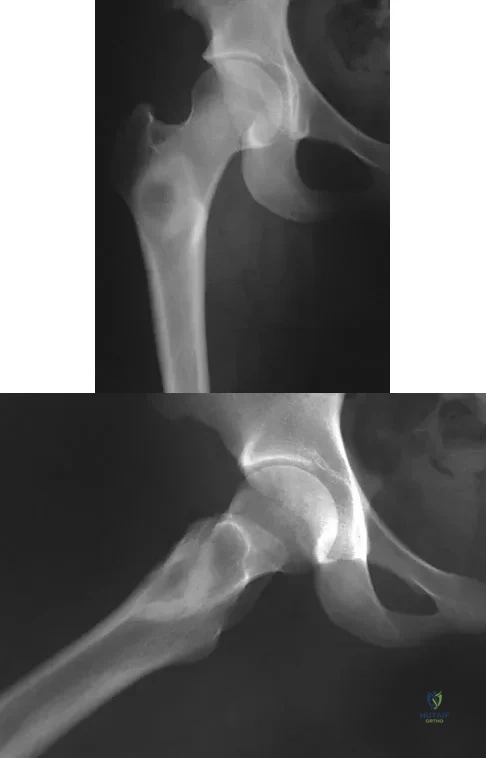
A 16-year-old girl is found to have an asymptomatic proximal femur lesion after a fall, as shown in the imaging studies. Biopsy is performed. Which of the following histologic descriptions is most characteristic of this lesion?
Explanation
Correct Answer: B
The imaging studies are consistent with fibrous dysplasia. The classic histologic finding of fibrous dysplasia is spicules of woven bone without osteoblastic rimming in a bland fibrous background (often described as 'Chinese characters'). Small round blue cells are seen in Ewing's sarcoma, malignant cells with osteoid in osteosarcoma, blood-filled spaces in aneurysmal bone cysts, and a central nidus with plump osteoblasts in osteoid osteoma.
Question 47
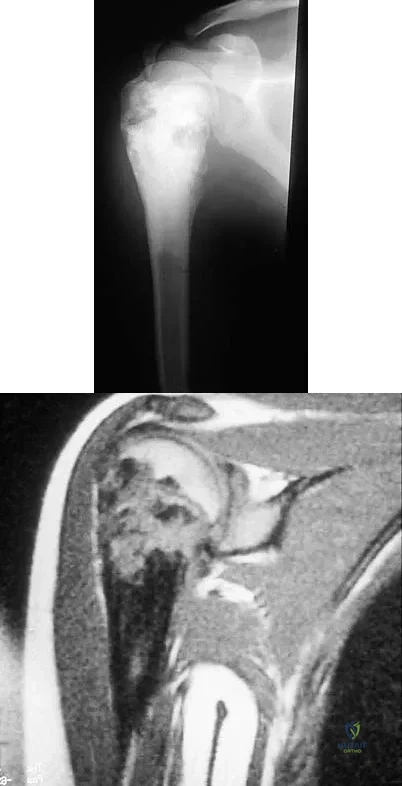
A 13-year-old girl presents with a firm mass and pain in her right shoulder. Radiographs and MRI are shown. Biopsy reveals malignant cells surrounded by osteoid. Which of the following is the most likely diagnosis?
Explanation
Correct Answer: C
The patient has osteosarcoma. The radiograph suggests an aggressive primary tumor of bone, and the histology shows malignant cells surrounded by osteoid, which is classic for osteosarcoma. Ewing's sarcoma histologically consists of small round blue cells. Osteochondroma and periosteal chondroma have a different histologic pattern and a less aggressive radiographic appearance.
Question 48
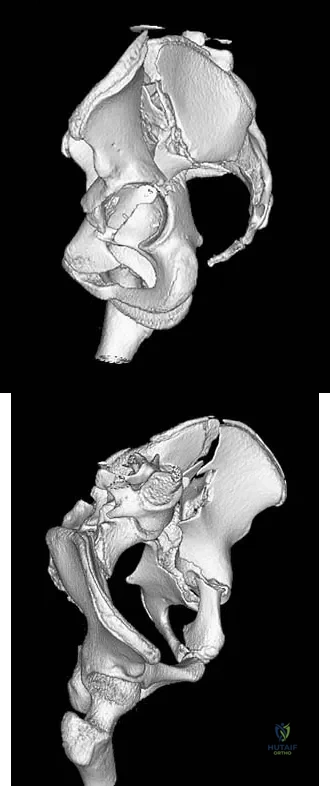
A 13-year-old girl sustains the pelvic injury shown in the provided 3D CT reconstructions. This fracture pattern is classified as a both-column acetabular fracture. What is the defining radiographic feature of this specific fracture pattern?
Explanation
Correct Answer: C
The defining feature of a both-column acetabular fracture pattern is that all articular fragments are on fracture fragments and no joint surface is left intact to the axial skeleton above. While extension into the sacroiliac joint or comminution may be present, the complete detachment of the articular surface from the intact ilium is the hallmark of a both-column fracture.
Question 49
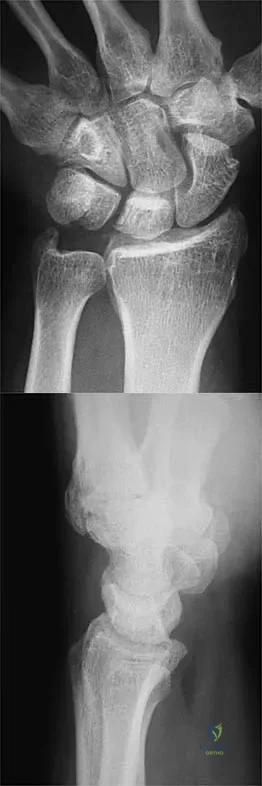
A 32-year-old man presents with increasing right wrist pain, decreased range of motion, and boggy synovitis over the dorsum of the wrist. Radiographs are shown, demonstrating increased density and fragmentation of the lunate. This disease process is classically associated with which of the following anatomic variants?
Explanation
Correct Answer: B
The patient has Kienbock's disease (osteonecrosis of the lunate), which presents with boggy synovitis of the wrist, decreased range of motion, and increased density in the lunate body on radiographs. This disease process is classically associated with an ulnar-negative variant, which is thought to increase shear forces across the lunate.
Question 50
A 35-year-old man presents with atraumatic, painless limited elbow motion. Radiographs are shown. The classic radiographic appearance of this benign connective tissue disorder is best described as:
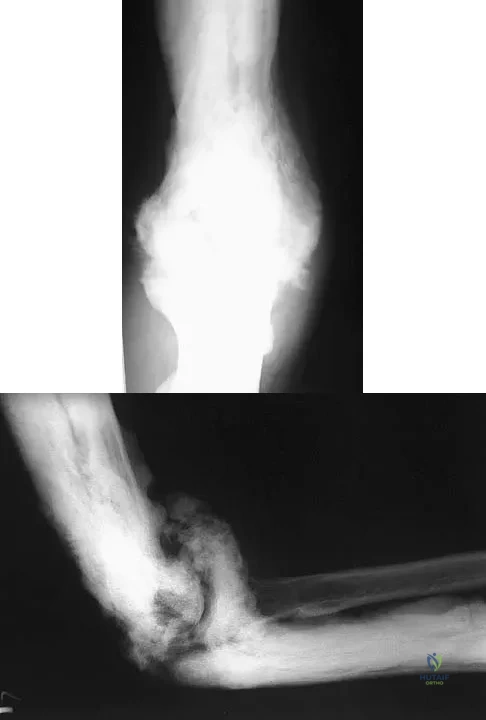
Explanation
Correct Answer: C
Based on the radiographic findings, the patient has melorheostosis, a rare, benign connective tissue disorder that is characterized by a cortical thickening of bone. It produces a 'dripping candle wax' appearance with dense hyperostosis that flows along the cortex. 'Smoke up a chimney' is associated with bone infarcts, 'sunburst' with osteosarcoma, and 'onion skin' with Ewing's sarcoma.
Question 51
A stress-strain curve for a typical orthopaedic metallic implant is shown.
What does the area under the curve within the elastic region represent?
Explanation
Question 52
A 6-year-old boy presents with a pink, pulseless hand following a Gartland type III supracondylar humerus fracture. After careful closed reduction and percutaneous pinning, the hand remains pink but pulseless. A Doppler ultrasound confirms biphasic flow in the palmar arch. What is the most appropriate next step in management?
Explanation
Question 53
A 65-year-old man presents with progressive clumsiness in his hands and a wide-based gait. Physical examination reveals hyperreflexia and a positive Hoffman sign.
MRI demonstrates multi-level cervical stenosis. Which of the following MRI findings is the most significant negative prognostic factor for neurologic recovery following surgical decompression?
Explanation
Question 54
Which of the following ligamentous complexes provides the most significant restraint to vertical displacement of the hemipelvis in a completely unstable pelvic ring injury?
Explanation
Question 55
A 22-year-old female collegiate soccer player undergoes anterior cruciate ligament (ACL) reconstruction. When counseling her on graft choices, she should be informed that a bone-patellar tendon-bone (BTB) autograft is associated with a statistically higher risk of which complication compared to a hamstring autograft?
Explanation
Question 56
A 15-year-old boy presents with a painful distal femur mass. Radiographs show a destructive lesion with a sunburst periosteal reaction.
A core needle biopsy confirms high-grade osteosarcoma. Following neoadjuvant chemotherapy, which of the following defines a favorable histologic response at the time of definitive resection?
Explanation
Question 57
A 12-year-old obese boy presents with acute on chronic knee pain and an inability to bear weight. Radiographs confirm a slipped capital femoral epiphysis (SCFE). Which of the following is the most significant prognostic risk factor for the development of avascular necrosis (AVN) in this patient?
Explanation
Question 58
A 45-year-old man sustains a Schatzker VI bicondylar tibial plateau fracture treated with dual plating. At his 6-week follow-up, radiographs reveal a progressive varus collapse. What technical oversight during surgical fixation is most commonly associated with this specific complication?
Explanation
Question 59
A 35-year-old active man undergoes a total hip arthroplasty (THA). The surgeon selects a ceramic-on-ceramic bearing surface to minimize wear. Which of the following is a unique clinical complication specifically associated with this bearing surface?
Explanation
Question 60
A 22-year-old man falls onto an outstretched hand and presents with anatomic snuffbox tenderness. Imaging confirms a non-displaced fracture of the proximal pole of the scaphoid. What is the primary arterial supply to this specific region, and what is its clinical implication?
Explanation
Question 61
A 68-year-old man complains of dropping objects, a loss of fine motor dexterity, and a "clumsy" gait. Examination shows a positive Hoffman's sign bilaterally and hyperreflexia. MRI of the cervical spine demonstrates severe stenosis at C4-C5 with an intramedullary hyperintense signal on T2-weighted images. What is the most appropriate management?
Explanation
Question 62
A 28-year-old male sustains a closed, mid-shaft femur fracture treated with a reamed, statically locked intramedullary nail. Which type of bone healing predominates in this scenario, and what is the underlying biomechanical principle?
Explanation
Question 63
A 19-year-old female soccer player undergoes an anterior cruciate ligament (ACL) reconstruction using a bone-patellar tendon-bone (BTB) autograft. At 8 months postoperatively, she reports significant localized anterior knee pain with kneeling and stairs, despite a stable knee. What is the most common cause of this specific complication?
Explanation
Question 64
A 25-year-old rugby player sustains an axial load to a plantarflexed foot. Weight-bearing radiographs reveal a 4 mm diastasis between the medial cuneiform and the base of the second metatarsal. Rupture of which of the following structures is the primary driver of this radiographic finding?
Explanation
Question 65
A 15-year-old boy presents with progressive knee pain. Imaging shows a destructive metaphyseal lesion of the distal femur with a "sunburst" periosteal reaction and a soft tissue mass. Core biopsy confirms high-grade conventional osteosarcoma. What is the standard-of-care treatment protocol?
Explanation
Question 66
A 55-year-old poorly controlled diabetic presents with rapid-onset, severe right leg swelling, erythema, hemorrhagic bullae, and excruciating pain out of proportion to physical findings. The LRINEC (Laboratory Risk Indicator for Necrotizing Fasciitis) score is 9. What is the single most critical intervention?
Explanation
None
