Part of the Master Guide

OITE & ABOS Orthopedic Exam MCQs: Trauma, Foot & Knee Board Review Part 132

Orthopedic Board Prep MCQs: Shoulder, Elbow, Arthroplasty & Trauma Part 84
23 Apr 2026 38 min read 49 Views
OITE & ABOS Orthopedic Board Prep: Practice Exam Part 84

Key Takeaway

This interactive quiz, Part 84, provides 50 high-yield MCQs for OITE & AAOS Orthopedic Board Review. Designed for orthopedic residents and surgeons, it offers practice with clinical scenarios in study or exam modes, complete with detailed explanations. Ideal for board exam preparation.

Orthopedic Board Prep MCQs: Shoulder, Elbow, Arthroplasty & Trauma Part 84

Comprehensive 100-Question Exam


00:00

Start Quiz

Question 1

In reverse total shoulder arthroplasty, moving the center of rotation medially and inferiorly alters the biomechanics of the deltoid. Which of the following best describes this effect?


Explanation
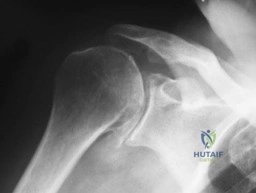
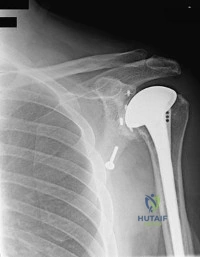
The Grammont design of rTSA medializes and distalizes the center of rotation. This increases the deltoid moment arm, which improves its mechanical advantage, and increases deltoid tension, which improves stability and recruits more anterior and posterior deltoid fibers for elevation.

Question 2

A 45-year-old male sustains a terrible triad injury to the elbow. During surgical management, which of the following sequences of repair provides the most biomechanically sound restoration of stability?


Explanation

The standard surgical algorithm for a terrible triad injury involves repairing structures from deep to superficial, or "inside-out". The sequence is typically: 1) Coronoid fixation, 2) Radial head fixation or arthroplasty, 3) LCL complex repair to the lateral epicondyle. If the elbow remains unstable after these steps, the MCL can be repaired or an external fixator applied.

Question 3

In the evaluation of a proximal humerus fracture, which of the following radiographic findings is the most reliable predictor of subsequent avascular necrosis of the humeral head?


Explanation

Hertel et al. identified key predictors of ischemia in proximal humerus fractures. The most significant predictors include disruption of the medial hinge >2 mm, an anatomic neck fracture (rather than surgical neck), and a short calcar length (<8 mm). Medial hinge disruption indicates tearing of the medial periosteal vessels (branches of the anterior circumflex humeral artery and posterior circumflex humeral artery).

Question 4

A 62-year-old man presents with vague shoulder pain 18 months after a total shoulder arthroplasty. Inflammatory markers (ESR, CRP) are normal. Aspiration yields no growth at 3 days. What is the optimal approach to diagnose a suspected Cutibacterium acnes (C. acnes) infection?


Explanation

C. acnes is an indolent, slow-growing, anaerobic Gram-positive bacillus that is a common cause of periprosthetic shoulder infections. It frequently presents with normal inflammatory markers. To properly identify C. acnes, cultures should be held for at least 14 days, as it often does not grow in standard 3- to 5-day culture periods.

Question 5

During an anatomic coracoclavicular (CC) ligament reconstruction for a chronic Type V AC joint separation, the surgeon aims to reconstruct both the conoid and trapezoid ligaments. To accurately replicate their anatomic insertions on the clavicle, where should the tunnels be placed relative to the distal end of the clavicle?


Explanation

The trapezoid ligament inserts more distally/laterally on the clavicle, approximately 15-17 mm medial to the distal clavicle. The conoid ligament inserts more proximally/medially, at the conoid tubercle, which is approximately 30-45 mm (average 30-35 mm) medial to the distal clavicle. Therefore, Conoid ~30-45 mm, Trapezoid ~15 mm is the standard tunnel placement.

Question 6

A 78-year-old female with severe rheumatoid arthritis sustains a comminuted intra-articular distal humerus fracture (OTA type 13-C3). Which of the following is an established advantage of performing a total elbow arthroplasty (TEA) compared to open reduction and internal fixation (ORIF) in this specific patient population?


Explanation
In elderly patients, particularly those with poor bone quality or pre-existing joint disease like rheumatoid arthritis, TEA provides a more predictable and often superior return of functional range of motion and reliable pain relief compared to ORIF for complex, comminuted distal humerus fractures. However, TEA does carry a permanent lifting restriction (typically 5-10 lbs) and a higher lifetime risk of implant failure or loosening requiring revision.

Question 7

Which of the following component positioning strategies is most effective at reducing the incidence of scapular notching in reverse total shoulder arthroplasty?


Explanation

Scapular notching is a frequent complication of rTSA where the medial aspect of the humeral tray impinges on the inferior scapular neck. To minimize notching, the glenosphere should be placed inferiorly (overhanging the inferior glenoid rim) and tilted inferiorly. Lateralizing the center of rotation (either with a lateralized glenosphere or bone graft) and decreasing the humeral neck-shaft angle (e.g., to 135 or 145 degrees instead of 155) also reduce notching.

Question 8

A 25-year-old competitive cyclist sustains a Type IIB distal clavicle fracture (Neer classification). Which of the following best describes the pathomechanics and optimal treatment of this injury?


Explanation
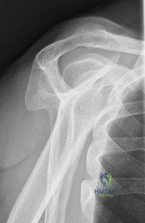
Neer Type II distal clavicle fractures occur medial to the AC joint ligaments. In Type IIA, the conoid and trapezoid remain attached to the distal fragment. In Type IIB, the conoid is torn while the trapezoid remains attached to the distal fragment, or both are detached from the proximal fragment, leading to superior displacement of the medial fragment by the trapezius. Because of the high nonunion rate (>30%) with nonoperative management, operative fixation is frequently recommended in active individuals.

Question 9

A patient presents with a history of recurrent elbow clicking and a sense of instability when pushing up from a chair. A lateral pivot-shift test of the elbow is positive. This condition is primarily caused by insufficiency of which of the following structures?


Explanation

Posterolateral rotatory instability (PLRI) of the elbow is typically caused by injury or insufficiency of the lateral ulnar collateral ligament (LUCL). The LUCL is the primary restraint to posterolateral rotatory subluxation of the radiocapitellar joint. Patients often describe symptoms when applying axial load, valgus stress, and supination (e.g., pushing off a chair).

Question 10

A 65-year-old female is scheduled for a total shoulder arthroplasty for primary osteoarthritis. Preoperative CT reveals a Walch B2 glenoid. What does a B2 glenoid signify, and what is a common surgical strategy for addressing it in anatomic TSA?


Explanation

The Walch classification describes glenoid morphology. A B2 glenoid is characterized by asymmetric posterior wear creating a biconcave surface and posterior subluxation of the humeral head. In anatomic TSA, this can be addressed by asymmetric anterior reaming (up to 10-15 degrees of retroversion correction, provided enough subchondral bone remains), posterior bone grafting, or using a posteriorly augmented glenoid component. If correction isn't possible without violating the glenoid vault, rTSA is indicated.

Question 11

A 72-year-old male presents with inability to actively elevate his right arm past 45 degrees, despite having full passive range of motion. MRI demonstrates a massive, retracted tear of the supraspinatus and infraspinatus with Goutallier grade 4 fatty infiltration. The subscapularis and teres minor are intact. What is the most appropriate definitive surgical intervention?


Explanation

This patient presents with pseudoparalysis (inability to actively elevate >90 degrees with preserved passive motion) secondary to a massive, irreparable rotator cuff tear (Goutallier 4 fatty infiltration implies irreversibility and irreparability). In an older patient with pseudoparalysis and an irreparable tear, reverse total shoulder arthroplasty (rTSA) is the treatment of choice, as it relies on the deltoid for elevation and does not require a functioning superior rotator cuff. Superior capsular reconstruction or tendon transfers are less predictable for reversing true pseudoparalysis in the elderly, and anatomic TSA is contraindicated in the absence of a functional cuff.

Question 12

When performing a two-incision repair for a distal biceps tendon rupture (modified Morrey approach), which of the following nerves is at the greatest risk of injury during the creation of the posterior bone tunnel in the radial tuberosity?


Explanation

The two-incision approach for distal biceps repair was developed to decrease the risk of injury to the radial nerve/PIN seen in a single-incision anterior approach. However, if the forearm is not kept in maximal pronation during the creation of the posterior bone tunnel (when exiting the ulna/radius posterolaterally), the PIN can wrap around the radial neck and be injured. Maximal pronation moves the PIN away from the surgical field.

Question 13

A 32-year-old male sustains a closed, spiral fracture of the distal third of the humerus (Holstein-Lewis fracture). On examination in the emergency department, he is noted to have a dense radial nerve palsy. What is the most appropriate initial management?


Explanation

The presence of a radial nerve palsy with a closed humeral shaft fracture (including Holstein-Lewis types) is not an absolute indication for immediate surgical exploration. Most of these represent neuropraxia or axonotmesis and will recover spontaneously (over 70-80% recovery rate). The initial management is closed reduction, application of a coaptation splint or functional brace, and clinical observation. If there is no clinical or EMG evidence of recovery by 3-4 months, or if the palsy occurs after closed reduction, exploration is indicated.

Question 14

A 24-year-old rugby player undergoes a Latarjet procedure for recurrent anterior shoulder instability with 25% glenoid bone loss. Which of the following is the most frequent long-term complication associated with this procedure?


Explanation

The Latarjet procedure is highly effective for preventing recurrent instability in patients with significant anterior glenoid bone loss. However, long-term follow-up studies have shown a high incidence of glenohumeral osteoarthritis. This is often associated with lateral overhang of the coracoid graft, which causes impingement and wear on the humeral head. Graft nonunion, hardware complications, and nerve injuries occur but at lower rates compared to the long-term development of osteoarthritis.

Question 15

In the management of extra-articular scapular body and neck fractures, which of the following is generally accepted as an absolute indication for open reduction and internal fixation (ORIF)?


Explanation

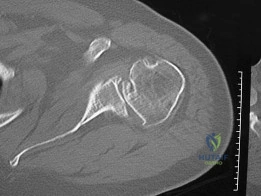
While most scapular body and neck fractures are treated nonoperatively, indications for ORIF of the scapular neck include severe displacement. Generally accepted indications for surgery include: medial/lateral displacement > 20 mm, angulation > 45 degrees, glenopolar angle (GPA) < 22 degrees, or a double disruption of the superior shoulder suspensory complex (SSSC) with significant displacement (>10 mm). Option 2 (medialization by 25 mm) exceeds the surgical threshold of 20 mm. Option 4 (floating shoulder) is not an absolute indication unless severely displaced.

Question 16

A 35-year-old female falls on an outstretched hand and sustains a shear fracture of the capitellum that includes a large portion of the trochlea (McKee modification of Bryan and Morrey Type 4). Which of the following surgical approaches provides the most optimal exposure for fixation of this specific fracture pattern?


Explanation

A Type 4 capitellum fracture (McKee) is a coronal shear fracture involving the capitellum and extending medially to include most or all of the trochlea. The standard Kocher lateral approach often does not provide adequate exposure for the medial (trochlear) extent of the fracture. An extended lateral approach (e.g., Kaplan or an extensile lateral approach elevating the common extensor origin and anterior capsule) is required to visualize and fix the articular surface adequately. A posterior approach with olecranon osteotomy is typically reserved for complex, comminuted bi-columnar distal humerus fractures, not isolated coronal shear fractures.

Question 17

Which of the following intraoperative techniques is most strongly recommended to minimize the risk of postoperative ulnar neuropathy during a total elbow arthroplasty for a patient with rheumatoid arthritis?


Explanation

Postoperative ulnar neuropathy is a common complication after total elbow arthroplasty (TEA). Most high-volume elbow surgeons recommend routine identification, mobilization, and anterior subcutaneous transposition of the ulnar nerve during TEA to move it away from the surgical field, reduce tension during flexion, and prevent impingement by the implants or cement. In situ decompression or leaving it in the tunnel risks injury during the extensive capsular release and component preparation.

Question 18

A 70-year-old female presents with sudden, sharp shoulder pain 6 months after an uncomplicated reverse total shoulder arthroplasty (rTSA). Radiographs reveal a new stress fracture of the acromion base (Levy Type II). What biomechanical factor of the rTSA construct most significantly contributed to this complication?


Explanation
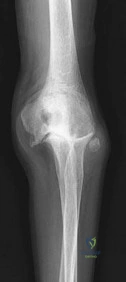
Acromial stress fractures after rTSA occur due to the altered biomechanics and increased tension on the deltoid, which originates on the acromion. Excessive distalization (lengthening of the humerus) significantly increases deltoid resting tension, placing a high load on the acromion and increasing the risk of a stress fracture. Other factors include superior screw placement in the base of the acromion or severe osteoporosis.

Question 19

A 28-year-old male develops severe elbow stiffness 3 months following open reduction and internal fixation of a terrible triad injury. Radiographs show mature heterotopic ossification (HO) bridging the radioulnar joint. He is scheduled for excision of the HO and capsular release. What is the optimal postoperative prophylaxis to prevent recurrence of HO in this patient?


Explanation

After surgical excision of heterotopic ossification around the elbow, the risk of recurrence is high. Prophylaxis is standard of care. The two most proven and widely used prophylactic regimens are oral NSAIDs (specifically Indomethacin) for 3 to 6 weeks, or a single dose of localized external beam radiation therapy (typically 700 cGy) given within 24-48 hours postoperatively. Bisphosphonates may delay the mineralization of HO but do not prevent the formation of the osteoid matrix, and therefore HO often forms once the drug is stopped.

Question 20

When performing open reduction and internal fixation (ORIF) of a valgus-impacted 4-part proximal humerus fracture, which structural element is critical to maintain or repair to prevent postoperative varus collapse?


Explanation

In proximal humerus fractures, particularly those treated with ORIF using a locking plate, restoration and support of the medial calcar (the medial hinge) is the most critical factor in preventing postoperative varus collapse and screw cut-out. If the medial cortex is comminuted and lacks structural support, adjuncts such as an intramedullary fibular strut allograft or inferior calcar screws (kickstand screws) must be used to provide medial support and prevent failure.

Question 21

In a patient undergoing total elbow arthroplasty for a severely comminuted, osteoporotic distal humerus fracture, what is the most common early postoperative nerve-related complication?


Explanation

Ulnar neuropathy is the most common postoperative nerve complication following total elbow arthroplasty (TEA), occurring in up to 5-10% of cases. The ulnar nerve is intimately associated with the medial epicondyle and the capsule, and it is frequently mobilized, transposed, or stretched during the surgical exposure for TEA.

Question 22

To minimize the risk of scapular notching in reverse total shoulder arthroplasty (RTSA), how should the glenosphere baseplate optimally be positioned?


Explanation

Scapular notching is a well-known complication of RTSA resulting from mechanical impingement of the humeral component against the inferior scapular neck during arm adduction. Positioning the glenosphere with inferior translation (overhanging the inferior rim) and inferior tilt alters the biomechanics to increase the impingement-free range of motion and drastically reduces the incidence of notching.

Question 23

A 40-year-old male presents with a severely comminuted, non-reconstructable radial head fracture after a fall from a height. He also complains of severe ipsilateral wrist pain. Radiographs reveal a shortened radius and disruption of the distal radioulnar joint (Essex-Lopresti injury). What is the most appropriate management?


Explanation

An Essex-Lopresti injury involves a radial head fracture, interosseous membrane disruption, and DRUJ dislocation. Radial head excision alone is absolutely contraindicated as it will lead to proximal migration of the radius, resulting in chronic wrist pain and ulnocarpal impingement. The appropriate treatment is restoring the lateral column with a radial head arthroplasty and stabilizing the DRUJ, often with pinning or ligament repair.

Question 24

In the surgical management of a 'terrible triad' injury of the elbow (elbow dislocation, radial head fracture, coronoid fracture), what is the recommended order of reconstruction to methodically restore joint stability?


Explanation

The classic 'inside-out' protocol for a terrible triad injury involves: 1) Coronoid fixation or replacement to restore anterior buttress stability; 2) Radial head fixation or arthroplasty to restore the lateral column and valgus stability; 3) Repair of the lateral ulnar collateral ligament (LUCL) to the lateral epicondyle to restore posterolateral rotatory stability. If instability persists, the MCL is repaired or a hinged external fixator is applied.

Question 25


Which of the following radiographic findings in a proximal humerus fracture is the strongest predictor for the development of avascular necrosis (AVN) of the humeral head according to the Hertel criteria?


Explanation

Hertel et al. identified key predictors for humeral head ischemia. The most reliable predictors are a short metaphyseal head extension (calcar length) of < 8 mm, disruption of the medial hinge (> 2 mm), and an anatomic neck fracture pattern. These findings indicate severe disruption of the critical intraosseous and ascending branch of the anterior humeral circumflex artery blood supply.

Question 26

A 25-year-old cyclist sustains a midshaft clavicle fracture. Which of the following is considered an absolute indication for operative fixation?


Explanation

Absolute indications for open reduction and internal fixation (ORIF) of a clavicle fracture include open fractures, impending skin compromise (severe tenting causing ischemia), neurovascular compromise, and symptomatic nonunion. Relative indications include shortening > 2 cm, severe displacement, and a 'floating shoulder'.

Question 27

Operative management of a scapular body and neck fracture is typically indicated if the glenoid medialization exceeds which of the following thresholds?


Explanation

Surgical indications for extra-articular scapular neck/body fractures include glenoid medialization greater than 20 mm, angular deformity greater than 40 degrees, or a double disruption of the superior shoulder suspensory complex (SSSC) with significant displacement.

Question 28

A 32-year-old bodybuilder feels a pop in his anterior axilla while performing a heavy bench press. Examination reveals loss of the anterior axillary fold and weakness with internal rotation. MRI confirms a rupture of the pectoralis major tendon at its insertion. What is the anatomic insertion site of the pectoralis major?


Explanation

The pectoralis major tendon inserts onto the lateral lip of the bicipital groove of the humerus. The latissimus dorsi inserts onto the floor of the groove, and the teres major inserts onto the medial lip. 'A miss between two majors' is a helpful mnemonic (Latissimus dorsi between Pectoralis major and Teres major).

Question 29

A 65-year-old female sustains a comminuted fracture of the olecranon extending distal to the coronoid process. What is the most appropriate fixation construct?


Explanation

Tension band wiring relies on an intact anterior cortex to convert tensile forces into compressive forces; therefore, it is contraindicated in comminuted fractures or those exiting distal to the center of rotation (coronoid level) due to the risk of shortening and joint subluxation. Posterior plate osteosynthesis is the standard of care for comminuted olecranon fractures.

Question 30


According to the Hamada classification for rotator cuff arthropathy, a shoulder radiograph showing acetabularization of the coracoacromial arch and femoralization of the humeral head without glenohumeral arthritis is classified as:


Explanation

The Hamada classification describes radiographic stages of massive rotator cuff tears: Grade 1: Acromiohumeral (AH) interval > 6 mm; Grade 2: AH interval < 5 mm; Grade 3: Acetabularization of the acromion; Grade 4: Glenohumeral joint arthritis; Grade 5: Humeral head collapse (AVN-like).

Question 31

An 18-year-old athlete undergoes arthroscopic anterior stabilization for recurrent anterior shoulder instability. Intraoperatively, he is found to have an 'off-track' engaging Hill-Sachs lesion. Which of the following procedures should be added to the Bankart repair?


Explanation

An 'off-track' Hill-Sachs lesion engages the anterior glenoid rim during abduction and external rotation, significantly increasing the risk of recurrent dislocation if treated with a Bankart repair alone. A remplissage procedure (insetting the infraspinatus tendon and capsule into the defect) converts the defect to an extra-articular lesion and prevents engagement.

Question 32

A patient develops severe heterotopic ossification (HO) following a distal humerus fracture, resulting in profound elbow stiffness. What is the most appropriate timing for surgical excision of the HO?


Explanation

Historically, surgical excision of HO was delayed until bone scans cooled or alkaline phosphatase normalized (12-18 months). Modern evidence indicates that excision is safe and effective when the HO appears radiographically mature (distinct cortical margins and trabecular patterns), typically at 4 to 6 months. Waiting too long increases the risk of irreversible joint contracture.

Question 33


A 45-year-old male feels a pop in his elbow while lifting a heavy box. On examination, the examiner's finger cannot hook beneath the tendon in the antecubital fossa from the lateral side. What structure is evaluated by this 'hook test'?


Explanation

The 'hook test' evaluates the integrity of the distal biceps tendon. The examiner uses a finger to hook under the tendon from the lateral side with the elbow flexed to 90 degrees and supinated. A positive test (inability to hook the tendon) indicates a complete rupture of the distal biceps tendon.

Question 34

A 20-year-old male is involved in a high-speed MVA and sustains a posterior sternoclavicular joint dislocation. He is hemodynamically stable but complains of dysphagia and mild dyspnea. A closed reduction is planned in the operating room. Which surgical specialty must be immediately available during this procedure?


Explanation

Posterior sternoclavicular dislocations can compress mediastinal structures, including the trachea, esophagus, and great vessels. Reduction of the joint carries a significant risk of catastrophic hemorrhage if a great vessel was lacerated and temporarily tamponaded by the displaced clavicle. Therefore, a cardiothoracic surgeon must be available.

Question 35

A 35-year-old male sustains a closed, spiral fracture of the distal third of the humeral shaft (Holstein-Lewis fracture). He presents with an isolated radial nerve palsy noted immediately after the injury. What is the most appropriate initial management?


Explanation

A primary radial nerve palsy in the setting of a closed humeral shaft fracture (including Holstein-Lewis patterns) is not an absolute indication for immediate surgical exploration. Up to 90% of these palsies represent neuropraxia or axonotmesis and will recover spontaneously. Functional bracing and close observation (often followed by EMG at 3-4 weeks if no recovery) is the initial standard of care.

Question 36

A 'floating shoulder' is typically defined as a double disruption of the superior shoulder suspensory complex (SSSC). Which of the following injury combinations classically constitutes a floating shoulder?


Explanation

A floating shoulder results from simultaneous fractures of the clavicle and the scapular neck, creating a mechanically unstable segment connecting the upper extremity to the axial skeleton. It often requires operative fixation of at least the clavicle to restore stability to the SSSC.

Question 37

When treating an intra-articular distal humerus fracture, an olecranon osteotomy approach provides excellent visualization of the articular surface. Which of the following osteotomies is preferred to facilitate subsequent reduction and promote reliable bone healing?


Explanation

A chevron osteotomy with the apex pointing distal provides a highly stable, self-centering construct when repaired (usually with tension band wiring or plating). This geometry dramatically increases the contact surface area and rotational stability, minimizing the risk of nonunion compared to a simple transverse osteotomy.

Question 38

In anatomic total shoulder arthroplasty for primary osteoarthritis, a biconcave glenoid with significant posterior wear (Walch B2) is encountered. Failure to correct this excessive retroversion during glenoid component placement strongly increases the risk of which complication?


Explanation

Failure to correct excessive posterior glenoid retroversion in a Walch B2 glenoid results in eccentric loading of the posterior aspect of the polyethylene glenoid component. This abnormal biomechanical force leads to the 'rocking horse' phenomenon, which is the primary driver of early aseptic loosening of the glenoid component.

Question 39

Posterolateral rotatory instability (PLRI) of the elbow, which classically presents with a positive pivot-shift test and apprehension when pushing up from a chair, is primarily caused by a deficiency of which ligamentous structure?


Explanation

The lateral ulnar collateral ligament (LUCL) is the primary restraint to posterolateral rotatory instability (PLRI) of the elbow. It originates from the lateral epicondyle and inserts on the supinator crest of the ulna. Insufficiency allows the radial head and proximal ulna to subluxate posterolaterally relative to the capitellum.

Question 40

A 30-year-old female sustains a shear fracture of the capitellum extending into the trochlea. During open reduction and internal fixation via a lateral approach, the surgeon decides to use the Kocher approach to visualize the capitellum while minimizing risk to the LUCL. The Kocher approach utilizes the internervous plane between which two muscles?


Explanation

The Kocher approach utilizes the internervous plane between the anconeus (innervated by the radial nerve) and the extensor carpi ulnaris (innervated by the posterior interosseous nerve). The Kaplan approach utilizes the plane between the ECRB and EDC, which is more anterior.

Question 41

In reverse total shoulder arthroplasty, which of the following baseplate and glenosphere configurations is most effective in preventing scapular notching?


Explanation

Scapular notching is primarily caused by mechanical impingement of the humeral tray against the inferior scapular neck. Inferior baseplate tilt combined with an inferior eccentric glenosphere overhang significantly reduces this impingement.

Question 42

To minimize scapular notching in Reverse Total Shoulder Arthroplasty (RSA), what is the optimal positioning of the glenoid baseplate?


Explanation

Inferior translation and inferior tilt of the glenosphere in RSA reduce the incidence of scapular notching. This positioning prevents mechanical impingement of the humeral component against the inferior scapular neck during arm adduction.

Question 43

A 78-year-old female with severe rheumatoid arthritis sustains a comminuted intra-articular distal humerus fracture. She is managed with a Total Elbow Arthroplasty (TEA). Which implant design is most appropriate for this patient?


Explanation

Linked (semi-constrained) TEA is indicated for trauma and for patients with inflammatory arthritis where the collateral ligaments are compromised or absent. Unlinked designs require intact collateral ligaments to provide joint stability.

Question 44

During a single-incision anterior approach for distal biceps tendon repair, which nerve is at greatest risk of iatrogenic injury if retractors are placed too vigorously on the lateral aspect of the wound?


Explanation

The posterior interosseous nerve (PIN) is at significant risk with excessive lateral retraction during the single-incision anterior approach as it wraps around the radial neck. The LABC is also at risk but is typically injured more superficially during the initial exposure.

Question 45

Which of the following factors is most strongly predictive of nonunion in nonoperatively managed midshaft clavicle fractures?


Explanation

Fracture shortening greater than 2 cm and 100% displacement are the strongest predictors of nonunion in midshaft clavicle fractures treated nonoperatively. These morphological factors often warrant primary surgical fixation to optimize outcomes.

Question 46

When evaluating a patient with recurrent anterior shoulder instability, which imaging modality is considered the gold standard for quantifying anterior glenoid bone loss?


Explanation

3D CT reconstruction with the humeral head digitally subtracted provides the most accurate and reliable quantification of glenoid bone loss. This precise measurement is critical for deciding between a soft tissue stabilization (Bankart) and a bone-grafting procedure (Latarjet).

Question 47

After open reduction and internal fixation of a proximal humerus fracture using a fixed-angle locking plate, what is the most common cause of late intra-articular screw penetration?


Explanation

The most common cause of late intra-articular screw penetration is secondary settling or varus collapse of the osteoporotic humeral head over the fixed locking screws. It is rarely due to initially placing screws that are too long.

Question 48

A 35-year-old male sustains a posterior elbow dislocation with an associated Regan-Morrey Type III coronoid fracture. What is the primary biomechanical consequence of failing to fix this specific coronoid fragment?


Explanation

The anteromedial facet of the coronoid is critical for resisting varus and posteromedial rotatory instability. Large (Type III) coronoid fractures must be fixed to restore the anterior buttress of the greater sigmoid notch and stabilize the joint.

Question 49

A 65-year-old male presents with primary glenohumeral osteoarthritis. A preoperative CT scan identifies a Walch B2 glenoid. What defines this specific glenoid morphology?


Explanation

A Walch B2 glenoid is characterized by a biconcave surface (paleoglenoid anteriorly and neoglenoid posteriorly) with posterior subluxation of the humeral head. Failure to correct the version in a B2 glenoid poses a high risk for early glenoid component loosening in anatomic total shoulder arthroplasty.

Question 50

Which of the following is considered an absolute indication for operative fixation of a scapular fracture?


Explanation

Most scapular body fractures are treated nonoperatively and heal well. However, absolute indications for surgery include intrathoracic penetration of a bone spike, open fractures, and severe glenohumeral instability due to massive glenoid involvement.

Question 51

A 6-year-old child sustains a Bado Type I Monteggia fracture equivalent. Closed reduction normalizes the ulnar alignment, but the radial head remains anteriorly dislocated. What is the most likely interposing structure preventing reduction?


Explanation

In pediatric Monteggia fractures where the radial head fails to reduce despite anatomic restoration of the ulnar bow, the annular ligament is the most common interposed structure. Open reduction is required to extract the ligament and allow the radial head to seat properly.

Question 52

A 60-year-old male presents with insidious shoulder pain and stiffness 2 years after an anatomic total shoulder arthroplasty. Aspiration yields fluid that grows Cutibacterium acnes after 10 days. Which of the following best describes this organism?


Explanation

Cutibacterium acnes (formerly Propionibacterium acnes) is a slow-growing, Gram-positive anaerobic bacillus commonly found in the normal skin flora of the shoulder. It is highly associated with indolent periprosthetic joint infections in shoulder arthroplasty.

Question 53

What is the most common long-term complication leading to revision following linked Total Elbow Arthroplasty (TEA) for rheumatoid arthritis?


Explanation

Aseptic loosening is the most common long-term complication and primary reason for revision in linked TEA. The semi-constrained nature of the implant transmits significant rotational and varus/valgus forces to the bone-cement interface, eventually leading to failure.

Question 54

During tension band wiring of a transverse olecranon fracture, what is the biomechanical principle achieved by the figure-of-eight wire?


Explanation

The tension band principle relies on converting the tensile forces generated by the triceps pull on the dorsal cortex into dynamic compressive forces across the articular surface. This dynamic compression occurs during active elbow flexion.

Question 55

A 25-year-old male sustains a closed transverse fracture of the middle third of the humeral shaft resulting from a high-energy fall. He presents with a complete radial nerve palsy. What is the most appropriate initial management?


Explanation

Primary radial nerve palsy associated with closed humeral shaft fractures is typically a neuropraxia. The standard of care is nonoperative fracture management (e.g., functional bracing or coaptation splint) and observation, as the vast majority recover spontaneously.

Question 56

When performing an olecranon osteotomy for exposure of a complex distal humerus fracture, what type of osteotomy provides the best stability and surface area for subsequent repair?


Explanation

A chevron osteotomy with the apex pointing distally (into the ulnar shaft) provides superior rotational stability and a larger surface area for healing compared to a transverse osteotomy. It should be performed at the bare area of the greater sigmoid notch.

Question 57

Which of the following patients is the most classic and appropriate candidate for a primary Reverse Total Shoulder Arthroplasty (RSA)?


Explanation

RSA is strictly indicated for patients with cuff tear arthropathy or massive irreparable rotator cuff tears with pseudoparalysis. The reverse prosthesis relies on the deltoid muscle for active elevation, effectively bypassing the deficient rotator cuff.

Question 58

In the Rockwood classification of acromioclavicular (AC) joint injuries, what defines a Type V injury?


Explanation

A Rockwood Type V injury involves complete disruption of both the AC and CC ligaments along with the deltotrapezial fascia. This extensive soft tissue failure leads to severe superior displacement (100% to 300%) of the distal clavicle relative to the acromion.

Question 59

During ORIF of a comminuted radial head fracture, the "safe zone" for hardware placement is utilized to prevent impingement. Which anatomical landmarks define this safe zone?


Explanation

The "safe zone" for radial head plating is a 90-degree arc that does not articulate with the proximal radioulnar joint (radial notch of the ulna) during full forearm rotation. This prevents hardware impingement and loss of pronation/supination.

Question 60

A 72-year-old female sustains a minimally displaced 3-part proximal humerus fracture involving the greater tuberosity. She elects for non-operative management. What is the most common complication she should be counseled about?


Explanation

The most common complication following non-operative management of proximal humerus fractures is significant shoulder stiffness (adhesive capsulitis). Early, supervised passive range of motion is critical to mitigate this debilitating risk.

Question 61

A 45-year-old tennis player presents with refractory lateral epicondylitis despite 12 months of conservative treatment. Surgical debridement is planned. Which tendon is the primary pathological structure targeted during this procedure?


Explanation

The Extensor Carpi Radialis Brevis (ECRB) tendon is the primary site of angiofibroblastic hyperplasia in lateral epicondylitis. Surgical treatment involves careful excision and debridement of this specific pathological tissue at its origin on the lateral epicondyle.

Question 62

In reverse total shoulder arthroplasty (RTSA), scapular notching is a recognized complication. Which of the following surgical techniques or implant designs is most effective in minimizing the incidence of inferior scapular notching?


Explanation

Inferior placement of the baseplate with an inferior glenosphere overhang of 2 to 4 mm significantly reduces the risk of scapular notching. This position limits the mechanical impingement of the medial humeral cup against the scapular neck during adduction.

None

Dr. Mohammed Hutaif
Medically Verified Content by
Prof. Dr. Mohammed Hutaif
Consultant Orthopedic & Spine Surgeon
Chapter Index
