Part of the Master Guide

OITE & ABOS Orthopedic Exam MCQs: Trauma, Foot & Knee Board Review Part 132

Orthopedic Surgery Board Review MCQs: Foot, Ankle & Trauma | Part 107
23 Apr 2026 49 min read 45 Views
Orthopedic Surgery Board Review MCQs: AAOS Master Bank Part 107

Key Takeaway

This page offers Part 107 of a comprehensive Orthopedic Surgery Board Review, featuring 50 high-yield multiple-choice questions (MCQs). Designed for orthopedic surgeons and residents preparing for OITE and AAOS certification exams, it includes interactive study/exam modes with detailed explanations and references. Master key topics for board success.

Orthopedic Surgery Board Review MCQs: Foot, Ankle & Trauma | Part 107

Comprehensive 100-Question Exam


00:00

Start Quiz

Question 1

A 35-year-old male sustains a purely ligamentous Lisfranc injury. He undergoes primary arthrodesis of the first, second, and third tarsometatarsal joints. Compared to open reduction and internal fixation (ORIF), which of the following is true regarding primary arthrodesis in this scenario?


Explanation

Primary arthrodesis for purely ligamentous Lisfranc injuries has been shown to result in decreased rates of subsequent procedures (e.g., hardware removal) and equivalent or superior functional outcomes compared to ORIF. ORIF is associated with a higher likelihood of hardware removal and potential progression to post-traumatic arthritis requiring salvage arthrodesis.

Question 2

During surgical fixation of a fibula fracture, a concomitant syndesmotic injury is suspected. Which of the following intraoperative findings best predicts syndesmotic instability requiring fixation?


Explanation

The intraoperative external rotation stress test or lateral hook test is the gold standard for diagnosing occult syndesmotic instability. Widening of the medial clear space or tibiofibular clear space under stress indicates dynamic instability of the syndesmosis and deltoid complex, necessitating stabilization.

Question 3

A 25-year-old involved in an MVC sustains a Hawkins III talar neck fracture. Which of the following structures provides the remaining blood supply to the talar body?


Explanation

Hawkins III fractures involve a fracture of the talar neck with dislocation of both the subtalar and tibiotalar joints. This displacement disrupts the artery of the tarsal canal, the artery of the tarsal sinus, and the deltoid branches. Thus, all three primary sources of blood supply to the talar body are disrupted, resulting in an avascular necrosis (AVN) rate approaching 100%.

Question 4

A 40-year-old smoker undergoes ORIF of a displaced intra-articular calcaneus fracture via an extensile lateral approach. Which of the following is the most significant modifiable patient-specific risk factor for postoperative wound complications in this setting?


Explanation

Current smoking is one of the most critical modifiable patient-specific risk factors for wound edge necrosis and deep infection following an extensile lateral approach for calcaneus fractures. Smoking cessation should be highly encouraged, and some surgeons consider active heavy smoking a relative contraindication to the extensile lateral approach.

Question 5

A 30-year-old sustains a spiral distal third tibial shaft fracture during a skiing accident. What associated injury must be specifically ruled out via advanced imaging or dedicated radiographs prior to operative intervention?


Explanation
Spiral distal third tibial shaft fractures have a highly associated risk (frequently cited between 25% and 90%) of a concomitant, often occult, posterior malleolus fracture. Preoperative CT scanning or dedicated internal rotation views are recommended to identify this intra-articular extension to alter surgical planning.

Question 6

A 22-year-old snowboarder presents with severe lateral ankle pain after landing a jump. Radiographs show a fracture of the lateral process of the talus. This injury is most commonly caused by which of the following mechanisms?


Explanation

A fracture of the lateral process of the talus, commonly known as a 'snowboarder's fracture', classically occurs via dorsiflexion and axial loading with eversion. It can easily be misdiagnosed as a severe lateral ankle sprain if radiographs are not carefully scrutinized.

Question 7

A 19-year-old college basketball player sustains a fracture at the metaphyseal-diaphyseal junction of the fifth metatarsal (Zone 2). The high risk of nonunion in this region is primarily due to a vascular watershed area involving the blood supply from which of the following?


Explanation

The metaphyseal-diaphyseal junction (Zone 2, Jones fracture) receives an intramedullary blood supply from a nutrient artery and extramedullary supply from metaphyseal vessels. A vascular watershed area exists at this specific junction, predisposing these fractures to delayed union or nonunion.

Question 8

A collegiate football lineman presents with severe pain at the base of his great toe after being tackled from behind while his foot was planted. He is diagnosed with a turf toe injury. Which structure is primarily injured?


Explanation

Turf toe is a hyperextension injury to the first metatarsophalangeal (MTP) joint, resulting in a sprain or tear of the plantar plate and capsuloligamentous complex (including the sesamoid complex).

Question 9

In comparing operative versus non-operative management of acute Achilles tendon ruptures utilizing modern functional rehabilitation protocols, which of the following statements is true?


Explanation

Recent high-quality randomized controlled trials (such as the study by Willits et al.) have demonstrated that when early functional rehabilitation (early weight-bearing and ROM) is utilized, the rerupture rates between operative and non-operative management of acute Achilles tendon ruptures are statistically similar. However, operative management still carries a higher risk of soft-tissue complications and infection.

Question 10

A 45-year-old male falls from a height and sustains a highly comminuted, displaced tibial pilon fracture with severe soft tissue swelling and fracture blisters. A spanning external fixator is planned. Which of the following represents the most appropriate principle for fibular fixation in this specific setting?


Explanation

While historically the fibula was fixed acutely to 'restore the lateral column', modern evidence indicates that acute fibular fixation through compromised soft tissue (especially at the level of the joint where incisions may compromise later tibial approaches) increases the risk of wound complications. It can safely be delayed or even omitted depending on the fracture pattern and soft tissue status.

Question 11

A 30-year-old male presents with an isolated medial subtalar dislocation. Closed reduction is attempted in the emergency department but is completely blocked. Which of the following structures is the most common block to closed reduction in a medial subtalar dislocation?


Explanation

In a medial subtalar dislocation (the most common type), the foot is displaced medially, and lateral structures can become entrapped. The extensor digitorum brevis (EDB) muscle, along with the talonavicular joint capsule, is the most common block to reduction. In a lateral subtalar dislocation, the most common block is the tibialis posterior tendon.

Question 12

A patient presents with an ankle fracture characterized by an anterior inferior tibiofibular ligament rupture, a spiral fracture of the fibula starting anteroinferiorly and exiting posterosuperiorly, a posterior malleolus fracture, and a transverse fracture of the medial malleolus. Based on the Lauge-Hansen classification, what is the mechanism of injury?


Explanation

This sequence perfectly describes a Supination-External Rotation (SER) stage IV pattern. Stage 1: AITFL sprain/rupture. Stage 2: Spiral fibula fracture (anteroinferior to posterosuperior). Stage 3: PITFL rupture or posterior malleolus fracture. Stage 4: Transverse medial malleolus fracture or deltoid ligament rupture.

Question 13

A 20-year-old collegiate track athlete complains of vague dorsal midfoot pain that worsens with sprinting. Radiographs are negative, but an MRI demonstrates a stress fracture of the central third of the tarsal navicular. The fracture is non-displaced and involves only the dorsal cortex. What is the most appropriate initial management?


Explanation

Tarsal navicular stress fractures occur in a high-risk watershed vascular zone in the central third of the bone. The standard initial treatment for a non-displaced navicular stress fracture is strict non-weight-bearing in a short leg cast for 6 to 8 weeks. Continued weight-bearing is associated with high rates of nonunion and fracture propagation.

Question 14

The Sanders classification for intra-articular calcaneus fractures is utilized to guide surgical treatment and predict outcomes. This classification is primarily based on the number and location of articular fracture lines seen on which of the following imaging modalities?


Explanation
The Sanders classification is based on coronal CT images that show the widest portion of the posterior facet of the calcaneus (sustentaculum tali). It dictates the number of articular fragments (types I-IV) and the location of the primary fracture lines.

Question 15

A 28-year-old male is involved in a severe crush injury to his foot and rapidly develops tense swelling, excruciating pain with passive toe extension, and paresthesias. Compartment syndrome of the foot is diagnosed. How many distinct osseofascial compartments are generally recognized in the foot for the purpose of fasciotomy?


Explanation

There are 9 recognized osseofascial compartments in the foot: the medial, lateral, superficial, calcaneal, 4 distinct interosseous compartments, and the adductor compartment. Complete surgical release requires dual dorsal incisions and often a medial incision to decompress all 9 compartments.

Question 16

A 35-year-old worker sustains a high-energy forced plantarflexion injury to the foot, resulting in a Chopart joint dislocation. This injury inherently involves dislocation between which of the following structures?


Explanation

The Chopart joint, also known as the transverse tarsal or midtarsal joint, consists of the talonavicular and calcaneocuboid articulations. A Chopart dislocation involves disruption of these joints, effectively separating the hindfoot from the midfoot.

Question 17

A 25-year-old undergoes ORIF of an ankle fracture with placement of two 3.5 mm syndesmotic screws. What is the current consensus regarding the routine removal of these syndesmotic screws in asymptomatic patients?


Explanation

Recent studies and meta-analyses have shown that routine removal of syndesmotic screws is not necessary. Patients with retained, loose, or even broken syndesmotic screws have similar, if not occasionally better, functional outcomes compared to those who undergo routine removal. Removal should generally be reserved for symptomatic patients.

Question 18

A 40-year-old male sustains a severe rotational ankle injury. Radiographs reveal a fracture-dislocation of the ankle where the proximal fibular shaft fragment is locked behind the posterior tubercle of the distal tibia. What is the eponymous name of this specific injury pattern?


Explanation

A Bosworth fracture-dislocation is a rare, severe pattern characterized by posterior dislocation of the proximal fibular fragment behind the posterior tubercle of the tibia. This results in a locked fibula that typically cannot be reduced closed and requires urgent open reduction to relieve skin tension and restore joint congruity.

Question 19

A 35-year-old female sustains an inversion injury to her ankle and foot. Radiographs demonstrate a fracture of the tuberosity of the fifth metatarsal (Zone 1). Which of the following soft tissue structures is primarily responsible for the avulsion force in this injury?


Explanation

Avulsion fractures of the fifth metatarsal tuberosity (Zone 1) are primarily caused by the pull of the peroneus brevis tendon, as well as the lateral band of the plantar fascia, during forced inversion of a plantarflexed foot.

Question 20

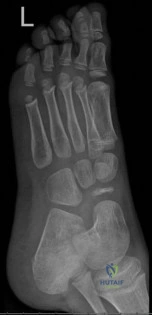
A 42-year-old construction worker falls from a ladder and sustains an intra-articular calcaneus fracture.

On the lateral radiograph, Bohler's angle is measured. What is the normal range for Bohler's angle, and what typically happens to it in a depressed intra-articular calcaneus fracture?


Explanation

Bohler's angle is formed by the intersection of a line drawn from the highest point of the anterior process to the highest point of the posterior facet, and a line from the highest point of the posterior facet to the superior edge of the tuberosity. It is normally between 20 and 40 degrees. In a depressed intra-articular calcaneus fracture, the posterior facet is driven plantarly, which typically leads to a decrease or flattening of Bohler's angle.

Question 21

A 32-year-old male sustains a Hawkins II talar neck fracture and undergoes ORIF. At 1-year follow-up, he presents with painful, limited hindfoot motion. Radiographs demonstrate a malunion of the talar neck in varus. Which of the following physical examination findings is most likely to be present as a direct consequence of this specific malunion?


Explanation

Varus malunion of the talar neck decreases subtalar eversion. A varus hindfoot biomechanically locks the transverse tarsal joint (talonavicular and calcaneocuboid joints), leading to a rigid forefoot and a severely decreased ability to accommodate uneven terrain during ambulation.

Question 22

A 25-year-old snowboarder presents with lateral ankle pain after a fall. Examination reveals tenderness just anterior and inferior to the lateral malleolus. Radiographs are initially read as normal, but a CT scan reveals a fracture. What is the most likely mechanism of injury for this specific fracture?


Explanation

The clinical scenario describes a 'snowboarder's fracture,' which is a fracture of the lateral process of the talus. The classic mechanism of injury involves axial loading with dorsiflexion and inversion of the ankle. It is frequently misdiagnosed as an anterior talofibular ligament (ATFL) sprain.

Question 23

During an extensile lateral approach for open reduction and internal fixation of a displaced intra-articular calcaneus fracture, a full-thickness flap is elevated. Which of the following structures is most at risk if the inferior limb of the incision is carried too far plantarly or deeply into the abductor digiti minimi fascia?


Explanation

The lateral plantar nerve, a branch of the tibial nerve, courses plantarly and is highly at risk if the inferior limb of the extensile lateral approach is carried too deep or too far plantarly. The sural nerve is at risk at the proximal aspect of the vertical limb. The lateral calcaneal artery is intentionally included in the full-thickness flap to preserve the vascularity to the corner of the skin flap.

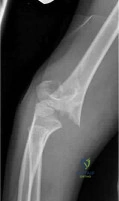
Question 24

A 45-year-old construction worker falls from a height and sustains a severely displaced, comminuted OTA/AO type 43-C3 tibial pilon fracture with massive soft tissue swelling and fracture blisters. The most appropriate initial management strategy is:


Explanation

High-energy pilon fractures with severe soft tissue compromise (e.g., massive swelling, fracture blisters) are best managed with a staged protocol: initial spanning external fixation across the ankle joint to restore length and alignment while allowing the soft tissues to recover. This is followed by delayed ORIF (typically 10-21 days later) once the 'wrinkle sign' is present, significantly reducing the risk of wound dehiscence and deep infection.

Question 25

A 22-year-old collegiate basketball player experiences acute lateral foot pain during a game. Radiographs demonstrate a fracture of the fifth metatarsal at the metaphyseal-diaphyseal junction, extending into the 4th-5th intermetatarsal articulation. Which of the following is the most appropriate management for this athlete to minimize the risk of nonunion and expedite return to play?


Explanation

This is a classic Jones fracture (Zone 2), located at the metaphyseal-diaphyseal junction and extending into the 4th-5th intermetatarsal facet. This area constitutes a vascular watershed zone, predisposing to delayed union and nonunion. In a high-level competitive athlete, intramedullary screw fixation is the treatment of choice to decrease time to union and allow a faster, more reliable return to sport compared to non-operative management.

Question 26

A 30-year-old male presents with midfoot pain after missing a step on the stairs. He has plantar ecchymosis. AP weight-bearing radiograph shows a 3 mm diastasis between the base of the 1st and 2nd metatarsals. What is the primary stabilizing structure of this interval that is likely injured?


Explanation

The Lisfranc ligament complex has three components (dorsal, interosseous, and plantar). The interosseous ligament, connecting the lateral aspect of the medial cuneiform to the medial aspect of the base of the second metatarsal, is the largest, strongest, and most important stabilizer of the Lisfranc joint. Notably, there is no direct ligamentous connection between the bases of the 1st and 2nd metatarsals.

Question 27

Recent randomized controlled trials comparing dynamic functional rehabilitation (non-operative) to surgical repair for acute Achilles tendon ruptures have consistently demonstrated which of the following regarding outcomes?


Explanation

Recent high-quality evidence (e.g., Willits et al.) demonstrates that when dynamic functional rehabilitation protocols (early weight-bearing and ROM in a functional brace/boot) are employed, the re-rupture rates for non-operatively treated acute Achilles tendon ruptures are equivalent to those treated operatively. Furthermore, surgical repair carries a significantly higher risk of soft tissue complications, wound breakdown, and sural nerve injury.

Question 28

A 24-year-old skier presents with posterolateral ankle pain and a snapping sensation. Examination reveals subluxation of the peroneal tendons over the lateral malleolus with resisted dorsiflexion and eversion. The superior peroneal retinaculum (SPR) is compromised. Where is the most common site of SPR avulsion in this injury?


Explanation

The superior peroneal retinaculum (SPR) acts as the primary restraint to prevent subluxation of the peroneal tendons. In cases of traumatic subluxation, the SPR most commonly avulses from its fibular insertion (the posterior and lateral margin of the lateral malleolus), creating a false pouch into which the tendons subluxate. This injury pattern is classified by the Eckert and Davis classification.

Question 29

In a Lauge-Hansen Supination-External Rotation (SER) stage IV ankle fracture, what is the anatomical sequence of structural failure?


Explanation

According to the Lauge-Hansen classification, the sequence for a Supination-External Rotation (SER) injury begins anterolaterally and progresses circumferentially: Stage I: Anterior inferior tibiofibular ligament (AITFL) rupture. Stage II: Spiral/oblique fracture of the lateral malleolus. Stage III: Posterior inferior tibiofibular ligament (PITFL) rupture or posterior malleolus avulsion. Stage IV: Deltoid ligament rupture or transverse medial malleolus fracture.

Question 30

A 19-year-old track athlete presents with insidious onset, ill-defined midfoot pain that worsens with running. CT scan reveals an incomplete stress fracture of the tarsal navicular in the sagittal plane. The high risk of nonunion in this bone is primarily attributed to its vascular anatomy, which is characterized by:


Explanation

The tarsal navicular has a well-documented relative avascular zone in its central third. Vessels from the dorsalis pedis and medial plantar arteries enter the bone peripherally along the dorsal and plantar non-articular surfaces and the medial tuberosity. These vessels converge toward the center but leave the central third poorly perfused, creating a watershed area. This predisposes sagittal plane stress fractures in this zone to delayed union and nonunion.

Question 31

A patient sustains a severe crush injury to the foot. The treating orthopedic surgeon suspects acute compartment syndrome of the foot and plans for emergency fasciotomies. How many distinct osseofascial compartments are generally recognized in the foot?


Explanation

The foot contains 9 distinct osseofascial compartments: the medial, lateral, superficial (central), and calcaneal compartments, as well as 4 interosseous compartments and the adductor compartment. They are typically released via dual dorsal incisions (over the 2nd and 4th metatarsals) or a combined medial approach with dorsal incisions depending on the extent of the crush.

Question 32

A professional football player sustains an extreme hyperextension injury to the first metatarsophalangeal (MTP) joint, resulting in a Grade 3 'turf toe' injury with frank dorsal dislocation of the proximal phalanx. Which of the following anatomic structures is consistently completely ruptured in a true Grade 3 turf toe injury?


Explanation

Turf toe is a severe sprain of the first MTP joint caused by an axial load on a dorsiflexed toe. A Grade 3 injury involves a complete tear of the plantar plate and the sesamoid complex (often disrupting the sesamoid phalangeal ligaments), leading to frank instability or dislocation. Surgical repair is often indicated for Grade 3 injuries, especially in elite athletes.

Question 33

A 40-year-old man falls from a ladder and sustains a displaced intra-articular calcaneus fracture. The coronal CT scan shows two distinct fracture lines traversing the posterior facet, creating three separate articular fragments. According to the Sanders classification, what is the grade of this fracture?


Explanation

The Sanders classification is based on coronal CT images of the posterior facet of the calcaneus at the widest point of the undersurface of the posterior talus. Type I: all non-displaced fractures. Type II: one fracture line in the posterior facet (two articular fragments). Type III: two fracture lines in the posterior facet (three articular fragments). Type IV: three or more fracture lines in the posterior facet (highly comminuted).

Question 34

During operative management of a pronation-external rotation (PER) ankle fracture, the surgeon evaluates the integrity of the syndesmosis. After rigidly fixing the medial and lateral malleoli, a bone hook is placed around the fibula and pulled laterally. Which fluoroscopic radiographic finding indicates syndesmotic instability (a positive Cotton test)?


Explanation

The Cotton test involves applying a lateral traction force to the fibula using a bone hook. Syndesmotic instability is defined by pathological widening of the tibiofibular clear space (abnormal is >5 mm) on the AP or mortise views, or asymmetric widening of the medial clear space. Normal tibiofibular overlap should be >10 mm on the AP and >1 mm on the mortise view.

Question 35

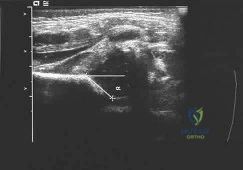
Six weeks following open reduction and internal fixation of a displaced talar neck fracture, an AP radiograph of the ankle demonstrates a distinct subchondral radiolucent band in the dome of the talus. What is the clinical significance of this finding?


Explanation

A subchondral radiolucent line in the talar dome visible at 6 to 8 weeks post-injury is known as the Hawkins sign. It represents subchondral osteopenia secondary to hyperemia and disuse. Its presence is an excellent prognostic indicator that the talar body retains sufficient blood supply and will not undergo avascular necrosis. Conversely, its absence does not definitively confirm AVN, but warrants closer surveillance.

Question 36

A 14-year-old boy presents with severe ankle pain after twisting his leg while sliding into a base. Radiographs reveal a fracture of the anterolateral distal tibial epiphysis. What is the precise pathomechanics responsible for this specific fracture pattern?


Explanation

The juvenile Tillaux fracture is a Salter-Harris Type III fracture of the anterolateral aspect of the distal tibial epiphysis. It uniquely occurs in adolescents because the distal tibial physis closes asymmetrically: from central, to anteromedial, to posteromedial, and finally the anterolateral portion. An external rotation force causes the strong anterior inferior tibiofibular ligament (AITFL) to avulse the unfused anterolateral epiphysis.

Question 37

A 35-year-old male sustains a high-energy ankle fracture-dislocation. Radiographs show a fracture of the distal fibula, but on the lateral view, the proximal fibular shaft fragment is locked behind the posterior tubercle of the distal tibia. Closed reduction attempts in the emergency department are completely unsuccessful. What is this specific irreducible injury pattern called?


Explanation

A Bosworth fracture-dislocation is a rare, irreducible fracture-dislocation of the ankle where the proximal segment of the fibula becomes severely entrapped behind the prominent posterior tubercle of the tibia. Closed reduction is typically impossible because the intact interosseous membrane and the bony anatomy act as an unforgiving tether, necessitating emergent open reduction.

Question 38

A 28-year-old male presents after a high-speed motor vehicle collision with massive midfoot swelling and deformity. Radiographs indicate a catastrophic dislocation of the transverse tarsal (Chopart) joint. Which two specific joints anatomically comprise the Chopart joint complex?


Explanation

The Chopart joint, also known as the transverse tarsal joint or midtarsal joint, is formed by the talonavicular articulation medially and the calcaneocuboid articulation laterally. It serves as the primary functional boundary separating the hindfoot from the midfoot. Dislocation represents a massive high-energy disruption of medial and lateral column stability.

Question 39

When performing a decompressive fasciotomy for acute compartment syndrome of the foot, the surgeon intentionally opens the medial compartment. Which of the following muscles is located exclusively within this specific compartment?


Explanation

The medial compartment of the foot contains the abductor hallucis and the flexor hallucis brevis muscles. The superficial (central) compartment contains the flexor digitorum brevis. The adductor compartment contains the adductor hallucis. The calcaneal compartment contains the quadratus plantae.

Question 40

A 65-year-old active male presents with a 'slapping gait' and an inability to clear his foot during the swing phase of ambulation. He reports feeling a sharp pop in his anterior ankle while hastily walking down a steep hill 3 weeks ago. On examination, he has weak ankle dorsiflexion against resistance and a palpable defect anterior to the ankle joint. Which of the following is the most appropriate definitive management for this patient?


Explanation

The patient has suffered an acute/subacute rupture of the tibialis anterior tendon, resulting in a foot drop and a characteristic slapping gait. In active, relatively healthy individuals, surgical repair (primary or with reconstruction/allografting depending on gap size and chronicity) is highly recommended to restore dorsiflexion power and normalize gait mechanics. AFOs are generally reserved for sedentary, low-demand, or medically unfit patients.

Question 41

A 32-year-old male sustains a Hawkins Type III talar neck fracture. Which of the following provides the predominant blood supply to the talar body that is disrupted in this specific injury pattern?


Explanation

The artery of the tarsal canal, a branch of the posterior tibial artery, provides the majority of the blood supply to the talar body. In a Hawkins III talus fracture (talar neck fracture with subtalar and tibiotalar dislocation), the blood supply from the artery of the tarsal canal, artery of the tarsal sinus, and deltoid branches are all typically disrupted, leading to an avascular necrosis (AVN) risk approaching 100%.

Question 42

When utilizing the extensile lateral approach for open reduction and internal fixation of a displaced intra-articular calcaneus fracture, what structure is at greatest risk during the development of the full-thickness flap?


Explanation

The sural nerve is at significant risk during the extensile lateral approach to the calcaneus. The incision must be planned carefully (an L-shaped incision avoiding the course of the nerve) and a full-thickness subperiosteal flap developed. Using a 'no-touch' technique with K-wires inserted into the talus and fibula to retract the flap helps protect the skin edges and the sural nerve.

Question 43

A 22-year-old collegiate basketball player sustains a fracture of the fifth metatarsal at the metaphyseal-diaphyseal junction extending into the intermetatarsal facet. What is the most appropriate management to ensure optimal outcome and return to play?


Explanation

This describes a Zone 2 (Jones) fracture. In high-level or competitive athletes, acute intramedullary screw fixation is recommended. It significantly reduces the risk of nonunion and allows for an earlier return to sport compared to non-operative management, which carries a high rate of delayed union or nonunion due to the watershed blood supply in this zone.

Question 44

According to biomechanical studies of ankle syndesmotic injuries, which ligament contributes the greatest resistance to lateral displacement of the distal fibula?


Explanation

According to Ogilvie-Harris et al., the posterior inferior tibiofibular ligament (PITFL) provides the most strength to the syndesmosis, accounting for approximately 42% of its resistance to diastasis. The anterior inferior tibiofibular ligament (AITFL) provides roughly 35%, and the interosseous ligament provides about 22%.

Question 45

A 45-year-old male sustains a lateral subtalar dislocation after a high-energy motor vehicle collision. Closed reduction is attempted in the emergency department but is unsuccessful. What anatomic structure is most likely interposing and blocking the reduction?


Explanation

In a lateral subtalar dislocation, the talar head displaces medially. The most common block to closed reduction is the tibialis posterior tendon, which can 'buttonhole' around the talar neck. In contrast, medial subtalar dislocations are more common, and their reduction is typically blocked by the extensor retinaculum, extensor digitorum brevis, or the capsule of the talonavicular joint.

Question 46

A 20-year-old track athlete is diagnosed with a mid-body tarsal navicular stress fracture. Non-operative management is chosen. Why is this specific anatomical location at high risk for delayed union or nonunion?


Explanation

The tarsal navicular receives its blood supply from branches of the dorsalis pedis and medial plantar arteries forming a network on its dorsal and plantar surfaces. Microangiographic studies show that the central third of the navicular body is a watershed area and is relatively avascular. This renders stress fractures in this central region highly prone to delayed union or nonunion.

Question 47

A collegiate football lineman hyperextends his great toe on artificial turf. He presents with severe pain, ecchymosis, and an inability to push off. MRI reveals a complete rupture of the plantar plate and capsular ligamentous complex from the proximal phalanx. According to the Anderson classification, what grade is this injury, and what is the typical recommendation?


Explanation

Turf toe is a sprain or tear of the first MTP joint plantar plate. The Anderson Classification grades them as: Grade 1 (stretch), Grade 2 (partial tear), and Grade 3 (complete tear with loss of continuity of the plantar plate). Grade 3 injuries in competitive athletes—especially those with MTP instability, gross deformity, or sesamoid retraction—often require surgical repair to restore push-off strength and prevent chronic instability.

Question 48

A 35-year-old male sustains a severe crush injury to the foot from heavy machinery. Clinical examination demonstrates tense swelling and excruciating pain with passive toe extension, raising strong clinical suspicion for compartment syndrome. How many distinct fascial compartments are generally recognized in the foot?


Explanation

There are 9 recognized fascial compartments in the foot: the medial, lateral, superficial, and calcaneal compartments, four interosseous compartments, and the adductor compartment. Fasciotomies are typically performed via a dual dorsal incision approach or a single extensive medial incision, depending on the injury pattern and surgeon preference.

Question 49

A 25-year-old skier sustains an inversion injury to the ankle. Examination reveals tenderness over the posterior margin of the distal fibula. Radiographs show a small cortical avulsion fracture from the lateral ridge of the distal fibula (Fleck sign). What is the most likely diagnosis?


Explanation

The 'fleck sign' at the posterior margin of the lateral malleolus on an AP or mortise radiograph represents a bony avulsion of the superior peroneal retinaculum (SPR). This radiographic finding is pathognomonic for a peroneal tendon subluxation or dislocation.

Question 50

When managing an acute Achilles tendon rupture non-operatively using an accelerated functional rehabilitation protocol, which of the following outcomes is most consistently supported by recent Level I evidence when compared to open surgical repair?


Explanation

High-quality randomized controlled trials (e.g., Willits et al.) have demonstrated that when a functional rehabilitation protocol (early weight-bearing in a boot with heel wedges and early active range of motion) is utilized, non-operative management results in an equivalent re-rupture rate compared to operative repair, while entirely avoiding the risk of surgical soft-tissue complications such as infection and wound breakdown.

Question 51

When utilizing an anterolateral surgical approach to the distal tibia for open reduction and internal fixation of a pilon fracture, the vascularity of the lateral skin flap is predominantly supplied by which angiosome?


Explanation

The anterolateral approach to the distal tibia uses the internervous plane between the superficial and deep peroneal nerves and relies on the anterior tibial artery angiosome for flap viability. In staged pilon fracture management, surgical incisions must respect these angiosomes to minimize the risk of wound necrosis.

Question 52

A 14-year-old boy presents with an ankle injury after a twisting fall.

Radiographs reveal an isolated Salter-Harris III fracture of the anterolateral distal tibial epiphysis. What is the primary pathomechanical mechanism of this specific fracture pattern?


Explanation

A juvenile Tillaux fracture is a Salter-Harris III fracture of the anterolateral distal tibia. It occurs because the distal tibial physis closes in a predictable pattern: central, then medial, and finally lateral. External rotation of the foot causes the intact AITFL to avulse the anterolateral epiphysis, which is the last portion of the physis to fuse.

Question 53

A 26-year-old male complains of persistent lateral ankle pain 6 weeks after a snowboarding accident. Initial radiographs in the emergency department were interpreted as a 'severe ankle sprain.' A subsequent CT scan reveals a delayed union of a 'snowboarder's fracture.' This injury is most commonly produced by which mechanism?


Explanation

A 'snowboarder's fracture' is a fracture of the lateral process of the talus. It is classically caused by a mechanism of dorsiflexion and eversion with axial loading, an injury pattern frequently seen when a snowboarder lands a jump improperly. Because they are difficult to see on standard plain films, they are often misdiagnosed as lateral ankle sprains.

Question 54

The Lisfranc ligament is a critical stabilizer of the midfoot arch and the tarsometatarsal articulation. Between which two osseous structures does the primary Lisfranc ligament traverse?


Explanation

The Lisfranc ligament is a stout interosseous ligament that runs from the lateral aspect of the medial cuneiform to the medial aspect of the base of the second metatarsal. It is the strongest and most important ligamentous stabilizer of the midfoot, compensating for the lack of an intermetatarsal ligament between the first and second metatarsal bases.

Question 55

A 55-year-old patient with long-standing poorly controlled diabetes presents with a unilaterally warm, swollen, and erythematous foot. Radiographs demonstrate fragmentation, periarticular debris, and subluxation at the tarsometatarsal joints, without frank ulceration or osteomyelitis. According to the Eichenholtz classification, what stage is this patient in, and what is the immediate treatment of choice?


Explanation

Eichenholtz Stage 1 (Developmental/Fragmentation phase) is characterized by clinical warmth, swelling, and erythema, with radiographic evidence of bony fragmentation, joint subluxation, and periarticular debris. The gold standard treatment during this active inflammatory phase is rigid immobilization and off-loading, typically with a Total Contact Cast (TCC), to prevent further mechanical destruction until the acute phase resolves.

Question 56

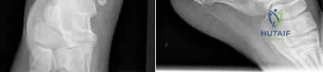
An image of a lateral foot radiograph shows a depressed intra-articular calcaneus fracture.

Which two lines are strictly used to measure Böhler's angle?


Explanation

Böhler's angle is formed by the intersection of two lines drawn on a lateral radiograph of the foot: one line drawn from the highest point of the anterior process to the highest point of the posterior articular facet, and a second line drawn from the highest point of the posterior articular facet to the highest point of the superior calcaneal tuberosity. The normal angle is 20 to 40 degrees, and it is typically decreased in intra-articular calcaneus fractures.

Question 57

Osteochondral lesions (OCLs) of the talar dome have different morphological and historical characteristics depending on their anatomic location. Which of the following best describes the typical morphology and etiology of a medial OCL of the talar dome?


Explanation

Medial osteochondral lesions of the talus are typically located posteromedially, are deep and cup-shaped, and frequently present with an insidious onset or a vague, atraumatic history. In contrast, lateral lesions are typically located anterolaterally, are shallow and wafer-shaped, and are strongly associated with a specific traumatic inversion/dorsiflexion event. A helpful mnemonic is 'DIAL a PIMP' (Dorsiflexion Inversion Anterior Lateral; Plantarflexion Inversion Medial Posterior).

Question 58

In the operative management of a trimalleolar ankle fracture, what constitutes a widely accepted modern indication for direct internal fixation of the posterior malleolus?


Explanation

Traditionally, posterior malleolar fragments were fixed only if they involved >25-33% of the articular surface. Modern indications have expanded, recognizing the importance of the posterior malleolus in syndesmotic stability (via the PITFL). Current indications include fragments involving >25% of the articular surface, persistent posterior subluxation of the talus, persistent displacement or step-off of the fragment after fibular reduction, or concomitant syndesmotic instability where fixing the fragment securely restores the PITFL.

Question 59

A 30-year-old equestrian sustains a severe forced plantarflexion and abduction injury to her foot. Radiographs demonstrate a comminuted fracture of the cuboid with lateral column shortening, classically known as a 'nutcracker' fracture. What is the primary functional goal of operative fixation in this specific injury?


Explanation

The 'nutcracker' fracture of the cuboid occurs when the cuboid is crushed between the calcaneus and the base of the 4th/5th metatarsals during severe forced abduction of the forefoot. This results in comminution and shortening of the lateral column, leading to a severe abduction deformity of the midfoot and altered biomechanics. The primary surgical goal (whether via ORIF or external fixation) is the restoration of lateral column length.

Question 60

According to the Lauge-Hansen classification of ankle fractures, a Supination-External Rotation (SER) type IV fracture classically involves disruption of the deltoid ligament or a transverse fracture of the medial malleolus. What represents the very first stage (Stage I) of injury in the SER sequence?


Explanation

The Lauge-Hansen Supination-External Rotation (SER) sequence is the most common ankle fracture pattern and progresses in four distinct stages: Stage I: Rupture of the anterior inferior tibiofibular ligament (AITFL); Stage II: Spiral or oblique fracture of the distal fibula; Stage III: Rupture of the posterior inferior tibiofibular ligament (PITFL) or avulsion fracture of the posterior malleolus; Stage IV: Rupture of the deltoid ligament or transverse avulsion fracture of the medial malleolus.

Question 61

A 42-year-old male undergoes open reduction and internal fixation of a displaced intra-articular calcaneus fracture via an extensile lateral approach. Which of the following describes the most appropriate plane of surgical dissection to minimize the risk of injury to the sural nerve and the vascular supply of the flap?


Explanation

The extensile lateral approach to the calcaneus requires the creation of a full-thickness fasciocutaneous flap via subperiosteal dissection. This technique retracts the sural nerve, peroneal tendons, and local vascular supply anteriorly and superiorly, minimizing soft tissue complications and nerve injury.

Question 62

A 38-year-old female presents with a closed spiral fracture of the distal third of the tibial shaft following a skiing fall. Initial anteroposterior and lateral radiographs of the tibia demonstrate the diaphyseal fracture but are otherwise unremarkable. What is the most appropriate next step in radiographic evaluation to rule out a commonly associated, yet frequently missed, injury?


Explanation

Spiral distal third tibia fractures have a high association (up to 50-90%) with occult posterior malleolar fractures. A CT scan of the ankle is highly recommended in this fracture pattern to identify and characterize intra-articular extension.

Question 63

A 27-year-old male sustains a Hawkins II talar neck fracture and undergoes urgent open reduction and internal fixation. At the 8-week postoperative visit, an anteroposterior radiograph of the ankle demonstrates a subchondral radiolucent band across the talar dome. What does this radiographic finding indicate?


Explanation

A subchondral radiolucent band on the talar dome is known as the Hawkins sign. It represents subchondral atrophy secondary to hyperemia and disuse, indicating that the vascular supply to the talar body remains intact.

Question 64

A 32-year-old male sustains a severe ankle fracture-dislocation. Closed reduction in the emergency department is unsuccessful despite adequate sedation and muscle relaxation. Post-reduction radiographs reveal that the distal fibula remains entrapped posterior to the posterior tubercle of the distal tibia. Which of the following best describes this specific injury pattern?


Explanation

A Bosworth fracture-dislocation is characterized by the proximal fragment of the fractured fibula becoming locked behind the posterior tubercle of the tibia. This irreducible pattern invariably requires open reduction.

Question 65

A 21-year-old collegiate track athlete presents with insidious onset dorsal midfoot pain. A CT scan confirms a stress fracture of the tarsal navicular. Which specific region of the navicular is at the highest risk for delayed union or nonunion due to its inherently poor vascularity?


Explanation

The central third of the tarsal navicular constitutes a vascular watershed area between the branches of the dorsalis pedis and medial plantar arteries. This tenuous blood supply makes stress fractures in this zone prone to nonunion.

Question 66

The Lisfranc ligament complex provides primary stability to the tarsometatarsal articulation. What are the correct anatomic attachments of the primary, stout interosseous Lisfranc ligament?


Explanation

The primary interosseous Lisfranc ligament connects the lateral aspect of the medial cuneiform to the medial base of the second metatarsal. It is the strongest of the tarsometatarsal ligaments and critical for stabilizing the midfoot arch.

Question 67

A 24-year-old snowboarder presents with lateral ankle pain and swelling after a hard landing. Initial radiographs are negative, but an MRI demonstrates a displaced fracture of the lateral process of the talus. This bony fragment typically contains articular surfaces for which two joints?


Explanation

The lateral process of the talus provides articular surfaces for the lateral malleolus (talofibular articulation) and the posterior facet of the subtalar joint. Fractures of this structure ('snowboarder\'s fracture') are frequently missed on plain radiographs.

Question 68

During open reduction and internal fixation of a pronation-external rotation ankle fracture, a Cotton test demonstrates persistent syndesmotic instability. The surgeon opts for dynamic fixation using a suture-button construct rather than static syndesmotic screws. Which of the following is a recognized advantage of the suture-button construct?


Explanation

Suture-button constructs provide dynamic stabilization of the syndesmosis, which mimics physiologic movement and generally does not require routine removal. In contrast, syndesmotic screws often break or require a secondary surgery for removal before weight-bearing.

Question 69

A 68-year-old diabetic female with a history of peripheral neuropathy sustains a closed avulsion fracture of the calcaneal tuberosity following a fall. The posterior skin over the heel is severely blanched and tented by the fracture fragment. What is the most appropriate initial management?


Explanation

Displaced calcaneal tuberosity avulsion fractures that cause skin tenting and blanching are orthopedic emergencies. Urgent surgical reduction and fixation are required to relieve pressure and prevent devastating posterior heel skin necrosis.

Question 70

A 28-year-old soccer player experiences sudden lateral ankle pain accompanied by a popping sensation during a rapid cutting maneuver. Physical examination reveals subluxation of the peroneal tendons anterior to the lateral malleolus with resisted eversion. Insufficiency of which of the following structures is most likely responsible?


Explanation

The superior peroneal retinaculum (SPR) is the primary restraint preventing anterior subluxation of the peroneal tendons over the lateral malleolus. Injury to the SPR or its fibular attachment ('fleck sign') is the hallmark of peroneal tendon dislocation.

Question 71

A 30-year-old construction worker sustains a severe crush injury to the foot from a falling steel beam. Acute compartment syndrome of the foot is suspected. Anatomically, how many distinct fascial compartments are generally recognized within the foot?


Explanation

There are 9 commonly recognized fascial compartments in the foot: medial, lateral, superficial central, deep central, calcaneal, and four interosseous compartments. All must be carefully released if full foot compartment syndrome is confirmed.

Question 72

A 20-year-old elite basketball player sustains a fracture of the fifth metatarsal at the metaphyseal-diaphyseal junction, with the fracture line extending into the fourth-fifth intermetatarsal facet. To minimize the risk of nonunion and expedite return to play, what is the most appropriate definitive management?


Explanation

This describes a true Jones fracture (Zone 2). In elite athletes, operative treatment with an intramedullary screw is recommended to decrease the time to union, lower the nonunion rate, and accelerate return to sport.

Question 73

During an extensile lateral approach for a displaced intra-articular calcaneus fracture, the surgeon must be careful to protect the primary vascular supply to the lateral soft tissue flap. Which artery provides this primary supply?


Explanation

The lateral calcaneal artery provides the primary blood supply to the lateral extensile flap used in calcaneus fracture fixation. Careful full-thickness subperiosteal dissection is required to protect this vessel and minimize the risk of wound edge necrosis.

Question 74

A 40-year-old male sustains an acute Achilles tendon rupture. He is counseled on nonoperative versus operative management. Based on recent high-level evidence, which of the following best describes the expected outcomes comparing nonoperative to operative treatment?


Explanation

Recent randomized controlled trials demonstrate that nonoperative management of acute Achilles tendon ruptures yields equivalent re-rupture rates to operative treatment when an early functional weight-bearing rehabilitation protocol is utilized. Operative management does, however, carry a higher risk of superficial and deep soft-tissue infections.

Question 75

A 32-year-old female presents with an isolated lateral malleolus fracture. A gravity stress radiograph demonstrates a medial clear space of 6 mm. This finding is indicative of a complete disruption of which of the following structures?


Explanation

A medial clear space of greater than 4 to 5 mm on a gravity stress or weight-bearing radiograph indicates a complete disruption of the deep deltoid ligament. This converts an isolated lateral malleolus fracture into an unstable bimalleolar-equivalent injury requiring operative fixation.

Question 76

A 21-year-old collegiate basketball player sustains a fracture at the metaphyseal-diaphyseal junction of the fifth metatarsal base. What is the most appropriate management to minimize the risk of nonunion and allow early return to sport?


Explanation

Intramedullary screw fixation is the gold standard for acute Jones fractures in elite athletes. This approach provides rigid stabilization of the watershed vascular zone, minimizing nonunion risk and allowing for an accelerated return to competitive sports.

None

Dr. Mohammed Hutaif
Medically Verified Content by
Prof. Dr. Mohammed Hutaif
Consultant Orthopedic & Spine Surgeon
Chapter Index
