Full Question & Answer Text (for Search Engines)
Question 1:
To avoid injury associated with repetitive internal impingement, the pitchers long humeral axis must be in which position during the late cocking phase of throwing:
Options:
- 20° extended relative to the plane of the scapula
- 10° extended relative to the plane of the scapula
- Parallel to the plane of the scapula
- 10° flexed relative to the plane of the scapula
- 20° flexed relative to the plane of the scapula
Correct Answer: Parallel to the plane of the scapula
Explanation:
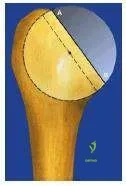
Hyperangulation during the late cocking phase of throwing can result in impingement of the greater tuberosity on the posterosuperior glenoid rim leading to labral or rotator cuff lesions. Positioning of the humeral axis parallel to the plane of the scapula is recommended to avoid injury associated with internal impingement.
Question 2:
Which of the following factors is related to recurrence after primary anterior shoulder dislocation:
Options:
- Type of sport practiced
- Treatment with immobilization
- Treatment with physical therapy
- Patient gender
- Patient age
Correct Answer: Patient age
Explanation:
The only known factor that statistically correlates with recurrence of anterior shoulder instability is patient age at the time of initial dislocation. A recent study demonstrated that patients having an initial dislocation during the third decade have more than a 60% chance of redislocating. The type of sport practiced, type of nonoperative treatment, and patient gender do not influence recurrence rate.
Question 3:
Use of functional knee bracing after anterior cruciate ligament (AC L) reconstruction will most likely result in which of the following scenarios:
Options:
- Better range of motion at the 2-year follow-up
- Better knee stability at the 2-year follow-up
- Better knee function at the 2-year follow-up
- More knee pain at the 3-month follow-up
- More quadriceps atrophy at the 3-month follow-up
Correct Answer: More quadriceps atrophy at the 3-month follow-up
Explanation:
Two-year follow-up has failed to show any differences in range of motion, stability, function, strength, pain, or atrophy in patients who were braced after AC L reconstruction vs. patients who were treated without a brace. The only difference between the two groups is that the braced group has better knee function in the early postoperative period, despite having more quadriceps atrophy.
Question 4:
The stabilizing ligamentous pulley of the long head of the biceps at the shoulder is composed of fibers from all of the following structures except:
Options:
- Superior glenohumeral ligament
- Middle glenohumeral ligament
- Coracohumeral ligament
- Subscapularis tendon
- Supraspinatus tendon
Correct Answer: Middle glenohumeral ligament
Explanation:
The stabilizing ligamentous pulley system of the long head of the biceps at the shoulder is a coalescence of the coracohumeral ligament and superior glenohumeral ligament. It also receives fiber contributions from the supraspinatus and subscapularis tendons.
Question 5:
Which of the following is the principal function of the biceps during throwing:
Options:
- Elbow flexion
- Shoulder stabilization
- Arm deceleration
- Humeral head depression
- Shoulder flexion
Correct Answer: Elbow flexion
Explanation:
The function of the biceps at the shoulder is controversial, especially in the throwing athlete. The biceps may act as a secondary shoulder stabilizer, weak shoulder flexor, arm decelerator, or weak depressor of the humeral head. However, it is widely agreed upon that the biceps principal function during throwing is elbow flexion.
Question 6:
Which of the following arteries provides the main vascular supply to the humeral head:
Options:
- Ascending branch of the posterior humeral circumflex artery
- Descending branch of the posterior humeral circumflex artery
- Ascending branch of the anterior humeral circumflex artery
- Descending branch of the anterior humeral circumflex artery
- Ascending intramedullary artery
Correct Answer: Ascending branch of the posterior humeral circumflex artery
Explanation:
The ascending branch of the anterior humeral circumflex artery provides the main vascular supply to the humeral head. Disruption of this blood supply can result in osteonecrosis of the humeral head.
Question 7:
When assessing patient outcomes after rotator cuff repair, which of the following is not related to poor functional outcome:
Options:
- Workmans compensation
- Revision rotator cuff repair
- Male gender
- Age older than 55 years at the time of repair
- Age younger than 55 years at the time of repair
Correct Answer: Age older than 55 years at the time of repair
Explanation:
A large outcome study of more than 600 rotator cuff repairs demonstrated that workmanâ s compensation, revision surgery, male gender, and age younger than 55 years at the time of repair are factors contributing to poor functional outcome and decreased workability following rotator cuff repair.
Question 8:
When using open measurement as the standard, which of the following is the most reliable instrument to measure rotator cuff tear size:
Options:
- Arthroscopy
- Magnetic resonance imaging
- Ultrasonography
- C omputed tomography
- C linical examination
Correct Answer: Arthroscopy
Explanation:
Of the modalities listed, arthroscopy most closely estimates the actual size of a rotator cuff tear. Magnetic resonance imaging and ultrasound are similar in their ability to determine rotator cuff tear size. Computed tomography (without arthrography) is poor in evaluation of the rotator cuff. A detailed clinical examination is helpful in determining which tendons are torn, however elucidation of the specific size of the tear on physical examination is unlikely.
Question 9:
When biomechanically comparing reconstruction of the anterior band of the medial collateral ligament of the elbow to the intact ligament, the reconstructed ligament behaves nearly identical to the intact ligament when subjected to valgus stress at all of the following degrees of elbow flexion except:
Options:
Correct Answer: 0°
Explanation:
Mullen and associates biomechanically compared reconstruction of the medial collateral ligament of the elbow to the intact ligament at 30°, 60°, 90°, and 120° of elbow flexion. They identified a significant difference in displacement with an applied valgus load at 120° of elbow flexion, leading them to conclude that medial collateral ligament reconstruction is a biomechanically sound procedure.
Question 10:
Which of the following is the most commonly reported cause of nontraumatic humeral head osteonecrosis:
Options:
- Alcohol abuse
- Corticosteroid therapy
- Gaucherâ s disease
- Smoking
- Hemoglobinopathies
Correct Answer: Corticosteroid therapy
Explanation:
Corticosteroid therapy is the most commonly reported cause of osteonecrosis of the humeral head. Other risk factors include alcohol abuse, hemoglobinopathies, Gaucherâ s disease, dysbarism, connective tissue disorders, arteritis, vasculitis, hypercoagulability, prior radiation, pregnancy, and pancreatitis.
Question 11:
The microfracture technique for articular cartilage lesions is most successful for which chondral lesions:
Options:
- 2 cm diameter
- Smaller than a 2 cm diameter
- Kissing lesions
- Loss of subchondral bone integrity
- Partial thickness chondral lesions
Correct Answer: 2 cm diameter
Explanation:
The inventors of the microfracture technique described a 70% to 80% success rate after microfracture of lesions smaller than 2 cm in diameter. The technique involves maintenance of some subchondral bone integrity and is indicated for full thickness chondral lesions. Lesions involving both the tibia and femur have resulted in less satisfactory outcomes.
Question 12:
The results of anteromedial tibial tubercle transfer for patellar malalignment are best when patellar lesions are located:
Options:
- Distally on the lateral facet
- Proximally on the lateral facet
- Proximally on the medial facet
- Distally on the medial facet
- Proximally on either facet
Correct Answer: Distally on the lateral facet
Explanation:
A study revealed that results after tibial tubercle anteromedialization are best if patellar lesions are located distally or laterally. The results were poor when the lesions were located proximally or on the medial facet.
Question 13:
The following structures are found in the superficial layer of the posterolateral corner:
Options:
- The biceps tendon and fabellofibular ligament
- The patellofemoral ligaments and quadriceps retinaculum
- The iliotibial tract and biceps tendon
- The joint capsule and fabellofibular ligament
- The popliteofibular ligament and biceps tendon
Correct Answer: The iliotibial tract and biceps tendon
Explanation:
An anatomic study described three distinct layers that compose the posterolateral corner of the knee. Layer one includes the biceps tendon, the iliotibial tract, the prepatellar bursa, and peroneal nerve. Layer two includes the quadriceps retinaculum and patellofemoral ligaments. Layer three, the deepest layer, includes the lateral part of the joint capsule, the popliteus tendon passing through the hiatus, the fibular collateral ligament, the fabellofibular ligament, arcuate complex, and popliteofibular ligament.
Question 14:
The following structures are found in the second, or middle layer, of the posterolateral corner:
Options:
- The biceps tendon and fabellofibular ligament
- The patellofemoral ligaments and quadriceps retinaculum
- The iliotibial tract and biceps tendon
- The joint capsule and fabellofibular ligament
- The popliteofibular ligament and biceps tendon
Correct Answer: The patellofemoral ligaments and quadriceps retinaculum
Explanation:
An anatomic study described three distinct layers that compose the posterolateral corner of the knee. Layer one includes the biceps tendon, the iliotibial tract, the prepatellar bursa, and peroneal nerve. Layer two includes the quadriceps retinaculum and patellofemoral ligaments. Layer three, the deepest layer, includes the lateral part of the joint capsule, the popliteus tendon passing through the hiatus, the fibular collateral ligament, the fabellofibular ligament, arcuate complex, and popliteofibular ligament.
Question 15:
The following structures are found in the deep layer of the posterolateral corner:
Options:
- The biceps tendon and fabellofibular ligament
- The patellofemoral ligaments and quadriceps retinaculum
- The iliotibial tract and biceps tendon
- The joint capsule and fabellofibular ligament
- The popliteofibular ligament and biceps tendon
Correct Answer: The joint capsule and fabellofibular ligament
Explanation:
An anatomic study described three distinct layers that compose the posterolateral corner of the knee. Layer one includes the biceps tendon, the iliotibial tract, the prepatellar bursa, and peroneal nerve. Layer two includes the quadriceps retinaculum and patellofemoral ligaments. Layer three, the deepest layer, includes the lateral part of the joint capsule, the popliteus tendon passing through the hiatus, the fibular collateral ligament, the fabellofibular ligament, arcuate complex, and popliteofibular ligament.
Question 16:
Sectioning the posterolateral structures alone affects lateral tibial plateau translation with:
Options:
- Increased anterior translation at 30° knee flexion
- Increased posterior translation at 90° knee flexion
- Increased posterior translation at 30° knee flexion
- Increased anterior translation at 90° knee flexion
- No change in translation of the knee
Correct Answer: Increased posterior translation at 90° knee flexion
Explanation:
Biomechanical studies show that sectioning the posterolateral structures alone results in increases in posterior translation of the lateral tibial plateau primarily at 30° of knee flexion.
Question 17:
Sectioning the posterolateral structures and posterior cruciate ligament results in:
Options:
- Increased posterior tibial translation at 30°
- Increased posterior tibial translation at 90
- Increased posterior tibial translation at 30° and 90°
- No increase in tibial translation
- Increased anterior tibial translation at 30° and 90
Correct Answer: Increased posterior tibial translation at 30°
Explanation:
Biomechanical studies show that sectioning the posterolateral structures and posterior cruciate ligament results in increases in posterior translation of the medial and lateral tibial plateaus at 30° and 90° of knee flexion.
Question 18:
The maximal restraint to varus stress provided by the posterolateral structures of the knee is at what degree of knee flexion:
Options:
Correct Answer: 0°
Explanation:
Biomechanical studies show that sectioning the posterolateral structures results in increases in varus rotation of the knee from 0º to 30° of knee flexion, with maximal increase observed at 30°.
Question 19:
The reverse pivot shift is most useful for diagnosing which of the following knee injuries:
Options:
- Anterior cruciate ligament injuries
- Posterior cruciate ligament injuries
- Medial collateral ligament injuries
- Posterolateral corner injuries
- Meniscal injuries
Correct Answer: Posterolateral corner injuries
Explanation:
The reverse pivot shift is positive if there is a palpable shift or jerk as the lateral tibial plateau reduces while bringing the knee from 90° of flexion to full extension with the foot in external rotation. This is indicative of posterolateral corner knee injury but has been reported to be positive in 11% to 35% of normal asymptomatic patients.
Question 20:
When using the tibial external rotation test on a patient, increased external rotation at 30° but not at 90° of knee flexion is indicative of:
Options:
- Anterior cruciate ligament injury
- Posterior cruciate ligament injury
- Isolated posterolateral corner injury
- Posterior cruciate and posterolateral corner injury
- Anterior cruciate and posterior cruciate ligament injury
Correct Answer: Isolated posterolateral corner injury
Explanation:
The tibial external rotation test is performed at 30° and 90° of knee flexion. The degree of foot external rotation with regard to the femur is evaluated. Increased external rotation at 30 ° is consistent with an isolated posterolateral corner injury. Increased external rotation at 30° and 90° is consistent with a combined posterolateral and posterior cruciate ligament injury.