Mastering Distal Humerus ORIF: An Intraoperative Guide to Supracondylar and Intercondylar Fractures
Key Takeaway
This masterclass guides fellows through open reduction and internal fixation (ORIF) of complex supracondylar and intercondylar distal humerus fractures. We'll cover comprehensive surgical anatomy, meticulous preoperative planning, exact patient positioning, and a step-by-step intraoperative execution from the surgeon's perspective. Learn critical pearls, pitfalls, and strategies for achieving stable fixation and optimal patient outcomes.
Introduction and Epidemiology
Distal humerus fractures represent a significant challenge in orthopedic trauma, demanding a meticulous understanding of complex elbow anatomy, advanced fixation techniques, and rigorous postoperative rehabilitation. These injuries account for approximately 2% to 6% of all fractures and roughly 30% of all elbow fractures.
The epidemiological distribution of supracondylar and intercondylar distal humerus fractures typically follows a bimodal curve. The first peak occurs in younger patients, usually males, who sustain high-energy trauma such as motor vehicle collisions, falls from height, or industrial accidents. These injuries are frequently open and associated with significant soft tissue compromise and concomitant polytrauma. The second peak involves older patients, predominantly females, who sustain low-energy falls. In this demographic, underlying osteopenia or osteoporosis is a defining factor.
Comminution is the dominant feature of supracondylar and intercondylar fractures, significantly complicating internal fixation. The inherently complex skeletal geometry of the distal humerus, characterized by a lack of substantial metaphyseal bone for hardware purchase, further exacerbates the difficulty of achieving stable osteosynthesis.
The primary goals of the initial evaluation are to comprehensively understand the fracture pattern, determine the existence of previous symptomatic elbow pathology (which may pivot the surgical decision toward arthroplasty), assess the extent of associated soft tissue injury in open fractures, and meticulously identify any associated musculoskeletal or neurovascular injuries. Achieving a construct stable enough to allow immediate, unprotected motion without fear of redisplacement remains the overarching objective of surgical intervention.
Surgical Anatomy and Biomechanics
A profound understanding of the osseous and ligamentous anatomy of the distal humerus is a prerequisite for successful fracture reduction and fixation.
Columnar Architecture
The distal humerus is best conceptualized as a triangular structure composed of two divergent columns—the medial and lateral columns—terminating in the articular block. The articular segment, often described as a "spool" or "tie arch," connects the two columns and consists of the trochlea medially and the capitellum laterally.

The lateral column is relatively straight and ends in the lateral epicondyle and the hemispherical capitellum, which articulates with the radial head. The medial column diverges more acutely, ending in the medial epicondyle and the trochlea, which articulates with the greater sigmoid notch of the ulna. The trochlea is uniquely oriented; it is externally rotated approximately 3 to 8 degrees, exhibits a valgus tilt of 4 to 8 degrees, and is anteriorly projected 30 to 40 degrees relative to the humeral shaft.

Between the columns lies the coronoid fossa anteriorly and the olecranon fossa posteriorly. The bone separating these fossae is exceptionally thin, often translucent (the supratrochlear septum), and provides negligible structural support or surface area for screw purchase.
Biomechanical Considerations
Biomechanically, the elbow joint is subjected to significant forces during routine activities of daily living, often experiencing loads exceeding three times body weight. The structural integrity of the distal humerus relies heavily on the intact triangular configuration of the medial and lateral columns linked by the articular tie arch.

When an intercondylar fracture occurs, this triangular construct is disrupted, leading to independent movement of the condyles and loss of structural continuity with the humeral diaphysis. The primary biomechanical objective of internal fixation is to restore this triangular arch. Fixation strategies must be designed to maximize mechanical stability, resisting torsional, bending, and axial loading forces. This is typically achieved through the application of dual plates, which act as tension bands or buttresses depending on the fracture configuration and loading conditions.
Indications and Contraindications
The management of supracondylar and intercondylar distal humerus fractures is predominantly operative. Non-operative management is reserved for a very select group of patients.
| Management Strategy | Indications | Contraindications |
|---|---|---|
| Non-Operative (Cast/Splint) | Non-displaced fractures; severely medically compromised patients unfit for anesthesia; non-ambulatory patients with minimal functional demands. | Displaced intra-articular fractures; open fractures; vascular compromise; compartment syndrome. |
| ORIF (Dual Plating) | Displaced supracondylar/intercondylar fractures in physiologically young or active patients; adequate bone stock to support internal fixation. | Severe osteopenia with unreconstructible comminution; active local infection; medically unstable patients. |
| Total Elbow Arthroplasty (TEA) | Elderly patients (>65 years) with severe osteopenia, extensive intra-articular comminution, or pre-existing inflammatory arthritis (e.g., Rheumatoid Arthritis). | Young, active patients; heavy laborers; history of elbow infection; inadequate soft tissue coverage; non-compliant patients. |
Elbow arthroplasty should be strongly considered in elderly patients with previous elbow pathology or in severely comminuted fractures in patients with profound osteopenia, as achieving stable internal fixation that permits early mobilization is highly improbable. However, modern internal fixation techniques, utilizing anatomically precontoured locking plates, can be successful even in low transcondylar fractures in older populations, provided meticulous technique is employed.
Pre Operative Planning and Patient Positioning
Thorough preoperative planning is critical to anticipate the surgical approach, the necessity for osteotomies, the sequence of reduction, and the optimal fixation construct.
Imaging and Diagnostics
Elbow radiographs in the anteroposterior (AP) and lateral planes are the initial imaging modalities. These must be carefully scrutinized to identify primary fracture lines, articular fragments, and the extent of metaphyseal comminution. Surgeons must also evaluate the proximal radius and ulna for associated injuries, such as Monteggia variants or terrible triad patterns.
A complete understanding of the fracture pattern is notoriously difficult to obtain based solely on simple radiographs due to the complex geometry of the distal humerus, fracture comminution, and fragment overlapping.
Computed tomography (CT) with three-dimensional (3D) reconstruction is considered the gold standard and is extremely helpful, especially in complex intra-articular cases. 3D surface rendering allows the surgeon to conceptualize specific fractured fragments, anticipate the articular topography, and formulate a precise, stepwise reduction strategy prior to the incision.

FIG 1 • A,B. Anteroposterior (AP) and lateral radiographs showing a comminuted intra-articular supraintercondylar fracture of the distal humerus. The complexity of the fracture is difficult to appreciate fully because of the geometry of the distal humerus, fracture comminution, and fragment overlapping. C,D. The use of CT with three-dimensional reconstruction and surface rendering helps understand the fracture configuration and anticipate the surgical findings.
Traction radiographs obtained in the operating room under anesthesia immediately before surgery can also be highly beneficial for unmasking the fracture pattern, particularly if a CT scan is unavailable or contraindicated.
Patient Positioning and Setup
Patient positioning must allow for unhindered access to the posterior elbow and facilitate intraoperative fluoroscopy.
The lateral decubitus position is favored by many surgeons. The patient is placed in the lateral position with the operative arm supported over a padded bolster or a dedicated arm positioner. The elbow should be able to flex past 90 degrees freely.

Alternatively, the prone position can be utilized, allowing the arm to drape over a radiolucent arm board. This provides excellent visualization and makes fluoroscopic imaging straightforward, though airway management and anesthesia access are more complex. A sterile tourniquet is typically applied high on the arm to optimize the surgical field during the critical phases of dissection and articular reduction.
Detailed Surgical Approach and Technique
The surgical management of intercondylar fractures requires a systematic approach to soft tissue dissection, articular exposure, and rigid internal fixation.
Surgical Approach and Ulnar Nerve Management
A posterior midline longitudinal incision is the standard utility approach. The incision typically begins 5 to 8 cm proximal to the olecranon tip, curving slightly radially or ulnarly around the olecranon to avoid placing the scar directly over the bony prominence, and extends distally along the subcutaneous border of the ulna.

The first critical deep step is the identification, neurolysis, and mobilization of the ulnar nerve. The nerve is located in the cubital tunnel posterior to the medial epicondyle. It must be decompressed proximally to the arcade of Struthers and distally into the flexor carpi ulnaris (FCU) muscle belly. The first motor branch to the FCU should be identified and protected.

Whether to perform a routine anterior transposition or an in-situ decompression remains debated. However, in the setting of complex internal fixation involving medial plating, anterior subcutaneous transposition is frequently performed to prevent hardware impingement, facilitate exposure of the medial column, and reduce the risk of delayed ulnar neuropathy.
Articular Exposure Options
Adequate visualization of the articular surface is paramount. Several options exist, dictated by the fracture complexity:
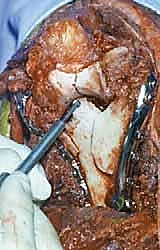
- Transolecranon Osteotomy: This is the workhorse approach for complex, comminuted intra-articular fractures (AO/OTA type 13-C). A chevron-shaped osteotomy is planned in the bare area of the greater sigmoid notch. The osteotomy is initiated with an oscillating saw and completed with an osteotome to create a rough, interdigitating surface that facilitates anatomic reduction and healing. The olecranon and attached triceps are reflected proximally, providing unparalleled visualization of the distal humeral articular surface.

- Triceps-Reflecting Approaches: For less comminuted fractures or when arthroplasty is a strong possibility, triceps-sparing or reflecting approaches (e.g., Bryan-Morrey, TRAP approach, or paratricipital approach) may be utilized. These preserve the extensor mechanism but offer a more restricted view of the anterior articular surface compared to an osteotomy.
Fracture Reduction and Fixation Strategy
The fundamental sequence of fixation is to first reconstruct the articular block, converting a complex C-type fracture into a simpler supracondylar (A-type) fracture, and subsequently attaching the reconstructed articular block to the humeral metadiaphysis.
Step 1: Articular Reduction
The articular fragments (trochlea and capitellum) are meticulously debrided of hematoma and interposed soft tissue. They are reduced anatomically, utilizing the 3D CT plan. Provisional fixation is achieved with smooth K-wires. Definitive fixation of the articular block is typically performed using headless compression screws or countersunk cortical screws placed from lateral to medial (or medial to lateral), ensuring they do not violate the articular cartilage or encroach upon the olecranon fossa.

Step 2: Columnar Fixation
Once the articular spool is reconstructed, it is reduced to the medial and lateral columns. Provisional K-wires are again utilized. Definitive internal fixation requires dual plating to restore the biomechanical triangle. Modern fixation strategies rely heavily on precontoured periarticular locking plates.
The debate between orthogonal plating (one medial plate, one posterolateral plate) and parallel plating (one medial plate, one lateral plate) is well-documented. However, biomechanical studies increasingly favor the parallel plate configuration for maximizing stability, particularly in the presence of supracondylar comminution or osteopenia.
The goal of the internal fixation technique is to achieve a construct stable enough to allow immediate unprotected motion. This can be attained provided the following principles (often referred to as the O'Driscoll principles) are adhered to:
* Plates used for internal fixation are applied so that fixation in the distal fragments is maximized.
* Every screw in the distal fragment should pass through a plate.
* Screws should engage a bone fragment on the opposite side that is also fixed to a plate.
* As many screws as possible should be placed in the distal fragments.
* Screws should be as long as possible.
* Screws should interdigitate, creating a fixed-angle arch.
* Plates should be applied with compression at the supracondylar level.
* The plates must be strong enough and stiff enough to resist bending and torsional forces.


FIG 2 • A. Internal fixation using two parallel medial and lateral plates allows maximal fixation of the plates in the distal fragments and increased stability at the supracondylar level. B. This postoperative AP radiograph shows anatomic reduction of a complex distal humerus fracture and stable fixation using the principles and technique described in this chapter. The olecranon osteotomy was fixed with a plate. (A: Copyright Mayo Clinic.)

Step 3: Osteotomy Repair and Closure
If an olecranon osteotomy was performed, it must be rigidly repaired. Tension band wiring using K-wires and figure-of-eight stainless steel wire is classic, but plate and screw fixation of the olecranon is increasingly preferred due to lower rates of symptomatic hardware and superior biomechanical strength, especially in heavier patients or those requiring aggressive rehabilitation. The ulnar nerve is carefully inspected in its transposed or in-situ position prior to meticulous layered closure.
Complications and Management
Distal humerus fractures are fraught with potential complications due to the severity of the injury, the complexity of the anatomy, and the extensive surgical dissection required.
| Complication | Incidence | Etiology and Management Strategy |
|---|---|---|
| Ulnar Neuropathy | 10% - 25% | Can be iatrogenic (traction, hardware impingement) or secondary to the initial trauma. Management ranges from observation and gabapentinoids for transient neuropraxia to surgical exploration, neurolysis, and transposition for progressive or refractory deficits. |
| Elbow Stiffness | >50% | The most common complication. Caused by capsular contracture, prolonged immobilization, or articular incongruity. Prevention via rigid fixation and early active ROM is key. Management includes dynamic splinting or eventual open/arthroscopic capsular release. |
| Nonunion / Hardware Failure | 2% - 10% | Associated with inadequate fixation, severe comminution, infection, or patient non-compliance. Requires revision ORIF with bone grafting. In elderly patients with failed ORIF, conversion to Total Elbow Arthroplasty (TEA) is often the salvage procedure of choice. |
| Heterotopic Ossification (HO) | 5% - 15% | Associated with high-energy trauma, traumatic brain injury, and delayed surgery. Prophylaxis (Indomethacin or localized radiation) is debated but considered in high-risk patients. Management involves delayed surgical excision once the HO is metabolically mature. |
| Infection | 2% - 8% | Higher in open fractures or prolonged surgeries. Superficial infections are managed with antibiotics; deep infections require aggressive surgical debridement, hardware retention if stable (until union), or hardware removal and placement of antibiotic spacers if unstable. |

Example of catastrophic hardware failure and loss of fixation due to inadequate construct stability in osteopenic bone.

Radiographic evidence of supracondylar nonunion requiring revision osteosynthesis and bone grafting.

Extensive heterotopic ossification bridging the elbow joint, resulting in profound stiffness and requiring eventual surgical excision.
Post Operative Rehabilitation Protocols
The success of distal humerus fracture management is inextricably linked to the postoperative rehabilitation protocol. The fundamental prerequisite for early rehabilitation is an intraoperative construct that the surgeon trusts to withstand the forces of early mobilization.
Postoperatively, the arm is typically placed in a bulky soft dressing and a posterior plaster splint with the elbow at approximately 60 to 90 degrees of flexion. The arm is elevated to minimize edema.

Immobilization should be brief. Within 2 to 5 days, the splint is removed, and active and active-assisted range of motion (ROM) exercises are initiated. Passive stretching is strictly avoided in the early phases to prevent heterotopic ossification and protect the osteosynthesis and osteotomy repair.
Gravity-assisted ROM exercises are highly effective. Patients are instructed to perform overhead exercises, allowing gravity to assist with elbow extension, and seated exercises where gravity assists with flexion. Night splinting in extension may be employed if flexion contractures begin to develop. Strengthening exercises are generally delayed until clinical and radiographic evidence of bone healing is present, typically around 8 to 12 weeks postoperatively.
Summary of Key Literature and Guidelines
The evolution of distal humerus fracture management has been heavily influenced by biomechanical studies and clinical outcome series.
The architectural principles of parallel plating, popularized by O'Driscoll et al., have become a cornerstone of modern osteosynthesis. Biomechanical evaluations comparing orthogonal (90-90) plating to parallel (180-degree) plating have consistently demonstrated that parallel constructs offer superior stiffness and resistance to torsional and axial loads, particularly in the presence of metaphyseal comminution. Clinical series by Sanchez-Sotelo and Shin have corroborated these biomechanical findings, showing high union rates and excellent functional outcomes with parallel locking plate configurations.
In the elderly population, the management algorithm has shifted significantly based on the work of McKee et al., who conducted a prospective randomized controlled trial comparing ORIF to Total Elbow Arthroplasty (TEA) in patients over 65 with complex intra-articular fractures. The study demonstrated that TEA provided more predictable functional outcomes, shorter operative times, and lower reoperation rates compared to ORIF in this specific demographic, establishing TEA as a primary treatment modality rather than merely a salvage option for severe osteoporotic fractures.
Surgeons must integrate these evidence-based guidelines with meticulous preoperative planning, precise surgical execution, and rigorous rehabilitation protocols to master the management of supracondylar and intercondylar distal humerus fractures.
Clinical & Radiographic Imaging
You Might Also Like