Orthopedic MCQ Exam: Trauma, Sports Medicine & Pediatrics | Part 234

Key Takeaway
This page offers Part 234 of a comprehensive orthopedic board review. Authored by Dr. Mohammed Hutaif, it provides 100 high-yield MCQs, formatted for OITE & AAOS/ABOS exams. Designed for orthopedic residents and surgeons, this interactive quiz enhances preparation through study and exam modes.
About This Board Review Set
This is Part 234 of the comprehensive OITE and AAOS Orthopedic Surgery Board Review series authored by Dr. Mohammed Hutaif, Consultant Orthopedic & Spine Surgeon.
This set has been strictly audited and contains 100 100% verified, high-yield multiple-choice questions (MCQs) modelled on the exact format of the Orthopaedic In-Training Examination (OITE) and the American Academy of Orthopaedic Surgeons (AAOS) board examinations.
How to Use the Interactive Quiz
Two distinct learning modes are available:
- Study Mode — After selecting an answer, you immediately see whether you are correct or incorrect, together with a full clinical explanation and literature references.
- Exam Mode — All feedback is hidden until you click Submit & See Results. A live timer tracks elapsed time. A percentage score and detailed breakdown are displayed upon submission.
Pro Tip: Use keyboard shortcuts A–E to select options, F to flag a question for review, and Enter to jump to the next unanswered question.
Topics Covered in Part 234
This module focuses heavily on: Ankle, Arthroscopy, Deformity, Fracture, Knee, Tendon, Tumor.
Sample Questions from This Set
Sample Question 1: ..Further imaging shows pulmonary metastases without an obvious primary tumor of origin and an incomplete fracture of the right distal femur. A decision is made to surgically treat his distal femur fracture. What is the role of establishing...
Sample Question 2: What tendon is closest to an appropriately placed anterolateral portal for ankle arthroscopy?...
Sample Question 3: A 6-year-old girl has a painless spinal deformity. Examination reveals 2+ and equal knee jerks and ankle jerks, negative clonus, and a negative Babinski. The straight leg raising test is negative. Abdominal reflexes are asymmetrical. PA and...
Sample Question 4: Examination of a 12-year-old girl with bilateral anterior knee pain reveals excessive femoral anteversion and excessive external tibial torsion. The patient has no patellofemoral instability. Nonsurgical management consisting of muscle stre...
Sample Question 5: Figures 5a and 5b show the radiographs of a 56-year-old man who was seen in the emergency department following a twisting injury to his left ankle. Examination in your office 3 days later reveals marked swelling and diffusetenderness to pal...
Why Active MCQ Practice Works
Evidence consistently demonstrates that active recall through spaced MCQ practice yields substantially greater long-term retention than passive reading alone (Roediger & Karpicke, 2006). All questions in this specific module have been algorithmically verified for clinical integrity and complete explanations.
Comprehensive 100-Question Exam
00:00
Start Quiz
Question 1
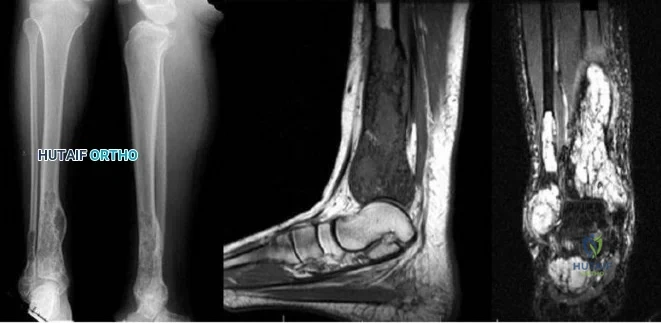
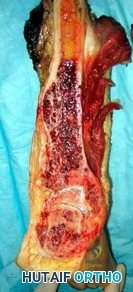
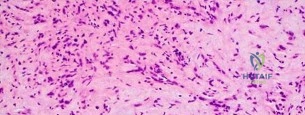
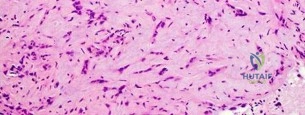
..Further imaging shows pulmonary metastases without an obvious primary tumor of origin and an incomplete fracture of the right distal femur. A decision is made to surgically treat his distal femur fracture. What is the role of establishing a preoperative histologic diagnosis for this patient?
Explanation
t(X;18)(p11.2;q11.2)
t(11;22)(q24;q12)
t(1;3)(p36.3;q25)
Question 2
What tendon is closest to an appropriately placed anterolateral portal for ankle arthroscopy?
Explanation
REFERENCE: Ogut T, Akgun I, Kesmezacar H, et al: Navigation for ankle arthroscopy: Anatomical study of the anterolateral portal with reference to the superficial peroneal nerve. Surg Radiol Anat 2004;26:268-274.
Question 3
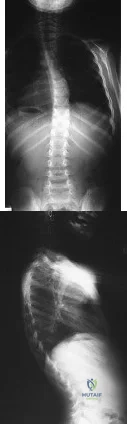
A 6-year-old girl has a painless spinal deformity. Examination reveals 2+ and equal knee jerks and ankle jerks, negative clonus, and a negative Babinski. The straight leg raising test is negative. Abdominal reflexes are asymmetrical. PA and lateral radiographs are shown in Figures 15a and 15b. What is the next most appropriate step in management? Review Topic
Explanation
Question 4
Examination of a 12-year-old girl with bilateral anterior knee pain reveals excessive femoral anteversion and excessive external tibial torsion. The patient has no patellofemoral instability. Nonsurgical management consisting of muscle strengthening and nonsteroidal medication has failed to relieve the patient’s pain. Treatment should now consist of
Explanation
REFERENCE: Delgado ED, Schoenecker PL, Rich MM, Capelli AM: Treatment of severe torsional malalignment syndrome. J Pediatr Orthop 1996;16:484-488.
Question 5
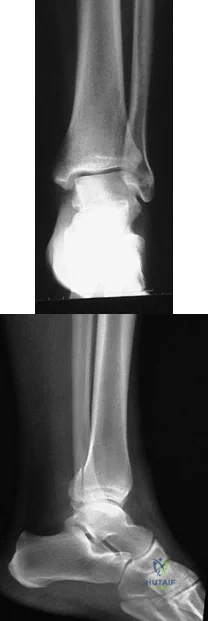
Figures 5a and 5b show the radiographs of a 56-year-old man who was seen in the emergency department following a twisting injury to his left ankle. Examination in your office 3 days later reveals marked swelling and diffuse tenderness to palpation about the ankle and leg. What is the next most appropriate step in management?
Explanation
Question 6
A 23-year-old man has had heel pain and fullness for the past several months. He reports that initially the pain was present only with activity, but more recently the pain has become constant. Figures 53a through 53d show a radiograph, a bone scan, and T2-weighted and gadolinium MRI scans. What is the most likely diagnosis?
Explanation
bone cyst.
REFERENCES: Parsons TW: Benign bone tumors, in Fitzgerald RH, Kaufer H, Malkani AL (eds): Orthopaedics. St Louis, MO, Mosby, 2002, pp 1027-1035.
Dorfman HD, Czerniak B: Bone Tumors. St Louis, MO, Mosby, 1998, pp 855-879.
Question 7
A tall, thin 17-year-old basketball player and his parents request an evaluation of his flexible (hypermobile) pes planus/planovalgus foot deformities. As part of his evaluation, the orthopaedic surgeon notes pectus excavatum, disproportionately long arms, and scoliosis. In addition to providing treatment of his feet, what test or evaluation should the patient be referred for? Review Topic
Explanation
Question 8
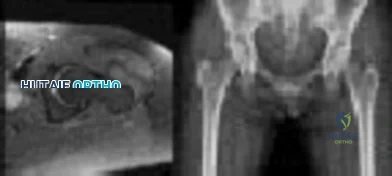
Figure 1 shows the radiograph and Figure 2 shows the MRI scan obtained from a 37-year-old woman with a 2-month history of left hip pain. Which combination of a single symptom and examination finding is most likely in this scenario?
Explanation
Question 9
Preventing "missed" femoral neck fractures associated with ipsilateral femoral shaft fractures is best achieved with
Explanation
Ipsilateral femoral neck and shaft fractures occur in up to 6% of femur fractures. A femoral neck fracture is often vertical and nondisplaced. A high degree of suspicion is necessary to avoid "missed" femoral neck fractures in patients with this condition. Although an examination and dedicated hip radiographs help to avoid missed injuries, a significant decrease in missed
injuries has been described with the use of thin-cut pelvic CT images. In patients who undergo trauma, a pelvic CT scan is often performed to assess for associated injuries and is easily reviewed to examine the femoral neck. Although MRI is advocated to identify isolated occult femoral neck fractures, CT has been described as the method of choice with which to identify ipsilateral femoral neck and shaft fractures in the trauma population. Currently, no literature supports the use of MRI in this population.
RECOMMENDED READINGS
Tornetta P 3rd, Kain MS, Creevy WR. Diagnosis of femoral neck fractures in patients with a femoral shaft fracture. Improvement with a standard protocol. J Bone Joint Surg Am. 2007 Jan;89(1):39-43. PubMed PMID: 17200308.View Abstract at PubMed
Kuhn KM, Agarwal A. Femoral fractures. In: Cannada LK, ed. Orthopaedic Knowledge Update
Question 10
Which of the following pharmacologic agents is most likely to adversely affect the success rate of bony union after lumbar arthrodesis?
Explanation
REFERENCES: Glassman SD, Rose SM, Dimar JR, et al: The effect of postoperative nonsteroidal anti-inflammatory drug administration on spinal fusion. Spine 1998;23:834-838.
Dimar JR II, Ante WA, Zhang YP, et al: The effects of nonsteroidal anti-inflammatory drugs on posterior spinal fusions in the rat. Spine 1996;21:1870-1876.
Question 11
Which of following side effects is most commonly seen in a pediatric patient undergoing ketamine anesthesia?
Explanation
REFERENCES: Furman JR: Sedation and analgesia in the child with a fracture, in Rockwood CA Jr, Wilkins KE, Beaty JH (eds): Fractures in Children, ed 4. Philadelphia, PA, Lippincott-Raven, 1996, vol 3, pp 62-63.
White PF, Way WL, Trevor AJ: Ketamine: Its pharmacology and therapeutic uses. Anesthesiology 1982;56:119-136.
McCarty EC, Mencio GA, Walker LA, Green NE: Ketamine sedation for the reduction of children’s fractures in the emergency department. J Bone Joint Surg Am 2000;82:912-918.
Question 12
A patient who was involved in a motor vehicle accident 2 days ago now reports neck pain. He denies any other symptoms. Radiographs reveal a type II odontoid fracture that is 2 mm anteriorly displaced. Management consists of halo vest immobilization in extension, and repeat radiographs reveal that the fracture is completely reduced. The patient is discharged to home, but later that evening he notes difficulty swallowing while trying to eat dinner. What is the most likely cause of this difficulty?
Explanation
REFERENCES: Garfin SR, Botte MJ, Waters RL, Nickel VL: Complications in the use of halo fixation device. J Bone Joint Surg Am 1986;68:320-325.
Glaser JA, Whitehill R, Stamp WG, Jane JA: Complications associated with the halo-vest: A review of 245 cases. J Neurosurg 1986;65:762-769.
Question 13
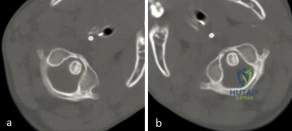
A 3-year-old girl developed torticollis eight months ago after a severe respiratory tract infection. A initial trial of halter traction was attempted without success. A trial of halo traction was then performed for 3 weeks and then a dynamic computed tomographic (CT) was obtained and shown in Figure A. Panel (a) shows an axial image with maximal rotation to the left. Panel (b) shows an axial image with maximal rotation to the right. What is the most appropriate next step in management? Review Topic
Explanation
Common causes of Atlantoaxial rotatory displacement (AARD) include infection, trauma, and recent neck surgery. Diagnosis is challenging and is best confirmed with dynamic CT (CT with the head turned maximally to either side and at neutral). If the symptoms are acute (less than 7 days) then initial treatment with a soft collar and anti-inflammatory medications is indicated. If the condition has been present for more than a week, more aggressive treatment with halter traction (present 1 week to 1 month) or halo traction (present for 1-3 months) is indicated. If nonoperative modalities fail, the condition has been present for > 3 months, or the patient has neurologic deficits, then posterior C1-C2 fusion is indicated.
Copley et al discuss the evaluation and treatment of various congenital and traumatic conditions of the pediatric cervical spine. They report that the underlying mechanism of Atlantoaxial rotatory displacement (AARD) is inflammation and spasm which can be caused by infection, prior surgery, trauma, and rheumatoid arthritis.
Subach et al reviewed at 20 children with atlantoaxial rotatory subluxation. They found that of the 20 patients treated overall, conservative management failed in 6 (30%), and they required posterior fusion because of recurrence of the atlantoaxial rotatory subluxation or unsuccessful reduction. The major factor predicting the failure of conservative management was the duration of subluxation before initial reduction. Patients with long-standing subluxation were more likely to experience recurrence and require surgery.
Figure A shows an asymmetric placed odontoid within the ring of C1. There is an increased distance from the odontoid to the right arch of C1 which is fixed and minimally changes with maximal rotation to the left. This radiographic finding is indicative of fixed subluxation. Illustration A further demonstrates this.
Incorrect
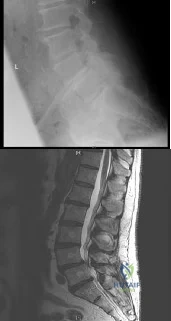
(SBQ12SP.1) A 65-year-old female with a history of breast cancer presents with bilateral buttock and leg pain that is worse with walking and improves with sitting. In addition, she reports that she feels unsteady on her feet and requires holding the railing when going up and down stairs. On physical exam she is unable to complete a tandem gait and has hip flexion weakness, ankle dorsiflexion weakness, and ankle plantar flexion weakness. Her reflex exam shows 3+ bilateral patellar reflexes. Radiographs and an MRI are shown in Figure A and B. What is the next most appropriate step in management. Review Topic
Lumbar epidural injection
Physical therapy with core strengthening and anti-inflammatory medications as needed
Lumbar decompression
Lumbar decompression and fusion
MRI of the cervical and thoracic spine
The clinical scenario is consistent with a patient with symptoms of degenerative spondylolisthesis AND symptoms of myelopathy. Myelopathy must be ruled out by performing an MRI of the cervical and thoracic spine.
Tandem stenosis occurs in approximately 5 to 25% of patients. Because of the stepwise progressive nature of myelopathy, treatment of myelopathy often takes precedence over lumbar spinal stenosis.
Rhee et al. found that the sensitivity and specificity of specific physical exam findings varies. Both the upward babinski reflex and the presence of clonus were found to be very non-sensitive (13%). The most sensitive provacative test was found to be the Hoffman sign (59%).
Salvi et al. reviewed the classic presentations for cervical myelopathy including demographics, history, and physical exam findings (the inability to preform a tandem gait, hyperreflexia, an abnormal babinksi and hoffman reflex, the inability to preform rapid movements and bilateral muscle weakness). Additionally they identify other potential causes for myelopathy, including multiple sclerosis, amyotrophic lateral sclerosis, multifocal motor neuropathy, and Guillain-Barre´syndrome.
Maezawa et al. showed that gait analysis can identify a pattern in patients with myelopathy. Patients with severe myelopathy have a characteristic gait with hyperextension of the knee in the stance phase without plantar flexion of the ankle in the swing phase. They also have decreased walking speed and stride length with a prolonged stance phase.
Figure A and B show a classic degenerative spondylolisthesis.
Incorrect Answers:
Question 14
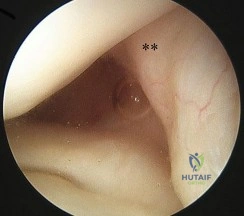
Figure 62 is an arthroscopic view of the intercondylar notch of a right knee from an anterolateral portal. What is the main function of the structure delineated by the black asterisks? Review Topic
Explanation
Question 15
A 5-year-old boy reports intermittent left elbow pain. History reveals that he injured his elbow 4 months ago, but had no treatment. He is now using his arm normally but reports pain almost daily. Examination reveals tenderness over the lateral epicondyle and a prominence is evident. Range of motion is from -5 2010 Pediatric Orthopaedic Examination Answer Book • 55 degrees to 120 degrees. Radiographs are shown in Figure 67. Management should include
Explanation
REFERENCES: Wattenbarger JM, Gerardi J, Johnson CE: Late open reduction internal fixation of lateral condyle fractures. J Pediatr Orthop 2002;223:94-398.
Flynn JC: Nonunion of slightly displaced fractures of the lateral humeral condyle in children: An update. J Pediatr Orthop 1989;9:691-696.
Question 16
When treating a stable 2-part intertrochanteric hip fracture with a sliding hip screw construct, what is the minimum amount of screw holes that are needed in the side plate for successful fixation?

Explanation
The referenced article by Bolhofner et al reviews a series of 69 patients with a sliding hip screw and two hole side plate and notes that they did not have any failure of the side plate construct.
The referenced article by McLoughlin et al is a biomechanical evaluation of 2 versus 4 hole plates and found that peak load in the failure test was not found to be statistically different between the two-hole and four-hole designs. In cyclic testing, the two-hole configuration exhibited statistically smaller fragment migration in both shear and distraction than the four-hole design.
Question 17
What part of the glenoid labrum has the least vascularity?
Explanation
REFERENCE: Cooper DE, Arnoczky SP, O’Brien SJ, et al: Anatomy, histology and vascularity of the glenoid labrum: An anatomical study. J Bone Joint Surg Am 1992;74:46-52.
Question 18
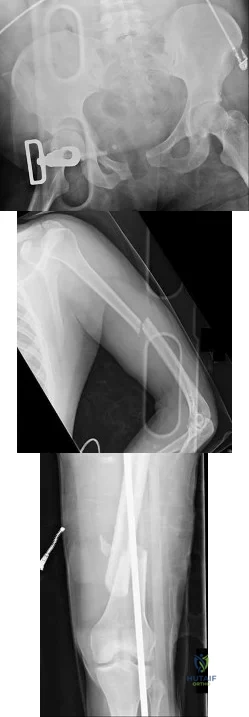
Figures 18a through 18c show injuries sustained by a 22-year-old woman after falling 45 feet while mountain climbing. After being airlifted to the nearest trauma center, her arterial blood gas was 7.21, pO2 84, pCO2 48, and delta base -11 mmol/L. Her Hgb is 8.7 and her resuscitation is ongoing. Based on this data, what would be the best management of her orthopaedic injuries?
Explanation
prolonged, invasive surgery. Upper extremity fractures are best managed acutely with splints in this clinical setting. Definitive fracture fixation should be delayed until the patient is adequately resuscitated.
Question 19
What factor is associated with a high risk of developing pseudotumors after metal-on-metal hip resurfacing?
Explanation
Question 20
The difference between vitamin D-dependent rickets type I (VDDR I) and vitamin D-dependent rickets type II (VDDR II) is
Explanation
VDDR I is a deficiency of 1a-hydroxylase [converts 25(OH)D to 1a,25(OH)2D3].
Lab tests show hypocalcemia, secondary hyperparathyroidism, elevated alkaline phosphatase (ALP) and low or undetectable calcitriol in the presence of adequate 25(OH)D levels. VDDR II or hereditary vitamin D resistant rickets (HVDRR) (autosomal recessive) is an inactivating mutation in the vitamin D receptor (VDR). Lab tests show low serum calcium and phosphate, elevated ALP and secondary hyperparathyroidism. Serum 25(OH)D values are normal and the 1,25(OH)2D levels are elevated (key difference from VDDR I).
Malloy et al. reviewed genetic disorders in vitamin D action. They state that VDDR I is an inborn error of vitamin D metabolism coded by the gene CYP27B1. Children with VDDR I present with joint pain/deformity, hypotonia, muscle weakness, growth failure, and hypocalcemic seizures or fractures in early infancy. Treatment is with calcitriol or 1a-hydroxyvitamin D (NOT cholecalciferol). Children with VDDR II present with bone pain, muscle weakness, hypotonia, hypocalcemic convulsions, growth retardation, severe dental caries or teeth hypoplasia. Affected children are resistant to therapy and supra-physiologic doses of all forms of vitamin D.
Illustration A shows the differences between VDDR I and VDDR II. Incorrect Answers
in the kidney). The liver enzyme vitamin D 25-hydroxylase (found in hepatocytes) is not responsible for VDDR. VDDR II is caused by an inactivating mutation (rather than an activating mutation).
Question 21
A 30-year-old farmer undergoes replantation of an above-the-elbow amputation. What form of management is most important following this surgery?
Explanation
REFERENCES: Wood MB: Replantations about the elbow, in Morrey BF (ed): The Elbow and Its Disorders. Philadelphia, PA, WB Saunders, 1985, pp 472-480.
Goldner RD, Nunley JA: Replantation proximal to the wrist, in Wood MD (ed) Hand Clinics: Microsurgery. Philadelphia, PA, WB Saunders, 1992, pp 413-425.
Question 22
Patients with which of the following primary carcinomas have the shortest overall survival rate after a solitary metastasis to bone?
Explanation
REFERENCE: CA, January/February 2000, vol 50, no. 1 (Cancer Statistics).
Question 23
What is a common clinical finding in patients with severe hypercalcemia secondary to bony metastasis?
Explanation
REFERENCE: Frassica FJ, Gitelis S, Sim FH: Metastatic bone disease: General principles, pathophysiology, evaluation, and biopsy. Instr Course Lect 1992;41:293-300.
Question 24
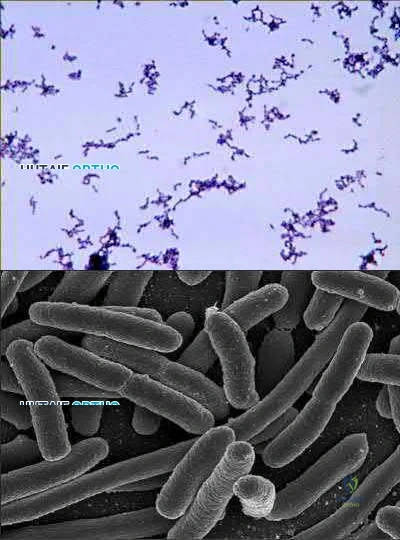
006%-3.4 %. The typical skin flora includes staph and strep as well as P. acnes, which has a propensity for the shoulder. Because it is an anaerobic organism, cultures may only become positive after 7-21 days.
Explanation
A 47-year-old, healthy, active patient presents with a sub-acute, full-thickness supraspinatus tear. His physical examination reveals significant weakness and pain with abduction. There was no glenohumeral instability. Radiographs demonstrate a type 1 acromion. An MRI scan shows a crescent shaped tear with 2-cm of tendinous retraction and no tendinous fatty changes. A subacromial corticosteroid injection 6 weeks ago provided him with 24 hours of pain relief but no improvement in strength. What would be the most appropriate treatment option?
Repeat subacromial corticosteriod injection

Biological augmentation of rotator cuff with porcine small intestine xenograft Rotator cuff repair

Rotator cuff repair plus acromioplasty

Rotator cuff repair, remplissage procedure, bicep tenodesis and distal clavicle excision
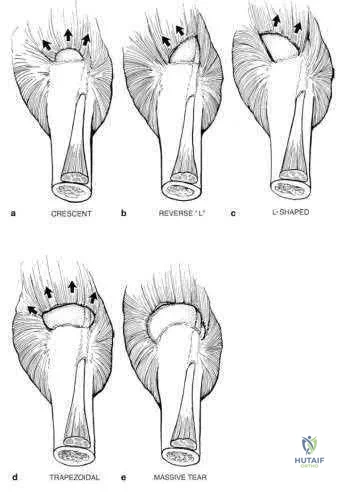
This patient has an isolated supraspinatus rotator cuff tear with symptomatic weakness. The most appropriate treatment would be isolated rotator cuff repair.
The primary purpose of rotator cuff repair is to restore muscle function. Secondary outcomes include reduction of pain and prevention of irreversible cuff changes, specifically muscular atrophy. Non-operative treatment ( exercise, therapy and pain medications) are recommended for partial thickness tears. The indication of surgical repair includes, isolated supraspinatus weakness +/- pain
that correlates with MRI imaging of a respective full thickness tear. Routine acrominoplasty is not recommended in conjunction with rotator cuff repair, especially with no previous symptoms of impingement.
Pedowitz et al. developed clinical practice guidelines for the treatment of rotator cuff pathology. The strongest supporting evidence in current literature was given a grade of 'moderate' with four treatment recommendations. These were,
Exercise and non-steroidal anti-inflammatory drugs can be used to manage partial thickness tears,

Routine acromioplasty is not required the time of cuff repair,

Non-cross-linked, porcine small intestine submucosal xenograft patches should not be used to manage cuff tears, and

Surgeons can advise patients that workers' compensation status correlates with a less favorable outcome after rotator cuff surgery.
Illustration A shows the different shapes of rotator cuff tears. Incorrect Answers:
A 12-year-old baseball pitcher describes progressive worsening of medial elbow pain on
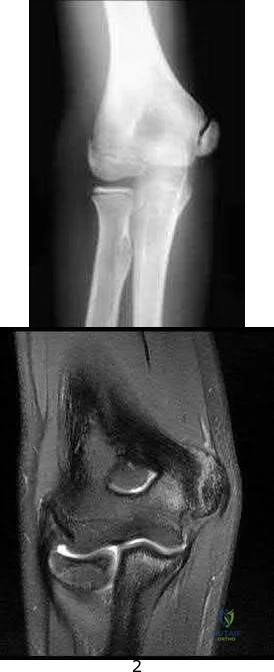
his throwing side. Examination reveals normal elbow range of motion. He is tender over the medial elbow to palpation. A dynamic ultrasound of his elbow shows no evidence of medial widening with valgus stress. His radiograph is shown in Figure A and an MRI is shown in Figure B. What is the most likely cause of his symptoms?
Displaced medial epicondyle avulsion fracture Medial apophysitis

Medial ulnar collateral ligament tear

Valgus extension overload with olecranon osteophytes Ulnar neuritis
The clinical presentation is consistent with Little League Elbow caused by medial apophysitis. Little League elbow is a general term explaining medial elbow pain in adolescent pitchers. The underlying pathology can include medial epicondyle stress fractures, avulsion fractures of the medial epicondyle, ulnar collateral ligament (UCL) injuries, or medial epicondyle apophysitis. In order to identify the underlying cause it is important to first rule out injury to the MCL by looking for medial widening on stress radiographs or dynamic ultrasound, or valgus instability on physical exam. Radiographs are useful to look for avulsion fractures or subtle physeal widening commonly seen with apophysitis.
Wei et al. obtained radiographs and magnetic resonance imaging on nine adolescent pitchers with a clinical diagnosis of Little League Elbow. They found radiographic findings in 4/9 and MRI findings in 6/9 patients. They emphasized that the MRI did not change management in any patients. Cain et al. review the different elbow conditions seen in throwing athletes. They emphasize the need to understand the underlying pathophysiology in order to treat and make appropriate changes to the biomechanics of the pitching technique.
Figure A shows an AP radiograph with slight widening of the apophysis, but no evidence of avulsion fracture. Figure B is an MRI which shows signal consistent with edema of the medial epicondyle apophysis.
Incorrect Answers:
The other responses are all typical throwing elbow conditions, but are much less common than apophysitis in the adolescent thrower.
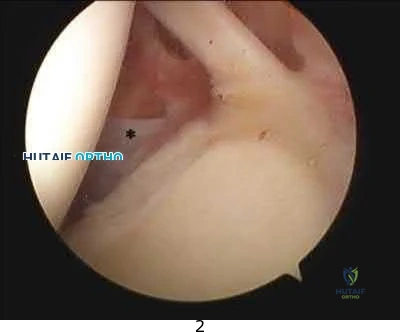
What is the primary function of the structure labeled with an asterisk in Figure A?
Prevents inferior translation of the humerus with the arm by the side Provides internal rotation of the humerus

Prevents anterior translation of the humerus with the arm in 45 degrees of abduction Prevents anterior translation of the humerus with the arm in 90 degrees of abduction Provides supination of the forearm and elbow flexion
The labeled structure is the middle glenohumeral ligament (MGHL) of the shoulder. The primary function of the MGHL is to prevent anterior translation of the humeral head with the arm in 45-60 degrees of abduction.
This structure originates from the glenoid labrum and inserts medial to the lesser tuberosity running obliquely across the subscapularis. The size of the structure may be variable and there are recognized normal anatomic variants ( including a cord like MGHL in the Buford complex). It is important to be able to recognize the MGHL and differentiate this from the subscapularis, IGHL, SGHL, and other intraarticular structures in the shoulder to be able to perform effective and precise arthroscopic procedures.
Burkhart et al. describe the function of the glenohumeral ligaments in anterior shoulder instability, noting that the MGHL provides a restraint to anterior translation with the arm in 45-60 degrees of abduction.
Wang et al. discuss microdamage to the inferior glenohumeral ligament from a basic science perspective, indicating that over time it may stretch and compromise it's function in restraining humeral translation.
Figure A is an arthroscopic image of the intraarticular structures of the shoulder with an asterisk on the MGHL.
Incorrect Answers (these are labeled on Illustration A, with the exception of the subscapularis which is difficult to visualize):

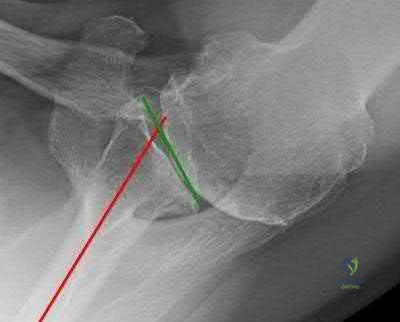
In which of the following clinical circumstances would it be appropriate to eccentrically ream the anterior glenoid?

year-old male undergoing a shoulder arthroplasty due to rotator cuff arthropathy 65-year-old female with a glenoid retroversion of 13-degrees undergoing shoulder arthroplasty

year-old female with humeral anteversion of 13-degrees undergoing shoulder arthroplasty

year-old female with glenoid retroversion of 25-degrees undergoing shoulder arthroplasty

year-old male with significant glenoid bone stock deficiency and severe osteoarthritis
The surgeon should consider eccentrically reaming the anterior glenoid when performing a total shoulder arthroplasty on a patient with a retroverted glenoid due to posterior deficiency associated with osteoarthritic changes which is most consistent with answer choice #2.
Normal version of the glenoid is 0-3 degrees of retroversion, but when doing a total shoulder the goal should be to place the glenoid component in neutral to slight anteversion. Reaming the anterior glenoid to neutral is a technique to be considered by the operative surgeon when presented with a patient undergoing total shoulder arthroplasty with a retroverted glenoid, as failure to perform this step increases the chance for glenoid loosening. If reaming down the anterior glenoid will take away too much bone stock (down to the coracoid process), one may consider bone grafting the posterior glenoid. To perform a total shoulder arthroplasty patients will need a functioning rotator cuff and appropriate glenoid bone stock.
Clavert et al. performed cadaveric analysis to simulate glenoid retroversion of greater than 15 degrees and found that retroversion to this degree cannot be safely corrected with eccentric anterior reaming when using a glenoid component with peripheral pegs due to penetration into the glenoid vault.
Nowak et al. used 3D-CT models of patients with advanced shoulder osteoarthritis with varying degrees of glenoid retroversion and simulated glenoid resurfacing. They found that smaller size glenoid components may allow for greater version correction when using in-line pegged components, as they would be less likely to result in peg penetration.
Illustration A shows >25 degrees of glenoid retroversion seen by axial radiograph of the shoulder in a patient with advanced osteoarthritis. In this case, anterior glenoid reaming is not the correct answer and a posterior glenoid allograft reconstruction would be appropriate.
Incorrect Answers:
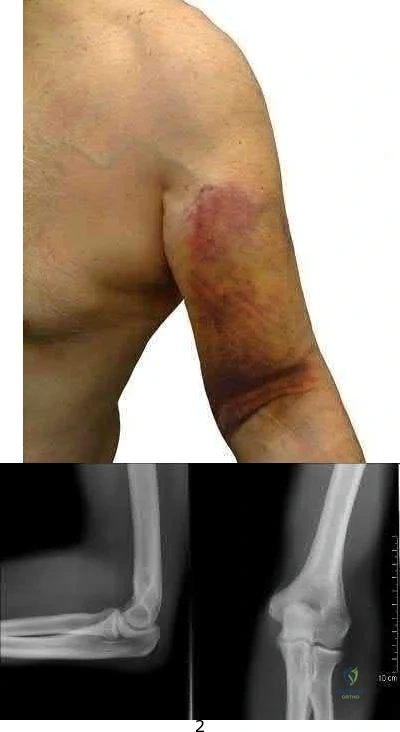
A 44-year-old left-hand dominant carpenter experienced immediate left elbow pain after trying to stop a heavy object from falling two days ago. Figure A shows a clinical image of the patient upon presentation. Physical exam shows full strength with wrist flexion, wrist extension, and pronation, but notable weakness with supination of the forearm. Sensory exam shows no deficits in the forearm or hand. There is a negative milking maneuver test and a positive hook test. Radiographs are shown in Figure B. What is the next most appropriate step in management?
Sling use as needed for comfort and progressive physical therapy Allograft reconstruction of the distal biceps tendon

Ulnar collateral ligament reconstruction Distal biceps tendon avulsion repair Brachioradialis and ECRB avulsion repair
Distal biceps tendon avulsion repair is the most appropriate next step in management.
Distal biceps tendon ruptures occur most commonly in middle-aged men and usually involve the dominant extremity. The mechanism of injury is usually a single traumatic event with eccentric force on the flexed elbow.
Sutton et al. authored a Level 5 review of distal biceps tendon ruptures. They discuss that nonsurgical management of distal biceps tears is appropriate in the low-demand or medically ill patient. Surgical repair improves elbow flexion strength by 30% and supination strength by 40% compared to nonoperative management.
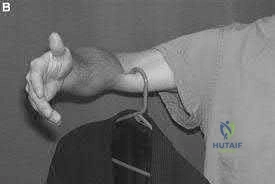
O'Driscoll et al. conducted a Level 2 study examining the accuracy of the hook test for distal biceps rupture diagnosis. They found that the hook test was abnormal in 33 of 33 (100%) patients with complete biceps avulsions, and intact in 12 of 12 (100%) with partial detachments.
Figure A is a clinical image demonstrating ecchymosis in the distal arm and antecubital fossa. Figure B shows normal elbow radiographs. Illustration A shows a normal hook test with an intact distal biceps insertion.
Incorrect Answers:
Early reverse total shoulder designs (before the development of the Grammont-style prosthesis) had a high failure rate due to early loosening of the glenoid component. What biomechanical feature accounted for this problem?

Glenoid component did not have a neck Humeral component too horizontal Center of rotation too lateral

Center of rotation too anterior Center of rotation too inferior
Early reverse ball-and-socket designs failed because their center of rotation remained lateral to the scapula, which limited motion and produced excessive torque on the glenoid component, leading to early loosening. The first modern reverse prosthesis was designed by Paul Grammont. According to Boileau et al., Grammont's design "introduced 2 major innovations (1) a large glenoid hemisphere with no neck and (2) a small humeral cup almost horizontally oriented with a nonanatomic inclination of 155 degrees, covering less than half of the glenosphere. This design medializes the center of rotation compared to earlier versions which minimizes torque on the glenoid component. Furthermore, the humerus is lowered relative to the acromion, restoring and even increasing deltoid tension. The Grammont reverse prosthesis imposes a new biomechanical environment for the deltoid muscle to act, thus allowing it to compensate for the deficient rotator cuff muscles." According to Gerber, "moving the center of rotation more medial and distal as well as implanting a large glenoid hemisphere that articulates with a humeral cup in 155 degrees of valgus are the biomechanical keys to sometimes spectacular short- to midterm results".
Which of the following preoperative factors is a contraindication to total shoulder arthroplasty?

Passive external rotation less than 10 degrees Eccentric posterior glenoid erosion

A 2-cm full-thickness supraspinatus tendon tear Inflammatory arthritis

A preganglionic brachial plexus injury
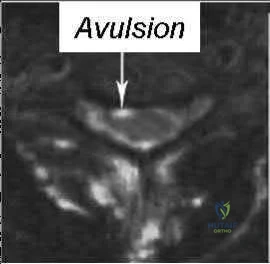
A preganglionic brachial plexus palsy, otherwise known as a root avulsion injury, presents with a flail arm and has a poor prognosis for recovery of motor function. Patients with brachial plexus palsies are not candidates for total shoulder arthroplasty due to the substantial motor and sensory deficits associated with these injuries.
In contrast, patients with a preoperative loss of passive external rotation, posterior glenoid erosion, a reparable full-thickness rotator cuff tear isolated to the supraspinatus tendon, and inflammatory arthritis are not contraindicated for a total shoulder arthroplasty.
Iannotti et al. performed a Level I prospective study in 118 patients who underwent either a total shoulder arthroplasty or a shoulder hemiarthroplasty for primary osteoarthritis. The presence of a reparable full-thickness rotator cuff tear did not adversely affect outcomes in either group but rather provided better active external rotation in the cohort receiving total shoulder arthroplasties. The authors concluded that a reparable tear of supraspinatus is not a contraindication to the use of a glenoid component.
Norris et al. compared outcomes of total shoulder arthroplasty and hemiarthroplasty performed for primary osteoarthritis in 160 patients. There were no differences in postoperative pain, function, ASES scores, or range of motion between groups for patients with reparable rotator cuff tears. The authors concluded that minor thinning and small tears of the rotator cuff can be adequately addressed at the time of surgery without adversely affecting outcomes.
Illustration A is a cervical T2 axial MRI which shows a cervical root avulsion, a form of preganglionic brachial plexus injury. Notice the perineural hyperintensity.
Incorrect Answers:
A 42-year-old male sustains a flail chest injury and subsequently undergoes operative stabilization of his chest wall. At first follow-up, the inferior angle of his ipsilateral scapula translates medially with any attempt at overhead activity. Injury to which of the following structures would cause this abnormality?

Spinal accessory nerve C8 and T1 nerve roots

Upper and lower subscapular nerves Thoracodorsal nerve

Long thoracic nerve
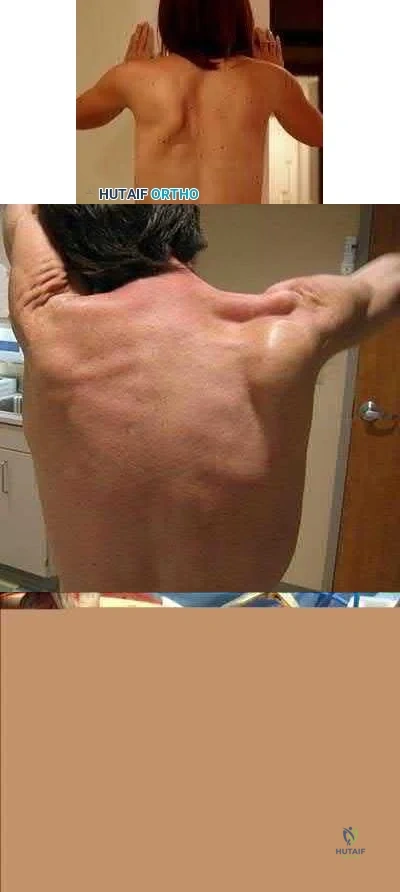
The clinical vignette describes medial scapular winging, which is seen after injury to the long thoracic nerve.
Medial scapular winging due to a long thoracic nerve palsy can be seen after repetitive stretching in athletes, with direct compression injury, or even iatrogenically during surgical procedures to the lateral thorax. Injury to the long thoracic nerve will eliminate the function of the serratus anterior,
which acts to protract the scapula laterally and upward and stabilize the vertebral border of scapula. This results in upper extremity weakness in forward elevation or abduction as the scapula is not stabilized against the thorax.
Meininger et al. report that lesions of the long thoracic nerve and spinal accessory nerves are the most common cause of scapular winging, although numerous underlying etiologies have been described. They report patients describe diffuse neck pain, shoulder girdle discomfort, upper back pain, and weakness with abduction and overhead activities. They also report that most cases are treated nonsurgically.
Wiater et al. review injuries to the spinal accessory nerve which causes dysfunction of the trapezius and subsequent lateral scapular winging. They note that the superficial course of the spinal accessory nerve in the posterior cervical triangle makes it susceptible to injury, and iatrogenic injury to the nerve after a surgical procedure is one of the most common causes of trapezius palsy. Most injuries are treated nonoperatively, but the Eden-Lange procedure, in which the insertions of the levator scapulae, rhomboideus minor, and rhomboideus major muscles are transferred, relieves pain, corrects deformity, and improves function in patients with irreparable injury to the spinal accessory nerve.
Illustration A shows a clinical photo of medial scapular winging, while illustration B shows a clinical photo of lateral scapular winging. Illustration C shows the long thoracic nerve during a rib fixation procedure, with the nerve sitting directly on top of the serratus anterior. The trapezius is overlying the scapula at the bottom of the photo, and the patient's head is to the right of the photo. Incorrect Answers:
A patient sustains a distal biceps brachii tendon rupture. If treated non-operatively, the greatest loss of strength would be seen with which activity?

Forearm supination Forearm pronation

Elbow flexion

Shoulder forward flexion Shoulder internal rotation
While both elbow flexion and forearm supination strength are affected, there is a greater percentage loss of supination strength. Patients may complain of weakness and fatigue with rotational activities such as using a screwdriver. The primary elbow flexor is actually the brachialis, and therefore less weakness in flexion is reported.
Patterson reviewed distal biceps ruptures and found nonsurgical treatments had 21 55% loss of supination strength and 8 36% loss of flexion strength.
Klonz reviewed anatomic and non-anatomic repairs and found better results with anatomic repairs with 91% return of supination strength and 96% return of flexion strength. Supination strength after nonanatomic repair did not improve in 4 of 8 patients (42%-56% of the uninjured arm).
A 27-year-old right hand dominant construction worker falls off a scaffold onto his outstretched arm. Figure A exhibits the radiograph taken at a local emergency room.
Following treatment, he is placed in a sling and follows up at your office two weeks later. He complains of a feeling that his arm is going to 'pop out'. Which specific physical examination finding is likely to be present?
Hornblower's Test Jobe's Test

Apprehension Sign with shoulder abducted and externally rotated Speed's Test

Kim's Test
The patient suffered a posterior shoulder dislocation, likely injuring the posterior capsule and/or labrum. Out of all the answer choices, Kim's test assesses posterior structures. Thus, Kim's test is the physical examination finding most likely to be present.
Posterior dislocations occur less frequently than anterior dislocations, and are often missed. Following closed reduction, persistent instability can occur, usually associated with posterior capsular or labral pathology. Posteriorly directed provocative maneuvers, such as the Kim test can be positive.
Robinson et al. performed an epidemiologic analysis on 120 posterior dislocations. Recurrent instability occurred at a rate of 17.7%. Risk factors for recurrent instability included age less than 40-years-old, dislocation during seizure, and a large reverse Hill-sachs (>1.5 cm3). Kim et al. describe the Kim lesion, a separation between the posteroinferior labrum and the articular cartilage without complete detachment of the labrum, which cause persistent posterior instability.
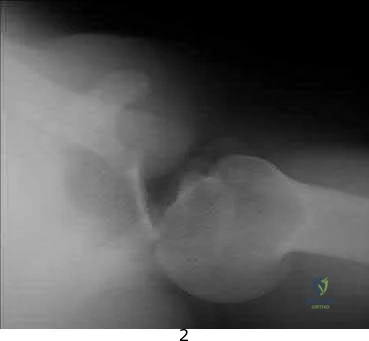
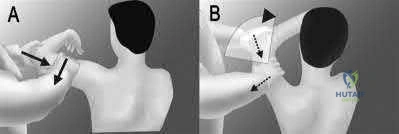
Figure A depicts a posterior dislocation on xray. Illustration A depicts the Kim test, which is performed by having the patient seated, arm at 90° abduction, followed by flexing the shoulder to 45° forward flexion while simultaneously applying axial load on the elbow and posterior-inferior force on the upper humerus. The test is positive when there is pain. Video 1 depicts the proper way to perform a Kim Test.
Incorrect answers:
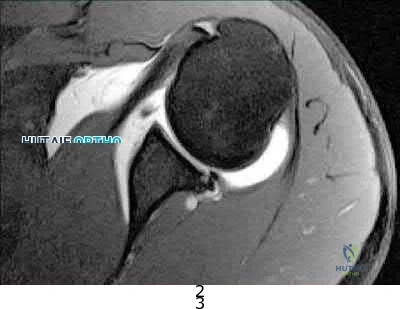
A 27-year-old male bodybuilder presents to the office with vague, deep shoulder pain and weakness with his bench press. His examination is somewhat difficult due to his large size, but no significant abnormal findings are noted. Radiographs are normal, and an MRI arthrogram is shown in Figure A. Which of the following is the most likely etiology of his complaints?
Pectoralis major rupture Supraspinatus partial thickness tear SLAP lesion

Tendonitis of the long head of the biceps Posterior labral tear
The clinical presentation and MRI are consistent with a Posterior labral tear.
Posterior labral tears are commonly seen in individuals that have repeated posteriorly-directed stress across their glenohumeral joint (football linemen, bodybuilders). These patients will often present with ill-described pain deep in their shoulder joint, along with decreases in shoulder strength. Focused shoulder examinations, such as the Jahnke Jerk Test or Push-pull test, can elicit pain from posterior labral tears; however, the sensitivity and specificity of these tests remain under question.
Mair et al. reviewed the outcome of posterior labral injuries in nine athletes who underwent arthroscopic repair with a bioabsorbable tack after failure of conservative management; all were
able to return to contact sports. They note that posteriorly applied forces can result in a shear-type vector that can cause posterior labral tears without capsular injury.
Bradley et al. reviewed 91 athletes with unidirectional recurrent posterior shoulder instability that were treated with an arthroscopic posterior capsulolabral reconstruction. They found that significant improvements in stability, pain, and function at a mean of 27 months postoperatively. Eightynine percent of the patients were able to return to their sport.
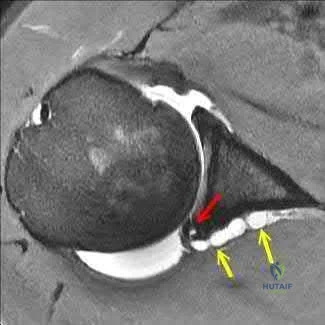
Figure A shows an axial MRI arthrogram of the shoulder with a posterior labral tear and an associated paralabral cyst. Illustration A is another axial shoulder MRI arthrogram cut showing a posterior labral tear (red arrow) and an associated paralabral cyst (yellow arrows).
Incorrect Answers:
A patient sustains a full thickness tear of their teres minor. Which of the following test/signs would most likely be positive in this patient?

Jobe's test Belly press test

Internal rotation lag sign Hornblower's sign Hawkin's sign
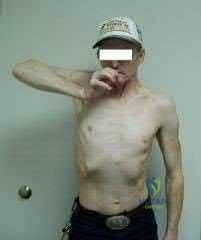
Hornblower's test is completed by asking the patient to hold their shoulder in 90 degrees of abduction and 90 degrees of external rotation. The test is positive if the arm falls into internal rotation or they are unable to actively externally rotate against resistance. This suggests teres minor pathology.
There are various tests/signs used by clinicians to detect rotator cuff pathology. The teres minor is innervated by the axillary nerve and functions to externally rotate the humerus. The hornblower's test/sign has various descriptions, but all act to determine external rotation weakness. In addition to being sensitive and specific for teres minor pathology, it can also be positive with posterior supraspinatus tears.
Walch et al. review 54 patients that underwent repair of combined supraspinatus and infraspinatus rotator-cuff tears. They found that the hornblower's sign was highly sensitive and specific for irreparable degeneration of the teres minor, while the dropping-sign was highly sensitive and specific for irreparable degeneration of the infraspinatus.
Hertel et al. prospectively review 100 patients with painful shoulders and impingement syndrome. They compared various lag signs (ERLS-external rotation lag sign, IRLS-internal rotation lag sign, drop sign) to the Jobe and lift-off signs. The ERLS was less sensitive but more specific than the
Jobe sign for the supraspinatus/infraspinatus. The drop sign was the least sensitive but was as specific as the ERLS. The IRLS was as specific but more sensitive than the lift-off sign for subscapularis tears.
Illustration A shows another variation of the hornblower's sign as originally desbribed by Arthui et

positive if the patient is unable to do this without abducting the affected arm and demonstrates the difficulty in raising the hand to the mouth in the absence of external rotation of the shoulder. The video provided shows how to perform both variations of the hornblower's test.
Incorrect Answers:
Reverse total shoulder arthroplasty combined with latissimus dorsi transfer would be
most appropriate for which of the following patients?
year-old male with post-traumatic shoulder arthritis after a four-part proximal humerus fracture with no motor dysfunction

year-old male with grade 4 shoulder arthritis with severe deltoid muscle dysfunction secondary to a stroke

year-old female with significant rotator cuff arthropathy, a negative Hornblower sign and less than 5 degrees of external rotation lag

year-old female with pseudoparesis of anterior elevation and external rotation, narrowing of gleno-humeral joint and acetabularization of the acromion

year-old male with grade 4 shoulder arthritis and an isolated supraspinatus tear
Reverse total shoulder arthroplasty combined with latissimus dorsi transfer would be most appropriate in a patient with pseudoparesis of anterior elevation and external rotation, in the setting of shoulder arthritis (narrowing of glenohumeral joint and acetabularization of the acromion).
Combining a latissimus dorsi tendon transfers with reverse total shoulder arthroplasty (R-TSA) helps to restore control of active external rotation. Dysfunction with external rotation can be determined clinically with external rotation lag sign, a positive Hornblower's sign, and radiographically with fatty degeneration of the teres minor classified as stage 2 or greater according to the system of Goutallier et al. or Fuchs et al.
Gerber et al. found that R-TSA with combined lat dorsi transfer yielded minimal improvements in external rotation ROM (13 deg to 19 deg) compared to increases in shoulder ROM in flexion (94 deg to 137 deg) and abduction (87 deg to 145 deg), with this procedure.
Boileau et al. examined 17 consecutive patients treated with reverse shoulder arthroplasty and latissimus dorsi and teres major transfer (L'Episcopo). They found that external rotation increased from -21 degrees to 13 degrees (+34 degrees ). They recommend transferring both the LD and TM, rather than the LD alone as it results in better active external rotation.
Illustration A is a radiograph showing a right reverse total shoulder replacement. Illustration B shows a cadaveric image of the positioning of the latissimus dorsi tendon transfer prior to implantation of the reverse total shoulder components.
Incorrect Answers
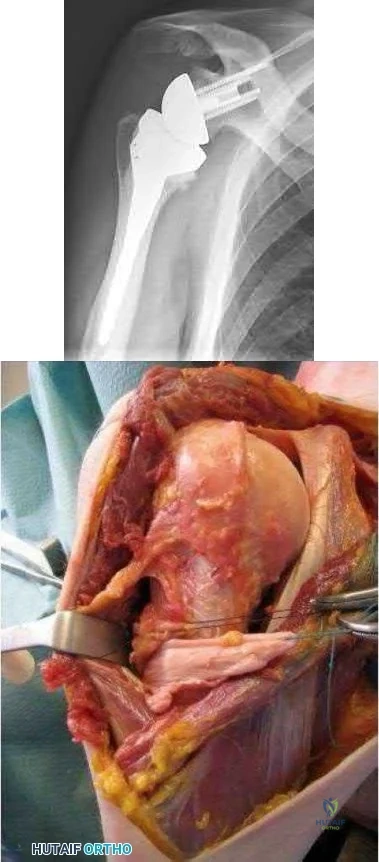
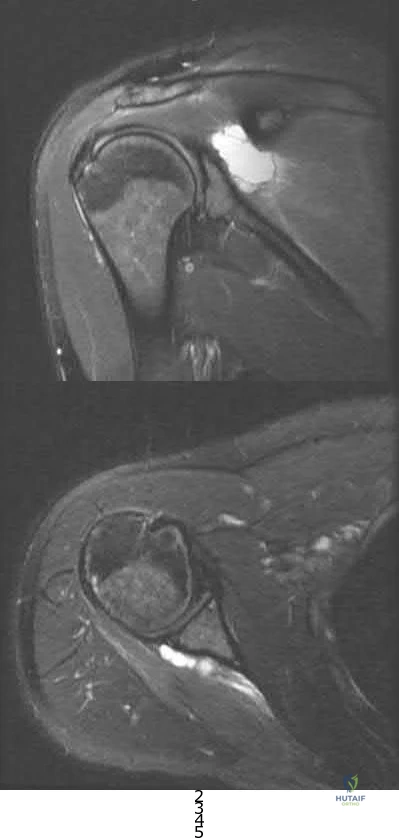
Figure A and B are MRI images of a 42-year-old male with symptoms of right shoulder neuropathy. If this patient has an abnormality detected on EMG and nerve conduction testing, which of the following nerves is most likely to be involved?
Subscapular nerve Axillary nerve Musculocutaneous nerve Suprascapular nerve Long thoracic nerve
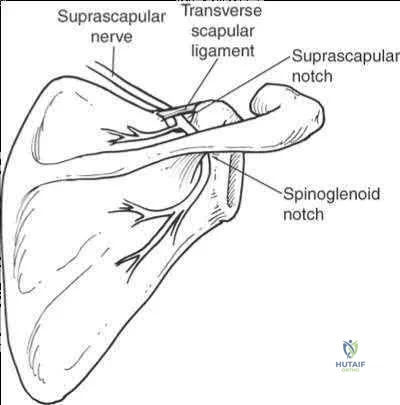
This patient is presenting with suprascapular nerve compression secondary to a spinoglenoid cyst. Injuries of the posterior shoulder joint capsule or posterior-superior labrum can result in spinoglenoid cysts. They may lead to suprascapular nerve palsy.
Patients will present with characteristic findings of external rotation
( infraspinatus) weakness when the cyst is isolated in the spinoglenoid notch. If the cyst is located in the suprascapular notch, both external rotation weakness and abduction (supraspinatus) weakness will be present. Electromyography and MRI are the investigations of choice in depicting the etiology of this mononeuropathy.
Piatt et al. found posterosuperior labral tears in 65/73 patients who had spinoglenoid notch cysts. All patients presented with should pain and weakness. Patients undergoing surgical intervention by drainage or excision +/- arthroscopic labral repair had a better outcome than non-operative care.
Westerheide et al. reported fourteen patients who underwent arthroscopic decompression of ganglion cysts associated with suprascapular neuropathy. All patients had a labral tear intraoperatively with arthroscopic drainage and labral repair. There was not recurrence at an average of 51 months of followup.
Piasecki et al. reviewed suprascapular neuropathy. Causes include:nerve entrapment along this path, particularly at the vulnerable suprascapular and spinoglenoid notch, as well as extrinsic compression by soft-tissue masses.
Figures A is a coronal MRI showing a large hyperintense mass medial to the glenoid articulation. Figure B shows an axial MRI of the lesion posterior to the glenoid. Illustration A shows a diagram of the posterior right shoulder. The suprascapular nerve can be seen traveling through the spinoglenoid notch. Incorrect Answers:
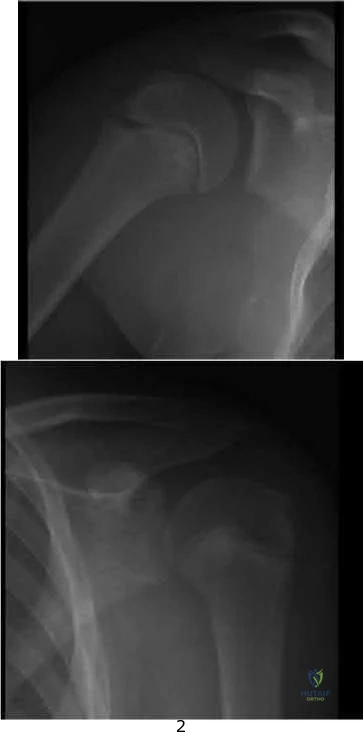
A 12-year-old right-hand-dominant pitcher presents with progressive right shoulder pain. He is now unable to pitch. He is tender to palpation over the lateral shoulder and has pain with rotation. An AP radiograph of the affected shoulder is shown in Figures A and a contralateral radiograph is shown in Figure B. What is the most likely diagnosis?
Septic arthritis of the shoulder SLAP tear
External impingement Internal impingement

proximal humerus. Patients may report a recent increase in pitching regimen. On examination, there is focal tenderness at the level of the physis. Treatment focuses on rest, physical therapy and a progressive throwing program. Pitching is often stopped for 2-3 months during rehabilitation.
Chen et al. review shoulder and elbow injuries in the young athlete. Little
Leaguer's shoulder results from epiphyseal lysis secondary to microtrauma. Pain over the anterolateral shoulder may be elicited on examination. The mainstay of treatment is 2-3 months of rest and return to pitching via a progressive throwing program.
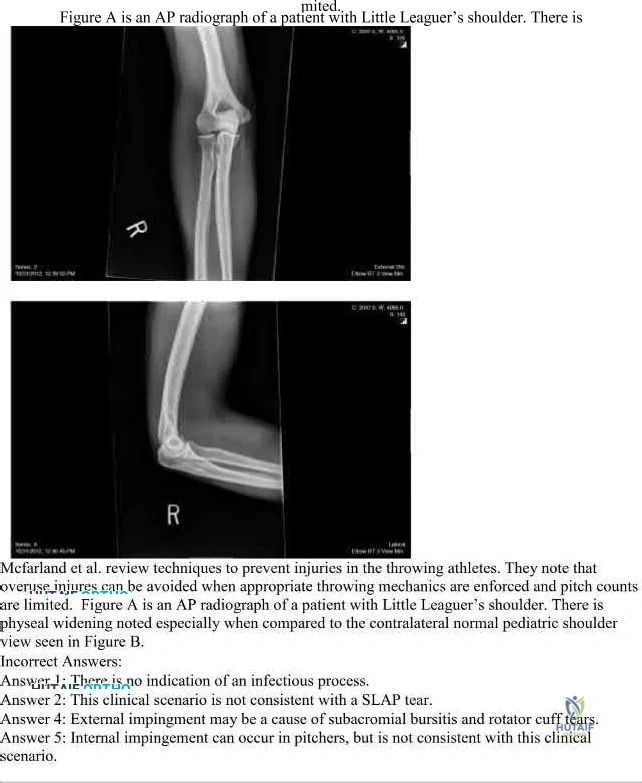
Mcfarland et al. review techniques to prevent injuries in the throwing athletes. They note that overuse injures can be avoided when appropriate throwing mechanics are enforced and pitch counts are li
physeal widening noted especially when compared to the contralateral normal pediatric shoulder view seen in Figure B.
Incorrect Answers:
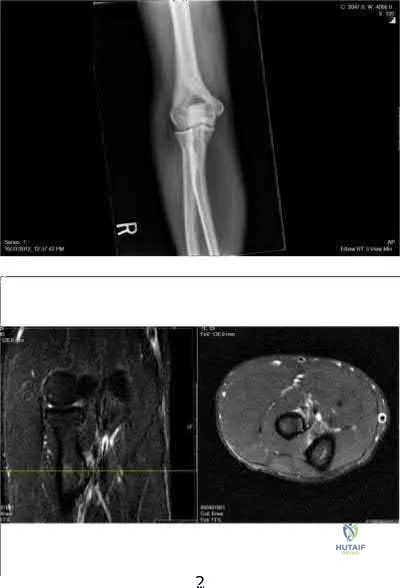
A 35-year-old carpenter has pain in the antecubital fossa that is worse with turning a screwdriver. He has undergone non-operative treatment for 6 months without relief. On physical examination his hook test is normal and there is pain and weakness with resisted supination. Radiographs are shown in Figures A-C. A MRI of the right elbow is shown in Figure D. The next most appropriate treatment is?
Exploration of the radial tunnel Superficial radial neurectomy

Detachment and repair of the biceps tendon Transfer of the biceps to the brachialis EMG with nerve conduction study
While complete trauamtic rupture of the distal biceps is more common, partial tears have been reported in the literature. The most common presentation is pain in the antecubital fossa worse with resisted supination.
Conservative management consists of NS

Transfer to the brachialis improves flexion strength but not supination.
Ramsey et al present a review article on distal biceps tendon injuries. They state that the most successful management of partial distal biceps tears that have failed conservative management is to surgically treat it like a complete rupture with release and surgical reattachment of the distal biceps to the radial tuberosity.
Figures A-C are normal radiographs of the elbow. Figure D is a crossreferenced axial and coronal T2 MRI that demonstrates increased signal and partial distal biceps tendon tearing. Illustration C shows the resected region of distal biceps tendon in the same patient and had an excellent functional outcome following distal biceps release and surgical reattachment with 2 double-loaded suture anchors.
Video V demonstrates The hook test for detecting complete distal biceps tendon avulsions.
A 49-year-old man sustains a dislocation of his left elbow that is successfully reduced and splinted. He misses his scheduled follow-up appointments and returns 6 weeks later. He is immediately enrolled in a course of vigorous physical therapy. At a repeat visit at 6 months, examination reveals that he lacks 40 degrees of elbow extension, and has flexion to 80 degrees. He is taken to the operating room for surgical release. Figures A and B are diagrams depicting the ligamentous attachments about the elbow. To restore elbow flexion, in addition to releasing the articular capsule, which ligament should be released?
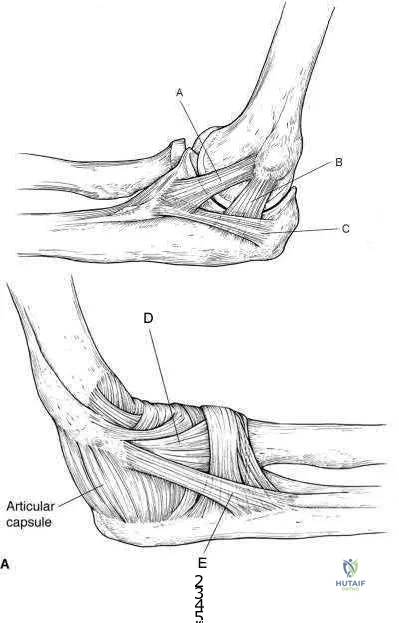
Ligament A Ligament B Ligament C Ligament D Ligament E
In addition to capsular release, the posterior band of the medial collateral ligament (MCL) should be released.
The posterior band of the MCL is attached dorsal to the axis of rotation and has greater variation in length. It increases in length by 9 mm between 60° and 120° of flexion. Posterior band contracture leads to loss of elbow flexion. In contrast, the anterior band of the MCL (AMCL) maintains a constant length ( isometric) throughout the entire arc of movement. Anterior capsule contracture leads to loss of extension.
Wada et al. treated 14 elbows with post traumatic contracture. Through a medial incision, the ulnar nerve was freed and the posterior band and posteromedial joint capsule were excised. Mean flexion increased from 89° preop to 127° postop. Anterior capsulectomy was performed for limited extension.
Morrey et al. studied structures providing stability about the elbow. They found that the anterior capsule stabilizes the elbow to varus-valgus stress in extension, not in flexion. The anterior band of the MCL is a primary stabilizer, especially in flexion.
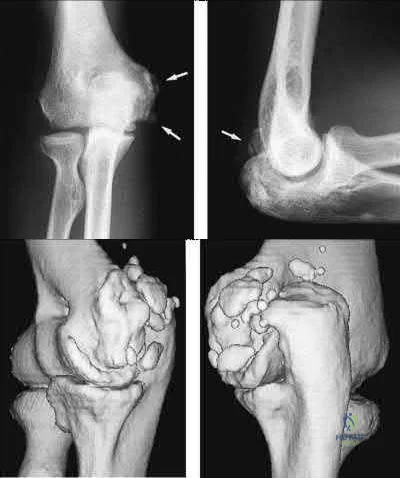
Figures A and B are medial and lateral illustrations of the elbow, respectively, depicting the ligamentous attachments. Illustrations A and B are radiographs are 3D CT reconstruction images of the left elbow, respectively, showing heterotopic ossification around the posterior band of the MCL.
Incorrect Answers:
A 23-year-old male sustains a dislocation of his elbow that was successfully closed reduced in the emergency room. 3 months later, the patient presents with pain and a catching sensation in his elbow. On physical exam, he is noted to have a positive lateral pivot-shift test. Incompetence of which of the following ligaments in Figure A is most commonly associated with his condition?
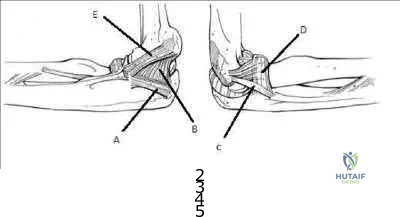
A B C D E
The patient is presenting with symptoms and physical exam consistent with posterolateral rotatory instability. Injury to the lateral ulnar collateral ligament
( LUCL), labeled C in Figure A, allows an abnormal external rotation
( supination) of the ulna on the humerus. This results in posterolateral rotatory instability. Posterolateral rotatory instability often presents as pain and recurrent clicking, snapping, clunking, or locking of the elbow. It should be noted that frank dislocations are not the most common presenting symptom. The physical exam is usually benign except for a positive lateral pivot-shift test or posterolateral rotatory drawer test. While injury to the LUCL is thought to be the primary pathology, other ligamentous stabilizers of the elbow may play a role.
Mehta et al. review posterolateral rotatory instability of the elbow. They state the instability usually results from an elbow dislocation with subsequent failure to heal of the ligamentous structures.
Patients with recurrent instability often require surgical intervention, as bracing is typically cumbersome and ineffective.
The video provided shows how to perform the lateral pivot-shift test. The patient is placed in the supine postion with forearm overhead and elbow extended. The elbow is then supinated with force and flexed to >40° while a valgus load applied. A positive result is palpable / visible clunk as the ulna and radius reduce suddenly. Illustration A shows the posterolateral rotatory drawer test.
External rotation and posterior forces are applied to the forearm attempting to sublux the radius posterior to the capitellum.
Incorrect Answers:
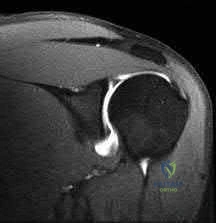
Figure A is the MR image of the left shoulder of an active 47year-old painter who has been experiencing shoulder pain for 9 months. In addition to the finding shown in Figure A, MRI examination of the intra-articular portion of the biceps tendon shows fraying greater than 50%. He has not obtained relief from an 8 month course of non-operative management including non-steroidal antiinflammatory medications, physical therapy and corticosteroid injection. What is the best next step in treatment?
New course of physical therapy

Activity shutdown with 6 weeks sling immobilization

Arthroscopic superior labrum anterior to posterior (SLAP) tear repair Arthroscopic debridement and possible biceps tenotomy versus tenodesis

Arthroscopic rotator cuff repair and acromioplasty
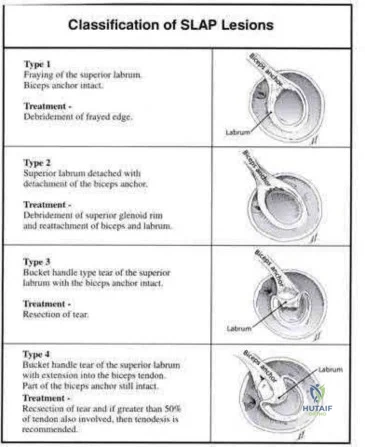
This patient has a Type II SLAP lesion. These should only rarely be repaired in patients older than 40 years of age. If a source of pain refractory to nonoperative management, biceps tenotomy or tenodesis should be considered.
SLAP repair for Type II SLAP lesions is a procedure that has enjoyed a high success rate in young patients. These are generally not indicated for repair in patients greater than 40 years of age due to high rate of stiffness postoperatively. A subset of patients continue to do poorly after SLAP repair. Poor range of motion and the development of post-surgical adhesive capsulitis is often an etiology for poor results. Arthrofibrosis recalcitrant to diligent therapy over many months can be treated with arthroscopic capsular release. This is predicated on failure of a dedicated course of physical therapy as part of a non-operative management course lasting greater than six months. As the propensity for stiffness increases with age, consideration should be treated with SLAP tear debridement and biceps tenotomy or tenodesis in patients greater than 40 years old. Tenotomy or tenodesis, however, can be effective at providing pain relief in the presence of proximal biceps tendon pathology.
Katz et al. reviewed 34 patients who presented to their group for management of failed SLAP repair. 50% were Worker's Compensation cases. The mean age at the time of initial SLAP repair was 43 years. They treated these patients conservatively initially followed by revision surgery in 21 cases. All completed a course of physical therapy initially. They concluded that once a patient has failed SLAP repair, there is a high chance of further conservative treatment failing. Although revision surgery improves outcomes, 32% will continue to have a "suboptimal" result. Holloway et al. reviewed 50 patients who underwent arthroscopic capsular release for adhesive capsulitis, comparing three groups: (1) post-surgical; (2) post-fracture; and (3) idiopathic adhesive capsulitis. All patients had completed supervised physical therapy and a home exercise program for at least one year. They concluded that arthroscopic capsular release improved range of motion equally for all three groups but patients in the post-surgical group had poorer subjective pain, function and satisfaction scores.
Figure A is an MRI showing a Type II SLAP tear. Illustration A shows the classification of SLAP lesions.
Incorrect Answers:
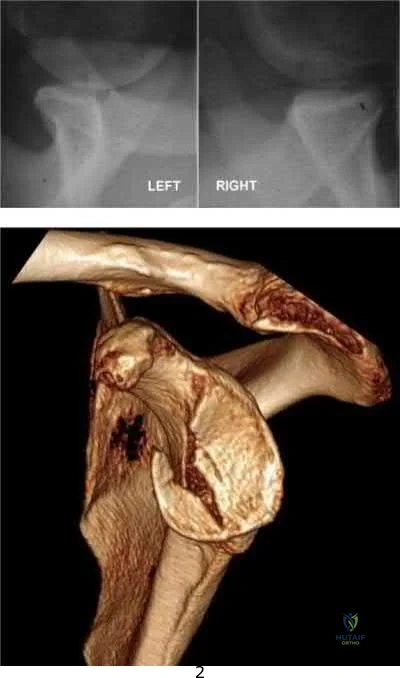
A 30-year-old man undergoes arthroscopic Bankart repair for recurrent anterior dislocation. He continues to experience instability postoperatively. Examination reveals a positive apprehension test. Radiographs of both shoulders are seen in Figure A. CT scan of his left shoulder is seen in Figure B. What is the best treatment option?
Bankart repair

Humeral head bone augmentation Remplissage

Coracoid autograft Connolly procedure
This patient has anterior glenoid bone deficiency (inverted pear glenoid) from a large bony Bankart lesion that was not adequately addressed in the index procedure. This is best treated with bony augmentation using the Latarjet vascularized coracoid transfer.
Patients with glenoid bone defects >20-30% have a high recurrence rate
(>60%) after Bankart repair alone. Bone grafting is necessary to offer containment. Autograft options include coracoid transfer (such as the Latarjet procedure which extends the articular arc and creates a conjoined tendon sling) and iliac crest bone grafting.
Burkhart et al. addressed glenohumeral bone defects. They advise that significant bone deficits cannot be adequately addressed via arthroscopic Bankart repair alone. The Latarjet transfer creates an extra-articular platform to extend the articular arc of the glenoid.
Hantes et al. assessed Latarjet repairs using CT. They found that there is almost complete repair of a 25% to 30% glenoid defect when using the Latarjet procedure.
Figure A comprises comparison Bernageau view glenoid profile radiographs of both shoulders.
Figure B is a 3D reconstruction CT with showing glenoid bone deficiency (inverted pear deformity) with a large bony Bankart lesion. Illustration A shows the method of obtaining a Bernageau glenoid profile view. Illustration B shows the "cliff sign" of anterior glenoid bone loss.
Illustration C depicts the Latarjet procedure. Illustration D depicts reduction in the articular arc with anterior glenoid loss.
Incorrect Answers:
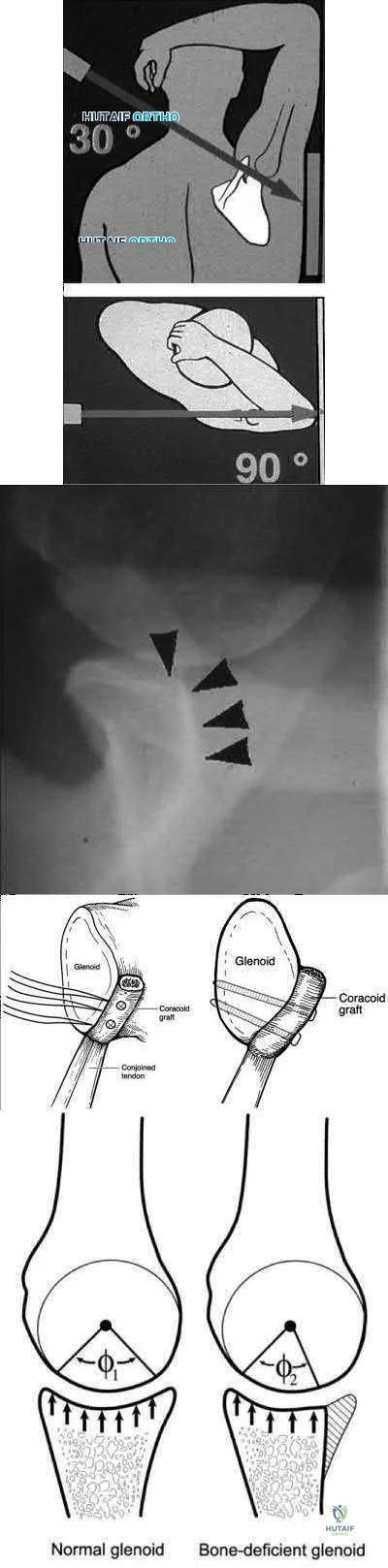
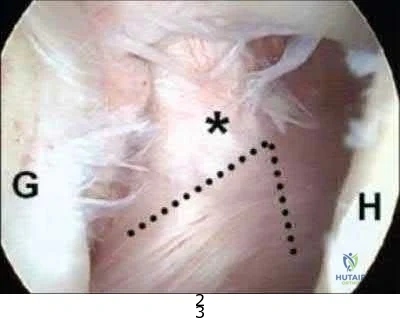
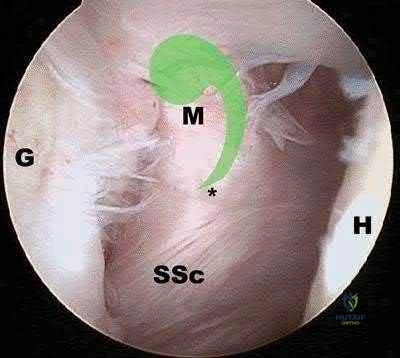
Figure A shows an arthroscopic picture of a 62-year-old male undergoing repair of a torn subscapularis tendon. In the image shown, G represents the glenoid, H represents the humeral head, and the dotted line represents the superolateral border of the subscapularis tendon. Which two ligaments form the structure marked with the asterisk?
Inferior and middle glenohumeral ligaments Middle and superior glenohumeral ligaments Coracohumeral and coracoacromial ligaments

Coracohumeral and superior glenohumeral ligaments Superior and inferior glenohumeral ligaments
The coracohumeral and superior glenohumeral ligaments form a complex that marks the superolateral margin of the subscapularis tendon.
In chronic or degenerative tears, the subscapularis will often retract medially and become scarred to the deltoid fascia. This makes identification difficult during arthroscopic repair. The coracohumeral and superior glenohumeral ligaments form a complex that inserts on the superolateral margin of the subscapularis. This "comma sign" can usually be identified during arthroscopic repair making identification of the subscapularis tendon an easier task.
Burkhart and Brady present surgical pearls for arthroscopic repairs of the subscapularis. Amongst other things, they state the subscapularis is almost always repairable with proper mobilization, but an Achilles tendon allograft or a subcoracoid pectoralis major transfer may be used for a severely degenerated subscapularis.
Lo and Burkhart describe the comma sign for repair of chronic subscapularis tears. They describe how the superior glenohumeral ligament/coracohumeral ligament complex and subscapularis tendon are intimately associated, and often tear off the humerus while remaining attached to each other. This complex, when torn, forms a "comma sign," that marks the superior and lateral margins of the subscapularis tendon.
Illustration A shows why the convergence of the superior glenohumeral and coracohumeral ligaments on the superolateral border of the subscapularis is referred to as the "comma sign." Incorrect Answers:
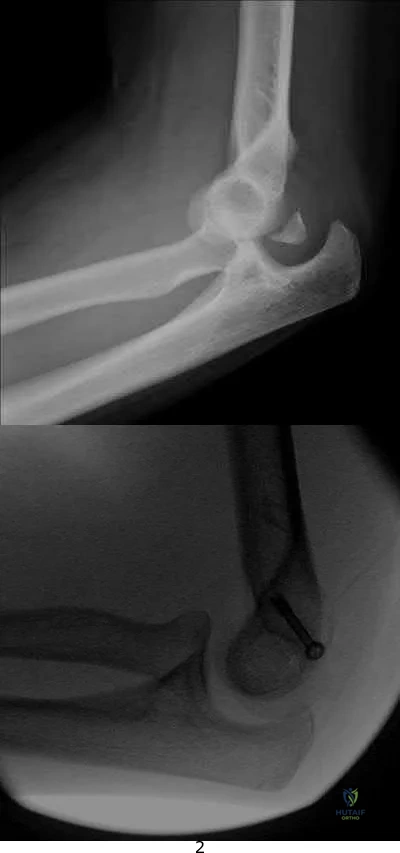
A 52-year-old man sustained the left elbow injury shown in Figure A while playing basketball 2.5 months ago. He underwent the procedure shown in Figure B. Post-operatively he was mobilized in a hinged brace. On examination today, his arc of elbow flexion is 75 degrees with loss of 45 degrees of full extension. His Disabilities of the Arm, Shoulder and Hand (DASH) Outcome Measure score is 45 points. What initial treatment option will likely provide the greatest improvement in this patients DASH score and functional range of motion?
Self-directed exercise therapy Supervised exercise therapy

Supervised exercise therapy with static progressive elbow splinting Continuous passive motion device

Closed manipulation under anesthesia
The clinical presentation is consistent with post-traumatic elbow stiffness following an elbow fracture-dislocation. Supervised exercise therapy with static elbow splinting over a 6 month period
has shown to have a significant improvement on DASH scores and functional range of motion (ROM) in patients with post-traumatic elbow stiffness.
Post-traumatic elbow stiffness is often difficult to manage. The ultimate goal of treatment is to restore a functional range of elbow motion (30° to 130°). Nonoperative modalities are considered the first-line of treatment. Aggressive physical therapy has traditionally been advocated. However, the use of static progressive elbow splinting with a turnbuckle, alongside aggressive physical therapy, has shown to provide better functional outcomes. Treatment is usually maintained over a period of 6-12 months. Surgery is considered when nonoperative therapy fails.
Doornberg et al. looked at a retrospective case series of 29 patients with posttraumatic elbow stiffness. They showed that static progressive splinting can help gain additional motion when standard exercises fail to produce additional improvements.
Lindenhovius et al. randomized sixty-six patients with post-traumatic elbow stiffness into static progressive elbow splint therapy or dynamic elbow splinting over a 12 month period. There was no significant difference in outcomes between treatment modalities. ROM increased by 40° vs. 39° at six months, respectively. DASH scores improved from 50 vs 45 at enrollment to 32 vs. 25 at six months, respectively.
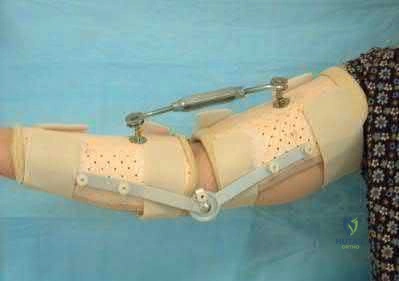
Figure A shows a posterior elbow dislocation with an associated medial epicondyle fracture. Figure B shows ORIF of the fracture seen in Figure A. Illustration A shows a static progressive turnbuckle elbow splint used for posttraumatic elbow stiffness.
Incorrect Answers:
tissues, causing hemarthrosis and additional fibrosis in the joint.
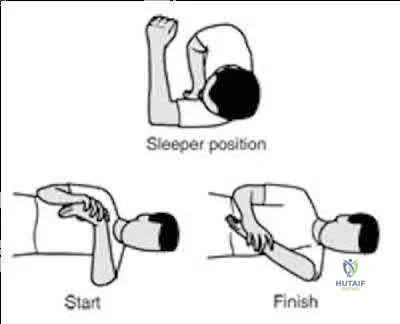
A 25-year-old right-hand baseball pitcher presents with persistent shoulder pain for the past several months in his dominant throwing arm. On physical examination, he is found to have full arc of motion with the exception of an internal rotation deficit of 30 degrees compared to his contralateral side. He is asked to complete the exercise shown in the video in Figure V. This form of rehabilitation is meant to address pathology in which anatomic structure?

Superior glenohumeral ligament Middle glenohumeral ligament

Anterior band of the inferior glenohumeral ligament Superior band of the inferior glenohumeral ligament

Posterior band of the inferior glenohumeral ligament
tissues in patients demonstrating symptoms of internal impingement. The sleeper stretch helps to address posterior tightness and the only posterior structure listed in the responses is the posterior band of the inferior glenohumeral ligament (posterior IGHL).
Internal impingement is a significant cause of pain in throwing athletes. It results from impingement of the articular undersurface of the posterior supraspinatus against the posteriorsuperior glenoid.
This is thought to be secondary to tightness in the posterior soft tissues including the capsule and posterior band of the IGHL. The mainstay of non-operative management is posterior capsular stretching with the sleeper stretches and cross-body adduction stretches. Heyworth et al. review the etiology, diagnosis and management of internal impingement of the shoulder. They note that repetitive contact between greater tuberosity and glenoid rim posterosuperiorly lead to impingement of the posterior rotator cuff and labrum. This occurs when the arm is externally rotated and abducted.
Tyler et al. reviewed the effects of posterior capsular stretching on alleviating symptoms in patients with internal impingement. Twenty-

Figure V is a video that demonstrates the sleeper stretch to address tightness of the posterior soft tissues. The arm is forward flexed 90 degrees and the patient lies on his side in order to stabilize the scapula while the arm is internally rotated. Illustration A depicts the sleeper stretch.
Incorrect Answers:
not the focus of the sleeper stretch.
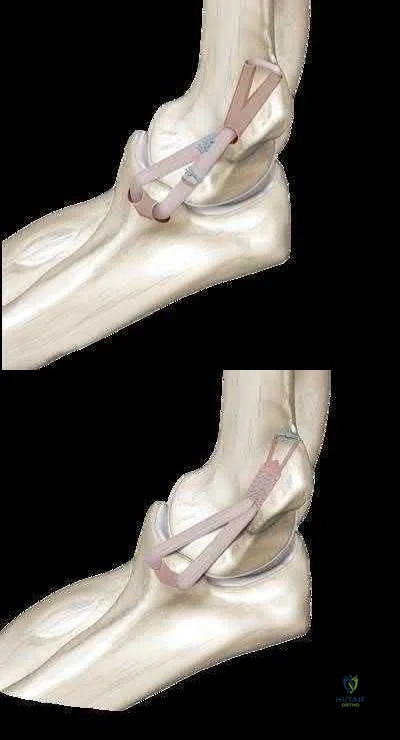
A 28-year-old professional baseball pitcher sustains a complete rupture of his ulnar collateral ligament. He is neurovascularly intact on exam. Which of the following surgical reconstruction techniques has been shown to result in the lowest complication rate and best patient outcome?

Splitting of flexor-pronator mass, figure-of-8 graft fixation. Splitting of flexor-pronator mass, docking graft fixation.

Splitting of flexor-pronator mass, docking graft fixation, ulnar nerve transposition. Detachment of flexor-pronator mass, figure-of-8 graft fixation, ulnar nerve transposition.

Detachment of flexor-pronator mass, docking graft fixation, ulnar nerve transposition.
Ulnar collateral ligament (UCL) reconstruction using a flexor-pronator musclesplitting approach and a docking graft fixation technique are associated with the lowest complication rate and best patient outcomes.
Vitale et al. performed a systematic review of retrospective cohort studies evaluating UCL reconstruction techniques in overhead athletes. They demonstrated that the flexor-pronator musclesplitting approach was associated with better outcomes than detachment of the flexorpronator mass, had a lower rate of postoperative ulnar neuropathy, and a lower overal complication rate. They also found fixation of the graft utilizing the docking technique was associated with better outcomes than the figure-of-8 technique. Abandoning the obligatory ulnar nerve transposition was associated with improved patient outcomes (89% vs. 75%) and a lower rate of postoperative ulnar neuropathy (4% vs. 9%).
Rettig et al performed a case series review of 31 overhead throwing athletes with ulnar collateral ligament injuries managed nonoperatively with 3 months rest followed by rehabilitation exercises. They concluded that 42% of athletes were able to return to their previous level of competition at an average of 6 months from diagnosis (earlier than reconstruction). The authors were unable to identify any patient-specific factors (duration of symptoms, age, acuity of onset) that would predict the success of nonoperative treatment.
Illustration A shows the figure-of-8 (Jobe) graft fixation technique. It is performed by passing the tendon graft through two bone tunnels in the medial epicondyle of the humerus and through one tunnel in the ulnar sublime tubercle. The graft is then sutured to itself in a figure-of-8 configuration. Illustration B shows the docking graft fixation technique. The graft is placed in a triangular configuration through a single humeral tunnel. The suture limbs are then brought out through two separate bone holes and tied over a bony bridge on the superior aspect of the medial epicondyle.
Incorrect Answers:
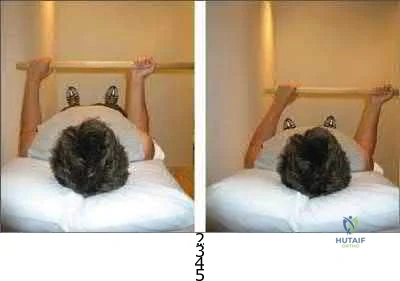
The right shoulder exercise seen in Figure A will put the LEAST amount of stretch on which structure?
Inferior glenohumeral ligament Coracohumeral ligament Anterior-superior capsule Superior glenohumeral ligament Posterior capsule
Shoulder wand exercises, as shown in Figure A, are used to increase external range of motion of the shoulder. With the arm adducted and the elbow flexed, this exercise will put the LEAST amount of stretch on the posterior capsule.
External rotation shoulder wand exercises are commonly used for the treatment of adhesive capsulitis. Adhesive capsulitis is most commonly caused by contracture of the rotator interval. The rotator interval includes the anterior-superior capsule, superior glenohumeral ligament, coracohumeral ligament and long head biceps tendon. The structure most commonly contracted is the anterior-superior capsule, which limits external rotation when the arm is adducted. Kuhn et al. showed that in the neutral position, each ligament except the posterior capsule significantly affected the torque required for external rotation. The greatest effect on resisting external rotation at 0 degrees of abduction was the entire inferior glenohumeral ligament > coracohumeral ligament
> anterior band of the inferior glenohumeral ligament > superior and middle glenohumeral ligament.
Harryman et al. looked at the role of the rotator interval capsule in passive motion and stability of the shoulder. They found operative alteration of this capsular interval was found to affect flexion, extension, external rotation, and adduction of the humerus with respect to the scapula. Limitation of external motion was increased by operative imbrication of the rotator interval and decreased by sectioning of the rotator interval capsule.
Kim et al. reviewed shoulder MRIs to determine if abnormalities of the rotator interval were correlated with chronic shoulder instability. They found a significantly larger rotator interval height, rotator interval area, and rotator interval index in patients with chronic anterior shoulder instability compared to patients without instability.
Figure A shows a patient performing an exercise to increase right shoulder external rotation with a wand/stick. The right arm is fully adducted by her side, and her elbow flexed at 90 degrees.
Incorrect Answers:
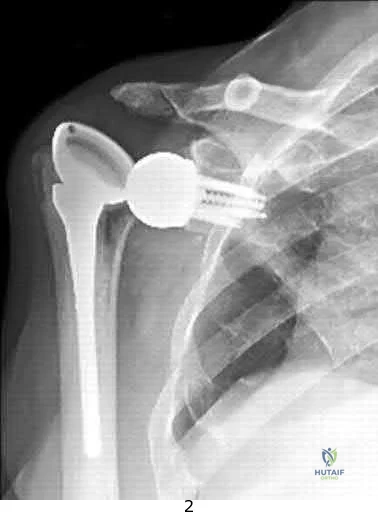
) A 55-year-old male returns for followup 3 months after reverse shoulder arthroplasty. He reports limited function of his right shoulder but no antecedent trauma. A radiograph of his shoulder is shown in Figure A. All of the following variables are associated with this complication EXCEPT:
History of malunited proximal humerus fracture Proximal humeral bone loss

Failed primary arthroplasty Rheumatoid arthritis

Fixed preoperative glenohumeral dislocation
Rheumatoid arthritis is not associated with reverse shoulder arthroplasty (RSA) dislocation. RSA dislocation is a known complication of RSA. Risks include proximal humeral bone loss, chronic fracture sequelae with malunited/ununited tuberosities, failed previous arthroplasty, and fixed glenohumeral dislocation preoperatively. An irreparable subscapularis tears may be less of an issue with newer implant designs.
Trappey et al. studied instability and infection rates after RSA. They found that the rate of instability was similar in primary and revision surgery, but the rate of infection was higher in revision surgery. Instability was highest in the fracture sequelae group because of malunited tuberosities, contractures and proximal humeral bone loss.
Favre et al. examined the effect of component positioning on RSA stability.
They found that humeral version was more important than glenoid version. Stability is improved with the humerus in neutral or slight anterversion. They recommend avoiding retroversion >10deg. Edwards et al. examined subscapularis insufficiency and the risk of RSA dislocation. They found that of 138 RSA, all 7 dislocations occurred in patients with an irreparable subscapularis.
Dislocation was also more likely in patients with complex diagnoses, including proximal humeral nonunion, fixed dislocation, and failed prior arthroplasty.
Figure A shows reverse shoulder arthroplasty dislocation. Incorrect Answers:
) A 45-year-old man complains of chronic right shoulder pain. He has a history of chronic steroid use because of asthma. He recently completed a course of physical therapy
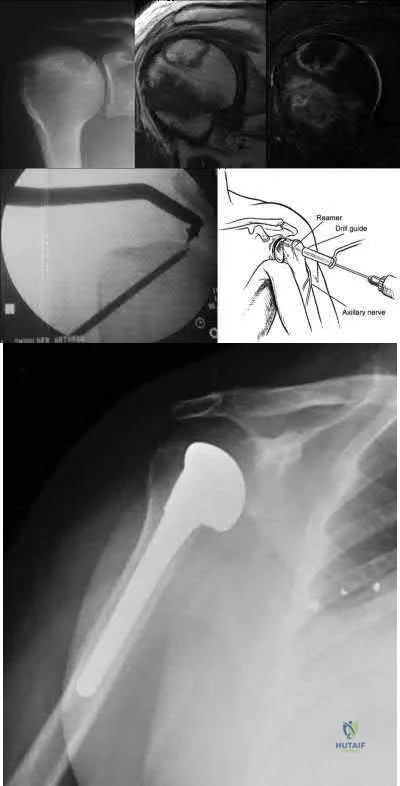
and has given up his job as a laborer in favor of a desk job. Examination reveals diminished shoulder abduction strength. A radiograph of his shoulder is shown in Figure A. Which of the following surgical treatment options (Figures B through F) is the most appropriate?
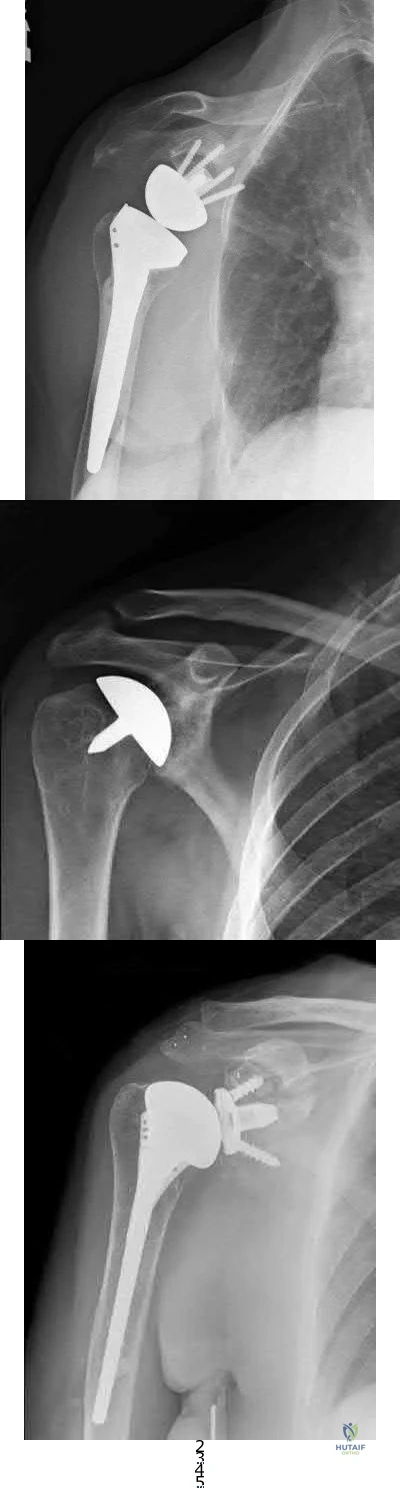
Figure B Figure C Figure D Figure E Figure F
This patient has early stage avascular necrosis (AVN) of the humeral head without subchondral collapse/flattening, likely related to chonic steroid use.
Core decompression is indicated.
Treatment of humeral head AVN is dependent on Cruess Stage. Precollapse stages (Stage I and II) may be treated by core decompression and joint preservation. Hemiarthroplasty is used for Stage III-IV disease. Total shoulder arthroplasty is used for Stage V disease. Resurfacing may be used for Stage III disease with focal chondral defects and sufficient remaining epiphyseal bone stock for fixation.
Harreld et al. reviewed humeral head AVN. They advocate attempting core decompression and arthroscopy for Stage III disease, and then tailoring resurfacing or replacement depending on defect size.
Smith et al. reviewed 31 hemiarthroplasties for steroid-related AVN (6 Stage III, 16 Stage IV, 5 Stage V). Unsatisfactory results were found in 45%. This was associated with glenoid cartilage wear over time. However, they still believed hemiarthroplasty was appropriate for younger active patients with stage III or stage IV disease.
LaPorte et al. performed core decompression for various stages of AVN.
Results were successful in 94%, 88%, 70% and 14% of Ficat-Arlet Stages I, II, III and IV humeral head AVN respectively, and more successful for nonsteroid related cases compared with steroidrelated cases. They recommend this treatment for Stages I-III.
Figure A comprises a radiograph showing Cruess Stage II disease ("snowcap" sign indicating sclerosis, preservation of the head contour and absence of subchondral collapse, left), a T1weighted
MRI (center) and T2-weighted fat saturated MRI (right) showing a variegated pattern of osteonecrosis, but with preservation of normal head contour. Figure B shows core decompression. Figure C shows hemiarthroplasty. Figure D shows reverse shoulder arthroplasty. Figure E shows resurfacing. Figure F shows total shoulder arthroplasty. Illustration A depicts the Cruess staging system. Illustration B shows a possible algorithm for management where they use the Ficat stages adapted from the hip.
Incorrect Answers:
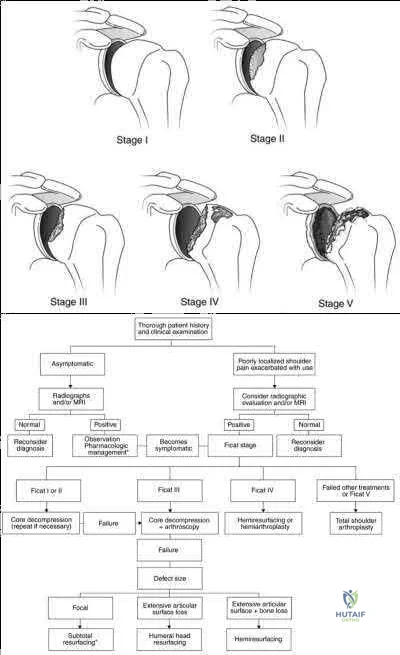
A 56-year-old otherwise healthy woman undergoes uncomplicated arthroscopic repair of a full-thickness rotator cuff tear. Prior to the procedure, the patient had attempted a long,
protracted course of physical therapy in an attempt to regain function without surgery. At her 10 day post-operative visit, she tearfully informs you that she cannot see her physical therapist because she has used up her 24-visit allotment for the year. She has 4 more weeks
until her insurance year turns over, and she does not have the financial means to pay out of pocket. What is the best next course of action?
Request a peer-to-peer review for authorization of additional visits or else the patient is likely to have a poor result

Provide a brief explanation and sheet of exercises for periscapular and cuff strengthening exercises using a resistance band

Test her range of motion and strength, and if limited, have her return weekly to your clinic for a guided home rehabilitation program

Explain to her that seeing a physical therapist during the first 6 weeks following cuff repair will not affect her range of motion one year removed from surgery

Give her a prophylactic corticosteroid injection to avoid early post-operative adhesive capsulitis
Early motion following rotator cuff repair has not been shown to impact range of motion and stiffness at one year post-operative clinical examinations.
Stiffness is a complication of protecting rotator cuff repairs from early re-tear with sling immobilization. However, with sling immobilization of up to 6 weeks, there is evidence of no increase in long-term stiffness. Accordingly, supervised physical therapy is not required in the first 6 weeks following arthroscopic rotator cuff repairs in order to obtain a good result.
Parsons et al. retrospectively reviewed 43 patients with full-thickness cuff tears who underwent a conservative early-postoperative protocol involving sling immobilization for 6 weeks with no formal therapy during that time. 10 /43 patient were characterized as stiff at their 6-week postoperative visit. At one year, there was no difference in the range of motion of the early stiff group compared to the non-stiff group.
Trenerry et al. collected prospective data on 209 consecutive patients undergoing primary rotator cuff repair. They found that patients in the stiffest quartile of range of motion testing at 6 weeks progressively regained range of motion by a post-operative visit at 72 weeks. The predictor of slowest recovery of early post-operative stiffness was found to be an internal rotation deficit with the patient reaching behind his or her back.
Incorrect Answers:
1: Early supervised physical therapy has not been shown to be essential to obtaining good motion post-operatively.
2 and 3: Strength testing and home strengthening programs in the early postoperative period would put the repair at risk for early failure.
5: Prophylactic corticosteroids are not indicated for prevention of postoperative stiffness, and furthermore, could theoretically interfere with healing.
A 62-year-old woman presents with chronic shoulder pain. On physical exam, she has anterior shoulder pain and her symptoms are reproduced with provocative testing of the biceps including supination against resistance and forward flexion of the shoulder against resistance. Internal and external rotation are painful, but her range of motion is intact. Shoulder radiograph and MRI images are shown in Figures A-E. Which of the following statements is true regarding the patient's condition?
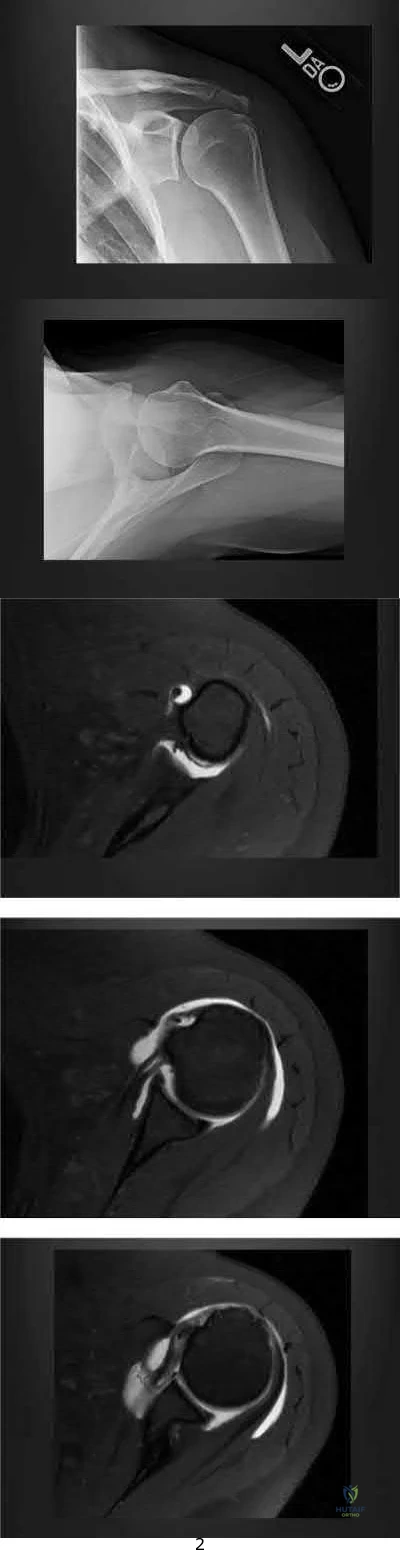
Her clinical examination is most consistent with a SLAP tear, which should be repaired. Her biceps pathology is due to her partial tearing of her subscapularis

She has isolated degenerative biceps tendonosis and an injection may cure her symptoms

She has end-stage rotator cuff arthropathy and should consider a reverse total shoulder arthroplasty

Her subacromial impingement is causing her biceps tendon sheath to be inflamed
The subscapularis tendon is the most important medial restraint to subluxation or dislocation of the long head of the biceps tendon (LHBT).
Anterior shoulder pain and positive provocative biceps clinical examination tests are common in patients with concomitant rotator cuff pathology. A consequence of subscapularis tendon tears -even partial tears - is that the LHBT can subluxate medially out of the intertubercular groove, as the subscapularis tendon is the most important restraint to medial instability of the LHBT. This instability can cause both pain and inflammation around the biceps tendon, leading to pain with resisted supination (Yergason's test) or resisted forward flexion (Speeds' test).
Walch et al. wrote a case series on 71 cases of biceps tendon instability. They found that dislocated LHBTs were associated with partial or complete subscapularis tears in 96% of cases.
Maier et al. published clinical results of treating acute traumatic medial LHBT instability with open repair of the subscapularis tendon and stabilization of the LHBT. They showed equivalent functional clinical outcomes to biceps tenotomy or tenodesis, with improved cosmesis and decreased muscle cramping.
Figures A and B show Grashey and axillary lateral views of the patient and demonstrate an os acromiale. Figures C, D, and E are axillary T2 MRI images. Figure C shows the tendon of the long head of the biceps in the distal aspect of the biceps grove. Moving proximally, Figure D shows the tendon subluxated onto the lesser tubercle and Figure E shows it fully dislocated medially.
Incorrect Answers:
A 78-year-old male presents to clinic 4 weeks after left total shoulder arthroplasty. He has not been wearing his sling and reports that he developed increased pain after slipping in the shower. He used the arm to catch himself from falling. On examination, he can flex the shoulder to 70 degrees, limited by pain. Active external rotation with arm at the side is 50 degrees and active internal rotation is 5 degrees. Passive external rotation is to 80 degrees. A radiograph of the left shoulder is shown below in Figure A. What other complaint is the patient most likely to have?
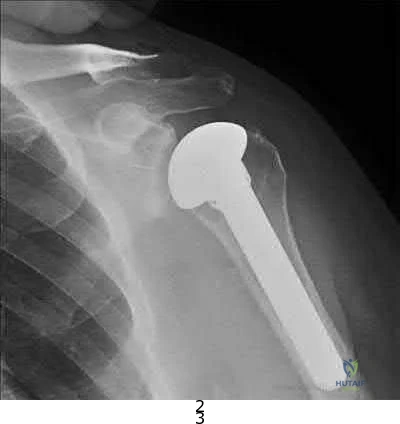
Pain with palpation of the bicipital groove Pain with palpation over the subdeltoid bursa Sensory loss over the lateral shoulder

Sensation of shoulder instability with external rotation Sensation of shoulder instability with internal rotation
The clinical presentation is consistent with a tear of the subscapularis, which is a well-described complication after total shoulder arthroplasty. The most likely additional complaint this patient will have is anterior shoulder instability, noticeable with external rotation of the shoulder.
Total shoulder arthroplasty is the preferred treatment for glenohumeral arthritis in patients with intact rotator cuff and good glenoid bone stock. The surgical approach involves detaching the subscapularis and capsule from the anterior humerus and dislocating the humeral head anteriorly. Post operatively, external rotation is limited to protect the subscapularis repair. If there is suspicion of a postoperative subscapularis tear, and ultrasound can be performed to confirm the diagnosis.
Miller et al. reported 7 cases of subscapularis tendon rupture after total shoulder arthroplasty, all of which were subsequently repaired. Decreased functional outcomes were observed in these patients, with lengthening techniques to address internal rotation contractures and prior surgery involving the subscapularis tendon as risk factors for rupture
Westoff et al. performed static and dynamic ultrasounds on 22 patients after total shoulder arthroplasty evaluating for numerous periarticular pathologies. The authors concluded that sonography is a useful tool for evaluation of periimplant tissues after TSA.
Figure A shows an intact left total shoulder arthroplasty without evidence of fracture, dislocation, or hardware loosening. Illustration A shows the incision for the subscapularis tendon during TSA. Incorrect Answers:
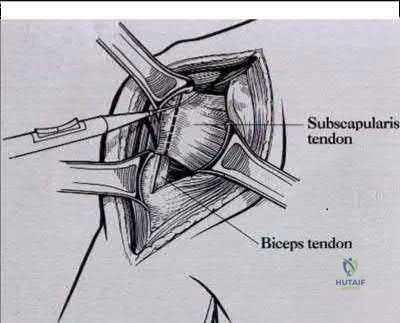
A 25-year-old lineman is referred to your office for a second opinion. 1 year ago, he underwent an arthroscopic procedure for shoulder instability. He complains of persistent sense of instability despite the surgery. Which of the following is a contraindication to revision arthroscopic labral repair for recurrent anterior glenohumeral instability?
Glenoid bone loss of 10%

Capsular attenuation from prior thermal capsulorraphy Anterior labral periosteal sleeve avulsion (ALSPA ) lesion Glenoid labral articular defect (GLAD) lesion

Combined Superior Labrum from Anterior to Posterior tear (SLAP) and recurrent Bankart lesion
Capsular attenuation or postthermal capsular necrosis from prior thermal capsulorraphy is a contraindicated to arthroscopic repair.
Thermal capsulorrhaphy utilizes heat generated by radiofrequency or laser ablation to cause capsular shrinkage in an effort to treat shoulder instability. However, high recurrence rates have been found, especially around two to three weeks after the index procedure, when the capsular tissue is the weakest. In the setting of recurrence following thermal capsulorrhaphy, open revision is recommended.
Creighton et al. reported on a series of 18 patients undergoing revision arthroscopic stabilization. Of the 18, 3 failed with recurrent instability, all with previous thermal capsulorrhaphy. Miniaci et al. reviewed the outcomes following thermal capsulorrhaphy noting high rates of recurrent instability, especially in the setting of initial treatment for multidirectional instability. Park et
al. reported on a series of 14 patients undergoing revision following thermal capsulorrhaphy. Ten out of 14 patients had signs of capsular thinning, insufficiency and attenuation.
Wong et al. surveyed 379 shoulder surgeons on the complications following thermal capsulorrhaphy. Capsular insufficiency and thinning were commonly associated with recurrent instability.
Hecht et al. performed thermal capsulorrhaphy and biomechanical analysis of the capsule in a sheep model. The authors found that the capsule was weakest at the 2-3 week post-operative timepoint, leading to the highest rate insufficiency, attenuation and mechanical failure at this time.
Incorrect answers:
A 47-year-old landscaper presents with worsening left shoulder pain and weakness. Three years ago, he injured the left shoulder in a fall and elected for nonoperative
management to minimize time off from work. Physical therapy was effective until 6 months ago when his shoulder function worsened to the point that he is now unable to work.
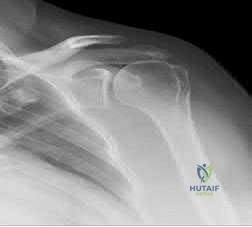
Examination of his active range of motion reveals forward elevation 120° with pain, abduction 100°, IR at neutral to T8 and ER at neutral 5°. He has a positive ER lag sign and Hornblower's sign. Belly press and lift-off tests are normal. A recent radiograph is shown in Figures A. MRI images are shown in Figures B and C. Which of the following is the best treatment option?
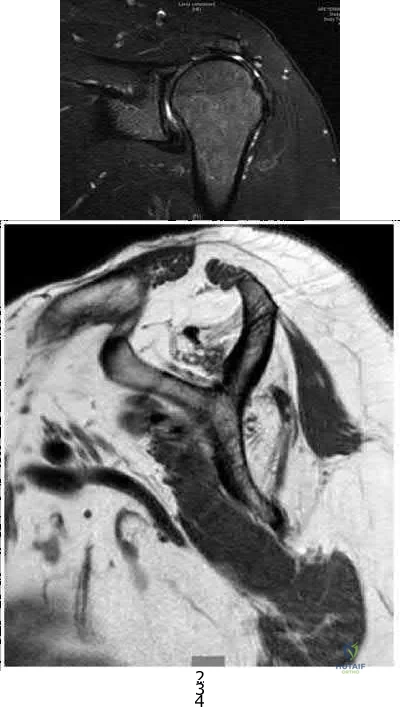
Continue physical therapy Latissimus dorsi transfer Arthroscopic rotator cuff repair Pectoralis major transfer

Reverse total shoulder arthroplasty
This patient has a chronic massive posterosuperior rotator cuff tear with marked atrophy, tendon retraction and loss of external rotation strength that is impacting his daily life. The best treatment option for this middle-aged laborer with an irreparable posterosuperior rotator cuff tear is a latissimus dorsi transfer to restore external rotation strength and motion.
Irreparable rotator cuff tears are marked by: (1) Superior displacement of the humeral head (AHI < 5-7mm), (2) Fatty infiltration of the rotator cuff muscles ( Goutallier stage 3-4), (3) Increased duration of the tendon tear and (4) Profound external rotation weakness. These findings are predictive of poorquality tissue and stiffness of the muscle-tendon unit, not amenable to primary repair. In this setting, a latissimus dorsi transfer can be utilized to restore shoulder strength, function and improve pain. Relative contraindications include subscapularis deficiency, deltoid deficiency, pseudoparalysis of the shoulder and advanced glenohumeral arthritis.
Gerber et al. performed a case series analysis of 67 patients with irreparable rotator cuff tears managed with latissimus dorsi transfer. Patients with an intact subscapularis demonstrated improvement in pain, range of motion and strength postoperatively, while no improvement was noted in patients with subscapularis deficiency. The authors conclude that latissimus dorsi transfer should not be performed in the setting of poor subscapularis function.
Iannotti et al. found that better clinical results following latissimus dorsi transfer were associated with: preserved active shoulder range of motion and strength (specifically forward elevation > 90° and external rotation > 20°), synchronous firing of the transferred latissimus dorsi muscle and male gender.
Figure A is an AP radiograph of the left shoulder with superior migration of the humeral head (AHI
< 5mm) and no evidence of glenohumeral arthritis. Figures B and C show a retracted posterosuperior rotator cuff tear and Goutallier stage 4 atrophy (more fat than muscle) of the supraspinatus, infraspinatus and teres minor, rendering this tear irreparable. Illustration A shows a latissimus dorsi transfer. The latissimus dorsi tendon is positioned over the top of the humeral head, covering most of the rotator cuff defect. The tendon is then secured to the subscapularis tendon edge and lesser tuberosity anteriorly, the remnant supraspinatus and infraspinatus tendons medially, and the greater tuberosity laterally.
Incorrect Answers:
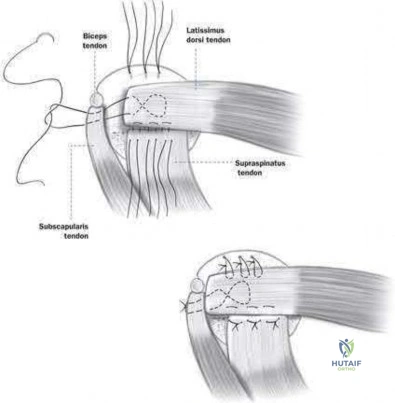
A collegiate swimmer develops medial winging of the scapula. If the EMG and nerve conduction studies are abnormal, the most likely nerve roots to be involved are?

C7, C8, T 1 C6, C7, C 8 C5, C6, C 7 C4, C5, C 6 C3, C4, C 5
Classic medial winging of the scapula is due to paralysis of the serratus anterior muscle which is supplied by the long thoracic nerve which holds the scapula to the chest wall and prevents the inferior angle of the scapula from migrating medially. It is innervated by the long thoracic nerve (C5, 6, 7).
Surgical treatment may include partial pec major transfer. Lateral winging may be caused by spinal accessory nerve palsy (CN XI, also ventral ramus C2,3,4). The nerve may be injured during neck surgery. This causes trapezius weakness, allowing the inferior pole of the scapula to migrate laterally. The modified Eden-Lange procedure may be used for this type of winging.
Gregg et al. describes paralysis of the serratus muscle in young athletes which they felt was due to repetitive traction. Full recovery usually occurs in an average of 9 months, and they recommend that surgical methods of treatment should be reserved for patients in whom function fails to return after a twoyear period.
Foo et al. describes a larger cohort of 20 patients again treated expectantly with observation and physical therapy. They reported consistent recovery but that it can take up to 2 years.
Illustration A shows a clinical photo of medial scapular winging. Illustration V is an instructional video of scapular winging. It begins with a clinical video of the condition.
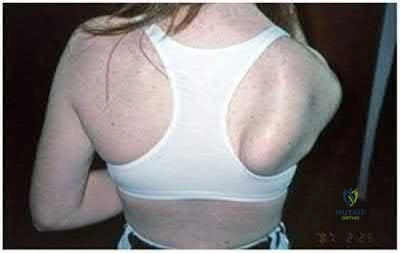
A 62-year-old man complains of shoulder pain for 2 years. He has had 1 course of intra articular sodium hyaluronate and 6 weeks of physical therapy with little relief. Examination reveals diminished arm flexion and abduction secondary to pain. Radiographs of his shoulder are shown in Figures A and B. According to the American Academy of Orthopaedic Surgeons Clinical Practice Guidelines, what is the next best step?
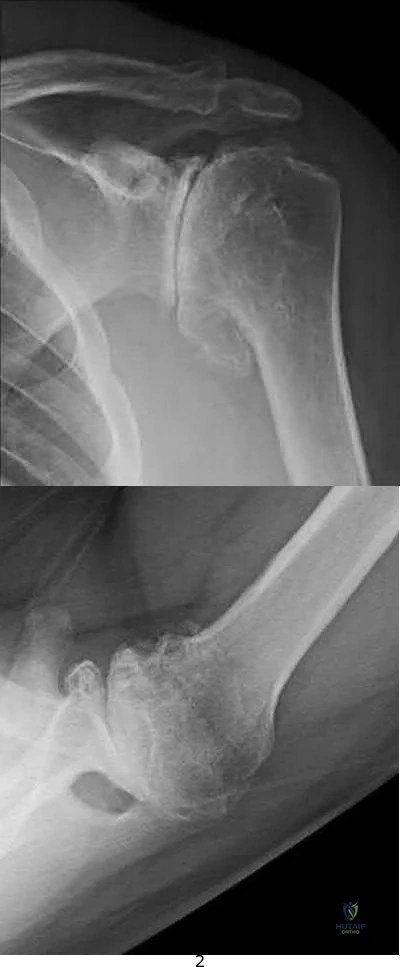
Humeral head replacement arthroplasty Hemiarthroplasty and ream-and-run glenoid procedure

Cuff tear arthropathy (CTA) prosthesis

Total shoulder arthroplasty with a metal-backed cemented glenoid component Total shoulder arthroplasty with an all-polyethylene cemented glenoid component
This patient has end-stage glenohumeral osteoarthritis (GH OA). According to the AAOS CPG, total shoulder arthroplasty (TSA) is recommended using an allpolyethylene cemented glenoid component.
TSA is indicated for cases of end-stage GH OA. It is preferred to hemiarthroplasty. It is contraindicated in cases with insufficient glenoid bone stock (glenoid wear to the level of the coracoid), rotator cuff arthropathy or irreparable cuff tears and deltoid dysfunction. It provides good pain relief and has good survival at 10 years (>90%).
Radnay et al. performed a systematic review involving 1952 patients comparing TSA with humeral head replacement (HHR). They found that TSR provided greater pain relief, range of motion, patient satisfaction, and had lower revision rates. They recommend TSA over HHR for GH OA. Izquierdo et al. described the AAOS Clinical Practice Guidelines (CPG) regarding treatment of GH OA. This is summarized in Illustration A.
Figures A and B show end-stage GH OA with large osteophytes and subchondral sclerosis. There is significant glenoid wear and posterior subluxation (Walch B glenoid deformity). Illustration A is a table summarizing the AAOS CPG on treatment of GH OA. Illustration B shows a CTA humeral component. It is not paired with a glenoid component.
Incorrect Answers:
Metal-backed glenoids have higher rates of revision than all-polyethylene glenoids.
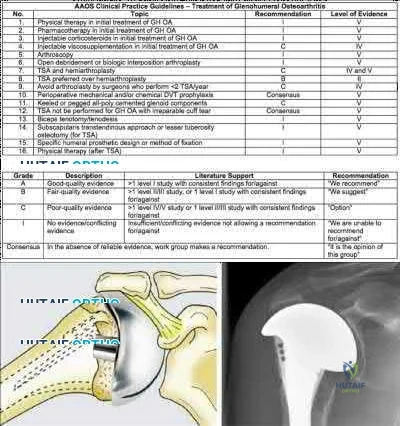
Posterior glenohumeral dislocations are as common as anterior dislocations in which of the following patient groups?
Football players

Marfan's syndrome patients Renal failure patients Epilepsy patients

Women
Millett et al and Robinson et al provide review articles on posterior shoulder dislocations, which are rare clinical entities that occur during seizures and electrocution (due to tetanic muscle contraction) or as a result of high energy trauma. Robinson et al noted that poor prognostic factors associated with posterior shoulder dislocation include late diagnosis, large bony defect of humeral head, associated proximal humerus fracture, and need for arthroplasty. In Gerber's series, posterior dislocations occurred with equal frequency to anterior in a cohort of epilepsy patients.
What nerve is injured most commonly during the superficial dissection when repairing a distal biceps rupture through a single incision anterior approach?

Medial antebrachial cutaneous nerve Lateral antebrachial cutaneous nerve Superficial radial nerve

Ulnar nerve

Posterior interosseous nerve
The lateral antebrachial cutaneous nerve (LABCN) is at risk during the superficial dissection when repairing a distal biceps rupture through a single incision anterior approach.
The LABCN is the terminal cutaneous branch of the musculocutaneous nerve, which supplies sensation to the volar-lateral aspect of the forearm. The LABCN pierces the deep fascia of the arm lateral to the musculotendinous junction of the distal biceps tendon after lying on top or piercing through the brachialis muscle. It exits the arm and lies in the subcutaneous tissues of the antecubital fossa. It is important to retract this nerve laterally during the approach to the distal biceps tendon.
Cohen describes the importance of identifying the LABCN during the superficial dissection as injury to this nerve is not uncommon (5-7%). Injury to the PIN (5 %) is devastating and occurs with retractor placement during the deep dissection and the use of suspensory fixation on the posterior cortex of the radius.
The review article by Ramsey et al covers the surgical anatomy and complications of biceps surgery, including injury to the LABCN.
Illustration A shows the LABCN relative to the anterolateral approach to the elbow which is commonly used to repair distal biceps avulsions. Illustration B shows the close proximity of the LABCN to the distal biceps in a human specimen.
Incorrect Responses:
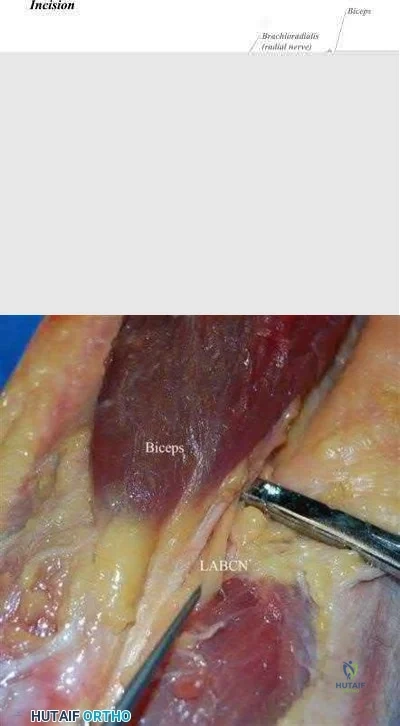
An MRI of the shoulder in a patient with chronic quadrilateral space syndrome is most likely to show which of the following?

Increased intra-capsular volume Loss of intra-capsular volume Fatty atrophy of the infraspinatus Fatty atrophy of the teres minor

Fatty atrophy of the latissimus dorsi
Quadrilateral space syndrome involves dysfunction of the axillary nerve, perhaps by entrapment or compression, resulting in the functional denervation of the teres minor.
The quadrilateral space is a potential space formed by the long head of the triceps medially, the humerus laterally, the teres minor above, and the teres major below. The axillary nerve and posterior circumflex humeral artery travel through this space.
The Sanders article describes the MRI appearance, which is that the muscle appears streaked with white on MRI and atrophied (See illustration A) consistent with fatty atrophy. Sanders group report this finding in 3% of shoulder MRIs. The posterior circumflex humeral artery also travels with the axillary nerve as it travels through this space. Loss of capsular volume on an arthrogram study is suggestive of adhesive capsulitis.
Illustration B is a diagram which shows the borders of the quadrilateral (or quadrangular) space.
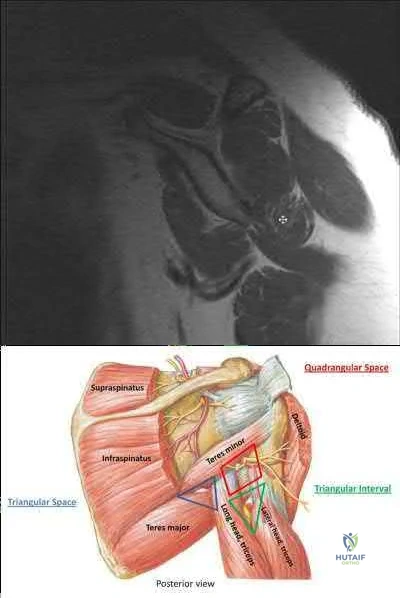
A 21-year-old collegiate volleyball player is noted to have weakness in external rotation and isolated atrophy of the infraspinatus on physical examination as seen in Figure A. An axial MRI image is shown in Figure B. This clinical condition is most likely caused by compression of the:
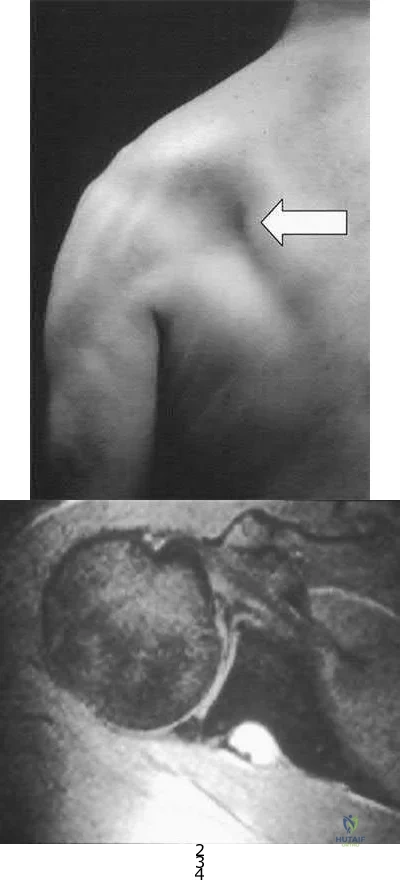
Axillary nerve at the triangular space Suprascapular nerve in the suprascapular notch Axillary nerve in the quadrangular space Suprascapular nerve in the spinoglenoid notch

Long thoracic nerve anterior to the scalenus and the first rib and posterior to the clavicle
The clinical presentation is consistent for a suprascapular neuropathy caused by compression of the suprascapular nerve by a cyst in the spinoglenoid notch.
The suprascapular nerve arises from the upper trunk of the brachial plexus with contributions from C5-6. It travels through the suprascapular notch of the scapula where it gives motor branches to the supraspinatus then around the spinoglenoid notch where it innervates the infraspinatus.
Compression of the nerve at the suprascapular notch will cause denervation and atrophy of both the supraspinatus and infraspinatus while compression at the spinoglenoid notch affects the infraspinatus in isolation. This is commonly seen in overhead athletes who sustain a SLAP tear and resultant spinoglenoid notch cyst as seen in the MRI. This will cause weakness and atrophy of the infraspinatus and can be noted both clinically and radiographically. Appropriate operative management is still not clear in the literature with some authors reporting a need for labral repair + cyst decompression and others reporting good outcomes with labral repair alone. Other cases have been treated with needle aspiration.
The cited reference by Cummins et al reviews the various causes, diagnosis, and treatment of suprascapular neuropathy.
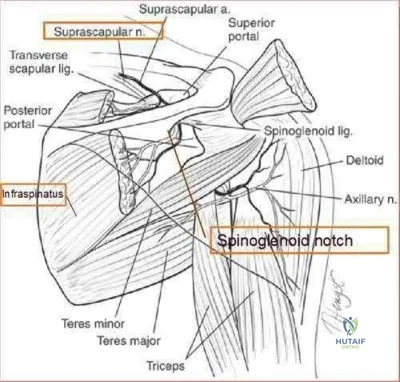
The reference by Martin et al is a retrospective study of the results of nonoperative treatment of suprascapular neuropathy in which 5 had excellent results and 7 had good results.
Which of the following provocative tests would most likely be positive in a patient with medial epicondylitis?

Resisted forearm pronation and wrist flexion with a clenched fist Resisted forearm supination and wrist extension with a clenched fist Dynamic valgus stress test

Milking maneuver Pinch grip test
A provocative test for medial epicondylitis can be elicited by applying resistance to a patient with their fist clenched, wrist flexed and pronated.
Medial epicondylitis is an overuse syndrome of the flexor-pronator mass. The pronator teres (PT) and flexor carpi radialis (FCR) are thought to be most affected with this condition. It is most common in the dominant arm and occurs with activities that require repetitive wrist flexion/forearm pronation. Patients are most tender over the origin of PT and FCR at the medial epicondyle.
Resisting a patient with their fist clenched, wrist flexed and pronated can cause worsening of their pain. This maneuver can be used as a provocative test for this condition.
Cain et al. reviewed elbow injuries in throwing athletes. They comment that the common flexorpronator muscle origin provides dynamic support to valgus stress in the throwing elbow, especially during early arm acceleration and help produce wrist flexion during ball release.
Amin et al. reviewed the evaluation and management of medial epicondylitis. They report that medial epicondylitis typically occurs in the fourth through sixth decades of life, the peak working years, and equally affects men and women. Physical therapy and rehabilitation is the main aspect of recovery from medial epicondylitis, once acute symptoms have been alleviated.
Illustration A shows a video of this provocative test for medial epicondylitis. Incorrect Answers:
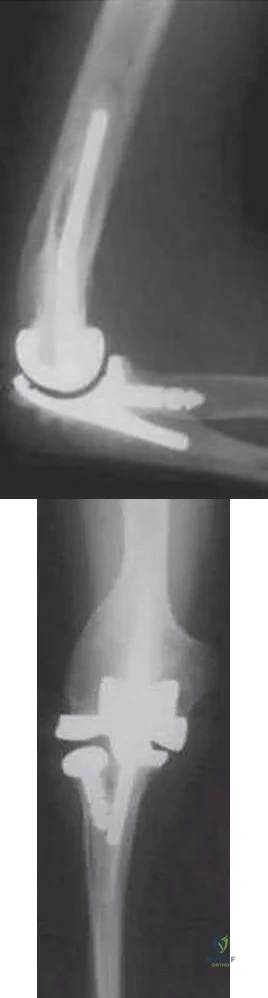
A 72-year-old woman presents for follow-up after elbow surgery. Her radiographs are shown in Figures A and B. Which of the following pre-operative diagnoses is a relative contraindication to the use of this prosthesis design?

Acute intra-articular distal humerus fracture Malunited intra-articular distal humerus fracture Late-stage rheumatoid arthritis

Post-traumatic bony ankylosis Osteoarthritis
This patient has had an unconstrained total elbow arthroplasty (TEA).
Unconstrained TEA is least preferred for late-stage rheumatoid arthritis where there is significant capsuloligamentous instability and bony erosion.
Unconstrained (unlinked or resurfacing prosthesis) TEA depend on intact bony and ligamentous constraints for stability. These are appropriate for humeroulnar conditions with intact collateral ligaments and radiocapitellar articulation e.g. osteoarthritis, post-traumatic arthritis, intra-articular distal humerus fracture, and malunion of the distal humerus. Conditions with increased risk of
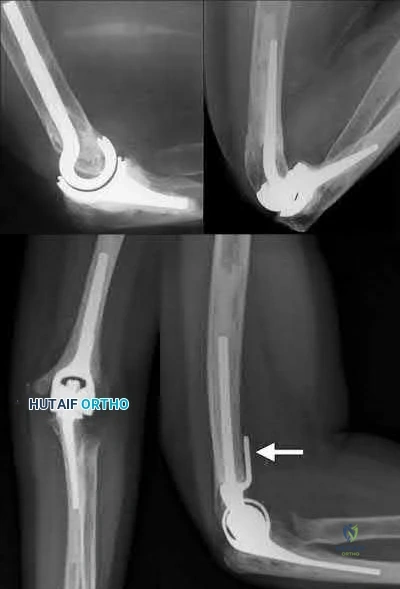
instability (ligamentous injury, rheumatoid arthritis) will benefit from a linked or semiconstrained prosthesis.
Mansat et al. reviewed the Coonrad-Morrey linked (semi-constrained) TEA implant in 70 patients after 5 years. They found that patients with inflammatory arthritis had higher function than those with traumatic conditions
( fractures, nonunions and post-traumatic arthritis). Survival rate was 98% and 91 % at 5 and 10 years, respectively. They concluded that this implant provided satisfactory treatment for different indications although radiolucent lines and bushing wear were a concern.
Hildebrand et al. reviewed the functional outcome of the Coonrad-Moorey prosthesis in 51 elbows after 50 months. The inflammatory arthritis group had higher performance scores than the traumatic/post-traumatic conditions group. Isometric extensor torque was found to be less than the nonoperated side. Radiolucency was noted in 11 elbows.
Figures A and B show an unconstrained TEA with radial head replacement. Illustration A shows more examples of unconstrained TEA. Illustration B shows a semiconstrained TEA. The arrow points to the anterior flange. Illustration C shows radiolucent lines around the stems. Illustration D shows severe bushing wear leading to locking mechanism failure. Illustration E is a table comparing linked and unlinked implants.
Incorrect Answers:
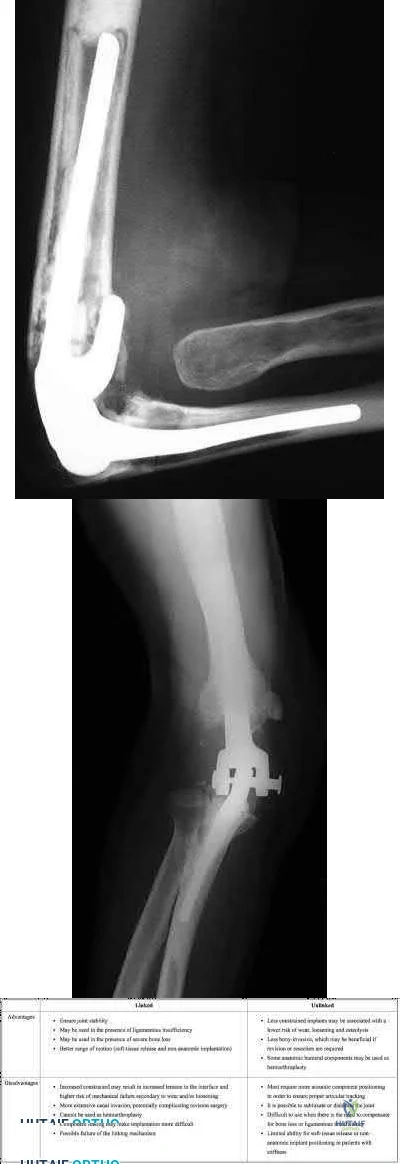
A professional baseball team has several pitchers with complaints of velocity loss with their pitches and shoulder pain of their dominant shoulders during spring training. Pitch counts are properly monitored. The average glenohumeral internal rotation deficit on the pitching staff is 45 degrees. The best intervention would be:
Pitchers throwing less fastballs and more changeups

Evaluate the pitchers elbows for ulnar collateral ligament acute ruptures. Increasing the weight training for the deltoid and latissimus dorsi muscles Focused stretches and therapies that address posterior capsular tightness Firing the general manager for finding pitchers that "lose their stuff"
Glenohumeral Internal Rotation Deficit (GIRD) is a phenomenon that occurs in baseball pitchers and is due to posterior capsular tightness. Treatment should begin with a therapy program addressing the pathologic posterior capsule.
GIRD is a phenomenon that is frequently found in high-level overhead throwing athletes, predominantly baseball pitchers. It is defined as the measured difference in internal rotation between the non-dominant arm and dominant arm. Worsening range of motion deficits are seen with increased repetitions, both over a single season and a career. GIRD > 25º is associated with development of shoulder pathologies or pain requiring periods of inactivity. Cessation of overhead throwing activities and initiation of a stretching program to address posterior capsular contractures is largely effective (90% in some series).
Burkhart et al. reviewed the conditions associated with high-level overhead throwing athletes shoulders, culminating in a theory of pathologic progression to "dead arm syndrome" (loss of velocity and effective pitching). Their theory attributes adaptive hyperexternal rotation (occurs during late-cocking / early acceleration phases of pitching) to lead to posterior-inferior capsular contracture and GIRD. Subsequent injuries to anterior structures - including SLAP lesions - would then occur.
Illustration A is a cartoon depiction of how to perform the sleeper stretch. This is a common component of a pitcher's maintenance stretching program.
Incorrect Answers:
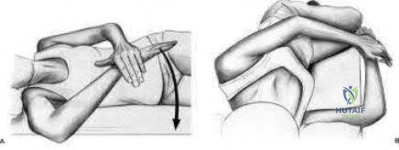
A 68-year-old man presents with severe right shoulder pain. He had a prolonged course of physical therapy and received several cortisone injections for his pain without improvement. Examination reveals pseudoparalysis of the right shoulder with a 20-degree external rotation lag with the shoulder adducted. With the shoulder placed in 90 degrees of abduction, he can actively externally rotate his shoulder. The patient was treated with a medialized reverse prosthesis shown in Figure A. Which of the following statement is true regarding this treatment option?
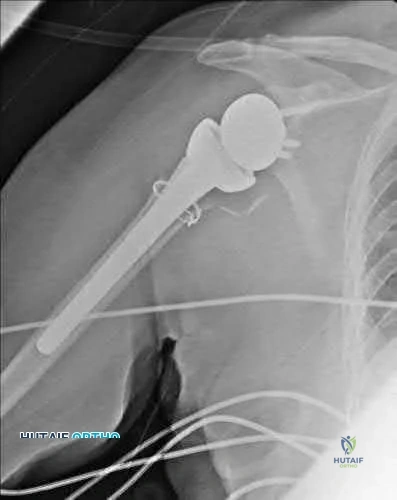
It is contraindicated in patients with shoulder pseudoparalysis

It can be used in patients with deltoid dysfunction when combined with latissimus dorsi transfer It shifts the center of rotation of the shoulder superior and lateral

The risk of scapular notching is increased with inferior placement of the glenoid component The risk of instability is increased with an irreparable subscapularis
The clinical presentation is consistent with a patient with pseudoparalysis that was treated with a reverse total shoulder arthroplasty (RTSA). The risk of postoperative instability is increased in patients with an irrepairable subscapularis when a medialized reverse prosthesis is used. Answers 1-4 are false statements.
RTSA is most commonly indicated for rotator cuff arthropathy. However, indications for use now include shoulder pseudoparalysis, anterosuperior escape of the humeral head, acute 3 or 4-part proximal humerus fractures, and greater tuberosity fracture nonunions. Contraindications to RTSA included deltoid dysfunction, insufficient glenoid bone stock, and bony deficiency of the acromion. Edwards et al. prospectively evaluated the risk of shoulder dislocation after reverse TSA. They found a significantly increased risk of dislocation (p=0.012) in patients with an irreparable subscapularis at time of surgery. There were no dislocations in the reparable group. Dislocations were more likely in patients with proximal humeral nonunions and failed prior arthroplasty. Mulieri et al. looked at the use of reverse TSA in patients with irreparable massive rotator cuff tears without evidence of glenohumeral arthritis. All outcomes were improved postoperatively, and they advocate
for reverse TSA in this subset of patients. Survivorship was over 90% at more than 4 years average follow up.
Boileau et al. evaluated the clinical outcomes of isolated biceps tenotomy/tenodesis in patients with massive rotator cuff tears and a biceps lesion. They found that the procedure can effectively treat pain and improve function in these patients. There was no difference in patients undergoing tenotomy versus tenodesis.
Figure A is a right shoulder radiograph status post RTSA with components in adequate position. Incorrect Answers:
Figure A shows immediate post-operative radiographs of a 75year-old patient with primary osteoarthritis. She presents 3 years later with increasing pain and weakness in the shoulder despite home physical therapy. Examination reveals limited active range of motion, with forward elevation of 80 degrees and external rotation of 50 degrees. Her deltoid function is intact. Repeat radiographs are seen in Figure B. Which treatment option would provide the best functional outcome for this patient?
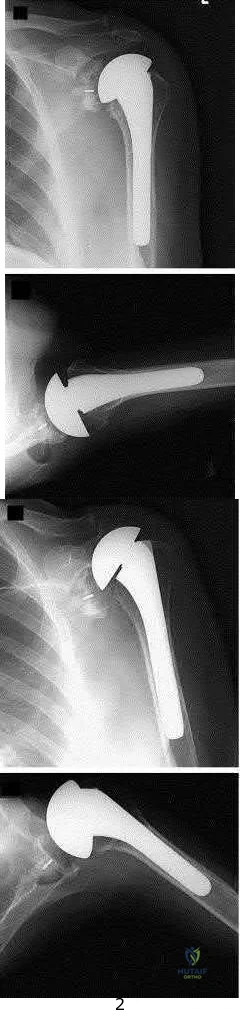
Open tendon transfer
Corticosteriod injection and supervised physical therapy

Open rotator cuff repair, subacromial decompression and distal clavical excision Revision to reverse shoulder arthroplasty

Revision to cuff arthropathy hemiarthroplasty
This patient presents with failed total shoulder arthroplasty. The best treatment option for functional outcome would be revision to reverse shoulder arthroplasty (rTSA).
RTSA is considered a viable treatment option for patients with failed shoulder arthroplasty. It allows for improved arm elevation and abduction in the setting of nonfunctional rotator cuff muscles, as seen in this example. Despite the expanding indications for rTSA, there are high complication rates in the revision setting. Complication rates for rTSA after failed shoulder arthroplasty have been reported to be between 11-36%. This procedure should, therefore, be performed by surgeons with extensive training in reconstructive shoulder arthroplasty.
Patel et al. retrospectively reviewed 31 patients (mean age, 68.7 years) who underwent rTSA for treatment of a failed shoulder arthroplasty. They found the greatest improvement with active forward elevation from 44° preoperatively to 108 ° postoperatively (P < .001). Complications occurred in 3 patients with periprosthetic fracture.
Hattrup et al. reviewed a series of 19 patients that underwent open rotator cuff repair after shoulder arthroplasty. Out of the 19 patients only 4 shoulders were successfully repaired. They concluded that successful rotator cuff repair after shoulder arthroplasty is possible but failure is more common. Figure A shows a left total shoulder arthroplasty that is well reduced in the glenoid. Figure B shows antero-superior escape of the prosthesis, indicative of a massive rotator cuff tear.
Incorrect Answers:
A 35-year-old man awoke following a night of heavy drinking with severe right shoulder pain and inability to raise his arm above his head. A radiograph from the emergency room is provided in Figure A. He was treated with a sling for a diagnosis of rotator cuff tear. Six weeks later, he complains of continued pain and difficulty using the arm. Which of the following is the next best step in management?
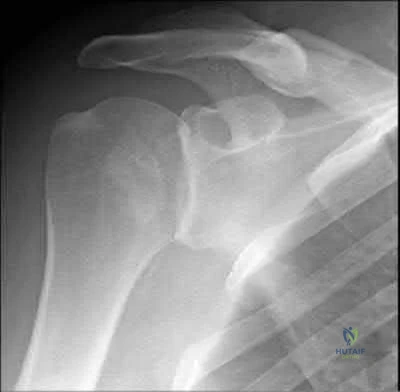
Physical therapy for range of motion followed by rotator cuff and deltoid strengthening exercises

Axillary radiograph of the shoulder

EMG to evaluate the suprascapular and axillary nerves Arthroscopic rotator cuff repair

Open subacromial decompression and latissimus dorsi transfer for massive cuff tear
The radiograph demonstrates overlap of the humeral head and glenoid suggesting shoulder dislocation. An Axillary radiograph is necessary to evaluate concentric reduction vs. dislocation of the shoulder. An example is provided in illustration A. Posterior shoulder dislocations can be easily be missed without the proper orthogonal views of the shoulder. Perron reviews the proper identification and emergency room care of posterior shoulder dislocation. Richardson found axillary radiographs to be more sensitive than trans-scapular radiographs for identifying posterior shoulder dislocations.
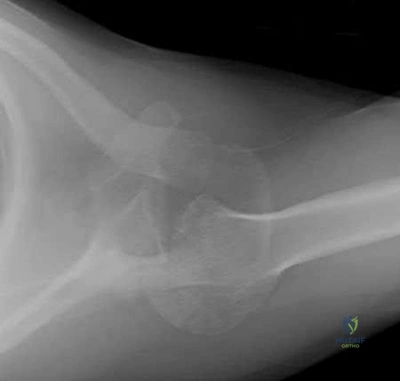
Recent randomized controlled trials comparing early passive range of motion to 6 weeks of immobilization after successful arthroscopic rotator cuff repair concluded that, compared to immobilization, early passive range of motion resulted in:
Higher Constant scores at 12 months

Increased rates of re-rupture as determined by ultrasound Equivalent functional outcomes

Less pain at 6 months

Inceased range of motion at 12 months
A series of high-quality RCTs have demonstrated that early passive range of motion has equivalent functional outcomes when compared to 6 weeks of immobilization after arthroscopic rotator cuff surgery.
Traditionally, most surgeons recommended early post-operative range of motion exercises for their patients in order to prevent adhesions and ultimately stiffness. However, recent evidence has found that there is no difference in the healing rate, range of motion or functional outcome between patients who undergo early versus delayed (i.e. initial 6 weeks of immobilization) passive range of motion exercises after arthroscopic rotator cuff repair.
Kim et al. conducted a randomized controlled trial comparing early passive range of motion vs. immobilization in 106 patients who underwent arthroscopic repair for full-thickness rotator cuff tears. They found that there was no clinically or statistically significant difference between the two groups in pain, healing or function.
Keener et al. also conducted a randomized controlled trial of 124 patients who were undergoing arthroscopic repair of a full-thickness rotator cuff tear and found no difference between early and delayed range of motion in healing and functional outcome.
Cuff & Pupello also compared early vs. delayed range of motion during the post-operative rehabilitation phase in a randomized controlled trial of 68 individuals undergoing arthroscopic rotator cuff repair and found no significant difference in range of motion or healing.
Incorrect Answers:
A 49-year-old male presents with right shoulder pain and weakness after undergoing open cervical lymph node biopsy approximately one year ago. A pertinent finding from the physical exam is seen in Figure A, with the patients arms by his side. Physical exam finding with the arms in a position of 90 degrees of forward elevation and 10 degrees of external rotation are shown in Figure B.
What nerve is most likely injured?
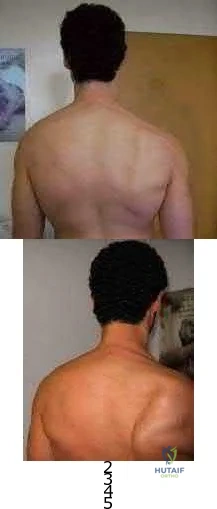
Long thoracic Suprascapular Spinal accessory Axillary Thoracodorsal
The patient is presenting with LATERAL scapular winging which is a result of injury to the spinal accessory nerve and resultant trapezius muscle palsy.
The spinal accessory nerve is fundamental to scapulothoracic function and essential for scapulohumeral rhythm. This nerve is vulnerable along its superficial course. The majority of injuries to the spinal accessory nerve are iatrogenic and occur secondary to head and neck surgery. There is often a marked delay in recognition and initiating treatment. Surgical treatment with the Eden-Lange transfer lateralizes the levator scapulae and rhomboids (transfer from medial border to lateral border)
Camp et al. reviewed the results of 111 patients who underwent operative management of a lesion to the spinal accessory nerve. They found that the majority (~80%) of injuries were sustained iatrogenically and that diagnosis was delayed for approximately 12 months.
Pikkarainen et al. reviewed the natural history of isolated serratus palsy. They found that symptoms mostly recover in 2 years, but at least one-fourth of the patients will have long-lasting symptoms, especially pain.
Figure A depicts a patient with lateral scapular winging. Figure B demonstrates physical exam of this patient with their arms in a position of 90 degrees of forward elevation and 10 degrees of external rotation. Illustration A highlights the difference between medial and lateral scapular winging. Illustration B depicts another example of a patient with lateral scapular winging.
Incorrect Answers:
An injury to the long thoracic nerve would result in serratus anterior palsy which would lead to MEDIAL scapular winging.

An injury to the suprascapular nerve would result in weakness and wasting of the supraspinatus and/or infraspinatus.
Question 25
When performing an inside-out lateral meniscal repair, capsule exposure is provided by developing the
Explanation
REFERENCES: Miller DB Jr: Arthroscopic meniscus repair. Am J Sports Med 1988;16:315-320.
Nawab A, Hester PW, Caborn DN: Arthroscopic meniscus repair, in Miller MD, Cole BJ (eds): Textbook of Arthroscopy. Philadelphia, PA, WB Saunders, 2004, pp 517-537.
Question 26
Which of the following methods of meniscal repair has the highest load to failure strength?
Explanation
REFERENCES: DeHaven KE: Meniscus repair. Am J Sports Med 1999;27:242-250.
Dervin GF, Downing KJ, Keene GC, McBride DG: Failure strengths of suture versus biodegradable arrow for meniscal repair: An in vitro study. Arthroscopy 1997;13:296-300.
Barber FA: Endoscopic meniscal repair: The T-fix technique. Sports Med Arthroscopy Rev 1999;7:28-33.
Question 27
A 45-year-old female returns to your clinic with 10-weeks of severe pain that starts in her back and extends down her right leg to the top of her foot. On physical exam she has decreased sensation on the dorsal aspect of her foot and 4/5 strength in her EHL. She has a positive straight leg raise on the right. The remaining physical exam is unremarkable, including normal achilles and patellar reflexes bilaterally, no clonus, and a down-going Babinski sign. Her pain has not been relieved by NSAIDs, epidural steroids or physical therapy. Figure A is a sagittal MRI and figure B is a axial MRI through the L4/5 disc space. What is the best treatment option at this time? Review Topic
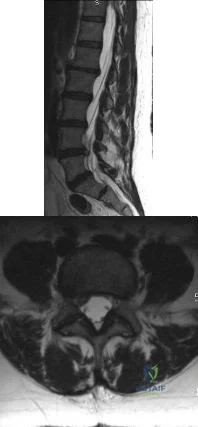
Explanation
Patients with paracentral herniated lumbar discs present with radicular pain affecting the traversing (caudal) nerve root. Unless the patient develops progressive neurologic decline, patients with herniated lumbar discs should undergo no less than 6 weeks of conservative treatment consisting of anti-inflammatory medications, rest and therapy. Most patients improve with nonoperative modalities. If appropriate conservative care fails, the correct surgical option is a unilateral microdiscectomy.
In the Spine Patient Outcomes Research Trial (SPORT) Weinstein et al. reported on the results of 501 patients with herniated lumbar discs who had failed at least six weeks of non-operative care. The patients were randomized to operative or nonoperative care, however there was a high amount of crossover between the two groups. Because of this, there was no difference reported between the two groups at final follow-up using an intent-to-treat analysis.
Weinstein et al., because of the flaws with the intent-to-treat analysis, also published an observational study on 528 patients who received surgery and 191 who received nonoperative care for a herniated lumbar disc. They reported that while both groups had an improvement from baseline, at two years, patients who elected to undergo surgery had significantly better outcomes than those who chose conservative care.
Lurie et al. reported the eight-year results from the observational group of the SPORT data, and found that the patients who underwent surgery continued to have statistically superior outcomes compared to those who underwent conservative care at long-term follow-up.
Figure A is a T2 sagittal MRI of the lumbar spine demonstrating a right sided L4/5 disc herniation, and Figure B is an axial image again demonstrating a paracentral L4/5 disc herniation.
Incorrect answers:
Question 28
A 35-year-old man who is an avid weight lifter competing in local tournaments reports new onset pain and loss of motion in his dominant right shoulder. Examination reveals joint line tenderness, active elevation to 100 degrees, and external rotation to 10 degrees. His contralateral shoulder reveals 170 degrees forward elevation and 50 degrees external rotation. Radiographs are shown in Figures 46a and 46b. What is the next most appropriate step in management?
Explanation
REFERENCES: Norris TR (ed): Orthopaedic Knowledge Update: Shoulder and Elbow 2. Rosemont, IL, American Academy of Orthopaedic Surgeons, 2002, pp 257-266.
Skedros JG, O’Rourke PJ, Zimmerman JM, et al: Alternatives to replacement arthroplasty for glenohumeral arthritis, in Iannotti JP, Williams GR (eds): Disorders of the Shoulder: Diagnosis and Management. Philadelphia, PA, Lippincott Williams & Wilkins, 1999, pp 485-499.
Question 29
Figures 10a through 10c show the plain radiograph and MRI scans of a 41-year-old man who has right hip pain. What is the most likely diagnosis?
Explanation
REFERENCE: El-Khoury G: MRI of the Musculoskeletal System. Philadelphia, PA, JB Lippincott, 1998, p 241.
Question 30
What is the most frequent complication following primary total hip arthroplasty?
Explanation
REFERENCES: Eftekhar N: Total Hip Arthroplasty. St Louis, MO, Mosby,1993, pp 1445-1676.
Koval KJ (ed): Orthopaedic Knowledge Update 7. Rosemont, IL, American Academy of Orthopaedic Surgeons, 2002, pp 56, 417-451.
FOR ALL MCQS CLICK THE LINK ORTHO MCQ BANK
Question 31
CLINICAL SITUATION Figures 1 and 2 are the radiographs of a 35-year-old man who has elbow pain after falling from a ladder onto an outstretched hand. Examination reveals elbow pain, swelling, limited motion, and normal neurologic function. A pathognomonic radiographic feature of this injury is a
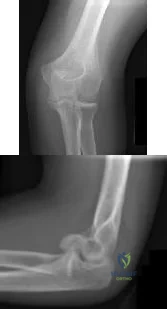
Explanation
Ideal visualization of the fragment during surgery is provided through a laterally based elbow approach (Kaplan or Kocher) with the patient in the supine position. Extension of the approach can be accomplished by releasing the lateral collateral ligament origin, which must be repaired to prevent post-operative instability. Posterior comminution and lateral column impaction are occasionally seen. When present, a posterior approach with an olecranon osteotomy is considered an alternative, but still does not allow ideal visualization of the anterior articular cartilage or safe angles for anterior to posterior screw placement. Therefore, the posterior approach not the preferred approach.
Headless screws are useful because this is typically a partial articular injury and screw orientation is ideally from anterior to posterior. The anterior entry of the screw should be buried beneath the articular cartilage margin.
Question 32
A 5-year-old boy complains of atraumatic foot pain that is aggravated by weight-bearing and an antalgic limp for a few days. He is splinted for 2 weeks by his pediatrician and referred to your office. Examination is unremarkable. Radiographs are shown in Figures A through C. What is the next best step? Review Topic
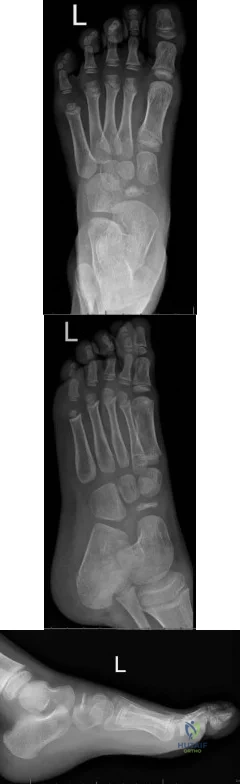
Explanation
Idiopathic avascular necrosis (AVN) of the navicular arises because the intraosseous blood flow of the navicular is centripetal, leaving a central watershed area. The primary blood supply is via perforating branches of the dorsalis pedis. Patients present with midfoot pain between 2-9 years of age. Navicular sclerosis, fragmentation, and flattening are noted radiographically.
Digiovanni et al. reviewed AVN in the foot. Nonsurgical management is routine. Cast immobilization will provide earlier resolution of symptoms. Weight-bearing will not affect outcome. The navicular will regain a normal appearance over time.
Aiyer and Hennrikus reviewed pediatric foot pain. That state that up to 25% of Kohler's disease is bilateral. They agree that casting for 4-6weeks will mitigate symptoms and increase the rate of symptom resolution.
Figures A through C are AP, oblique and lateral foot radiographs showing navicular flattening and sclerosis consistent with Kohler's disease.
Incorrect Answers:
(SBQ13PE.29) A 10-year-old girl presents to your office accompanied by her mother to discuss cosmetic concerns regarding her feet pictured in Figure A. They recently migrated to the U.S. and this is the first medical evaluation for this complaint. The father's feet apparently look similar. The remainder of the patient's physical
examination is normal. The parents should be counseled that children with this condition have: Review Topic
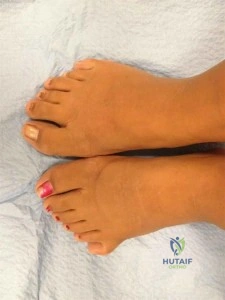
Delayed motor milestones, and cardiac and renal work up are necessary
Normal motor milestones, but cardiac and renal work up are necessary
Delayed motor milestones, but no further work up is necessary
Normal motor milestones, and no further work up is necessary
No chance of passing on this trait to children, as it results from a spontaneous genetic mutation
This patient has post-axial polydactyly of the feet. Children with this condition exhibit normal motor milestones. If the remainder of the physical examination is normal, no further work up is necessary.
Post-axial polydactyly is a common autosomal dominant trait. As such, there is usually a family history. In the absence of other physical exam abnormalities, this condition is not associated with systemic disorders. Normal motor development can be expected, though surgical treatment may be undertaken to facilitate cosmesis or shoe-wear.
Phelps et al. reviewed supernumerary digits in 61 patients at an average of 15 year follow up. They found 94% good to excellent results. Poor results were associated with pre-axial duplications and persistent hallux varus.
Figure A is a clinical photo showing bilateral post-axial polydactyly of the foot. Incorrect answers:
cardiac or renal conditions without any manifestations. Answer 5. This is an autosomal dominant condition.
Question 33
When performing a right proximal humeral hemiarthroplasty, the relative placements of the lesser tuberosity relative to the biceps tendon is best depicted, in Figure 175, by the Review Topic
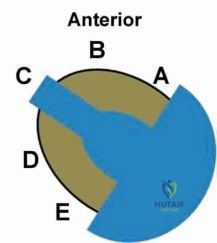
Explanation
B. One of the most common errors during proximal humeral arthroplasty is the use of the lateral keel of the prosthesis as the landmark, around which the tuberosities are reconstructed. If this is done, the anterior soft tissue/bone element is stretched, while the posterior soft tissue/bone element is lax, with a resultant loss of external rotation of the arm. The biceps should be used as the proper landmark for tuberosity reconstruction and in its absence, the anterior aspect of the prosthesis, where the bicipital groove would have been, should be used as the central juncture of tuberosity reconstruction. The upper border of the pectoralis is best used to gauge appropriate height but knowing that the biceps tendon runs directly underneath the tendon insertion can also aid in estimating the proper location.
Question 34
Figures 2a and 2b show the radiographs of a 72-year-old man with aseptic loosening of the tibial component of his total knee arthroplasty. Optimal management should include
Explanation
The insertions of the lateral ligaments are absent, thereby rendering the lateral side of the knee predictably unstable. Also, the large valgus deformity compromises the medial collateral ligament. The posterior cruciate ligament is also likely to be deficient with this much tibial bone destruction. The patient requires a posterior stabilized femoral component at the minimum, and possibly a constrained femoral component. Retention of the femoral component, even though it may be well-fixed, jeopardizes the outcome.
REFERENCES: Lotke PA, Garino JP: Revision Total Knee Arthroplasty. New York, NY, Lippincott-Raven, 1999, pp 137-250.
Insall JN, Windsor RE, Scott WN, et al: (eds): Surgery of the Knee, ed 2. New York, NY, Churchill Livingstone, 1993, pp 935-957.
Pellicci PM, Tria AJ Jr, Garvin KL (eds): Orthopaedic Knowledge Update: Hip and Knee Reconstruction 2. Rosemont, IL, American Academy of Orthopaedic Surgeons, 2000,
pp 339-365.
Question 35
A 58-year-old man has a painful right hip 3 years after undergoing a large head metal-on-metal total hip arthroplasty (THA) in which the components are well positioned. MR imaging confirms a cystic mass around the hip and metal ion levels show a marked increase in cobalt compared to chromium levels. The erythrocyte sedimentation rate (ESR) and C-reactive protein (CRP) level are within defined limits. What is the most likely cause for his discomfort?
Explanation
This patient presents with a pseudotumor likely attributable to local tissue reaction resulting from either articular metal wear debris and/or corrosion and fretting of the trunnion. The trunnion is a more likely source of the problem for a number of reasons: good position of metal articulation, increased trunnion corrosion and fretting associated with large-head THA, and markedly increased cobalt levels compared to chromium levels. Infection is very unlikely
in the setting of normal ESR and CRP findings. MR imaging findings are consistent with pseudotumor and not iliopsoas tendonitis or trochanteric bursitis.

CLINICAL SITUATION FOR QUESTIONS 42 THROUGH 45
Figures 42a through 42e are the radiographs, MR image, and MR arthrogram of a 25-year-old collegiate soccer player who has new-onset left groin pain. He played competitive soccer from a young age and has either competed or practiced 5 to 6 times per week since the age of
Question 36
Torsional moments about the longitudinal axis of a total hip arthroplasty show what change during stair climbing compared with walking?
Explanation
REFERENCES: Hurwitz DE, Andriacchi TP: Biomechanics of the hip, in Callaghan JJ, Rosenberg AG, Rubash HE (eds): The Adult Hip. Philadelphia, PA, Lippincott Raven, 1998, pp 75-85.
Bergmann G, Graichen F, Rohlmann A: Is staircase walking a risk for the fixation of hip implants? J Biomech 1995;28:535-553.
Question 37
A 32-year-old professional football player has disabling left arm pain in the C7 dermatome that has been increasing in severity for the past 2 months. Examination shows a positive Spurling test on the left side, but no changes in motor, sensory, or deep tendon reflexes. Because nonsurgical management has failed to provide relief, he has chosen surgery to allow him to complete his season. The MRI scan and myelogram shown in Figures 19a and 19b show minimal disk bulge, but a root cutoff is noted at the left C7 foramen. Electromyography demonstrates C7 nerve root irritation. Which of the following procedures will best optimize his chances for completing the season?
Explanation
REFERENCES: Henderson, CM, Hennessy RG, Shuey HM Jr, Shackelford EG: Posterior-lateral foraminotomy as an exclusive operative technique for cervical radiculopathy: A review of 846 consecutively operated cases. Neurosurgery 1983;13:504-512.
Dillin W, Booth R, Cuckler J, Balderston R, Simeone F, Rothman R: Cervical radiculopathy: A review. Spine 1986;11:988-991.
Chen BH, Natarajan RN, An H, Andersson GB: Comparison of biomechanical response to surgical procedures used for cervical radiculopathy: Posterior keyhole foraminotomy versus anterior foraminotomy and discectomy versus anterior discectomy with fusion. J Spinal Disord 2001;14:17-20.
Question 38
A previously asymptomatic 14-year-old girl sustained a twisting injury to her ankle. Radiographs are shown in Figures 2a and 2b. Management should consist of
Explanation
REFERENCES: Menendez LR (ed): Orthopaedic Knowledge Update: Musculoskeletal Tumors. Rosemont, IL, American Academy of Orthopaedic Surgeons, 2002, pp 69-75.
Biermann JS: Common benign lesions of bone in children and adolescents. J Pediatr Orthop 2002;22:268-273.
Question 39
A healthy 16-year-old boy has had increasing pain in the right knee for the past 3 months. Examination reveals warmth and swelling around the distal femur. Radiographs and an MRI scan are shown in Figures 51a through 51c, and a biopsy specimen is shown in Figure 51d. What is the most likely diagnosis?
Explanation
REFERENCES: Wold LE, Adler CP, Sim FH, et al: Atlas of Orthopedic Pathology, ed 2. Philadelphia, PA, WB Saunders, 2003, p 179.
McCarthy EF, Frassica FJ: Pathology of Bone and Joint Disorders with Clinical and Radiographic Correlation. Philadelphia, PA, WB Saunders, 1998, p 205.
Question 40
A 67-year-old man with right shoulder osteoarthritis (OA) remains symptomatic despite a course of nonsurgical treatment. A CT scan of the shoulder shows eccentric posterior glenoid wear with 10° of retroversion. What is the appropriate management of this glenoid bone loss during surgery for an anatomic total shoulder arthroplasty?
Explanation
glenoid bone grafting may be considered for glenoid retroversion >15°.
Question 41
A 44-year-old man was involved in a low speed rear-end motor vehicle accident 4 weeks ago. He predominantly reports pain in the back of the neck, with occasional radiation into the trapezius region bilaterally. He denies any extremity pain. The pain has not changed in intensity, but is worse with neck range of motion. Cervical spine radiographs were negative for acute osseous trauma or instability. What is the next most appropriate step in management? Review Topic
Explanation
Question 42
In a patient with a C5-6 herniation, the most likely sensory deficit will be in the
Explanation
REFERENCE: Hoppenfeld S: Evaluation of nerve root lesions involving the upper extremity, in Orthopaedic Neurology. Philadelphia, PA, JB Lippincott, 1977, pp 7-23.
Question 43
below show the radiographs, and the MRIs obtained from a year-old man with worsening left knee pain. A foot hip-to-ankle radiograph shows a degree varus knee deformity. The patient sustained a major left knee injury 5 years ago and a confirmed complete anterior cruciate ligament (ACL) tear. He managed this injury nonsurgically with a functional brace but experienced worsening pain. He was seen by an orthopaedic surgeon 18 months ago, and a medial meniscus tear was diagnosed; the tear was treated with an arthroscopic partial medial meniscectomy. Since then, his knee has been giving way more often, and he no longer feels safe working on a pitched roof. The patient received 6 months of formal physical therapy and was fitted for a new functional ACL brace, but he still has pain and instability. He believes he has exhausted his nonsurgical options and would like to undergo surgery. What is the most appropriate treatment at this time?
Explanation
Proximal tibial osteotomy is the most appropriate intervention to correct varus malalignment and to reduce stress on the ACL. In some cases, proximal tibial osteotomy alone may address both pain and instability, but if instability persists, particularly in the setting in which instability can be dangerous, subsequent ACL reconstruction can further stabilize the knee with less stress on the graft after the correction of malalignment. Varus alignment places increased stress on the native or reconstructed ACL. ACL reconstruction should be performed only at the same time as or following proximal tibial osteotomy to correct alignment in the setting of varus malalignment. It is not appropriate to perform ACL reconstruction prior to proximal tibial osteotomy in this setting. Distal femoral osteotomy is not indicated to correct varus malalignment. Varus alignment places increased stress on the native or reconstructed ACL, and ACL
reconstruction alone is not indicated for this patient.
Question 44
-While obtaining informed consent for a lateral closing-wedge osteotomy, what complication should be discussed with the patient as exclusive to this procedure and not encountered in medial opening-wedge osteotomy?
Explanation
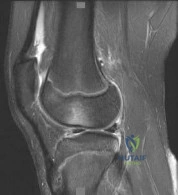
Figure 56 is the MRI scan of a 15-year-old girl who had left knee pain after sustaining a noncontact twisting injury while playing soccer. She reported severe pain initially that has since improved. On examination, she had a large knee effusion with lateral joint line tenderness. Range of motion is from 5 degrees of extension to 70 degrees of flexion. She wishes to return to sports at her preinjury level of activity.
Question 45
Figures 128a and 128b show the radiograph and MRI scan of a 74-year-old woman with severe neck pain and upper extremity numbness, tingling, and clumsiness. She also reports that she has balance problems and sustained a distal radius fracture in a fall 6 months ago. Examination reveals hyperreflexia in bilateral quadriceps and Achilles reflexes, bilateral Hoffman's signs, and eight beats of clonus in both lower extremities. What is the best treatment option? Review Topic
Explanation
Question 46
Antibiotic-loaded bone cement prostheses, such as that shown in Figure 8, are best created by using which of the following methods?
Explanation
High-dose antibiotic-loaded bone cements are described as those containing greater than 1.0 g of antibiotic per 40 g of cement. Effective elution levels have been documented with 3.6 g tobramycin and 1.0 g vancomycin per 40 g of bone cement. This was documented by Penner and associates. Furthermore, it was shown that the combination of the two antibiotics in the bone cement improved the elution of both antibiotics.
REFERENCES: Hanssen AD, Spangehl MJ: Practical applications of antibiotic-loaded bone cement for treatment of infected joint replacements. Clin Orthop 2004;427:79-85.
Penner MJ, Masri BA, Duncan CP: Elution characteristics of vancomycin and tobramycin combined in acrylic bone-cement. J Arthroplasty 1996;11:939-944.
Question 47
Figures 23a and 23b show the MRI scans of a 50-year-old woman who has increasing gait disturbance. She reports three falls in the past week. Examination reveals hyperreflexia, motor weakness in the biceps and triceps, and a positive Hoffman’s sign. What is the most appropriate treatment plan? Review Topic
Explanation
(SBQ12SP.77) A 68-year-old is undergoing lateral lumbar interbody fusion using the tranpsoas approach. Which of the following statements is true regarding the safe approach zone for this procedure as you move cranial to caudal in the lumbar spine? Review Topic
Safe approach zone increases due to vessels moving more ventral
Safe approach zone increases due to lumbar plexus moving more dorsal
Safe approach zone decreases due to vessels moving more dorsal
Safe approach zone decreases due to lumbar plexus moving more ventral
Safe approach zone remains the same throughout the lumbar spine
As you move cranial to caudal in the lumbar spine, the safe approach zone for the lateral transpsoas approach decreases due to the more ventral position of the lumbar plexus.
Lateral lumbar interbody fusion has become more common for degenerative spine disorders and adjacent segment degeneration. This transpsoas approach is typically useful for pathology from L1-L2 disc space to the L4-L5 disc space and places the lumbar plexus at risk. Working at the more caudal disc spaces is especially difficult given the more ventral position of the plexus, but the use of triggered EMG retractors and probes can help prevent nerve injuries. Surgical approach can be especially difficult in patients with rotational deformities.
Benglis et al. did a cadaver study with specimens placed lateral to trace the course of the lumbar plexus. They found that the plexus move more ventral with respect to the disc space moving more caudal in the lumbar spine.
Park et al. used 10 cadaver specimens to measure the distance of the lumbar nerve roots from the center of the disc space in the lateral approach. While disc space access was generally safe, there was less distance to the nerve root for more caudal disc levels.
Regev et al. did a MRI study to evaluate the safe working corridor for the lateral approach. The safe zone narrows considerably in the L4-L5 disc space due to more
ventral position of the nerve roots, and they recommend careful monitoring when addressing this level.
Incorrect
Question 48
Figures 9a through 9c are the preoperative radiographs and a T2-weighted MR image of a patient treated with surgery for spondylolisthesis and neuroforaminal stenosis. Figure 9d is the postsurgical radiograph. Interbody fusion offers which advantage over posterolateral fusion (PLF)? A B C D
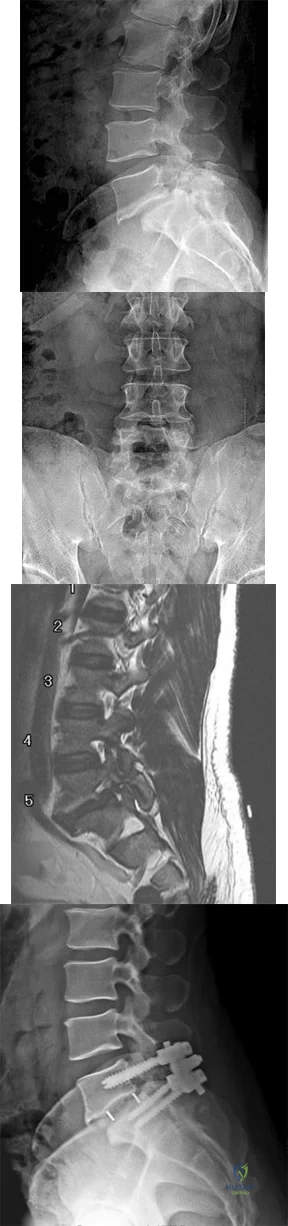
Explanation
Interbody fusion, when compared to PLF, is a predictor of more substantial blood loss. Multilevel posterior lumbar interbody fusion (PLIF) is an independent predictor of blood loss for posterior spine fusion. Some retrospective studies suggest that fusion rates are higher for transforaminal lumbar interbody fusion (TLIF) than PLF, but this finding has not been borne out in prospective studies. The main advantage of TLIF in the context of this question is restoration of neuroforaminal height, and many surgeons will consider TLIF or PLIF for that reason. The parasagittal MR image seen in Figure 9c shows neuroforaminal narrowing. The pre- and postsurgical radiographs show a difference in neuroforaminal height.
RECOMMENDED READINGS
DiPaola CP, Molinari RW. Posterior lumbar interbody fusion. J Am Acad Orthop Surg. 2008 Mar;16(3):130-9. Review. PubMed PMID: 18316711. View Abstract at PubMed
Eismont FJ, Norton RP, Hirsch BP. Surgical management of lumbar degenerative spondylolisthesis. J Am Acad Orthop Surg. 2014 Apr;22(4):203-13. doi: 10.5435/JAAOS-22-04-203. Review. PubMed PMID: 24668350. View Abstract at PubMed
McAfee PC, DeVine JG, Chaput CD, Prybis BG, Fedder IL, Cunningham BW, Farrell DJ, Hess SJ, Vigna FE. The indications for interbody fusion cages in the treatment of spondylolisthesis: analysis of 120 cases. Spine (Phila Pa 1976). 2005 Mar 15;30(6 Suppl):S60-5. PubMed PMID: 15767888. View Abstract at PubMed
RESPONSES FOR QUESTIONS 10 THROUGH 14
Postoperative deep surgical site infection
Proximal junctional kyphosis
Pedicle screw cut-out
Pseudarthrosis
Sagittal imbalance
Please match the scenario described below with the most likely complication listed above.
Question 49
Initial management should consist of Review Topic
Explanation
Question 50
The patient develops an inability to dorsiflex her foot 2 days after surgical intervention while she is sitting in a chair after physical therapy. Initial treatment should consist of
Explanation
Gamma irradiation produces free radicals. Although these free radicals can form cross-links with other polyethylene chains, the free radicals can also form a bond with oxygen, resulting in early oxidation. Gamma irradiation in air produces the highest risk for oxidized polyethylene, resulting in the highest risk for wear, delamination, and subsequent osteolysis.
This patient demonstrates severe periarticular osteolysis. When she is asymptomatic, this suggests the acetabular and femoral components remain well fixed to the bone. Consequently, she can be treated by removing the wear generator (polyethylene exchange), along with bone grafting of the osteolytic defect. Considering the extensive amount of osteolysis, observation for 1 year would not be appropriate.
The psoas is the anatomic structure that runs anterior to the acetabulum. The femoral neurovascular structures are at risk if the retractor is placed anterior and inferior to the psoas tendon.
The patient develops a foot drop 2 days after surgery. As a result, it can be assumed that the nerve was not injured directly during the surgical procedure. Although MR imaging or a CT scan may be indicated to identify an evolving hematoma, the immediate concern is to minimize pressure on the sciatic nerve. Tension on the nerve can be decreased by flexing the surgical knee and positioning the bed flat.
Question 51
Kinematic analysis of the medial and lateral menisci has demonstrated that the lateral meniscus has which of the following characteristics compared with the medial meniscus?
Explanation
REFERENCES: Insall JN, Scott WN (eds): Surgery of the Knee, ed 3. New York, NY, Churchill Livingstone, 2001, vol 1, p 474.
Thompson WO, Thaete FL, Fu FH, et al: Tibial meniscal dynamics using 3D reconstructions
of MR images, in Proceedings of the Orthopaedic Research Society 1990;389.
Vaccaro AR (ed): Orthopaedic Knowledge Update 8. Rosemont, IL, American Academy
of Orthopaedic Surgeons, 2005, pp 15-28.
Question 52
Figure 10 shows the MRI scan of a 56-year-old woman with metastatic breast cancer who now reports progressive paraparesis. Her general health remains good. Treatment should consist of
Explanation
REFERENCE: Fardin DF, Garfin SR, Abitbol J, et al (eds): Orthopaedic Knowledge Update: Spine 2. Rosemont, IL, American Academy of Orthopaedic Surgeons, 2002, pp 123-133.
Question 53
Figures 5a and 5b show the clinical photograph and radiograph of a patient who has difficulty wearing shoes and has persistent symptoms medially and laterally at the first and fifth metatarsophalangeal joints. Because shoe modifications have failed to provide relief, management should now consist of
Explanation
REFERENCES: Mann RA, Coughlin MJ: Adult hallux valgus, in Coughlin MJ, Mann RA (eds): Surgery of the Foot and Ankle, ed 7. St Louis, MO, Mosby, 1999, pp 415-435.
Mizel MS, Miller RA, Scioli MW (eds): Orthopaedic Knowledge Update: Foot and Ankle 2. Rosemont, IL, American Academy of Orthopaedic Surgeons, 1998, pp 163-173.
Question 54
A 30-year-old man sustains a head injury as well as a femur and pelvis fractures as the result of a rollover motor vehicle accident. He is initially comatosed, but recovers cognitive function after 10 days in the hospital. Soon after awakening he complains of wrist pain and an x-ray demonstrates a distal radius fracture. What is the most likely explanation for this delayed diagnosis?

Explanation
Question 55
A man who weighs 75 kg (165 pounds) is scheduled for elective total hip arthroplasty. He reports a history consistent with anaphylaxis from penicillin. Within 1 hour of the incision the patient should receive 1000 mg of
Explanation
Question 56
The most common neurologic injury following an anterior cervical diskectomy and fusion (ACDF) is injury to which of the following structures? Review Topic
Explanation
Question 57
A 20-year-old man is brought to the emergency department after a high-speed motor vehicle accident. His initial blood pressure is 70/40 mm Hg. He is currently receiving intravenous fluids as well as blood. His Focused Assessment with Sonography for Trauma examination did not show any free fluid in his abdomen and his chest radiograph is unremarkable. An AP pelvis radiograph is shown in Figure 15. What is the next most appropriate step in the management of his pelvic injury? Review Topic
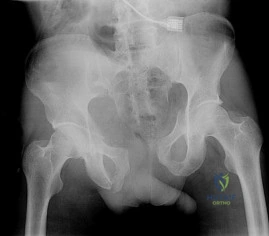
Explanation
Question 58
Which of the following physical examination findings is most likely present in the condition producing the MRI findings shown in Figure 92? Review Topic
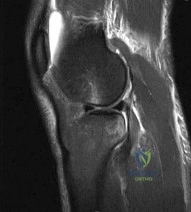
Explanation
Question 59
The pathology of the lesion shown in Figures 1 and 2 reveal what cellular pattern?
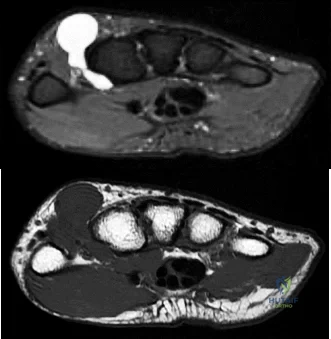
Explanation
Question 60
A 17-year-old boy is shot in the left side of the neck at the C5-6 level and sustains an incomplete spinal cord injury that is called a Brown-Sequard syndrome. Which of the following best describes the expected deficits? Review Topic
Explanation
Question 61
Which of the following best describes the relative content of the components of articular cartilage in decreasing order?
Explanation
REFERENCE: Schiller AL: Pathology of osteoarthritis, in Kuettner KE, Goldberg VM: Osteoarthritic Disorders. Rosemont, IL, American Academy of Orthopaedic Surgeons, 1995,
pp 95-101.
Question 62
Figure 59 shows properties of a material being tested for use as an implant. What is represented by the portion of the stress-strain curve from point A to point B?
Explanation
REFERENCES: Vaccaro AR (ed): Orthopaedic Knowledge Update 8. Rosemont, IL, American Academy of Orthopaedic Surgeons, 2005, pp 45-46.
El-Ghannam A, Ducheyne P: Biomaterials, in Mow VC, Huiskes R (eds): Basic Orthopaedic Biomechanics and Mechano-Biology, ed 3. Philadelphia, PA, Lippincott-Raven, 2005, pp 501-503.
Question 63
Parosteal osteosarcoma
Explanation
Question 64
Commotio cordis is best treated with
Explanation
REFERENCES: McCrory P: Commotio cordis. Br J Sports Med 2002;36:236-237.
Boden BP, Tacchetti R, Mueller FO: Catastrophic injuries in high school and college baseball players. Am J Sports Med 2004;32:1189-1196.
Question 65
A 30-year-old elite marathon runner reports chronic pain over the lateral aspect of the distal right leg and dysesthesia over the dorsum of the foot with active plantar flexion and inversion of the foot. Examination reveals a tender soft-tissue fullness approximately 10 cm proximal to the lateral malleolus. The pain is exacerbated by passive plantar flexion and inversion of the ankle. There is also a positive Tinel’s sign over the site of maximal tenderness. There is no motor weakness, and deep tendon reflexes are normal. Radiographs and MRI of the leg are normal. What is the next most appropriate step in management?
Explanation
REFERENCES: Styf J: Diagnosis of exercise-induced pain in the anterior aspect of the lower leg. Am J Sports Med 1988;16:165-169.
Sridhara CR, Izzo KL: Terminal sensory branches of the superficial peroneal nerve: An entrapment syndrome. Arch Phys Med Rehabil 1985;66:789-791.
Styf J: Entrapment of the superficial peroneal nerve: Diagnosis and results of decompression.
J Bone Joint Surg Br 1989;71:131-135.
Question 66
During treatment of rupture of the subscapularis tendon with associated biceps instability, treatment of the biceps tendon should include which of the following? Review Topic
Explanation
the restraints to medial translations of the biceps have been disrupted. Attempts at recentering the biceps have not been successful, and clinical results appear to be improved when tenodesis or tenotomy is employed in the treatment of the unstable biceps associated with subscapularis tears.
Question 67
A 25-year-old man sustains a left brachial plexus injury from a fall while rock climbing. Examination reveals poor intrinsic function of the hand, ptosis, and miosis. He is able to abduct and forward flex his shoulder with full strength. This combination of physical findings is most suggestive of what pattern of nerve injury?
Explanation
A preganglionic lesion occurs proximal to the spinal foramen, whereas a postganglionic lesion occurs distal to the spinal foramen in the root, trunk, division, cord, or branches of the brachial plexus. The Horner sign, which is characterized by miosis, ptosis, anhydrosis, and enophthalmos, results from an injury to the sympathetic ganglion, which lies in close proximity to the T1 root level. The presence of a Horner sign is highly suggestive of a T1 preganglionic injury. Other physical examination indicators of a preganglionic injury include atrophy of the parascapular muscles (injury to the dorsal rami of the cervical spinal nerve roots), winged scapula (injury to the long thoracic nerve) and hemidiaphragmatic paralysis (phrenic nerve injury). The lack of intrinsic hand function in this patient is also suggestive of an injury at the level of C8-T1. Preservation of shoulder abduction and forward flexion would not typically be seen with an injury to the C5-C6 roots or the upper trunk.
Question 68
A 20-year-old unrestrained driver sustained a midshaft femur fracture in a high-speed motor vehicle accident. The femoral neck was evaluated with a CT scan with 2-mm cuts through the hip; no fracture was identified. What additional studies (if any) should be performed to minimize the risk of having an undiagnosed femoral neck fracture?
Explanation
Question 69
A hockey player had a puck hit his foot. Radiographs taken immediately after the game were negative. He still has persistent pain 5 days after the injury and difficulty weight bearing. What is the best next step?
Explanation
Question 70
Figure 43 shows the lateral radiograph of a patient who underwent anterior cruciate ligament reconstruction. Based on the tunnel placement shown in the radiograph, evaluation of postoperative knee range of motion will most likely show
Explanation
REFERENCES: Brown CH Jr, Carson EW: Revision anterior cruciate ligament surgery. Clin
Bernhardt DT, Landry GL: Sports injuries in young athletes. Adv Pediatr 1995;42:465- Sports Med 1999;18:109-171.
Brown HR, Indelicato PA: Complications of anterior cruciate ligament reconstruction. Op Tech Orthop 1992;2:125-135.
Question 71
A 19-year-old man was in a motorcycle accident. He sustained a grade IIIB open tibia fracture with a wide zone of injury to the surrounding soft tissue and a closed-head injury. The patient was treated emergently with irrigation, debridement, and external fixation. What is the most accurate statement regarding long-term functional and financial outcomes?
Explanation
Lower Extremity Assessment Project data suggest that long-term functional outcomes and patient satisfaction at 7 years are equivalent between those
who undergo limb-salvage and primary amputations. Return to work is essentially the same between the 2 groups. The projected lifetime healthcare cost for patients treated with amputation is nearly 3 times higher than costs for those who are treated with limb-salvage procedures.
RECOMMENDED READINGS
Busse JW, Jacobs CL, Swiontkowski MF, Bosse MJ, Bhandari M; Evidence-Based Orthopaedic Trauma Working Group. Complex limb salvage or early amputation for severe lower-limb injury: a meta-analysis of observational studies. J Orthop Trauma. 2007 Jan;21(1):70-6. PubMed PMID: 17211275. View Abstract at PubMed
MacKenzie EJ, Jones AS, Bosse MJ, Castillo RC, Pollak AN, Webb LX, Swiontkowski MF, Kellam JF, Smith DG, Sanders RW, Jones AL, Starr AJ, McAndrew MP, Patterson BM, Burgess AR. Health-care costs associated with amputation or reconstruction of a limb-threatening injury. J Bone Joint Surg Am. 2007 Aug;89(8):1685-92. PubMed PMID: 17671005. View Abstract at PubMed
CLINICAL SITUATION FOR QUESTIONS 85 THROUGH 88
Figures 85a and 85b are the plain radiographs of a 38-year-old man who fell off the roof of a 2-story house and sustained an isolated injury to his right knee. Examination reveals a swollen leg with a knee effusion. The skin is intact, but there are some abrasions and an obvious deformity. His neurovascular examination reveals active dorsiflexion and plantar flexion with some pain and symmetric palpable pulses
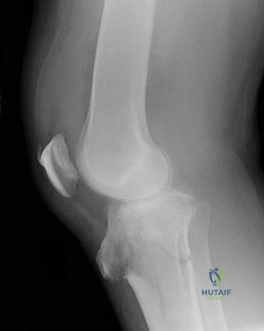
85A
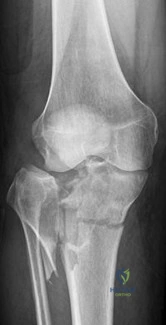
B
Question 72
A 55-year-old man who works as a carpenter reports chronic right anterior shoulder pain and weakness. Examination reveals 90 degrees of external rotation (with the arm at the side) compared to 45 degrees on the left side. His lift-off examination is positive, along with a positive belly press finding. An MRI scan reveals a chronic, retracted atrophied subscapularis tendon. What is the most appropriate management of his shoulder pain and weakness? Review Topic
Explanation
Question 73
A 71-year-old man has worsening left hip pain and is indicated for a left total hip arthroplasty (THA). Figure 1 shows a preoperative plan for the patient. The patient is scheduled for a left THA using a direct anterior approach with the pictured implants. If this plan is followed as pictured, what is the likely outcome for this patient? Figure could not be loaded
Explanation
A. spinal fusion.
B. BMI and implant size.
C. mismatch between the metaphysis and diaphysis.
D. modular neck prosthesis.
Question 74
Which of the following infectious organisms may be associated with underlying malignancy?
Explanation
REFERENCES: Schaaf RE, Jacobs N, Kelvin FM, et al: Clostridium septicum infection associated with colonic carcinoma and hematologic abnormality. Radiology 1980;137:625-627.
Katlic MR, Derkac WM, Coleman WS: Clostridium septicum infection and malignancy. Ann Surg 1981;193:361-364.
Question 75
A patient is seen in the emergency department after a motor vehicle accident. He reports right hip pain and chest pain. Initial hypotension has responded to a fluid bolus. Radiographs reveal a posterior hip dislocation with a small posterior acetabular wall fracture. You are called at home and informed of the findings. What is the next most appropriate step in management? Review Topic
Explanation
Question 76
A 24-year-old man sustains the injury shown in Figures 19a through 19e in a paragliding accident. He is neurologically intact. He also sustained fractures of his left femur and right distal radius. Which of the following represents the best option for management of the spinal injury?
Explanation
REFERENCES: McLain RF, Benson DR: Urgent surgical stabilization of spinal fractures in polytrauma patients. Spine 1999;24:1646-1654.
Wood K, Butterman G, Mehbod A, et al: Operative compared with nonoperative treatment of a thoracolumbar burst fracture without neurological deficit: A prospective, randomized study.
J Bone Joint Surg Am 2003;85:773-781.
Spivak JM, Connolly PJ (eds): Orthopaedic Knowledge Update: Spine 3. Rosemont, IL, American Academy of Orthopaedic Surgeons, 2006, pp 201-216.
Question 77
Which of the following is considered the lowest level that a standard thoracolumbosacral orthosis (TLSO) can immobilize?
Explanation
REFERENCES: White AA, Panjabi MM: Clinical Biomechanics of the Spine, ed 2. Philadelphia, PA, JB Lippincott, 1990, pp 475-509.
Norton PL, Brown T: The immobilizing efficiency of back braces. J Bone Joint Surg Am 1957;39:111-139.
Question 78
A year-old obese man with a body mass index of 42 comes into the office with left knee pain 1 year after undergoing an uncomplicated left medial unicompartmental knee arthroplasty (UKA). Radiographs show a loose tibial component in varus. What is the most appropriate next step to treat this failed construct?
Explanation
This patient likely is experiencing failure of the UKA secondary to poor patient selection. In this young, heavy man, the component likely loosened due to the ongoing varus alignment of the knee and his elevated
weight. Despite this likely scenario, the next step is determining whether an infection is the cause of his pain. Prior to obtaining an aspiration, the surgeon can order ESR and CRP studies to determine whether aspiration is warranted. If the laboratory studies are unremarkable, the surgeon likely can forgo the
aspiration and proceed to a revision TKA with possible augments on standby.
Question 79
A 32-year-old man has a closed oblique displaced fracture at the junction of the lower and middle third of the humeral shaft and a complete radial nerve palsy. Closed reduction is performed and is felt to be acceptable. Management of the radial nerve palsy should consist of
Explanation
REFERENCES: Pollock FH, Drake D, Bovill EG, et al: Treatment of radial neuropathy associated with fractures of the humerus. J Bone Joint Surg Am 1981;63:239-243.
Norris TR (ed): Orthopaedic Knowledge Update: Shoulder and Elbow 2. Rosemont, IL, American Academy of Orthopaedic Surgeons, 2002, pp 237-247.
Question 80
Which of the following is most important to acheive a good outcome following a Syme amputation?

Explanation
Question 81
A 6-year-old boy with spastic diplegic cerebral palsy has a crouched gait. Examination reveals hip flexion contractures of 15 degrees and popliteal angles of 70 degrees. Equinus contractures measure 10 degrees with the knees extended. Which of the following surgical procedures, if performed alone, will worsen the crouching?
Explanation
REFERENCES: Gage JR: Distal hamstring lengthening/release and rectus femoris transfer, in Sussman MD (ed): The Diplegic Child. Rosemont, IL, American Academy of Orthopaedic Surgeons, 1992, pp 324-326.
Bleck EE: Orthopaedic Management of Cerebral Palsy, in Saunders Monographs in Clinical Orthopaedics. Philadelphia, PA, WB Saunders, vol 2, 1979.
Question 82
Figure 28 shows the postoperative radiograph of a 36-year-old patient. The cerclage cable was placed for a minimal medial calcar fracture seen during femoral preparation. In the immediate postoperative period, what is the highest level of activity that would be safely permitted?
Explanation
REFERENCES: Berend KR, Lombardi AV Jr, Mallory TH, et al: Cerclage wires or cables for the management of intraoperative fracture associated with a cementless, tapered femoral prosthesis: Results at 2 to 16 years. J Arthroplasty 2004;19:17-21.
Schmidt AH, Kyle RF: Periprosthetic fractures of the femur. Orthop Clin North Am 2002;33:143-152.
Greidanus NV, Mitchell PA, Masri BA, et al: Principles of management and results of treating the fractured femur during and after total hip arthroplasty. Instr Course Lect 2003;52:309-322.
Question 83
A 50-year-old patient underwent multiple debridements for an open radial shaft fracture with bone loss. The bed currently shows no evidence of infection but has a 14-cm diaphyseal bone defect. The most appropriate treatment includes open reduction and internal fixation along with
Explanation
A. clinical examination.
B. invasive pressure measurement.
C. arterial Doppler study.
D. MRI.
Compartment syndrome of the hand can result from a variety of factors, including a traumatic event such as crush injury, fracture, vascular insult, a high-pressure injection injury, or an insect or spider bite. The treatment involves decompressive fasciotomy of the involved compartments. The diagnosis of hand compartment syndrome is determined by history, examination, and objective testing. Patients experience pain out of proportion to the injury, along with swelling and tense skin. Pain may occur with passive motion of the metacarpophalangeal joints as the intrinsic muscles are stretched. Invasive intracompartmental pressures can be measured in the compartments of the hand but not in the fingers. Arterial Doppler studies assess arterial blood flow,
and an abnormality would be a late finding. 41
MRI would show edema of the hand and fingers, but the decision to perform surgical release is less likely made from the findings. The most appropriate method of determining the need for finger fasciotomy is the history and physical examination.
45- Figures 1 and 2 show the MRI studies of a 35-year-old manual laborer with persistent wrist pain despite immobilization. At the time of surgery, collapse of the capitate and arthritic changes of the midcarpal joint are noted. What is the most appropriate procedure for this condition?
A. Local vascularized bone graft
B. Proximal row carpectomy
C. Midcarpal fusion
D. Total wrist arthroplasty
The T1-weighted MRI reveals decreased signal that is consistent with avascular necrosis (AVN) of the capitate. Figure 2 demonstrates increased signal of the capitate consistent with edema. The etiology of AVN of the capitate may be related to trauma, abnormal interosseous vascular supply, and hypermobility. Surgical treatment is considered for patients who have had persistent symptoms despite immobilization. At the time of surgery, collapse of the capitate and arthritic changes would be treated most appropriately with a salvage procedure. A midcarpal fusion is a motion-preserving salvage procedure and is the most appropriate option given to address the pain associated with the midcarpal arthritic changes. The alternative options are not appropriate for this patient. Local vascularized bone grafts are considered for situations in which no evidence of capitate collapse or arthritis is observed.
Question 84
A 19-year-old college cross-country runner is amenorrheic and has recurrent stress fractures. Long-term management should consist of
Explanation
REFERENCES: Nattiv A, Armsey TD Jr: Stress injury to bone in the female athlete. Clin Sports Med 1997;16:197-224.
Drinkwater BL: Exercise and bones: Lessons learned from female athletes. Am J Sports Med 1996;24:S33-S35.
Question 85
Figure 48 shows an MRI scan of the knee. The arrow is pointing to what structure?
Explanation
REFERENCES: Gray H: Anatomy of the Human Body. Philadelphia, PA, Lea and Febiger, 1918, 2000.
Netter FH: Atlas of Human Anatomy. Summit, NJ, Ciba-Geigy, 1989, pp 464-465.
Question 86
An open biopsy specimen of a radiodense distal clavicle lesion in a 12-year-old girl shows chronic polyclonal inflammatory cells without granuloma formation. Laboratory studies show that bacterial, fungal, and acid-fast bacillus cultures are negative. Subsequently, a similar lesion is noted in the fibula. The next most appropriate step in management should consist of
Explanation
REFERENCE: Carr AJ, Cole WG, Roberton DM, Chow CW: Chronic multifocal osteomyelitis. J Bone Joint Surg Br 1993;75:582-591.
Question 87
Figure 7 shows a sagittal T1-weighted MRI scan. What muscle/tendon is identified by the arrow? Review Topic
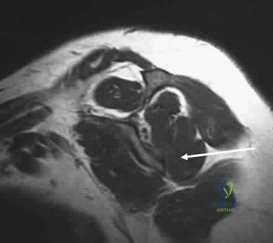
Explanation
Question 88
ACL rehabilitation often includes exercises with the distal end of the extremity fixed in place with axial loading and co-contracture of muscle groups to help stabilize the joint. This type of exercise is more commonly referred to as: Review Topic
Explanation
Closed chain exercises are preferred for any rehabilitation protocol that wants to minimize stress across a potentially unstable joint. After ACL reconstruction it is important to begin motion and strengthening but not stress the reconstructed ligament which may lead to loss of stability or failure.
An example of a closed chain exercise of the quadriceps is a squat or leg press in which the foot is fixed against the floor/plate and both the quadriceps and hamstrings can contract together keeping the knee joint stable and preventing excess stress across the reconstructed ACL. An example of an open chain exercise of the quadriceps is a seated leg extension in which the foot is not fixed and the quadriceps contract in isolation. This creates a strong anterior pull on the tibia which can lead to excess stress on the ACL graft.
Beynnon et al. present a review on the behavior of ACL grafts during rehabilitation. They found that exercises that produce the least amount of stress across an ACL graft are either dominated by hamstring muscle contraction, involve quadriceps muscle activity with the knee flexed at 60° or greater, or involve active knee motion between
35°
and
90°
of
flexion.
Illustration A is an example of a squat, which is a closed chain exercise. Notice the feet are fixed in place against the floor. Illustration B is an example of a seated leg extension, which is an open chain exercise. Notice the feet are not fixed in place and no axial loading or co-contracture can occur.
Incorrect
Question 89
Figure 40 shows the radiograph of a 30-year-old woman who has a painful elbow. Examination reveals a deformed skull, multiple cafe-au-lait spots, and bone deformities. What is the most likely diagnosis?
Explanation
REFERENCES: Albright F, Butler AM, Hampton AO, et al: Syndrome characterized by osteitis fibrosa disseminata, areas of pigmentation and endocrine dysfunction with precocious puberty in females. N Engl J Med 1937;216:727-746.
Danon M, Robboy SJ, Kim S, Scully R, Crawford JD: Cushing syndrome, sexual precocity, and polyostotic fibrous dysplasia (Albright syndrome) in infancy. J Pediatr 1975;87:917-921.
Grabias SL, Campbell CJ: Fibrous dysplasia. Orthop Clin North Am 1977;8:771-783.
Question 90
A 36-year-old woman has pain and swelling of the anterior arm after undergoing arthroscopic shoulder surgery 8 months ago. At the time of the procedure, extensive debridement and synovectomy of the anterior aspect of the joint was performed to remove scar tissue that had formed after an open rotator cuff repair. Examination reveals a golf ball-sized swelling just lateral to the coracoid. The area is not warm and shows no other signs of infection. An MRI scan is shown in Figure 1. Management should now consist of
Explanation
REFERENCES: Cole BJ, Rodeo SA, O’Brien SJ, et al: The anatomy and histology of the rotator interval capsule of the shoulder. Clin Orthop 2001;390:129-137.
Jost B, Koch PP, Gerber C: Anatomy and functional aspects of the rotator interval. J Shoulder Elbow Surg 2000;9:336-341.
Question 91
A 55-year-old man who works as a carpenter reports chronic right anterior shoulder pain and weakness. Examination reveals 90 degrees of external rotation (with the arm at the side) compared to 45 degrees on the left side. His lift-off examination is positive, along with a positive belly press finding. An MRI scan reveals a chronic, retracted atrophied subscapularis tendon. What is the most appropriate management of his shoulder pain and weakness?
Explanation
REFERENCES: Jost B, Puskas GJ, Lustenberger A, et al: Outcome of pectoralis major transfer for the treatment of irreparable subscapularis tears. J Bone Joint Surg Am 2003;85:1944-1951.
Resch H, Povacz P, Ritter E, et al: Transfer of the pectoralis major muscle for the treatment of irreparable rupture of the subscapularis tendon. J Bone Joint Surg Am 2000;82:372-382.
Question 92
With the arm abducted 90 degrees and fully externally rotated, which of the following glenohumeral ligaments resists anterior translation of the humerus?
Explanation
REFERENCES: Harryman DT II, Sidles JA, Harris SL, et al: The role of the rotator interval capsule in passive motion and stability of the shoulder. J Bone Joint Surg Am 1992;74:53-66.
Wang VM, Flatow EL: Pathomechanics of acquired shoulder instability: A basic science perspective. J Shoulder Elbow Surg 2005;14:2S-11S.
Question 93
A 32-year-old woman has had pain and a visibly growing mass in the shoulder for 3 years but denies any history of trauma. Examination reveals a swollen, boggy shoulder mass. The AP radiograph and MRI scan are shown in Figures 20a and 20b. Figures 20c through 20e show a portion of the excised mass and the photomicrographs of the biopsy specimen. What is the most likely diagnosis?
Explanation
REFERENCES: Murphy FP, Dahlin DC, Sullivan CR: Articular synovial chondromatosis. J Bone Joint Surg Am 1982;44:77-86.
Milgram JW: Synovial osteochondromatosis: A histopathological study of thirty cases. J Bone Joint Surg Am 1977;59:792-801.
Question 94
A 53-year-old woman reports a 4-month history of gradual onset diffuse shoulder pain and limited function. She has had no prior treatment, and her medical history is unremarkable. Examination reveals globally painful active range of motion to 120 degrees forward elevation, 25 degrees external rotation with the arm at the side, and internal rotation to the sacrum. Passive range of motion is also limited in comparison with the contralateral shoulder. Radiographs are shown in Figures 31a through 31c. What is the most appropriate management? Review Topic
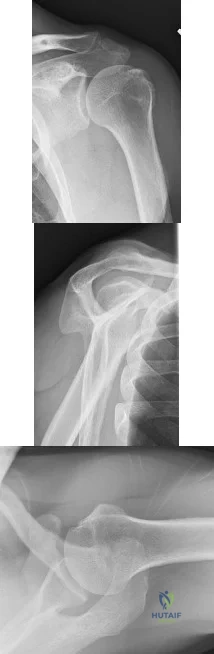
Explanation
Question 95
When using the direct lateral (or Hardinge) approach for hip arthroplasty, three muscles are detached from the femur. In addition to the vastus lateralis, they include the
Explanation
REFERENCES: Hoppenfeld S, deBoer P (eds): Surgical Exposures in Orthopaedics: The Anatomic Approach. Philadelphia, PA, JB Lippincott, 1984, pp 333-335.
Hardinge K: The direct lateral approach to the hip. J Bone Joint Surg Br 1982;64:17-19.
Question 96
A 47-year-old man comes for evaluation of his dominant right elbow, which has been bothering him with activity for the past 3 months, especially with activities requiring wrist extension. He is an active squash player and has been unable to continue this sport. Examination shows tenderness at the common extensor origin. What is the next best step? Review Topic
Explanation
Lateral epicondylitis is a common problem with numerous non-operative treatments available. There is little scientific evidence to support any of these treatments however and the quality of most reports is low and their conclusions limited by bias and/or study design. Tennis elbow often resolves with time regardless of which conservative treatment is chosen.
Coombes et al. randomized patients with unilateral tennis elbow to receive either (1) corticosteroid injection, (2) placebo injection, (3) corticosteroid injection plus physical therapy or (4) placebo injection plus physical therapy. They found that
corticosteroid resulted in worse clinical outcome and recurrence rate compared to placebo injection. Use of physical therapy did not produce any significant differences.
Dines et al. review the diagnosis and of tennis injuries, including lateral epicondylitis. Although they acknowledge that there is "no long term benefit with regard to tendon healing," they note that steroid injection may be useful to control acute symptoms.
Boyer et al. review the myths surrounding lateral epicondylitis. They note that despite widespread use, corticosteroid injection has repeatedly been shown to have no long term benefit. They conclude based on their review of the literature that if there is any benefit to steroid injection, it is of short duration, and in patients whose symptoms have been of short duration, without any previous treatment.
Incorrect answers:
Question 97
Pacinian corpuscles are lamellated nerve endings that are responsible for providing the perception of
Explanation
REFERENCE: Sunderland SS: Nerves and Nerve Injuries, ed 2. New York, NY, Churchill Livingstone, 1978, pp 343-347.
Question 98
Which of the following is considered the most appropriate indication for conversion of a hip fusion to total hip arthroplasty?
Explanation
REFERENCES: Santore RF: Hip reconstruction: Nonarthroplasty, in Callaghan JJ, Dennis DA, Paprosky WG, Rosenberg AG (eds): Orthopaedic Knowledge Update: Hip and Knee Reconstruction. Rosemont, IL, American Academy of Orthopaedic Surgeons, 1995, pp 109-115.
Callaghan JJ, Brand RA, Pedersen DR: Hip arthrodesis: A long-term follow-up. J Bone Joint Surg Am 1985;67:1328-1335.
Question 99
An 11-year-old female gymnast has had gradually increasing right wrist pain for the past 6 months. Examination reveals normal range of motion and strength. Moderate tenderness is present over the distal radius. AP radiographs will most likely show
Explanation
REFERENCES: Mandelbaum BR, Bartolozzi AR, Davis CA, Teurlings L, Bragonier B: Wrist pain syndrome in the gymnast: Pathogenetic, diagnostic, and therapeutic consideration. Am J Sports Med 1989;17:305-317.
Roy S, Caine D, Singer KM: Stress changes of the distal radial epiphysis in young gymnasts: A report of twenty-one cases and a review of the literature. Am J Sports Med 1985;13:301-308.
Question 100
A 21-year-old professional ballet dancer reports a painful popping sensation over her right hip joint. Examination reveals that symptoms are reproduced with hip flexion and external rotation. Which of the following studies will best confirm the diagnosis? Review Topic
Explanation
