Part of the Master Guide

Orthopedic Surgery Board Review MCQs: Arthroplasty, Trauma & Spine Part 255

Orthopedic Surgery Board Review MCQs: Ankle & Trauma Fractures - Part 95
23 Apr 2026 53 min read 62 Views
Orthopedic Surgery Board Review MCQs: AAOS Master Bank Part 95

Key Takeaway

This interactive quiz offers 50 high-yield Orthopedic Surgery MCQs for surgeons and residents. Modeled on OITE/AAOS exams, it provides detailed explanations and flexible study modes. Essential for comprehensive preparation and successful AAOS/ABOS board certification.

Orthopedic Surgery Board Review MCQs: Ankle & Trauma Fractures - Part 95

Comprehensive 100-Question Exam


00:00

Start Quiz

Question 1

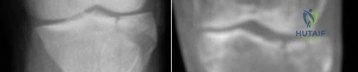
A 45-year-old female presents with a closed trimalleolar ankle fracture. A preoperative CT scan demonstrates a posterior malleolus fracture with a large posteromedial fragment extending to the medial malleolus, consistent with a Haraguchi Type II fracture.

Which of the following surgical approaches provides the most optimal visualization and access for rigid internal fixation of this specific posterior malleolar fracture pattern?


Explanation

Haraguchi classification categorizes posterior malleolus fractures based on axial CT imaging. Type I is a posterolateral oblique fragment. Type II involves a medial extension (transverse extension) that often includes the medial malleolus or is associated with a disrupted posterior colliculus. Because the fracture extends posteromedially, a posteromedial approach is required to directly visualize, reduce, and plate the fracture. An isolated posterolateral approach would not provide access to the posteromedial extension, and anterior-to-posterior screws are biologically and mechanically inferior to posterior buttress plating for these large fragments.

Question 2

A 65-year-old male with poorly controlled type 2 diabetes mellitus and peripheral neuropathy sustains a displaced bimalleolar equivalent ankle fracture. He undergoes open reduction and internal fixation (ORIF). Which of the following postoperative regimens or fixation strategies is considered the standard of care to minimize complications in this specific patient population?


Explanation

Diabetic patients, particularly those with peripheral neuropathy, are at extremely high risk for postoperative complications following ankle fracture surgery, including Charcot neuroarthropathy, infection, and hardware failure. Standard of care involves 'maximizing fixation'—using locking plates, multiple quad-cortical syndesmotic screws, and sometimes extending fixation across the tibiotalar joint if the risk of failure is severe. Additionally, the period of non-weight-bearing is typically doubled compared to healthy patients, often lasting 8-12 weeks.

Question 3

During surgical exploration of an unstable ankle fracture, the surgeon identifies an avulsion fracture of the anterior inferior tibiofibular ligament (AITFL) from its fibular attachment. This specific osseous fragment is known as:


Explanation

The Wagstaffe-Le Fort fragment is an avulsion fracture of the anteromedial fibula at the attachment of the anterior inferior tibiofibular ligament (AITFL). The Tillaux-Chaput fragment is the corresponding avulsion from the anterolateral tibia. The Volkmann fragment is an avulsion of the posterior inferior tibiofibular ligament (PITFL) from the posterolateral tibia (often synonymous with the posterior malleolus). Bosworth refers to a fracture-dislocation where the fibula is entrapped behind the posterior tibial tubercle.

Question 4

A 38-year-old construction worker falls from scaffolding, sustaining a high-energy closed pilon fracture (AO/OTA 43-C3) with massive soft tissue swelling, hemorrhagic fracture blisters, and shortening of the limb. What is the most appropriate initial management?


Explanation

The standard of care for high-energy pilon fractures with severe soft tissue compromise is a staged protocol ('span, scan, and plan'). Initial management involves the application of a joint-spanning external fixator to restore length, alignment, and allow soft tissues to recover. Definitive ORIF is delayed (typically 10-21 days) until soft tissue swelling resolves, indicated by the return of skin creases ('wrinkle sign'). While acute fibular fixation is sometimes performed, it is increasingly avoided in severe soft tissue injuries to prevent wound complications, making D the most encompassing and correct approach.

Question 5

A 30-year-old male sustains a twisting injury to his right ankle. In the emergency department, plain radiographs show a severely displaced fracture-dislocation. Attempts at closed reduction under conscious sedation are repeatedly unsuccessful due to a mechanical block. A Bosworth fracture-dislocation is suspected. What is the anatomic block to reduction in this injury?


Explanation

A Bosworth fracture-dislocation is an irreducible ankle fracture characterized by posterior dislocation of the proximal fibular fragment behind the posterior lateral tubercle of the distal tibia. The intact interosseous membrane acts as a tether, making closed reduction impossible. Open reduction is required to physically lever the fibula out from behind the tibia.

Question 6

A 22-year-old female presents with an ankle injury after a fall during a soccer match. Radiographs demonstrate a short oblique fracture of the lateral malleolus starting at the level of the syndesmosis and extending proximally and posteriorly. Additionally, the medial clear space is widened to 6 mm on the gravity stress view. According to the Lauge-Hansen classification, what stage of injury does this represent?


Explanation

The fracture pattern described is a Supination-External Rotation (SER) injury. The sequence of injury in SER is: Stage I (AITFL rupture), Stage II (short oblique/spiral fracture of the distal fibula), Stage III (PITFL rupture or posterior malleolus fracture), and Stage IV (deltoid ligament rupture or medial malleolus transverse fracture). Widening of the medial clear space indicates a disrupted deltoid ligament, moving this to an SER Stage IV injury.

Question 7

A 25-year-old male is involved in a high-speed motor vehicle collision and sustains a talar neck fracture. Radiographs and a subsequent CT scan confirm a completely displaced talar neck fracture with dislocation of both the subtalar and tibiotalar joints. The talonavicular joint remains reduced. According to the Hawkins classification, what type of fracture is this, and what is the approximate historical rate of avascular necrosis (AVN) associated with it?


Explanation

Hawkins classification for talar neck fractures: Type I is non-displaced (AVN < 10%). Type II is displaced with subtalar dislocation (AVN 20-50%). Type III is displaced with subtalar and tibiotalar dislocation (AVN 80-100% historically, though modern series report slightly lower rates, it remains the highest risk category without TN dislocation). Type IV includes talonavicular dislocation. Therefore, this is a Hawkins Type III with a historical AVN risk of nearly 100%.

Question 8

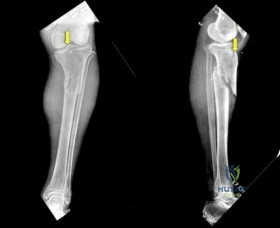
An orthopedic surgeon is utilizing an extensile lateral approach for open reduction and internal fixation of a displaced intra-articular calcaneus fracture.

To minimize the risk of apex wound necrosis, the full-thickness flap must be elevated in a 'no-touch' subperiosteal plane. Which of the following vascular structures provides the primary blood supply to the apex of this flap?


Explanation

The primary blood supply to the corner (apex) of the extensile lateral flap used for calcaneus fractures is the lateral calcaneal artery, which is a terminal branch of the peroneal artery. Careful, full-thickness subperiosteal elevation and 'no-touch' retraction techniques with K-wires in the talus are utilized to protect this vascular supply and prevent disastrous wound sloughing.

Question 9

A 24-year-old athlete reports midfoot pain after an axial load on a plantarflexed foot. Weight-bearing radiographs of the foot appear largely normal, but a close inspection reveals a small bony fragment in the first intermetatarsal space, known as the 'fleck sign.' This sign represents an avulsion from which of the following structures?


Explanation

The 'fleck sign' is pathognomonic for a Lisfranc injury. It represents an avulsion fracture at the attachment site of the Lisfranc ligament. The Lisfranc ligament runs from the lateral aspect of the medial cuneiform to the medial base of the second metatarsal. The avulsion typically occurs at the base of the second metatarsal.

Question 10

A 28-year-old male presents with isolated medial ankle pain and swelling after an inversion and rotational injury. Radiographs show a transverse fracture of the medial malleolus and widening of the tibiofibular clear space. A full-length tibia-fibula radiograph reveals a fracture of the proximal third of the fibula. What is the most likely Lauge-Hansen mechanism for this specific injury pattern (Maisonneuve fracture)?


Explanation

A Maisonneuve fracture is classically described as a Pronation-External Rotation (PER) stage III or IV injury. The medial injury (deltoid rupture or medial malleolar fracture) occurs first (Stage I), followed by rupture of the anterior tibiofibular ligament and interosseous membrane (Stage II), and then the fibula fractures at the proximal third as the force exits (Stage III). If the posterior malleolus or PITFL is involved, it is Stage IV.

Question 11

An 82-year-old female with severe osteoporosis, dementia, and compromised soft tissues presents with a highly unstable bimalleolar ankle fracture. Given her inability to comply with non-weight-bearing restrictions, the surgeon elects to perform a primary tibiotalocalcaneal (TTC) nailing. Which of the following is the most significant advantage of this approach in this specific patient compared to traditional ORIF?


Explanation

In frail, elderly patients with significant comorbidities (dementia, poor skin, osteoporosis) who cannot adhere to non-weight-bearing restrictions, primary TTC nailing is an excellent salvage option for ankle fractures. The most significant advantage is the minimal soft tissue dissection required (inserted via a limited plantar approach), which drastically reduces the high rates of wound breakdown and infection associated with traditional ORIF in this population. It allows immediate weight-bearing, though it sacrifices the tibiotalar and subtalar joints.

Question 12

During open reduction and internal fixation of a Weber B ankle fracture, the surgeon must intraoperatively assess the integrity of the syndesmosis. Under live fluoroscopy, which of the following stress tests is the most reliable and sensitive for demonstrating latent syndesmotic instability?


Explanation

The external rotation stress test, often performed using a 'hook test' (pulling the fibula laterally with a bone hook) or by manually externally rotating the foot while stabilizing the tibia, is the most reliable intraoperative method to assess the syndesmosis under fluoroscopy. Widening of the medial clear space or the tibiofibular clear space indicates syndesmotic instability requiring fixation.

Question 13

A 21-year-old snowboarder presents with chronic lateral ankle pain 6 weeks after a hard landing. He was initially diagnosed with an 'ankle sprain' at an urgent care. He has localized tenderness just inferior to the tip of the lateral malleolus. An occult fracture is suspected. What specific anatomical structure is most likely fractured in this 'snowboarder's fracture'?


Explanation

A 'snowboarder's fracture' refers to a fracture of the lateral process of the talus. It typically occurs due to axial loading, dorsiflexion, and inversion/eversion while snowboarding. Because it mimics a severe lateral ankle sprain, it is frequently missed on standard AP and lateral ankle radiographs. CT scan is often required for definitive diagnosis and to assess displacement, which dictates operative vs. non-operative management.

Question 14

A 35-year-old male falls from a height of 10 feet, landing on a plantarflexed foot. Radiographs reveal a comminuted compression fracture of the cuboid with notable shortening of the lateral column of the foot (the 'nutcracker' fracture). What is the primary surgical objective when treating this injury?


Explanation

A 'nutcracker' fracture of the cuboid occurs when severe abduction force combined with axial load crushes the cuboid between the calcaneus and the 4th/5th metatarsals. The primary surgical goal is the restoration and maintenance of lateral column length. This is typically achieved with external fixation or distractor application followed by ORIF, frequently necessitating structural bone graft to fill the void.

Question 15

A surgeon is performing an anterolateral approach to the distal tibia for fixation of a complex pilon fracture. During the superficial dissection, the surgeon creates an internervous interval. Which nerve is at greatest risk of iatrogenic injury as it crosses the operative field from medial to lateral over the distal fibula/ankle joint?


Explanation

The anterolateral approach to the distal tibia typically utilizes the interval between the medial structures (tibialis anterior, extensor hallucis longus) and lateral structures (extensor digitorum longus). During the superficial dissection, branches of the superficial peroneal nerve (specifically the intermediate dorsal cutaneous branch) cross the surgical field from medial to lateral and are at high risk of transection or traction injury. The deep peroneal nerve is deeper, running with the anterior tibial artery between EHL and EDL.

Question 16

A 20-year-old collegiate basketball player complains of acute lateral foot pain after cutting during a game. Radiographs demonstrate a non-displaced transverse fracture at the metaphyseal-diaphyseal junction of the fifth metatarsal, extending into the fourth-fifth intermetatarsal facet. What is the most appropriate management for this elite athlete to ensure the fastest reliable return to play?


Explanation

The patient has a Zone II fracture of the proximal fifth metatarsal, commonly known as a Jones fracture. Due to the watershed blood supply in this area, these fractures have a high rate of delayed union or nonunion. In elite athletes, early intramedullary screw fixation is the standard of care to achieve a reliable union and allow a faster return to sport compared to prolonged conservative management.

Question 17

A 35-year-old male sustains a severe ankle injury following an axial load on a neutral foot. Radiographs show vertical migration of the talus driving apart the tibia and fibula, severely disrupting the syndesmosis without significant medial or lateral malleolar fractures. This specific high-energy injury pattern is colloquially known as:


Explanation

The 'logsplitter' injury is a severe variant of a syndesmotic injury caused by a high-energy axial load that drives the talus superiorly into the distal tibiofibular joint, splitting it apart much like an axe splitting a log. It involves profound disruption of the syndesmosis, interosseous membrane, and often requires robust surgical stabilization of the mortise.

Question 18

A 14-year-old male complains of right ankle pain after a skateboarding fall. Radiographs reveal a Salter-Harris III fracture of the anterolateral aspect of the distal tibia.

This specific fracture (juvenile Tillaux) is possible due to the asymmetric closure pattern of the distal tibial physis. What is the predictable chronological sequence of this physeal closure?


Explanation

The distal tibial physis closes over a period of 18 months in a predictable sequence: central, then medial, and finally lateral. Because the anterolateral portion is the last to fuse, external rotation forces during this 18-month window pull on the AITFL, avulsing the unfused anterolateral epiphysis, resulting in a juvenile Tillaux fracture (Salter-Harris III).

Question 19

According to the Lauge-Hansen classification, an ankle fracture characterized by a transverse fracture of the medial malleolus, rupture of the syndesmosis, and a comminuted or short oblique 'bending' fracture of the fibula above the level of the joint line is produced by which mechanism?


Explanation

The Pronation-Abduction (PA) mechanism occurs when the foot is pronated (taut medial structures) and an abduction force is applied. Sequence: Stage 1) Transverse fracture of medial malleolus or deltoid rupture. Stage 2) Rupture of AITFL/PITFL (syndesmosis). Stage 3) Short oblique or comminuted (bending) fracture of the fibula at or above the level of the syndesmosis, often with a butterfly fragment on the lateral side due to compression.

Question 20

A 28-year-old male presents with a highly comminuted, displaced coronal shear fracture of the talar body. Open reduction and internal fixation are required. To achieve perpendicular visualization and adequate access for hardware placement on the medial aspect of the talar dome and body, which of the following approaches or osteotomies is most frequently utilized?


Explanation

Fractures of the talar body are intra-articular and notoriously difficult to expose. For direct visualization of the medial and central talar dome and body to achieve anatomic reduction, a medial malleolar osteotomy (typically a chevron type) is the workhorse approach. It allows the medial malleolus to be reflected inferiorly on the deltoid ligament, granting excellent exposure to the talus, and is later fixed with lag screws.

Question 21

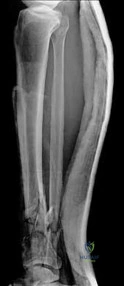
A 35-year-old male presents after an ankle injury. Radiographs show a fracture-dislocation of the ankle. Closed reduction in the ED is unsuccessful. The lateral radiograph demonstrates the proximal fibular fragment trapped posterior to the posterior tubercle of the distal tibia.

Which of the following is the most appropriate next step in management?


Explanation

The clinical description is of a Bosworth fracture-dislocation. The proximal fibular shaft is incarcerated behind the posterior tibial tubercle, making closed reduction impossible. Repeated attempts at closed reduction can cause further soft tissue damage and neurovascular injury. Urgent open reduction and internal fixation, usually via a posterolateral approach, is required.

Question 22

A 42-year-old male sustains a high-energy closed pilon fracture (AO/OTA 43-C3). An ankle-spanning external fixator is applied on the day of injury.

What is the most reliable clinical indicator that the soft tissue envelope is ready for definitive open reduction and internal fixation (ORIF)?


Explanation

In high-energy pilon fractures, definitive ORIF is typically delayed to allow soft tissue swelling to subside, reducing the risk of wound complications. The appearance of skin wrinkles ("wrinkle sign") is a reliable clinical indicator that the soft tissue edema has decreased sufficiently to safely proceed with surgical incisions.

Question 23

A 28-year-old female is 8 weeks status post ORIF of a Hawkins Type II talar neck fracture. A radiograph reveals a subchondral radiolucent band in the talar dome.

What is the prognostic significance of this radiographic finding?


Explanation

The presence of a subchondral radiolucent band in the talar dome at 6 to 8 weeks post-injury is known as the Hawkins sign. This radiolucency represents subchondral osteopenia due to bone resorption, which requires an intact blood supply. Therefore, a positive Hawkins sign is a highly reliable indicator that the talar body has preserved vascularity and avascular necrosis is unlikely to occur.

Question 24

A 14-year-old male presents with lateral ankle pain after a twisting injury playing soccer. Radiographs and a subsequent CT scan demonstrate a displaced Salter-Harris III fracture of the anterolateral aspect of the distal tibial epiphysis. What is the primary deforming force responsible for this specific fracture pattern?


Explanation

A Tillaux fracture is a Salter-Harris type III fracture of the anterolateral distal tibial epiphysis. It occurs in adolescents whose distal tibial physis has begun to close (which closes central to medial, then lateral). The avulsion is caused by tension from the anterior inferior tibiofibular ligament (AITFL) during external rotation forces.

Question 25

A 13-year-old female sustains a triplane ankle fracture.

Which of the following best describes the classical anatomical planes of injury in the three parts of this fracture?


Explanation

A triplane fracture is a unique pediatric fracture occurring during the transitional phase of physeal closure. It classically involves a fracture line in the sagittal plane through the epiphysis, a transverse plane through the physis, and a coronal plane through the distal tibial metaphysis. On AP radiographs, it mimics a Salter-Harris III fracture, while on lateral radiographs, it mimics a Salter-Harris II fracture.

Question 26

A 24-year-old male presents with persistent lateral ankle pain 3 weeks after a snowboarding accident. Initial plain radiographs were reported as negative for fracture. Clinical examination reveals tenderness inferior and anterior to the lateral malleolus. Which of the following injuries is most likely present and best diagnosed with a CT scan?


Explanation

Fractures of the lateral process of the talus ("snowboarder's fracture") often result from dorsiflexion and inversion of the ankle. They are notoriously missed on initial plain radiographs (missed in up to 40% of cases). The classic presentation is persistent lateral ankle pain mistaken for a severe sprain. A CT scan is the best modality for definitive diagnosis and assessing displacement and comminution.

Question 27

A 38-year-old male undergoes ORIF of a displaced intra-articular calcaneus fracture via an extensile lateral approach.

Postoperatively, the patient reports numbness over the lateral aspect of the foot and lateral heel. Which nerve is most likely at risk during the distal extension of this surgical approach?



Explanation

The extensile lateral approach to the calcaneus places the sural nerve at risk. The sural nerve provides sensory innervation to the posterolateral lower leg, lateral heel, and lateral border of the foot. It typically crosses the lateral border of the Achilles tendon and runs distally along the lateral aspect of the calcaneus, making it vulnerable during the inferior and distal limbs of the incision.

Question 28

A 45-year-old manual laborer sustains a purely ligamentous Lisfranc injury involving the 1st, 2nd, and 3rd tarsometatarsal joints. Which of the following statements regarding the definitive surgical management is most supported by current orthopedic literature?


Explanation

Multiple randomized controlled trials have demonstrated that for purely ligamentous Lisfranc injuries, primary arthrodesis of the medial column (1st, 2nd, and 3rd TMT joints) results in comparable or superior functional outcomes and a significantly lower rate of secondary surgeries (due to hardware removal or subsequent post-traumatic arthritis) when compared to ORIF.

Question 29

A 50-year-old female presents with chronic ankle pain following a conservatively managed bimalleolar ankle fracture 1 year ago. Radiographs demonstrate a malunion.

Which radiographic parameter is most sensitive for detecting fibular shortening in a malunited ankle fracture?


Explanation

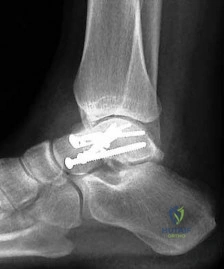
Fibular shortening alters the ankle mortise and leads to lateral talar shift. Radiographic signs of fibular shortening include a broken Shenton's line of the ankle, a loss of the "dime sign" (unbroken curve between the lateral talar articular surface and the fibular recess), and a decreased talocrural angle (normally 83 +/- 4 degrees). The talocrural angle is the angle formed by a line perpendicular to the tibial plafond and a line connecting the tips of the medial and lateral malleoli. Fibular shortening decreases this angle.

Question 30

A 22-year-old elite collegiate basketball player sustains a fracture at the base of the fifth metatarsal. Radiographs show a transverse fracture extending into the intermetatarsal articulation (between the 4th and 5th metatarsals).

What is the recommended treatment to minimize the risk of nonunion and expedite return to play in this athlete?


Explanation

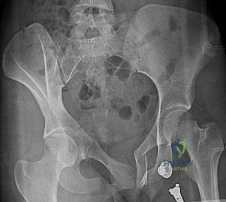
The fracture described is a Zone 2 fracture of the base of the 5th metatarsal (true Jones fracture), which extends into the 4th-5th intermetatarsal joint. Due to a watershed blood supply area, these have a high rate of delayed union or nonunion. In elite athletes, early intramedullary screw fixation is the standard of care as it significantly decreases the nonunion rate and allows for a faster return to sport compared to conservative management.

Question 31

A 30-year-old male is brought to the emergency department after a motor vehicle collision. He has severe midfoot swelling and deformity. Radiographs confirm a dorsal dislocation of the navicular from the talus and the cuboid from the calcaneus, without fracture. What is this specific injury pattern known as?


Explanation

The Chopart joint complex, or transverse tarsal joint, consists of the talonavicular and calcaneocuboid joints. A dislocation through these joints is a Chopart dislocation. Subtalar dislocation involves the talocalcaneal and talonavicular joints (the talus remains in the mortise). Lisfranc involves the tarsometatarsal joints.

Question 32

A horseback rider sustains a crush injury to the foot when her horse falls on her. She presents with lateral column foot pain. Radiographs reveal a comminuted fracture of the cuboid with shortening of the lateral column of the foot.

What is the classic mechanism of injury for this "nutcracker" fracture?



Explanation

A "nutcracker" fracture of the cuboid occurs when the forefoot is forcefully abducted. This mechanism compresses the cuboid between the anterior calcaneus and the base of the 4th and 5th metatarsals, crushing the bone and leading to lateral column shortening. Treatment often requires restoration of lateral column length with an external fixator or bridge plating and bone grafting.

Question 33

A 27-year-old female presents with ankle pain after an external rotation injury. Ankle radiographs show a widened medial clear space and disruption of the distal tibiofibular syndesmosis, but no lateral malleolus fracture is visible. What is the most critical next step in radiographic evaluation?


Explanation

The presentation describes a syndesmotic injury with medial clear space widening (deltoid ligament rupture), strongly suggesting a pronation-external rotation injury mechanism. When these ankle findings are present without a distal fibula fracture, a Maisonneuve fracture (proximal third fibular shaft fracture) must be suspected. Full-length tibia/fibula radiographs are essential to diagnose this injury.

Question 34

When placing a syndesmotic screw for a confirmed distal tibiofibular syndesmosis injury, which of the following describes the most widely accepted mechanical principles for fixation?


Explanation

The most widely accepted technique for syndesmotic screw fixation involves placing one or two screws 2 to 3 cm proximal and parallel to the ankle joint line. They can engage either 3 or 4 cortices (both fibula cortices and one or two tibial cortices). The screw is a position screw, not a lag screw, as over-compression can restrict normal fibular motion and lead to ankle stiffness. The ankle is typically held in neutral dorsiflexion, though recent evidence questions the strict necessity of this.

Question 35

A 40-year-old male falls from a height and sustains a severely displaced comminuted fracture of the talar body. Surgical planning dictates that extensive exposure of the medial and central aspects of the talar dome is required for anatomical reduction.

Which surgical approach provides the most optimal visualization for this injury?


Explanation

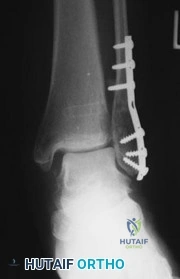
Talar body fractures often require excellent visualization of the talar dome for accurate articular reduction. The medial aspect and central dome are best visualized via a medial malleolar osteotomy. This osteotomy is pre-drilled, performed in a chevron or transverse fashion, and allows the medial malleolus to be retracted distally with the deltoid ligament attached, fully exposing the medial talar body and dome.

Question 36

In the setting of a trimalleolar ankle fracture, recent literature emphasizes the importance of fixing the posterior malleolus. Which of the following is considered the primary biomechanical rationale for anatomical open reduction and internal fixation of the posterior malleolus, even for smaller fragments?


Explanation

Historically, posterior malleolus fractures were fixed only if they involved >25-33% of the articular surface. However, recent biomechanical and clinical studies have shown that the posterior malleolus is the primary insertion site of the posterior inferior tibiofibular ligament (PITFL). Fixing the posterior malleolus restores the tension of the PITFL, which is crucial for the rotational stability of the syndesmosis. This is often biomechanically superior to placing a syndesmotic screw alone.

Question 37

A 45-year-old male sustains an acute, closed, midsubstance Achilles tendon rupture. He is active but not a professional athlete. He is considering non-operative management with an early functional rehabilitation protocol versus surgical repair. Based on recent high-quality randomized controlled trials, what is the most accurate information regarding re-rupture rates?


Explanation

Historically, non-operative treatment of Achilles tendon ruptures (involving prolonged rigid casting) had higher re-rupture rates than surgical repair. However, recent landmark studies (such as the WILL trial and studies by Willits et al.) have demonstrated that when non-operative treatment is paired with an early functional rehabilitation protocol (early weight-bearing in a functional brace), the re-rupture rates are statistically similar to operative repair, while completely avoiding surgical complications like wound breakdown and infection.

Question 38

A 20-year-old track and field athlete presents with an insidious onset of vague midfoot pain. Radiographs are unremarkable, but a subsequent MRI reveals a stress fracture through the central third of the tarsal navicular.

Why is this specific anatomical location at a high risk for delayed union or nonunion?


Explanation

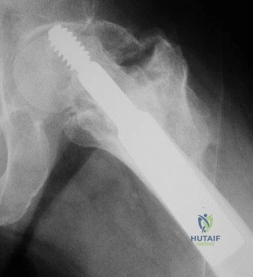
The tarsal navicular receives its blood supply from branches of the dorsalis pedis and medial plantar arteries. These vessels enter the bone dorsally and plantarly, respectively. The central third of the navicular body represents an area of relative avascularity (a watershed zone) between these two blood supplies. Stress fractures in this region have a high risk of delayed union or nonunion and often require prolonged non-weight-bearing cast immobilization or surgical intervention.

Question 39

A 55-year-old female presents to the emergency department after a slip and fall on ice. Her ankle is visibly deformed with the foot displaced laterally. The skin over the medial malleolus is severely blanched and tightly tented, but intact. What is the most urgent and appropriate next step?


Explanation

Severe tenting and blanching of the skin over a bony prominence (like the medial malleolus in a lateral fracture-dislocation of the ankle) is a surgical/orthopedic emergency. It indicates impending skin necrosis. The deformity must be immediately reduced via closed manipulation in the ED to relieve pressure on the skin, even before obtaining formal radiographs if the delay would be significant. Once reduced and splinted, radiographs can be obtained.

Question 40

In the management of severe (AO/OTA 43-C3) pilon fractures, the evolution from immediate internal fixation to a staged protocol (initial external fixation followed by delayed ORIF) was primarily driven by the unacceptably high rate of which specific complication?


Explanation

Historically, immediate open reduction and internal fixation of high-energy pilon fractures through swollen, traumatized soft tissue envelopes resulted in catastrophic wound complications, including skin necrosis, wound dehiscence, osteomyelitis, and eventual amputations. Sirkin et al. and Patterson and Krause popularized the staged protocol (spanning ex-fix, delay for soft tissue recovery, then definitive ORIF), which dramatically reduced the incidence of these severe soft tissue complications and deep infections.

Question 41

A 45-year-old female sustains a rotational ankle fracture. Computed tomography demonstrates a posterior malleolus fragment. Based on recent biomechanical and clinical literature, what is considered the most critical indication for surgical fixation of the posterior malleolus?


Explanation

Historically, posterior malleolus fixation was dictated by fragment size (e.g., >25% or >33% of the articular surface). However, recent biomechanical studies emphasize that the primary indication for fixing the posterior malleolus is to restore syndesmotic stability by reattaching the PITFL. Anatomical reduction of the posterior malleolus effectively stabilizes the syndesmosis, often obviating the need for trans-syndesmotic screws.

Question 42

A 38-year-old male presents with a comminuted distal tibia pilon fracture. The surgeon plans an anterolateral approach to the distal tibia. During this approach, which of the following nerves is at greatest risk of iatrogenic injury as it crosses the surgical field?


Explanation

The superficial peroneal nerve is at greatest risk during the anterolateral approach to the distal tibia, as its branches cross the surgical field from medial to lateral over the extensor retinaculum. The deep peroneal nerve is located more medially alongside the anterior tibial artery and is protected when dissecting in the correct interval (between the peroneus tertius and extensor digitorum longus, or lateral to the EDL).

Question 43

A 28-year-old male sustains a high-energy motor vehicle collision, resulting in a Hawkins Type III fracture of the talar neck. What is the approximate rate of avascular necrosis (AVN) of the talar body associated with this specific injury pattern?


Explanation

The Hawkins classification for talar neck fractures predicts the risk of avascular necrosis (AVN). Type I (nondisplaced) has a 0-10% risk. Type II (subtalar subluxation/dislocation) has a 20-50% risk. Type III (dislocation of both subtalar and tibiotalar joints) disrupts the three major sources of blood supply (artery of the tarsal canal, artery of the sinus tarsi, and deltoid branches), leading to a 70-100% risk of AVN. Type IV includes talonavicular subluxation/dislocation with a similarly high or higher risk.

Question 44

A 24-year-old snowboarder presents with lateral ankle pain after a hard landing. Initial plain radiographs are unremarkable, but a subsequent CT scan reveals a displaced fracture of the lateral process of the talus.

Which of the following physical examination findings is most specific for this injury compared to a standard ankle sprain?


Explanation

A fracture of the lateral process of the talus, often called a 'snowboarder's fracture', is frequently misdiagnosed as an ATFL sprain. Point tenderness is typically located slightly inferior and anterior to the tip of the lateral malleolus, corresponding precisely to the anatomical location of the lateral process of the talus, differentiating it from the ATFL which is slightly more anterior.

Question 45

In the Sanders classification system for intra-articular calcaneus fractures, which specific imaging modality and view is primarily utilized to determine the classification?


Explanation

The Sanders classification relies on coronal CT scan images. Specifically, it evaluates the fracture lines through the widest portion of the posterior articular facet of the calcaneus. It divides the facet into three columns using two fracture lines (A and B) and a third line (C) separating the posterior facet from the sustentaculum tali. The classification (I-IV) depends on the number and location of articular fracture lines.

Question 46

A 42-year-old male sustains a severe ankle injury. Radiographs show a fracture-dislocation with the fibula resting posterior to the tibia. Closed reduction in the emergency department is unsuccessful. In this classic Bosworth fracture-dislocation, which anatomical structure typically entraps the proximal fibular fragment?


Explanation

A Bosworth fracture-dislocation is characterized by the proximal fibular fragment becoming physically locked behind the posterolateral ridge of the distal tibia. The intact interosseous membrane acts as a tether. This mechanical block makes closed reduction virtually impossible and represents a surgical emergency to prevent skin necrosis and neurovascular compromise.

Question 47

A 14-year-old boy falls while skateboarding and sustains a Salter-Harris III fracture of the anterolateral aspect of the distal tibia. Which specific ligament is responsible for the avulsion force creating this fracture fragment?


Explanation

The Tillaux fracture is an avulsion of the anterolateral epiphysis of the distal tibia. It occurs in adolescents due to the asymmetrical closure of the distal tibial physis (which closes central, then medial, then lateral). An external rotation force places tension on the anterior inferior tibiofibular ligament (AITFL), which avulses the still-open anterolateral epiphysis.

Question 48

A 30-year-old male presents with severe midfoot swelling and pain following a motorcycle accident. Radiographs reveal a dislocation involving the talonavicular and calcaneocuboid articulations. What is the standard eponym used to describe this specific joint complex?


Explanation

The articulation separating the hindfoot (talus and calcaneus) from the midfoot (navicular and cuboid) is anatomically referred to as the transverse tarsal joint. Eponymously, it is known as the Chopart joint. The Lisfranc joint refers to the tarsometatarsal articulations.

Question 49

Following a severe crush injury to the foot from heavy machinery, a patient develops excruciating pain out of proportion to the injury, pain with passive toe stretch, and tense swelling. You suspect compartment syndrome. How many anatomically distinct fascial compartments are recognized in the foot for the purposes of surgical fasciotomy?


Explanation

There are 9 recognized fascial compartments in the foot: medial, lateral, superficial central, deep central, calcaneal, and four interosseous compartments. Adequate surgical decompression requires specific approaches (often dual dorsal incisions and occasionally a medial approach) to release all 9 compartments to prevent devastating ischemic contractures.

Question 50

A 55-year-old female sustains an isolated medial malleolus fracture. In deciding between tension band wiring and lag screw fixation, which of the following scenarios represents the clearest advantage for utilizing a tension band construct?


Explanation

Tension band wiring is particularly advantageous for small, transverse avulsion-type fractures or in poor quality osteoporotic bone. In these scenarios, lag screws may not achieve adequate purchase or may split the small fragment. The tension band converts eccentric tensile forces into compressive forces at the articular surface. Disadvantages include prominent hardware.

Question 51

A 33-year-old equestrian falls, and her foot is forcefully abducted while caught in the stirrup. She sustains a highly comminuted 'nutcracker' fracture of the cuboid. This specific fracture pattern occurs secondary to severe compression between which two bones?


Explanation

A 'nutcracker' fracture of the cuboid is a crush/compression injury. It typically occurs during forced abduction of the forefoot, which violently compresses the cuboid between the anterior process of the calcaneus proximally and the bases of the 4th and 5th metatarsals distally. This leads to shortening of the lateral column of the foot.

Question 52

A 62-year-old male with long-standing, poorly controlled diabetes and profound peripheral neuropathy sustains a bimalleolar ankle fracture. Which of the following modifications to standard surgical fixation and postoperative care is recommended to minimize the risk of hardware failure and Charcot arthropathy?


Explanation

Diabetic patients with severe neuropathy are at exceptionally high risk for hardware failure, nonunion, wound complications, and subsequent Charcot neuroarthropathy. Standard fixation is often insufficient. Surgeons should employ enhanced, rigid fixation constructs (often doubling the normal hardware) and enforce a significantly prolonged non-weight-bearing period (often 2 to 3 times longer than a non-diabetic patient) to ensure stable union.

Question 53

When performing an extensile lateral approach for the open reduction and internal fixation of a displaced intra-articular calcaneus fracture, the incision is made in an 'L' shape. Which nerve is at greatest risk of transection if the horizontal limb of the incision is carried too far anteriorly or placed too dorsally?


Explanation

The sural nerve travels posterior to the lateral malleolus and courses along the lateral aspect of the hindfoot and midfoot. It is at direct risk during the extensile lateral approach to the calcaneus. The vertical limb must be placed precisely between the Achilles and fibula, and the horizontal limb must remain low (at the junction of the plantar and lateral skin) to protect the sural nerve.

Question 54

A 29-year-old male sustains a supination-external rotation ankle injury. Non-weight-bearing radiographs demonstrate an isolated, minimally displaced trans-syndesmotic fracture of the distal fibula (Weber B). The medial clear space measures 3 mm.

What is the most appropriate next step to assess the integrity of the deep deltoid ligament and rule out a bimalleolar equivalent injury?


Explanation

To accurately assess for deep deltoid ligament disruption in an apparent isolated lateral malleolus fracture (Weber B), dynamic assessment is required. Both gravity stress views and weight-bearing radiographs are validated methods. If the medial clear space widens to greater than 4-5 mm (or >1 mm compared to the superior clear space), it indicates deep deltoid incompetence, classifying it as a bimalleolar equivalent fracture requiring operative intervention.

Question 55

A 35-year-old construction worker sustains a Gustilo-Anderson Type II open ankle fracture. Based on current literature and major trauma guidelines, what is the single most critical factor in reducing the risk of subsequent deep infection?


Explanation

Extensive literature review has shown that the early administration of intravenous antibiotics (ideally within 1 hour of injury) is the most critical intervention in reducing infection rates in open fractures. The rigid '6-hour rule' for surgical debridement has been largely debunked by recent evidence, although urgent thorough debridement (within 24 hours) remains the standard of care. High-pressure lavage is generally avoided as it may drive debris deeper into tissues.

Question 56

A 21-year-old elite collegiate basketball player sustains an acute fracture at the metaphyseal-diaphyseal junction of the fifth metatarsal during practice. He wishes to return to competitive play as quickly and safely as possible. What is the evidence-based recommended treatment?


Explanation

A fracture at the metaphyseal-diaphyseal junction of the fifth metatarsal is defined as a Jones fracture. Because this area is a vascular watershed zone, conservative treatment carries a higher risk of delayed union or nonunion. In high-level athletes, early intramedullary screw fixation is highly recommended as it significantly reduces the time to union and facilitates a faster, more reliable return to play.

Question 57

A 25-year-old marathon runner presents with a 4-week history of vague, progressively worsening dorsal midfoot pain. Initial radiographs are negative, but an MRI demonstrates a stress fracture strictly localized to the central third of the navicular body. The characteristically high risk of delayed union or nonunion in this specific region is anatomically due to:


Explanation

The navicular bone has a tenuous, centripetal blood supply originating from branches of the dorsalis pedis and medial plantar arteries. This microvascular anatomy leaves a relative avascular 'watershed' zone in the central third of the navicular body. Stress fractures in this precise location are notoriously prone to delayed union or frank nonunion and often require strict non-weight-bearing in a cast or surgical intervention (screw fixation).

Question 58

A 68-year-old female with osteoporosis misjudges a curb step and feels a sudden 'pop' in her posterior heel. Radiographs reveal a large 'beak' type avulsion fracture of the superior calcaneal tuberosity, displaced proximally by 4 cm.

On examination, the skin overlying the posterior heel is visibly blanched and tense. What is the most appropriate management?


Explanation

A displaced avulsion fracture of the calcaneal tuberosity that causes blanching (ischemia) of the thin overlying posterior heel skin represents a true orthopedic surgical emergency. The direct pressure from the displaced bony fragment will rapidly lead to full-thickness skin necrosis if not urgently reduced and definitively stabilized. Delaying for swelling to subside is contraindicated here.

Question 59

A 40-year-old male underwent open reduction and internal fixation of a severe rotational ankle fracture. The syndesmosis was stabilized utilizing a single 3.5 mm cortical screw placed across four cortices. At 3 months post-operatively, he is asymptomatic, but radiographs show the syndesmotic screw has fractured within the clear space. What is the current consensus regarding the management of this finding?


Explanation

Current orthopedic evidence and randomized trials suggest that routine removal of syndesmotic screws is unnecessary. Screws that break, loosen, or are intentionally retained generally do not result in poorer clinical outcomes, increased pain, or clinically significant loss of range of motion compared to screws that are electively removed. Therefore, asymptomatic broken screws require no intervention.

Question 60

The posterior process of the talus is anatomically divided into a medial tubercle and a lateral tubercle, separated by a distinct fibro-osseous groove. Which of the following tendons traverses this groove and may become symptomatic in cases of a lateral tubercle fracture (Shepherd's fracture) or a symptomatic os trigonum?


Explanation

The flexor hallucis longus (FHL) tendon runs directly through the groove located between the medial and lateral tubercles of the posterior process of the talus. Pathologies in this posterior talar region, such as a fracture of the lateral tubercle (Shepherd's fracture) or impingement from an os trigonum, frequently cause FHL tenosynovitis or mechanical entrapment (triggering) of the tendon.

Question 61

A 42-year-old female undergoes fixation of a posterior malleolus fracture via a posterolateral approach.

Which of the following describes the correct internervous/intermuscular interval for this approach?


Explanation

The posterolateral approach to the ankle utilizes the interval between the peroneus brevis (superficial peroneal nerve) and the flexor hallucis longus (tibial nerve). This allows excellent access to the posterior malleolus while protecting the sural nerve laterally.

Question 62

Following reduction and screw fixation of a syndesmotic injury in a pronation-external rotation (PER) ankle fracture, the surgeon is concerned about malreduction. Which of the following modalities is the most sensitive and specific for detecting syndesmotic malreduction postoperatively?


Explanation

Postoperative CT is the gold standard for assessing syndesmotic reduction. Plain radiographs have been shown to be highly insensitive for detecting subtle sagittal plane translation and rotational deformities.

Question 63

A 30-year-old male presents with a severely deformed ankle following a fall. Radiographs demonstrate a fracture of the fibula with the proximal fibular fragment displaced posterior to the posterior tubercle of the distal tibia. Closed reduction in the emergency department is unsuccessful. What is the most likely anatomic block to reduction?


Explanation

This describes a Bosworth fracture-dislocation. Closed reduction is typically prevented because the proximal fibular fragment becomes mechanically locked behind the posterolateral tibial ridge by the intact posterior syndesmotic ligaments.

Question 64

Recent biomechanical and clinical studies regarding the fixation of the posterior malleolus in trimalleolar ankle fractures have shifted the paradigm away from solely using fragment size (>25%) as the primary indication for fixation. What is the primary biomechanical advantage of directly fixing the posterior malleolus?


Explanation

Direct fixation of the posterior malleolus anatomically restores the posterior incisura and the attached posterior inferior tibiofibular ligament (PITFL). This provides greater biomechanical syndesmotic stability than utilizing trans-syndesmotic screws alone.

Question 65

A 45-year-old female sustains a Supination-External Rotation (SER) stage IV ankle injury. Radiographs show a trans-syndesmotic fibula fracture. A gravity stress view shows a medial clear space of 6 mm. Which specific component of the medial ligamentous complex must be disrupted to allow this lateral talar shift?


Explanation

The deep deltoid ligament is the primary medial stabilizer of the ankle against lateral talar translation. Its disruption is the hallmark of an SER IV injury when a medial malleolus fracture is absent.

Question 66

A 72-year-old female with severe, poorly controlled diabetes mellitus, profound peripheral neuropathy, and a BMI of 38 presents with a closed, highly comminuted unstable ankle fracture. The soft tissues are significantly compromised. Which of the following surgical options offers the most rigid construct and lowest risk of soft tissue failure in this specific high-risk patient?


Explanation

In severe neuropathic (Charcot-risk) diabetic patients with unstable fractures and poor soft tissue envelopes, primary TTC nailing provides a load-sharing construct that bypasses compromised soft tissues, significantly reducing complication rates.

Question 67

A 14-year-old boy presents with an ankle injury after a skateboarding accident. Radiographs reveal a Salter-Harris type III fracture of the anterolateral aspect of the distal tibia epiphysis. Which of the following ligaments is responsible for this avulsion injury?


Explanation

A juvenile Tillaux fracture is an avulsion of the anterolateral distal tibial epiphysis caused by tension from the anterior inferior tibiofibular ligament (AITFL). It occurs in adolescents because the lateral physis is the last to close.

Question 68

According to the Lauge-Hansen classification, what is the correct sequential order of structural failure in a Supination-External Rotation (SER) ankle fracture?


Explanation

The SER sequence is: 1) Anterior inferior tibiofibular ligament (AITFL), 2) Short oblique fracture of the distal fibula, 3) Posterior inferior tibiofibular ligament (PITFL) or posterior malleolus, 4) Deltoid ligament or medial malleolus.

Question 69

A 32-year-old male sustains a severe ankle injury. Closed reduction in the emergency department is unsuccessful. Radiographs demonstrate a fracture-dislocation where the proximal fibular fragment is displaced posterior to the posterior tubercle of the distal tibia. Which of the following is the most appropriate management?


Explanation

This describes a Bosworth fracture-dislocation. The proximal fibular fragment becomes locked behind the posterior tubercle of the tibia, rendering closed reduction impossible and necessitating urgent surgical release and open reduction.

Question 70

When utilizing the posterolateral approach to the ankle for fixation of a posterior malleolus fracture, the surgical interval is developed between which of the following muscle bellies?


Explanation

The posterolateral approach utilizes the internervous plane between the peroneal tendons (superficial peroneal nerve) and the flexor hallucis longus (tibial nerve). This provides excellent access to the posterior malleolus while avoiding major neurovascular structures.

Question 71

A 28-year-old female presents with an ankle fracture following an inversion injury. Radiographs reveal a transverse fracture of the distal fibula below the level of the syndesmosis and a vertical fracture of the medial malleolus. What is the most biomechanically sound fixation strategy for the medial malleolus in this injury pattern?


Explanation

This is a Supination-Adduction (SAD) injury. The vertical medial malleolus fracture involves shear forces and is best stabilized biomechanically with an anti-glide plate applied to the medial or anteromedial surface of the tibia to resist vertical displacement.

Question 72

Following open reduction and internal fixation of a severe pronation-external rotation (PER) ankle fracture with syndesmotic instability, which imaging modality is considered the gold standard for evaluating the accuracy of syndesmotic reduction?


Explanation

Postoperative or intraoperative bilateral CT is the gold standard for assessing syndesmotic reduction. Plain radiographs have low sensitivity for detecting subtle, yet clinically significant, syndesmotic malreduction.

Question 73

A surgeon chooses to use a posterolateral anti-glide plate for a Danis-Weber type B lateral malleolus fracture. While biomechanically superior to lateral plating, this technique is most commonly associated with which of the following complications?


Explanation

Posterolateral anti-glide plating provides superior biomechanical stability by resisting the posterior glide of the distal fragment. However, hardware prominence can cause irritation or tenosynovitis of the peroneal tendons.

Question 74

A 72-year-old male with severe peripheral neuropathy and a history of Charcot arthropathy presents with an acute, closed, highly unstable bimalleolar ankle fracture. The soft tissues are significantly compromised. To minimize catastrophic failure and soft tissue complications, what is the most appropriate definitive surgical intervention?


Explanation

In elderly diabetic patients with severe neuropathy and unstable fractures, primary TTC nailing provides rigid, load-sharing fixation. This significantly reduces the risk of hardware failure and soft tissue breakdown compared to standard ORIF.

Question 75

During pre-operative planning for an ankle fracture, a CT scan reveals a large avulsion fracture of the posterolateral aspect of the distal tibia. This specific fragment, which serves as the attachment site for the posterior inferior tibiofibular ligament (PITFL), is eponymously referred to as:


Explanation

The Volkmann fragment is the posterolateral aspect of the distal tibia where the PITFL attaches. A fracture here defines a classical posterior malleolar avulsion injury.

None

Dr. Mohammed Hutaif
Medically Verified Content by
Prof. Dr. Mohammed Hutaif
Consultant Orthopedic & Spine Surgeon
Chapter Index
