Open Fractures: Why Continuous Pressure Monitoring is Crucial

Key Takeaway
This topic focuses on Open Fractures: Why Continuous Pressure Monitoring is Crucial, The biggest concern following high-energy tibial fractures is compartment syndrome. This critical condition is monitored through careful assessment of clinical signs and symptoms, but definitive diagnosis often involves continuous pressure monitoring within the muscle compartments. Early detection and intervention are crucial to prevent permanent damage and optimize patient outcomes.
You are on-call and presented with a 24-year-old male who sustained a high-energy open tibial shaft fracture from a motorcycle collision. The wound is 6cm, with periosteal stripping and significant contamination. You are concerned about the risk of compartment syndrome. Explain the pathophysiology of this risk and why the "open" nature of the injury does not exclude the diagnosis.
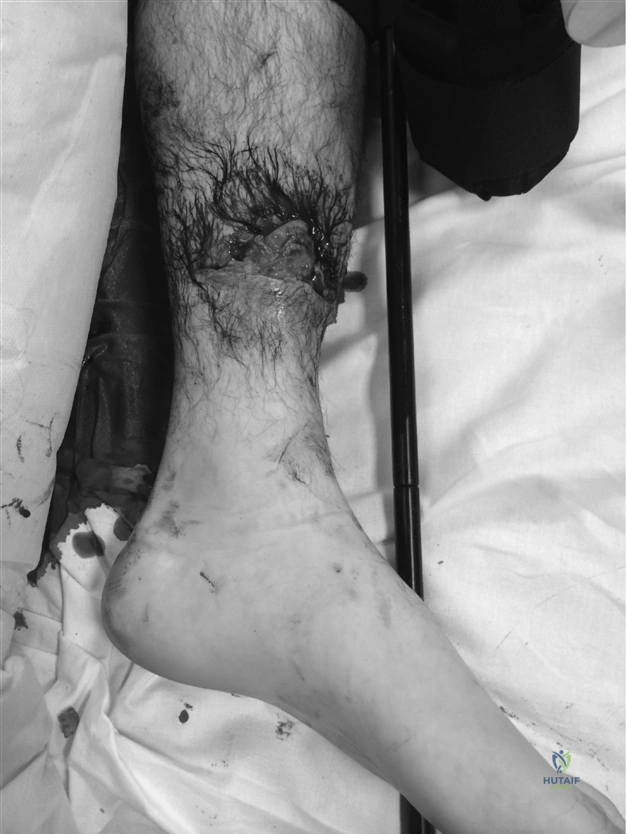
Candidate: The open fracture creates a fascial defect, but it is not sufficient to decompress the compartment because the volume of the hematoma and the reactive edema from reperfusion injury exceeds the size of the skin and fascial rent. ACS occurs when the intracompartmental pressure exceeds the capillary perfusion pressure, leading to microvascular collapse, hypoxia, and eventually, irreversible myonecrosis.
Candidates often suggest that the "open" wound acts as a safety valve, providing prophylactic decompression. This is a dangerous misconception; you must explicitly state that the injury does not "auto-decompress" and that the incidence of ACS in open fractures remains clinically significant (3-9%).
The candidate should define the "vicious cycle": fracture/trauma leads to hemorrhage and post-ischemic reperfusion edema. Because the four compartments are bound by inelastic fascia, volume expansion causes an exponential rise in pressure. The key physiologic marker is the delta pressure (ΔP = Diastolic BP - Compartment Pressure). If the ΔP < 30 mmHg for > 2 hours, it confirms the need for emergent fasciotomy, regardless of whether the initial wound was open or closed.
How do you approach the surgical management of this patient, specifically addressing the timing of debridement and the decision to use definitive intramedullary nailing versus external fixation?

Candidate: I would follow the BOAST guidelines. Immediate surgery is reserved for ischemic limbs or gross contamination (e.g., sewage). Otherwise, I would perform a thorough, systematic debridement within 24 hours. For stabilization, if the patient is stable and soft tissue allows, I prefer IM nailing. If there is significant contamination or hemodynamic instability, I would use a spanning external fixator for damage control.
Sticking to the outdated "6-hour rule." Examiners want to see that you understand the LEAP study findings and prioritize daylight surgery with a specialized team over "rushed" surgery in the middle of the night.
The candidate should frame the answer as a "cancer operation for trauma." Mention: 1) Systemic stabilization (ATLS) first. 2) Systematic debridement: "Outside-to-in," evaluating muscle using the "4 Cs" (Color, Consistency, Contractility, Capacity to bleed). 3) Skeletal stabilization based on the soft tissue status: Definitive IM nailing for stable/clean wounds vs. damage control external fixation for high-energy/contaminated wounds. 4) Early involvement of the plastic surgery team for wound coverage planning.
