
Comprehensive Master Guide · Medically Reviewed

Orthopedic Ob Reconstru Review | Dr Hutaif Hip & Knee R -...

ORTHOPEDIC MCQS ONLINE OB 20 2A RECONSTRUCTION OrthoCash 2020 A 65-year-old woman with painful knee arthritis and the deformity seen in Figure A, is scheduled …

6 Detailed Chapters
64 min read
Updated: Apr 2026
Dr. Mohammed Hutaif
Medically Reviewed by
Prof. Dr. Mohammed Hutaif
Verified Content Expert Reviewed

Quick Medical Answer

Learn more about ORTHOPEDIC MCQS ONLINE OB 20 RECONSTRUCTION 1A and how to manage it. Orthopedic procedures like **hip arthroplasty tha** often involve assessing unique risk factors, including those for nerve injury. Similar to total knee arthroplasty, where peroneal nerve palsy can result from factors like valgus deformity or prior lumbar laminectomy, precise surgical planning is vital to mitigate potential complications and ensure optimal patient recovery.

Hip Arthroplasty Tha: Online MCQs to Sharpen Your Ortho Skills

Orthopedic Ob Reconstru Review | Dr Hutaif Hip & Knee R -...

Comprehensive 100-Question Exam


00:00

Start Quiz

Question 1

A 45-year-old active male undergoes a total hip arthroplasty using a ceramic-on-ceramic bearing. Two years later, he presents with a 'squeaking' sound coming from the hip with deep flexion activities. Radiographs show well-fixed components. What is the most likely etiology of this phenomenon?


Explanation

Squeaking in ceramic-on-ceramic total hip arthroplasty is most commonly associated with edge loading of the bearing surface. This can occur due to component malposition, specifically cup retroversion, steep inclination, or loss of fluid film lubrication. While liner fracture can cause a catastrophic failure and acute pain, squeaking in an asymptomatic, well-fixed hip usually correlates with edge loading.

Question 2

A 68-year-old female is scheduled for a total hip arthroplasty. Preoperative standing and sitting lateral spine-pelvis radiographs demonstrate a change in sacral slope of less than 10 degrees from standing to sitting. Which of the following component positioning strategies is most appropriate given this finding?


Explanation

A change in sacral slope of <10 degrees between standing and sitting indicates a 'stiff' spinopelvic junction. Normally, the pelvis tilts posteriorly when transitioning from standing to sitting, increasing functional acetabular anteversion and opening the cup anteriorly to prevent impingement and posterior dislocation. In a stiff spine, this compensatory posterior tilt does not occur, putting the patient at higher risk of anterior impingement and posterior dislocation during sitting. Therefore, the surgeon must compensate by increasing the target acetabular cup anteversion.

Question 3

During a posterior-stabilized total knee arthroplasty, the surgeon assesses the gaps with trial components. The knee has a symmetric extension gap that accepts a 10 mm spacer block perfectly. In flexion, the gap is asymmetric, being tight medially and loose laterally. Which of the following is the most appropriate next step in management?


Explanation

In TKA, an asymmetric flexion gap that is tight medially and loose laterally with a symmetric extension gap is indicative of an internally rotated femoral component. To correct this, the femoral component should be externally rotated. External rotation of the femoral component moves the posterior medial condyle more anteriorly (decreasing the medial flexion gap tension) and the posterior lateral condyle more posteriorly (tightening the lateral flexion gap), thereby balancing the flexion space.

Question 4

According to the 2018 Evidence-Based Validated Definition for Periprosthetic Joint Infection, which of the following findings is considered a 'Major Criterion' sufficient for a definitive diagnosis of periprosthetic joint infection (PJI)?


Explanation

According to the 2018 ICM/MSIS criteria for PJI, there are two major criteria, either of which is definitive for infection: 1) Two positive periprosthetic cultures with phenotypically identical organisms, or 2) A sinus tract communicating with the joint. Alpha-defensin, elevated synovial PMN%, and elevated CRP are all minor criteria that contribute to a scoring system. A single positive tissue culture is also a minor criterion, except in cases of highly virulent organisms where it might strongly suspect infection, but formally it is minor.

Question 5

A 55-year-old male presents with isolated medial compartment osteoarthritis of the right knee. He is being evaluated for a medial unicompartmental knee arthroplasty (UKA). Which of the following physical examination or radiographic findings is an absolute contraindication to a medial UKA?


Explanation

An intact ACL is generally considered a prerequisite for a standard medial UKA. An absent ACL with subjective instability or anterior subluxation of the tibia on a lateral radiograph is a contraindication because it leads to eccentric wear of the UKA components and early failure. A BMI < 35, mild patellofemoral arthritis (especially medial facet or asymptomatic), and a flexion contracture up to 15 degrees are generally acceptable. Chondrocalcinosis is no longer considered an absolute contraindication if the lateral cartilage is otherwise intact.

Question 6

A 72-year-old female falls and sustains a periprosthetic femur fracture around her cementless total hip arthroplasty. Radiographs reveal a fracture extending just distal to the tip of the stem. The stem is radiographically loose, but there is excellent proximal and distal bone stock. According to the Vancouver classification, what is the fracture type and the recommended surgical treatment?


Explanation

The fracture is around or just distal to the stem (Type B). The stem is loose, but bone stock is good, which makes it a Vancouver B2 fracture. The gold standard treatment for a Vancouver B2 fracture is revision of the femoral component to a long stem (often cementless fluted tapered or fully porous) that bypasses the fracture by at least 2 cortical diameters, along with fracture fixation (e.g., cerclage cables) if necessary. Vancouver B1 involves a well-fixed stem (treated with ORIF). Vancouver B3 involves a loose stem with poor bone stock (often treated with proximal femoral replacement).

Question 7

During a revision total hip arthroplasty, you encounter severe acetabular bone loss. Preoperative radiographs demonstrate up and in migration of the cup past Kohler's line, superior migration of 4 cm, and intraoperatively you note destruction of >60% of the acetabular rim, with independent movement of the superior and inferior hemipelvis. What is the most appropriate reconstructive option?


Explanation

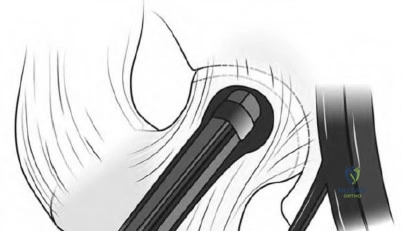
The description represents a Paprosky Type 3B defect with pelvic discontinuity (medial migration past Kohler's, >3cm superior migration, >50% rim absent, and independent movement of the hemipelvis). Such massive defects with pelvic discontinuity cannot be reliably treated with jumbo cups or isolated structural grafts due to lack of stable host bone contact. A custom triflange acetabular component, a cup-cage construct, or a pelvic distraction technique with a trabecular metal cup are the preferred options to achieve rigid fixation across the discontinuity.

Question 8

When performing a direct anterior approach to the hip for total hip arthroplasty, the internervous plane utilized is between the tensor fasciae latae (TFL) and the sartorius superficially. Which two nerves supply these muscles respectively?


Explanation

The direct anterior (Smith-Petersen) approach utilizes a true internervous and intermuscular plane. Superficially, the plane is between the Sartorius (supplied by the femoral nerve) and the Tensor Fasciae Latae (supplied by the superior gluteal nerve). Deep, the plane is between the Rectus Femoris (femoral nerve) and the Gluteus Medius (superior gluteal nerve).

Question 9

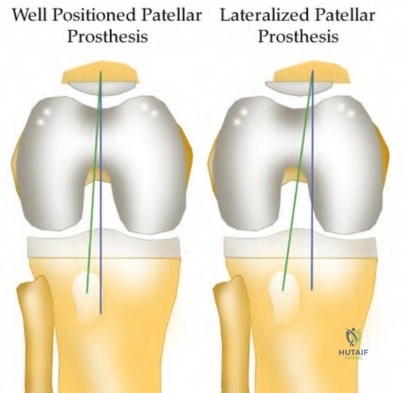
A patient presents with persistent anterior knee pain and a 'clunking' sensation 1 year following a primary total knee arthroplasty. On physical exam, the patella tracks laterally and there is tenderness over the lateral retinaculum. Radiographs and CT scan are obtained. Which of the following component malpositions is most likely responsible for lateral patellar maltracking?


Explanation

Internal rotation of the femoral component medializes the trochlear groove, effectively increasing the Q-angle and causing the patella to track laterally. Other factors causing lateral maltracking include internal rotation of the tibial component (medializes the tibial tubercle), medial translation of the femoral component, and medial translation of the tibial component.

Question 10

A surgeon is performing a primary TKA and decides to use the surgical epicondylar axis (SEA) to set the rotation of the femoral component. Which of the following best defines the SEA?


Explanation

The Surgical Epicondylar Axis (SEA) is defined as the line connecting the sulcus of the medial epicondyle to the most prominent point of the lateral epicondyle. This axis more closely approximates the flexion-extension axis of the knee. The Clinical Epicondylar Axis (CEA) connects the most prominent points of both epicondyles and is typically internally rotated about 3 degrees relative to the SEA. Whiteside's line (the anteroposterior axis) is typically perpendicular to the SEA.

Question 11

A 62-year-old male presents with groin pain and a palpable mass 5 years after receiving a metal-on-polyethylene total hip arthroplasty with a large diameter modular cobalt-chromium head on a titanium stem. Serum cobalt levels are significantly elevated while chromium levels are mildly elevated. A metal artifact reduction sequence (MARS) MRI shows a cystic pseudotumor. What is the most likely diagnosis?


Explanation

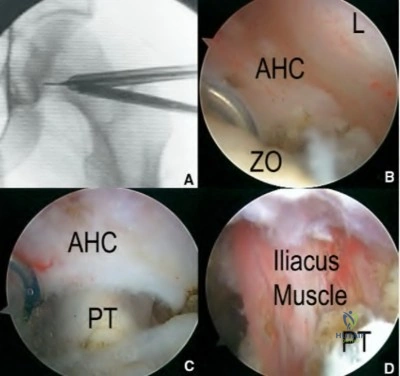
The patient is presenting with adverse local tissue reaction (ALTR) or ALVAL secondary to trunnionosis. Trunnionosis is mechanically assisted crevice corrosion that occurs at the modular head-neck junction. It is particularly associated with large-diameter metal heads (which increase torque at the trunnion) on titanium stems (mixed-alloy coupling). Serum metal ions typically show a higher cobalt-to-chromium ratio (often >2:1) compared to metal-on-metal bearing wear, which usually has roughly equal elevation of both ions.

Question 12

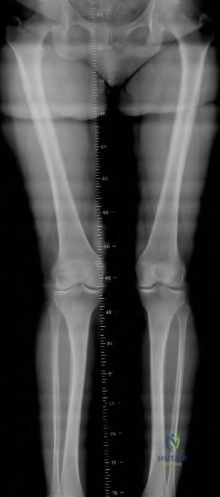
When planning a medial opening wedge high tibial osteotomy (HTO) for isolated medial compartment osteoarthritis in a varus knee, the surgeon intends to shift the mechanical axis to the Fujisawa point. Where is the Fujisawa point located on the tibial plateau?


Explanation

The Fujisawa point is traditionally targeted in HTO for medial compartment OA to slightly overcorrect the varus deformity and unload the medial compartment. It is located at 62% of the tibial plateau width from the medial edge (i.e., slightly lateral to the lateral tibial spine in the lateral compartment). This aligns the mechanical axis to pass through the lateral compartment, providing optimal unloading of the damaged medial cartilage while preventing excessive valgus overload.

Question 13

According to the classification of cementless femoral stems, a fully porous-coated cylindrical stem relies on which area for its primary mechanical fixation?


Explanation

Fully porous-coated cylindrical stems (often considered Type 4 in some classifications) bypass the metaphysis and rely on diaphyseal engagement for their primary stability and long-term biologic fixation (osteointegration). The isthmus provides a 'scratch fit' which confers immediate mechanical stability, while the extensive porous coating allows for bone ingrowth. Proximally coated stems (wedge-shaped, Type 1 or 2) rely on metaphyseal fit and fill.

Question 14

A 70-year-old female presents 6 months post-total knee arthroplasty with an inability to actively extend her knee. Examination reveals a palpable defect at the superior pole of the patella. What is the most appropriate surgical reconstruction option for a chronic quadriceps tendon rupture following TKA with inadequate remaining tissue?


Explanation

Chronic extensor mechanism disruption post-TKA is a devastating complication. Direct repair usually fails due to poor tissue quality and the mechanics of the joint. When tissue is inadequate, the current gold standard treatments involve either reconstruction using a synthetic mesh (like Marlex mesh, which allows for robust fibrous tissue ingrowth) or a full extensor mechanism allograft (tibial tubercle, patellar tendon, patella, and quad tendon). The mesh technique has shown increasingly favorable long-term results and avoids the disease transmission/resorption risks of allograft.

Question 15

The wear rate of ultra-high molecular weight polyethylene (UHMWPE) in total hip arthroplasty has been significantly reduced by cross-linking. Which of the following manufacturing steps is required after gamma irradiation to prevent long-term oxidative degradation of the polyethylene?


Explanation

Gamma irradiation is used to cross-link UHMWPE, which improves wear resistance. However, irradiation creates free radicals within the polyethylene chains. If these free radicals are exposed to oxygen in vivo, they lead to oxidative degradation, embrittlement, and catastrophic failure of the plastic. To eliminate these free radicals, the polyethylene must undergo thermal treatment (either remelting or annealing) after irradiation, or an antioxidant (like Vitamin E) must be infused into the material.

Question 16

In a cruciate-retaining (CR) total knee arthroplasty, the posterior cruciate ligament (PCL) is preserved. If the PCL is left excessively tight during the procedure, what kinematic abnormality is most likely to occur?


Explanation

In a CR TKA, an excessively tight PCL will pull the femur excessively posterior during flexion (excessive posterior rollback), which can lead to limited knee flexion, excessive wear on the posterior aspect of the polyethylene insert, and lift-off of the anterior tibial tray. Paradoxical anterior slide is typically seen when the PCL is deficient or incompetent in a CR knee.

Question 17

A patient presents with thigh pain 10 years after a cementless total hip arthroplasty. Radiographs demonstrate a continuous radiolucent line of 3 mm with sclerotic margins in Gruen zones 1, 2, 6, and 7. The stem has subsided by 5 mm. What is the most likely mode of failure?


Explanation

The presence of a wide, continuous radiolucent line with a sclerotic boundary (demarcation) around a previously well-fixed stem, along with subsidence, is classic for aseptic loosening secondary to osteolysis from particulate debris (typically polyethylene wear). Stress shielding typically shows proximal bone resorption (calcar round-off) but with the distal stem remaining rigidly fixed without subsidence. Infection usually presents with more rapid, irregular osteolysis and periosteal reaction without a sclerotic border.

Question 18

During a revision total knee arthroplasty, removal of the tibial component reveals a massive contained metaphyseal defect measuring 3 cm deep, but with an intact cortical rim. According to the Anderson Orthopaedic Research Institute (AORI) classification, what type of defect is this, and what is the preferred method of management?


Explanation

A massive metaphyseal defect (cavitary) with an intact cortical rim is an AORI Type 2 defect (often 2B if both condyles are involved, 2A if single). For large Type 2 defects that are not amenable to simple cement fill or small block augments, the use of porous metaphyseal tantalum cones or titanium sleeves combined with a diaphyseal engaging stem provides excellent structural support and long-term biologic fixation.

Question 19

A 65-year-old patient who underwent a posterior-stabilized total knee arthroplasty 1 year ago complains of a painful 'catch' and an audible pop at the anterior knee when extending the leg from roughly 40 degrees of flexion to full extension. What is the underlying pathomechanics of this condition?


Explanation

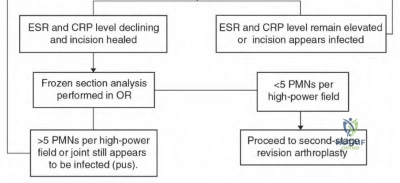
Patellar clunk syndrome is a known complication specific to posterior-stabilized TKA designs. It occurs when a fibrous nodule hypertrophies at the junction of the quadriceps tendon and the superior pole of the patella. During flexion, the nodule drops into the intercondylar box of the femoral component. As the knee extends (usually between 30-45 degrees), the nodule catches on the superior margin of the box and suddenly pops out, creating the characteristic painful 'clunk'. Treatment is typically arthroscopic debridement of the nodule.

Question 20

During primary total knee arthroplasty using a measured resection technique, the surgeon aims to restore the joint line. Which of the following anatomic landmarks is most reliable for approximating the native joint line level if the articular surface is severely distorted?


Explanation

In revision TKA or primary TKA with severe bone loss/distortion, restoring the joint line is critical for proper kinematics and patellar tracking. Reliable osseous landmarks for estimating the joint line include: ~2.5 to 3 cm distal to the adductor tubercle, ~2.5 cm distal to the medial epicondyle, and ~1.5 cm proximal to the fibular head. Option 0 (3 cm from medial epicondyle) is slightly inaccurate (usually 2.5 cm). The adductor tubercle is a very consistent landmark, and the joint line sits approximately 2.5 to 3 cm distal to it.

Question 21

A 60-year-old male presents with groin pain 8 years after a metal-on-metal total hip arthroplasty. Lab results show elevated serum cobalt and chromium levels. MRI with MARS (Metal Artifact Reduction Sequence) shows a solid and cystic mass communicating with the joint space. What is the characteristic histological finding in the periprosthetic tissue of this condition?


Explanation

Adverse local tissue reactions (ALTR) in metal-on-metal (MoM) implants are characterized by ALVAL (Aseptic Lymphocyte-dominated Vasculitis-Associated Lesion). Histologically, it shows a diffuse perivascular infiltrate of T-lymphocytes and plasma cells. Birefringent particles under polarized light are seen with polyethylene wear, while giant cells engulfing non-birefringent debris are typical of PMMA (cement) wear.

Question 22

During a primary total knee arthroplasty for a severe fixed valgus deformity, the knee is noted to be tight in extension but balanced in flexion. Which of the following lateral structures should be released first to selectively correct the tight extension gap?


Explanation

The iliotibial (IT) band is a primary stabilizer in extension on the lateral side. In a valgus knee that is tight in extension but balanced in flexion, the IT band should be released first. The popliteus tendon is tight in flexion, and releasing it would primarily affect the flexion gap.

Question 23

A 75-year-old female sustains a fall 5 years after a cementless THA. Radiographs show a periprosthetic femur fracture occurring around the stem tip. Intraoperative assessment reveals the stem remains firmly fixed in the metaphysis, and the proximal bone stock is adequate. According to the Vancouver classification, what is the fracture type and the standard recommended treatment?


Explanation

The fracture is around the stem (Type B). Because the stem is firmly fixed, it is classified as a Vancouver B1 fracture. The standard treatment for B1 fractures is ORIF using a long plate, bridging the fracture with bicortical fixation distally and unicortical screws or cerclage cables proximally.

Question 24

A 68-year-old female presents with an inability to perform a straight leg raise 3 months following a primary TKA. Examination reveals a palpable gap at the superior pole of the patella. What is the most appropriate surgical management for this complication?


Explanation

Quadriceps tendon ruptures (or any major extensor mechanism disruption) following TKA have very high failure rates with simple primary end-to-end repair due to poor tissue quality and tension. Reconstruction using an extensor mechanism allograft or synthetic mesh (e.g., Marlex mesh) is the recommended treatment to provide a durable biologic or synthetic scaffold.

Question 25

Which of the following is traditionally considered an absolute contraindication to a medial mobile-bearing unicompartmental knee arthroplasty (UKA)?


Explanation

ACL deficiency is traditionally an absolute contraindication for a mobile-bearing medial UKA due to the high risk of bearing spin-out and abnormal anterior-posterior kinematics. Age and weight are no longer considered absolute contraindications. Mild fixed flexion contractures (<15 degrees) and asymptomatic patellofemoral osteoarthritis are widely accepted in modern UKA practice.

Question 26

A 65-year-old male complains of a painful catching sensation and an audible "clunk" when extending his knee from a flexed position, 1 year after a posterior-stabilized (PS) TKA. What is the primary etiology of this condition?


Explanation

Patellar clunk syndrome is a complication predominantly seen in PS TKA designs. It is caused by the formation of a fibrous nodule at the junction of the quadriceps tendon and the superior pole of the patella. During flexion, this nodule drops into the intercondylar box of the femoral component. As the knee extends (usually around 30-45 degrees), the nodule pops out with a painful "clunk".

Question 27

Which surgical approach to the hip is most frequently associated with the risk of iatrogenic injury to the superior gluteal nerve?


Explanation

The direct lateral (Hardinge) approach involves splitting the gluteus medius and minimus muscles. The superior gluteal nerve innervates these muscles and runs approximately 3 to 5 cm proximal to the tip of the greater trochanter. Extending the split too proximally places the main trunk of the nerve at significant risk.

Question 28


A patient presents with a feeling of the knee "giving way" when descending stairs 1 year post-TKA. On examination, the knee is stable in full extension but has significant anteroposterior laxity at 90 degrees of flexion. Which of the following technical errors during the index surgery is the most likely cause?


Explanation

Flexion instability is characterized by laxity in flexion while maintaining stability in extension. It is typically caused by an excessive resection of the posterior femoral condyles or the use of an undersized femoral component, leading to a loose flexion gap. Compensating by using a thicker polyethylene insert would result in a tight extension gap.

Question 29

During a primary TKA for a varus osteoarthritic knee, after making the standard measured bone cuts, the knee has a symmetric tight medial gap in both flexion and extension. The lateral gap is well-balanced. Which of the following is the most appropriate next step in soft tissue balancing?


Explanation

A tight medial gap in both flexion and extension indicates a symmetrically tight medial compartment. The most appropriate step is to release the medial structures, typically starting with the deep MCL and posteromedial capsule. Modifying bone cuts is not indicated if the mechanical axis cuts were correct, and increasing poly thickness would overstuff the entire joint.

Question 30

Tranexamic acid (TXA) is routinely utilized in total joint arthroplasty to minimize perioperative blood loss. What is the cellular mechanism of action of TXA?


Explanation

Tranexamic acid (TXA) is a synthetic analog of the amino acid lysine. It functions as an antifibrinolytic by reversibly and competitively binding to the lysine receptor sites on plasminogen. This prevents plasminogen from being activated to plasmin, thereby inhibiting the degradation of fibrin clots.

Question 31

The introduction of highly cross-linked polyethylene (HXLPE) has significantly reduced wear rates and osteolysis in THA. However, the cross-linking process alters the mechanical properties of the material. Which of the following properties is primarily DECREASED by the irradiation process?


Explanation

While the irradiation process used to create highly cross-linked polyethylene significantly improves its adhesive and abrasive wear resistance, it comes at a cost to its mechanical properties. Irradiation decreases ultimate tensile strength, yield strength, ductility, and fracture toughness, making the material more susceptible to fatigue fracture or rim failure.

Question 32

A 45-year-old female with developmental dysplasia of the hip (DDH) presents for THA. Preoperative radiographs show the femoral head is subluxated, with 80% proximal migration relative to the height of the normal true acetabulum. Based on the Crowe classification, what type of dysplasia does she have?


Explanation

The Crowe classification of DDH evaluates the degree of proximal migration of the femoral head: Type I: <50% subluxation; Type II: 50-75% subluxation; Type III: 75-100% subluxation; Type IV: >100% subluxation (complete dislocation). With 80% proximal migration, the patient falls into the Crowe Type III category.

Question 33

A 70-year-old female undergoes a right TKA for a severe fixed valgus deformity. Postoperatively in the recovery room, she is noted to have a foot drop and decreased sensation over the dorsum of the right foot. What is the most appropriate initial management?


Explanation

Peroneal nerve palsy is a known complication of TKA in patients with severe valgus and flexion contractures, primarily due to traction on the nerve upon deformity correction. Initial management includes relieving any extrinsic pressure (loosening dressings) and relaxing the nerve by flexing the knee to 20-30 degrees. An AFO prevents equinus contracture. Surgical exploration is generally reserved for failure to recover after several months.

Question 34

According to the classic work by Lewinnek, what is the "safe zone" for the orientation of the acetabular component in total hip arthroplasty to minimize the risk of postoperative dislocation?


Explanation

Lewinnek et al. described the safe zone for acetabular cup placement as 15° ± 10° of anteversion and 40° ± 10° of inclination (abduction). Placement of the cup outside this zone historically correlated with a significantly higher risk of dislocation, though modern large-head bearings have slightly altered these strict functional parameters.

Question 35

Which of the following statements best describes the surgical principle of true kinematic alignment in total knee arthroplasty?


Explanation

Kinematic alignment (KA) aims to restore the patient's native, pre-arthritic constitutional joint lines and alignment (co-alignment of the kinematic axes of the knee). This involves making bone cuts that match the individual anatomy, often leaving the tibia in slight varus and the femur in slight valgus. This is in contrast to mechanical alignment, which aims for a neutral (0-degree) mechanical axis.

Question 36

A 68-year-old male presents with groin pain 6 years after a primary THA using a large-diameter metal head on a standard titanium alloy stem (metal-on-polyethylene bearing). Radiographs show no component loosening, but an MRI reveals a large cystic mass around the joint. Blood tests show elevated serum cobalt and normal chromium levels. What is the most likely diagnosis?


Explanation

Trunnionosis, or mechanically assisted crevice corrosion (MACC), occurs at the modular head-neck junction. It is a known complication when using large metal heads (often cobalt-chromium) on titanium stems. The localized corrosion releases metal ions (typically higher cobalt than chromium), leading to an adverse local tissue reaction (ALTR) or pseudotumor, even without a metal-on-metal bearing surface.

Question 37

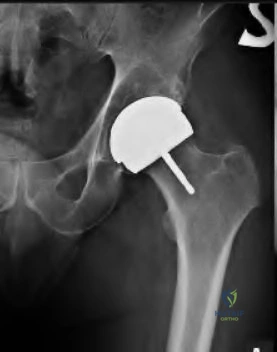
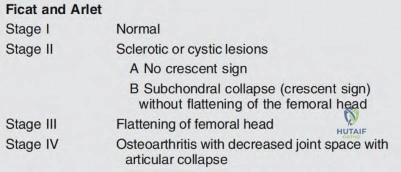
A 35-year-old male presents with right hip pain. MRI confirms avascular necrosis (AVN) of the femoral head. Radiographs show a distinct sclerotic band and cystic changes in the femoral head, but no subchondral collapse or crescent sign. According to the Ficat and Arlet classification, what stage is this, and is core decompression generally indicated?


Explanation

The presence of radiographic changes (sclerosis/cysts) without subchondral collapse (no crescent sign or flattening) corresponds to Ficat Stage II AVN. Core decompression is generally indicated for early, pre-collapse stages (Ficat I and II) to reduce intraosseous pressure, improve vascularity, and attempt to delay or prevent progression to collapse.

Question 38

In total hip arthroplasty, a single-wedge (flat tapered) titanium cementless stem relies primarily on which of the following mechanisms for its initial mechanical stability?


Explanation

Single-wedge (flat tapered) stems, such as the Taperloc or Accolade, are designed to wedge mediolaterally within the proximal femur (metaphysis) to achieve three-point fixation. They are purposefully narrow in the AP dimension to spare bone and do not rely on AP fill or distal diaphyseal engagement, which helps prevent stress shielding.

Question 39


A 72-year-old female presents with acute thigh pain and an inability to bear weight after a minor fall, 10 years post-THA. Radiographs demonstrate a fracture around the tip of the well-fixed femoral stem, extending into the diaphysis. The bone stock proximally remains intact. Which principle must be strictly adhered to during the surgical fixation of this fracture?


Explanation

This describes a Vancouver B1 periprosthetic fracture (fracture around a well-fixed stem with good bone stock). The treatment of choice is osteosynthesis with a long bridging plate. To prevent creating a stress riser at the tip of the stem, the plate should overlap the stem proximally using cerclage cables or unicortical screws, while achieving solid bicortical screw fixation distally in the native diaphysis.

Question 40

During a complex revision TKA, the surgeon notes profound laxity and attenuation of the medial collateral ligament (MCL) such that the knee cannot be balanced coronally in either flexion or extension. The extensor mechanism and posterior capsule remain completely intact. Which level of prosthetic constraint is most appropriate in this scenario?


Explanation

A completely deficient or non-functional MCL that prevents coronal balancing is an indication for a rotating-hinge prosthesis. A constrained non-hinged (CCK/VVC) implant requires an intact or minimally competent MCL and LCL to act as a soft-tissue tether; it cannot overcome profound global collateral deficiency.

Question 41

In revision total hip arthroplasty (THA), an Extended Trochanteric Osteotomy (ETO) is often planned to remove a well-fixed cementless stem. To ensure successful extraction and subsequent stable fixation of a fully porous-coated cylindrical revision stem, what is the biomechanical principle regarding the length of the ETO fragment?


Explanation

An Extended Trochanteric Osteotomy (ETO) must extend distal to the area of prosthetic fixation to allow for safe extraction of a well-fixed cementless stem (or distal to the cement mantle for cemented stems). For reimplantation, the diaphyseal segment of the revision stem must achieve at least 4 to 6 cm of scratch fit distal to the ETO osteotomy site.

Question 42

A 68-year-old patient with a fused lumbar spine from L2 to the pelvis (pelvic incidence minus lumbar lordosis mismatch) is scheduled for a THA. How does this spinopelvic stiffness affect the optimal acetabular cup positioning to minimize the risk of dislocation?


Explanation

A fused or stiff lumbar spine prevents the normal posterior pelvic tilt that occurs when a patient transitions from standing to sitting. Because the pelvis fails to tilt back, there is a lack of relative functional acetabular anteversion, leading to anterior impingement and posterior dislocation. To compensate, the surgeon must place the cup in higher anteversion and inclination.

Question 43

A patient with a metal-on-polyethylene (MoP) THA presents 5 years postoperatively with sudden onset groin pain. Blood work reveals serum Cobalt levels significantly higher than Chromium levels. MRI with MARS sequencing shows a solid and cystic pseudotumor around the hip. What is the primary pathophysiologic mechanism for this failure?


Explanation

This presentation describes trunnionosis, which is caused by Mechanically Assisted Crevice Corrosion (MACC) at the modular head-neck junction. It classically presents with elevated serum Cobalt > Chromium (unlike bearing surface wear in Metal-on-Metal, where Co and Cr are elevated more equally) and can form Adverse Local Tissue Reactions (ALTR/pseudotumors) even in MoP bearings.

Question 44

A patient presents with a palpable, painful 'catch' and an audible pop during active extension of the knee from 40 degrees to 30 degrees following a posterior-stabilized (PS) Total Knee Arthroplasty (TKA). What is the most likely etiology?


Explanation

This describes 'Patellar Clunk Syndrome', a complication unique to posterior-stabilized (PS) TKAs (especially earlier designs with a high intercondylar box ratio). It is caused by the formation of a fibrous nodule on the undersurface of the quadriceps tendon at the superior pole of the patella, which catches in the femoral intercondylar box during extension.

Question 45

Intraoperatively during a primary TKA, the surgeon utilizes spacer blocks and finds that the flexion gap is excessively tight, but the extension gap is perfectly symmetric and balanced. Which of the following is the most appropriate surgical step to correct this kinematic mismatch?


Explanation

A tight flexion gap with a balanced extension gap means the AP dimension in flexion is too large. Downsizing the femoral component (which effectively resects more posterior femoral condyle when using anterior referencing) will increase the flexion gap without altering the extension gap.

Question 46

According to the 2018 International Consensus Meeting (ICM) criteria for Periprosthetic Joint Infection (PJI), which of the following carries the highest diagnostic weight and qualifies as a definitive 'Major' criterion?


Explanation

The 2018 ICM criteria establish two definitive (Major) criteria for PJI: 1) Two positive periprosthetic cultures with phenotypically identical organisms, or 2) A sinus tract communicating with the joint. The other options are minor criteria that contribute points toward the diagnosis.

Question 47

In the manufacturing of highly cross-linked polyethylene (XLPE) for THA, irradiation is used to create cross-links that improve wear resistance. What is the primary biomechanical tradeoff of using a 'remelting' process compared to an 'annealing' process to eliminate free radicals?


Explanation

Irradiation creates free radicals that can cause oxidation. Heating the polyethylene eliminates these free radicals. Remelting (heating above the melting point) completely extinguishes free radicals but decreases the material's mechanical properties (fatigue and yield strength). Annealing (heating below the melting point) maintains mechanical strength but leaves residual free radicals, which require adding antioxidants like Vitamin E to prevent oxidation.

Question 48

During a total hip arthroplasty, the surgeon utilizes a standard offset stem instead of a high offset stem, inadvertently decreasing the patient's native femoral offset by 15 mm. What is the most likely biomechanical consequence of this error?


Explanation

Decreasing femoral offset shortens the abductor moment arm. To maintain a level pelvis during the single-leg stance phase, the abductor muscles must generate significantly more force. This ultimately increases the overall joint reactive force across the hip and can lead to a Trendelenburg gait and increased wear.

Question 49

Elevation of the joint line during TKA (often resulting from excessive distal femoral resection and using a thicker polyethylene insert) most commonly leads to which of the following complications?


Explanation

Joint line elevation during TKA alters the isometry of the collateral ligaments. The ligaments become relatively lax in mid-flexion, causing mid-flexion instability. It also results in pseudo-patella baja (the patella is lower relative to the joint line, though the patellar tendon length is unchanged), which alters patellofemoral kinematics and can cause anterior knee pain.

Question 50

A 45-year-old active male with a ceramic-on-ceramic (CoC) THA reports a loud squeaking noise with walking that is socially embarrassing. Which factor is most strongly associated with the etiology of this phenomenon?


Explanation

Squeaking in Ceramic-on-Ceramic (CoC) bearings is heavily associated with edge loading (often due to component malposition, such as excessive cup anteversion or inclination, or micro-separation during swing phase). Edge loading disrupts the normal fluid-film lubrication, leading to stripe wear and high-frequency vibrations (squeaking).

Question 51

A patient requires a femoral revision THA for aseptic loosening. Radiographs demonstrate extensive metaphyseal bone loss with the diaphyseal cortical bone remaining fully intact for only 3 cm distal to the tip of the current stem. According to the Paprosky femoral defect classification, what type of defect is present?


Explanation

In the Paprosky femoral defect classification: Type IIIA defects have >4 cm of intact diaphyseal bone available for distal fixation. Type IIIB defects have <4 cm of intact diaphyseal bone. Type IV defects have no functional diaphyseal bone (widened isthmus) requiring an extensively porous coated stem or impaction grafting. Since this patient has 3 cm intact, it is Type IIIB.

Question 52

Which of the following histological findings is pathognomonic for an Aseptic Lymphocyte-Dominated Vasculitis-Associated Lesion (ALVAL) in the setting of a failed metal-on-metal THA?


Explanation

ALVAL (Aseptic Lymphocyte-Dominated Vasculitis-Associated Lesion) is a Type IV delayed hypersensitivity reaction seen in metal-on-metal hip replacements. Histologically, it is defined by a heavy perivascular infiltrate of T-lymphocytes, macrophages, and varying degrees of tissue necrosis.

Question 53

When evaluating a patient for a Unicompartmental Knee Arthroplasty (UKA), which of the following is considered a classic absolute contraindication?


Explanation

Historically and classically, an absent or incompetent ACL is an absolute contraindication for a medial UKA because the altered kinematics lead to premature failure and progression of arthritis. Age and weight have been largely debunked as strict contraindications. Flexion contracture > 15 degrees is a contraindication (10 degrees is acceptable). Asymptomatic PF chondromalacia is not a contraindication.

Question 54

Following a complete disruption of the extensor mechanism after TKA, a reconstruction utilizing synthetic mesh (e.g., Marlex) is performed. What is the critical recommended postoperative rehabilitation protocol to ensure construct survival?


Explanation

Extensor mechanism reconstruction in the setting of a TKA (whether with Marlex mesh or allograft) relies heavily on host tissue ingrowth into the reconstructive material. The standard protocol requires strict immobilization in full extension for 6 to 8 weeks to prevent early catastrophic failure and allow for biologic incorporation.

Question 55

In revision TKA for severe AORI Type 2b or 3 metaphyseal bone defects, highly porous metaphyseal titanium cones are increasingly utilized. What is their primary biomechanical and biologic advantage over standard structural allografts?


Explanation

Highly porous titanium metaphyseal cones offer excellent early rigid mechanical stability (often a 'scratch fit' in the metaphysis) and long-term biologic fixation through osteointegration. This overcomes the major limitations of structural bulk allografts, which suffer from nonunion, late resorption, and eventual collapse.

Question 56

Popliteal artery injury is a rare but devastating complication of primary TKA. During which specific surgical maneuver is the artery at the highest risk of direct traumatic injury?


Explanation

The popliteal artery is situated directly posterior to the posterior capsule of the knee, at the level of the joint line. It is at greatest risk of direct laceration from the oscillating saw blade penetrating the posterior capsule during the proximal tibial cut or the posterior femoral condylar cuts.

Question 57

A 72-year-old patient undergoes a primary TKA for severe valgus deformity. Intraoperatively, the medial collateral ligament (MCL) is found to be severely attenuated and incompetent, preventing varus-valgus stability with standard gap balancing, but the extensor mechanism and soft tissue envelope are otherwise intact. Which level of implant constraint is most appropriate as the next step?


Explanation

A Constrained Condylar Knee (CCK) utilizes a tall, thick tibial post and a deep femoral box to provide varus-valgus constraint. It is indicated when the collateral ligaments (especially the MCL) are attenuated or deficient, but a linked hinge is not yet required. A rotating hinge is reserved for complete collateral absence with global soft tissue failure or massive bone loss.

Question 58

A 35-year-old female with developmental dysplasia of the hip (DDH) Crowe Type IV is undergoing THA. The surgeon plans to place the acetabular component in the true anatomic hip center. If the leg is lengthened >4 cm without a subtrochanteric shortening osteotomy, which nerve division is most susceptible to traction injury?


Explanation

Bringing the hip center down to the true anatomic acetabulum in Crowe IV DDH can cause significant limb lengthening. Lengthening >4 cm puts the sciatic nerve at high risk for a traction palsy. The peroneal division of the sciatic nerve is tethered at the fibular head and has less connective tissue support, making it much more susceptible to injury than the tibial division.

Question 59

Radiographs of a failed THA demonstrate severe periprosthetic osteolysis. The acetabular component has migrated 4 cm superiorly and 2 cm medially past Kohler's line, and the radiographic teardrop is completely destroyed. Which Paprosky acetabular defect is present?


Explanation

The Paprosky acetabular defect classification: Type IIIA indicates 'up and out' migration (>3 cm superior) with an intact Kohler's line. Type IIIB indicates 'up and in' migration (medial to Kohler's line, often with pelvic discontinuity) and destruction of the teardrop. Because the component has migrated past Kohler's line, it is a Type IIIB defect.

Question 60

A patient presents 8 weeks after a primary TKA with severe stiffness. Despite aggressive, supervised physical therapy, their active and passive range of motion is limited to a painful arc from 15 degrees of extension to 75 degrees of flexion. What is the most appropriate next step in management?


Explanation

For arthrofibrosis and significant stiffness following TKA that fails to improve with physical therapy, Manipulation Under Anesthesia (MUA) is highly effective if performed within the optimal window of 6 to 12 weeks postoperatively. Waiting until 6 months allows mature scar tissue to form, increasing the risk of periprosthetic fracture or tendon rupture during MUA.

Question 61

During a standard Cruciate-Retaining (CR) Total Knee Arthroplasty, what is the primary consequence of an excessive posterior slope cut on the proximal tibia?


Explanation

Increasing the posterior slope of the tibial cut increases the dimensions of the flexion gap without significantly affecting the extension gap, leading to a loose flexion gap. This can cause instability in flexion and poor kinematics.

Question 62

A 65-year-old male with a metal-on-polyethylene total hip arthroplasty (large modular head) presents with insidious groin pain 5 years postoperatively. Blood tests reveal elevated cobalt levels and normal chromium. Aspiration is negative for infection.

What is the most likely diagnosis?


Explanation

Trunnionosis, or mechanically assisted crevice corrosion at the head-neck junction, can occur in non-Metal-on-Metal bearings, especially with large metal heads. It classically presents with elevated cobalt levels disproportionate to chromium, leading to an Adverse Local Tissue Reaction (ALTR).

Question 63

A 70-year-old female presents with a feeling of instability when going down stairs one year after a primary TKA. Clinical exam reveals stability in full extension and at 90 degrees of flexion, but excessive AP laxity at 30-45 degrees of flexion. Which of the following technical errors is the most likely cause?


Explanation

Mid-flexion instability typically occurs when the joint line is elevated. The collateral ligaments become relatively lax in mid-flexion due to altered isometry, even if the gaps at 0 and 90 degrees are perfectly balanced.

Question 64

During a complex revision Total Hip Arthroplasty for a well-fixed extensively porous-coated stem, an extended trochanteric osteotomy (ETO) is planned. Which of the following is true regarding the ETO technique?


Explanation

The extended trochanteric osteotomy (ETO) is a lateral cortical window measuring typically 12 to 15 cm in length, leaving the vastus lateralis attached to preserve blood supply. It provides excellent exposure for stem removal and heals reliably via endochondral ossification.

Question 65

In diagnosing Periprosthetic Joint Infection (PJI), the 2018 ICM criteria include Alpha-defensin as a major synovial fluid biomarker. What is the primary cellular source of Alpha-defensin in the context of PJI?


Explanation

Alpha-defensin is a highly specific antimicrobial peptide released predominantly by human neutrophils in response to pathogens, making it an excellent biomarker for diagnosing periprosthetic joint infection.

Question 66

A 55-year-old female underwent THA with a ceramic-on-ceramic bearing. At her 2-year follow-up, she complains of a loud squeaking noise from her hip when bending to tie her shoes. Which of the following factors is most strongly associated with squeaking in ceramic-on-ceramic THA?


Explanation

Squeaking in ceramic-on-ceramic hips is multifactorial but is most strongly correlated with edge loading and stripe wear. This frequently results from component malposition (such as excessive cup inclination) or impingement causing micro-separation.

Question 67

A 65-year-old man who underwent a Posterior Stabilized (PS) Total Knee Arthroplasty 18 months ago complains of a painful 'catch' or 'pop' when extending his knee from 40 degrees of flexion. Which of the following is the most likely pathophysiologic mechanism for this condition?


Explanation

Patellar clunk syndrome occurs primarily in PS knees when a hypertrophic fibrous nodule forms at the superior pole of the patella. During extension from deep flexion, the nodule catches within the intercondylar box of the femoral component.

Question 68

A 78-year-old female sustains a periprosthetic femur fracture 10 years after a cemented THA. Radiographs show a fracture around the tip of the stem with a loose femoral component and poor proximal bone stock, but adequate diaphyseal bone.

What is the most appropriate surgical treatment?


Explanation

Vancouver B2 fractures involve a loose stem with adequate remaining distal bone stock. The standard of care is revision arthroplasty using a diaphyseal-fitting stem (such as a fluted tapered modular stem) that bypasses the fracture by at least 2 cortical diameters, along with fracture stabilization.

Question 69

To reduce polyethylene wear rates in THA, highly cross-linked polyethylene (HXLPE) is widely used. What is the primary purpose of the post-irradiation thermal treatment (melting or annealing) in the manufacturing of HXLPE?


Explanation

Irradiation creates cross-links to improve wear resistance but leaves behind free radicals that can cause long-term oxidative degradation. Thermal treatment (melting or annealing) eliminates or reduces these free radicals.

Question 70

In a Posterior Stabilized (PS) total knee arthroplasty, what is the primary biomechanical function of the femoral cam and tibial post mechanism?


Explanation

The cam-post mechanism in a PS knee substitutes for the posterior cruciate ligament (PCL). Its primary function is to engage during flexion and force the femur to roll backward on the tibia (femoral rollback), which optimizes clearance and allows for deeper flexion.

Question 71

Tranexamic acid (TXA) is routinely used to reduce blood loss in total joint arthroplasty. What is the precise mechanism of action of TXA?


Explanation

TXA is a synthetic analog of lysine. It reversibly binds to the lysine-binding sites on plasminogen, competitively inhibiting the activation of plasminogen to plasmin, thereby exerting a strong antifibrinolytic effect.

Question 72

During a primary total hip arthroplasty, the surgeon opts to increase the femoral offset compared to the patient's native anatomy. Assuming the leg length is kept constant, which of the following biomechanical effects is most likely to result from this change?


Explanation

Increasing the femoral offset increases the lever arm of the abductor musculature. This mechanical advantage means less abductor force is required to stabilize the pelvis during single-leg stance, which consequently decreases the overall joint reaction force.

Question 73

A direct anterior approach to the hip utilizes an internervous and intermuscular plane. Which of the following accurately describes this superficial interval?


Explanation

The direct anterior (Smith-Petersen) approach exploits a true superficial internervous plane between the sartorius (supplied by the femoral nerve) and the tensor fasciae latae (supplied by the superior gluteal nerve).

Question 74

A 52-year-old male with isolated medial compartment osteoarthritis is evaluated for a unicompartmental knee arthroplasty (UKA).

Which of the following conditions is considered a strict contraindication to a traditional mobile-bearing UKA?


Explanation

An intact ACL is critical for the success of traditional mobile-bearing UKA. ACL deficiency leads to altered kinematics, posterior tibial subluxation, and rapid eccentric wear or bearing dislocation.

Question 75

A dual mobility cup is often used in revision THA to reduce the risk of dislocation. Which of the following best describes the primary biomechanical principle of a dual mobility construct?


Explanation

Dual mobility constructs feature a smaller inner head articulated within a large mobile polyethylene liner, which articulates with the metal shell. This mechanism essentially creates a very large effective head size, vastly increasing the 'jumping distance' required for dislocation.

Question 76

During TKA, joint line restoration is critical for proper biomechanics. Which of the following is a direct consequence of inadvertently elevating the joint line by more than 8 mm?


Explanation

Joint line elevation shifts the relative position of the patella distally, resulting in acquired patella baja and increased patellofemoral contact stresses. It also alters the isometry of the collateral ligaments, leading to mid-flexion instability.

Question 77

A 62-year-old female presents with a persistently painful, stiff, and swollen knee 1 year after a primary TKA. Inflammatory markers are normal, and aspiration yields fluid with <500 WBCs. She reports a history of a severe skin rash when wearing cheap jewelry. If metal hypersensitivity is suspected, which immunological mechanism is primarily responsible?


Explanation

Metal hypersensitivity (such as to nickel, cobalt, or chromium) in joint arthroplasty acts as a Type IV delayed-type hypersensitivity reaction, which is a T-cell mediated immune response.

Question 78

Patellar maltracking is a significant complication following TKA. Which of the following component malpositions is most likely to cause lateral patellar maltracking?


Explanation

Internal rotation of the tibial component effectively lateralizes the tibial tubercle relative to the trochlear groove, increasing the Q angle and leading to lateral patellar maltracking. Internal rotation of the femoral component has a similar detrimental effect.

Question 79

When planning a primary THA, the surgeon uses the AP pelvis radiograph to assess leg length discrepancy.

Which of the following radiographic landmarks is most reliable for establishing a horizontal reference line for leg length measurement?


Explanation

The inter-teardrop line is the most consistent and reliable horizontal reference line on an AP pelvis radiograph. It represents the inferior margin of the true acetabulum and is much less affected by pelvic tilt and rotation than the obturator foramina or ischial tuberosities.

Question 80

A 68-year-old male sustains a distal femur periprosthetic fracture (Lewis and Rorabeck Type II) directly above a well-fixed PS TKA femoral component. The fracture is displaced. What is the most appropriate management?


Explanation

Lewis and Rorabeck Type II fractures are displaced fractures where the femoral prosthesis remains well-fixed. The standard of care is open reduction and internal fixation (ORIF), typically utilizing a pre-contoured lateral locking plate or retrograde nail.

Question 81

During a measured-resection total knee arthroplasty, the trial components are placed. The knee is found to have a symmetric tight extension gap and a symmetric perfectly balanced flexion gap. Which of the following is the most appropriate next step to balance the knee?


Explanation

A symmetric tight extension gap with a balanced flexion gap is treated by resecting more distal femur. Altering the tibial cut would affect both the flexion and extension gaps simultaneously.

Question 82

Which of the following is traditionally considered an absolute contraindication to a fixed-bearing medial unicompartmental knee arthroplasty (UKA)?


Explanation

ACL deficiency is a traditional strict contraindication to a fixed-bearing medial UKA due to altered kinematics leading to early aseptic loosening and polyethylene wear. Age and mild asymptomatic patellofemoral arthritis are no longer considered absolute contraindications.

Question 83

A 65-year-old male with a long-segment lumbar fusion (L2 to Sacrum) presents for a total hip arthroplasty. How does his spinopelvic stiffness affect acetabular dynamics during the transition from standing to sitting?


Explanation

In a normal spine, sitting causes posterior pelvic tilt which functionally increases acetabular anteversion to clear the anterior femur. A fused spine fails to tilt posteriorly, leaving the cup relatively less anteverted while sitting, which increases the risk of anterior impingement and posterior dislocation.

Question 84

In total knee arthroplasty, which of the following femoral component malpositions is most likely to lead to lateral patellar maltracking?


Explanation

Internal rotation of the femoral component medializes the trochlear groove relative to the extensor mechanism. This increases the Q-angle and biomechanically drives the patella laterally, leading to maltracking.

Question 85

A surgeon is performing a total hip arthroplasty via the direct anterior (Smith-Petersen) approach. This approach exploits the internervous plane between which two muscle groups?


Explanation

The direct anterior approach utilizes the superficial internervous plane between the sartorius (innervated by the femoral nerve) and the tensor fasciae latae (innervated by the superior gluteal nerve).

Question 86

A 65-year-old female with a metal-on-polyethylene THA presents with groin pain 5 years post-op. Radiographs show well-fixed components. Aspiration yields sterile fluid with a normal cell count. Serum metal ion testing shows heavily elevated Cobalt with normal Chromium levels. What is the most likely etiology?


Explanation

Trunnionosis involves mechanically assisted crevice corrosion at the modular head-neck junction. In a metal-on-polyethylene implant, an isolated disproportionate elevation in serum cobalt relative to chromium strongly suggests wear at the trunnion.

Question 87

During a cruciate-retaining (CR) total knee arthroplasty trial, the knee is well-balanced in extension, but the anterior tibia lifts off the trial baseplate in deep flexion. What is the most likely cause?


Explanation

A tight PCL causes excessive femoral rollback during flexion, which forcibly tilts the tibia and leads to anterior tibial lift-off. Management involves selectively releasing (recessing) the PCL or converting to a posterior-stabilized design.

Question 88

A 75-year-old female sustains a periprosthetic femur fracture around a cemented polished taper slip stem. Radiographs demonstrate a fracture around the tip of the stem. The stem is radiographically loose, but the proximal bone stock is excellent (Vancouver B2).

What is the gold standard surgical management?


Explanation

Vancouver B2 fractures are defined by a loose stem in the setting of adequate proximal bone stock. The standard of care is revision arthroplasty using a long cementless stem (fluted tapered or fully porous-coated) that bypasses the most distal fracture line by at least two cortical diameters.

Question 89

A patient presents 3 weeks after an uncomplicated primary TKA with acute severe knee pain, erythema, and a large effusion. Synovial fluid analysis reveals a WBC of 45,000 cells/uL with 92% polymorphonuclear neutrophils. Radiographs show perfectly aligned, well-fixed components. What is the best definitive management?


Explanation

For an acute early postoperative periprosthetic joint infection (less than 4 weeks from index surgery) with well-fixed components, DAIR with a modular polyethylene exchange is the standard of care to eradicate the infection while preserving bone stock.

Question 90

Pre-operative templating for a primary total hip arthroplasty aims to restore native femoral offset. Failure to restore femoral offset (leaving it decreased) leads to which of the following biomechanical consequences?


Explanation

Decreasing the femoral offset shortens the abductor lever arm. This results in abductor weakness (manifesting as a Trendelenburg lurch) and forces the abductors to generate more tension to balance the pelvis, paradoxically increasing the total joint reaction force.

Question 91

In the manufacturing of modern highly cross-linked polyethylene (HXLPE) for total hip arthroplasty, increasing the radiation dose improves wear resistance but is known to adversely decrease which of the following mechanical properties?


Explanation

High-dose gamma or electron beam irradiation creates cross-links that vastly improve wear resistance. However, this process alters the polymer's structural integrity, leading to a reduction in ultimate tensile strength, fatigue strength, and fracture toughness.

Question 92

A patient with a severe 20-degree valgus knee deformity undergoes a primary posterior-stabilized TKA. On post-operative day 1, the patient exhibits a new-onset foot drop and numbness over the first dorsal web space. What is the most appropriate initial step in management?


Explanation

Peroneal nerve palsy following correction of a severe valgus knee is typically due to traction or compression. Initial management requires immediate removal of all compressive dressings and flexing the knee to relax the nerve; surgical exploration is reserved for refractory cases or known transection.

Question 93

Six months following an uncemented total hip arthroplasty, a patient complains of severe sharp groin pain when actively lifting their leg to get into a car. Radiographs reveal an acetabular component that is prominent anteriorly. Which of the following is the most likely diagnosis?


Explanation

Iliopsoas impingement occurs when the tendon rubs against a prominent, overhanging anterior acetabular rim. It typically presents with reproducible groin pain during active hip flexion against gravity, such as lifting the leg into a vehicle.

Question 94

During a total knee arthroplasty, which of the following surgical steps carries the highest risk of iatrogenic injury to the popliteal artery?


Explanation

The popliteal artery is tethered firmly by the soleus arch just distal to the joint line, making it highly susceptible to injury during the flat proximal tibial bone cut if posterior retractors are not placed carefully.

Question 95

A surgeon is performing a revision THA for a fractured ceramic femoral head. The femoral stem is well-fixed. After thorough debridement of all ceramic shards, what is the critical step regarding the bearing surface selection?


Explanation

Retained ceramic shards can cause catastrophic third-body wear of a new metal head, so a ceramic head must be used. A titanium adapter sleeve is required because the trunnion is invariably damaged by the fracture, and placing a ceramic head directly on a damaged trunnion risks recurrent fracture.

Question 96

During a primary TKA trial reduction, the surgeon notes that the joint is symmetrically loose in full extension and symmetrically loose in 90 degrees of flexion. Which of the following is the most appropriate single intervention?


Explanation

When a TKA is symmetrically loose in both flexion and extension, it indicates that the overall joint space is too large but the gaps are perfectly balanced. The correct intervention is to insert a thicker tibial polyethylene liner.

Question 97

Which of the following prophylactic regimens is considered most effective for a patient with a prior history of severe heterotopic ossification undergoing a revision total hip arthroplasty?


Explanation

Single-dose localized external beam radiation (700-800 cGy) administered around the time of surgery is highly effective at preventing heterotopic ossification in high-risk patients. Oral indomethacin is an alternative but radiation is considered the gold standard for severe prior HO.

Question 98

Patellar clunk syndrome is a recognized complication characterized by a fibrosynovial nodule catching in the intercondylar notch. It is most commonly associated with which of the following knee arthroplasty designs?


Explanation

Patellar clunk syndrome is classical for posterior-stabilized TKA designs, particularly those with a high, sharp, and anteriorly positioned intercondylar box. The nodule forms at the superior pole of the patella and catches during active extension.

None

Detailed Chapters & Topics

Dive deeper into specialized chapters regarding orthopedic-mcqs-online-ob-20-reconstruction-1a

6 Chapters
01
Chapter 1 28 min

Is Your Femoral Head Affected? Understanding Hip Osteoarthritis

Structured Oral Hip Examination Question 4 EXAMINER : These are the radiographs of a 78-year-old lady who has been refe…

02
Chapter 2 84 min

TKR Component Malalignment: Oral Examination Question Uncovered

KNEE Structured oralexamination question9: Malalignment of total knee replacement (TKR) components EXAMINER : Have a lo…

03
Chapter 3 10 min

Oral Examination Question: Master Unicondylar UKA vs HTO

KNEE Structured oralexamination question4: Unicondylar knee arthroplasty ( UKA ) versus high tibial osteotomy ( HTO ) E…

04
Chapter 4 90 min

Orthopedic Examination Question Patellar Instability Decoded

Structured oral examination question 8: Patellar instability EXAMINER : A 17-year-old lady is referred to your Patella …

05
Chapter 5 10 min

Knee Biomechanics and Kinematics: A Comprehensive Surgical Guide

Master knee biomechanics and kinematics to improve orthopedic surgery outcomes. Explore mechanical axes, TKA, and ACL r…

06
Chapter 6 11 min

Open Reduction and Repair of Patellar Dislocation: A Comprehensive Surgical Guide

Master the open reduction and repair of patellar dislocations. This comprehensive surgical guide covers MPFL reconstruc…

Dr. Mohammed Hutaif
Medically Verified Content by
Prof. Dr. Mohammed Hutaif
Consultant Orthopedic & Spine Surgeon
Guide Overview