Optimal Skin Graft Thickness for Exposed Hand Tendons & Wounds: An Orthopedic Academic Review
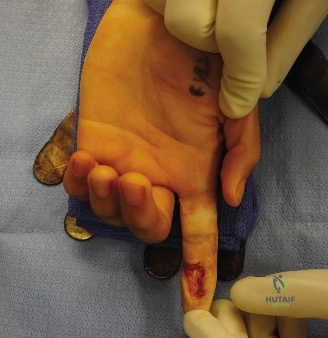
Key Takeaway
Optimal skin graft thickness for exposed hand tendons and wounds depends on wound bed vascularity and anatomical site. Viable paratenon over extensor tendons often supports thinner grafts. However, bare flexor tendons require interposition of vascularized tissue (e.g., local flap) before grafting, as they are avascular and cannot support a graft directly. Careful selection ensures graft take, durability, and function.
A 35-year-old patient presents following a crush injury to the dorsal hand, resulting in a 4x4cm skin defect with exposure of the extensor tendons. You assess the wound and note that while the paratenon is absent, the tendon fascicles appear white, glistening, and intact. Describe your management strategy regarding the choice of soft tissue coverage.
Candidate: I would clean the wound, perform a debridement, and apply a split-thickness skin graft because it has a high take rate and is easy to perform in a patient with a hand injury. If that doesn't work, I would consider a flap.
The candidate fails to recognize the "Absolute Contraindication": bare tendon without paratenon/epitenon is avascular. Suggesting a skin graft directly onto bare tendon is a dangerous error that will lead to graft necrosis and tendon desiccation/rupture. Furthermore, "waiting to see if it works" is not a strategy; it is a recipe for surgical failure.
The candidate must state: "This is a critical scenario. Because the paratenon is absent, the tendon is effectively avascular and will not support a skin graft. Therefore, a skin graft is contraindicated. I must provide a vascularized bed first. I would perform thorough debridement and then proceed with a vascularized soft tissue transfer—ideally a local rotation flap or a reverse-flow island flap—to ensure the tendons are covered with well-vascularized tissue. Once the flap has integrated, a secondary split-thickness skin graft can be applied to the flap donor site or any residual defect if necessary."
You have decided that a skin graft is appropriate for a different, cleaner dorsal hand wound where the peritenon is intact. How do you decide between a Split-Thickness Skin Graft (STSG) and a Full-Thickness Skin Graft (FTSG), and what are the functional implications for the patient?
Candidate: I'd choose the STSG because it's easier to harvest and covers more area. If I need it to look better, I'd use the FTSG, but it's harder to get to take.
The candidate focuses on ease of surgery and aesthetics, ignoring the fundamental biomechanical difference: Secondary Contraction. Failing to mention that STSGs contract significantly (70-90%) is a major red flag in an FRCS exam, as this leads to post-operative joint contractures in the hand.
The candidate should categorize by biomechanics: "I weigh the reliability of take against the risk of secondary contraction. An STSG has a higher take rate on marginal beds but is prone to high secondary contraction due to myofibroblast activity, which can lead to tethering and functional stiffness in the hand. Conversely, an FTSG, while requiring a pristine, highly vascularized bed, undergoes significantly less secondary contraction (10-30%) and provides better durability, sensation, and cosmetic match. Given this is the dorsal hand—an area of high mobility—I would prioritize an FTSG if the bed is healthy to minimize long-term contracture."
