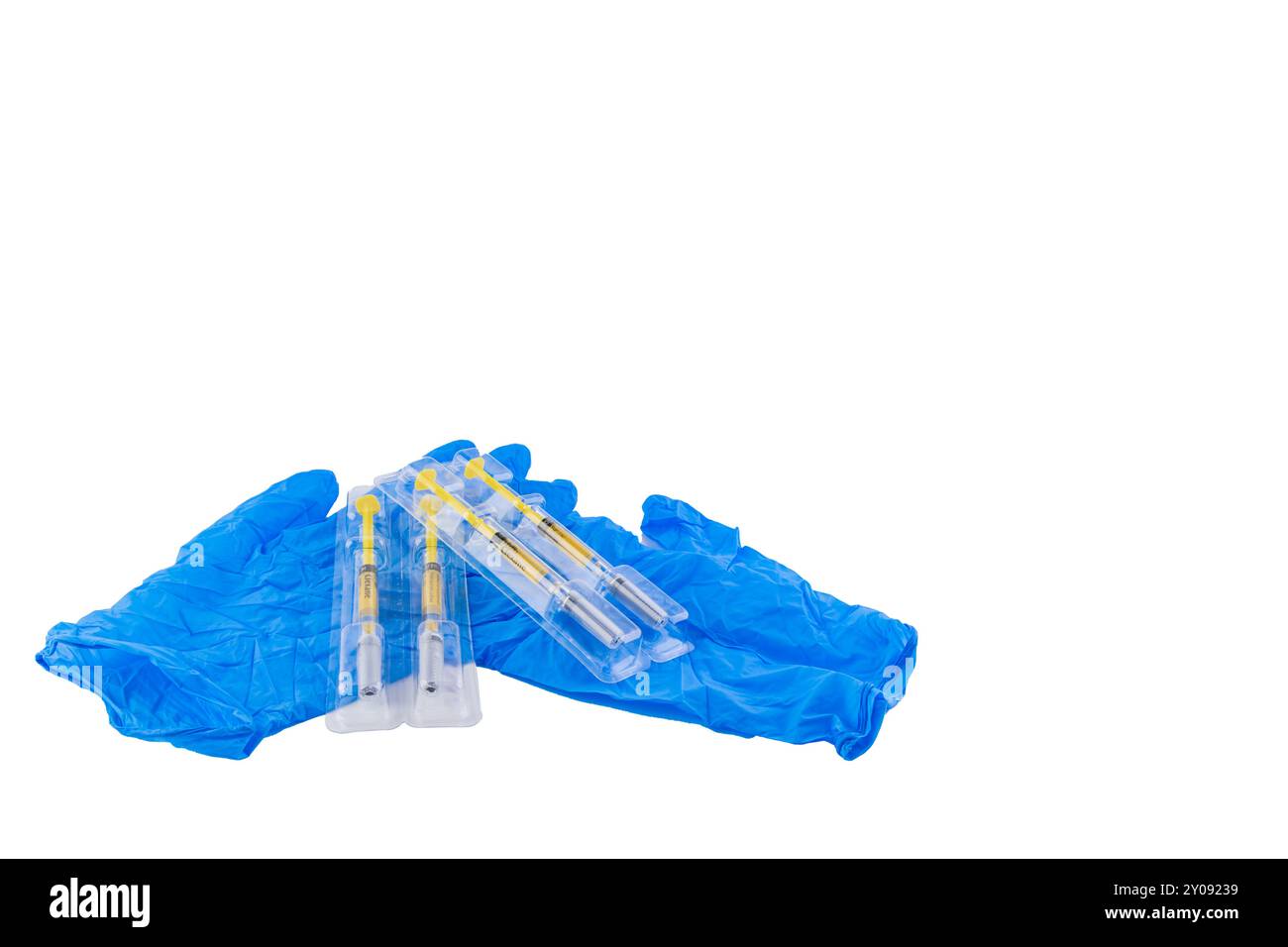
Clexane (Enoxaparin): An Expert Medical SEO Guide
As an expert Medical SEO Copywriter and Orthopedic Specialist, I understand the critical role of comprehensive, accurate, and accessible medical information. This guide provides an exhaustive deep-dive into Clexane (Enoxaparin), a widely used low molecular weight heparin (LMWH), focusing on its applications, mechanisms, and safety profile in clinical practice, particularly within the orthopedic field.
1. Comprehensive Introduction & Overview
Clexane is the brand name for Enoxaparin sodium, an injectable anticoagulant medication belonging to the class of low molecular weight heparins (LMWHs). It is derived from unfractionated heparin but undergoes a depolymerization process, resulting in a smaller, more uniform molecular size. This modification confers significant pharmacological advantages, making Clexane a cornerstone in the prevention and treatment of various thromboembolic disorders.
What is Clexane Used For?
Primarily, Clexane is prescribed to prevent and treat blood clots, which can lead to life-threatening conditions such as deep vein thrombosis (DVT) and pulmonary embolism (PE). Its utility spans a broad range of medical scenarios, from surgical prophylaxis (especially in orthopedic procedures like hip or knee replacement) to managing acute coronary syndromes.
Why is Clexane Important?
Thrombotic events pose a substantial risk to patient morbidity and mortality. Clexane offers a predictable anticoagulant response, high bioavailability, and a relatively long half-life, allowing for once or twice-daily subcutaneous administration without the need for routine laboratory monitoring in most patients. This makes it a practical and effective option for both inpatient and outpatient management of thrombotic conditions.
2. Deep-Dive into Technical Specifications / Mechanisms
Understanding how Clexane works at a molecular level is crucial for appreciating its clinical efficacy and safety profile.
Mechanism of Action
Enoxaparin exerts its anticoagulant effect primarily by potentiating the activity of antithrombin III (ATIII). ATIII is a naturally occurring plasma protein that inactivates several coagulation factors, most notably Factor Xa and Factor IIa (thrombin).
- Selective Factor Xa Inhibition: Unlike unfractionated heparin, which has a more balanced effect on both Factor Xa and Factor IIa, Clexane exhibits a much higher anti-Factor Xa activity compared to its anti-Factor IIa (anti-thrombin) activity (ratio approximately 3:1 to 4:1). This selectivity is due to its shorter chain length; while longer heparin chains are required to bridge ATIII and thrombin for effective thrombin inactivation, shorter LMWH chains can bind to ATIII and inhibit Factor Xa without necessarily forming a ternary complex with thrombin.
- Impact on Coagulation Cascade: By inhibiting Factor Xa, Clexane effectively prevents the conversion of prothrombin to thrombin, thereby disrupting the final common pathway of the coagulation cascade and inhibiting fibrin clot formation.
- Reduced Thrombin Inactivation: The reduced anti-Factor IIa activity means Clexane has less direct effect on existing thrombin and thrombin-mediated platelet activation, contributing to a lower risk of certain bleeding complications compared to unfractionated heparin.
- Other Effects: Clexane also has some anti-inflammatory properties and can influence endothelial cell function, although its primary therapeutic effect is anticoagulation.
Pharmacokinetics
The pharmacokinetic profile of Clexane contributes significantly to its clinical utility and predictable action.
- Absorption: Following subcutaneous (SC) administration, enoxaparin is rapidly and almost completely absorbed. Peak anti-Xa activity is usually observed 3 to 5 hours after SC injection. Bioavailability approaches 100%.
- Distribution: Enoxaparin has a relatively small volume of distribution. It does not cross the blood-brain barrier and only minimally crosses the placenta. Protein binding is limited.
- Metabolism: Enoxaparin is primarily metabolized in the liver by desulfation and depolymerization into smaller fragments with reduced biological activity. These metabolites are generally considered inactive.
- Elimination: The elimination of enoxaparin and its metabolites occurs predominantly via the kidneys. The elimination half-life of anti-Xa activity is approximately 4 to 5 hours after a single SC dose and about 7 hours after repeated dosing. This relatively long half-life supports once or twice-daily dosing regimens.
- Renal Impairment: Renal clearance is a major elimination pathway. In patients with severe renal impairment (creatinine clearance < 30 mL/min), the elimination half-life is significantly prolonged, necessitating dosage adjustments to prevent accumulation and increased bleeding risk.
3. Extensive Clinical Indications & Usage
Clexane is a versatile anticoagulant with numerous approved indications, reflecting its broad utility in preventing and treating thromboembolic diseases.
Detailed Indications
| Indication Category | Specific Conditions | Indication