Allopurinol: A Comprehensive Medical SEO Guide for Gout and Hyperuricemia Management
Welcome to this exhaustive guide on Allopurinol, a cornerstone medication in the management of gout and other conditions characterized by elevated uric acid levels. As expert Medical SEO Copywriters and Orthopedic Specialists, we understand the critical role Allopurinol plays in improving patient quality of life by preventing painful gout attacks and mitigating the systemic effects of hyperuricemia. This guide is designed to provide authoritative, in-depth information for patients, caregivers, and healthcare professionals, covering everything from its core mechanism to advanced clinical considerations.
Disclaimer: This guide provides general medical information and is not a substitute for professional medical advice, diagnosis, or treatment. Always seek the advice of your physician or other qualified health provider with any questions you may have regarding a medical condition.
1. Introduction & Overview of Allopurinol
Allopurinol is a medication classified as a xanthine oxidase inhibitor. Its primary role is to reduce the production of uric acid in the body, thereby preventing the formation of uric acid crystals that cause the excruciating pain of gout attacks and lead to other serious health complications like kidney stones and tophi. First approved in the 1960s, Allopurinol has revolutionized the long-term management of hyperuricemia, transforming the lives of millions suffering from gout.
For orthopedic specialists, understanding Allopurinol is crucial as gout frequently manifests with acute inflammatory arthritis, often affecting joints in the feet, ankles, and knees. Chronic, uncontrolled hyperuricemia can lead to destructive joint changes and significant mobility impairment, making effective uric acid lowering therapy like Allopurinol a vital component of patient care.
2. Deep-dive into Technical Specifications and Mechanisms
2.1. Mechanism of Action
Allopurinol exerts its therapeutic effect by inhibiting the enzyme xanthine oxidase. Xanthine oxidase is responsible for the catabolism of purines (compounds found in many foods and produced naturally by the body) into uric acid.
The process can be summarized as follows:
* Purines are metabolized into hypoxanthine.
* Xanthine oxidase converts hypoxanthine into xanthine.
* Xanthine oxidase then converts xanthine into uric acid.
Allopurinol and its major active metabolite, oxypurinol (alloxanthine), potently inhibit xanthine oxidase, thereby blocking these final steps in uric acid production. This inhibition leads to:
* Reduced serum uric acid levels: Less uric acid is produced, leading to lower concentrations in the blood.
* Reduced urinary uric acid excretion: Consequently, less uric acid is excreted in the urine, reducing the risk of uric acid kidney stones.
* Increased excretion of hypoxanthine and xanthine: These precursors are more soluble than uric acid and are readily excreted by the kidneys, posing a lower risk of crystallization.
The active metabolite, oxypurinol, has a much longer half-life than allopurinol itself, making it the primary contributor to the sustained uric acid-lowering effect.
2.2. Pharmacokinetics
Understanding how Allopurinol is absorbed, distributed, metabolized, and eliminated from the body is crucial for effective dosing and management, especially in patients with renal impairment.
| Pharmacokinetic Parameter | Description
| Parameter | Description
Absorption: Approximately 80-90% of orally administered Allopurinol is absorbed from the gastrointestinal tract.
Peak Plasma Levels: Achieved within 1.5 hours for Allopurinol. Oxypurinol peak levels are typically reached within 3-5 hours.
Distribution: Allopurinol has low protein binding and distributes widely into total body water.
Metabolism: Allopurinol is rapidly metabolized, primarily by xanthine oxidase, to its active metabolite, oxypurinol. This conversion is crucial as oxypurinol is responsible for the majority of the therapeutic effect.
Elimination:
* Allopurinol: Has a relatively short plasma half-life of 1-2 hours. It is eliminated renally.
* Oxypurinol: Has a much longer plasma half-life, ranging from 13 to 30 hours in patients with normal renal function. This extended half-life allows for once-daily dosing. Oxypurinol is also primarily eliminated via the kidneys.
Impact of Renal Impairment: Both Allopurinol and oxypurinol are predominantly cleared by the kidneys. Therefore, renal impairment significantly prolongs the half-life of oxypurinol, necessitating substantial dose reductions to prevent accumulation and potential toxicity.
3. Extensive Clinical Indications & Usage
Allopurinol is indicated for a range of conditions involving hyperuricemia, both primary (idiopathic) and secondary to other diseases or treatments.
3.1. Primary Indications
-
Management of Gout:
- Recurrent Gout Attacks: For patients experiencing multiple acute gout attacks.
- Tophi: Presence of tophaceous deposits (uric acid crystal accumulations in soft tissues and joints).
- Gouty Nephropathy: Kidney disease caused by uric acid deposits.
- Uric Acid Nephrolithiasis: Recurrent kidney stones composed of uric acid.
- Note: Allopurinol is a prophylactic agent for gout, used to lower uric acid levels over time. It is generally not initiated during an acute gout attack, as it can potentially prolong or worsen the flare by mobilizing urate from tissues. However, if a patient is already on Allopurinol, it should generally be continued during an acute attack, with concurrent treatment for the flare.
-
Prophylaxis of Hyperuricemia and Uric Acid Nephropathy during Chemotherapy:
- Tumor Lysis Syndrome (TLS): In patients undergoing chemotherapy for malignancies (e.g., leukemia, lymphoma), rapid cell breakdown can release large amounts of purines, leading to severe hyperuricemia. Allopurinol prevents this surge, reducing the risk of acute kidney injury due to uric acid crystallization in the renal tubules.
-
Recurrent Calcium Oxalate Stones with Hyperuricosuria:
- In cases where recurrent calcium oxalate kidney stones are associated with elevated urinary uric acid excretion and conventional therapy (e.g., dietary modification, increased fluid intake) has failed, Allopurinol may be used to reduce uric acid excretion, which can act as a nidus for calcium oxalate crystal formation.
3.2. Off-label or Less Common Indications
- Lesch-Nyhan Syndrome: A rare, inherited disorder characterized by overproduction of uric acid, neurological impairment, and self-mutilation. Allopurinol helps manage the hyperuricemia.
- Polycythemia Vera: A myeloproliferative disorder that can lead to increased uric acid production.
- Certain Enzyme Deficiencies: Conditions like adenosine deaminase deficiency.
3.3. Dosage Guidelines
Allopurinol dosing is highly individualized, aiming to achieve and maintain target serum uric acid levels (typically below 6 mg/dL, or even lower, <5 mg/dL, for severe gout or tophi). The principle is "start low, go slow" to minimize side effects and allow for gradual uric acid mobilization.
-
For Gout and Chronic Hyperuricemia (Oral):
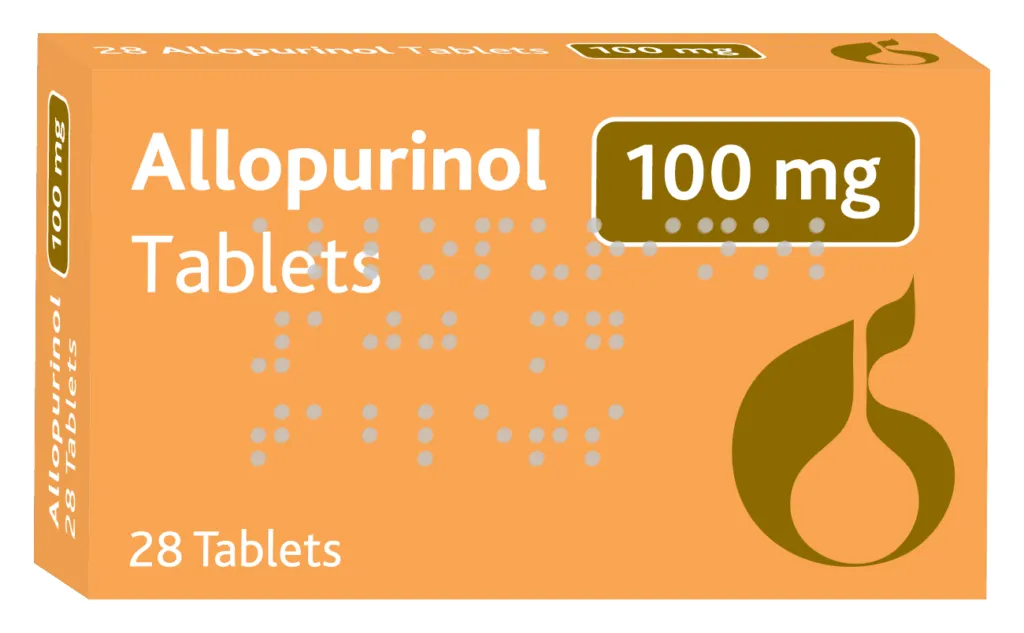
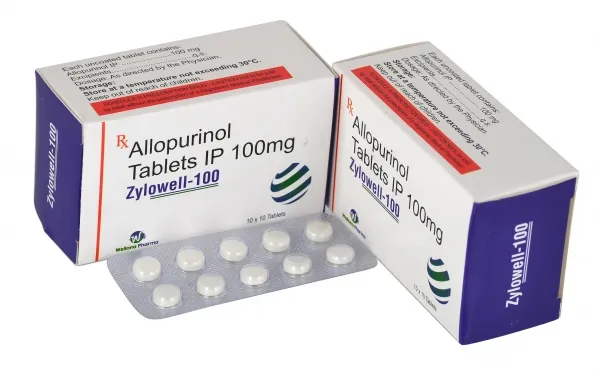
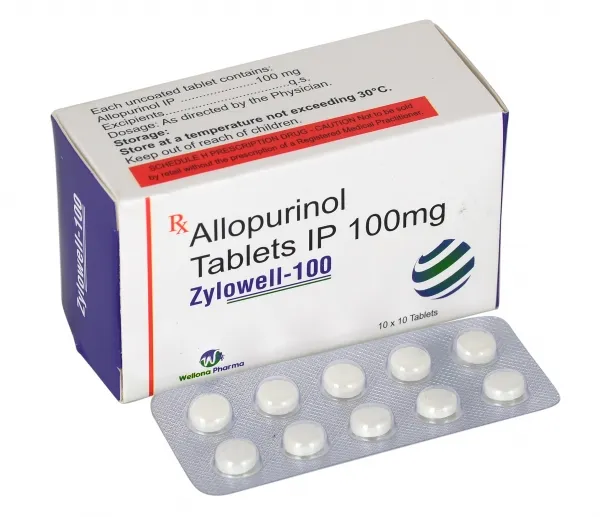
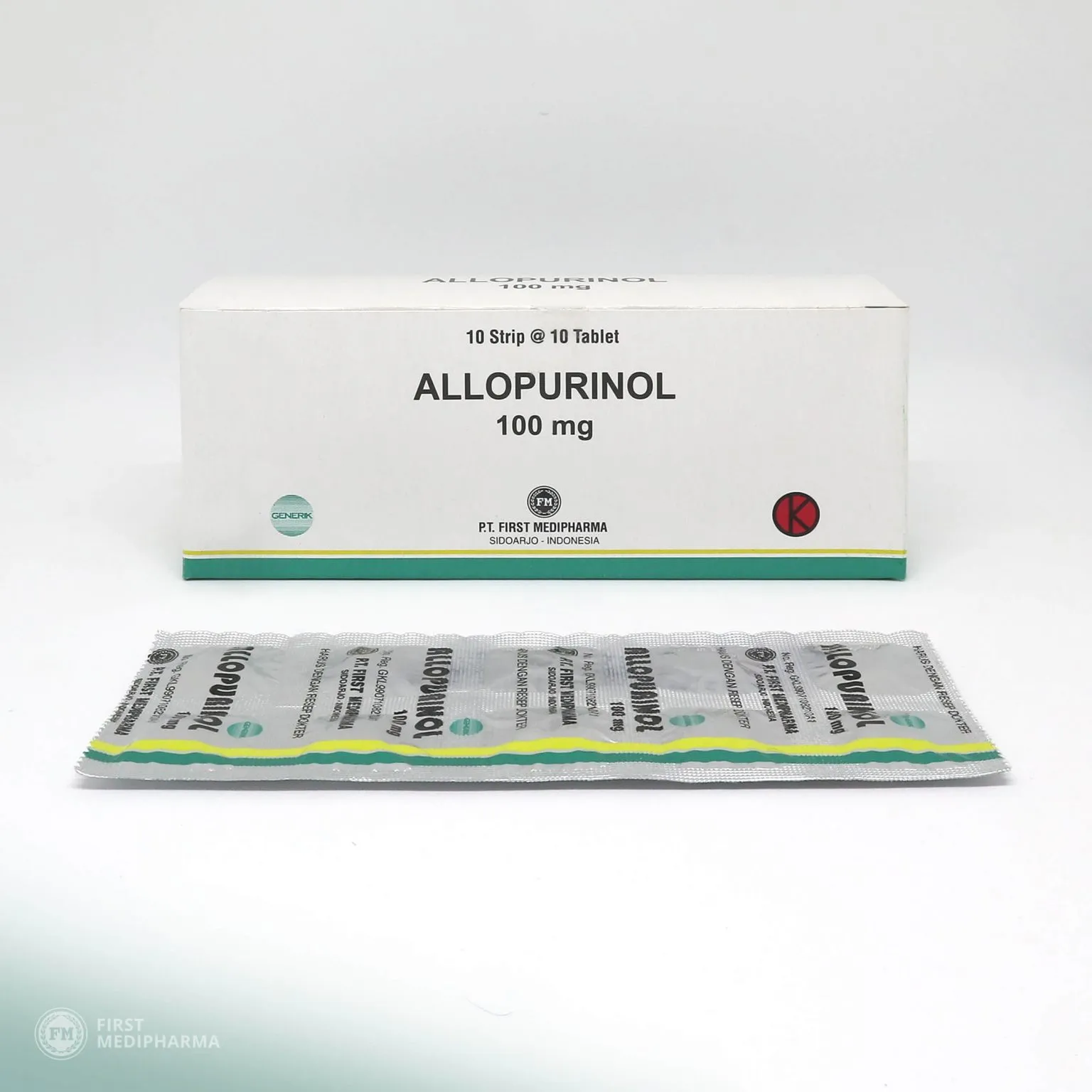
- Initial Dose: Typically 100 mg once daily. Some guidelines suggest starting as low as 50 mg/day, especially in patients with mild-to-moderate renal impairment.
- Titration: The dose is usually increased by 50-100 mg increments every 2-4 weeks until the target serum uric acid level is achieved.
- Maintenance Dose: Ranges from 100 mg to 800 mg daily, usually given as a single dose. Doses above 300 mg/day may be given in divided doses to improve tolerability.
- Maximum Dose: Generally 800 mg/day, though some severe cases might require higher under strict medical supervision.
-
For Prophylaxis of Hyperuricemia during Chemotherapy (Oral):
- Adults: 600-800 mg daily for 2-3 days before chemotherapy, then 300-600 mg daily. Continue for several days after chemotherapy, or as long as hyperuricemia persists.
- Children: 10-20 mg/kg/day up to a maximum of 400 mg/day, given in 2-3 divided doses.
-
**Intravenous (IV) Allop