Pathological Fractures: Etiology, Diagnosis, Biomechanics & Mirels' Score
Key Takeaway
Pathological fractures occur through bone weakened by disease, not normal trauma. Common causes include metastatic bone disease (breast, prostate, lung cancer), primary bone tumors, and metabolic conditions. Diagnosis involves plain radiographs, CT, MRI, and systemic workup. The Mirels' Scoring System is used to assess fracture risk and guide prophylactic surgical stabilization.
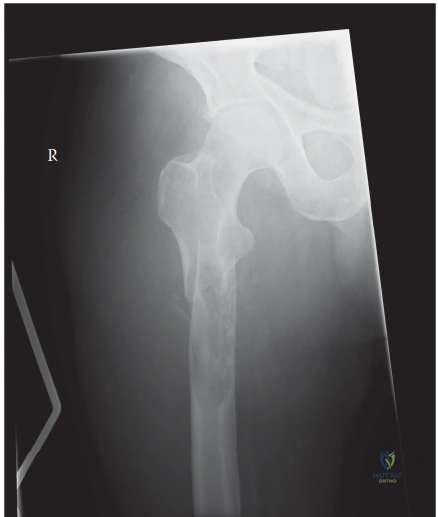
A 62-year-old female presents with acute, severe pain in her right thigh after a trivial trip. She has a known history of metastatic breast cancer. Radiographs are provided. Describe the radiographic findings and outline your immediate assessment.
Candidate: The radiograph shows a pathological femoral fracture through a lytic lesion. I would assess the patient's systemic status, perform an oncological workup including bloods (Calcium, ALP, PSA/markers), and stage the disease with a CT chest/abdomen/pelvis. I need to calculate the Mirels' score and plan for surgical stabilization.
Failing to mention the "Multidisciplinary Team (MDT)" or ignoring the biological prognosis. Candidates often fixate on the hardware (nail vs. plate) without confirming if the patient is medically fit for surgery or if the fracture is truly the priority over systemic stabilization (e.g., hypercalcemia management).
Adopt a structured approach: 1. Clinical/Systemic: Assess ABCs, neurological status, and metabolic stability (Hypercalcemia/Cord compression?). 2. Radiographic: Describe the lesion (e.g., lytic, cortical thinning, endosteal scalloping). Calculate Mirels' score (Site, Pain, Lesion, Size). 3. Oncological: Confirm if this is the first presentation or a known metastasis. If unknown, biopsy is essential BEFORE pinning to avoid seeding. 4. Surgical Planning: Propose internal fixation (e.g., cephalomedullary nail) with PMMA cement augmentation to provide immediate load-bearing and local tumor control.
You have decided to proceed with surgery. You are performing an intramedullary nailing for this pathological femoral fracture. What specific technical modifications do you employ compared to a standard trauma nailing?
Candidate: I would perform more generous reaming, use a long nail to bypass the lesion, and utilize PMMA cement to fill the lytic defect and augment the nail/screw purchase.
Forgetting the "Bypass Principle." Simply fixing the fracture site is insufficient; the implant must span the entire bone or at least two cortical diameters beyond the lesion to account for future tumor expansion and bone resorption.
Emphasize four pillars: 1. Bypass Principle: Ensure fixation spans at least two cortical diameters (or the full bone) to handle the inevitable progression of the disease. 2. Cement Augmentation: Use PMMA around the nail and screws to fill defects and improve screw purchase in osteopenic/neoplastic bone. 3. Local Control: Consider intralesional curettage to debulk the tumor mass, and discuss the role of intraoperative radiation or radio-labeled cement. 4. Biopsy Tract: If an open biopsy was performed, ensure the incision is excised or the tract incorporated into the final surgical approach to prevent track seeding.
Look at this radiograph. Is this a candidate for non-operative management?
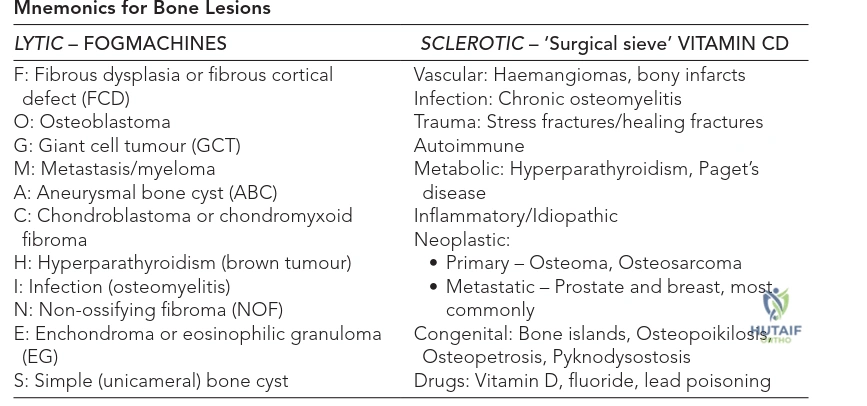
Candidate: This lesion has significant cortical involvement in the proximal femur. I would use the Mirels' scoring system. If the score is 7 or higher, surgery is indicated. If the score is low and the patient has a very limited life expectancy, we might consider non-operative management.
Giving a "yes/no" answer without the context of patient physiology. A "poor" candidate ignores the patient's remaining life expectancy and functional goals, or forgets that "non-operative" in these cases often means radiation therapy and protected weight-bearing, not just "doing nothing."
Structure the decision around the Risk-Benefit Ratio: 1. Mirels' Score: Clearly state that a score ≥ 7 warrants prophylactic fixation. 2. Life Expectancy: If <6 weeks, the risks of major surgery outweigh the benefits; radiation and pain management are appropriate. 3. Tumor Biology: Blastic lesions (prostate/breast) may respond well to hormonal/systemic therapy, whereas aggressive lytic lesions (renal/thyroid) rarely heal without stabilization. 4. Functional Goals: If the patient is non-ambulatory, aggressive surgery is less indicated than for a fit patient with isolated bone disease.
