
العربية
Comprehensive Master Guide · Medically Reviewed

Acetabular Fractures: Epidemiology, Surgical Anatomy, Biomechanics, & Treatment Principles

Master the epidemiology, surgical anatomy, and biomechanics of acetabular fractures. Discover essential treatment principles to restore hip congruity.

15 Detailed Chapters
26 min read
Updated: Jun 2026
Dr. Mohammed Hutaif Clinic
Medically Reviewed by
Prof. Dr. Mohammed Hutaif Clinic
Verified Content Expert Reviewed

Quick Medical Answer

Acetabular fractures are complex hip injuries, typically from high-energy trauma. Understanding their epidemiology, detailed surgical anatomy (Judet & Letournel columns, neurovascular structures), and biomechanics is crucial. This expertise guides precise treatment, restoring hip congruity to prevent post-traumatic osteoarthritis and ensure long-term function.

Illustration of acetabulum fracture acetabulum - Dr. Mohammed Hutaif
🎓

FRCS Masterclass: Clinical Viva

Interactive Examiner Scenario • Test your knowledge before revealing the answers.

👨‍⚕️ Examiner Scenario

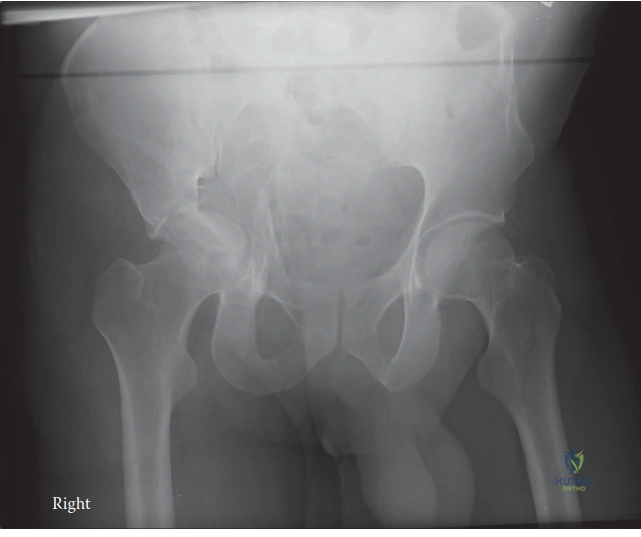
A 35-year-old male arrives in the Emergency Department following a high-energy motorcycle collision. He is hemodynamically stable. An AP pelvis radiograph is obtained.
Clinical Image
AP Pelvis Radiograph

Describe your initial management and the specific radiographic findings you are looking for in this patient.

Candidate: I would follow ATLS protocols to ensure systemic stability. I'd perform a focused neurovascular examination, particularly looking for sciatic nerve palsy. Radiographically, I need Judet views—iliac and obturator obliques—and a high-resolution CT scan with 2D and 3D reconstructions to classify the fracture using the Judet and Letournel system, specifically assessing the articular congruity and displacement of the columns.

❌ Common Pitfall (Poor Answer)

Candidates often jump straight to "I would plan for a Kocher-Langenbeck approach." This ignores the trauma context (ATLS/systemic safety) and lacks a structured approach to imaging. Furthermore, failing to mention the specific importance of the femoral head's concentric reduction on CT is a major oversight.

⭐ The Gold Standard (Perfect Answer)

Start with a "Patient First" approach: ATLS, secondary survey, and neurovascular assessment (sciatic/femoral). In terms of imaging, define the goal: Anatomical assessment. Mention: 1. Plain film analysis (AP and Judet views) to identify column involvement. 2. CT with 2D/3D reconstruction as the definitive planning tool. 3. Specifically mention looking for: articular step-off (>2mm), marginal impaction of the posterior wall, quadrilateral surface displacement, and ensuring the femoral head remains concentrically reduced within the acetabulum.

👨‍⚕️ Examiner Scenario

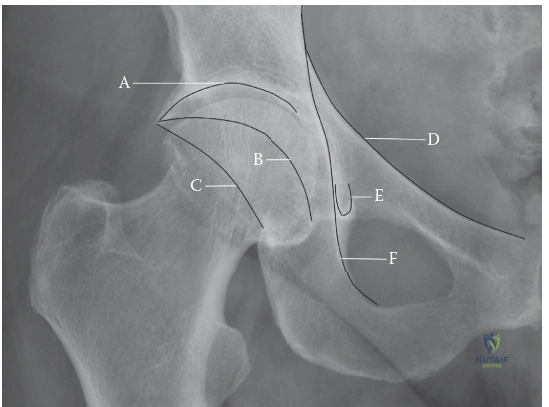
Following your assessment, you identify a displaced posterior wall fracture with associated posterior hip subluxation. What are the absolute indications for surgical intervention, and how would you surgically approach this?

Clinical Image
Representative Acetabular Fracture Detail

Candidate: Surgery is indicated for instability, incongruity, or significant displacement. For a posterior wall fracture, if the articular surface is significantly involved—typically >40%—or if the hip remains unstable on stress examination, I would proceed with a Kocher-Langenbeck approach to allow for anatomical reduction and buttress plate fixation.

❌ Common Pitfall (Poor Answer)

Ignoring the "soft tissue" component. Candidates often forget to mention the risk to the sciatic nerve during the Kocher-Langenbeck approach or fail to address marginal impaction, which is common in posterior wall injuries and must be elevated and bone-grafted to prevent late failure.

⭐ The Gold Standard (Perfect Answer)

Structure the answer clearly: Indications: Instability, intra-articular step-off >2mm, or incarceration of fragments. Surgical Approach: Kocher-Langenbeck. Key Technical Pearls: (1) Meticulous protection of the sciatic nerve. (2) Need to perform an arthrotomy to inspect the joint for loose bodies and articular impaction. (3) Elevate any impacted marginal cartilage and use bone graft. (4) Apply a buttress plate along the posterior rim to restore the posterior wall and provide rotational stability to the femoral head.

Detailed Chapters & Topics

Dive deeper into specialized chapters regarding acetabulum-fracture

15 Chapters
01
Chapter 1 20 min

Mastering Posterior Wall Acetabular Fracture Fixation: An Intraoperative Guide

Master posterior wall acetabular fracture fixation with our intraoperative guide. Learn surgical anatomy, restore hip s…

02
Chapter 2 27 min

Acetabulum Posterior Approach: Simplest Fix for Hip Fractures

Posterior Approach to the Acetabulum The posterior approach gives access to the posterior wall of the acetabulum and it…

03
Chapter 3 29 min

Navigating the Anatomy of the Ilioinguinal in Acetabular Surgery

Applied Surgical Anatomy of the Ilioinguinal Approach to the Acetabulum Overview The applied anatomy of this approach i…

04
Chapter 4 11 min

Ilioinguinal Approach: Master the Deep Inguinal Ring for Success

Ilioinguinal Approach to the Acetabulum The ilioinguinal approach allows exposure of the inner surface of the pelvis fr…

05
Chapter 5 13 min

Mastering Open Reduction & Internal Fixation of the Posterior Acetabulum

Chapter 4 Open Reduction and Internal Fixation of the Posterior Wall of the Acetabulum Jodi Siegel and David C. Templem…

06
Chapter 6 20 min

Comprehensive Management of Transverse Plus Posterior Wall Acetabular Fractures: A Case Study

Discover the evaluation and operative management of a complex transverse plus posterior wall acetabular fracture in thi…

07
Chapter 7 20 min

The Ilioinguinal Approach: Comprehensive Surgical Anatomy & Acetabular Fracture Management

Explore the ilioinguinal approach for complex acetabular fractures. Learn essential surgical anatomy, biomechanics, and…

08
Chapter 8 20 min

Geriatric Complex Acetabular Fractures: A Detailed Clinical Case Study

Review this clinical case study of a 78-year-old female with a complex geriatric acetabular fracture, detailing surgica…

09
Chapter 9 16 min

Isolated Anterior & Posterior Acetabular Column Fractures: Comprehensive Guide to Anatomy, Biomechanics & Management

Explore the anatomy, biomechanics, and surgical management of isolated anterior and posterior acetabular column fractur…

10
Chapter 10 14 min

Decoding Acetabulum Fractures & Dislocations: Key Insights

ACETABULUM EPIDEMIOLOGY The incidence of acetabular fractures is 3 per 100,000 population per year. Neurologic injuries…

11
Chapter 11 31 min

Acetabulum Fractures Diagnosis: Crucial Steps for Recovery

Acetabulum Fractures: Diagnosis, Treatment, and Prognosis Acetabulum Fractures Acetabulum fractures are pelvis fracture…

12
Chapter 12 20 min

Intrapelvic Protrusio Acetabuli and Osteitis Pubis: Comprehensive Surgical Management

Master surgical management of intrapelvic protrusio acetabuli. Discover key insights on biomechanics, pathophysiology, …

13
Chapter 13 11 min

Advanced Management of Acetabular Fractures and High-Energy Pelvic Trauma

Explore the shift toward total hip arthroplasty (THA) for acute acetabular fractures. Discover key indications and pati…

14
Chapter 14 14 min

Acetabular and Pelvic Fractures: A Comprehensive Surgical Guide

Master the operative treatment of acetabular and pelvic fractures. Discover our expert surgical guide on anatomical red…

15
Chapter 15 11 min

Operative Management of Acetabular Fractures: A Comprehensive Surgical Guide

Master the operative management of acetabular fractures. This surgical guide details clinical evaluation, imaging, and …

Dr. Mohammed Hutaif Clinic
Medically Verified Content by
Prof. Dr. Mohammed Hutaif Clinic
Consultant Orthopedic & Spine Surgeon
Guide Overview