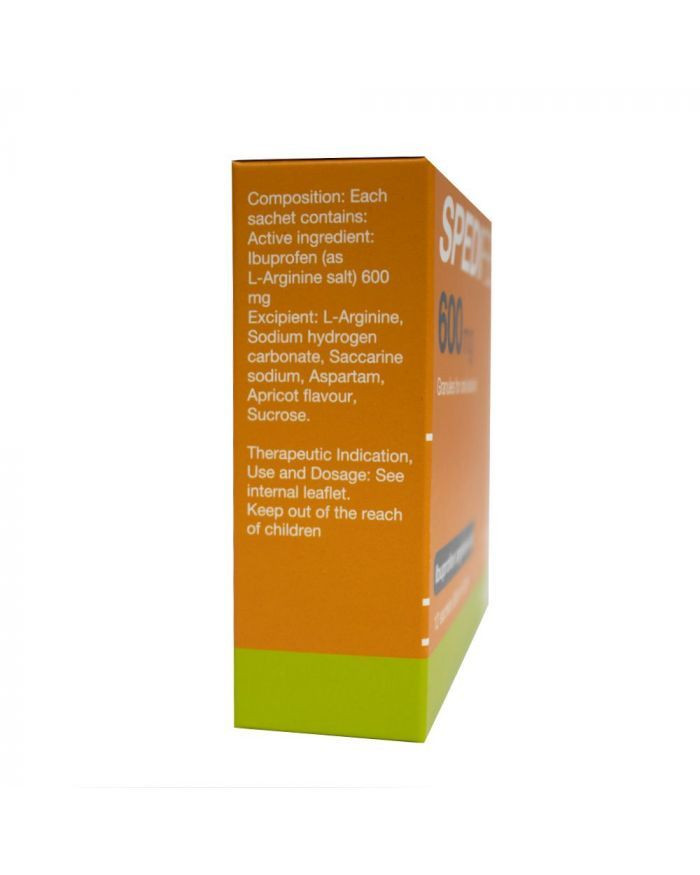
Spedifen (Ibuprofen Arginate): An Expert Medical SEO Guide
1. Comprehensive Introduction & Overview
Welcome to this authoritative medical SEO guide on Spedifen, specifically focusing on its formulation as Ibuprofen Arginate. While "Cleaned 395" may be an internal identifier, this guide will delve into the widely recognized and clinically significant aspects of Spedifen, a potent Non-Steroidal Anti-Inflammatory Drug (NSAID) designed for rapid action in managing pain, inflammation, and fever. As an expert in medical SEO and orthopedic care, we understand the critical need for precise, evidence-based information regarding medications central to patient well-being and recovery.
Spedifen (Ibuprofen Arginate) stands out in the crowded field of NSAIDs due to its unique salt formulation. By combining ibuprofen, the active pharmaceutical ingredient, with arginine, an amino acid, Spedifen achieves significantly faster absorption compared to standard ibuprofen formulations. This rapid onset of action makes it particularly valuable for acute pain conditions where quick relief is paramount.
This guide is meticulously crafted to provide healthcare professionals, patients, and caregivers with an exhaustive resource covering every critical aspect of Spedifen (Ibuprofen Arginate). From its fundamental mechanism of action to intricate dosage guidelines, potential risks, and interactions, our aim is to empower you with comprehensive knowledge for safe and effective therapeutic use.
What is Spedifen (Ibuprofen Arginate)?
Spedifen is a brand name for a specific formulation of ibuprofen, where ibuprofen is complexed with the amino acid L-arginine. Ibuprofen itself is a well-established NSAID, widely used for its analgesic (pain-relieving), anti-inflammatory, and antipyretic (fever-reducing) properties. The addition of arginine significantly enhances the solubility and dissolution rate of ibuprofen, leading to faster absorption from the gastrointestinal tract and consequently a quicker onset of therapeutic effects. This makes Spedifen an excellent choice for conditions requiring rapid pain relief.
Key Benefits of Spedifen (Ibuprofen Arginate)
- Rapid Onset of Action: Due to enhanced absorption, pain relief often begins sooner than with conventional ibuprofen tablets.
- Effective Pain Management: Potent analgesic properties for various types of pain.
- Anti-inflammatory Effects: Reduces inflammation associated with injuries, arthritis, and other conditions.
- Fever Reduction: Effectively lowers elevated body temperature.
- Versatile Use: Applicable across a wide range of acute and chronic conditions.
2. Deep-Dive into Technical Specifications / Mechanisms
Understanding the science behind Spedifen (Ibuprofen Arginate) is crucial for appreciating its therapeutic profile. This section provides a detailed examination of its mechanism of action and pharmacokinetic properties.
2.1. Mechanism of Action
Spedifen, like other NSAIDs, exerts its therapeutic effects primarily by inhibiting the synthesis of prostaglandins. Prostaglandins are lipid compounds that act as local hormones, playing a crucial role in the body's inflammatory response, pain signaling, and fever regulation.
The Cyclooxygenase (COX) Pathway:
The synthesis of prostaglandins is mediated by a family of enzymes known as cyclooxygenases (COX). There are two main isoforms of this enzyme:
- COX-1 (Constitutive COX): This isoform is constitutively expressed in most tissues and is responsible for producing prostaglandins that perform essential physiological functions. These include protecting the gastric mucosa (producing protective mucus and bicarbonate), maintaining renal blood flow, and facilitating platelet aggregation.
- COX-2 (Inducible COX): This isoform is typically induced at sites of inflammation, injury, and infection. It produces prostaglandins that mediate pain, inflammation, and fever.
Ibuprofen, the active component of Spedifen, is a non-selective COX inhibitor. This means it reversibly inhibits both COX-1 and COX-2 enzymes.
How Ibuprofen Arginate Works:
- Inhibition of Prostaglandin Synthesis: By inhibiting both COX-1 and COX-2, ibuprofen reduces the production of prostaglandins.
- Analgesic Effect: Reduced prostaglandin synthesis at sites of injury diminishes the sensitization of peripheral pain receptors, leading to pain relief.
- Anti-inflammatory Effect: Less prostaglandin production at inflammatory sites reduces vasodilation, edema, and leukocyte infiltration, thereby alleviating inflammation.
- Antipyretic Effect: In the hypothalamus, prostaglandins (especially PGE2) are key mediators of fever. By inhibiting their synthesis, ibuprofen helps to reset the body's thermostat to a normal temperature.
- Role of Arginine: The arginine component of Spedifen does not directly contribute to the pharmacological action of ibuprofen itself. Its primary role is to enhance the solubility and dissolution rate of ibuprofen in the gastrointestinal tract. This leads to a faster absorption profile, resulting in quicker attainment of therapeutic plasma concentrations and thus a more rapid onset of pain relief compared to standard ibuprofen formulations.
2.2. Pharmacokinetics
Pharmacokinetics describes how the body handles a drug – its absorption, distribution, metabolism, and excretion.
2.2.1. Absorption:
- Rapid & Enhanced: Spedifen (Ibuprofen Arginate) is rapidly absorbed from the gastrointestinal tract. The arginine salt significantly increases the dissolution rate of ibuprofen, leading to a faster rate of absorption.
- Peak Plasma Concentration (Cmax): Achieved significantly faster (e.g., typically within 15-30 minutes) compared to conventional ibuprofen formulations (which can take 1-2 hours).
- Bioavailability: The bioavailability of ibuprofen from Spedifen is high, comparable to other ibuprofen formulations.
2.2.2. Distribution:
- Protein Binding: Ibuprofen is highly bound to plasma proteins (approximately 99%), primarily albumin.
- Volume of Distribution (Vd): It has a relatively small volume of distribution, indicating it largely remains in the extracellular fluid.
- Tissue Penetration: Ibuprofen readily penetrates synovial fluid, where it can exert its anti-inflammatory effects in conditions like arthritis.
2.2.3. Metabolism:
- Hepatic Metabolism: Ibuprofen undergoes extensive metabolism in the liver, primarily via oxidation by cytochrome P450 enzymes (mainly CYP2C9 and CYP2C8) and subsequent conjugation.
- Inactive Metabolites: The major metabolites are pharmacologically inactive.
2.2.4. Excretion:
- Renal Excretion: The inactive metabolites, along with a small amount of unchanged ibuprofen, are primarily excreted by the kidneys via urine.
- Half-Life: The plasma elimination half-life of ibuprofen is relatively short, typically around 1.8 to 3.5 hours. This necessitates multiple daily dosing for sustained therapeutic effects.
3. Extensive Clinical Indications & Usage
Spedifen (Ibuprofen Arginate) is indicated for a broad spectrum of conditions requiring analgesic, anti-inflammatory, and antipyretic actions. Its rapid onset makes it particularly suitable for acute presentations.
3.1. Detailed Indications
Spedifen is used for the symptomatic treatment of:
- Pain:
- Acute Pain: Headaches (tension headaches, migraines), dental pain (e.g., post-extraction), post-operative pain, musculoskeletal pain (sprains, strains, backache, neck pain).
- Dysmenorrhea: Primary painful menstruation.
- Post-Traumatic Pain: Pain associated with injuries, contusions, and soft tissue trauma.
- Inflammation:
- Rheumatic Conditions: Symptomatic relief in inflammatory and degenerative rheumatic diseases such as rheumatoid arthritis, osteoarthritis, ankylosing spondylitis, and juvenile idiopathic arthritis.
- Non-Articular Rheumatism: Tendinitis, bursitis, capsulitis.
- Acute Gout Attacks: Management of pain and inflammation.
- Fever:
- Reduction of fever associated with various conditions, including colds and flu.
3.2. Dosage Guidelines
Dosage of Spedifen (Ibuprofen Arginate) should always be individualized based on the patient's condition, severity of symptoms, and response to treatment. It is crucial to use the lowest effective dose for the shortest possible duration to minimize the risk of adverse effects.
3.2.1. General Adult Dosage:
Spedifen is commonly available in strengths such as 200 mg, 400 mg, and 600 mg of ibuprofen per dose (often as sachets for oral solution or tablets).
- Initial Dose: Typically 200 mg or 400 mg of ibuprofen.
- Maintenance Dose: 200 mg to 400 mg every 4 to 6 hours as needed.
- Maximum Daily Dose: The recommended maximum daily dose for adults is generally 1200 mg to 2400 mg of ibuprofen, depending on the specific formulation and indication. Do not exceed 2400 mg in a 24-hour period. For self-medication, typically do not exceed 1200 mg/day.
- Administration: It is generally recommended to take Spedifen with food or milk to minimize gastrointestinal upset. Do not crush or chew tablets if they are film-coated or sustained-release. Sachets should be dissolved in water as directed.
3.2.2. Specific Dosage Considerations:
- Acute Pain/Fever (Self-medication): Typically 200-400 mg every 4-6 hours.
- Rheumatic Conditions (Prescription): Doses may be higher, up to 600 mg three to four times daily, not exceeding 2400 mg/day under medical supervision.
- Dysmenorrhea: 400 mg every 4-6 hours as needed, starting at the first sign of symptoms.
- Duration of Treatment: For self-medication, limit use to 3 days for fever and 5 days for pain, unless directed by a doctor. Chronic conditions require ongoing medical supervision.
3.2.3. Special Populations:
- Elderly Patients: Increased risk of adverse effects, especially gastrointestinal bleeding and renal impairment. Use the lowest effective dose for the shortest duration. Close monitoring is essential.
- Patients with Renal Impairment: Ibuprofen and its metabolites are primarily excreted by the kidneys. Significant renal impairment may necessitate dose reduction or avoidance. Regular monitoring of renal function is advised.
- Patients with Hepatic Impairment: Metabolized in the liver. Severe hepatic impairment may require dose adjustment or contraindicate use. Liver function should be monitored.
- Pediatric Use: While ibuprofen is widely used in children, Spedifen (Ibuprofen Arginate) formulations might have specific age/weight-based dosing guidelines. Always consult a pediatrician and follow product-specific instructions for pediatric use. Generally, pediatric doses are calculated based on weight (e.g., 5-10 mg/kg per dose, up to 3-4 times daily).
4. Risks, Side Effects, and Contraindications
While effective, Spedifen (Ibuprofen Arginate) carries a risk of adverse effects, some of which can be serious. Understanding these risks, side effects, and contraindications is paramount for safe prescribing and use.
4.1. Contraindications
Spedifen (Ibuprofen Arginate) is absolutely contraindicated in patients with:
- Hypersensitivity: Known hypersensitivity to ibuprofen, arginine, or any other excipients in the formulation. Also contraindicated in patients who have experienced asthma, urticaria, angioedema, or other allergic-type reactions after taking aspirin or other NSAIDs.
- Active Peptic Ulcer/Gastrointestinal Bleeding: History of recurrent peptic ulcer or hemorrhage (two or more distinct episodes of proven ulceration or bleeding).
- History of Gastrointestinal Bleeding/Perforation: Related to previous NSAID therapy.
- Severe Renal Impairment: (Creatinine clearance < 30 mL/min).
- Severe Hepatic Impairment: (Child-Pugh Class C).
- Severe Heart Failure: (NYHA Class IV).
- Third Trimester of Pregnancy: Due to the risk of premature closure of the fetal ductus arteriosus and potential renal dysfunction in the fetus.
- Cerebrovascular or Other Active Bleeding.
- Concomitant use with other NSAIDs, including COX-2 inhibitors, or high-dose aspirin (>75 mg/day) for pain relief.
- Peri-operative pain in the setting of Coronary Artery Bypass Graft (CABG) surgery.
4.2. Side Effects
Side effects can range from common and mild to rare and severe. They are typically dose-dependent.
4.2.1. Common Side Effects (affecting >1% of users):
- Gastrointestinal (GI): Nausea, vomiting, dyspepsia (indigestion), abdominal pain, diarrhea, flatulence, constipation.
- Central Nervous System (CNS): Headache, dizziness, fatigue, nervousness.
- Ear/Eye: Tinnitus (ringing in the ears), blurred vision (rare).
- Skin: Rash, pruritus (itching).
4.2.2. Less Common to Rare but Serious Side Effects:
- Gastrointestinal:
- GI Bleeding, Ulceration, Perforation: Can occur at any time, with or without warning symptoms. Elderly patients are at higher risk.
- Exacerbation of Crohn's disease or ulcerative colitis.
- Cardiovascular:
- Thrombotic Events: Increased risk of serious cardiovascular thrombotic events, myocardial infarction (MI), and stroke, which can be fatal. This risk may increase with duration of use and in patients with pre-existing cardiovascular disease or risk factors.
- Hypertension: New onset or worsening of pre-existing hypertension.
- Fluid Retention and Edema: Can lead to or exacerbate heart failure.
- Renal:
- Acute Kidney Injury: Especially in patients with pre-existing renal dysfunction, heart failure, liver dysfunction, or those on diuretics or ACE inhibitors.
- Renal Papillary Necrosis.
- Interstitial Nephritis.
- Hepatic:
- Elevated liver enzymes (transient and reversible).
- Rarely, severe liver injury, including jaundice, fulminant hepatitis, liver necrosis, and hepatic failure.
- Hematologic:
- Prolonged bleeding time (due to COX-1 inhibition affecting platelet aggregation).
- Anemia, agranulocytosis, aplastic anemia, hemolytic anemia, leukopenia, thrombocytopenia (rare).
- Central Nervous System:
- Vertigo, insomnia, depression, anxiety, aseptic meningitis (especially in patients with autoimmune disorders like SLE).
- Dermatologic:
- Stevens-Johnson Syndrome (SJS), Toxic Epidermal Necrolysis (TEN), Exfoliative Dermatitis (rare but life-threatening skin reactions).
- Photosensitivity reactions.
- Respiratory:
- Bronchospasm, dyspnea, exacerbation of asthma (especially in aspirin-sensitive asthmatics).
- Hypersensitivity Reactions:
- Anaphylaxis, angioedema, severe allergic reactions.
4.3. Warnings and Precautions
- GI Risk: Administer with caution in patients with a history of GI disease. Concomitant use with protective agents (e.g., proton pump inhibitors) may be considered.
- Cardiovascular Risk: Monitor blood pressure. Use with caution in patients with cardiovascular disease or risk factors.
- Renal Function: Monitor renal function, especially in elderly or dehydrated patients. Ensure adequate hydration.
- Hepatic Function: Monitor liver function tests periodically during long-term therapy.
- Hematologic Effects: Monitor hemoglobin and hematocrit in patients on long-term therapy.
- Masking Infection: NSAIDs can mask signs of infection (e.g., fever, pain).
- Alcohol: Avoid or limit alcohol consumption due to increased risk of GI irritation and bleeding.
- Driving/Operating Machinery: May cause dizziness or visual disturbances; advise caution.
5. Drug Interactions
Spedifen (Ibuprofen Arginate) can interact with various medications, potentially altering their effects or increasing the risk of adverse reactions. Always inform your doctor or pharmacist about all medications, supplements, and herbal products you are taking.
5.1. Major Drug Interactions
| Drug Class | Examples | Interaction Mechanism | Clinical Outcome / Management