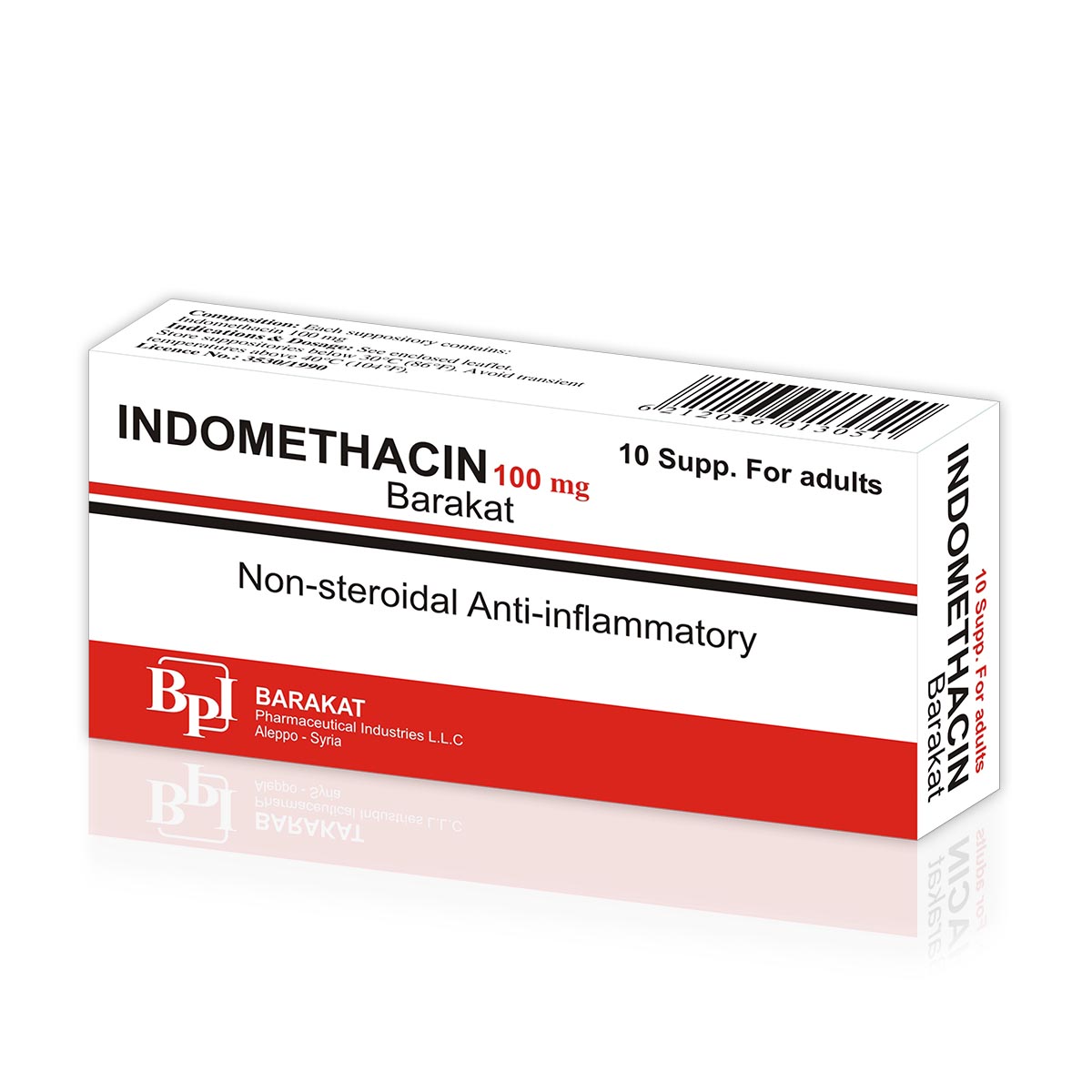
Indomethacin: An In-Depth Medical SEO Guide
As an expert in orthopedic medicine and a seasoned medical SEO copywriter, we understand the critical need for accurate, comprehensive, and accessible information regarding medications that impact musculoskeletal health and overall well-being. Indomethacin is a potent nonsteroidal anti-inflammatory drug (NSAID) with a significant role in managing various inflammatory and painful conditions. This extensive guide aims to provide a detailed, authoritative overview of Indomethacin, covering its mechanism of action, pharmacokinetics, detailed indications, dosage guidelines, contraindications, drug interactions, specific warnings for pregnancy and lactation, and overdose management.
1. Introduction & Overview of Indomethacin
Indomethacin is a powerful nonsteroidal anti-inflammatory drug (NSAID) that has been a cornerstone in the management of pain, inflammation, and fever for decades. First introduced in the 1960s, it belongs to the indole acetic acid derivative class of NSAIDs, distinguishing it from other common NSAIDs like ibuprofen or naproxen. Due to its potent anti-inflammatory properties, Indomethacin is often reserved for more severe or specific inflammatory conditions where other NSAIDs may be less effective or contraindicated.
Its therapeutic benefits stem from its ability to reduce the production of prostaglandins, which are key mediators of inflammation, pain, and fever in the body. While highly effective, its potency also means a higher propensity for certain side effects, particularly gastrointestinal and central nervous system effects, necessitating careful patient selection and monitoring. This guide will delve into the intricate details of how Indomethacin works, when it's prescribed, and what precautions need to be taken to ensure its safe and effective use.
2. Deep-Dive into Technical Specifications & Mechanisms
Understanding how Indomethacin works at a molecular level is crucial for appreciating its therapeutic effects and potential side effects.
2.1. Mechanism of Action
Indomethacin exerts its primary therapeutic effects by inhibiting the activity of cyclooxygenase (COX) enzymes, specifically both COX-1 and COX-2 isoforms.
- Cyclooxygenase (COX) Inhibition:
- Prostaglandin Synthesis: COX enzymes are responsible for converting arachidonic acid into prostaglandins, prostacyclins, and thromboxanes. These lipid compounds play diverse roles in the body.
- COX-1 Isoform: This isoform is constitutively expressed in most tissues and is involved in "housekeeping" functions, such as protecting the gastric mucosa, maintaining renal blood flow, and facilitating platelet aggregation. Inhibition of COX-1 contributes to the gastrointestinal and bleeding side effects associated with Indomethacin.
- COX-2 Isoform: This isoform is primarily induced at sites of inflammation, pain, and fever. Inhibition of COX-2 is largely responsible for Indomethacin's anti-inflammatory, analgesic, and antipyretic effects.
- Impact on Inflammation, Pain, and Fever:
- Inflammation: By reducing prostaglandin synthesis, Indomethacin decreases vasodilation, edema, and leukocyte infiltration at inflammatory sites.
- Pain: Prostaglandins sensitize peripheral pain receptors; their reduction elevates the pain threshold.
- Fever: Prostaglandins, particularly PGE2, act on the hypothalamus to raise the body's set point, leading to fever. Indomethacin mitigates this effect.
- Other Potential Mechanisms (less prominent but noted):
- Indomethacin may also inhibit the migration of polymorphonuclear leukocytes (a type of white blood cell) and uncouple oxidative phosphorylation in cartilage, though these are considered secondary to its primary COX inhibitory action.
2.2. Pharmacokinetics
The body's interaction with Indomethacin involves a predictable journey from absorption to elimination.
- Absorption:
- Indomethacin is rapidly and almost completely absorbed from the gastrointestinal tract after oral administration.
- Peak plasma concentrations are typically achieved within 1-2 hours for immediate-release formulations and 2-4 hours for extended-release capsules.
- Distribution:
- It is highly bound to plasma proteins (approximately 90-99%), primarily albumin.
- Indomethacin readily crosses the blood-brain barrier and the placental barrier.
- It is also distributed into synovial fluid, where its concentrations may persist longer than in plasma, contributing to its efficacy in arthritic conditions.
- It is detectable in breast milk.
- Metabolism:
- Indomethacin undergoes extensive hepatic metabolism, primarily through demethylation, debenzoylation, and glucuronidation.
- The metabolites are largely inactive.
- Elimination:
- The drug and its metabolites are primarily eliminated via the kidneys (urine, approximately 60%) and through biliary excretion (feces, approximately 33%).
- The plasma elimination half-life ranges from 4.5 to 6 hours, but this can be prolonged in patients with impaired renal or hepatic function.
3. Extensive Clinical Indications & Usage
Indomethacin's potent anti-inflammatory and analgesic properties make it a valuable treatment option for a range of conditions, particularly those involving significant inflammation.
3.1. Approved Indications
Indomethacin is approved for the treatment of various inflammatory and painful conditions:
- Rheumatoid Arthritis (RA): For the relief of signs and symptoms of moderate to severe active rheumatoid arthritis.
- Osteoarthritis (OA): For the relief of signs and symptoms of moderate to severe active osteoarthritis.
- Ankylosing Spondylitis: For the relief of signs and symptoms of active ankylosing spondylitis.
- Acute Gouty Arthritis: Indomethacin is considered a first-line treatment due to its rapid and potent efficacy in alleviating the intense pain and inflammation associated with acute gout attacks.
- Bursitis and Tendinitis: For the relief of acute painful shoulder (bursitis and/or tendinitis).
- Acute Pain: For the management of moderate to severe acute pain.
- Patent Ductus Arteriosus (PDA) in Premature Infants: Intravenous indomethacin is used to promote closure of a clinically significant PDA in premature infants weighing between 500 and 1750 grams, who are less than 32 weeks gestational age, and have not responded to conventional medical management (e.g., fluid restriction, diuretics). This mechanism involves prostaglandin inhibition, which is essential for maintaining the patency of the ductus arteriosus in utero.
3.2. Dosage Guidelines
Dosage varies significantly based on the indication, patient response, and formulation. It is crucial to use the lowest effective dose for the shortest possible duration to minimize adverse effects.
Oral Formulations (Capsules, Suspension, Extended-Release)
| Indication | Initial Dose (Adults) | Maintenance Dose (Adults) | Max Daily Dose (Adults) | Notes |
| --- | --- Indomethacin is a medication primarily used to reduce inflammation, pain, and fever. Its primary mechanism of action involves the inhibition of cyclooxygenase (COX) enzymes, specifically both COX-1 and COX-2. By doing so, it blocks the synthesis of prostaglandins, which are key mediators of inflammation, pain, and fever in the body. While highly effective, its potency also means a higher propensity for certain side effects, necessitating careful patient selection and monitoring. |
| Rheumatoid Arthritis, Osteoarthritis, Ankylosing Spondylitis | 25 mg 2-3 times daily | Increase by 25 mg or 50 mg increments at weekly intervals, up to a maximum of 150-200 mg daily. | 200 mg/day | Divide doses. Extended-release capsules (75 mg) can be given once or twice daily.