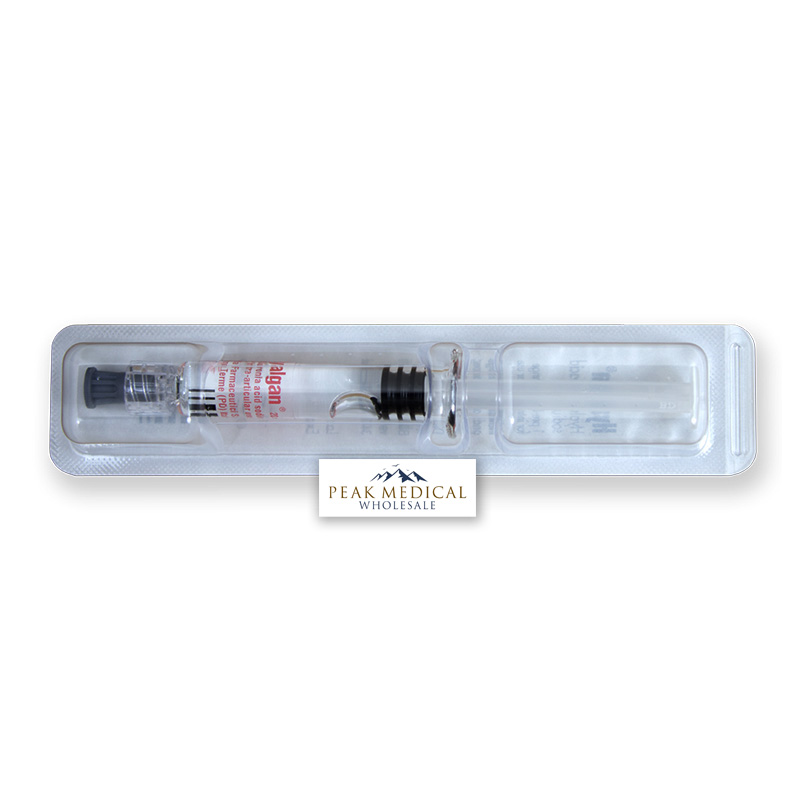
Understanding Hyalgan: A Comprehensive Guide to Viscosupplementation for Knee Osteoarthritis
Introduction to Hyalgan
Osteoarthritis (OA) of the knee is a debilitating condition affecting millions worldwide, characterized by the breakdown of joint cartilage and underlying bone, leading to pain, stiffness, and reduced mobility. For many individuals suffering from OA, conservative treatments such as physical therapy, weight management, and oral pain relievers may not provide adequate relief. This is where advanced therapeutic options, like viscosupplementation with Hyalgan, come into play.
Hyalgan is a brand name for a sterile, non-pyrogenic solution of sodium hyaluronate, a natural substance found in the body, particularly in the synovial fluid of joints. Classified as a viscosupplement, Hyalgan is designed to supplement the naturally occurring hyaluronic acid (HA) in the knee joint, which is often depleted and degraded in individuals with osteoarthritis. This comprehensive guide will delve deep into Hyalgan, exploring its scientific underpinnings, clinical applications, safety profile, and practical considerations, empowering both patients and healthcare professionals with authoritative knowledge.
The Science Behind Hyalgan: Mechanism of Action and Pharmacokinetics
Understanding how Hyalgan works at a molecular level is crucial for appreciating its therapeutic benefits.
Mechanism of Action (MOA)
Hyalgan's primary mechanism of action is viscosupplementation. In a healthy joint, synovial fluid, rich in high molecular weight hyaluronic acid, acts as a lubricant and shock absorber. In an osteoarthritic knee, the quality and quantity of this synovial fluid degrade, becoming less viscous and elastic. Hyalgan aims to restore these crucial properties:
- Restoration of Synovial Fluid Viscoelasticity: By introducing exogenous sodium hyaluronate directly into the joint space, Hyalgan helps to replenish the synovial fluid, improving its lubricating and shock-absorbing capabilities. This reduction in friction and impact stress on the articular cartilage can alleviate pain and improve joint function.
- Anti-inflammatory Effects: Hyaluronic acid has demonstrated anti-inflammatory properties. It can modulate the activity of inflammatory cells and cytokines within the joint, potentially reducing synovitis (inflammation of the synovial membrane) and associated pain.
- Analgesic Effect: Beyond mechanical benefits, HA may directly interact with pain receptors or nerve endings in the joint, contributing to its pain-relieving effects.
- Chondroprotection (Potential): Some research suggests that HA may have chondroprotective effects, helping to protect existing cartilage from further degradation and potentially stimulating endogenous HA production by synovial cells.
- Improved Joint Homeostasis: By restoring a more physiological environment within the joint, Hyalgan contributes to overall joint health and function.
Hyalgan contains a highly purified fraction of sodium hyaluronate with a molecular weight ranging from 500,000 to 730,000 Daltons, which is similar to that of natural hyaluronic acid found in healthy synovial fluid. This specific molecular weight is believed to be optimal for its viscoelastic and biological functions within the joint.
Pharmacokinetics
Hyalgan's pharmacokinetics are primarily localized to the site of injection, the knee joint.
- Distribution: Once injected intra-articularly, Hyalgan distributes throughout the synovial fluid and penetrates the superficial layers of the articular cartilage and synovial membrane. It exerts its therapeutic effects directly within the joint capsule.
- Metabolism: Sodium hyaluronate is metabolized locally within the joint by hyaluronidases, a family of enzymes responsible for HA degradation. These enzymes break down the high molecular weight HA into smaller fragments.
- Excretion: The degradation products are then absorbed into the systemic circulation, primarily through the lymphatic system, and subsequently metabolized in the liver and excreted via the kidneys.
- Half-life: The residence time of exogenous HA within the joint can vary, but studies suggest that the beneficial effects of Hyalgan can last for several months, even though the HA itself may be detectable for a shorter period. This prolonged effect is thought to be due to the stimulation of endogenous HA production and sustained beneficial changes in the joint environment.
Clinical Indications and Usage: Who Can Benefit from Hyalgan?
Hyalgan is a targeted therapy, specifically indicated for a defined patient population.
Primary Indication
Hyalgan is indicated for the treatment of pain in osteoarthritis (OA) of the knee in patients who have failed to respond adequately to conservative non-pharmacologic therapy and simple analgesics (e.g., acetaminophen). This means it is typically considered a second-line treatment option after initial, less invasive approaches have proven insufficient.
Detailed Patient Selection Criteria
Healthcare providers will consider several factors when determining if Hyalgan is an appropriate treatment:
- Diagnosis of Knee OA: Patients must have a confirmed diagnosis of osteoarthritis of the knee, often supported by radiographic evidence showing joint space narrowing, osteophytes, or subchondral sclerosis.
- Failure of Conservative Treatments: The patient should have tried and not achieved satisfactory pain relief from non-pharmacological interventions (e.g., physical therapy, exercise, weight loss) and simple oral analgesics (e.g., acetaminophen, NSAIDs).
- Persistent Knee Pain: The primary symptom should be persistent knee pain that significantly impacts quality of life and daily activities.
- Absence of Acute Inflammation: While Hyalgan has anti-inflammatory properties, it's generally not recommended for acutely inflamed joints or effusions, which should be addressed first.
- Unilateral or Bilateral Pain: Hyalgan can be administered to one or both knees, depending on the patient's symptoms.
Dosage and Administration Guidelines
Proper administration is critical for the efficacy and safety of Hyalgan.
- Standard Regimen: The recommended treatment regimen for Hyalgan is five (5) injections, administered once a week for five consecutive weeks.
- Dose per Injection: Each pre-filled syringe contains 2 mL of Hyalgan (20 mg of sodium hyaluronate).
- Injection Technique:
- Aseptic Technique: Strict aseptic technique must be followed during administration to minimize the risk of joint infection.
- Intra-articular Injection: Hyalgan is administered directly into the synovial space of the knee joint. The physician may use anatomical landmarks or ultrasound guidance to ensure accurate placement.
- Aspiration: Before injecting Hyalgan, any joint effusion (excess fluid) should be aspirated to reduce intra-articular pressure and potentially improve treatment efficacy.
- Preparation: Hyalgan is supplied in a sterile, pre-filled syringe. The contents are for single use only.
- Post-injection Care:
- Patients are usually advised to avoid strenuous activities, prolonged standing, or heavy weight-bearing for 24-48 hours after each injection.
- Applying ice to the injection site can help reduce localized pain and swelling.
- Normal daily activities can typically be resumed after this initial rest period.
- Repeat Treatment Intervals: The duration of pain relief varies among individuals. If a patient experiences significant benefit, repeat courses of Hyalgan may be considered after at least 6 months, or once the effects of the previous course begin to wane.
Risks, Side Effects, and Contraindications
While generally well-tolerated, Hyalgan is not without potential risks and contraindications.
Contraindications
Hyalgan should NOT be administered to patients with:
- Known Hypersensitivity: Patients with a known hypersensitivity to hyaluronate preparations or to any of the excipients in Hyalgan.
- Avian Protein Allergies: Hyalgan is derived from rooster combs. Therefore, patients with known allergies to avian proteins (e.g., eggs, feathers, poultry products) are contraindicated due to the potential for severe allergic reactions.
- Infection or Skin Disease: Active infection or skin disease in the area of the injection site or in the affected knee joint itself. This is to prevent the introduction of pathogens into the joint space.
- Severe Venous or Lymphatic Stasis: Patients with severe venous or lymphatic stasis in the affected leg should not receive Hyalgan, as it could exacerbate these conditions.
Potential Side Effects
Most side effects associated with Hyalgan are localized, mild, and transient.
- Common (Injection Site Reactions):
- Pain
- Swelling
- Warmth
- Redness
- Bruising or ecchymosis
These reactions typically resolve within a few days.
- Less Common:
- Joint Effusion: Temporary increase in joint fluid.
- Pruritus (itching): At the injection site.
- Headache: Infrequent.
- Gastrointestinal disturbances: Nausea, abdominal pain (rare).
- Rare but Serious:
- Pseudosepsis: An acute inflammatory reaction characterized by severe pain, swelling, warmth, and redness, mimicking a septic joint, but without bacterial infection. This reaction is sterile and usually resolves with symptomatic treatment.
- Allergic Reactions: Systemic allergic reactions, including rash, urticaria, and in very rare cases, anaphylaxis, can occur, particularly in patients with undiagnosed avian protein sensitivities.
- Joint Infection: Although rare with strict aseptic technique, any intra-articular injection carries a risk of introducing bacteria, leading to septic arthritis.
Management of Side Effects:
* For common injection site reactions, rest, ice application, compression, and elevation (RICE) are often effective.
* Over-the-counter analgesics (e.g., acetaminophen, NSAIDs) can help manage pain.
* In cases of significant joint effusion, aspiration of the fluid by a healthcare professional may be necessary.
* Any signs of severe reaction or suspected infection (e.g., fever, increasing pain, significant warmth/redness beyond the initial 24-48 hours) warrant immediate medical attention.
Drug Interactions
- Local Interactions: There are no known systemic drug interactions with Hyalgan. However, disinfectants containing quaternary ammonium salts (e.g., benzalkonium chloride) should not be used for skin preparation prior to Hyalgan injection. These agents can cause precipitation of sodium hyaluronate. Always ensure the use of appropriate antiseptic solutions (e.g., povidone-iodine, alcohol).
Pregnancy and Lactation Warnings
- Pregnancy Category: The safety of Hyalgan in pregnant women has not been established. Animal reproduction studies have not demonstrated teratogenic effects, but the effects on embryo-fetal development are unknown. Hyalgan should only be used during pregnancy if the potential benefits clearly outweigh the potential risks to the fetus.
- Lactation: It is unknown whether Hyalgan is excreted in human milk. Caution should be exercised when Hyalgan is administered to nursing mothers. A decision should be made whether to discontinue nursing or to discontinue the drug, taking into account the importance of the drug to the mother.
Overdose Management
Overdose with Hyalgan is highly unlikely given its intra-articular administration and the limited volume injected. In the rare event that an excessively large volume is injected, it could theoretically lead to:
- Increased Intra-articular Pressure: This could cause increased pain and swelling within the joint capsule.
- Treatment: Management would primarily involve aspiration of the excess fluid from the joint and symptomatic relief (e.g., rest, ice, analgesics). Systemic toxicity from an overdose is not anticipated due to its localized action and rapid metabolism if it enters the systemic circulation.
Massive FAQ Section
1. What is Hyalgan made from?
Hyalgan is made from sodium hyaluronate, a highly purified natural substance derived from rooster combs. It is chemically identical to the hyaluronic acid naturally found in human joints.
2. How long does it take for Hyalgan to work?
Patients typically begin to experience pain relief after the third or fourth injection in the series. The full effects are usually felt a few weeks after the completion of the five-injection course.
3. How long do the effects of Hyalgan last?
The pain-relieving effects of Hyalgan can last for up to 6 months or longer. Individual results vary, and some patients may experience benefits for a shorter or longer duration.
4. Can Hyalgan be used for other joints besides the knee?
Hyalgan is specifically indicated and approved only for the treatment of pain in osteoarthritis of the knee. Its safety and efficacy have not been established for other joints.
5. Is the Hyalgan injection painful?
While any injection can cause some discomfort, Hyalgan injections are generally well-tolerated. Patients may feel a brief sting or pressure. The use of local anesthetic prior to injection can help minimize discomfort. Mild pain or soreness at the injection site after the procedure is common and usually temporary.
6. What should I avoid after a Hyalgan injection?
It is generally recommended to avoid strenuous activities, prolonged standing, heavy lifting, or high-impact exercise for 24-48 hours after each injection. This allows the medication to settle and helps prevent exacerbation of injection site reactions. Normal light activities can usually be resumed after this period.
7. Can I receive Hyalgan if I have an egg allergy?
No. Hyalgan is derived from rooster combs, which contain avian proteins. Therefore, patients with known allergies to avian proteins, including eggs, feathers, or poultry products, are contraindicated due to the risk of severe allergic reactions.
8. How often can I get Hyalgan injections?
If a patient responds well to Hyalgan, repeat courses may be considered. However, it's generally recommended to wait at least 6 months between courses or until the effects of the previous treatment begin to diminish. Your doctor will determine the appropriate timing for repeat treatments based on your individual response.
9. Is Hyalgan covered by insurance?
Most insurance plans, including Medicare, cover Hyalgan injections for eligible patients with knee osteoarthritis who meet specific criteria (e.g., failure of conservative treatments). However, coverage can vary, so it's essential to check with your specific insurance provider.
10. What are the alternatives to Hyalgan?
Alternatives to Hyalgan for knee osteoarthritis include:
* Non-pharmacological therapies: Physical therapy, exercise, weight loss, bracing.
* Oral medications: Acetaminophen, NSAIDs.
* Other intra-articular injections: Corticosteroids (for short-term relief), other viscosupplements (different HA preparations).
* Surgical options: Arthroscopy, partial or total knee replacement, for severe cases.
11. Can Hyalgan reverse osteoarthritis?
No, Hyalgan does not cure or reverse osteoarthritis. It is a symptomatic treatment designed to reduce pain and improve joint function by supplementing the natural lubricating and shock-absorbing properties of synovial fluid. It helps manage the symptoms of OA but does not regenerate cartilage or halt the underlying disease progression.
12. What is the difference between Hyalgan and other viscosupplements?
While all viscosupplements contain hyaluronic acid, they can differ in several key aspects:
* Source: Some are derived from animal sources (like Hyalgan from rooster combs), others are produced via bacterial fermentation.
* Molecular Weight: Different products have varying molecular weights of HA, which can influence their viscoelastic properties and duration of action.
* Concentration: The amount of HA per injection can differ.
* Injection Regimen: Some products require a single injection, while others, like Hyalgan, require a series of 3 or 5 injections.
Your doctor will choose the most appropriate viscosupplement based on your specific condition and needs.
13. How should Hyalgan be stored?
Hyalgan syringes should be stored at room temperature, between 2°C and 25°C (36°F and 77°F). It should not be frozen. Protect from light. Always check the expiration date before use.
Conclusion: Empowering Patients with Knowledge
Hyalgan represents a valuable therapeutic option for individuals battling the persistent pain of knee osteoarthritis. By restoring the natural lubrication and shock-absorbing properties within the joint, it offers a non-surgical pathway to improved comfort and mobility. This comprehensive guide has aimed to demystify Hyalgan, providing a thorough understanding of its scientific principles, clinical application, and safety profile.
It is crucial for patients to engage in an open dialogue with their orthopedic specialist to determine if Hyalgan is the right treatment choice for their specific condition. A personalized treatment plan, considering individual health status, severity of OA, and previous treatment responses, is paramount for achieving the best possible outcomes. With informed decision-making and expert guidance, Hyalgan can play a significant role in enhancing the quality of life for many living with knee osteoarthritis.