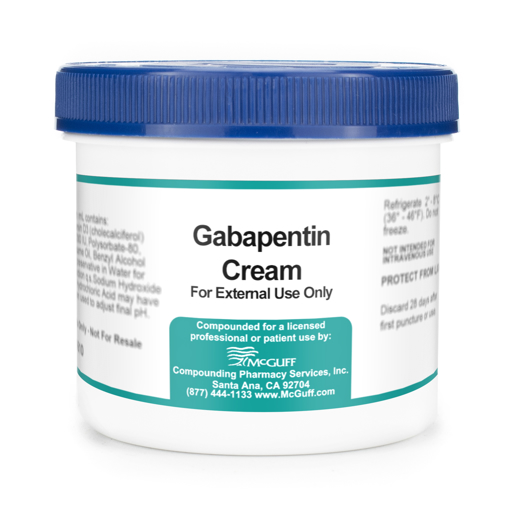
Gabapentin Cream: A Comprehensive Medical Guide to Topical Neuropathic and Musculoskeletal Pain Relief
As an expert in orthopedic care and medical SEO copywriting, we understand the critical need for precise, authoritative information regarding advanced pain management solutions. Gabapentin cream represents a significant advancement in localized pain therapy, offering a targeted approach to various neuropathic and musculoskeletal conditions. This exhaustive guide delves into every facet of gabapentin cream, from its intricate mechanism of action to practical dosage guidelines, ensuring healthcare professionals and patients alike have a robust understanding of this specialized medication.
1. Introduction & Overview of Gabapentin Cream
Gabapentin, initially developed as an antiepileptic drug, has found widespread utility in managing various forms of neuropathic pain and certain musculoskeletal conditions. While oral gabapentin is a systemic medication, gabapentin cream offers a localized delivery system, aiming to minimize systemic side effects while maximizing therapeutic benefit at the site of pain. This topical formulation is increasingly prescribed for conditions where nerve pain is localized, or where systemic medications are poorly tolerated or contraindicated.
The primary appeal of gabapentin cream lies in its ability to deliver the active pharmaceutical ingredient directly to the affected area, potentially achieving higher local concentrations with significantly lower systemic absorption compared to oral routes. This targeted approach can be particularly beneficial for patients seeking relief from chronic, localized pain without the systemic adverse effects often associated with oral neuropathic agents, such as drowsiness or dizziness.
What is Gabapentin Cream?
Gabapentin cream is a pharmaceutical preparation containing gabapentin as its active ingredient, formulated for topical application to the skin. It is typically compounded by specialized pharmacies in various strengths, as it is not widely available as a commercially manufactured, FDA-approved topical product in all regions for specific indications. Its use is often off-label, based on clinical experience and emerging research supporting its efficacy in localized pain syndromes.
2. Deep-Dive into Technical Specifications & Mechanisms
Understanding how gabapentin cream works requires an appreciation of its pharmacological underpinnings, even when applied topically.
2.1. Mechanism of Action
Gabapentin is structurally similar to the neurotransmitter gamma-aminobutyric acid (GABA), but it does not directly bind to GABA receptors, nor does it affect GABA uptake or degradation. Instead, its primary mechanism of action is believed to involve binding to the alpha-2-delta (α2δ) subunit of voltage-gated calcium channels (VGCCs) in the central and peripheral nervous systems.
When applied topically, gabapentin is thought to penetrate the skin and reach nerve endings in the localized painful area. By binding to the α2δ subunit, gabapentin modulates the activity of these calcium channels, leading to a reduction in the influx of calcium ions into presynaptic nerve terminals. This reduction in calcium influx subsequently decreases the release of various excitatory neurotransmitters, including glutamate, substance P, and norepinephrine, which are implicated in the transmission and amplification of pain signals.
In essence, gabapentin cream works by:
* Modulating neuronal excitability: Reducing the hyperexcitability of damaged or sensitized neurons responsible for neuropathic pain.
* Inhibiting neurotransmitter release: Decreasing the release of pain-promoting neurotransmitters from nerve endings.
* Localizing effect: Concentrating its action within the superficial layers of the skin and underlying nerve structures, thereby providing targeted pain relief.
2.2. Pharmacokinetics of Topical Gabapentin
The pharmacokinetics of topical gabapentin differ significantly from its oral counterpart, primarily due to limited systemic absorption.
- Absorption: When applied to the skin, gabapentin penetrates the stratum corneum (outermost layer of the skin) and diffuses into deeper dermal layers, reaching peripheral nerve endings. The extent of systemic absorption is generally low, minimizing the risk of systemic side effects. However, absorption can vary depending on:
- Formulation: The specific cream base or vehicle used.
- Skin integrity: Damaged or broken skin may lead to increased absorption.
- Application area: Larger application areas may result in greater total absorption.
- Concentration: Higher concentrations in the cream can lead to more gabapentin penetrating the skin.
- Distribution: Once absorbed locally, gabapentin distributes within the skin and subcutaneous tissues. Systemic distribution is minimal, though trace amounts may be detectable in plasma.
- Metabolism: Gabapentin is not significantly metabolized in humans, regardless of the route of administration.
- Elimination: Primarily excreted unchanged by the kidneys. Due to minimal systemic absorption from topical application, renal elimination is negligible for topical use unless significant systemic absorption occurs.
The low systemic bioavailability is a key advantage of topical gabapentin, allowing for targeted pain relief with a reduced systemic side effect profile.
3. Extensive Clinical Indications & Usage
Gabapentin cream is often utilized for a variety of localized neuropathic and musculoskeletal pain conditions, particularly when oral medications are ineffective, poorly tolerated, or contraindicated. It is important to note that many of these uses are considered off-label, and clinical evidence continues to evolve.
3.1. Detailed Indications
| Indication Category | Specific Conditions & Rationale