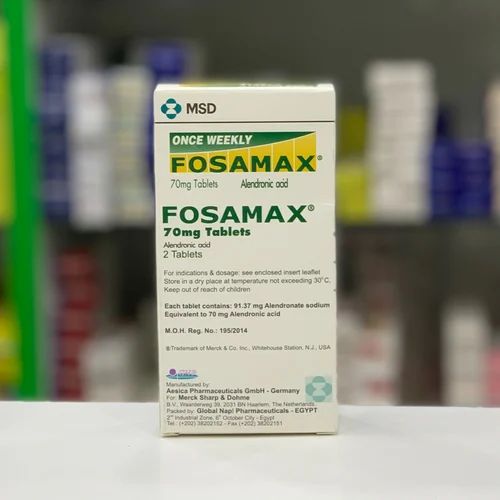
Fosamax (Alendronate): A Comprehensive Medical SEO Guide for Bone Health
Comprehensive Introduction & Overview
Fosamax, with its generic name alendronate sodium, is a cornerstone medication in the management and prevention of osteoporosis and other bone disorders. As a potent bisphosphonate, it plays a critical role in preserving bone mineral density (BMD) and significantly reducing the risk of debilitating fractures. Developed and widely prescribed, alendronate has revolutionized the approach to bone health, offering a long-term solution for millions worldwide suffering from conditions that weaken the skeletal system.
Osteoporosis, characterized by porous and fragile bones, affects a significant portion of the aging population, particularly postmenopausal women. This condition leads to increased susceptibility to fractures, especially in the hip, spine, and wrist, which can severely impact quality of life and even lead to mortality. Fosamax works by targeting the fundamental processes of bone remodeling, ensuring that bone breakdown is effectively slowed, allowing for bone density to be maintained or even improved.
This comprehensive guide, written by an expert medical SEO copywriter and orthopedic specialist, delves into the intricate details of Fosamax, providing an authoritative resource for patients, healthcare providers, and anyone seeking in-depth knowledge about this vital medication. We will explore its mechanism of action, pharmacokinetic profile, detailed indications, precise dosage guidelines, critical contraindications, potential drug interactions, warnings for pregnancy and lactation, and essential overdose management strategies.
Deep-dive into Technical Specifications / Mechanisms
Mechanism of Action: How Fosamax Rebuilds Bone Strength
Fosamax belongs to the class of medications known as bisphosphonates. These drugs are synthetic analogs of pyrophosphate, a naturally occurring compound that modulates bone mineralization. The primary mechanism by which alendronate exerts its therapeutic effect is through its specific inhibition of osteoclast-mediated bone resorption.
Here's a breakdown of its action:
* Targeting Osteoclasts: Alendronate selectively accumulates in areas of active bone remodeling, particularly at sites of bone resorption. Osteoclasts, the cells responsible for breaking down bone tissue, readily take up alendronate.
* Inhibition of Osteoclast Activity: Once internalized by osteoclasts, alendronate interferes with the mevalonate pathway, which is crucial for the synthesis of isoprenoid lipids. These lipids are essential for the post-translational modification of small GTPases, proteins vital for osteoclast function and survival.
* Disruption of Osteoclast Function: By disrupting this pathway, alendronate impairs the formation of the osteoclast's ruffled border (the active bone-resorbing surface) and inhibits its ability to adhere to the bone surface and secrete acid and enzymes necessary for bone resorption.
* Induction of Osteoclast Apoptosis: Furthermore, alendronate has been shown to induce apoptosis (programmed cell death) in osteoclasts, effectively reducing their number and lifespan.
* Result: The net effect is a significant reduction in bone turnover, leading to a decrease in bone loss and a progressive increase in bone mineral density. This action helps restore the balance between bone formation and resorption, making bones stronger and less prone to fractures. Unlike some other treatments, bisphosphonates like alendronate do not directly stimulate new bone formation but rather preserve existing bone.
Pharmacokinetics: The Journey of Alendronate in the Body
Understanding the pharmacokinetics of alendronate is crucial for optimizing its efficacy and minimizing adverse effects. Its unique absorption and distribution profile necessitate strict adherence to administration instructions.
Absorption
- Poor Oral Bioavailability: Alendronate exhibits very poor oral bioavailability. On an empty stomach, approximately 0.64% of an oral dose is absorbed in women, and 0.60% in men. This low absorption is a key factor influencing its administration.
- Food and Beverage Interactions: The bioavailability is dramatically reduced by food and beverages. Even coffee or orange juice taken within 30 minutes of alendronate can reduce absorption by up to 60%. Calcium-containing foods and supplements, antacids, and certain medications with polyvalent cations (e.g., magnesium, aluminum, iron) can form insoluble complexes with alendronate, rendering it virtually unabsorbable. This underscores the critical importance of taking Fosamax with plain water only, at least 30 minutes before any food, drink, or other medications.
Distribution
- Rapid Distribution to Bone: Following absorption, alendronate is rapidly distributed, with approximately 50% binding to plasma proteins. A significant portion of the absorbed dose rapidly localizes to bone, particularly to sites of active bone remodeling, where it binds strongly to the hydroxyapatite crystals.
- Minimal Soft Tissue Distribution: Alendronate does not accumulate in soft tissues.
Metabolism
- No Metabolism: Alendronate is not metabolized in humans. It is excreted unchanged.
Excretion
- Renal Excretion: Approximately half of the absorbed dose is excreted unchanged by the kidneys. The unabsorbed portion is excreted in the feces.
- Long Half-Life: Due to its strong binding to bone, alendronate has an extremely long terminal half-life, estimated to be greater than 10 years. This prolonged retention in bone contributes to its sustained therapeutic effect even after discontinuation of therapy.
Extensive Clinical Indications & Usage
Fosamax is indicated for a range of conditions characterized by bone loss and increased fracture risk. Its efficacy has been well-established through numerous clinical trials.
Detailed Indications
| Indication | Description ## Introduction to Fosamax (Alendronate)
Fosamax, or its generic equivalent alendronate sodium, stands as a pivotal medication in the orthopedic and endocrinology fields, primarily utilized for the prevention and treatment of various bone metabolic diseases. As a member of the bisphosphonate family, alendronate plays a fundamental role in maintaining skeletal integrity by inhibiting the processes that lead to bone degradation. Its introduction significantly altered the landscape of osteoporosis management, offering a highly effective therapeutic option to reduce fracture risk and improve the quality of life for millions.
Osteoporosis, a systemic skeletal disease characterized by low bone mass and microarchitectural deterioration of bone tissue, leads to increased bone fragility and susceptibility to fracture. While predominantly affecting postmenopausal women, it also impacts men and individuals on certain medications like glucocorticoids. Fosamax specifically targets the cellular mechanisms responsible for bone resorption, thereby promoting a net gain or stabilization of bone mineral density (BMD).
This comprehensive guide aims to provide an exhaustive overview of Fosamax, covering its scientific underpinnings, clinical applications, safety profile, and practical administration advice. Our goal is to serve as an authoritative resource for healthcare professionals, patients, and caregivers seeking a deep understanding of this essential medication.
Deep-dive into Technical Specifications / Mechanisms
Mechanism of Action: The Molecular Foundation of Bone Preservation
Alendronate's efficacy stems from its highly specific and potent anti-resorptive action, primarily mediated through its interaction with osteoclasts – the specialized cells responsible for breaking down bone tissue. As an expert medical SEO copywriter and orthopedic specialist, understanding this mechanism is paramount.
Alendronate is a nitrogen-containing bisphosphonate. Its mechanism of action can be broken down into several key steps:
- High Affinity for Bone Mineral: Alendronate possesses a strong affinity for hydroxyapatite, the primary mineral component of bone. Upon absorption, it rapidly localizes to bone surfaces, particularly at sites of active bone remodeling where resorption is occurring.
- Osteoclast Uptake: Once bound to bone, alendronate is internalized by active osteoclasts during the process of bone resorption. Osteoclasts engulf small quantities of the mineralized bone matrix containing the bound alendronate.
- Inhibition of the Mevalonate Pathway: Inside the osteoclast, alendronate inhibits farnesyl pyrophosphate synthase (FPPS), a crucial enzyme in the mevalonate pathway. This pathway is responsible for synthesizing isoprenoid lipids (e.g., farnesyl pyrophosphate, geranylgeranyl pyrophosphate). These isoprenoids are essential for the post-translational prenylation of small GTPases (like Ras, Rho, Rac), which are vital for the proper function, morphology, and survival of osteoclasts.
- Disruption of Osteoclast Function: By blocking FPPS, alendronate prevents the prenylation of these GTPases. This disruption impairs several critical osteoclast functions:
- Loss of Ruffled Border: The characteristic ruffled border of the osteoclast, essential for secreting acid and enzymes to dissolve bone, collapses.
- Inhibition of Adhesion: Osteoclasts lose their ability to adhere effectively to the bone surface.
- Impaired Vesicle Trafficking: The transport of lysosomal enzymes required for bone breakdown is disrupted.
- Induction of Osteoclast Apoptosis: Ultimately, the cellular dysfunction induced by alendronate leads to programmed cell death (apoptosis) of the osteoclasts. This effectively reduces the number and activity of bone-resorbing cells.
Overall Effect: The net result of these actions is a significant reduction in bone resorption without directly affecting bone mineralization. This allows osteoblasts (bone-forming cells) to continue their work, leading to a relative increase in bone formation compared to resorption, thereby improving or maintaining bone mineral density and increasing bone strength.
Pharmacokinetics: The Body's Interaction with Alendronate
The pharmacokinetic profile of alendronate is unique and dictates its specific administration requirements.
Absorption
- Oral Bioavailability: Alendronate exhibits extremely low oral bioavailability. When taken on an empty stomach, at least 30 minutes before food or drink, with plain water, approximately 0.6% to 0.7% of the dose is absorbed.
- Impact of Food and Beverages: The presence of food, beverages (other than plain water), or other medications (especially those containing calcium, magnesium, or aluminum) taken concurrently or within a short window significantly reduces alendronate absorption. For example, coffee or orange juice can reduce bioavailability by up to 60%. Calcium supplements and antacids can virtually eliminate absorption. This makes strict adherence to dosing instructions paramount for therapeutic efficacy.
Distribution
- Rapid Bone Localization: After absorption, alendronate is rapidly distributed. Approximately 50% of the absorbed dose is transiently distributed to soft tissues before being rapidly taken up by bone or excreted renally.
- Bone Binding: Alendronate has a very high affinity for bone mineral, binding tightly to hydroxyapatite crystals. This binding is responsible for its prolonged retention in the skeleton.
Metabolism
- Non-Metabolized: Alendronate is not metabolized in humans. It is excreted unchanged.
Excretion
- Renal Clearance: Approximately half of the absorbed dose is excreted unchanged by the kidneys. The unabsorbed drug is eliminated in the feces.
- Terminal Half-Life: Due to its strong and persistent binding to bone, alendronate has an extremely long terminal half-life, estimated to be greater than 10 years. This prolonged skeletal retention contributes to its sustained pharmacological effect, even with once-weekly dosing.
Extensive Clinical Indications & Usage
Fosamax is a versatile medication with proven efficacy across several bone health indications.
Detailed Indications
| Indication | Target Population & Specifics