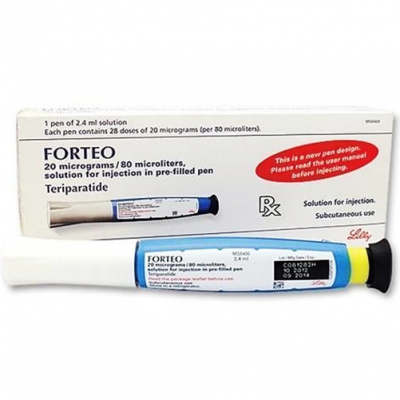
Introduction: Understanding Forteo (Teriparatide)
Forteo, with its active ingredient teriparatide, represents a significant advancement in the treatment of severe osteoporosis. Unlike most other osteoporosis medications that primarily work by slowing down bone resorption (the breakdown of old bone), Forteo is an anabolic agent. This means it actively stimulates new bone formation, making it a unique and powerful tool in the fight against bone fragility and fractures.
Developed as a recombinant human parathyroid hormone (PTH) fragment, teriparatide mimics the action of the body's natural PTH when administered intermittently. Its primary role is to increase bone mineral density (BMD) and significantly reduce the risk of both vertebral and non-vertebral fractures in specific high-risk patient populations. This comprehensive guide delves into the intricate details of Forteo, providing an authoritative resource for healthcare professionals and patients alike seeking to understand its profound impact on bone health.
Deep Dive into Forteo's Scientific Profile
Mechanism of Action: How Forteo Builds Bone
Forteo's mechanism of action is central to its therapeutic efficacy and differentiates it from conventional anti-resorptive therapies. Teriparatide is the active 1-34 N-terminal fragment of human parathyroid hormone (PTH). The full-length PTH hormone plays a crucial role in calcium and phosphate homeostasis, but its effect on bone is complex and dose-dependent.
- Intermittent vs. Continuous PTH Exposure: When endogenous PTH levels are continuously elevated (e.g., in hyperparathyroidism), it leads to bone resorption. However, when exogenous PTH (like teriparatide) is administered intermittently, typically once daily, it has a net anabolic effect on the skeleton.
- Stimulation of Osteoblasts: Forteo primarily acts by directly stimulating osteoblasts, the bone-forming cells. It promotes their differentiation, proliferation, and activity, leading to an increase in bone matrix synthesis and mineralization.
- Bone Remodeling Unit Recruitment: Teriparatide also influences the bone remodeling unit, enhancing the coupling of bone formation to resorption. While it does transiently increase osteoclast activity (bone-resorbing cells) early in treatment, the net effect over the treatment period is a significant increase in bone formation.
- Increased Bone Mineral Density (BMD): This osteoanabolic action results in increased BMD, particularly in the lumbar spine and femoral neck, which are common sites for osteoporotic fractures.
- Improved Bone Microarchitecture: Beyond just increasing density, Forteo also improves the microarchitecture of trabecular bone and cortical bone thickness, contributing to enhanced bone strength and reduced fracture risk.
Pharmacokinetics: Absorption, Distribution, Metabolism, Excretion
Understanding Forteo's pharmacokinetics provides insight into its dosing regimen and systemic effects.
- Administration: Forteo is administered via subcutaneous (SC) injection.
- Absorption: Following subcutaneous injection into the thigh or abdomen, teriparatide is rapidly absorbed.
- Peak plasma concentrations (Cmax) are typically achieved within approximately 30 minutes.
- The absolute bioavailability is high, estimated to be around 95%.
- Distribution: Teriparatide has a relatively low volume of distribution, suggesting it does not extensively distribute into tissues beyond the interstitial fluid. It binds minimally to plasma proteins.
- Metabolism: Teriparatide is metabolized primarily by non-specific enzymatic cleavage in the liver and kidneys, rather than through a specific cytochrome P450 pathway. This non-specific degradation leads to smaller, inactive fragments.
- Excretion: The elimination of teriparatide is rapid.
- The elimination half-life is approximately 1 hour in serum, reflecting its rapid clearance from the bloodstream.
- The metabolites are primarily excreted via the kidneys. Due to its short half-life, the systemic effects of teriparatide quickly diminish after administration.
Extensive Clinical Indications & Usage Guidelines
Forteo is a potent medication reserved for specific patient populations who have severe osteoporosis and are at a high risk of fracture.
Approved Indications for Forteo
Forteo is indicated for the treatment of osteoporosis in:
- Postmenopausal Women with Severe Osteoporosis: Specifically, those who are at high risk for fracture. This includes women with a history of osteoporotic fracture, multiple risk factors for fracture, or who have failed or are intolerant to other available osteoporosis therapy.
- Men with Primary or Hypogonadal Osteoporosis: Similar to postmenopausal women, it's indicated for men who are at high risk for fracture.
- Men and Women with Glucocorticoid-Induced Osteoporosis: For individuals who are at high risk for fracture due to sustained systemic glucocorticoid therapy.
Defining "High Fracture Risk" typically includes one or more of the following:
* History of a prior low-trauma fracture.
* Very low bone mineral density (e.g., T-score ≤ -3.0).
* Multiple risk factors for fracture (e.g., advanced age, family history of fracture, prolonged glucocorticoid use, certain underlying medical conditions).
* Failure of or intolerance to other osteoporosis therapies.
Dosage and Administration
Correct dosage and administration technique are crucial for optimizing Forteo's efficacy and safety.
- Standard Dose: The recommended dose of Forteo is 20 micrograms (mcg) administered once daily.
- Route of Administration: Forteo is administered by subcutaneous injection into the thigh or abdominal wall. Patients or their caregivers must be trained by a healthcare professional on proper injection technique.
- Duration of Treatment: The cumulative lifetime duration of Forteo treatment should not exceed 2 years. This limitation is based on animal studies that showed an increased incidence of osteosarcoma with long-term, high-dose exposure. While the relevance to humans is not fully established, this precaution is strictly observed.
- Follow-up Therapy: After completing the 2-year course of Forteo, patients should typically be switched to an anti-resorptive agent (e.g., bisphosphonate or denosumab) to maintain the bone mineral density gains achieved with Forteo and further reduce fracture risk. This sequential therapy approach is often recommended to maximize long-term benefits.
- Storage: Forteo should be stored in a refrigerator at 2°C to 8°C (36°F to 46°F). The pen should be discarded 28 days after the first injection, even if some solution remains.
Risks, Side Effects, and Contraindications
While Forteo is highly effective, it carries specific risks, side effects, and contraindications that must be carefully considered by healthcare providers and patients.
Contraindications: When Forteo Should NOT Be Used
Forteo is contraindicated in patients with:
- Hypersensitivity: Known hypersensitivity to teriparatide or any component of the formulation.
- Pre-existing Hypercalcemia: Patients with persistently elevated serum calcium levels, as Forteo can further increase calcium.
- Severe Renal Impairment: Due to its renal clearance, severe renal impairment may lead to accumulation and increased risk of hypercalcemia.
- Metabolic Bone Diseases Other Than Primary Osteoporosis: This includes Paget's disease of bone, osteomalacia, or other metabolic bone diseases, as the effects of Forteo in these conditions are not fully understood and may be detrimental.
- Unexplained Elevations of Alkaline Phosphatase: This could indicate an underlying metabolic bone disease or skeletal malignancy.
- Prior External Beam or Implant Radiation Therapy to the Skeleton: Such patients may have an increased risk of osteosarcoma.
- Skeletal Malignancies: Patients with primary or metastatic malignancies involving the bone.
- Children or Young Adults with Open Epiphyses: Forteo is not approved for use in pediatric patients due to the unknown effects on growing bones and the potential risk of osteosarcoma.
- Pregnancy and Lactation: Forteo is not recommended during pregnancy or lactation.
Important Warnings and Precautions
- BLACK BOX WARNING: Osteosarcoma: In animal studies, teriparatide caused an increased incidence of osteosarcoma (a malignant bone tumor) in rats. The relevance of this finding to humans is unclear, but caution is advised. Forteo should not be prescribed to patients at increased baseline risk for osteosarcoma, including those with Paget's disease, unexplained elevations of alkaline phosphatase, open epiphyses, or prior radiation therapy involving the skeleton.
- Hypercalcemia: Transient hypercalcemia is common after Forteo injection. Persistent hypercalcemia may necessitate discontinuation of the drug. Patients with pre-existing hypercalcemia should not receive Forteo.
- Orthostatic Hypotension: Some patients may experience transient orthostatic hypotension, typically within 4 hours of injection, which usually resolves within a few hours. Patients should be advised to sit or lie down if they experience symptoms.
- Urolithiasis (Kidney Stones): Forteo may increase the risk of urolithiasis, especially in patients with pre-existing hypercalciuria.
- Drug-Induced Hyperuricemia: Forteo may cause transient increases in serum uric acid levels, though clinical gout is uncommon.
Common Side Effects
Commonly reported side effects include:
- Nausea
- Leg cramps
- Dizziness
- Headache
- Injection site reactions (e.g., pain, swelling, bruising)
Drug Interactions
- Digoxin: As Forteo can transiently increase serum calcium, caution should be exercised when co-administering with digoxin, as hypercalcemia can predispose patients to digoxin toxicity. Serum calcium and digoxin levels should be monitored.
- Diuretics: Thiazide diuretics can reduce urinary calcium excretion, potentially increasing the risk of hypercalcemia when co-administered with Forteo.
- Calcium Supplements/Vitamin D: While essential for bone health, excessive intake of calcium and Vitamin D with Forteo should be monitored to prevent hypercalcemia.
Pregnancy and Lactation Warnings
- Pregnancy: Forteo is classified as Pregnancy Category C (under the old system). There are no adequate and well-controlled studies in pregnant women. Animal studies have shown reproductive toxicity. Forteo should not be used during pregnancy. Women of childbearing potential should use effective contraception during treatment.
- Lactation: It is unknown whether teriparatide is excreted in human milk. Due to the potential for serious adverse reactions in nursing infants, Forteo is not recommended for use during lactation.
Overdose Management
In the event of an overdose, symptoms may include exaggerated pharmacological effects:
- Symptoms: Orthostatic hypotension, nausea, vomiting, dizziness, headache. More severe symptoms could include hypercalcemia.
- Management: There is no specific antidote for Forteo. Management should be supportive and symptomatic. Discontinue Forteo, monitor serum calcium levels, and provide appropriate medical care to correct fluid and electrolyte imbalances.
Forteo: Frequently Asked Questions (FAQ)
Q1: What is Forteo used for?
Forteo (teriparatide) is used to treat severe osteoporosis in postmenopausal women, men, and individuals with glucocorticoid-induced osteoporosis who are at a high risk of fracture. It's unique because it's an anabolic (bone-building) agent, stimulating new bone formation rather than just slowing bone loss.
Q2: How does Forteo work differently from other osteoporosis medications?
Most other osteoporosis medications, such as bisphosphonates (e.g., alendronate, risedronate) or denosumab, are anti-resorptive. They work by slowing down the breakdown of old bone. Forteo, on the other hand, is an anabolic agent that directly stimulates osteoblasts (bone-forming cells) to build new bone, thereby increasing bone mineral density and improving bone strength.
Q3: How is Forteo administered?
Forteo is administered once daily as a subcutaneous injection into the thigh or abdominal wall. It comes in a pre-filled pen device, and patients or their caregivers are trained by a healthcare professional on how to properly use it.
Q4: What is the maximum duration of Forteo treatment? Why?
The cumulative lifetime duration of Forteo treatment should not exceed 2 years. This limitation is primarily due to animal studies where high doses and long-term exposure to teriparatide were associated with an increased incidence of osteosarcoma (a type of bone cancer) in rats. While the risk in humans is considered very low, this precaution is maintained.
Q5: What are the most serious risks associated with Forteo?
The most serious, though rare, risk associated with Forteo is osteosarcoma, based on findings in rat studies. Other important risks include hypercalcemia (high calcium levels in the blood) and orthostatic hypotension (a sudden drop in blood pressure upon standing). Patients are screened for pre-existing conditions that might increase these risks.
Q6: Can Forteo be used by everyone with osteoporosis?
No, Forteo is not suitable for everyone with osteoporosis. It is specifically indicated for individuals with severe osteoporosis and a high risk of fracture. It is contraindicated in patients with pre-existing hypercalcemia, severe kidney disease, certain metabolic bone diseases, a history of skeletal radiation therapy, or skeletal malignancies. It is also not for use in children, pregnant, or breastfeeding women.
Q7: What should I do if I miss a dose of Forteo?
If you miss a dose of Forteo, do not take a double dose to make up for the missed one. Simply resume your regular dosing schedule the next day. If you are unsure, contact your healthcare provider for specific advice.
Q8: Are there any dietary restrictions while taking Forteo?
There are no specific dietary restrictions directly related to Forteo. However, it's important to maintain adequate calcium and Vitamin D intake through diet or supplements as recommended by your doctor, as these are crucial for bone health. Your doctor will monitor your calcium levels to ensure they remain within a healthy range.
Q9: What happens after I complete my 2-year Forteo treatment?
After completing the 2-year course of Forteo, it is generally recommended that patients transition to an anti-resorptive osteoporosis medication (e.g., a bisphosphonate or denosumab). This follow-up therapy helps to preserve the bone mineral density gains achieved with Forteo and continues to reduce the risk of future fractures.
Q10: How quickly does Forteo start to work?
Forteo begins to stimulate new bone formation relatively quickly, often within the first few months of treatment. Clinical studies have shown significant increases in bone mineral density and reductions in fracture risk over the course of the 2-year treatment period.
Q11: Can Forteo be stored at room temperature?
No, Forteo must be stored in a refrigerator at 2°C to 8°C (36°F to 46°F). Once a pen has been used for the first time, it should be discarded after 28 days, even if there is still some medicine left in it. Never freeze Forteo.
Q12: Is Forteo covered by insurance?
Forteo is a specialty medication and its coverage by insurance plans can vary widely. Most insurance providers, including Medicare and private plans, typically require prior authorization and may have specific criteria that must be met for coverage due to its cost and specific indications. It is best to contact your insurance provider directly or consult with your doctor's office for assistance with coverage details.