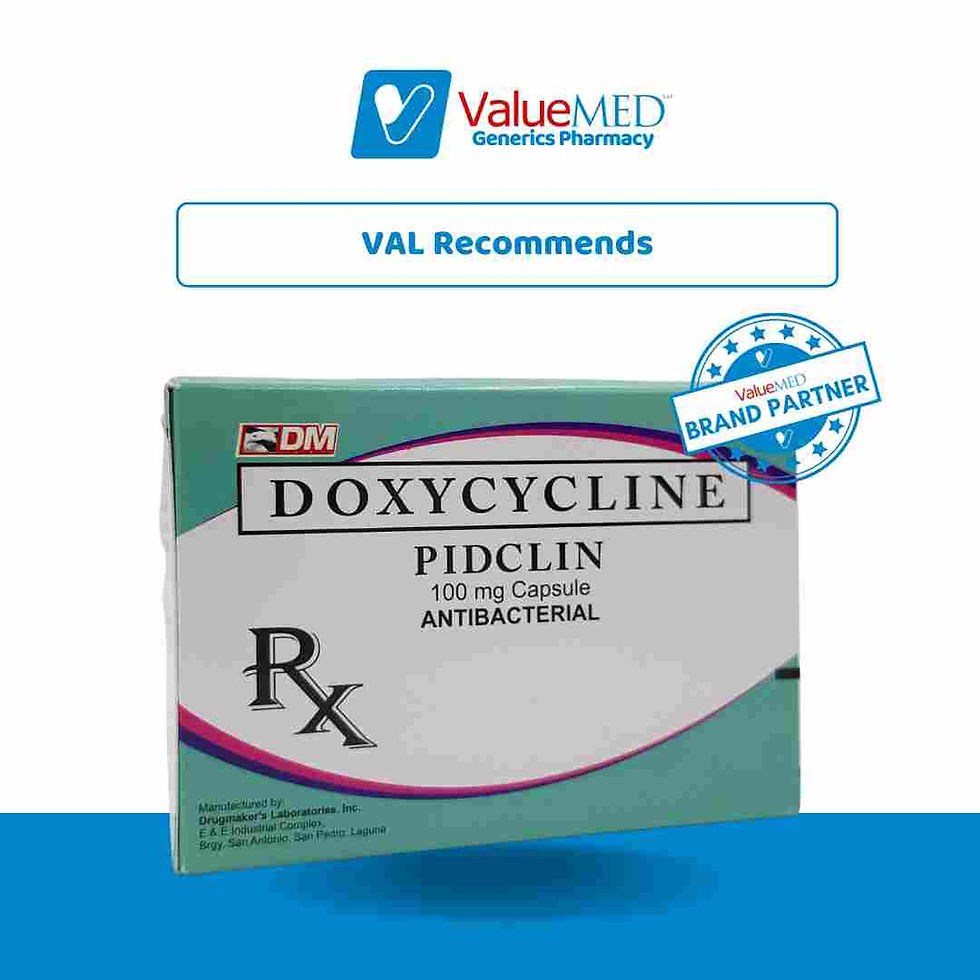
Doxycycline: A Comprehensive Medical SEO Guide
Doxycycline is a widely recognized and extensively utilized broad-spectrum tetracycline antibiotic. Its versatility stems from its efficacy against a diverse array of bacterial infections, as well as certain parasitic infections. As an expert medical SEO copywriter and orthopedic specialist, this guide aims to provide an exhaustive, authoritative, and technically precise overview of Doxycycline, covering its fundamental mechanisms to its nuanced clinical applications and critical safety considerations.
1. Comprehensive Introduction & Overview of Doxycycline
Doxycycline belongs to the tetracycline class of antibiotics, first introduced in the mid-20th century. It is a semi-synthetic derivative of tetracycline, distinguished by its improved pharmacokinetic profile, including better absorption, longer half-life, and reduced propensity for renal accumulation, making it a preferred choice in many clinical scenarios.
Administered orally or intravenously, Doxycycline exerts its therapeutic effects by inhibiting bacterial protein synthesis, thereby halting bacterial growth and replication. Its broad-spectrum activity makes it invaluable in treating infections caused by Gram-positive and Gram-negative bacteria, as well as atypical organisms like Mycoplasma, Chlamydia, Rickettsia, and some protozoa. Beyond its antimicrobial properties, Doxycycline also exhibits anti-inflammatory and immunomodulatory effects, which are leveraged in conditions like rosacea and certain periodontal diseases.
The importance of Doxycycline extends across various medical disciplines, from infectious disease and dermatology to orthopedics, where its role in managing certain bone and joint infections, though often adjunctive, is recognized.
2. Deep-dive into Technical Specifications & Mechanisms
Understanding Doxycycline's action at a molecular level is crucial for appreciating its clinical utility and potential limitations.
2.1. Mechanism of Action
Doxycycline functions as a bacteriostatic agent, meaning it inhibits bacterial growth rather than directly killing the bacteria. Its primary mechanism involves interfering with bacterial protein synthesis:
- Binding to the 30S Ribosomal Subunit: Doxycycline reversibly binds to the 30S ribosomal subunit of susceptible bacteria.
- Inhibition of Aminoacyl-tRNA Binding: This binding prevents the attachment of aminoacyl-tRNA to the acceptor (A) site on the mRNA-ribosome complex.
- Cessation of Peptide Chain Elongation: By blocking the entry of new amino acids, Doxycycline effectively halts the elongation of the peptide chain, thereby inhibiting the synthesis of essential bacterial proteins.
- Bacteriostatic Effect: Without the ability to synthesize vital proteins, bacteria cannot grow, divide, or perform essential metabolic functions, leading to their eventual eradication by the host's immune system.
2.2. Pharmacokinetics
Doxycycline's pharmacokinetic profile contributes significantly to its clinical effectiveness and dosing convenience.
Absorption
- Oral Absorption: Doxycycline is well absorbed orally, typically 90-100% of the dose.
- Food Effect: Unlike some other tetracyclines, food and dairy products have a minimal impact on Doxycycline absorption, though absorption may be slightly reduced. It is often recommended to take Doxycycline with food to minimize gastrointestinal upset.
- Peak Plasma Concentration: Achieved within 1.5 to 4 hours after oral administration.
Distribution
- Wide Distribution: Doxycycline distributes widely into body tissues and fluids, including the cerebrospinal fluid (though concentrations are lower in uninflamed meninges), pleural fluid, peritoneal fluid, synovial fluid, and ocular tissues.
- Lipophilicity: Its high lipophilicity allows for excellent penetration into various tissues, including prostate, lungs, and female reproductive organs.
- Protein Binding: Approximately 80-95% is bound to plasma proteins.
- Intracellular Penetration: It achieves good intracellular concentrations, which is important for treating infections caused by intracellular pathogens like Chlamydia and Rickettsia.
Metabolism
- Minimal Hepatic Metabolism: Doxycycline is minimally metabolized in the liver, distinguishing it from other tetracyclines.
- Enterohepatic Recirculation: It undergoes some enterohepatic recirculation.
Excretion
- Primary Excretion Routes: Excreted primarily unchanged in the feces via the intestinal wall (non-biliary) and to a lesser extent in the urine.
- Renal Impairment: Due to its predominant non-renal excretion, Doxycycline is generally safe for use in patients with renal impairment, requiring no significant dosage adjustment, unlike many other antibiotics.
- Half-life: The elimination half-life is typically 16-22 hours, allowing for once or twice daily dosing.
3. Extensive Clinical Indications & Usage
Doxycycline's broad spectrum of activity makes it a cornerstone in the treatment of numerous infectious diseases and other conditions.
3.1. Bacterial Infections
Doxycycline is indicated for infections caused by susceptible Gram-positive, Gram-negative, and atypical bacteria.
- Respiratory Tract Infections:
- Community-acquired pneumonia (especially atypical pneumonia caused by Mycoplasma pneumoniae, Chlamydia pneumoniae, Legionella pneumophila).
- Acute exacerbations of chronic bronchitis.
- Sinusitis.
- Urinary Tract Infections: While not a first-line agent for uncomplicated UTIs due to resistance patterns, it can be effective for specific atypical pathogens or in cases of resistance to other agents.
- Sexually Transmitted Infections (STIs):
- Chlamydia trachomatis infections (uncomplicated urethral, endocervical, rectal).
- Gonorrhea (as an alternative in specific cases or for co-infection with Chlamydia).
- Syphilis (alternative for penicillin-allergic patients).
- Lymphogranuloma venereum.
- Granuloma inguinale (Donovanosis).
- Skin and Soft Tissue Infections:
- Acne vulgaris (moderate to severe inflammatory acne due to its anti-inflammatory properties and activity against Cutibacterium acnes).
- Rosacea (papulopustular rosacea, utilizing sub-antimicrobial doses for anti-inflammatory effects).
- Certain cellulitis cases, especially those involving atypical pathogens or specific resistance patterns.
- Rickettsial Infections:
- Rocky Mountain spotted fever.
- Typhus fever and scrub typhus.
- Q fever.
- Ehrlichiosis and Anaplasmosis.
- Spirochetal Infections:
- Lyme disease (early localized and early disseminated disease).
- Relapsing fever.
- Leptospirosis.
- Other Notable Bacterial Infections:
- Cholera.
- Anthrax (inhalation and cutaneous, post-exposure prophylaxis and treatment).
- Plague.
- Brucellosis (in combination with other agents).
- Tularemia.
- Vibrio infections.
- Actinomycosis.
3.2. Parasitic Infections
- Malaria Prophylaxis and Treatment: Effective against chloroquine-resistant Plasmodium falciparum. Used for prophylaxis in travelers to malaria-endemic areas.
3.3. Orthopedic and Musculoskeletal Applications
As an orthopedic specialist, it's worth noting Doxycycline's role, though often secondary or adjunctive, in:
- Prosthetic Joint Infection (PJI): In some multi-drug regimens, Doxycycline may be considered for specific organisms or for its anti-inflammatory properties, particularly in chronic low-grade infections.
- Osteomyelitis: For specific susceptible organisms or in cases where other agents are contraindicated. Its good bone penetration is an advantage.
- Lyme Arthritis: A manifestation of Lyme disease, where Doxycycline is a primary treatment.
3.4. Other Indications
- Periodontitis: Used as an adjunct to scaling and root planing for its collagenase-inhibiting and anti-inflammatory effects (sub-antimicrobial dose formulations).
- Pleural Effusion: Used in pleurodesis (instillation into the pleural space) to prevent recurrence of malignant pleural effusions, due to its sclerosing properties.
3.5. Dosage Guidelines
Dosage varies significantly based on the indication, patient age, and severity of the infection. It is critical to adhere to prescribed dosages and duration.
General Adult Dosing
- Standard Oral Dose: Typically 100 mg every 12 hours on the first day, followed by 100 mg once daily or 50 mg every 12 hours.
- Severe Infections/Specific Indications: May require 100 mg every 12 hours throughout the course.
- Acne Vulgaris: Usually 50-100 mg once or twice daily. Sub-antimicrobial doses (e.g., 20 mg twice daily or 40 mg once daily modified-release) are used for anti-inflammatory effects in rosacea or periodontitis.
- Malaria Prophylaxis: 100 mg once daily, starting 1-2 days before travel, continued daily during travel, and for 4 weeks after leaving the endemic area.
- Lyme Disease: 100 mg twice daily for 10-28 days, depending on the stage and manifestation.
- Chlamydia: 100 mg twice daily for 7 days.
- Syphilis (early): 100 mg twice daily for 14 days (for penicillin-allergic patients).
Pediatric Dosing (Children ≥ 8 years old)
- General: 2.2 mg/kg body weight divided into two doses on the first day, then 2.2 mg/kg once daily or 1.1 mg/kg every 12 hours. Max 100 mg/dose.
- Severe Infections/Rickettsial Diseases/Anthrax: Up to 4.4 mg/kg/day divided into two doses.
Administration Instructions
- Oral: Take with a full glass of water.
- Upright Position: Remain upright for at least 30 minutes (preferably 1 hour) after taking to prevent esophageal irritation/ulceration.
- Food: Can be taken with food or milk to minimize gastrointestinal upset, though some absorption reduction may occur. Avoid taking with antacids, iron supplements, or calcium-rich foods within 2-3 hours.
- Intravenous: Administer as a slow infusion over 1-4 hours.
4. Risks, Side Effects, and Contraindications
While generally well-tolerated, Doxycycline carries specific risks and contraindications that healthcare providers and patients must be aware of.
4.1. Contraindications
- Hypersensitivity: Known allergy or hypersensitivity to Doxycycline, other tetracyclines, or any component of the formulation.
- Pregnancy: Doxycycline is classified as Pregnancy Category D. It can cause permanent discoloration of teeth (yellow-gray-brown) and inhibition of bone growth in the fetus. Therefore, it is generally contraindicated in pregnant women.
- Lactation: Excreted into breast milk. Potential for tooth discoloration and inhibition of bone growth in nursing infants. Use is generally not recommended.
- Children Under 8 Years of Age: Contraindicated in children under 8 years of age due to the risk of permanent tooth discoloration and enamel hypoplasia, as well as reversible inhibition of bone growth. Exceptions may be made for severe or life-threatening conditions like Rocky Mountain spotted fever where the benefits outweigh the risks.
4.2. Common Side Effects
- Gastrointestinal Disturbances: Nausea, vomiting, diarrhea, abdominal pain. Can be minimized by taking with food.
- Esophageal Irritation/Ulceration: Especially if taken without sufficient water or while lying down.
- Photosensitivity: Increased susceptibility to sunburn. Patients should be advised to avoid prolonged sun exposure and use protective clothing and broad-spectrum sunscreens.
- Vaginal Candidiasis (Yeast Infection): Due to disruption of normal flora.
- Oral Thrush: Similar to vaginal candidiasis.
4.3. Serious or Less Common Side Effects
- Pseudotumor Cerebri (Benign Intracranial Hypertension): Symptoms include headache, blurred vision, diplopia, and papilledema. More common in overweight women of childbearing age.
- Clostridium difficile-associated Diarrhea (CDAD): Can range from mild diarrhea to severe colitis.
- Hepatotoxicity: Liver injury, rare but possible, especially with high doses or in patients with pre-existing liver disease.
- Nephrotoxicity: Renal dysfunction, rare given its primary non-renal excretion, but caution in patients with severe renal impairment is still warranted for certain formulations.
- Blood Dyscrasias: Hemolytic anemia, thrombocytopenia, neutropenia, eosinophilia (rare).
- Hypersensitivity Reactions: Rash, urticaria, angioedema, anaphylaxis.
- DRESS Syndrome (Drug Reaction with Eosinophilia and Systemic Symptoms): A severe, potentially life-threatening drug reaction.
4.4. Drug Interactions
Doxycycline can interact with several medications, altering their efficacy or increasing the risk of adverse effects.
| Drug Class/Drug | Interaction Mechanism | Clinical Effect | Management |
|---|---|---|---|