Subcapital vs. Intertrochanteric Fracture: Key Differences Explained

Key Takeaway
Looking for accurate information on Subcapital vs. Intertrochanteric Fracture: Key Differences Explained? Subcapital fractures are breaks in the neck of the femur, the bone part connecting its head to the shaft. Intertrochanteric fractures involve breaks in the trochanters, the two large bony protrusions on the upper femur. Both **subcapital and intertrochanteric** fractures are common proximal femoral fractures, typically caused by falls and prevalent in older adults, often requiring surgical treatment.
Introduction & Epidemiology
Proximal femoral fractures represent a significant global health burden, primarily affecting the elderly population and contributing substantially to morbidity, mortality, and healthcare expenditures. These fractures are broadly categorized into intracapsular and extracapsular types, each presenting distinct anatomical, biomechanical, and prognostic implications. This academic review focuses on two predominant types: subcapital fractures (intracapsular) and intertrochanteric fractures (extracapsular), highlighting their key differences in etiology, management, and outcomes.
A subcapital fracture is an intracapsular fracture of the femoral neck, occurring at the junction of the femoral head and the true neck, distal to the weight-bearing articular cartilage of the femoral head but proximal to the basilar neck. This anatomical location places the fracture within the confines of the hip joint capsule, critically impacting its vascularity.
An intertrochanteric fracture is an extracapsular fracture that occurs in the region between the greater and lesser trochanters, involving the cancellous bone of the trochanteric region. This area is anatomically rich in vascular supply, distinguishing its healing potential from intracapsular fractures.
Epidemiology
Both subcapital and intertrochanteric fractures primarily affect older adults, with an increasing incidence directly correlating with age due to factors such as osteoporosis, sarcopenia, balance dysfunction, and increased fall risk. The overall incidence of hip fractures is projected to rise significantly in the coming decades due to demographic shifts.
- Subcapital Fractures: Constitute approximately 45-50% of all proximal femoral fractures. They are typically seen in older osteoporotic patients following low-energy falls. Younger patients may sustain these fractures from high-energy trauma, often associated with higher rates of complications due to the severity of initial displacement.
- Intertrochanteric Fractures: Account for 45-50% of proximal femoral fractures, mirroring the incidence of subcapital types. These fractures are also predominantly observed in the osteoporotic elderly after low-energy falls. While less common in younger individuals, they can occur after high-energy trauma.
- Gender Predilection: Both types show a strong female predominance, particularly in post-menopausal women, reflecting the higher prevalence and severity of osteoporosis in this demographic.
- Mortality: The 1-year mortality rate for all hip fractures ranges from 14% to 36%, with slightly higher rates often observed for intertrochanteric fractures compared to subcapital fractures, potentially due to the older age, higher comorbidity burden, and greater blood loss often associated with the former.
Classification Systems
Precise classification is crucial for guiding treatment and predicting outcomes.
Subcapital Fractures
The most commonly used system is the
Garden classification
, which assesses displacement based on AP radiographs:
*
Garden I (Incomplete/Impacted):
Valgus impacted or incomplete, non-displaced. Trabecular lines in the femoral head align with acetabular trabeculae.
*
Garden II (Complete, Non-Displaced):
Complete fracture line, but non-displaced. Trabecular lines still aligned.
*
Garden III (Partially Displaced):
Complete fracture, partial displacement with varus angulation, often with external rotation. Some contact between fragments.
*
Garden IV (Completely Displaced):
Complete displacement, no contact between fragments, femoral head often completely dislocated from the neck and externally rotated. Trabecular lines in the femoral head are malaligned with acetabular trabeculae.
The
Pauwels classification
describes the angle of the fracture line relative to the horizontal, predicting shearing forces and stability:
*
Pauwels Type I:
<30 degrees (low shear, more stable)
*
Pauwels Type II:
30-50 degrees
*
Pauwels Type III:
>50 degrees (high shear, very unstable, prone to nonunion)
Intertrochanteric Fractures
The
AO/OTA Fracture and Dislocation Classification
is the most comprehensive, dividing intertrochanteric fractures (31-A) into:
*
31-A1:
Simple, stable (e.g., two-part, reverse obliquity).
*
31-A2:
Multifragmentary, unstable (e.g., three-part, four-part with lesser trochanter involvement).
*
31-A3:
Lateral wall comminution, reverse obliquity, or subtrochanteric extension. Highly unstable.
The
Evans/Jensen classification
is also widely used, categorizing fractures by number of fragments and stability:
*
Two-part:
Stable.
*
Three-part:
Unstable (e.g., lesser trochanter fragment).
*
Four-part:
Highly unstable (e.g., greater and lesser trochanter fragments).
*
Reverse Obliquity:
Fracture line runs from inferomedial to superolateral. Biomechanically unstable with traditional sliding hip screws.
Surgical Anatomy & Biomechanics
A thorough understanding of the surgical anatomy and biomechanics of the proximal femur is paramount for successful management of these fractures. Key distinctions between subcapital and intertrochanteric fractures lie in their blood supply, inherent stability, and associated muscle attachments.
Femoral Neck Anatomy (Relevant to Subcapital Fractures)
The femoral neck connects the femoral head to the shaft, angling superiorly, anteriorly, and medially. Its primary biomechanical role is to transmit forces from the axial skeleton through the hip joint to the femoral shaft.
- Blood Supply: This is the most critical anatomical consideration for subcapital fractures. The femoral head receives its primary blood supply from the medial and lateral circumflex femoral arteries , branches of the profunda femoris artery. These vessels anastomose to form an extracapsular arterial ring at the base of the femoral neck. From this ring, the retinacular vessels (superior, inferior, anterior, posterior) ascend along the neck within the joint capsule (reflected off the synovium) to supply the femoral head. The artery of the ligamentum teres (foveal artery), a branch of the obturator artery, provides a variable and often insufficient supply, particularly in adults. A displaced subcapital fracture commonly disrupts these critical retinacular vessels, compromising the blood supply to the femoral head and leading to a significant risk of avascular necrosis (AVN).
-
Trabecular Patterns:
The internal architecture of the femoral head and neck consists of a dense network of cancellous bone organized into trabecular systems:
- Primary Compressive (Medial): Arise from the medial femoral cortex, fan out to support the superior weight-bearing dome of the femoral head.
- Primary Tensile (Lateral): Arise from the lateral cortex, arc upwards towards the inferior aspect of the femoral head.
- Secondary Compressive & Tensile: Less prominent.
- Ward's Triangle: A relatively weaker area where these trabeculae intersect minimally.
- Calcar Femorale: A dense, vertically oriented lamella of bone originating from the posteromedomedial cortex of the femoral shaft, extending into the posterior femoral neck, providing significant strength and support.
- Joint Capsule: The entire femoral neck is intracapsular, making fracture hematoma containment within the joint space possible, potentially further increasing intra-articular pressure and impairing retinacular blood flow.
Trochanteric Region Anatomy (Relevant to Intertrochanteric Fractures)
The intertrochanteric region is extracapsular, characterized by the prominent greater and lesser trochanters and the dense cancellous bone between them.
- Blood Supply: The trochanteric region has a rich, redundant blood supply from numerous muscular branches of the circumflex femoral arteries and perforating arteries. This robust vascularity contributes to the high healing potential and lower incidence of AVN and nonunion compared to subcapital fractures.
-
Muscle Attachments:
- Greater Trochanter: Insertion site for gluteus medius, gluteus minimus, piriformis, obturator internus, gemelli, and quadratus femoris (partially). These muscles exert significant forces across the fracture site, influencing displacement patterns and reduction stability.
- Lesser Trochanter: Insertion site for the iliopsoas muscle, a powerful hip flexor. Displaced lesser trochanter fragments (common in three-part fractures) are pulled proximally and anteriorly by the iliopsoas, creating significant instability and varus malalignment.
- Bone Quality: The intertrochanteric region is predominantly cancellous bone, which, while metabolically active and well-vascularized, can be significantly osteoporotic in the elderly, leading to comminution and poor screw purchase.
-
Biomechanics of Injury:
- Subcapital: Often results from rotational forces or a combination of axial load and rotation. The relatively slender femoral neck, coupled with compromised bone quality, makes it susceptible to shearing or bending forces, leading to displacement. The varus and external rotation often observed in displaced fractures is due to the pull of gluteal muscles and gravity.
- Intertrochanteric: Typically caused by a direct lateral impact (fall onto the greater trochanter) or a torsional force. The fracture line passes through the trochanteric cancellous bone. The degree of comminution, particularly involving the lateral femoral wall and lesser trochanter, dictates the fracture's stability. Loss of the lateral wall (AO/OTA 31-A2.2/A3 fractures) prevents medialization of the distal fragment, increasing stress on the implant and increasing risk of varus collapse and cut-out.
Indications & Contraindications
The decision for operative versus non-operative management, and the choice of surgical technique, is contingent upon numerous factors including fracture type and displacement, patient age, activity level, medical comorbidities, bone quality, and surgeon preference.
General Principles
- Early Mobilization: The overarching goal for nearly all proximal femoral fractures is to achieve stable fixation to allow early weight-bearing and mobilization, minimizing the debilitating complications of prolonged bed rest in the elderly (e.g., pneumonia, DVT/PE, pressure ulcers, muscle atrophy, deconditioning).
- Medical Optimization: All patients should undergo thorough medical evaluation and optimization prior to surgery to minimize perioperative risks.
Subcapital Fractures
| Indication Type | Specific Criteria |
|---|---|
| Operative | Subcapital: |
| - Garden I/II in young, healthy patients or in specific stable contexts where internal fixation is feasible and complications (e.g., AVN) can be closely monitored. | |
| Intertrochanteric: | Operative: Almost universal due to bone instability and to permit early weight-bearing. |
| - Unstable fractures (e.g., reverse obliquity, subtrochanteric extension, extensive comminution, lateral wall compromise): Cephalomedullary nailing is the preferred method. | |
| Non-Operative | - Patients deemed medically unstable or moribund, with limited life expectancy where the risks of surgery outweigh potential benefits. |
| - Not suitable for internal fixation if unstable or comminuted. | |
| - Patient with high ambition/life goals or if hip preservation is mandatory: Consideration of arthroplasty (THA preferred over hemiarthroplasty) early if high risk of AVN/nonunion, or as salvage. | |
| Non-Operative | - Patients who are profoundly frail, pre-existing non-ambulatory, or have severe life-limiting comorbidities where the risks of intervention far outweigh any functional benefits. |
| Non-Operative | - Patients with dementia or neurological conditions making functional recovery improbable. |
| - Patient preferences or cultural considerations that weigh against surgery. | |
| Consideration: | - Age, function, comorbidities, previous history. |
| Consideration: | - Likely benefit of weight-bearing versus bed rest. |
| Consideration: | - The ability of the patient to participate in the rehabilitation process. |
| - Patient with known hip osteoarthritis: total hip replacement. | |
| - Patient who is unwilling to undergo general anesthesia. | |
| - Patient with cognitive impairment (e.g., severe dementia) leading to inability to cooperate with post-operative regimen. | |
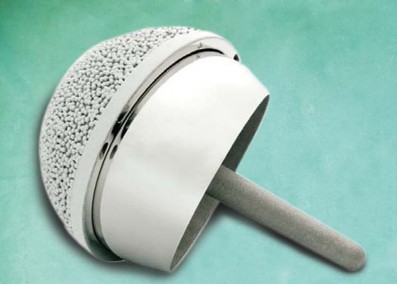
| Total Hip Replacement (THA) | Ideal for older, active patients with a good remaining life expectancy, especially those with pre-existing osteoarthritis of the hip. Also for younger patients with severe comminution or articular damage not amenable to internal fixation, or as salvage after failed fixation or AVN. |
| Contraindications: Infection, severe medical instability, patient unwilling to undergo prolonged rehabilitation required for THA outcomes. | |
| Total Hip Replacement (THA) | Contraindications: Patients with active hip infection or active serious inflammatory diseases (e.g., rheumatoid arthritis), severe metabolic bone disease that precludes stable fixation of arthroplasty components. |
| - Patients unwilling to follow strict post-operative weight-bearing or hip precautions. | |
| Total Hip Replacement (THA) | - Not suitable if patient has chronic uncontrolled sepsis or serious hip joint infection. |
| Total Hip Replacement (THA) | - Patients with poor bone stock (e.g., severe osteoporosis, metabolic bone diseases, previous hardware) that significantly compromises ability to achieve stable reconstruction. |
| Total Hip Replacement (THA) | - The presence of systemic inflammatory conditions (e.g., rheumatoid arthritis) which may affect implant longevity and increase perioperative risks. |
| Total Hip Replacement (THA) | - Patients with poor functional status pre-injury or limited potential for functional recovery due to neurological compromise or severe cognitive impairment. |
| - Patients with significant active comorbidities (e.g., severe cardiac disease, recent stroke, uncontrolled diabetes) that significantly increase the risks of surgery and anesthesia beyond acceptable limits, where non-operative management or a simpler, less invasive procedure might be safer. |
Intertrochanteric Fractures
| Indication Type | Specific Criteria |
|
Total Hip Replacement (THA)
|
- Patients who have significant functional limitations pre-injury and are not expected to regain ambulation or functional independence with THA due to neurological impairment, severe deconditioning, or severe underlying medical conditions.
|
| |
- Patients with limited life expectancy where the benefit of THA in terms of quality of life and function is unlikely to be realized.
|
|
Consideration:
|
- The ability of the patient to follow instructions and participate in the post-operative rehabilitation regimen.
|
| |
- Overall patient goals for mobility and function, balancing surgical risks with potential benefits.
|
| |
- Patient preferences (e.g., strong desire for internal fixation for activity level) even if not typical indication for non-displaced fractures.
|
|
- Patient with cognitive dysfunction impeding compliance or comprehension.
|
|
Total Hip Replacement (THA)
|
- The presence of active hip sepsis or any other active infection in the body that cannot be adequately controlled preoperatively, as this significantly increases the risk of periprosthetic joint infection.
|
|
Total Hip Replacement (THA)
|
- The presence of uncontrolled depression or psychotic disorders, making reliable postoperative compliance improbable.
|
| |
- The patient's inability to give informed consent.
You Might Also Like