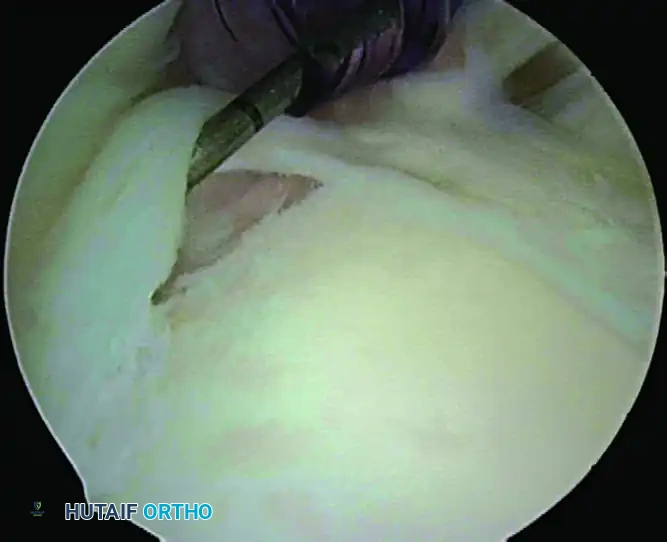
Mastering Shoulder Arthroscopy: Advanced Portal Placement and Surgical Techniques
Key Takeaway
Establishing precise arthroscopic portals is the foundational step in shoulder surgery. This guide details the antegrade method for anterior portal placement, posterior portal establishment, and specialized approaches including the anteroinferior 5-o'clock and Neviaser portals. Mastery of these techniques ensures optimal intra-articular visualization, facilitates complex instrumentation, and minimizes iatrogenic neurovascular injury during advanced shoulder arthroscopy procedures.
Introduction to Shoulder Arthroscopy Portals
The success of any shoulder arthroscopy is fundamentally predicated upon the precise and strategic placement of surgical portals. Inadequate portal placement invariably leads to compromised visualization, instrument crowding, poor trajectory for anchor insertion, and an increased risk of iatrogenic injury to the surrounding neurovascular structures. As shoulder arthroscopy has evolved from a purely diagnostic modality to a highly advanced therapeutic intervention capable of addressing complex rotator cuff tears, labral pathology, and capsular instability, the surgeon’s armamentarium of portal placements must similarly expand.
This comprehensive masterclass details the evidence-based surgical techniques for establishing the primary and accessory portals in shoulder arthroscopy. Particular emphasis is placed on the antegrade method for anterior portal placement, the foundational posterior portal, the highly specialized anteroinferior 5-o’clock portal, and the superior (Neviaser) portal.
Preoperative Preparation and Landmark Identification
Before the initiation of any arthroscopic procedure, meticulous palpation and marking of anatomical landmarks are mandatory. This step must be performed prior to joint distention, as the infusion of fluid will rapidly obscure bony prominences and distort the superficial anatomy.
Essential Anatomical Landmarks
The surgeon must use a surgical marker to delineate the following structures:
* The anterior, lateral, and posterior borders of the acromion.
* The acromioclavicular (AC) joint.
* The distal clavicle.
* The coracoid process.
* The spine of the scapula.
Surgical Warning: Failure to accurately mark these landmarks prior to the infiltration of local anesthetic or joint distention can lead to spatial disorientation, resulting in aberrant portal placement that traverses tendinous structures rather than muscular intervals.
The Posterior Portal: The Foundation of Shoulder Arthroscopy
The posterior portal serves as the primary viewing portal for the majority of glenohumeral and subacromial procedures. Its correct placement dictates the ease with which all subsequent anterior and accessory portals are established.
Surgical Technique for the Posterior Portal
- Site Selection and Infiltration: After the skin site for the posterior portal is selected—typically 2 cm inferior and 1 cm medial to the posterolateral corner of the acromion—inject this area and other planned arthroscopic portal areas with a mixture of local anesthetic and epinephrine. This preemptive infiltration significantly decreases dermal and subdermal bleeding, maintaining a clear visual field.
- Superficial Incision: Incise the superficial skin layer with a No. 11 knife blade.
> Pitfall: Avoid deeper penetration with the scalpel. Plunging the blade may precipitate excessive bleeding from the subcutaneous venous plexus or inadvertently damage the underlying musculature. - Joint Entry Strategies: There are two primary philosophies regarding joint entry: preinsufflation versus dry entry.
- Preinsufflation Technique: A spinal needle is directed toward the coracoid process. Once intra-articular placement is confirmed by the free backflow of synovial fluid, the joint is distended with saline. Preinsufflation produces some distraction of the humeral head from the glenoid, making entry with the cannulas easier. However, if the needle is extra-articular, the initial fluid bolus is injected into the soft tissues, severely distorting the anatomy.
- Dry Entry (Blunt Trocar) Technique: Many master surgeons prefer using a blunt trocar to enter the joint before joint distention. Because the glenoid neck and humeral head are more easily palpable without fluid distention, the surgeon can rely on tactile feedback.
- Tactile Navigation: Insert a cannula and blunt trocar along the intended path, directing it anteriorly and medially toward the anterior joint line (aiming for the coracoid). Palpate the bony scapular neck and glenoid with the blunt tip of the trocar to determine the midpoint in a superoinferior direction.
- Capsular Penetration: Slide the trocar laterally to locate the rim of the glenoid, which will feel like a small ridge. Immediately lateral to this ridge is the optimal entry site for the joint capsule. This position ensures that the entry site is as far medial as possible, passing safely through the muscular portions of the rotator cuff (infraspinatus) instead of damaging the critical tendinous insertions.
The Antegrade Method for Anterior Portal Placement
The anterior portal is the primary working portal for glenohumeral procedures. The "Antegrade Method" utilizes the established posterior viewing portal to safely and accurately create the anterior portal from an inside-out visual perspective combined with an outside-in instrumental approach.
Defining the Rotator Interval
The target for the anterior portal is the "soft spot" known as the rotator interval. This triangular anatomical window is bordered by:
* Superiorly: The anterior margin of the supraspinatus tendon.
* Inferiorly: The superior margin of the subscapularis tendon.
* Medially: The base of the coracoid process.
* Contents: The intra-articular portion of the long head of the biceps tendon, the coracohumeral ligament, and the superior glenohumeral ligament.
Step-by-Step Antegrade Technique
- Internal Positioning: Push the arthroscope, which is already established in the posterior portal, anteriorly across the joint space. Direct the lens into the anterior soft spot triangle formed by the glenoid articular surface, the biceps tendon, and the subscapularis tendon.
- Transillumination: Push the arthroscope firmly up against the anterior joint capsule. Turn off the overhead operating room lights. The high-intensity light from the arthroscope will transilluminate the skin anteriorly, indicating the precise area of intended portal placement.
- Spinal Needle Localization: Back the arthroscope slightly away from the capsule to restore a wide field of view. Palpate externally from the transilluminated spot while observing the soft spot area arthroscopically. Pass an 18-gauge spinal needle from this external spot into the joint.
- Trajectory Confirmation: Manipulate the spinal needle within the joint. It is imperative to ensure that the needle enters parallel to the glenoid face and superior to the subscapularis tendon. This ensures ease of instrumentation and optimal trajectory for anchor placement.
- Incision: Withdraw the spinal needle. Using a No. 11 blade, make a precise dermatotomy in this chosen spot, following the exact trajectory established by the needle.
- Cannula Insertion and Arthroscope Protection: Pass a cannula equipped with a blunt trocar through the incision and into the joint capsule.
> Clinical Pearl: Before penetrating the capsule with the trocar, move the arthroscope superiorly or retract it slightly. This critical maneuver ensures that the delicate and expensive arthroscope lens is not damaged as the metal trocar forcefully enters the joint space. Maintain careful control of the trocar to prevent iatrogenic scuffing of the humeral head or glenoid articular cartilage.
Establishing Accessory Anterior Portals
Complex procedures, such as extensive labral repairs or complex instability corrections, often require multiple working portals.
* If an accessory anterior portal is necessary, the decision regarding its location must be made before making the initial anterior portal to ensure optimal spacing.
* Accessory anterior portals must be separated by at least 2 to 3 cm. This distance prevents skin bridge necrosis and avoids the "chopstick effect," where instruments clash and restrict maneuverability.
* The appropriate position of any accessory portal must always be confirmed with a spinal needle prior to incision.
The Anteroinferior 5-O’clock Portal
Described extensively by Davidson and Tibone, the anteroinferior 5-o’clock portal is an advanced accessory portal utilized primarily for addressing inferior capsular pathology, complex Bankart lesions, and multidirectional instability. It provides an unparalleled trajectory to the inferior glenoid.
Intra-articular Landmarks and Trajectory
The intra-articular starting point for the anteroinferior portal is located along the leading edge of the inferior glenohumeral ligament (IGHL) at the 5-o’clock position (in a right shoulder) along the glenoid rim.
* The portal travels directly through the muscular belly of the subscapularis.
* It passes lateral to the conjoined tendon.
Neurovascular Considerations
This portal demands a profound respect for the regional neurovascular anatomy. The trajectory places several critical structures at risk:
* Cephalic Vein and Anterior Humeral Circumflex Artery: Both lie in the direct path of this portal. However, utilizing a blunt passer rod or a blunt-tipped cannula can effectively and safely push these vascular structures aside without causing laceration.
* Musculocutaneous Nerve: The portal passes lateral to this nerve. Davidson and Tibone measured the mean distance from the portal to the musculocutaneous nerve to be 22.9 ± 4 mm.
* Axillary Nerve: The portal passes superolateral to the axillary nerve, with a mean distance of 24.4 ± 5.7 mm.
Surgical Warning: While the distances to the musculocutaneous and axillary nerves provide a margin of safety, aberrant anatomy or excessive medial deviation during portal creation can result in catastrophic nerve injury. Always use blunt dissection techniques once the skin is incised.
Arm Positioning and Technique
To safely establish the 5-o'clock portal, the convexity of the humeral head must be moved away from the starting site. This not only improves visualization but also allows a Wissinger rod to be directed laterally if an inside-out technique is chosen.
* Unweighting the Arm: When the arm is unweighted, removed from traction, and placed alongside the body, the humeral head convexity translates superiorly. This maneuver opens the inferior joint space and allows appropriate access to the leading edge of the IGHL.
* Axillary Distraction: Placing an object, such as a rolled towel or the surgeon's forearm, into the axilla distracts the joint laterally, further enhancing visualization of the starting site.
* Outside-In Localization: Using the outside-in technique allows the portal to be created from a point lateral and inferior to the coracoid. Spinal needle localization is absolutely critical here to ensure the best access to the inferior glenoid while avoiding the conjoined tendon medially.
The Superior (Neviaser) Portal
Credited to Neviaser, the superior portal—also known as the supraclavicular or suprascapular portal—is an invaluable adjunct in advanced shoulder arthroscopy. It is most frequently utilized for the passage of suture retrieval devices during complex rotator cuff repairs, SLAP lesion repairs, and superior capsular reconstructions.
Anatomic Boundaries
The Neviaser portal is situated in a highly specific anatomic triangle bound by:
* Anteriorly: The posterior aspect of the clavicle.
* Laterally: The medial border of the acromion.
* Posteriorly: The base of the acromion and the scapular spine.
* Inferiorly (Intra-articularly): The posterosuperior rim of the glenoid.
Surgical Anatomy and Trajectory
To reach the joint space, instruments passed through the Neviaser portal must penetrate the trapezius muscle and pass directly through the supraspinatus muscle belly.
* Because the portal traverses the muscular portion of the supraspinatus rather than its tendon, it does not compromise the structural integrity of the rotator cuff.
* The trajectory provides a direct, perpendicular approach to the superior glenoid, making it the ideal angle for drilling and placing suture anchors for SLAP repairs.
Neurovascular Safety Margin
The primary structure at risk during the creation of the superior portal is the suprascapular nerve and artery.
* As the suprascapular nerve traverses the suprascapular notch and courses toward the spinoglenoid notch, it lies approximately 3 cm medial to the superior portal at its closest point.
* To maintain this safety margin, the surgeon must ensure the portal is placed as far laterally within the defined triangle as possible, hugging the medial border of the acromion. Medial deviation significantly increases the risk of suprascapular nerve injury.
Postoperative Protocols and Portal Management
The management of arthroscopic portals does not end with the conclusion of the intra-articular procedure. Proper closure and postoperative care are essential to prevent complications such as synovial fistulas, infection, and excessive scarring.
Fluid Extravasation Management
During prolonged procedures, particularly those utilizing multiple accessory portals, fluid extravasation into the deltoid and pectoral musculature is inevitable.
* Prior to closure, the joint and subacromial space must be thoroughly evacuated of fluid.
* Leaving the cannulas in place while turning off the inflow allows the residual fluid to drain, reducing postoperative pain and swelling.
Closure Techniques
- Capsular Closure: Routine closure of the capsule is generally not required, except in cases of severe multidirectional instability where capsular plication is the primary goal.
- Skin Closure: The dermal incisions should be closed meticulously. Depending on surgeon preference, this can be achieved with non-absorbable simple sutures (e.g., 3-0 Nylon), absorbable subcuticular sutures, or adhesive skin closures.
- Dressings: A sterile, highly absorbent dressing should be applied to manage the expected serosanguinous drainage that occurs in the first 24 to 48 hours postoperatively.
Rehabilitation Implications
Portal placement rarely dictates the rehabilitation protocol, which is instead governed by the primary pathology addressed (e.g., rotator cuff repair vs. labral stabilization). However, patients should be educated that portal sites may remain tender for several weeks as the traversed musculature (such as the deltoid, trapezius, and supraspinatus) heals from the blunt trauma of cannula insertion.
Conclusion
The mastery of shoulder arthroscopy is inextricably linked to the mastery of portal placement. By adhering to strict anatomical landmarks, utilizing spinal needle localization, and respecting the regional neurovascular anatomy, the orthopedic surgeon can safely establish the posterior, anterior, anteroinferior, and superior portals. These techniques not only optimize intra-articular visualization and biomechanical advantage but also ensure the highest standards of patient safety and surgical efficacy in modern operative orthopedics.
You Might Also Like