Posterior Shoulder Instability: Arthroscopic Shoulder J Bone Joint Solutions
Key Takeaway
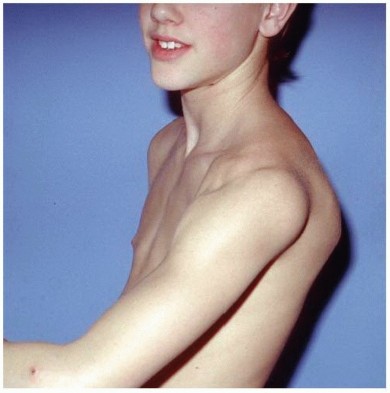
For anyone wondering about Posterior Shoulder Instability: Arthroscopic Shoulder J Bone Joint Solutions, Posterior shoulder instability describes a pathologic translation of the glenohumeral shoulder j bone joint, varying from mild subluxation to traumatic dislocation. This condition, less common than anterior instability, typically causes pain in provocative positions or during activities like throwing. It often results from trauma or specific movements (flexion, adduction, internal rotation), with pathologies of the posterior capsule and labral complex being primary contributors.
Introduction and Epidemiology
Posterior shoulder instability represents a complex and often underdiagnosed spectrum of glenohumeral pathology, encompassing entities ranging from mild, recurrent microtraumatic subluxation to acute, locked posterior dislocations. Historically considered a rare condition, posterior instability accounts for approximately 5% to 10% of all documented shoulder instability presentations. However, advancements in diagnostic imaging and arthroscopic techniques have revealed that recurrent posterior subluxation is far more prevalent than previously recognized, particularly within athletic populations.

The clinical presentation of posterior instability frequently diverges from its anterior counterpart. Rather than frank dislocation, the majority of patients present with recurrent posterior subluxation, often reporting vague, deep-seated posterior shoulder pain exacerbated by provocative positioning. This is particularly common in athletes subjected to repetitive axial loading or posterior shear forces, such as offensive linemen in American football, weightlifters (specifically during the bench press), and overhead athletes during the follow-through phase of throwing. The insidious onset of symptoms often leads to misdiagnosis, with patients frequently treated for presumed rotator cuff tendinopathy or internal impingement before the underlying capsulolabral pathology is identified.
Acute traumatic posterior dislocations, while less common, are classically associated with high-energy trauma, seizures, or electrical shock. In these scenarios, intense, uncoordinated contraction of the internal rotators (subscapularis, pectoralis major, latissimus dorsi) overpowers the weaker external rotators, driving the humeral head posteriorly over the glenoid rim. If left unrecognized, static posterior subluxation or locked posterior dislocation can rapidly progress to severe chondral injury, osteonecrosis, and early-onset glenohumeral osteoarthritis, a condition often referred to as capsulorrhaphy arthropathy if inappropriately managed.

Surgical Anatomy and Biomechanics
A profound understanding of the static and dynamic stabilizers of the posterior glenohumeral joint is requisite for successful arthroscopic management. The glenohumeral joint is inherently unstable due to the mismatch in surface area between the large humeral head and the shallow glenoid fossa. Stability is maintained through a delicate interplay of osseous geometry, capsulolabral integrity, and neuromuscular control.
Osseous Architecture and Static Stabilizers
The primary osseous stabilizer against posterior translation is the native version of the glenoid. The normal glenoid is typically retroverted by 1 to 2 degrees relative to the scapular body. However, patients with posterior instability frequently exhibit increased glenoid retroversion or posterior glenoid dysplasia, which mechanically predisposes the humeral head to posterior translation.
The posterior labrum serves to deepen the glenoid concavity and acts as a critical attachment site for the posterior capsule. Unlike the anterior capsule, which is robust and reinforced by distinct glenohumeral ligaments, histologic and anatomic evaluations of the posterior capsule reveal a relatively thin structure composed primarily of radial and circular fibers with minimal cross-linking.

The capsuloligamentous restraints function in a position-dependent manner. When the arm is adducted and in neutral rotation, the superior glenohumeral ligament and the coracohumeral ligament provide the primary restraint to posterior translation. As the arm is elevated and internally rotated (the classic provocative position for posterior instability), the posterior band of the inferior glenohumeral ligament (IGHL) complex becomes taut and acts as the primary static restraint. Attenuation, redundancy, or avulsion of the posterior IGHL is a hallmark of recurrent posterior instability.
Dynamic Stabilizers and Biomechanics
Dynamic stability is conferred primarily by the rotator cuff musculature and the long head of the biceps tendon. The subscapularis provides significant anterior support but also acts synergistically with the posterior cuff to compress the humeral head into the glenoid concavity. The infraspinatus and teres minor are particularly critical; their contraction not only dynamically resists posterior translation but also tensions the posterior capsule.

Pathogenesis typically involves either a direct blow to the anterior shoulder (driving the humerus posteriorly) or indirect forces acting on the upper extremity. The classic indirect mechanism involves an axial load applied to a shoulder that is flexed, adducted, and internally rotated (FADIR position). This position maximizes stress on the posterior band of the IGHL and the posteroinferior labrum. Repetitive microtrauma in this position, common in contact athletes, leads to gradual capsular attenuation, posterior labral tearing (posterior Bankart lesion), or a concealed interstitial tear of the posteroinferior labrum known as a Kim lesion.
Indications and Contraindications
The decision-making process for the management of posterior shoulder instability hinges on the chronicity of the symptoms, the degree of structural damage, the patient's functional demands, and their response to conservative management.

An extended trial of conservative measures, including physical therapy focused on periscapular stabilization and strengthening of the posterior rotator cuff, is the mandatory first-line treatment for atraumatic or microtraumatic recurrent posterior subluxation. Surgical intervention is indicated when non-operative modalities fail to alleviate pain or restore function, particularly in high-demand athletes.
| Indication Category | Operative Management | Non Operative Management |
|---|---|---|
| Primary Diagnosis | Recurrent posterior subluxation failing >6 months of physical therapy | First-time acute posterior dislocation without significant structural damage |
| Structural Pathology | Posterior Bankart lesion, Kim lesion, symptomatic reverse Hill-Sachs lesion | Atraumatic multidirectional instability (initial presentation) |
| Bone Loss | Posterior glenoid bone loss <20% (Arthroscopic), >20% (Open Bone Block) | Absence of significant osseous defects |
| Patient Profile | High-demand athletes unable to return to play due to pain or instability | Voluntary dislocators with underlying psychiatric overlay |
| Contraindications | Active infection, severe glenohumeral osteoarthritis, voluntary habitual dislocation | N/A |

Pre Operative Planning and Patient Positioning
Thorough preoperative planning requires a comprehensive physical examination and advanced imaging. The physical examination must include specific provocative tests for posterior instability, namely the Jerk test, the Kim test, and the posterior load-and-shift test. A positive Jerk test indicates a posteroinferior labral tear, while a positive Kim test is highly sensitive for a concealed posteroinferior labral lesion.
Advanced Imaging Modalities
Standard radiographs, including a true anteroposterior (Grashey), scapular Y, and axillary lateral view, are mandatory to assess for glenohumeral congruity, posterior glenoid rim fractures, and the presence of a reverse Hill-Sachs lesion (an impaction fracture of the anteromedial humeral head).

Magnetic Resonance Imaging (MRI), preferably Magnetic Resonance Arthrography (MRA), is the gold standard for evaluating the capsulolabral complex. Axial and oblique coronal/sagittal sequences are scrutinized for posterior labral detachment, capsular redundancy, and associated pathology such as Superior Labrum Anterior Posterior (SLAP) tears. The ABER (abduction external rotation) and FADIR (flexion adduction internal rotation) views can enhance the detection of capsular laxity and non-displaced labral tears. Computed Tomography (CT) is reserved for quantifying glenoid retroversion and calculating the percentage of posterior glenoid bone loss in cases of chronic dislocation or severe trauma.
Patient Positioning and Anesthesia
Arthroscopic posterior stabilization can be performed in either the lateral decubitus or the beach chair position, depending on surgeon preference. However, the lateral decubitus position is highly advantageous for posterior instability surgery.

In the lateral decubitus setup, the arm is suspended with 10 to 15 pounds of longitudinal traction in approximately 45 degrees of abduction and 15 degrees of forward flexion. This positioning inherently distracts the glenohumeral joint, providing unparalleled visualization of the posteroinferior recess and facilitating optimal access for anchor placement along the posteroinferior glenoid rim. General anesthesia with a supplemental interscalene regional nerve block is standard to ensure complete muscle relaxation and superior postoperative pain control.
Detailed Surgical Approach and Technique
The arthroscopic management of posterior instability demands meticulous technique, focusing on anatomic restoration of the labral footprint and retensioning of the redundant posterior capsule through a robust capsulolabral shift.
Diagnostic Arthroscopy and Pathology Identification
A standard posterior viewing portal is established approximately 2 cm inferior and 1 cm medial to the posterolateral corner of the acromion. An anterior portal is created via an outside-in technique through the rotator interval. Initial diagnostic arthroscopy is performed to systematically evaluate the articular cartilage, biceps tendon, rotator cuff, and the entire capsulolabral circumference.

In posterior instability, the surgeon must specifically look for the "drive-through" sign, which indicates significant capsular laxity. The posteroinferior labrum is probed meticulously. A classic posterior Bankart lesion presents as a frank avulsion of the labrum from the glenoid rim. Conversely, a Kim lesion presents as a superficial fraying or an intact articular surface with a concealed, deep intrasubstance tear of the labrum, resulting in a loss of chondrolabral containment. The anterior humeral head must also be inspected for a reverse Hill-Sachs lesion.
Portal Placement and Trajectory
Optimal portal placement is critical to achieve the correct trajectory for anchor insertion on the posterior glenoid. If anchors are placed via the standard posterior portal, the angle of approach is often too acute, leading to medial skiving off the glenoid face.

To circumvent this, an accessory posterolateral portal (often referred to as the Port of Wilmington) is established. This portal is localized using a spinal needle, typically entering 1 cm anterior and 1 cm lateral to the posterolateral corner of the acromion, passing through the muscular portion of the infraspinatus. This trajectory allows for a perpendicular approach to the posteroinferior glenoid rim (the 7 o'clock to 9 o'clock positions in a right shoulder), ensuring secure anchor placement.
Tissue Preparation and Mobilization
Successful capsulolabral reconstruction requires aggressive tissue mobilization. Using an arthroscopic elevator and electrocautery, the posterior labrum and capsule are elevated from the glenoid neck. The dissection must proceed inferiorly to the 6 o'clock position to ensure the redundant inferior capsule can be shifted superiorly.

Once mobilized, the posterior glenoid neck is decorticated using a motorized burr. This step is non-negotiable; removing the cortical bone to expose a bleeding cancellous bed is essential for biological healing of the capsulolabral complex to the bone.
Anchor Placement and Capsulolabral Shift
Suture anchors are introduced via the accessory posterolateral portal. Biocomposite or all-suture anchors (typically 1.8 mm to 3.0 mm in diameter) are preferred to minimize the risk of glenoid osteolysis or hardware prominence. The first anchor is placed at the most inferior aspect of the defect, usually at the 6:30 or 7 o'clock position.

A suture passing device (e.g., a curved suture lasso or penetrating grasper) is introduced through the standard posterior portal. A critical step in the procedure is capturing a substantial bite of the inferior capsule (capsular plication) along with the labral tissue. The tissue is captured inferior to the anchor site to achieve a superior and medial shift, effectively eliminating the capsular redundancy and recreating the posterior bumper.

Knots are tied using a sliding-locking knot backed up by alternating half-hitches, or knotless anchors can be utilized to tension the tissue. This process is repeated sequentially from inferior to superior, typically requiring 3 to 4 anchors to fully reconstruct the posterior quadrant up to the 9 o'clock or 10 o'clock position.
Management of Bone Loss and Associated Lesions
If a reverse Hill-Sachs lesion is present and engages the posterior glenoid during internal rotation, it must be addressed to prevent recurrent instability. A modified McLaughlin procedure or arthroscopic reverse remplissage can be performed. This involves filling the anterior humeral defect by tenodesing the subscapularis tendon and the anterior capsule into the defect using suture anchors.

If posterior glenoid bone loss exceeds 15% to 20%, soft tissue stabilization alone is associated with unacceptably high failure rates. In these instances, an open or arthroscopic posterior bone block procedure (using distal tibia allograft or iliac crest autograft) is indicated to restore the osseous articular arc.
Complications and Management
Arthroscopic posterior stabilization is generally highly successful, but complications can arise, particularly if surgical indications are stretched or technical errors occur during tissue tensioning.

Recurrent instability is the most common complication, often resulting from failure to adequately mobilize the capsule, failure to address unrecognized bone loss, or non-compliance with postoperative rehabilitation. Over-tightening of the posterior capsule can lead to significant postoperative stiffness, particularly a loss of internal rotation.
| Complication | Estimated Incidence | Etiology and Risk Factors | Salvage Strategy / Management |
|---|---|---|---|
| Recurrent Instability | 5% - 10% | Unrecognized bone loss, inadequate capsular shift, premature return to play | Revision arthroscopy, posterior bone block augmentation |
| Postoperative Stiffness | 5% - 15% | Over-plication of the posterior capsule, prolonged immobilization | Aggressive physical therapy, arthroscopic capsular release |
| Hardware Complications | < 2% | Anchor pullout, intra-articular prominent knots leading to chondral damage | Arthroscopic hardware removal, revision fixation |
| Nerve Injury | < 1% | Axillary nerve injury during inferior capsular dissection (6 o'clock) | Observation (most are neuropraxias), nerve exploration if no recovery by 3-6 months |
| Chondrolysis / Arthritis | Rare | Intra-articular prominent anchors, thermal energy misuse, chronic subluxation | Joint preservation procedures, Arthroplasty in older patients |
Surgeons must remain acutely aware of the course of the axillary nerve, which lies in close proximity to the inferior capsule. Dissection and suture passage at the 6 o'clock position must be performed with direct visualization, avoiding deep, blind passes into the inferior recess.

Post Operative Rehabilitation Protocols
The postoperative rehabilitation protocol is as critical as the surgical execution in ensuring a successful outcome. The primary goal in the early phases is to protect the surgical repair while preventing adhesive capsulitis.
Unlike anterior stabilization, where the arm is typically immobilized in internal rotation, patients undergoing posterior stabilization must be immobilized in a specialized brace that holds the arm in neutral to 15 degrees of external rotation and slight abduction. This position removes tension from the posterior capsule and allows the repaired tissues to heal in a shortened, competent state. Immobilization is strictly maintained for 4 to 6 weeks.
During the initial 4 weeks, passive range of motion is limited. Forward flexion is restricted to 90 degrees, and internal rotation is strictly avoided to prevent stress on the repair. At 4 to 6 weeks, the brace is discontinued, and active-assisted range of motion is initiated.
Strengthening begins at 8 to 10 weeks postoperatively, focusing heavily on the periscapular stabilizers (rhomboids, trapezius, serratus anterior) and the dynamic stabilizers of the posterior cuff. Isotonic exercises are gradually introduced.
Return to play for contact athletes or heavy laborers is typically delayed until 6 to 9 months postoperatively. Clearance is contingent upon the restoration of full, painless range of motion, symmetrical strength on isokinetic testing, and successful completion of a sport-specific functional progression program.
Summary of Key Literature and Guidelines
The evolution of arthroscopic management for posterior shoulder instability is heavily supported by robust academic literature. Historically, open posterior capsulorrhaphy was the standard of care but was fraught with high recurrence rates and significant morbidity. The transition to arthroscopic techniques has yielded superior functional outcomes and lower recurrence rates.
Key contributions by Bradley et al. have defined the pathology of posterior instability in athletes, emphasizing that pain, rather than frank dislocation, is the primary symptom. Their work demonstrated that arthroscopic capsulolabral reconstruction provides excellent return-to-play rates in overhead and contact athletes.
Kim et al. revolutionized the diagnostic and therapeutic approach with the description of the Kim lesion (a concealed, incomplete avulsion of the posteroinferior labrum) and the validation of the Kim test. Their long-term outcomes studies established that arthroscopic repair of these lesions, combined with a posteroinferior capsular shift, yields >90% success rates.
Furthermore, recent guidelines emphasize the critical evaluation of bone loss. Provencher et al. have published extensively on the quantification of glenoid bone loss, establishing that while soft tissue repair is highly effective for isolated capsulolabral injuries, critical posterior bone loss (>20%) strictly mandates osseous augmentation to prevent catastrophic failure.
In conclusion, the arthroscopic treatment of posterior shoulder instability is a highly effective, minimally invasive surgical intervention. Success relies on accurate preoperative diagnosis, meticulous surgical technique focusing on anatomic restoration and capsular retensioning, and strict adherence to specific postoperative rehabilitation protocols.
Clinical & Radiographic Imaging
You Might Also Like