
العربية
Comprehensive Master Guide · Medically Reviewed

Acute Rotator Cuff Tears: Epidemiology, Surgical Anatomy, and Biomechanics Review

Explore the epidemiology, risk factors, and anatomy of acute rotator cuff tears. Learn to differentiate them from chronic injuries for optimal outcomes.

15 Detailed Chapters
24 min read
Updated: Jun 2026
Dr. Mohammed Hutaif Clinic
Medically Reviewed by
Prof. Dr. Mohammed Hutaif Clinic
Verified Content Expert Reviewed

Quick Medical Answer

Acute rotator cuff tears are sudden, often traumatic, injuries occurring within 6 weeks to 3 months of onset, distinct from chronic tears. They account for 10-20% of symptomatic cases. A deep understanding of the shoulder's surgical anatomy—including the four cuff muscles, their insertions, and neurovascular structures—is crucial for accurate diagnosis, timely intervention, and optimal functional outcomes.

Illustration of rotator cuff tears - Dr. Mohammed Hutaif
🎓

FRCS Masterclass: Clinical Viva

Interactive Examiner Scenario • Test your knowledge before revealing the answers.

👨‍⚕️ Examiner Scenario

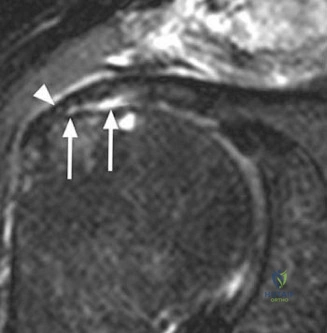
A 55-year-old active manual laborer presents to the emergency department following a fall onto his outstretched arm 3 weeks ago. He complains of persistent pain and significant weakness in shoulder abduction. Clinical examination reveals a positive Jobe’s test and external rotation lag sign. You obtain an MRI scan. Describe the critical prognostic indicators you are looking for on this image.
Clinical Image
Figure 1: MRI of the patient's shoulder

Candidate: I would look at the tear size and the quality of the muscle. I'll check for how far the tendon has retracted using the Patte classification and check for muscle atrophy and fatty infiltration using the Goutallier classification. I also want to see if the tear is reparable or if there is too much muscle degeneration.

❌ Common Pitfall (Poor Answer)

Candidates often list classifications without explaining their clinical relevance. A poor answer ignores the distinction between "reparable" and "irreparable" anatomy, and fails to mention the importance of the humeral head position (e.g., superior migration suggesting chronicity or massive tear).

⭐ The Gold Standard (Perfect Answer)

I would perform a systematic assessment of three key domains: 1. Tear Morphology: Assessing the size and the Patte classification of retraction. 2. Muscle Quality: Utilizing the Goutallier classification for fatty infiltration and looking for muscle belly atrophy on sagittal T1-weighted sequences. 3. Joint Integrity: Evaluating for superior humeral head migration, which indicates a loss of the rotator cuff force couple, and checking for associated pathology like biceps instability or labral injury. These factors collectively determine whether the tear is physiologically reparable or requires salvage reconstruction.

👨‍⚕️ Examiner Scenario

The MRI confirms a full-thickness, 2cm tear of the supraspinatus with minimal retraction. The patient is booked for an arthroscopic repair. Describe the biomechanical rationale for choosing a suture-bridge (transosseous equivalent) technique over a single-row repair.

Candidate: Suture-bridge repair is better because it provides a stronger construct. It spreads the tension across the whole footprint rather than just one line of anchors. Studies show it has higher load-to-failure strength and reduces gap formation, which helps the tendon heal better to the bone.

❌ Common Pitfall (Poor Answer)

Failure to mention "footprint contact pressure" or "contact area." Simply stating it is "stronger" is not enough for an elite-level pass. Candidates should articulate the conversion of a point-loading force into a surface-area compression force.

⭐ The Gold Standard (Perfect Answer)

The suture-bridge technique provides a transosseous equivalent repair. Its primary biomechanical advantage is the significant increase in footprint contact area and compressive force across the tendon-bone interface. By spreading the load across a medial and lateral row, it minimizes "gap formation" at the repair site during cyclic loading, facilitating superior biological healing by recreating the native enthesis footprint rather than a single-point fixation.

👨‍⚕️ Examiner Scenario

During your arthroscopic inspection, you note significant inflammation, but the patient's symptoms and history also raise a red flag for potential septic arthritis or crystal arthropathy. You see this image on your diagnostic sweep.

Clinical Image
Figure 2: Intra-operative findings

How do you manage this intra-operatively?

Candidate: I would stop the repair immediately. I’ll take samples for microbiology and histology (sent in sterile containers). I will perform a thorough lavage and debridement of the joint. I wouldn't place any hardware if there is clear pus, and I would start empirical antibiotics after consulting with microbiology.

❌ Common Pitfall (Poor Answer)

Forgetting to mention the "histology" samples or failing to highlight the importance of "joint lavage" using large volumes of saline. Borderline candidates also fail to mention post-operative coordination with the infectious disease team.

⭐ The Gold Standard (Perfect Answer)

Safety is the priority. 1. Cease the procedure to prevent further contamination. 2. Collect multiple samples (minimum of 3-5) for microscopy, culture, and sensitivity (MCS) and histopathology to rule out infection versus crystalline disease (e.g., gout/CPPD). 3. Aggressive Irrigation: Perform an extensive arthroscopic synovectomy and lavage with 10+ liters of saline. 4. Hardware decision: If the clinical suspicion for septic arthritis is high, I would not proceed with tendon repair or anchor placement. 5. Management: Close the portals, start targeted antibiotics only after formal consultation with Microbiology/ID, and discuss the plan for a staged reconstruction once the infection is cleared.

Detailed Chapters & Topics

Dive deeper into specialized chapters regarding shoulder-and-elbow-cases-acute-rotator-cuff-tears

15 Chapters
01
Chapter 1 16 min

Arthroscopic Double-Row Rotator Cuff Repair: An Intraoperative Masterclass

Master arthroscopic double-row rotator cuff repair with this intraoperative guide. Discover essential surgical anatomy …

02
Chapter 2 14 min

Overlooked Tears? Advanced Treatment of Subscapularis Tears

Arthroscopic Treatment of Subscapularis Tears, Including Subcoracoid Impingement DEFINITION A subscapularis tendon tear…

03
Chapter 3 13 min

Subscapularis Tears: Mastering the Optimal Angle of Approach

Arthroscopic Treatment of Subscapularis Tears, Including Subcoracoid Impingement DEFINITION A subscapularis tendon tear…

04
Chapter 4 17 min

Irreparable Rotator Cuff Tears: What Are Your Treatment Options?

A 70-year-old, right-hand-dominant woman presents to clinic with right shoulder pain and weakness. She has had progress…

05
Chapter 5 14 min

Partial-Thickness Rotator Cuff Tears: Repair or Debride?

A 70-year-old, right-hand-dominant woman returns to clinic complaining of persistent, right shoulder pain. She has been…

06
Chapter 6 26 min

Unraveling Infraspinatus and Teres Rotator Cuff Tears

A 65-year-old, left-hand-dominant woman returns to clinic complaining of persistent left shoulder pain. She has a chron…

07
Chapter 7 23 min

Chronic Rotator Cuff Tears: A Comprehensive Orthopedic Review

Master the management of chronic rotator cuff tears. This orthopedic review covers epidemiology, risk factors, surgical…

08
Chapter 8 11 min

Mastering Rotator Cuff Repair: Pathophysiology, Indications, and Surgical Techniques

Master rotator cuff repair with our expert guide. Explore pathophysiology, clinical presentation, natural history, and …

09
Chapter 9 18 min

Open Repair of Rotator Cuff Tears: A Masterclass in Surgical Techniques

Master open rotator cuff repair for massive tears. Discover tear pathoanatomy, safe zones, and the anterolateral deltoi…

10
Chapter 10 11 min

Advanced Management of Cuff Tear Arthropathy and Adhesive Capsulitis

Master the advanced management of cuff tear arthropathy and adhesive capsulitis. Discover key pathomechanics, Hamada cl…

11
Chapter 11 19 min

Operative Management of Full-Thickness Rotator Cuff Tears

Master the operative management of full-thickness rotator cuff tears. Explore modern surgical techniques, biomechanical…

12
Chapter 12 13 min

Operative Management of Major Upper Extremity Tendon Ruptures: Biceps, Triceps, and Pectoralis Major

Master the surgical techniques for distal biceps, triceps, and pectoralis major tendon ruptures. Evidence-based guide c…

13
Chapter 13 13 min

Arthroscopic Management of Partial-Thickness Rotator Cuff Tears: Débridement and Transtendinous Repair

Master the arthroscopic management of partial-thickness rotator cuff tears. Discover expert techniques for débridement …

14
Chapter 14 20 min

Arthroscopic Subscapularis Tendon Repair: A Comprehensive Surgical Guide

Master the arthroscopic subscapularis tendon repair technique. This comprehensive guide covers portals, mobilization, t…

15
Chapter 15 10 min

Arthroscopic Rotator Cuff Repair: A Comprehensive Surgical Masterclass

Master arthroscopic rotator cuff repair with this comprehensive surgical guide. Explore biomechanical principles, TOE t…

Dr. Mohammed Hutaif Clinic
Medically Verified Content by
Prof. Dr. Mohammed Hutaif Clinic
Consultant Orthopedic & Spine Surgeon
Guide Overview