Proximal Humerus Fracture: Orthopedic MD Explains Treatment & Management
Key Takeaway
Here are the crucial details you must know about Proximal Humerus Fracture: Orthopedic MD Explains Treatment & Management. For a proximal humerus fracture orthopedic intervention, surgery typically involves fixing the displaced fracture with a proximal humerus locking plate, often through a deltopectoral approach. This procedure aims to achieve the best functional outcome, preventing mal- or non-union, despite potential risks like fixation failure, neurovascular injury, or stiffness.
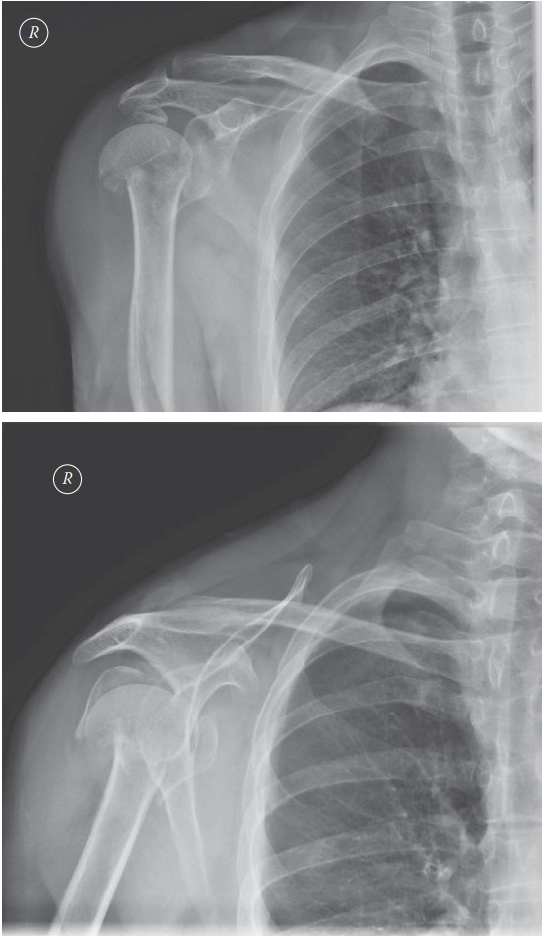
1. Describe these radiographs. Show Answer Show Explanation
2. How would you manage this isolated injury in this patient? Show Answer Show Explanation 3. What surgery would you recommend and what would you tell the patient? Show Answer Show Explanation

Proximal Humerus Fracture
These are AP and axillary lateral views of the proximal humerus. They show a displaced proximal humerus fracture.
Click here to see more
What surgery would you recommend and what would you tell the patient?
- I would plan to fix this fracture using a proximal humerus locking plate through a deltopectoral approach.
- I would tell the patient that surgery is generally safe and is likely to give him the best functional outcome and to avoid potentially painful mal- or non-union. There are risks inherent with any operation. Risks specific to this injury and operation include failure of fixation, neurovascular injury, shoulder stiffness, osteonecrosis and infection. These are rare and where avoided, the reported results are good. It is possible that for a patient with very low functional demands, non-operative treatment may allow healing with a functional result, but for a more active or physiologically younger patient, surgery does this more reliably although a multi-centre randomised trial (the PROFHER trial) did not find any difference in the outcomes of surgically and non-surgically treated patients after 2 years.
You Might Also Like