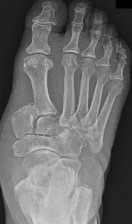
Orthopedic Review | Dr Hutaif General Orthopedics Revie -...
Key Takeaway
This topic focuses on ORTHOPEDIC MCQS ONLINE BANK OITE 20, This interactive module provides an orthopaedic knowledge update through multiple-choice questions designed for self-assessment. It presents clinical scenarios, diagnostic details, and treatment options, along with relevant references to enhance understanding. This format helps orthopedic professionals evaluate and refresh their understanding of current best practices and management strategies in various orthopedic subspecialties, aiding in exam preparation and continuous learning.
ORTHOPEDIC MCQS ONLINE BANK OITE 20
For OITE 20 FIGURE CLICK
OITE
20
FIGURES
1. 00.1 A 25-year-old man sustains the injury shown in the radiographs in Figures 1A and 1B.
2. Examination reveals that he is neurovascularly intact, and there is a transverse 3-cm open
3. medial wound. In addition to urgent irrigation and debridement, definitive management
4. should include
5. 1- application of a spanning
6. external fixator.
7. 2- open reduction and internal
8. fixation of the fibula and the
9. syndesmosis.
10. 3- transarticular Steinmann pin
11. fixation.
12. 4- closed reduction and casting.
13. 5- closed reduction, rodding of
14. the fibula, and suture of the
15. deltoid ligament.
1.
answer
1. Figures 1
1. A
1. B
- Question 00.1
- Answer = 2
- back to this question
- next question
- Reference(s)
- Bray TJ, Endicott M, Capra SE: Treatment of open ankle fractures: Immediate internal fixation versus closed immobilization and delayed fixation. Clin Orthop 1989;240:47-52. Franklin JL, Johnson KD, Hansen ST Jr: Immediate internal fixation of open ankle fractures: Report of thirty-eight cases treated with a standard protocol. J Bone Joint Surg Am 1984;66:1349-1356. Wiss DA, Gilbert P, Merritt PO, Sarmiento A: Immediate internal fixation of open ankle fractures. J Orthop Trauma 1988;2:265-271.
- 00.2 The mother of a 3-year-old boy reports that he suddenly refuses to bear weight on
- the left lower extremity. He has a temperature of 102.2°F (39°C), and laboratory
- studies reveal a WBC of 17,800/mm3 (normal 3,500 to 10,500/mm3).
- Examination reveals that range of hip motion includes flexion from 10° to 110°,
- and internal and external rotation of 40° each. He has irritability with palpation of
- any portion of the left lower extremity. No joint effusion is noted. Plain
- radiographs of the left lower extremity are normal. Management should now
- include
- 1- aspiration of the left hip.
- 2- aspiration of the distal femoral metaphysic.
- 3- a three-phase bone scan.
- 4- an MRI scan of the pelvis.
- 5- ELISA testing for antibodies to Borrelia burgdorferi.
- answer
- back
- Question 00.2
- Answer = 3
- back to this question
- next question
- Reference(s)
- Morrissey RT: Bone and joint sepsis, in Morrissey RT, Weinstein SL (eds): Lovell and Winter's Pediatric Orthopaedics, ed 4. Philadelphia, PA, Lippincott-Raven, 1996, pp 586-593. Aronson J, Garvin K, Seibert J, Glasier C, Tursky EA: Efficiency of the bone scan for occult limping toddlers. J Pediatr Orthop 1992;12:38-44.
- 00.3 The blood supply for the lateral arm flap is supplied by which of the following
- arteries?
- 1- Anterior Numeral circumflex
- 2- Posterior radial collateral
- 3- Subscapular
- 4- Profunda brachial
- 5- Superior ulnar collateral
- answer
- back
- Question 00.3
- Answer = 2
- back to this question
- next question
- Reference(s)
- American Society for Hand Surgery: Hand Surgery Update. Rosemont, IL, American Academy of Orthopaedic Surgeons, 1996, pp 309-316. Jone NF, Lister GD: Free skin and composite flaps, in Green DP, Hotchkiss RN, Pederson WC (eds): Green's Operative Hand Surgery, ed 4. New York, NY, Churchill Livingstone, 1999, pp 1159-1200.
- 00.4 When compared with patients with osteoarthritis, patients with rheumatoid
- arthritis who undergo total hip arthroplasty with cemented components can be
- expected to show inferior results in which of the following categories?
- 1- Functional scores
- 2- Patient satisfaction
- 3- Acetabular component loosening
- 4- Femoral component loosening
- 5- Polyethylene wear rate
- answer
- back
- Question 00.4
- Answer = 1
- back to this question
- next question
- Reference(s)
- Creighton MG, Callaghan JJ, Olejniczak JP, Johnston RC: Total hip arthroplasty with cement in patients who have rheumatoid arthritis: A minimum ten-year follow-up study. J Bone Joint Surg Am 1998;80:1439-1446.
- 00.5 Calcaneovalgus in a child with myelomeningocele is most likely the result of
- 1- fetal positioning.
- 2- an L5 neurologic level.
- 3- spasticity of the extensor hallucis longus.
- 4- the anterior tibialis functioning out of phase.
- 5- nerve root sparing of L3.
- answer
- back
- Question 00.5
- Answer = 2
- back to this question
- next question
- Reference(s)
- Beaty JH (ed): Orthopaedic Knowledge Update 6. Rosemont, IL, American Academy of Orthopaedic Surgeons, 1999, pp 583-595.
- 00.6 Which of the following factors is considered a disadvantage when using a
- triceps- splitting approach for the management of an intra-articular distal humerus
- fracture?
- 1- Increased risk of radial nerve injury
- 2- Increased risk of ulnar nerve injury
- 3- Problems with wound healing
- 4- Loss of triceps strength
- 5- Inability to adequately see the fracture
- answer
- back
- Question 00.6
- Answer = 5
- back to this question
- next question
- Reference(s)
- Beaty JH (ed): Orthopaedic Knowledge Update 6. Rosemont, IL, American Academy of Orthopaedic Surgeons, 1999, pp 323-335. Bryan RS, Morrey BF: Fracture of the distal humerus, in Morrey BF (ed): The Elbow And Hip Disorders. Philadelphia, PA, WB Saunders, 1995, pp 302-339.
- 00.7 Virchow's triad of factors that leads to the development of venous thrombosis
- consists of which of the following events?
- 1- Platelet aggregation, thrombin release, and fibrin deposition
- 2- Increased blood viscosity, immobility, and lower extremity paralysis
- 3- Venous stasis, endothelial damage, and hypercoagulability
- 4- Arterial stasis, fibrinolytic activation, and venous stasis
- 5- Hyperactive platelets, fibrin formation, and clot propagation
- answer
- back
- Question 00.7
- Answer = 3
- back to this question
- next question
- Reference(s)
- Della Valle CJ, Steiger DJ, DiCesare PE: thromboembolism after hip and knee arthroplasty: Diagnosis and treatment. J Am Acad Orthop Surg 1998;6:327-336.
- 00.8 Which of the following fracture patterns is most characteristic of a nonaccidental
- injury in a 6-month-old infant?
- l- Salter type I fracture of the proximal tibia
- 2- Metaphyseal or "comer" fracture of the distal tibia
- 3- Spiral midshaft tibia fracture
- 4- Transverse midshaft tibia fracture
- 5- Oblique midshaft tibia fracture
- answer
- back
- Question 00.8
- Answer = 2
- back to this question
- next question
- Reference(s)
- Kramer KE, Green NE: Child abuse, in Skeletal Trauma in Children. Philadelphia, PA, WB Saunders, 1998, pp 577-594.
- 00.9 A 16-year-old basketball player sustained a stress fracture of the proximal right
- fifth metatarsal shaft, and management consisted of a non-weight-bearing short
- leg cast for 8 weeks. Three weeks after cast removal, the fracture site is tender.
- Radiographs show no evidence of union. Management should now consist of
- 1- discontinuation of competitive sports activities.
- 2- a rocker-bottom shoe with a hard sole.
- 3- a non-weight-bearing short leg cast for an additional 6 weeks.
- 4- percutaneous injection of autogenous bone marrow into the fracture site.
- 5- open reduction with screw fixation.
- answer
- back
- Question 00.9
- Answer = 5
- back to this question
- next question
- Reference(s)
- Josefsson PO, Karlsson M, Redlund-Johnell I, Wendeberg B: Jones fracture: Surgical versus nonsurgical treatment. Clin Orthop 1994;299:252-255. Sammarco GJ: The Jones fracture. Instr Course Lect 1993;42:201-205.
- 00.10 Figures 2a and 2b show the radiographs of a 27-year-old man who underwent
- surgery for a fracture-dislocation of the ankle 3 months ago. He reports that he
- has been walking for the past 4 weeks and has significant pain. Examination
- reveals that the scars are well healed, and there are no signs of infection.
- Management should consist of
- 1- a double upright brace
- and physical therapy.
- 2- a sympathetic block.
- 3- a fibular osteotomy and
- syndesmotic
- reconstruction.
- 4- a vans distal tibial
- osteotomy.
- 5- open reduction of the
- syndesmosis with fixation.
- answer
- back
- Figures 2
- A
- B
- Question 00.10
- Answer = 3
- back to this question
- next question
- Reference(s)
- Weber D, Friederich NF, Muller W: Lengthening osteotomy of the fibula for post- traumatic malunion: Indications, technique and result. Int Orthop 1998;22:149-152. Rupp RE, Ebraheim NA, Moronell M: Expanding the use of the ankle distractor in the treatment of complex ankle fractures. Orthopedics 1995;18:639-641.
- 00.11 Patients with hereditary motor and sensory neuropathy type I are at increased
- risk for which of the following hip abnormalities?
- 1- Slipped capital femoral epiphysis
- 2- Osteonecrosis
- 3- Chondrolysis
- 4- Developmental coxa vara
- 5- Dysplasia
- answer
- back
- Question 00.11
- Answer = 5
- back to this question
- next question
- Reference(s)
- Van Erve RH, Driessen AP: Developmental hip dysplasia in hereditary motor and sensory neuropathy type I. J Pediatr Orthop 1999;19:92-96.
- 00.12 Instability of the lunotriquetral joint that results in volar tilt of the Innate is the
- result of injury to the lunotriquetral ligament and a tear of what other ligament?
- 1- Scapholunate
- 2- Radioscapholunate
- 3- Ulnar collateral
- 4- Volar radioulnar
- 5- Dorsal radiotriquetral
- answer
- back
- Question 00.12
- Answer = 5
- back to this question
- next question
- Reference(s)
- Short WH, Werner FW, Fortino MD, Palmer AK, Mann KA: A dynamic biomechanical study of scapholunate ligament sectioning. J Hand Surg Am 1995;20A:986-999. Patterson R, Viegas SF: Biomechanics of the wrist. J Hand Ther 1995;8:97-105.
- 00.13 What finding on initial radiographs best predicts a greater incidence of varus
- angulation after treatment of a tibial shaft fracture in a functional brace?
- 1- Intact fibula
- 2- Segmental fracture
- 3- Tibia and fibula fractures at different levels
- 4- Short oblique fracture
- 5- Distal third fracture
- answer
- back
- Question 00.13
- Answer = 1
- back to this question
- next question
- Reference(s)
- Sarmiento A, Sharpe FE, Ebramzadeh E, Normand P, Shankwiler J: Factors influencing the outcome of closed tibial fractures treated with functional bracing. Clin Orthop 1995;315:8-24.
- 00.14 An otherwise healthy 10-year-old boy has an erythematous, painful epitrochlear
- lymph node after visiting a relative with cats 3 days ago. Which of the following
- organisms is the most likely cause of this problem?
- 1- Bartonella henselae
- 2- Mycobacterium marinum
- 3- Eikenella corrodens
- 4- Blastomycosis dermatitidis
- 5- Pasteurella
- answer
- back
- Question 00.14
- Answer = 1
- back to this question
- next question
- Reference(s)
- Laskin RS, Potenza AD: Cat scratch fever: A confusing diagnosis for the orthopaedic surgeon. Two case reports and a review of the literature. J Bone Joint Surg Am 1971;53:1211-1214. Bass JW, Vincent JM, Person DA: The expanding spectrum of Bartonella infections: 11. Cat-scratch disease. Pediatr Infect Dis J 1997;16:163-179. Adal KA, Cockerell CJ, Petri WA Jr: Cat scratch disease, bacillary angiomatosis, and other infections due to Rochalimaea. N Engl J Med 1994;330:1509-1515. Schurman DJ: Uncommon infections in orthopaedic surgery, in Evarts CM (ed): Surgery of the Musculoskeletal System, ed 2. New York, NY, Churchill Livingstone, 1990, pp 4573-4594.
- 00.15 Accepted clinical evidence now supports the use of which of the following
- medications in adult patients with acute spinal cord injury from nonpenetrating
- trauma?
- 1- Nonsteroidal anti-inflammatory drugs
- 2- Potassium channel Mockers
- 3- Methylprednisolone
- 4- Naloxone
- 5- Diuretics
- answer
- back
- Question 00.15
- Answer = 3
- back to this question
- next question
- Reference(s)
- Bracken MB, Shepard MJ, Holford TR, et al: Administration of methylprednisolone for 24 or 48 hours or tirilazad mesylate for 48 hours in the treatment of acute spinal cord injury: Results of the Third National Acute Spinal Cord Injury Randomized Controlled Trial. JAMA 1997;277:1597-1604.
- 00.16 A 63-year-old professional golfer reports night pain in his left nondominant
- shoulder that now awakens him from sleep. Examination reveals weakness of
- external rotation. What is the most likely diagnosis?
- 1- Chronic shoulder subluxation
- 2- Chronic calcific tendinitis
- 3- Grade I impingement syndrome
- 4- Rotator cuff tear
- 5- Glenohumeral arthritis
- answer
- back
- Question 00.16
- Answer = 4
- back to this question
- next question
- Reference(s)
- Norris TR (ed): Orthopaedic Knowledge Update: Shoulder and Elbow. Rosemont, IL, American Academy of Orthopaedic Surgeons, 1997, pp 123-133. Neer CS 11: Anterior acromioplasty for the chronic impingement syndrome in the shoulder: A preliminary report. J Bone Joint Surg Am 1972;54:4150.
- 00.17 The nuclear inclusions in the osteoclasts of patients with Paget's disease are
- most likely related to
- 1- human immunodeficiency virus (HIV).
- 2- Epstein-Barr virus.
- 3- paramyxovirus.
- 4- adenovirus.
- 5- chlamydia.
- answer
- back
- Question 00.17
- Answer = 3
- back to this question
- next question
- Reference(s)
- Dorfman HD, Czermak B: Bone Tumors. St Louis, MO, Mosby, 1998, pp 1195- 1196. McCarthy EF, Frassica FJ: Pathology of Bone and Joint Disorders. Philadelphia, PA, WB Saunders, 1998, pp 166-167.
- 00.18 An 11-year-old boy sustains a closed, completely displaced midshaft fracture of
- the radius and ulna. Two attempts at closed reduction with the child completely
- relaxed under a Bier (IV regional) block result in radiographic findings of 25° of
- apex volar angulation of the ulna and bayonet apposition of the radius with 5° of
- angulation. Management should now include
- 1- a long arm cast.
- 2- external fixation.
- 3- intramedullary fixation of both bones with flexible nails.
- 4- open reduction and crossed Kirschner wire fixation of the fracture.
- 5- closed reduction under general anesthesia and application of a sugar tong splint.
- answer
- back
- Question 00.18
- Answer = 3
- back to this question
- next question
- Reference(s)
- Beaty JH (ed): Orthopaedic Knowledge Update 6. Rosemont, IL, American Academy of Orthopaedic Surgeons, 1999, pp 313-321. Huber RI, Keller HW, Huber PM, Rehm KE: Flexible intramedullary nailing as fracture treatment in children. J Pediatr Orthop 1996;16:602-605.
- 00.19 Figures 3a and 3b show the radiographs of a 40-year-old man with rheumatoid arthritis
- who underwent ankle arthrodesis 5 months ago. Although the patient reported favorable
- results initially, he now states that he has had increased pain and a limp for the past 4
- weeks. Examination reveals swelling and tenderness over the distal one third of the tibia.
- Laboratory studies show a WBC of 6,000/mm3 (normal 3,500 to 10,500/mm3) and an
- erythrocyte sedimentation rate of 18 mm/h (normal up to 20 mm/h). Management should
- now include
- 1- open biopsy.
- 2- a short leg cast with no
- weight bearing for 6
- weeks.
- 3- plate removal.
- 4- replacement of the plate
- with a longer plate.
- 5- bone grafting.
- answer
- back
- Figures 3
- A
- B
- Question 00.19
- Answer = 2
- back to this question
- next question
- Reference(s)
- Lidor C, Ferris LR, Hall R, Alexander IJ, Nunley JA: Stress fracture of the tibia after arthrodesis of the ankle or the hindfoot. J Bone Joint Surg Am 1997;79:558-564.
- 00.20 A 32-year-old laborer reports a weak grip and is unable to actively or passively
- fully flex the long finger following an amputation at the distal joint. When
- isolated, each joint flexes fully. Treatment should now consist of
- 1- attachment of the profundus tendon to the distal aspect of the middle phalanx.
- 2- release of the conjoined lateral bands from the amputation site dorsally.
- 3- central slip release or lengthening.
- 4- resection of the radial lateral band.
- answer
- back
- Question 00.20
- Answer = 4
- back to this question
- next question
- Reference(s)
- Harris C, Riordan DC: Intrinsic contracture in the hand and its surgical treatment. J Bone Joint Surg Am 1954;36:10-20.
- 00.21 Which of the following variables is considered the best predictor of a successful
- meniscus repair?
- 1- Age of the patient
- 2- Age of the tear
- 3- Location of the tear
- 4- Gender
- 5- Medial versus lateral meniscus
- answer
- back
- Question 00.21
- Answer = 3
- back to this question
- next question
- Reference(s)
- DeHaven KE: Meniscus repair. Am J Sports Med 1999:27:242-250. Beaty JH (ed): Orthopaedic Knowledge Update 6. Rosemont, IL, American Academy of Orthopaedic Surgeons, 1999, pp 533-557.
- 00.22 Evaluation of a 55-year-old man scheduled to undergo right total hip arthroplasty
- reveals a history of left total hip arthroplasty complicated by heterotopic
- ossification and a recent bleeding ulcer. Appropriate heterotopic ossification
- prophylaxis should consist of
- 1- divided dose radiation therapy.
- 2- single fraction low-dose radiation therapy.
- 3- alendronate.
- 4- indomethacin.
- 5- cyclooxygenase-2.
- answer
- back
- Question 00.22
- Answer = 2
- back to this question
- next question
- Reference(s)
- Lewallen DG: Heterotopic ossification following total hip arthroplasty. Instr Course Lect 1995;44:287-292. Callaghan JJ, Dennis DA, Paprosky WG, Rosenberg AG (eds): Orthopaedic Knowledge Update: Hip and Knee Reconstruction. Rosemont, IL, American Academy of Orthopaedic Surgeons, 1995, pp 163-170.
- 00.23 A 63-year-old woman reports pain and callus formation on the lateral aspect of
- the foot after undergoing a triple arthrodesis 2 years ago. Examination reveals
- hindfoot varus of 5° and forefoot supination of 15°. Radiographs show a well-
- healed triple arthrodesis without adjacent joint arthritis or deformity. If
- nonsurgical management fails to provide relief, surgical correction should consist
- of a
- 1- calcaneal osteotomy with derotation osteotomies of the transverse tarsal joints.
- 2- medial displacement calcaneal slide with a first metatarsal-tarsal fusion.
- 3- medial closing wedge osteotomy of the calcaneus.
- 4- plantar flexion osteotomy of the first metatarsal.
- 5- resection of the base of the fifth metatarsal.
- answer
- back
- Question 00.23
- Answer = 1
- back to this question
- next question
- Reference(s)
- Haddad SL, Myerson MS, Pell RF IV, Schon LC: Clinical and radiographic outcome of revision surgery for failed triple arthrodesis. Foot Ankle Int 1997;18:489-499.
- 00.24 A 13-year-old boy felt a painful pop in the left knee after stumbling while
- running with a football. He states that there was immediate tenderness and
- swelling, and he is unable to actively extend the knee. A lateral radiograph is
- shown in Figure 4. Management should consist of
- 1- toe-touch weight bearing while ambulating
- with crutches.
- 2- a knee immobilizer.
- 3- fracture fragment excision and extensor
- mechanism repair.
- 4- closed reduction of the fracture and a long leg
- cast with the knee in hyperextension.
- 5- open reduction and screw fixation of the fracture.
- answer
- back
- Figure 4
- Question 00.24
- Answer = 5
- back to this question
- next question
- Reference(s)
- Ogden JA, Tross RB, Murphy MJ: Fractures of the tibial tuberosity in adolescents. J Bone Joint Surg Am 1980;62:205-215. Christie MJ, Dvonch VM: Tibial tuberosity avulsion fracture in adolescents. J Pediatr Orthop 1981;1:391-394.
- 00.25 A primary deforming force on the fracture shown in Figure 5 is the
- 1- anterior oblique ligament.
- 2- adductor pollicis muscle.
- 3- abductor pollicis brevis muscle.
- 4- abductor pollicis longus muscle.
- 5- opponens pollicis muscle.
- answer
- back
- Figure 5
- Question 00.25
- Answer = 4
- back to this question
- next question
- Reference(s)
- Levine AM (ed): Orthopaedic Knowledge Update: Trauma. Rosemont, IL, American Academy of Orthopaedic Surgeons, 1996, pp 95-109. Beaty JH (ed): Orthopaedic Knowledge Update 6. Rosemont, IL, American Academy of Orthopaedic Surgeons, 1999, pp 361-386. Amadio PC, Beckenbaugh RD, Bishop AT, et al: Fractures of the Hand and Wrist, in Jupiter JB (ed): Flynn's Hand Surgery, ed 4. Baltimore, MD, Williams & Wilkins, 1991, pp 122-185.
- 00.26 A 12-year-old boy is unable to bear weight on his right hip, and radiographs
- reveal a slipped capital femoral epiphysis. The other hip appears normal. The
- patient is at greatest risk for
- 1- chondrolysis.
- 2- endocrine abnormality.
- 3- osteonecrosis.
- 4- repeat slippage.
- 5- adolescent Blount disease.
- answer
- back
- Question 00.26
- Answer = 3
- back to this question
- next question
- Reference(s)
- Loder RT, Richards BS, Shapiro PS, Reznick LR, Aronson DD: Acute slipped capital femoral epiphysis: The importance of physeal stability. J Bone Joint Surg Am 1993;75:1134-1140.
- 00.27 Figures 6a and 6b show the external rotation stress
- mortise view and the lateral radiograph of a 45-year-
- old man who sustained a twisting injury to the ankle.
- Examination reveals swelling and tenderness over the
- fibula but no medial swelling or tenderness.
- Management should consist of
- 1- a long leg cast in internal rotation.
- 2- a short leg cast and no weight bearing for 6 weeks.
- 3- an ankle walking brace and weight bearing as tolerated.
- 4- open reduction and internal fixation of the fibula fracture.
- 5- open reduction and
- internal fixation of
- the fibula fracture
- and insertion of a
- syndesmotic screw.
- answer
- back
- Figures 6
- A
- B
- Question 00.27
- Answer = 3
- back to this question
- next question
- Reference(s)
- Bauer M, Jonsson K, Nilsson B: Thirty-year follow-up of ankle fractures. Acta Orthop Scand 1985;56:103-106. Michelson JD: Fractures about the ankle. J Bone Joint Surg Am 1995;77:142-152. Zeegers AV, Van Raay JJ, van der Werken C: Ankle fractures treated with a stabilizing shoe. Acta Orthop Scand 1989;60:597-599.
- 00.28 A patient has a left-sided far lateral disk herniation at the L4-LS level that is
- confirmed by an MRI scan. Physical examination will most likely reveal
- absence of the
- 1- Achilles reflex and difficulty with toe walking.
- 2- Achilles reflex and difficulty with heel walking.
- 3- Achilles reflex and difficulty with squatting.
- 4- patella reflex and difficulty with squatting.
- 5- patella reflex and difficulty with toe walking.
- answer
- back
- Question 00.28
- Answer = 4
- back to this question
- next question
- Reference(s)
- Beaty JH (ed): Orthopaedic Knowledge Update 6. Rosemont, IL, American Academy of Orthopaedic Surgeons, 1999, pp 685-698.
- 00.29 Nerve entrapment at the spinoglenoid notch may result in atrophy of which of
- the following structures?
- 1- Supraspinatus
- 2- Supraspinatus and infraspinatus
- 3- Infraspinatus
- 4- Infraspinatus and teres minor
- 5- Infraspinatus and teres major
- answer
- back
- Question 00.29
- Answer = 3
- back to this question
- next question
- Reference(s)
- Williams PL, Warwick R (eds): Gray's Anatomy, ed 36. Philadelphia, PA, WB Saunders, 1980, pp 456-1096. Post M, Grinblat E: Suprascapular nerve entrapment: Diagnosis and results of treatment. J Shoulder Elbow Surg 1993;2:190-197.
- 00.30 Following repair of a large rotator cuff tear using a suture-to-bone technique, the
- postoperative rehabilitation program should include
- 1- immobilization in 90° of abduction.
- 2- sling immobilization for 12 weeks.
- 3- early rotator cuff strengthening.
- 4- early active motion.
- 5- early passive motion.
- answer
- back
- Question 00.30
- Answer = 5
- back to this question
- next question
- Reference(s)
- Iannotti JP: Full-thickness rotator cuff tears: Factors affecting surgical outcome. J Am Acad Orthop Surg 1994;2:87-95. Kibler WB, Livingston BK, Bruce RB: Current concepts in shoulder rehabilitation. Adv Oper Orthop 1995;3:249-300.
- 00.31 What design parameter of reamers leads to increased formation of fat emboli
- during femoral reaming?
- 1- Wider driver shaft
- 2- Deeper cutting flutes
- 3- Shorter length reamer head
- 4- Sharper cutting blades
- 5- Narrower reamer tip
- answer
- back
- Question 00.31
- Answer = 1
- back to this question
- next question
- Reference(s)
- Muller C, Frigg R, Pfister U: Effect of flexible drive diameter and reamer design on the increase of pressure in the medullary cavity during reaming. Injury 1993;24:540-547.
- 00.32 A 17-year-old female high school varsity butterfly swimmer reports numbness
- and tingling in the ulnar digits of her right dominant hand that is associated with
- increasing pain throughout the right shoulder girdle. She also reports prominence
- of her right shoulder blade. Examination will most likely reveal which of the
- following physical findings?
- 1- Limited elbow extension
- 2- Loss of internal rotation
- 3- Positive sulcus sign
- 4- Weakness of external rotation
- 5- Acromioclavicular joint tenderness
- answer
- back
- Question 00.32
- Answer = 3
- back to this question
- next question
- Reference(s)
- Norris TR (ed): Orthopaedic Knowledge Update: Shoulder and Elbow. Rosemont, IL, American Academy of Orthopaedic Surgeons, 1997, pp 85-94. Itoi E, Motzkin NE, Morrey BF, et al: Scapular inclination and inferior stability of the shoulder. J Shoulder Elbow Surg 1992;1:131-139.
- 00.33 Improvement in hip range of motion following cemented total hip arthroplasty in
- patients with ankylosing spondylitis has been found to be limited by
- 1- infection.
- 2- neurologic involvement.
- 3- heterotopic ossification.
- 4- soft-tissue contractures.
- 5- ankylosis of the lumbar spine.
- answer
- back
- Question 00.33
- Answer = 3
- back to this question
- next question
- Reference(s)
- Callaghan JJ, Dennis DA, Paprosky WG, Rosenberg AG (eds): Orthopaedic Knowledge Update: Hip and Knee Reconstruction. Rosemont, IL, American Academy of Orthopaedic Surgeons, 1995, pp 79-86.
- 00.34 A 30-year-old man who underwent closed treatment of an ankle fracture 6 years
- ago now has chronic ankle pain. Radiographs show a healed fibula fracture, with
- 5 mm of shortening and a lateral shift of the talus. The articular surfaces of the
- ankle appear normal. Nonsurgical management has failed to provide relief.
- Treatment should now consist of
- 1- arthrodesis of the ankle.
- 2- osteotomy and realignment of the distal fibula.
- 3- arthroscopic debridement of the ankle.
- 4- deltoid ligament reconstruction.
- 5- lateral ligament reconstruction.
- answer
- back
- Question 00.34
- Answer = 2
- back to this question
- next question
- Reference(s)
- Weber BG, Simpson LA: Corrective lengthening osteotomy of the fibula. Clin Orthop 1985;199:61-67. Marti RK, Raaymakers EL, Nolte PA: Malunited ankle fractures: The late results of reconstruction. J Bone Joint Surg Br 1990;72:709-713.
- 00.35 Item deleted after statistical review
- (and no answer or references cited)
- back
- next question
- 00.36 The mother of an obese 13-year-old girl reports that she has been walking with a
- painful externally rotated gait for the past 3 weeks. Examination reveals that
- passive range of motion of the hip is not painful, but there is little internal
- rotation of the right hip. Radiographs show a 50% slip of the right proximal
- femoral epiphysis. Management should consist of
- 1- in situ pinning.
- 2- bed rest and gradually increased traction until the hip is reduced, followed by in
- situ pinning.
- 3- reduction under general anesthesia and percutaneous pinning.
- 4- open epiphysiodesis.
- 5- cuneiform osteotomy.
- answer
- back
- Question 00.36
- Answer = 1
- back to this question
- next question
- Reference(s)
- Loder RT, Richards BS, Shapiro PS, Remick LR, Aronson DD: Acute slipped capital femoral epiphysis: The importance of physeal stability. J Bone Joint Surg Am 1993;75:1134-1140. Aronsson DD, Loder RT: Treatment of the unstable (acute) slipped capital femoral epiphysis. Clin Orthop 1996;322:99-110. Beaty JH (ed): Orthopaedic Knowledge Update 6. Rosemont, IL, American Academy of Orthopaedic Surgeons, 1999, pp 409-425.
- 00.37 Figures 7a and 7b show the radiographs of a 32-year-old man who underwent open
- reduction and internal fixation of a displaced comminuted talar body fracture 2 years ago.
- He now reports severe pain and swelling with ambulation that has failed to respond to
- bracing and other nonsurgical management. Examination reveals ankle range of motion
- that is painful and restricted. A CT scan shows no subtalar arthrosis. What is the preferred
- surgical treatment?
- 1- Talectomy
- 2- Talectomy and
- tibiocalcaneal
- arthrodesis
- 3- Bone grafting of the
- talus
- 4- Pantalar arthrodesis
- 5- Tibiotalar
- arthrodesis
- answer
- back
- Figures 7
- A
- B
- Question 00.37
- Answer = 5
- back to this question
- next question
- Reference(s)
- Kitaoka HB, Patzer GL: Arthrodesis for the treatment of arthrosis of the ankle and osteonecrosis of the talus. J Bone Joint Surg Am 1998;80:370-379.
- 00.38 Examination of a patient who has weakness in the gastrocnemius muscle reveals
- that he can perform 10 single leg/toe raises on the unaffected side but is unable
- to perform any on the ipsilateral side. Manual muscle testing shows that the
- patient can resist the examiner's maximal upper extremity strength throughout a
- range of motion. What is the appropriate grading for this muscle?
- 1- 1/5
- 2- 2/5
- 3- 3/5
- 4- 4/5
- 5- 5/5
- answer
- back
- Question 00.38
- Answer = 4
- back to this question
- next question
- Reference(s)
- Beaty JH (ed): Orthopaedic Knowledge Update 6. Rosemont, IL, American Academy of Orthopaedic Surgeons, 1999, pp 653-671.
- 00.39 What type of tumor arises from notochordal rests?
- 1- Giant cell
- 2- Osteoblastoma
- 3- Osteoid osteoma
- 4- Chordoma
- 5- Ewing's sarcoma
- answer
- back
- Question 00.39
- Answer = 4
- back to this question
- next question
- Reference(s)
- Dorfman HD, Czerniak B: Bone Tumors. St Louis, MO, Mosby, 1998, pp 974- 977.
- 00.40 A 20-year-old woman who underwent a posterior cervical lymph node biopsy 2
- years ago now reports right periscapular pain. Examination of the shoulder
- reveals ptosis, active total elevation of 130°, lateral scapular winging, and
- scapulothoracic crepitus. Management consisting of physical therapy and
- scapular bracing for 6 months has failed to provide relief. Treatment should now
- consist of
- 1- pectoralis major transfer.
- 2- latissimus dorsi transfer.
- 3- levator scapulae and rhomboid transfer.
- 4- partial scapulectomy.
- 5- scapulothoracic arthrodesis.
- answer
- back
- Question 00.40
- Answer = 3
- back to this question
- next question
- Reference(s)
- Bigliani LU, Compito CA, Duralde XA, Wolfe IN: Transfer of the levator scapulae, rhomboid major, and rhomboid minor for paralysis of the trapezius. J Bone Joint Surg Am 1996;78:1534-1540. Kuhn JE, Plancher KD, Hawkins RJ: Scapular winging. J Am Acad Orthop Surd 1995 ;3:319-325.
- 00.41 Radiographic examination of a 2-year-old boy with scoliosis reveals normally
- formed vertebrae with a measurement of 29° from T6 to T 12, convex to the left.
- The difference between the angles formed by the rib with the vertebral end plate
- at T9 is 10° (left minus right). An MRI scan of the brain stem and spinal cord is
- normal, and there are no congenital abnormalities of the vertebrae or ribs.
- Management should consist of
- 1- a corrective thoracolumbosacral orthosis for 23 hours per day.
- 2- a hypercorrective (Charleston-type) brace at night.
- 3- serial cast treatment, followed by bracing.
- 4- corrective instrumentation without fusion (growing rod).
- 5- observation.
- answer
- back
- Question 00.41
- Answer = 5
- back to this question
- next question
- Reference(s)
- Mehta MH: The rib-vertebra angle in the early diagnosis between resolving and progressive infantile scoliosis. J Bone Joint Surg Br 1972:54:230-243.
- 00.42 A 67-year-old man who underwent a successful ankle fusion 5 months ago now
- reports pain with localized swelling over the distal one third of his lower leg.
- Radiographs are negative, but a bone scan reveals increased focal uptake in the
- distal one third of the tibia. The next best course of action should include
- 1- a biopsy of the tibia.
- 2- a short leg cast.
- 3- a bone stimulator.
- 4- a shoe with a rocker sole.
- 5- IV antibiotics.
- answer
- back
- Question 00.42
- Answer = 2
- back to this question
- next question
- Reference(s)
- Lidor C, Ferris LR, Hall R, Alexander IJ, Nunley JA: Stress fracture of the tibia after arthrodesis of the ankle or the hindfoot. J Bone Joint Surg Am 1997;79:558- 564. Hvid I, Rasmussen O, Jensen NC, Nielsen S: Trabecular bone strength profiles at the ankle joint. Clin Orthop 1985;199:306-312.
- 00.43 A 69-year-old woman reports persistent right leg pain after surgery. Selective nerve root injection is performed, as shown in Figure 8. What nerve root is being blocked?
- 1- L2
- 2- L3
- 3- L4
- 4- LS
- 5- S 1
- answer
- back
- Figure 8
- Question 00.43
- Answer = 3
- back to this question
- next question
- Reference(s)
- Rauschning W: Pathoanatomy of lumbar spinal stenosis: A pictorial outline, in Andersson GBT, McNeill TW (eds): Lumbar Spinal Stenosis. St Louis, MO, Mosby Year Book, 1992, pp 19-29.
- 00.44 Item deleted after statistical review
- (and no answer or references cited)
- back
- next question
- 00.45 A 23-year-old house painter has mild pain and is unable to fully flex his finger
- after accidentally discharging a high-pressure paint sprayer into the tip of his left
- nondominant index finger 30 minutes ago. Examination reveals a 3-mm puncture
- wound over the finger pulp, valor swelling of the digit, mildly restricted motion,
- and intact neurovascular function. A lateral radiograph is shown in Figure 10. In
- addition to broad-spectrum antibiotics, management should consist of
- 1- surgical exploration and
- chemical debridement.
- 2- extended surgical exploration
- and mechanical debridement.
- 3- hospital admission, elevation,
- and observation.
- 4- debridement and irrigation of
- the puncture wound and
- observation.
- 5- distal and proximal flexor
- sheath decompression and
- catheter irrigation of the flexor
- sheath.
- answer
- back
- Figure 10
- Question 00.45
- Answer = 2
- back to this question
- next question
- Reference(s)
- Beaty JH (ed): Orthopaedic Knowledge Update 6. Rosemont, IL, American Academy of Orthopaedic Surgeons, 1999, pp 361-386. Pinto MR, Turkula-Pinto LD, Cooney WP, Wood MB, Dobyns JH: High-pressure injection injuries of the hand: Review of 25 patients managed by open wound technique. J Hand Surg Am 1993;18:125-130.
- 00.46 Which of the following processes is related to osteofibrous dysplasia
- (Campanacci's disease)?
- 1- Nonossifying fibroma
- 2- Osteoid osteoma
- 3- Adamantinoma
- 4- Fibrosarcoma
- 5- Ollier's disease (multiple enchondromatosis)
- answer
- back
- Question 00.46
- Answer = 3
- back to this question
- next question
- Reference(s)
- Springfield DS, Rosenberg AE, Mankin HJ, Mindell ER: Relationship between osteofibrous dysplasia and adamantinoma. Clin Orthop 1994;309:234-244. Bridge JA, Dembinski A, DeBoer J, Travis J, Neff JR: Clonal chromosomal abnormalities in osteofibrous dysplasia: Implications for histopathogenesis and its relationship with adamantinoma. Cancer 1994;73:1746-1752.
- 00.47 A 27-year-old woman sustained a radial head fracture after falling from a
- ladder, and radiographs reveal that there are two large fragments. Treatment
- should consist of
- 1- open reduction and internal fixation.
- 2- radial head excision.
- 3- a Silastic implant.
- 4- delayed excision of the fragments if pain persists.
- 5- lidocaine injections and early motion.
- answer
- back
- Question 00.47
- Answer = l
- back to this question
- next question
- Reference(s)
- Davidson PA, Moseley JB Jr, Tullos HS: Radial head fracture: A potentially complex injury. Clin Orthop 1993;297:224-230. Esser RD, Davis S, Taavao T: Fractures of the radial head treated by internal fixation: Late results in 26 cases. J Orthop Trauma 1995;9:318-323.
- 00.48 A patient with degenerative hip arthritis caused by hip dysplasia undergoes
- primary total hip arthroplasty. Immediately following the procedure, the patient
- reports anteromedial leg numbness and is unable to extend the knee. What nerve
- has most likely been injured?
- 1- Sciatic
- 2- Obturator
- 3- Lateral femoral cutaneous
- 4- Superior gluteal
- 5- Femoral
- answer
- back
- Question 00.48
- Answer = 5
- back to this question
- next question
- Reference(s)
- DeHart MM, Riley LH Jr: Nerve injuries in total hip arthroplasty. J Am Acad Orthop Surg 1999;7:101-111.
- 00.49 What muscle lies between the superficial femoral and profunda femoris arteries
- in the midthigh?
- 1- Pectineus
- 2- Rectus femoris
- 3- Adductor magnus
- 4- Adductor longus
- 5- Sartorius
- answer
- back
- Question 00.49
- Answer = 4
- back to this question
- next question
- Reference(s)
- Hoppenfeld S, deBoer P (eds): Surgical Exposures in Orthopaedics: The Anatomic Approach, ed 2. Philadelphia, PA, JB Lippincott, 1994, pp 401-429.
- 00.50 Which of the following structures is considered the primary restraint to anterior
- translation in the cocking position of throwing?
- 1- Subscapularis muscle
- 2- Posterior labrum
- 3- Anterior band of the inferior glenohumeral ligament
- 4- Middle glenohumeral ligament
- 5- Superior glenohumeral ligament
- answer
- back
- Question 00.50
- Answer = 3
- back to this question
- next question
- Reference(s)
- O'Brien SJ, Neves MC, Amoczky SP, et al: The anatomy and histology of the inferior glenohumeral ligament complex of the shoulder. Am J Sports Med 1990;18:449-456. Matsen FA, Lippitt SB, Sidles JA, et al: Practical Evaluation and Management of the Shoulder. Philadelphia, PA, WB Saunders, 1994, pp 59-110.
- 00.51 A 13-year-old girl with Down syndrome is a community ambulator and has had
- a painless waddling gait for the past 4 years. Examination shows mild limitation
- of hip abduction with no guarding. Radiographs reveal bilateral dislocated hips
- with moderate acetabular dysplasia. The hips do not reduce in maximum
- abduction. Management should consist of
- 1- observation.
- 2- bilateral split-Russell skin traction.
- 3- closed reduction of both hips under general anesthesia.
- 4- open reduction of both hips and capsular imbrication.
- 5- open reduction of both hips and a Chiari innominate osteotomy.
- answer
- back
- Question 00.51
- Answer = 1
- back to this question
- next question
- Reference(s)
- Bennet GC, Rang M, Roye DP, Aprin H: Dislocation of the hip in trisomy 21. J Bone Joint Surg Br 1982;64:289-294. Aprin H, Zink WP, Hall JE: Management of dislocation of the hip in Down syndrome. J Pediatr Orthop 1985;5:428-431.
- 00.52 A 24-year-old man sustained a posterior hip dislocation 2 hours ago, and
- treatment consists of immediate reduction. Postreduction radiographs and CT
- scans confirm a concentric reduction with several small bony fragments in the
- fovea that do not impinge on the head and no acetabular fracture. Management
- should now include
- 1- protected weight bearing as tolerated.
- 2- a hip abduction orthosis, followed by weight bearing at 12 weeks.
- 3- femoral traction for 6 weeks, followed by weight bearing as tolerated.
- 4- irrigation and debridement of the hip and immediate full weight bearing.
- 5- irrigation and debridement of the hip, followed by a hip abduction orthosis for 12
- weeks.
- answer
- back
- Question 00.52
- Answer = 1
- back to this question
- next question
- Reference(s)
- Levine AM (ed): Orthopaedic Knowledge Update: Trauma. Rosemont, IL, American Academy of Orthopaedic Surgeons, 1996, pp 281-286. Tometta P III, Mostafavi HR: Hip dislocation: Current treatment regimens. J Am Acad Orthop Surg 1997;5:27-36.
- 00.53 An otherwise healthy 50-year-old woman has a painful planovalgus deformity of
- the foot that is the result of chronic posterior tibial tendon deficiency. Both the
- hindfoot and forefoot positions are passively correctable. Orthotic management
- has failed to provide relief. Treatment should now consist of
- 1- reconstruction of the posterior tibial tendon and spring (calcaneonavicular)
- ligament.
- 2- reconstruction of the posterior tibial tendon and a medial displacement calcaneal
- osteotomy.
- 3- varus osteotomy of the calcaneus and reconstruction of the spring
- (calcaneonavicular) ligament.
- 4- triple arthrodesis and lengthening of the Achilles tendon.
- 5- arthrodesis of the talonavicular and calcaneocuboid joints.
- answer
- back
- Question 00.53
- Answer = 2
- back to this question
- next question
- Reference(s)
- Mizel MS, Miller RA, Scioli MW: Orthopaedic Knowledge Update: Foot and Ankle 2. Rosemont, IL, American Academy of Orthopaedic Surgeons, 1998, pp 253-277. Myerson MS: Adult acquired flatfoot deformity: Treatment of dysfunction of the posterior tibial tendon. Instr Course Lect 1997;46:393-405.
- 00.54 Which of the following soft-tissue lesions is best described as a
- Musculoskeletal Tumor Society stage 3 lesion (aggressive)?
- 1- Nodular fasciitis
- 2- Lipoma
- 3- Malignant fibrous histiocytoma
- 4- Fibromatosis (extra-abdominal desmoid)
- 5- Giant cell tumor of the tendon sheath
- answer
- back
- Question 00.54
- Answer = 4
- back to this question
- next question
- Reference(s)
- Enneking WF, Spanier SS, Goodman MA: A system for the surgical staging of musculoskeletal sarcoma. Clin Orthop 1980;153:106-120. Enzinger FM, Weiss SW (eds): Soft-Tissue Tumors, ed 3. St Louis, MO, Mosby, 1995, pp 201-231.
- 00.55 Examination of a 5-year-old girl with a limp reveals abduction of 40° in the left
- hip compared with 60° in the right. A radiograph of the pelvis shows
- fragmentation and irregularity of the entire left proximal femoral epiphysis, with
- about a 40% loss of lateral epiphyseal height and no epiphyseal extrusion.
- Management should consist of
- 1- observation.
- 2- adductor tenotomy.
- 3- a proximal femoral osteotomy.
- 4- a Salter iliac osteotomy.
- 5- a hinged abduction brace.
- answer
- back
- Question 00.55
- Answer = 1
- back to this question
- next question
- Reference(s)
- Catterall A: The natural history of Perthes' disease. J Bone Joint Surg Br 1971;53:37-53. Herring JA, Neustadt JB, Williams JJ, Early JS, Browne RH: The lateral pillar classification of Legb Calve-Perthes disease. J Pediatr Orthop 1992;12:143-150.
- 00.56 Construct stability is enhanced with posterior spinous process wiring in the
- presence of anterior cervical plating because of
- 1- improved rotational stiffness.
- 2- improved lateral bending stiffness.
- 3- improved extension stiffness.
- 4- reconstitution of the posterior tension band.
- 5- augmentation of axial load resistance.
- answer
- back
- Question 00.56
- Answer = 4
- back to this question
- next question
- Reference(s)
- Beaty JH (ed): Orthopaedic Knowledge Update 6. Rosemont, IL, American Academy of Orthopaedic Surgeons, 1999, pp 747-756.
- 00.57 What type of cells are responsible for the bone resorption in patients with
- multiple myeloma?
- 1- Plasma cells
- 2- Langerhans' giant cells
- 3- Polymorphonuclear leukocytes
- 4- Osteoclasts
- 5- Platelets
- answer
- back
- Question 00.57
- Answer = 4
- back to this question
- next question
- Reference(s)
- Dorfman HD, Czerniak B: Bone Tumors. St Louis, MO, Mosby, 1998, pp 667-668. McCarthy EF, Frassica FJ: Pathology of Bone and Joint Disorders. Philadelphia, PA, WB Saunders, 1998, pp 185-194.
- 00.58 What factor best differentiates radial tunnel syndrome from posterior
- interosseous nerve syndrome?
- 1- Electromyogram results that indicate denervation of the extensor muscles
- 2- Significant pain in the forearm
- 3- Weakness of the finger and thumb extensors
- 4- A negative middle finger extension test
- 5- The presence of a radially deviated wrist
- answer
- back
- Question 00.58
- Answer = 2
- back to this question
- next question
- Reference(s)
- American Society for Surgery of the Hand: Hand Surgery Update. Rosemont, IL, American Academy of Orthopaedic Surgeons, 1996, pp 221-231. Beaty JH (ed): Orthopaedic Knowledge Update 6. Rosemont, IL, American Academy of Orthopaedic Surgeons, 1999, pp 387-405. Szabo RM: Entrapment and compression neuropathies, in Green DP, Hotchkiss RN, Pederson WC (eds): Green's Operative Hand Surgery, ed 4. New York, NY, Churchill Livingstone, 1999, pp 1404-1447.
- 00.59 Figures 11a and 11b show the AP radiograph and CT scan of a 45-year-old woman who
- reports shoulder pain after sustaining an injury to the left shoulder 3 weeks ago.
- Examination reveals that passive elevation of the shoulder is limited to 80°, and passive
- external rotation is limited to -10°. Pain is present on all movement of the shoulder. Initial
- management should consist of
- 1- open reduction.
- 2- open reduction and lesser tuberosity transfer.
- 3- closed reduction under general anesthesia.
- 4- aggressive physical therapy.
- 5- hemiarthroplasty.
- answer
- back
- Figures 11
- A
- B
- Question 00.59
- Answer = 3
- back to this question
- next question
- Reference(s)
- Levine AM (ed): Orthopaedic Knowledge Update: Trauma. Rosemont, IL, American Academy of Orthopaedic Surgeons, 1996, pp 15-24. Stableforth PG, Sarangi PP: Posterior fracture-dislocation of the shoulder: A superior subacromial approach for open reduction. J Bone Joint Surg Br 1992;74:579-584.
- 00.60 Following arthroscopic repair of a 2- x 3-cm full-thickness tear of the
- supraspinatus tendon, initial rehabilitation should consist of
- 1- early active shoulder motion.
- 2- early passive shoulder motion.
- 3- early isometric rotator cuff strengthening.
- 4- early isotonic rotator cuff strengthening.
- 5- sling immobilization with no shoulder motion.
- answer
- back
- Question 00.60
- Answer = 2
- back to this question
- next question
- Reference(s)
- Karas EH, lannotti JP: Failed repair of the rotator cuff: Evaluation and treatment of complications. Instr Course Lect 1998;47:87-95. Matsen FA III, Arntz CT, Lippitt SB: Rotator cuff, in Rockwood CA Jr, Matsen FA III, Wirth MA, et al (eds): The Shoulder, ed 2. Philadelphia, PA, WB Saunders, 1998, pp 755-839.
- 00.61 Figure 12 shows the radiograph of an 84-year-old woman who has been referred
- by her rheumatologist for rotator cuff repair. History reveals that she has been
- receiving intra-articular steroid injections at 6-month intervals for the past 8
- years; however, they are no longer effective and she reports constant pain.
- Treatment should now consist of
- 1- latissimus dorsi tendon transfer.
- 2- shoulder arthrodesis.
- 3- rotator cuff repair with a fascia lata graft.
- 4- total shoulder replacement.
- 5- Numeral head replacement.
- answer
- back
- Figure 12
- Question 00.61
- Answer = 5
- back to this question
- next question
- Reference(s)
- Norris TR (ed): Orthopaedic Knowledge Update: Shoulder and Elbow. Rosemont, IL, American Academy of Orthopaedic Surgeons, 1997, pp 173-177. Collins DN, Harryman DT II: Arthroplasty for arthritis and rotator cuff deficiency. Orthop Clin North Am 1997;28:225-239.
- 00.62 A 10-year-old girl sustained a left radial neck
- fracture in a fall on the playground 24 hours
- ago. Neurovascular examination is intact.
- Under general anesthesia, examination reveals
- forearm rotation of 25° supination and 35°
- pronation. Following manual closed reduction
- attempts under anesthesia, the intra-operative
- radiograph shown in Figure 13 reveals no
- change in angulation. Management should
- now consist of
- 1- a sling for 3 days, followed by early active range-
- of-motion exercises.
- 2- a long arm cast in maximum supination.
- 3- a long arm cast in maximum pronation.
- 4- percutaneous Kirschner wire reduction of the
- fracture.
- 5- open reduction of the fracture and transcapitellar
- wire fixation.
- answer
- back
- Figure 13
- Question 00.62
- Answer = 4
- back to this question
- next question
- Reference(s)
- Bernstein SM, McKeever P, Bernstein L: Percutaneous reduction of displaced radial neck fractures in children. J Pediatr Orthop 1993;13:85-88. Rodriguez-Merchan EC: Percutaneous reduction of displaced radial neck fractures in children. J Trauma 1994;37:812-814. Steele JA, Graham HK: Angulated radial neck fractures in children: A prospective study of percutaneous reduction. J Bone Joint Surg Br 1992;74:760-764.
- 00.63 Which of the following findings is considered the best indication for
- exploration of the radial nerve in a patient who has a radial nerve palsy and an
- acute Numeral shaft fracture from blunt trauma?
- 1- Complete motor and sensory palsy
- 2- Open Numeral fracture
- 3- Oblique distal third Numeral fracture
- 4- Transverse midshaft fracture
- 5- 100% fragment displacement
- answer
- back
- Question 00.63
- Answer = 2
- back to this question
- next question
- Reference(s)
- Beaty JH (ed): Orthopaedic Knowledge Update 6. Rosemont, IL, American Academy of Orthopaedic Surgeons, 1999, pp 271-286. Foster RJ, Swiontkowski MF, Bach AW, Sack JT: Radial nerve palsy caused by open humeral shaft fractures. J Hand Surg Am 1993;18:121-124.
- 00.64 A 22-year-old man with Down syndrome who wants to participate in the
- Special Olympics has been referred for evaluation. Screening radiographs show
- 5 mm of motion at C1-C2 but are otherwise normal. Examination reveals no
- signs or symptoms of neck pain or myelopathy, and the neurologic examination
- is normal. Management should consist of
- 1- posterior C 1-C2 fusion with transarticular screw fixation.
- 2- posterior C1-C2 fusion with wiring and immobilization in a halo vest.
- 3- posterior occiput-C2 fusion and immobilization in a halo vest.
- 4- restriction from high-risk sports such as gymnastics or diving and observation.
- 5- nonsurgical management that includes a program of cervical isometric
- strengthening, followed by continued participation in sports without restriction.
- answer
- back
- Question 00.64
- Answer = 4
- back to this question
- next question
- Reference(s)
- Ward WT: Atlantoaxial instability in children with Down syndrome, in Betz RR, Mulcahey MJ (eds): The Child With a Spinal Cord Injury. Rosemont, IL, American Academy of Orthopaedic Surgeons, 1996, pp 89-95. Doyle JS, Lauerman WC, Wood KB, Krause DR: Complications and long-term outcome of upper cervical spine arthrodesis in patients with Down Syndrome. Spine 1996;21:1223-1231. Segal LS, Drummond DS, Zanotti RM, Ecker ML, Mubarak SJ: Complications of posterior arthrodesis of the cervical spine in patients who have Down syndrome. J Bone Joint Surg Am 1991;73:1547-1554.
- 00.65 A talar neck fracture heals in 20° of varus. This will most likely result in
- 1- loss of dorsiflexion of the ankle.
- 2- lateral foot overload.
- 3- chronic posterior tibial tendinitis.
- 4- osteonecrosis of the talus.
- 5- a stress fracture of the cuboid.
- answer
- back
- Question 00.65
- Answer = 2
- back to this question
- next question
- Reference(s)
- Daniels TR, Smith JW: Talar neck fractures. Foot Ankle 1993;14:225-234.
- 00.66 During a routine preparticipation cardiovascular screening examination, an 18-
- year-old soccer player admits to lightheadedness after exertion. Before clearing
- the patient to play, the orthopaedic surgeon should order
- 1- a cardiology consultation.
- 2- a cardiac catheterization.
- 3- an MRI scan of the brain.
- 4- thallium stress testing.
- 5- echocardiography.
- answer
- back
- Question 00.66
- Answer = l
- back to this question
- next question
- Reference(s)
- Basilico FC: Cardiovascular disease in athletes. Am J Sports Med 1999;27:108-121. Mills JD, Moore GE, Thompson PD: The athlete's heart. Clin Sports Med 11)97;16:725-737.
- 00.67 The key element of the fibrinolytic system is conversion of
- 1- plasminogen to plasmin.
- 2- fibrinogen to fibrin.
- 3- prothrombin to thrombin.
- 4- factor X to factor Xa.
- 5- factor V to factor Va.
- answer
- back
- Question 00.67
- Answer = 1
- back to this question
- next question
- Reference(s)
- Yamamoto K, Saito H: A pathological role of increased expression of plasminogen activator inhibitor-1 in human or animal disorders. Int J Hematol 1998:68:371-385. Shen GX: Vascular cell-derived fibrinolytic regulators and atherothrombotic vascular disorders (Review). Int J Mol Med 1998;1:399-408. Beaty JH (ed): Orthopaedic Knowledge Update 6. Rosemont, IL, American Academy of Orthopaedic Surgeons, 1999, pp 63-72.
- 00.68 Improvement in which of the following factors is considered the basis for
- enhanced clinical results on the femoral side in cemented total hip arthroplasty?
- 1- Patient selection
- 2- Surgical approaches
- 3- Surgical cement techniques
- 4- Component instrumentation
- 5- Component metallurgy
- answer
- back
- Question 00.68
- Answer = 3
- back to this question
- next question
- Reference(s)
- Beaty JH (ed): Orthopaedic Knowledge Update 6. Rosemont, IL, American Academy of Orthopaedic Surgeons, 1999, pp 455-492. Mulroy WF, Estok DM, Harris WH: Total hip arthroplasty with use of so-called second-generation cementing techniques: A fifteen-year average follow-up study. J Bone Joint Surg Am 1995;77:1845-1852.
- 00.69 A patient has midfoot arthritis, and management consists of an extended steel
- shank as a shoe modification. The shoe prescription should also include
- 1- a lateral heel wedge.
- 2- a rocker sole.
- 3- a heel lift.
- 4- a cushioned heel (SACH).
- 5- an offset medial stabilizer.
- answer
- back
- Question 00.69
- Answer = 2
- back to this question
- next question
- Reference(s)
- Janisse D (ed): Introduction to Pedorthics. Columbia, MD, PFA, 1998, pp 267-272.
- 00.70 Figure 14 shows the standing lateral
- radiograph of a 16-year-old boy with
- achondroplasia who reports bilateral
- posterior thigh pain and numbness in the
- legs after walking 2 blocks. Symptoms are
- relieved with sitting and resting.
- Examination shows increased
- thoracolumbar kyphosis and lumbar
- lordosis, both of which are partially
- correctable. Motor strength and reflexes are
- normal in the lower extremities. The
- patient's symptoms are most likely the result
- of
- 1- cervical spinal stenosis.
- 2- lumbar spinal stenosis.
- 3- a thoracic herniated nucleus pulposus.
- 4- a spinal cord cyst.
- 5- a spinal tumor.
- answer
- back
- Figure 14
- Question 00.70
- Answer = 2
- back to this question
- next question
- Reference(s)
- Lutter LD, Langer LO: Neurological symptoms in achondroplastic dwarfs: Surgical treatment. J Bone Joint Surg Am 1977;59:87-91. Hecht JT, Butler IJ, Scott CI Jr: Long-term neurological sequelae in achondroplasia. Eur J Pediatr 1984;143:58-60. Tolo VT: Spinal deformity in short-stature syndromes. Instr Course Lect 1990;39:399-405.
- 00.71 The radiographs shown in Figures 15a through 15c and the CT scans shown in
- Figures 15d and 15e show what type of acetabular fracture pattern?
- 1- Transverse
- 2- T-shaped
- 3- Posterior column
- 4- Posterior column/posterior wall
- 5- Posterior wall
- back
- Go to next slide
- for remaining
- figures and
- answer link
- Figures 15
- A
- B
- answer
- back to question
- D
- Figures 15
- E
- C
- Question 00.71
- Answer = 5
- back to this question
- next question
- Reference(s)
- Letournel E, Judet R: Posterior wall fractures, in Letournel E, Judet R (eds): Fractures of the Acetabulum, ed 2. Berlin, Germany, Springer-Verlag, 1993, pp 67-85.
- 00.72 Formation of a boutonniere deformity requires injury to not only the central
- tendon insertion at the level of the proximal interphalangeal joint, but also injury
- of the
- 1- sagittal bands.
- 2- lateral bands.
- 3- conjoined lateral bands.
- 4- triangular ligament.
- 5- oblique retinacular ligament.
- answer
- back
- Question 00.72
- Answer = 4
- back to this question
- next question
- Reference(s)
- Harris C Jr, Rutledge GL Jr: The functional anatomy of the extensor mechanism of the finger. J Bone Joint Surg Am 1972;54:713-726. Micks JE, Hager D: Role of the controversial parts of the extensor of the finger. J Bone Joint Surg Am 1973;55:884.
- 00.73 A 45-year-old man has had spontaneous neck and right arm pain for the past 2
- days, and he states that the pain is relieved when he places his hand on the top of
- his head. Examination reveals decreased sensation on the dorsum of the first
- web space, weakness in the wrist extensors, and an absent brachioradialis reflex.
- The remainder of the examination is unremarkable. What is the most likely
- diagnosis?
- 1- Double-crush phenomenon with carpal tunnel syndrome and cervical disk
- herniation at CS-6
- 2- Cervical disk herniation at C6-7
- 3- Cervical disk herniation at CS-C6 with myelopathy
- 4- Acute cervical disk herniation at CS-C6
- 5- A shoulder impingement lesion and cervical disk herniation at C6-C7
- answer
- back
- Question 00.73
- Answer = 4
- back to this question
- next question
- Reference(s)
- Garfin SR, Vaccaro AR (eds): Orthopaedic Knowledge Update: Spine. Rosemont, IL, American Academy of Orthopaedic Surgeons, 1997, pp 75-86.
- 00.74 A 48-year-old woman underwent a lateral sesamoidectomy 8 months ago
- because of intractable pain under the first metatarsal. She now reports a
- recurrence of similar symptoms, and nonsurgical management has failed to
- provide relief. Examination reveals pain under the medial sesamoid with a local
- callus under the same structure. Treatment should now consist of
- 1- a medial sesamoidectomy.
- 2- a dorsiflexion osteotomy of the first metatarsal.
- 3- a Silastic implant.
- 4- a plantar exostectomy of the medial sesamoid.
- 5- arthrodesis of the first metatarsophalangeal joint.
- answer
- back
- Question 00.74
- Answer = 4
- back to this question
- next question
- Reference(s)
- Coughlin MJ: Sesamoid pain: Causes and surgical treatment. Instr Course Lect 1990;39:23-35. Coughlin MJ, Mann RA: Surgery of the Foot and Ankle, ed 7. St Louis, MO, Mosby, 1999, pp 446-448.
- 00.75 The sciatic nerve usually lies anterior to which of the following short external
- rotator muscles of the hip joint?
- 1- Quadratus femoris
- 2- Obturator externus
- 3- Obturator internus
- 4- Superior gemellus
- 5- Piriformis
- answer
- back
- Question 00.75
- Answer = 5
- back to this question
- next question
- Reference(s)
- Hoppenfeld S, deBoer P: Surgical Exposures in Orthopaedics: The Anatomic Approach. Philadelphia, PA, JB Lippincott, 1984, p 341.
- 00.76 A 42-year-old woman has had pain in the left shoulder for the past 3 months.
- She denies any history of shoulder injury; however, she states that she has had
- type I diabetes mellitus for the past 20 years. Examination reveals
- anterosuperior shoulder tenderness, limited active and passive shoulder motion,
- pain at the extremes of motion, and normal strength. Management should
- consist of
- 1- arthroscopic capsular release.
- 2- stretching exercises.
- 3- strengthening exercises.
- 4- chiropractic manipulation.
- 5- manipulation under anesthesia.
- answer
- back
- Question 00.76
- Answer = 2
- back to this question
- next question
- Reference(s)
- Warner JJ: Frozen shoulder: Diagnosis and management. J Am Acad Orthop Surg 1997;5:130-140. Harryman DT II: Shoulders: Frozen and stiff. Instr Course Lect 1993;42:247-257.
- 00.77 A 54-year-old woman with degenerative arthritis reports persistent, diffuse,
- severe pain following primary total knee arthroplasty 6 months ago. Examination
- shows a well-healed incision without erythema; however, the skin in the lower
- extremity is shiny, mottled, hypersensitive to palpation, and cooler than the
- opposite limb. The knee has smooth range of motion from full extension to 85°
- of flexion and excellent stability. Radiographs show well-fixed, well-aligned
- components. Laboratory studies show a WBC of 3,600/mm3 (normal 3,500 to
- 10,500/mm3) and an erythrocyte sedimentation rate of 8 mm/h (normal up to 20
- mm/h). Aspiration of the knee reveals 1,200 nucleated cells/mm3, predominately
- lymphocytes, and cultures are negative. What is the most likely diagnosis?
- 1- Infection
- 2- Patellar maltracking
- 3- Polyethylene synovitis
- 4- Reflex sympathetic dystrophy
- 5- Aseptic loosening
- answer
- back
- Question 00.77
- Answer = 4
- back to this question
- next question
- Reference(s)
- Beaty JH (ed): Orthopaedic Knowledge Update 6. Rosemont, IL, American Academy of Orthopaedic Surgeons, 1999, pp 559-582. Ritter MA: Postoperative pain after total knee arthroplasty. J Arthroplasty 1997;12:337-339.
- 00.78 Item deleted after statistical review
- (and no answer or references cited)
- back
- next question
- 00.79 A 28-year-old woman has had intermittent aching pain in the left ankle for the
- past year that is exacerbated by activity. Figures 17a through 17e show the plain
- radiograph, the coronal T1-weighted MRI scan, the axial T2-weighted MRI scan,
- and low- and high- power photomicrographs. What is the most likely diagnosis?
- 1- Giant cell tumor
- 2- Osteochondroma
- 3- Enchondroma
- 4- Chondromyxoid fibroma
- 5- Chondroblastoma
- back
- Go to next slide
- for remaining figures
- and answer link
- Figures 17
- A
- B
- answer
- back to question
- C
- D
- Figures 17
- E
- Question 00.79
- Answer = 4
- back to this question
- next question
- Reference(s)
- Scarborough MT, Moreau G: Benign cartilage tumors. Orthop Clin North Am 1996;27:583-589. Wu CT, Inwards CY, O'Laughlin S, Rock MG, Beabout JW, Un fi KK: Chondromyxoid fibroma of bone: A clinicopathologic review of 278 cases. Hum Pathol 1998;29:438-446.
- 00.80 The radiographs of a 24-year-old female long-distance runner show a tibial
- stress fracture. History reveals that she has had no menstrual periods for the
- past 18 months. Further work-up should include
- 1- dual-emission x-ray absorptiometry (DEXA).
- 2- an MRI scan of the leg.
- 3- a CT scan of the lumber spine.
- 4- a three-phase bone scan.
- 5- a skeletal survey.
- answer
- back
- Question 00.80
- Answer = 1
- back to this question
- next question
- Reference(s)
- Snow-Harker CM: Bone health and prevention of osteoporosis in active athletic women. Clin Sports Med 1994;13:389-484. Voss LA, Fadale PD, Hulstyn MJ: Exercise-induced loss of bone density in athletes. J Am Acad Orthop Surg 1998;6:349-357.
- 00.81 The anti-inflammatory action of nonsteroidal anti-inflammatory drugs and
- aspirin is mediated by
- 1- inhibiting cyclooxygenase.
- 2- inhibiting phospholipase A2.
- 3- suppressing leukocyte chemotactic mediators.
- 4- decreasing cell membrane permeability.
- 5- blocking lipoxygenase.
- answer
- back
- Question 00.81
- Answer = 1
- back to this question
- next question
- Reference(s)
- Fadale PD, Wiggins ME: Corticosteroid injections: Their use and abuse. J Am Acad Orthop Surg 1994;2:133-140. Leadbetter WB: Corticosteroid injection therapy in sports injuries, in Leadbetter WB, Buckwalter JA, Gordon SL (eds): Sports-induced inflammation: Clinical and Basic Science Concepts. Park Ridge, IL, American Academy of Orthopaedic Surgeons, 1990, pp 527-545.
- 00.82 A 10-year-old girl has had knee pain for the past 3 months.
- History reveals that an incidental knee radiograph obtained 2
- years ago showed no skeletal abnormalities. Current plain
- radiographs and a biopsy specimen are shown in Figures 18a
- through 18c. The patient's current condition is most likely
- associated with
- 1- familial infantile retinoblastoma.
- 2- multiple hereditary
- osteochondromatosis.
- 3- multiple enchondromatosis.
- 4- polyostotic fibrous dysplasia.
- 5- Gaucher's disease.
- answer
- back
- C
- Figures 18
- A
- B
- Question 00.82
- Answer = 1
- back to this question
- next question
- Reference(s)
- Hansen MF: Molecular genetic considerations in osteosarcoma. Clin Orthop 1991;270:237-246. Weis L: Common malignant bone tumors: Osteosarcoma, in Simon MA, Springfield D (eds): Surgery for Bone and Soft-Tissue Tumors. Philadelphia, PA, Lippincott-Raven, 1998, pp 265-274.
- 00.83 Camptodactyly is most commonly caused by
- 1- volar skin deficiency.
- 2- volar plate contractures.
- 3- abnormalities of the palmar fascia and Landsmeer ligament.
- 4- articular deformity of the proximal interphalangeal joint.
- 5- anomalous lumbrical and superficialis insertions.
- answer
- back
- Question 00.83
- Answer = 5
- back to this question
- next question
- Reference(s)
- McFarlane RM, Classen DA, Porte AM, Botz JS: The anatomy and treatment of camptodactyly of the small finger. J Hand Surg Am 1992;17:35-44.
- 00.84 Which of the following actions best describes the process of osteoinduction?
- 1- The creation of a scaffold for bone to form on
- 2- The ability to signal local factors to stimulate bone formation
- 3- Stimulation of revascularization
- 4- Inactivation of osteoclast function
- 5- Conversion of a soft callus to a hard callus
- answer
- back
- Question 00.84
- Answer = 2
- back to this question
- next question
- Reference(s)
- Beaty JH (ed): Orthopaedic Knowledge Update 6. Rosemont, IL, American Academy of Orthopaedic Surgeons, 1996, pp 25-35. Einhom TA: Enhancement of fracture healing. J Bone Joint Surg Am 1995;77:940-956. Simon SR (ed): Orthopaedic Basic Science. Rosemont, IL, American Academy of Orthopaedic Surgeons, 1994, pp 129-184.
- 00.85 Surgeons can best prevent wrong-site surgery by performing which of the
- following preoperative procedures?
- 1- Check the surgical permit.
- 2- Check with accompanying family members.
- 3- Ask the patient and mark the surgical site.
- 4- Review the medical record.
- 5- Review the radiographs.
- answer
- back
- Question 00.85
- Answer = 3
- back to this question
- next question
- Reference(s)
- Cowell HR (ed): Wrong-site surgery. J Bone Joint Surg Am 1998;80:463.
- 00.86 A 20-year-old man injured his left nondominant shoulder in a fall while in-line
- skating. Radiographs show an anteroinferior glenohumeral dislocation. After
- successful closed reduction, initial management should consist of
- 1- immediate range-of-motion exercises.
- 2- sling immobilization.
- 3- arthroscopic labral repair.
- 4- arthroscopic capsular shrinkage.
- 5- open instability repair.
- answer
- back
- Question 00.86
- Answer = 2
- back to this question
- next question
- Reference(s)
- Green A, Norris TR: Proximal humerus fractures and glenohumeral dislocations: Part III. Glenohumeral dislocations, in Browner BD, Jupiter JB, Levine AM, et al (eds): Skeletal Trauma, ed 2. Philadelphia, PA, WB Saunders, 1998, pp 1639-1655.
- 00.87 A 62-year-old man has had an
- enlarging painless mass on his
- thigh for the past 4 months. A
- biopsy specimen and MRI scans
- are shown in Figures 19a through
- 19c. This type of tumor will most
- often metastasize to which of the
- following structures?
- 1- Bone
- 2- Lungs
- 3- Liver
- 4- Lymph nodes
- 5- Kidney
- answer
- back
- C
- Figures 6
- A
- B
- Question 00.87
- Answer = 2
- back to this question
- next question
- Reference(s)
- Choong PFM, Pritchard DJ: Common malignant soft-tissue tumors, in Simon MA, Springfield D (eds): Surgery for Bone and Soft-Tissue Tumors. Philadelphia, PA, Lippincott-Raven, 1998, pp 541-553. Bertoni F, Capanna R, Biagini R, et al: Malignant fibrous histiocytoma of soft tissue: An analysis of 78 cases located and deeply seated in the extremities. Cancer 1985;56:356-367.
- 00.88 What artery courses anterior to the superior edge of the quadratus femoris
- muscle?
- 1- Inferior gluteal
- 2- Superior gluteal
- 3- Profundus femoris
- 4- Medial femoral circumflex
- 5- Ascending branch of the lateral femoral circumflex
- answer
- back
- Question 00.88
- Answer = 4
- back to this question
- next question
- Reference(s)
- Hoppenfeld S, deBoer P: Surgical Exposures in Orthopaedics: The Anatomic Approach. Philadelphia, PA, JB Lippincott, 1984, pp 345-346.
- 00.89 A 10-year-old girl has a bulge on the lateral side of the elbow. History reveals
- that she sustained a fracture of the ulna 1 year ago, had the cast removed after
- healing, but did not return for any follow-up examinations. Radiographs reveal
- an anterior dislocation of the radial head, with preservation of normal concavity
- of the articular surface. The healed ulna has an anterior bow of 18°. Management
- should consist of
- 1- excision of the radial head.
- 2- closed reduction of the radial head.
- 3- open reduction of the radial head with repair of the annular ligament.
- 4- open reduction of the radial head with reconstruction of the annular ligament.
- 5- open reduction of the radial head with reconstruction of the annular ligament and
- an ulnar osteotomy.
- answer
- back
- Question 00.89
- Answer = 5
- back to this question
- next question
- Reference(s)
- Seel MJ, Peterson HA: Management of chronic posttraumatic radial head dislocation in children. J Pediatr Orthop 1999;19:306-312.
- 00.90 A 25-year-old patient has chronic pain in the third interspace of the foot.
- Nonsurgical management provides only temporary relief; orthotic treatment has
- no effect on the patient's symptoms. The interspace is surgically explored and the
- digital nerve appears normal. Treatment should now consist of
- 1- excision of the interdigital nerve as far proximal in the interspace as possible.
- 2- exploration of the adjacent second and fourth interspaces.
- 3- release of the transverse intermetatarsal ligament.
- 4- intrafascicular release of the interdigital nerve.
- 5- resection of the third and fourth metatarsal heads.
- answer
- back
- Question 00.90
- Answer = 3
- back to this question
- next question
- Reference(s)
- Mizel MS, Miller RA, Scioli MW (eds): Orthopaedic Knowledge Update: Foot and Ankle 2. Rosemont, IL, American Academy of Orthopaedic Surgeons, 1998, pp 101-111. Okafor B, Shergill G, Angel J: Treatment of Morton's neuroma by neurolysis. Foot Ankle Int 1997;18:284-287. Gauthier G: Thomas Morton's disease: A nerve entrapment syndrome. A new surgical technique. Clin Orthop 1979;142:90-92.
- 00.91 A college football player sustains a head and neck injury while making a tackle.
- Examination reveals no evidence of cardiorespiratory compromise. Initial
- management should consist of
- 1- immobilization with both the helmet and shoulder pads in place.
- 2- immobilization, followed by removal of the helmet only.
- 3- removal of both the helmet and shoulder pads, followed by immobilization.
- 4- removal of the face mask and shoulder pads, followed by immobilization.
- 5- removal of the helmet only, followed by immobilization.
- answer
- back
- Question 00.91
- Answer = 1
- back to this question
- next question
- Reference(s)
- Torg JS: Athletic Injuries to the Head, Neck, and Face, ed 2. St Louis, MO, Mosby, 1991, pp 426-437. Warren WL, Balles JE: On the field evaluation of athletic neck injury, in Clinics in Sports Medicine. Philadelphia, PA, WB Saunders, 1998, vol 17, pp 99-110.
- 00.92 A 52-year-old woman with no history of malignancy has had mild aching pain in the left
- tibia for the past 2 years. Examination reveals a firm mass in the subcutaneous border of
- the tibia; a bone scan shows this to be an isolated finding. Figures 20a through 20d show
- the plain radiograph, the sagittal T1-weighted MRI scan, the axial T2-weighted MRI scan,
- and the biopsy specimen. Management should now include
- 1- serial radiographic
- observation.
- 2- curettage and bone
- grafting.
- 3- wide en bloc excision.
- 4- chemotherapy and
- wide en bloc excision.
- 5- prophylactic
- stabilization and
- radiation therapy.
- back
- Go to next slide
- for remaining
- figures and
- answer link
- Figures 20
- A
- B
- answer
- back to question
- C
- D
- Figures 20
- Question 00.92
- Answer = 3
- back to this question
- next question
- Reference(s)
- Hazelbag HM, Taminiau AH, Fleuren GJ, Hogendoom PC: Adamantinoma of the long bones: A clinicopathological study of thirty-two patients with emphasis on histological subtype, precursor lesion, and biological behavior. J Bone Joint Surg Am 1994;76:1482-1499. Gebhardt MC, Springfield D, Eckardt JJ: Diaphyses, in Simon MA, Springfield D (eds): Surgery for Bone and Soft-Tissue Tumors. Philadelphia, PA, Lippincott- Raven, 1998, pp 393-403.
- 00.93 Normal cortical bone has which of the following MR signal characteristics?
- 1- Low on T1-weighted images and low on T2-weighted images
- 2- Low on T1-weighted images and high on T2-weighted images
- 3- Moderate on T1-weighted images and low on T2-weighted images
- 4- High on TI-weighted images and low on T2-weighted images
- 5- High on TI-weighted images and high on T2-weighted images
- answer
- back
- Question 00.93
- Answer = 1
- back to this question
- next question
- Reference(s)
- Beaty JH (ed): Orthopaedic Knowledge Update 6. Rosemont, IL, American Academy of Orthopaedic Surgeons, 1999, pp 81-87.
- 00.94 Which of the following factors decreases the complication rate following
- reamed, anterograde locked intramedullary nailing of Numeral shaft fractures?
- 1- Use in patients older than age 60 years
- 2- Use in patients with a Numeral canal diameter of greater than 10 mm
- 3- Use in patients with preexisting shoulder pathology
- 4- Use of large diameter nails
- 5- Insertion of the nail through the tendinous portion of the rotator cuff
- answer
- back
- Question 00.94
- Answer = 2
- back to this question
- next question
- Reference(s)
- Farragos AF, Schemitsch EH, McKee MD: Complications of intramedullary nailing for fractures of the humeral shaft: A review. J Orthop Trauma 1999;13:258-267. Levine AM (ed): Orthopaedic Knowledge Update: Trauma. Rosemont, IL, American Academy of Orthopaedic Surgeons, 1996, pp 25-34.
- 00.95 A 21-year-old male college lacrosse player reports pain in his right posterior
- shoulder. Examination reveals marked atrophy of the infraspinatus muscle and
- marked weakness of external rotation. The shoulder remains very strong in
- elevation and abduction. An MRI scan would most likely show
- 1- dislocation of the long head of the biceps.
- 2- an isolated infraspinatus tear.
- 3- a teres minor tear.
- 4- an anterior labral tear.
- 5- a spinoglenoid notch cyst.
- answer
- back
- Question 00.95
- Answer = 5
- back to this question
- next question
- Reference(s)
- Fritz RC, Helms CA, Steinbach LS, Genant HK: Suprascapular nerve entrapment: Evaluation with MR imaging. Radiology 1992;182:437-444. Glennon TP: Isolated injury of the infraspinatus branch of the suprascapular nerve. Arch Phys Med Rehabil 1992;73:201-202.
- 00.96 The use of a threaded uncemented acetabular component in total hip
- arthroplasty has resulted in a high rate of
- 1- aseptic loosening.
- 2- acetabular fracture.
- 3- infection.
- 4- nerve injury.
- 5- dislocation.
- answer
- back
- Question 00.96
- Answer = 1
- back to this question
- next question
- Reference(s)
- Beaty JH (ed): Orthopaedic Knowledge Update 6. Rosemont, IL, American Academy of Orthopaedic Surgeons, 1999, pp 455-492.
- 00.97 A 3-year-old child with arthrogryposis multiplex congenita underwent an
- extensive release procedure for clubfoot 1 year ago. Figure 21 shows the current
- clinical photograph with the foot in maximum dorsiflexion. The mother of the
- child states that the ankle-foot orthosis for the right foot has not fit properly for
- the past 3 months. Management should now consist of
- 1- serial casting.
- 2- a new orthosis.
- 3- posterior, medial, lateral, and plantar soft-tissue release.
- 4- talectomy.
- 5- triple arthrodesis.
- answer
- back
- Figure 21
- Question 00.97
- Answer = 4
- back to this question
- next question
- Reference(s)
- Tachdjian MO (ed): Pediatric Orthopaedics. Philadelphia, PA, WB Saunders, 1990, p 2099. Goldberg MJ: Syndromes of orthopaedic importance, in Morrissy RT, Weinstein SL (eds): Pediatric Orthopaedics. Philadelphia, PA, Lippincott-Raven, 1996, p 265.
- 00.98 A 26-year-old plastics worker sustained concentrated hydrofluoric acid burns of
- the dorsum of her right hand 1 hour ago. Initial treatment consisted of copious
- irrigation with tap water and dressing of the wound. Management should now
- include
- 1- local calcium gluconate injections.
- 2- local debridement and delayed skin coverage.
- 3- repeated local debridements and silver sulfadiazine dressings.
- 4- serial whirlpool debridements.
- 5- wide local excision and immediate flap coverage.
- answer
- back
- Question 00.98
- Answer = 1
- back to this question
- next question
- Reference(s)
- American Society for Surgery of the Hand: Hand Surgery Update. Rosemont, IL, American Academy of Orthopaedic Surgeons, 1996, pp 405-411. Achauer BM: The burned hand, in Green DP, Hotchkiss RN, Pederson WC (eds): Green's Operative Hand Surgery, ed 4. New York, NY, Churchill Livingstone, 1999, pp 2045-2060.
- 00.99 A 12-year-old child sustained the displaced supracondylar humerus fracture
- shown in Figure 22. The elbow is swollen, and the neurovascular examination is
- intact. Management should consist of
- 1- a collar-and-cuff with the elbow in 130° of
- flexion.
- 2- a bridging external fixator.
- 3- closed reduction with application of a long
- arm cast.
- 4- closed reduction with insertion of two smooth
- pins.
- 5- open reduction with lateral column plating.
- answer
- back
- Figure 22
- Question 00.99
- Answer = 4
- back to this question
- next question
- Reference(s)
- Topping RE, Blanco JS, Davis TJ: Clinical evaluation of crossed-pin versus lateral-pin fixation in displaced supracondylar humerus fractures. J Pediatr Orthop 1995;15:435-439. France J, Strong M: Deformity and function in supracondylar fractures of the humerus in children variously treated by closed reduction and splinting, traction, and percutaneous pinning. J Pediatr Orthop 1992;12:494-498.
- 00.100 Figures 23a and 23b show the left and right elbow radiographs of a 20-year-old student
- with functional difficulties related to the inability to rotate her forearms. She denies any
- pain. Examination reveals that both forearms are fixed in 30° of pronation. Management
- should consist of
- 1- reassurance only.
- 2- resection of both synostoses.
- 3- supination osteotomy of the nondominant forearm.
- 4- rotational osteotomy of both forearms to neutral rotation.
- 5- rotational osteotomy of the dominant forearm synostosis.
- answer
- back
- Figures 23
- A
- B
- Question 00.100
- Answer = 3
- back to this question
- next question
- Reference(s)
- American Society for Surgery of the Hand: Hand Surgery Update. Rosemont, IL, American Academy of Orthopaedic Surgeons, 1996, pp 377-385. Ezaki M, Kay SPJ, Light TR, et al: Congenital hand deformities, in Green DP, Hotchkiss RN, Pederson WC (eds): Green's Operative Hand Surgery, ed 4. New York, NY, Churchill Livingstone, 1999, pp 325-551.
- 00.101 Figure 24 shows the lateral radiograph of a 13-year-old football player who is
- unable to bear weight on his left foot after sustaining an injury several hours
- ago. The neurovascular examination is normal. Management should consist of
- 1- a non-weight-bearing short leg cast.
- 2- a short leg cast and full weight bearing.
- 3- closed reduction of the fracture and a long leg cast.
- 4- open reduction and screw fixation of the fracture.
- 5- in situ percutaneous Kirschner wire fixation of the fracture.
- answer
- back
- Figure 24
- Question 00.101
- Answer = 4
- back to this question
- next question
- Reference(s)
- Letts RM, Gibeault D: Fractures of the- neck of the talus in children. Foot Ankle 1980;1:74-77. Canale ST, Kelly FB Jr: Fractures of the neck of the talus: Long-term evaluation of seventy-one cases. J Bone Joint Surg Am 1978;60:143-156.
- 00.102 A 21-year-old patient with cerebral palsy and lower extremity spasticity has a
- painful bunion deformity. Shoe wear modification has failed to provide relief.
- A standing AP radiograph of the foot shows a large bunion deformity with an
- intermetatarsal 1-2 angle of 14° and a hallux valgus angle of 30°. Surgical
- treatment of the hallux should consist of a
- 1- metatarsophalangeal arthrodesis.
- 2- metatarsophalangeal resection arthroplasty.
- 3- distal chevron bunionectomy.
- 4- first metatarsal-tarsal fusion with distal soft-tissue realignment.
- 5- simple bunionectomy with an Akin osteotomy of the proximal phalanx.
- answer
- back
- Question 00.102
- Answer = 1
- back to this question
- next question
- Reference(s)
- Kelikian AS: Hallux valgus and metatarsus primus varus, in Kelikian AS (ed): Operative Treatment of the Foot and Ankle. Stamford, CT, Appleton and Lang, 1999, pp 61-93. Lutter LD, Mizel MS, Pfeffer GB (eds): Orthopaedic Knowledge Update: Foot and Ankle. Rosemont, IL, American Academy of Orthopaedic Surgeons, 1994, pp 141-162.
- 00.103 The preferred surgical approach to the injury shown in the radiographs in
- Figures 25a and 25b and the CT scans in Figures 25c and 25d is between the
- 1- pes anserinus and the medial patellar retinaculum.
- 2- pes anserinus and the medial gastrocnemius.
- 3- biceps femoris and the iliotibial band.
- 4- lateral head of the gastrocnemius and the biceps femoris.
- S- medial head of the gastrocnemius and the soleus.
- back
- Go to next slide for remaining figures and answer link
- Figures 25
- A
- B
- answer
- back to question
- C
- D
- Figures 25
- Question 00.103
- Answer = 2
- back to this question
- next question
- Reference(s)
- De Boeck H, Opdecam P: Posteromedial tibial plateau fractures: Operative treatment by posterior approach. Clin Orthop 1995;320:125-128. Geordiadis GM: Combined anterior and posterior approaches for complex tibial plateau fractures. J Bone Joint Surg Br 1994;76:285-289.
- 00.104 Maximum rigidity of the fracture shown in Figure 26 is best achieved with
- 1- dorsal plating.
- 2- tension band wiring.
- 3- intramedullary Kirschner wires.
- 4- multiple crossed Kirschner wires.
- 5- interfragmentary lag screws.
- answer
- back
- Figure 26
- Question 00.104
- Answer = 5
- back to this question
- next question
- Reference(s)
- Black DM, Mann RJ, Constine RM, Daniels AV: The stability of internal fixation in the proximal phalanx. J Hand Surg Am 1986;11:672-677.
- 00.105 A 32-year-old man sustained an injury to the left ankle in a fall while playing
- softball. Examination reveals moderate swelling about the ankle, tenderness at
- the medial and lateral malleoli, and normal sensibility. A mortise view is shown
- in Figure 27. The most reliable radiographic indicator of syndesmotic disruption
- in this patient is the presence of
- 1- a medial malleolar fracture.
- 2- lateral translation of the talus beneath the tibia.
- 3- a fibular fracture that is more than 4 cm above
- the ankle joint.
- 4- increased tibiofibular clear space.
- 5- increased medial clear space.
- answer
- back
- Figure 27
- Question 00.105
- Answer = 4
- back to this question
- next question
- Reference(s)
- Levine AM (ed): Orthopaedic Knowledge Update: Trauma. Rosemont, IL, American Academy of Orthopaedic Surgeons, 1996, pp 191-209. Beaty JH (ed): Orthopaedic Knowledge Update 6. Rosemont, IL, American Academy of Orthopaedic Surgeons, 1999, pp 597-612.
- 00.106 Figure 28 shows the AP radiograph of a 65-year-old woman who has mild
- shoulder pain and anemia. History reveals no significant illnesses or injuries.
- What is the next step in evaluation?
- 1- MRI scan
- 2- Serum protein electrophoresis
- 3- Serum alkaline phosphatase studies
- 4- Open biopsy
- 5- Needle biopsy
- answer
- back
- Figure 28
- Question 00.106
- Answer = 2
- back to this question
- next question
- Reference(s)
- Unni KK: Dahlin's Bone Tumors, ed 5. Philadelphia, PA, Lippincott-Raven, 1996, pp 225-236. George ED, Sadovsky R: Multiple myeloma: Recognition and management. Am Fam Physician 1999;59:1885-1894.
- 00.107 Figure 29 shows the radiograph of a 40-year-old woman who has had severe
- pain and limited motion in her nondominant shoulder for the past 3 months. She
- is no longer able to perform her personal care without pain. History is
- significant for type I diabetes mellitus, hypertension, and bronchial asthma.
- What is the most likely diagnosis?
- 1- Adhesive capsulitis
- 2- Calcific tendinitis
- 3- Acute impingement syndrome
- 4- Rotator cuff tear
- 5- Gouty arthritis
- answer
- back
- Figure 29
- Question 00.107
- Answer = 1
- back to this question
- next question
- Reference(s)
- Norris TR (ed): Orthopaedic Knowledge Update: Shoulder and Elbow. Rosemont, IL, American Academy of Orthopaedic Surgeons, 1997, pp 255-263. Zuckerman JD, Cuomo F, Rokito S: Definition and classification of frozen shoulder: A consensus approach. J Shoulder Elbow Surg 1994;3:572.
- 00.108 Which of the following hamstring muscles has dual innervation?
- 1- Semimembranosus
- 2- Semitendinosus
- 3- Sartorius
- 4- Biceps femoris
- 5- Gracilis
- answer
- back
- Question 00.108
- Answer = 4
- back to this question
- next question
- Reference(s)
- Clanton TO, Coupe KJ: Hamstring strains in athletes: Diagnosis and treatment. J Am Acad Orthop Surg 1998;6:237-248. Hollinshead WH: Anatomy for Surgeons, ed 2. New York, NY, Harper & Row, 1969, pp 635-751.
- 00.109 Which of the following is considered the most significant indication for
- surgery when evaluating an adult with scoliosis?
- 1- Double major curve pattern
- 2- Evidence of crankshaft phenomenon
- 3- Progression of the deformity
- 4- Thoracolumbar curve pattern
- 5- Association with spondylolisthesis
- answer
- back
- Question 00.109
- Answer = 3
- back to this question
- next question
- Reference(s)
- Beaty JH (ed): Orthopaedic Knowledge Update 6. Rosemont, IL, American Academy of Orthopaedic Surgeons, 1999, pp 707-712.
- 00.110 A 25-year-old man sustained closed injuries to his arm in a motor vehicle accident.
- Radiographs of the elbow and forearm are shown in Figures 30a through 30c. Exploration
- of the radial head shows it to be too comminuted to repair. Management should consist of
- 1- ulnohumeral pin fixation.
- 2- radial head resection.
- 3- silicone radial head replacement.
- 4- Vitallium radial head replacement.
- 5- application of a hinged elbow
- distracter.
- answer
- back
- C
- Figures 30
- A
- B
- Question 00.110
- Answer = 4
- back to this question
- next question
- Reference(s)
- Knight DJ, Rymaszewski LA, An-is AA, Miller JH: Primary replacement of the fractured radial head with a metal prosthesis. J Bone Joint Surg Br 1993;75:572- 576. Sellman DC, Seitz WH Jr, Postak PD, Greenwald AS: Reconstructive strategies for radioulnar dissociation: A biomechanical study. J Orthop Trauma 1995;9:516- 522.
- 00.111 Which of the following bone tumors is typically multifocal and involves bones
- in the same extremity?
- 1- Osteoblastoma
- 2- Osteosarcoma
- 3- Chondrosarcoma
- 4- Chondroblastoma
- 5- Hemangioendothelioma
- answer
- back
- Question 00.111
- Answer = 5
- back to this question
- next question
- Reference(s)
- Dorfman HD, Czemiak B: Bone Tumors. St Louis, MO, Mosby, 1998, pp 369- 370. McCarthy EF, Frassica FJ: Pathology of Bone and Joint Disorders. Philadelphia, PA, WB Saunders, 1998, p 267.
- 00.112 Item deleted after statistical review
- (and no answer or references cited)
- back
- next question
- 00.113 Which of the following structures is the principal vascular supply to the
- articular segment of the Numeral head?
- 1- Ascending branch of the anterior Numeral circumflex artery
- 2- Posterior Numeral circumflex artery
- 3- Subscapular artery
- 4- Anastomotic vessels of the rotator cuff
- 5- Medial Numeral capsular vessels
- answer
- back
- Question 00.113
- Answer = 1
- back to this question
- next question
- Reference(s)
- Gerber C, Schneeberger AG, Vinh TS: The arterial vascularization of the humeral head: An anatomical study. J Bone Joint Surg Am 1990;72:1486-1494. Green A, Norris TR: Proximal humerus fractures and glenohumeral dislocations: Part I. Essential principles, in Browner BD, Jupiter JB, Levine AM, et al (eds): Skeletal Trauma, ed 2. Philadelphia, PA, WB Saunders, 1998, pp 1549-1570.
- 00.114 What is the most common cause of death in patients with multiple injuries
- who survive the first week after injury?
- 1- Unstabilized long bone fractures
- 2- Intracranial injury
- 3- Disseminated intravascular coagulopathy
- 4- Sepsis and multiple organ failure
- 5- Cardiovascular collapse
- answer
- back
- Question 00.114
- Answer = 4
- back to this question
- next question
- Reference(s)
- Pape HC, Remmers D, Kleemann W, Goris JA, Regel G, Tscheme H: Posttraumatic multiple organ failure: A report on clinical and autopsy findings. Shock 1994;2:228-234. Swiontkowski MF: The multiply injured patient with musculoskeletal injuries, in Rockwood CA, Green DP, Bucholz RW, et al (eds): Rockwood and Green's Fractures in Adults. Philadelphia, PA, Lippincott-Raven, 1996, pp 121-157.
- 00.115 The white oxidation bands observed in polyethylene components are
- associated with which of the following sterilization techniques?
- 1- Autoclaving
- 2- Electron beam irradiation in nitrogen
- 3- Gamma irradiation in air
- 4- Ethylene oxide sterilization
- 5- Gas plasma sterilization
- answer
- back
- Question 00.115
- Answer = 3
- back to this question
- next question
- Reference(s)
- Beaty JH (ed): Orthopaedic Knowledge Update 6. Rosemont, IL, American Academy of Orthopaedic Surgeons, 1999, pp 47-53. Bell CJ, Walker PS, Abeysundera MR, Simmons JM, King PM, Blunn GW: Effect of oxidation on delamination of ultrahigh-molecular-weight polyethylene tibial components. J Arthroplasty 1998;13:280-290. Sutula LC, Collier JP, Saum KA, et al: The Otto Aufranc Award: Impact of gamma sterilization on clinical performance of polyethylene in the hip. Clin Orthop 1995;319:28-40.
- 00.116 Figures 31a and 31b show the plain AP and lateral radiographs of a 28-year-old
- man who sustained a closed injury to his back in a fall from a roof. His
- neurologic examination is normal. What is the most likely diagnosis for the
- injury at L3?
- 1- Burst fracture 4- Lumberjack (hyperextension) fracture
- 2- Compression fracture 5- Traumatic spondylolisthesis
- 3- Chance (flexion-distraction) fracture
- answer
- back
- Figures 31
- A
- B
- Question 00.116
- Answer = 1
- back to this question
- next question
- Reference(s)
- Ferguson RL, Allen BL Jr: A mechanistic classification of thoracolumbar spine fractures. Clin Orthop 1984;189:77-88. Scheffer MM, Currier BL: Thoracolumbar burst fractures, in Levine AM, Eisrnont FJ, Garfin SR, et al (eds): Spine Trauma. Philadelphia, PA, WB Saunders, 1998, pp 428-451. Denis F: The three-column spine and its significance in the classification of acute thoracolumbar spinal injuries. Spine 1983;8:817-831.
- 00.117 Adaptation of muscle fibers is directed through the influence of
- 1- cardiovascular conditioning.
- 2- endocrine pathways.
- 3- neuromuscular facilitation.
- 4- nutrition.
- 5- heredity.
- answer
- back
- Question 00.117
- Answer = 3
- back to this question
- next question
- Reference(s)
- Komi PV (ed): Strength and Power in Sports. Oxford, England, Blackwell Scientific, 1992, p 384. McArdle WD, Katch FI, Katch VL: Exercise Physiology, ed 2. Philadelphia, PA, Lea and Fabiger, 1986, pp 385-386.
- 00.118 An MRI scan accurately diagnoses a grade III posterior cruciate injury in
- what percent of patients?
- 1- 10%
- 2- 25%
- 3- 50%
- 4- 75%
- 5- Greater than 90%
- answer
- back
- Question 00.118
- Answer = 5
- back to this question
- next question
- Reference(s)
- Fischer SP, Fox JM, Del Pizzo W, Friedman MJ, Snyder SJ, Ferkel RD: Accuracy of diagnoses from magnetic resonance imaging of the knee: A multi-center analysis of one thousand and fourteen patients. J Bone Joint Surg Am 1991;73:2-10. Hamer CD, Hoher J: Evaluation and treatment of posterior cruciate ligament injuries. Am J Sports Med 1998;26:471-482.
- 00.119 Item deleted after statistical review
- (and no answer or references cited)
- back
- next question
- 00.120 Figure 33 shows the AP radiograph of the femur of an asymptomatic 14-year-
- old patient. What is the
- most likely diagnosis?
- 1- Ollier's disease
- 2- Paget's disease
- 3- Fracture malunion
- 4- Residual proximal femoral focal deficiency
- 5- Fibrous dysplasia
- answer
- back
- Figure 33
- Question 00.120
- Answer = 5
- back to this question
- next question
- Reference(s)
- Unni KK: Dahlin's Bone Tumors, ed 5. Philadelphia, PA, Lippincott-Raven, 1996, pp 355-433.
- 00.121 What structure is considered most at risk for injury during insertion of an
- arthroscope into the ankle using the anterolateral portal?
- 1- Peroneus tertius tendon
- 2- Dorsalis pedis artery
- 3- Saphenous nerve
- 4- A branch of the superficial peroneal nerve
- 5- A branch of the deep peroneal nerve
- answer
- back
- Question 00.121
- Answer = 4
- back to this question
- next question
- Reference(s)
- Voto SJ, Ewing JW, Fleissner PR Jr, Alfonso M, Kufel M: Ankle arthroscopy: Neurovascular and arthroscopic anatomy of standard and trans-Achilles tendon portal placement. Arthroscopy 1989;5:41-46.
- 00.122 Use of a retrograde femoral nail is best indicated for which of the following
- injuries?
- 1- An isolated femoral shaft fracture from a low-velocity gunshot
- 2- A subtrochanteric femoral fracture
- 3- A femoral shaft fracture with an associated unstable spinal injury
- 4- A femoral shaft fracture with a contaminated open knee wound
- 5- A femoral shaft fracture with a prior meniscectomy
- answer
- back
- Question 00.122
- Answer = 3
- back to this question
- next question
- Reference(s)
- Beaty JH (ed): Orthopaedic Knowledge Update 6. Rosemont, IL, American Academy of Orthopaedic Surgeons, 1999, pp 493-504. Moed BR, Watson, JAAOS: Review Article, July, 1999.
- 00.123 The effectiveness of pamidronate in patients with metastatic bone cancer is
- most likely the result of which of the following mechanisms?
- 1- Stimulates osteoblasts
- 2- Inhibits osteoclasts
- 3- Inhibits neovascularization
- 4- Binds to osteoid receptors
- 5- Causes tumor cell necrosis
- answer
- back
- Question 00.123
- Answer = 2
- back to this question
- next question
- Reference(s)
- Hortobagyi GN, Theriault RL, Porter L, et al: Efficacy of pamidronate in reducing skeletal complications in patients with breast cancer and lytic bone metastases: Protocol 19 Aredia Breast Cancer Study Group. N Eng J Med 1996;335:1785-1791.
- 00.124 A 10-year-old boy sustains a Salter-Harris type II fracture of the proximal
- humeral epiphysis. Examination reveals that the epiphysis is translated 50% and
- angulated to 35° of varus. Management should consist of
- 1- immobilization with a sling.
- 2- a shoulder spica cast in flexion and abduction.
- 3- closed reduction and percutaneous pin fixation.
- 4- open reduction and internal fixation with flexible intramedullary nails.
- 5- open reduction and plate fixation.
- answer
- back
- Question 00.124
- Answer = 1
- back to this question
- next question
- Reference(s)
- Baxter MP, Wiley JJ: Fractures of the proximal humeral epiphysis: Their influence on humeral growth. J Bone Joint Surg Br 1986;68:570-573.
- 00.125 Following surgical release of a complete posterior interosseous nerve palsy at
- the arcade of Froshe, what muscle will most likely be first to be reinnervated or
- show return of function?
- 1- Supinator
- 2- Extensor carpi ulnaris
- 3- Extensor carpi radialis brevis
- 4- Extensor digitorum communis
- 5- Extensor pollicis longus
- answer
- back
- Question 00.125
- Answer = 4
- back to this question
- next question
- Reference(s)
- Dawson DM, Hallet M, Millender LH: Entrapment Neuropathies, ed 2. Boston, MD, Little, Brown & Co, 1990, pp 199-231. Eaton CJ, Lister GD: Radial nerve compression. Hand Clin 1992;8:345-357.
- 00.126 Which of the following factors is considered a major contributor to the
- development of osteolysis about uncemented acetabular components?
- 1- Titanium acetabular shell
- 2- Cobalt-chromium acetabular shell
- 3- Hydroxyapatite-coated acetabular shell
- 4- Polyethylene thickness
- 5- Geometric design of the porous surface
- answer
- back
- Question 00.126
- Answer = 4
- back to this question
- next question
- Reference(s)
- Beaty JH (ed): Orthopaedic Knowledge Update 6. Rosemont, IL, American Academy of Orthopaedic Surgeons, 1999, pp 455-492. Jasty M, Goetz DD, Bragdon CR, et al: Wear of polyethylene acetabular components in total hip arthroplasty: An analysis of one hundred and twenty-eight components retrieved at autopsy or revision operations. J Bone Joint Surg Am 1997;79:349-358.
- 00.127 Bending forces in the long bones most commonly result in what type of
- fracture pattern?
- 1- Short oblique
- 2- Transverse with butterfly
- 3- Linear shear of 45°
- 4- Spiral
- 5- Segmental
- answer
- back
- Question 00.127
- Answer = 2
- back to this question
- next question
- Reference(s)
- Martin RB, Burr DB, Sharkey NA (eds): Skeletal Tissue Mechanics. New York, NY, Springer-Verlag, 1998, pp 127-180. Rockwood CA, Green DP, Bucholz RW, et al: Principles of fractures and dislocations, in Rockwood CA, Green DP, Bucholz RW, et al (eds): Rockwood and Green's Fractures in Adults. Philadelphia, PA, Lippincott-Raven, 1996, pp 3-120.
- 00.128 What percent of patients will report spontaneous resolution of acute low back
- pain within 1 month?
- 1- 15%
- 2- 25%
- 3- 50%
- 4- 90%
- 5- 99%
- answer
- back
- Question 00.128
- Answer = 4
- back to this question
- next question
- Reference(s)
- Beaty JH (ed): Orthopaedic Knowledge Update 6. Rosemont, IL,, American Academy of Orthopaedic Surgeons, 1999, pp 685-698.
- 00.129 A 24-year-old woman who gave birth to her first child 1 month ago now reports
- back pain. Standing radiographs reveal a 2-cm pubic diastasis. Management
- should consist of
- 1- symphyseal plating.
- 2- symphyseal plating and sacroiliac joint screw fixation.
- 3- bed rest for 3 months.
- 4- pelvic external fixation.
- 5- a pelvic binder.
- answer
- back
- Question 00.129
- Answer = 5
- back to this question
- next question
- Reference(s)
- Rommens PM: Internal fixation in postpartum symphysis pubis rupture: Report of three cases. J Orthop Trauma 1997;11:273-276. Beaty JH (ed): Orthopaedic Knowledge Update 6. Rosemont, IL, American Academy of Orthopaedic Surgeons, 1999, pp 427-439.
- 00.130 A 20-year-old ballerina reports pain along the posterior medial ankle.
- Examination reveals tenderness along the posterior medial ankle and increased
- pain with plantar flexion of the toes against resistance. The remainder of the
- foot examination and radiographs of the foot are normal. What is the most
- likely cause of her pain?
- 1- Medial ankle instability
- 2- Tenosynovitis of the flexor hallucis longus tendon
- 3- Tarsal tunnel syndrome
- 4- Occult fracture of the posterior process of the talus
- 5- Longitudinal tear of the posterior tibial tendon
- answer
- back
- Question 00.130
- Answer = 2
- back to this question
- next question
- Reference(s)
- Mizel MS, Miller RA, Scioli MW (eds): Orthopaedic Knowledge Update: Foot and Ankle 2. Rosemont, IL, American Academy of Orthopaedic Surgeons, 1998. pp 39-54. Hamilton WG, Geppert MJ, Thompson FM: Pain in the posterior aspect of the ankle in dancers: Differential diagnosis and operative treatment. J Bone Joint Surg Am 1996;78:1491-1500.
- 00.131 Which of the following conditions is most commonly associated with the foot
- deformity shown in Figure 34?
- 1- Streeter congenital constriction band syndrome
- 2- Marfan syndrome
- 3- Proteus syndrome
- 4- Beckwith-Wiedemann syndrome
- 5- Nail-patella syndrome (onycho-osteodysplasia)
- answer
- back
- Figure 34
- Question 00.131
- Answer = 3
- back to this question
- next question
- Reference(s)
- Stricker SJ: Musculoskeletal manifestations of Proteus syndrome. J Pediatr Orthop 1992;12:544-546. Demetriades D, Hager J, Nikolaides N, Malamitsi-Puchner A, Bartsocas CS: Proteus syndrome: Musculoskeletal manifestations and management. A report of two cases. J Pediatr Orthop 1992;12:106-113.
- 00.132 A 50-year-old man sustained numerous injuries in a motor vehicle accident 1
- week ago, including a four-part fracture-dislocation of the proximal humerus.
- Radiographs obtained at the time of injury showed that the humeral head was
- severely displaced. Because of the patient's overall medical status, surgery was
- postponed for 1 week. The patient is now stable, and treatment should consist
- of
- 1- shoulder arthrodesis.
- 2- total shoulder replacement.
- 3- Numeral head replacement.
- 4- open reduction and internal fixation.
- 5- resection arthroplasty.
- answer
- back
- Question 00.132
- Answer = 3
- back to this question
- next question
- Reference(s)
- Goldman RT, Koval KJ, Cuomo F, Gallagher MA, Zuckerman JD: Functional outcome after humeral head replacement for acute three- and four-part proximal humeral fractures. J Shoulder Elbow Surg 1995;4:81-86. Norris TR, Green A, McGuigan FX: Late prosthetic shoulder arthroplasty for displaced proximal humerus fractures. J Shoulder Elbow Surg 1995;4:271-280.
- 00.133 The mother of a 2-year-old boy reports that he has been walking with a limp on
- the left lower extremity for the past 36 hours. She denies any history of trauma
- or fever, but states that he had an upper respiratory infection 10 days before the
- limp began. He currently has a temperature of 99.0°F (37.2°C). Examination
- reveals no tenderness in the spine and pelvis, and the child allows passive hip
- motion with mild guarding on the left side. Laboratory studies show an
- erythrocyte sedimentation rate of 12 mm/h (normal up to 20 mm/h) and a
- peripheral leukocyte count of 9,900/mm3 (normal 4,500 to 11,OOO/mm3).
- Radiographs of the hips and pelvis are normal. An ultrasound of the left hip
- shows a small effusion. Based on these findings, the patient should now undergo
- 1- observation, followed by a repeat examination in 24 hours.
- 2- a technetium Tc 99m triple-phase bone scan.
- 3- a gallium scan.
- 4- an MRI scan of the left hip with gadolinium enhancement. '
- 5- arthrocentesis of the left hip.
- answer
- back
- Question 00.133
- Answer = l
- back to this question
- next question
- Reference(s)
- Del Beccaro MA, Champoux AN, Bockers T, Mendelman PM: Septic arthritis versus transient synovitis of the hip: The value of screening laboratory tests. Ann Emerg Med 1992;21:1418-1422. Futami T, Kasahara Y, Suzuki S, Ushikubo S, Tsuchiya T: Ultrasonography in transient synovitis and early Perthes' disease. J Bone Joint Surg Br 1991;73:635-639.
- 00.134 What component of cartilage is primarily responsible for retaining fluid in the
- matrix?
- 1- Chondrocytes
- 2- Proteoglycans
- 3- Collagen
- 4- Noncollagenous proteins
- 5- Calcium
- answer
- back
- Question 00.134
- Answer = 2
- back to this question
- next question
- Reference(s)
- Heinegard D, Oldberg A: Structure and biology of cartilage and bone matrix noncollagenous macromolecules. FASEB J 1989;3:2042-2051. Oldberg A, Antonsson P, Hedborn E, Heinegard D: Structure and function of extracellular matrix proteoglycans. Biochem Soc Trans 1990;18:789-792.
- 00.135 Which of the following is considered a risk factor for osteoporosis?
- 1- Obesity
- 2- Mediterranean heredity
- 3- Fair skin and hair
- 4- A history of manual labor
- 5- Late-onset menopause
- answer
- back
- Question 00.135
- Answer = 3
- back to this question
- next question
- Reference(s)
- Beaty JH (ed): Orthopaedic Knowledge Update 6. Rosemont, IL, American Academy of Orthopaedic Surgeons, 1999, pp 149-165. Riggs BL, Melton LJ III: The prevention and treatment of osteoporosis. N Engl J Med 1992;327:620-627.
- 00.136 Which of the following is considered the earliest electrodiagnostic finding that
- can help differentiate axonotmesis from neurapraxia following a peripheral
- nerve injury?
- 1- A conduction block across the site of injury
- 2- The appearance of fibrillation potentials in muscles innervated distal to the level
- of injury
- 3- The appearance of positive sharp waves in muscles innervated distal to the level
- of injury
- 4- Slowing of the conduction velocity distal to the injury
- 5- Abnormal distal motor recruitment
- answer
- back
- Question 00.136
- Answer = 4
- back to this question
- next question
- Reference(s)
- Simon SR (ed): Orthopaedic Basic Science. Rosemont, IL, American Academy of Orthopaedic Surgeons, 1994, pp 327-396. Dumitri D: Electrodiagnostic Medicine. Philadelphia, PA, Hanley & Belfus Inc/Mosby, 1995, pp 341-384.
- 00.137 Figures 35a and 35b show the plain radiograph and CT scan of a 10-year-old girl who has
- had pain and deformity in the left wrist for the past year. Management should consist of
- 1- mid-diaphyseal ulnar shortening.
- 2- distal ulnar physeal arrest.
- 3- distal radial osteotomy and ulnar physeal arrest with
- ulnar shortening.
- 4- physiolysis (tether excision) of the distal radius.
- 5- splinting and observation, followed by surgery 2 years
- after the onset of
- menarche.
- answer
- back
- Figures 35
- A
- B
- Question 00.137
- Answer = 4
- back to this question
- next question
- Reference(s)
- Vickers DW: Epiphysiolysis. Curr Orthopaedics 1989;3:41-47. Vickers DW, Nielson G: Madelung deformity: Surgical prophylaxis (physiolysis) during the late growth period by resection of the dyschondrosteosis lesion. J Hand Surg Br 1992;17:401-407.
- 00.138 Which of the following is considered an absolute indication for emergency
- spinal surgery in a patient with a thoracolumbar fracture?
- 1- Concomitant fractures that involve multiple extremities
- 2- Absence of bowel and bladder function
- 3- Progression of neurologic deficit with documented spinal canal compression
- 4- Posterior ligamentous instability as shown on an MRI scan and a palpable
- interspinous gap on physical examination
- 5- Neurogenic shock
- answer
- back
- Question 00.138
- Answer = 3
- back to this question
- next question
- Reference(s)
- Kostuik JP, Huler RJ, Esses SI, et al: Thoracolumbar spine fracture, in Frymoyer JW (ed): The Adult Spine: Principles and Practice. New York, NY, Raven Press, 1991, pp 1269-1329.
- 00.139 A 12-year-old girl has a right thoracic scoliosis of 29°. Like her mother, she is
- tall and slender and has arachnodactyly. Examination reveals a prominent
- pectus carinatum, generalized joint laxity, and right ectopia lends. The patient's
- general condition is most likely the result of
- 1- an autosomal-dominant defect of the FBN1 gene on chromosome 15 that encodes
- for glycoprotein fibrillin.
- 2- an autosomal-dominant defect in the COL1A1 gene.
- 3- an autosomal-recessive deficiency in cystathionine.
- 4- an autosomal-recessive defect in type II collagen.
- 5- a sex-linked recessive defect on chromosome 23.
- answer
- back
- Question 00.139
- Answer = 1
- back to this question
- next question
- Reference(s)
- Dietz HC, Pyeritz RE, Hall BD, et al: The Marfan syndrome locus: Confirmation of assignment to chromosome 15 and identification of tightly linked markers at 15qI5-q21.3. Genonucs 1991;9:355-361. Dietz HC, Cutting GR, Pyeritz RE, et al: Marfan syndrome caused by a recurrent de novo missense mutation in the fibrillin gene. Nature 1991;352:337-339. Dietz FR, Mathews KD: Update on the genetic bases of disorders with orthopaedic manifestations. J Bone Joint Sur- Am 1996;78:1583-1598.
- 00.140 Which of the following objective abnormalities in gait is greater in patients
- with a significant difference (greater than 6 cm) in limb lengths?
- 1- Mechanical work by the short limb
- 2- Stance time on the short limb
- 3- Step length on the short side
- 4- Vertical ground-reaction force on the long limb
- 5- Walking velocity
- answer
- back
- Question 00.140
- Answer = 4
- back to this question
- next question
- Reference(s)
- Bhave A, Paley D, Herzenberg JE: Improvement in gait parameters after lengthening for the treatment of limb-length discrepancy. J Bone Joint Surg Am 1999;81:529-534.
- 00.141 A patient who underwent a total knee replacement sustains a nondisplaced
- transverse periprosthetic patella fracture in a fall. Radiographs reveal that the
- patellar component appears stable. Management should consist of
- 1- immediate range-of-motion exercises.
- 2- immobilization of the knee in extension.
- 3- open reduction and internal fixation of the fracture.
- 4- excision of the inferior pole fragment.
- 5- patellectomy.
- answer
- back
- Question 00.141
- Answer = 2
- back to this question
- next question
- Reference(s)
- Engh GA, Ammeen DJ: Periprosthetic fractures adjacent to total knee implants: Treatment and clinical results. Instr Course Lect 1998;47:437-448. Rorabeck CH, Angliss RD, Lewis PL: Fractures of the femur, tibia, and patella after total knee arthroplasty: Decision making and principles of management. Instr Course Lect 1998:47:449-458.
- 00.142 A 65-year-old patient reports shoulder discomfort after sustaining an injury in a
- fall 6 weeks ago. Radiographs obtained at the time of the initial injury were
- reported as normal. History reveals a record of ethanol abuse. Examination
- reveals limited active and passive external rotation with the arm held at the
- patient's side. The best course of action should be to
- 1- apply a shoulder immobilizer and reexamination in 7 to 10 days.
- 2- administer a subacromial lidocaine injection.
- 3- obtain an arthrogram.
- 4- obtain AP and axillary radiographs of the glenohumeral joint.
- 5- begin physical therapy.
- answer
- back
- Question 00.142
- Answer = 4
- back to this question
- next question
- Reference(s)
- Hawkins RJ, Neer CS II, Pianta RM, Mendoza FX: Locked posterior dislocation of the shoulder. J Bone Joint Surg Am 1987;69:9-18. Neer CS, Rockwood CA: Fractures and dislocations of the shoulder, in Rockwood CA Jr, Green DP (eds): Rockwood and Green's Fractures in Adults, ed 2. Philadelphia, PA, JB Lippincott, 1984, vol 1, pp 675-985.
- 00.143 A 76-year-old woman has had generalized muscle weakness and arthralgias for
- the past 2 years. Radiographs show generalized osteopenia and a pseudofracture
- (Looser's zone) in the inferomedial aspect of the femoral neck. Laboratory
- studies show normal serum calcium and hemoglobin levels and a mildly
- elevated alkaline phosphatase level. What is the most likely diagnosis?
- 1- Osteomalacia
- 2- Osteoporosis
- 3- Multiple myeloma
- 4- Leukemia
- 5- Paget's disease of bone
- answer
- back
- Question 00.143
- Answer = 1
- back to this question
- next question
- Reference(s)
- Beaty JH (ed): Orthopaedic Knowledge Update 6. Rosemont, IL, American Academy of Orthopaedic Surgeons, 1999, pp 149-165. Mankin HJ: Metabolic bone disease. Instr Course Lect 1995;44:3-29.
- 00.144 A 15-year-old gymnast with bilateral spondylolysis of the fourth lumbar
- vertebra with no significant forward slip has had pain for the past year.
- Management consisting of bracing for 3 months, followed by 10 weeks of cast
- treatment, has failed to provide relief. The pain prevents her from participating
- in all physical activities and she now seeks further treatment to relieve it.
- Treatment should consist of
- 1- posterior fusion of L3 to L4.
- 2- laminectomy and posterior fusion of L4 to L5.
- 3- laminectomy and posterior fusion of L4 to the sacrum.
- 4- anterior fusion of L4 to L5.
- 5- repair of the L4 pars defect.
- answer
- back
- Question 00.144
- Answer = 5
- back to this question
- next question
- Reference(s)
- Pedersen AK, Hagen R: Spondylolysis and spondylolisthesis: Treatment by internal fixation and bone grafting of the defect. J Bone Joint Surg Am 1988;70:15-24.
- 00.145 Which of the following is considered the most common perioperative
- complication after fixation of a T-shaped acetabular fracture through an
- extensile approach?
- 1- Sciatic nerve injury
- 2- Pulmonary embolus
- 3- Infection
- 4- Heterotopic ossification
- 5- Flap necrosis
- answer
- back
- Question 00.145
- Answer = 4
- back to this question
- next question
- Reference(s)
- Beaty JH (ed): Orthopaedic Knowledge Update 6. Rosemont, IL, American Academy of Orthopaedic Surgeons, 1999, pp 427-439. Ghalambor N, Matta JM, Bernstein L: Heterotopic ossification following operative treatment of acetabular fracture: An analysis of risk factors. Clin Orthop 1994;305:96-105.
- 00.146 What finding best indicates that a patient with type I diabetes mellitus has the
- capacity to heal a plantar foot ulcer?
- 1- Toe pressures of greater than 40 mm Hg
- 2- A capillary refill time in the toes of greater than 3 seconds
- 3- An ankle brachial index of greater than 1
- 4- An ability to detect a 5.07 Semmes-Weinstein monofilament
- 5- An absence of vascular calcifications on plain radiographs of the foot
- answer
- back
- Question 00.146
- Answer = 1
- back to this question
- next question
- Reference(s)
- Mizel MS, Miller RA, Scioli MW (eds): Orthopaedic Knowledge Update: Foot and Ankle 2. Rosemont, IL, American Academy of Orthopaedic Surgeons, 1998, pp 113-121. Brodsky JW: The diabetic foot, in Mann RA, Coughlin MJ (eds): Surgery of the Foot and Ankle, ed 6. St Louis, MO, Mosby, 1993, pp 877-958.
- 00.147 Articular cartilage lesions that do not penetrate the subchondral bone are
- unlikely to heal because the
- 1- cartilage is avascular.
- 2- cartilage is aneural.
- 3- chondrocytes stop secreting matrix components in response to trauma.
- 4- surrounding cartilage effectively unloads the defect.
- 5- cytokines are unable to penetrate the cartilage.
- answer
- back
- Question 00.147
- Answer = 1
- back to this question
- next question
- Reference(s)
- Chen FS, Frenkel SR, DiCesare PE: Repair of articular cartilage defects: Part I. Basic science of cartilage healing. Am J Orthop 1999;28:31-33.
- 00.148 The risk of exposure to human immunodeficiency virus (HIV) from a ligament
- allograft is
- 1- 1:1,000.
- 2- 1:10,000.
- 3- 1:100,000.
- 4- 1:1,000,000.
- 5- 1:1,000,000,000.
- answer
- back
- Question 00.148
- Answer = 4
- back to this question
- next question
- Reference(s)
- Beaty JH (ed): Orthopaedic Knowledge Update 6. Rosemont, IL, American Academy of Orthopaedic Surgeons, 1999, pp 533-557. Getelman MH, Friedman MJ: Revision anterior cruciate ligament reconstruction surgery. J Am Acad Orthop Surg 1999;7:189-198.
- 00.149 Which of the following structures is considered most at risk for injury when
- posterolateral bone grafting is performed for midshaft tibial nonunion?
- 1- Posterior tibial nerve
- 2- Sural nerve
- 3- Superficial peroneal nerve
- 4- Lesser saphenous vein
- 5- Branches of the peroneal artery
- answer
- back
- Question 00.149
- Answer = 5
- back to this question
- next question
- Reference(s)
- Hoppenfeld S, deBoer P: Surgical Exposures in Orthopaedics. Philadelphia, PA, JB Lippincott, 1984, pp 448-450.
- 00.150 What type of chondrosarcoma has the lowest 5-year disease-free survival rate?
- 1- Chondrosarcoma developing in an osteochondroma
- 2- Chondrosarcoma developing in Ollier's disease
- 3- Intermediate grade (grade II)
- 4- Mesenchymal
- 5- Clear cell
- answer
- back
- Question 00.150
- Answer = 4
- back to this question
- next question
- Reference(s)
- Dorfman HD, Czerniak B: Bone Tumors. St Louis, MO, Mosby, 1998, pp 421- 435. Nakashima Y, Unni KK, Shives TC, Swee RG, Dahlin DC: Mesenchymal chondrosarcoma of bone and soft tissue: A review of 111 cases. Cancer 1986;57:2444-2453.
- 00.151 A 25-year-old man with multiple injuries has an injury severity score of 40.
- His risk of mortality from his injuries is
- 1- 0%.
- 2- 20%.
- 3- 50%.
- 4- 80%.
- 5- 100%.
- answer
- back
- Question 00.151
- Answer = 3
- back to this question
- next question
- Reference(s)
- Baker SP, O'Neill B, Haddon W Jr, Long WB: The injury severity score: A method for describing patients with multiple injuries and evaluating emergency cases. J Trauma 1974;14:187-196. Swiontkowski M: The multiply injured patient with musculoskeletal injuries, in Rockwood CA, Green DP, Bucholz RW, et al (eds): Rockwood and Green's Fractures in Adults. Philadelphia, PA, Lippincott-Raven, 1996, pp 121-158.
- 00.152 Which of the following properties is most commonly associated with titanium
- alloy implants when compared with cobalt-chromium alloys?
- 1- Lower elastic modulus
- 2- Lower corrosive resistance
- 3- Better wear characteristics
- 4- Lower notch sensitivity
- 5- Greater hardness
- answer
- back
- Question 00.152
- Answer = 1
- back to this question
- next question
- Reference(s)
- Simon SR (ed): Orthopaedic Basic Science. Rosemont, IL, American Academy of Orthopaedic Surgeons, 1994, pp 447-486. Buckwalter JA, Einhom TA, Simon SR (eds): Orthopaedic Basic Science: Biology and Biomechanics of the Musculoskeletal System, ed 2. Rosemont, IL, American Academy of Orthopaedic Surgeons, 2000, pp 182-215.
- 00.153 Which of the following is considered the most common cause of persistent
- symptoms following surgery for carpal tunnel syndrome?
- 1- Error in preoperative diagnosis
- 2- Double crush phenomenon
- 3- Incomplete release of the median nerve at the wrist
- 4- Permanent injury to the median nerve
- 5- Secondary compression as the result of postoperative scarring
- answer
- back
- Question 00.153
- Answer = 3
- back to this question
- next question
- Reference(s)
- Cobb TK, Amadio PC, Leatherwood DF, Schleck CD, Ilstrup DM: Outcome of reoperation for carpal tunnel syndrome. J Hand Surg Am 1996;21:347-356.
- 00.154 Examination of a 50-year-old man with atraumatic shoulder pain and a 1-cm
- tear of the supraspinatus tendon will most likely reveal
- 1- decreased active forward elevation.
- 2- weakness with external rotation.
- 3- weakness with forward elevation.
- 4- ain with external rotation stretching.
- 5- pain with maximum passive elevation.
- answer
- back
- Question 00.154
- Answer = 5
- back to this question
- next question
- Reference(s)
- Matsen FA III, Arntz CT, Lippitt SB: Rotator cuff, in Rockwood CA Jr, Matsen SA III, Wirth MA, et al (eds): The Shoulder, ed 2. Philadelphia, PA, WB Saunders, 1998, pp 755-839.
- 00.155 The use of injectable calcium phosphate cement for stabilizing metaphyseal
- fractures may have which of the following potential biological disadvantages
- compared with allograft bone?
- 1- A necrotizing exothermic curing reaction
- 2- Lack of osteoconductivity
- 3- Slower replacement by normal trabecular bone
- 4- Larger pore size
- 5- Greater immunogenicity
- answer
- back
- Question 00.155
- Answer = 3
- back to this question
- next question
- Reference(s)
- Frankenburg EP, Goldstein SA, Bauer TW, Harris SA, Poser RD: Biomechanical and histological evaluation of a calcium phosphate cement. J Bone Joint Surg Am 1998;80:1112-1124.
- 00.156 A 20-year-old man sustains a closed posterior dislocation of the right elbow in a
- fall from the roof. Management consists of reduction in the emergency
- department within 20 minutes of the injury. Postreduction radiographs show no
- fractures, and examination reveals that the elbow is stable. A posterior splint is
- applied. Based on these findings, immobilization in the splint should be
- continued for what period of time?
- 1- 1 week
- 2- 3 weeks
- 3- 6 weeks
- 4- 2 months
- 5- 4 months
- answer
- back
- Question 00.156
- Answer = 1
- back to this question
- next question
- Reference(s)
- Melhoff TL, Noble PC, Bennett JB, Tullos HS: Simple dislocation of the elbow in the adult: Results after closed treatment. J Bone Joint Surg Am 1988;70:244-249. Linscheid RL, O'Driscoll SW: Elbow dislocations, in Morrey BF (ed): The Elbow and Its Disorders. Philadelphia, PA, WB Saunders, 1993, pp 441-452.
- 00.157 The risk of refracture is highest after which of the following methods of
- treatment of femoral shaft fractures in children?
- 1- Flexible intramedullary nailing
- 2- External fixation
- 3- Pontoon casting
- 4- Immediate spica casting
- 5- Traction and spica casting
- answer
- back
- Question 00.157
- Answer = 2
- back to this question
- next question
- Reference(s)
- Green WB: Displaced fractures of the femoral shaft in children: Unique factors and therapeutic options. Clin Orthop 1998;353:86-96. Gregory P, Pevny T, Teague D: Early complications with external fixation of pediatric femoral shaft fractures. J Orthop Trauma 1996;10:191-198.
- 00.158 Impairment is best defined as
- 1- the effects of a disease on function.
- 2- the psychosocial factors associated with an injury.
- 3- the loss of a physiologic or anatomic structure or function.
- 4- the extent of pain or suffering related to an injury.
- 5- a pathologic condition of a body part.
- answer
- back
- Question 00.158
- Answer = 3
- back to this question
- next question
- Reference(s)
- Beaty JH (ed): Orthopaedic Knowledge Update 6. Rosemont, IL, American Academy of Orthopaedic Surgeons, 1999, pp 131-137.
- 00.159 A 21-year-old marathon runner who is 5' 2" tall and weighs 95 lb reports the
- onset of left leg pain when she increased her training program 2 months prior to
- an event. History reveals that her last menstrual period was 18 months ago.
- Bone density of the spine tested by DEXA is 1.8 standard deviations below the
- mean for age. A bone scan is normal. Management should include
- 1- cessation of running and 10 mg of alendronate per day.
- 2- nutritional counseling and a stretching program.
- 3- an ultrasound of the heel and 500 mg of calcium per day.
- 4- calcitonin, a short leg cast, and multivitamins.
- 5- evaluation of the amenorrhea, achievement of nutritional balance, and cross-
- training.
- answer
- back
- Question 00.159
- Answer = 5
- back to this question
- next question
- Reference(s)
- Arendt EA (ed): Orthopaedic Knowledge Update: Sports Medicine 2. Rosemont, IL, American Academy of Orthopaedic Surgeons, 1999, pp 43-47.
- 00.160 An 18-year-old man reports a persistent foot drop after sustaining a knee injury
- 2 years ago. He has been using an ankle-foot orthosis, but electrodiagnostic
- studies fail to show any evidence of recovery. The patient now requests a more
- definitive intervention. Treatment should consist of
- 1- ankle arthrodesis.
- 2- tenodesis of the anterior tibial tendon.
- 3- anterior transfer of the Achilles tendon.
- 4- anterior transfer of the posterior tibial tendon.
- 5- anterior transfer of the peroneus longus tendon.
- answer
- back
- Question 00.160
- Answer = 4
- back to this question
- next question
- Reference(s)
- Rodriguez RP: The Bridle procedure in the treatment of paralysis of the foot. Foot Ankle 1992;13:63-69. Santi MD, Botte MJ: Nerve injury and repair in the foot and ankle. Foot Ankle Int 1996;17:425-439.
- 00.161 Which of the following most accurately diagnoses a complete rupture of the
- anterior cruciate ligament at the time of the initial injury?
- 1- Knee effusion
- 2- Lachman test
- 3- McMurray's test
- 4- Anterior drawer test
- 5- Pivot-shift test
- answer
- back
- Question 00.161
- Answer = 2
- back to this question
- next question
- Reference(s)
- Beaty JH (ed): Orthopaedic Knowledge Update 6. Rosemont, 1L, American Academy of Orthopaedic Surgeons, 1999, pp 533-557. Donaldson WF III, Warren RF, Wickiewicz T: A comparison of acute anterior cruciate ligament examinations: Initial versus examination under anesthesia. Am J Sports Med 1985;13:5-10.
- 00.162 A sensory axon carries its impulse from the periphery to its cell body located in
- the
- 1- anterior horn of the spinal cord.
- 2- dorsal column of the spinal cord.
- 3- paravertebral ganglia.
- 4- dorsal root ganglion.
- 5- brain stem.
- answer
- back
- Question 00.162
- Answer = 4
- back to this question
- next question
- Reference(s)
- Beaty JH (ed): Orthopaedic Knowledge Update 6. Rosemont, IL, American Academy of Orthopaedic Surgeons, 1999, pp 3-23.
- 00.163 Figures 36a through 36c show the radiographs of a 32-year-old woman who
- sustained an isolated closed injury to the lower extremity in a fall.
- Management should consist of
- 1- a long leg cast until union is achieved.
- 2- immediate application of a functional brace with weight bearing.
- 3- internal fixation of the tibia and cast immobilization of the ankle.
- 4- internal fixation of the ankle and functional brace management of the tibia.
- 5- internal fixation of both the tibia and the ankle.
- answer
- back
- C
- Figures 36
- A
- B
- Question 00.163
- Answer = 5
- back to this question
- next question
- Reference(s)
- Lonner JH, Jupiter JB, Healy WL: Ipsilateral tibia and ankle fractures. J Orthop Trauma 1993;7:130-137. Browner BD, Jupiter JB, Trafton P, et al (eds): Skeletal Trauma: Fractures, Dislocations, Ligamentous Injuries. Philadelphia, PA, WB Saunders, 1997, p 1658.
- 00.164 Figure 37 shows the AP radiograph of a 25-year-old woman who has had
- chronic pain and swelling in the second toe for the past several years. Orthotic
- management has failed to provide relief.
- Treatment should now consist of
- 1- arthrodesis of the metatarsophalangeal joint.
- 2- Silastic metatarsophalangeal joint replacement.
- 3- debridement of the joint and metatarsal head.
- 4- resection of the metatarsal head.
- 5- dorsiflexion osteotomy of the distal metatarsal.
- answer
- back
- Figure 37
- Question 00.164
- Answer = 3
- back to this question
- next question
- Reference(s)
- Mann RA, Coughlin MJ: Keratotic disorders of the plantar skin, in Mann RA. Coughlin MJ (eds): Surgery of the Foot and Ankle, ed 6. St Louis, MO, Mosby, 1993, pp 435-441. Mizel MS, Miller RA, Scioli MW: Orthopaedic Knowledge Update: Foot and Ankle 2. Rosemont, IL, American Academy of Orthopaedic Surgeons, 1998, pp 65-78.
- 00.165 Production of which of the following clotting factors is inhibited by warfarin?
- 1- I
- 2- VII
- 3- XI
- 4- XII
- 5- XIII
- answer
- back
- Question 00.165
- Answer = 2
- back to this question
- next question
- Reference(s)
- Beaty JH (ed): Orthopaedic Knowledge Update 6. Rosemont, IL, American Academy of Orthopaedic Surgeons, 1999, pp 63-72. Lieberman JR, Wollaeger J, Dorey F, et al: The efficacy of prophylaxis with low-dose warfarin for prevention of pulmonary embolism following total hip arthroplasty. J Bone Joint Surg Am 1997;79:319-325.
- 00.166 Which of the following congenital spinal anomalies will most likely cause a
- progressive scoliotic deformity?
- 1- Block vertebrae at L1 to L3
- 2- Unilateral bar at T7 to T9
- 3- Completely incarcerated hemivertebra at T12
- 4- Nonincarcerated hemivertebra at T7
- 5- Adjacent nonincarcerated hemivertebra (left T6, right T7)
- answer
- back
- Question 00.166
- Answer = 2
- back to this question
- next question
- Reference(s)
- McMaster MJ, Ohtsuka K: The natural history of congenital scoliosis: A study of two hundred and fifty-one patients. J Bone Joint Surg Am 1982;64:1128-1147.
- 00.167 Item deleted after statistical review
- (and no answer or references cited)
- back
- next question
- 00.168 During a routine total hip arthroplasty, active bleeding is encountered after a
- retractor is placed under the transverse acetabular ligament. Which of the
- following structures has most likely been injured?
- 1- Inferior gluteal artery
- 2- Obturator artery
- 3- Hypogastric artery
- 4- Femoral artery
- 5- External iliac vein
- answer
- back
- Question 00.168
- Answer = 2
- back to this question
- next question
- Reference(s)
- Wasielewski RC, Crossett LS, Rubash HE: Neural and vascular injury in total hip arthroplasty. Orthop Clin North Am 1992;23:219-235.
- 00.169 A 42-year-old man has posttraumatic syringomyelia (cystic myelopathy) that
- extends into his cervical spinal cord. He reports that he sustained a fracture-
- dislocation at T7-T8 with paraplegia several years ago. Based on these findings,
- what is the most important surgical indication?
- 1- Homer's syndrome
- 2- Radicular pain
- 3- Autonomic dysreflexia
- 4- Increased spasticity
- 5- Motor loss in the hands
- answer
- back
- Question 00.169
- Answer = 5
- back to this question
- next question
- Reference(s)
- Madsen PW, Green BA, Bowen BC: Syringomyelia, in Herkowitz HN, Eismont FJ, Garfin SR, et al (eds): Rothman-Simeone The Spine, ed 4. Philadelphia, PA, WB Saunders, 1999, pp 1421-1460. Madsen PW, Falcone S, Bowen BC, et al: Posttraumatic syringomyelia, in Levine AM, Eismont FJ, Garfin SR, et al (eds): Spine Trauma. Philadelphia, PA, WB Saunders, 1998, pp 608-623.
- 00.170 During repair of an unstable fracture, the majority of osteoblasts originate from
- 1- undifferentiated mesenchymal cells.
- 2- dedifferentiated muscle cells.
- 3- endothelial cells.
- 4- transformed cartilage cells.
- 5- circulating monocytes.
- answer
- back
- Question 00.170
- Answer = 1
- back to this question
- next question
- Reference(s)
- Buckwalter JA, Einhom TA, Bolander ME, et al: Healing of the musculoskeletal tissues, in Rockwood CA, Green DP, Bucholz RW, et al (eds): Rockwood and Green's Fractures in Adults. Philadelphia, PA, Lippincott-Raven, 1996, pp 261-304.
- 00.171 Normal mineralization of bone is seen in which of the following conditions?
- 1- Rickets
- 2- Seizure disorder treated with phenytoin
- 3- Renal osteodystrophy
- 4- Fanconi syndrome type II
- 5- Osteoporosis
- answer
- back
- Question 00.171
- Answer = 5
- back to this question
- next question
- Reference(s)
- Mankin HJ: Metabolic bone disease. Instr Course Lect 1995;44:3-29. Lenchik L, Sartoris DJ: Orthopedic aspects of metabolic bone disease. Orthop Clin North Am 1998;29:103-134.
- 00.172 A 58-year-old woman sustained a distal radius fracture 8 weeks ago and now
- returns for removal of the cast. Examination reveals that flexion of the proximal
- interphalangeal joints is less when the metacarpophalangeal joints are extended
- rather than flexed. What is the most likely diagnosis?
- 1- Joint contracture
- 2- Extrinsic tightness
- 3- Intrinsic tightness
- 4- Volkmann contracture
- 5- Tightness of the oblique retinacular ligament
- answer
- back
- Question 00.172
- Answer = 3
- back to this question
- next question
- Reference(s)
- Smith RJ: Non-ischemic contractures of the intrinsic muscles of the hand. J Bone Joint Sur- Am 1971;53:1313-1331.
- 00.173 Which of the following bone lesions arises exclusively in the epiphysis or
- apophysis of the long bones?
- 1- Giant cell tumor
- 2- Aneurysmal bone cyst
- 3- Unicameral bone cyst
- 4- Fibrous dysplasia
- 5- Chondroblastoma
- answer
- back
- Question 00.173
- Answer = 5
- back to this question
- next question
- Reference(s)
- Dorfman HD, Czerniak B: Bone Tumors. St Louis, MO, Mosby, 1998, pp 296- 297. Turcotte RE, Kurt AM, Sim FH, Unni KK, McLeod RA: Chondroblastoma. Hum Pathol 1993;24:944-949.
- 00.174 A 35-year-old woman sustains a comminuted fracture-dislocation of the
- proximal tibia with a 10-cm posterior wound. After reduction of the dislocation
- in the emergency department, examination reveals no pulse and an ischemic
- limb. The patient is obtunded, and a CT scan of the head reveals diffuse edema.
- Intubation results in aspiration of her stomach contents. Oxygenation is
- maintained only with the use of 15 mm Hg of positive end-expiratory pressure;
- a chest radiograph reveals bilateral infiltrates. Treatment of the leg injury at this
- time should consist of
- 1- amputation.
- 2- a spanning external fixator and delayed vascular repair.
- 3- a temporary vascular shunt and irrigation and debridement with definitive open
- reduction and internal fixation of the plateau.
- 4- definitive vascular repair and irrigation and debridement with spanning external
- fixation of the plateau.
- 5- definitive vascular repair and irrigation and debridement with open reduction and
- internal fixation of the plateau.
- answer
- back
- Question 00.174
- Answer = l
- back to this question
- next question
- Reference(s)
- Helfet DL, Howey T, Sanders R, Johansen K: Limb salvage versus amputation: Preliminary results of the Mangled Extremity Severity Score. Clin Orthop 1990;256:80-86. Tornetta P III, Olson SA: Amputation versus limb salvage. Instr Course Lect 1997;46:511-518.
- 00.175 A 4-year-old child with a history of premature birth has bowing of the femur
- and a limb length discrepancy, possibly secondary to distal physeal
- embolization from an umbilical catheter in the newborn nursery. Examination
- reveals 4 cm of shortening and 20° of varus angulation. A CT scan shows a
- physeal bar that occupies 60% of the physeal area, with almost all of the medial
- physis involved. To restore normal proportions to the extremity, treatment
- should consist of
- 1- physeal bar resection with fat graft interposition and physeal distraction.
- 2- physeal bar resection with fat graft interposition and a valgus osteotomy.
- 3- epiphysiodesis, gradual angular correction and limb lengthening with distraction
- osteogenesis, and a planned second lengthening.
- 4- epiphysiodesis, a closing wedge valgus osteotomy, and a planned limb
- lengthening at puberty.
- 5- lateral physeal stapling, with a planned limb lengthening at puberty.
- answer
- back
- Question 00.175
- Answer = 3
- back to this question
- next question
- Reference(s)
- Beaty JH (ed): Orthopaedic Knowledge Update 6. Rosemont, IL, American Academy of Orthopaedic Surgeons, 1999, pp 505-520. Aronson J: Limb-lengthening, skeletal reconstruction, and bone transport with the Ilizarov method. J Bone Joint Surg Am 1997;79:1243-1258.
- 00.176 What is the primary goal when using a total contact cast in the treatment of a
- plantar foot ulcer in a patient with diabetes mellitus?
- 1- Prevent weight bearing
- 2- Prevent the onset of a neuropathic foot
- 3- Prevent bacterial contamination of the ulcer
- 4- Decrease pressure and shear stresses around the ulcer
- 5- Protect the foot from further injury
- answer
- back
- Question 00.176
- Answer = 4
- back to this question
- next question
- Reference(s)
- Mizel MS, Miller RA, Scioli MW (eds): Orthopaedic Knowledge Update: Foot and Ankle 2. Rosemont, IL, American Academy of Orthopaedic Surgeons, 1998, pp 113-121. Brodsky JW: The diabetic foot, in Mann RA, Coughlin MJ (eds): Surgery of the foot and Ankle, ed 6. St Louis, MO, Mosby, 1993, pp 877-958.
- 00.177 A 24-year-old man is unable to extend his right knee following a twisting injury
- while playing tennis. He had a similar injury to the same knee 4 years ago, and
- the knee has also given way at least four times in the past 12 months. He uses a
- knee brace while playing sports. Examination reveals a mild effusion and
- medial joint line tenderness. The knee is locked in 20° of flexion. He has a
- Lachman test result of grade II, and the pivot-shift test is difficult to elicit
- because of pain. What is the most likely diagnosis?
- 1- An acute-on-chronic anterior cruciate ligament injury with a medial collateral
- ligament tear
- 2- A chronic anterior cruciate ligament injury with a medial collateral ligament
- injury
- 3- A chronic anterior cruciate ligament injury with pseudolocking because of an
- anterior cruciate ligament stump
- 4- A chronic anterior cruciate ligament injury with a displaced bucket-handle tear of
- the medial meniscus
- 5- A chronic anterior cruciate ligament injury with a flexion contracture because of
- pain and spasm
- answer
- back
- Question 00.177
- Answer = 4
- back to this question
- next question
- Reference(s)
- Shelbourne KD, Johnson GE: Locked bucket-handle meniscal tears in knees with chronic anterior cruciate ligament deficiency. Am J Sports Med 1993;21:779-782. Barrack RL, Bruckner JD, Kneisl J, Inman WS, Alexander AH: The outcome of nonoperatively treated complete tears of the anterior cruciate ligament in active young adults. Clin Orthop 1990;259:192-199.
- 00.178 Which of the following is considered the most appropriate statistical test to
- evaluate a prospective study with continuous variables and three treatment
- groups?
- 1- Student's t-test
- 2- Analysis of variance
- 3- Linear regression
- 4- Chi-square
- 5- Frequency analysis
- answer
- back
- Question 00.178
- Answer = 2
- back to this question
- next question
- Reference(s)
- Simon SR (ed): Orthopaedic Basic Science. Rosemont, IL, American Academy of Orthopaedic Surgeons, 1994, pp 625-665.
- 00.179 In automobiles with air bags, injuries to children younger than age 4 years may
- be best minimized by having the child sit in the
- 1- front seat in a forward-facing child seat.
- 2- front seat in a rear-facing child seat.
- 3- rear seat in a child seat.
- 4- rear seat with a seat belt.
- 5- rear seat with a soft cervical collar.
- answer
- back
- Question 00.179
- Answer = 3
- back to this question
- next question
- Reference(s)
- MCaffrey M, German A, Lalonde F, Letts M: Air bags and children: A potentially lethal combination. J Pediatr Orthop 1999;19:60-64.
- 00.180 A 32-year-old man has right hip pain and a limb-length inequality. History
- reveals that he sustained a femoral neck fracture 2 years ago that was treated
- with closed reduction and internal fixation. Radiographs show a femoral neck
- nonunion with a neck shaft angle of 90°; however, an MRI scan shows no
- osteonecrosis. Treatment should now consist of
- 1- total hip arthroplasty.
- 2- vascularized pedicle graft.
- 3- valgus osteotomy with internal fixation.
- 4- bipolar hemiarthroplasty.
- 5- repeat internal fixation.
- answer
- back
- Question 00.180
- Answer = 3
- back to this question
- next question
- Reference(s)
- Ballmer FT, Ballmer PM, Baumgaertel F, Ganz R, Mast JW: Pauwels osteotomy for nonunions of the femoral neck. Orthop Clin North Am 1990;21:759-767. Marti RK, Schuller HM, Raaymakers EL: Intertrochanteric osteotomy for non-union of the femoral neck. J Bone Joint Surg Br 1989;71:782-787.
- 00.181 Osteomalacia in patients with renal osteodystrophy is most often the result of
- 1- bisphosphonate compounds.
- 2- aluminum-containing phosphate-binding antacids.
- 3- insufficient sunlight.
- 4- drug activation of P-450 system in the liver.
- 5- dietary malabsorption.
- answer
- back
- Question 00.181
- Answer = 2
- back to this question
- next question
- Reference(s)
- Beaty JH (ed): Orthopaedic Knowledge Update 6. Rosemont, IL, American Academy of Orthopaedic Surgeons, 1999, pp 149-165. Mankin HJ: Metabolic bone disease. Instr Course Lect 1995;44:3-29.
- 00.182 Figure 38 shows the radiograph of a 58-year-old woman who has marked
- weakness in her dominant arm and is unable to lift it overhead; however, she
- reports only minimal pain. Examination reveals multiple blisters on the
- ipsilateral hand. What is the most
- likely diagnosis?
- 1- Septic arthritis
- 2- Gouty arthritis
- 3- Rheumatoid arthritis
- 4- Syringomyelia
- S- Gorham's disease
- answer
- back
- Figure 38
- Question 00.182
- Answer = 4
- back to this question
- next question
- Reference(s)
- Rhoades CE, Neff JR, Rengachary SS, et al: Diagnosis of posttraumatic syringohydromyelia presenting as neuropathic joints: Report of two cases and review of the literature. Clin Orthop 1983;180:182-187. Tully JG Jr, Latteri A: Paraplegia, syringomyelia tarda and neuropathic arthrosis of the shoulder: A triad. Clin Orthop 1978;134:244-248.
- 00.183 An 11-year-old boy has an enlarging, slightly tender mass over the proximal
- phalanx of the third digit. The plain radiograph and a biopsy specimen are
- shown in Figures 39a and 39b. What is the most likely diagnosis?
- 1- Giant cell tumor
- 2- Chondroblastoma
- 3- Periosteal chondroma
- 4- Aneurysmal bone cyst
- 5- Nonossifying fibroma
- answer
- back
- Figures 39
- A
- B
- Question 00.183
- Answer = 3
- back to this question
- next question
- Reference(s)
- Scarborough MT, Moreau G: Benign cartilage tumors. Orthop Clin North Am 1996;27:583-589 Weiner SD, Iorio CD: Painless deformity of a long finger phalanx of a 4-year-old girl. Clin Orthop 1999;369:357-359, 364-365.
- 00.184 A 30-year-old woman has chronic ankle pain and swelling without any history
- of trauma. Examination reveals diffuse swelling and soft-tissue fullness along
- the anterior aspect of the ankle joint. Plain radiographs are normal. An MRI
- scan shows an effusion of the ankle and a soft-tissue mass arising from the
- ankle joint that is dark on both T1- and T2weighted images. A needle biopsy
- specimen is shown in Figure 40. Management should consist of
- 1- below-knee amputation and chemotherapy.
- 2- external beam radiation.
- 3- extra-articular resection
- and tibiotalar
- arthrodesis.
- 4- open synovectomy.
- 5- triple antibiotic
- therapy.
- answer
- back
- Figure 40
- Question 00.184
- Answer = 4
- back to this question
- next question
- Reference(s)
- Mizel MS, Miller RA, Scioli MW (eds): Orthopaedic Knowledge Update: Foot and Ankle 2. Rosemont, IL, American Academy of Orthopaedic Surgeons, 1998, pp 11-26. Enzinger FM, Weiss SW: Benign tumors and tumor-like lesions of synovial tissue, in Enzinger FM, Weiss SW eds): Soft Tissue Tumors. St Louis, MO, CV Mosby, 1983, pp 502-518.
- 00.185 Which of the following radiographic findings suggests that a dislocation of the
- metatarsophalangeal joint of the hallux may not be reduceable with closed
- methods?
- 1- Intra-articular displacement of the sesamoids
- 2- Proximal displacement of the sesamoids
- 3- Fracture of the medial sesamoid
- 4- A medial-lateral separation of the sesamoids of greater than 5 mm
- 5- An avulsion fracture of the adductor hallucis tendon insertion
- answer
- back
- Question 00.185
- Answer = 1
- back to this question
- next question
- Reference(s)
- Jahss MH: Traumatic dislocations of the first metatarsophalangeal joint. Foot Ankle 1980;1:15-21. Schenck RC Jr, Heckman JD: Fractures and dislocations of the forefoot: Operative and nonoperative treatment. J Am Acad Orthop Surg 1995;3:70-78.
- 00.186 A 1-year-old infant has a subtrochanteric femur fracture. Examination reveals
- that the infant falls below the fifth percentile for height and weight, although the
- head circumference is normal. Laboratory studies show low hematocrit and
- platelet counts and an increased acid phosphatase level. Radiographs show no
- discernible medullary canal of the femur. What is the most likely diagnosis?
- 1- Achondroplasia
- 2- Diastrophic dysplasia
- 3- Osteogenesis imperfecta
- 4- Osteopetrosis
- 5- Mucopolysaccharidosis type I
- answer
- back
- Question 00.186
- Answer = 4
- back to this question
- next question
- Reference(s)
- Armstrong DG, Newfield JT, Gillespie R: Orthopedic management of osteopetrosis: Results of a survey and review of the literature. J Pediatr Orthop 1999;19:122-132.
- 00.187 Which of the following is considered a potential advantage of using ceramic
- materials in total hip arthroplasty?
- 1- High surface roughness
- 2- High wear resistance
- 3- Brittle nature
- 4- Low tensile strength
- 5- Low cost
- answer
- back
- Question 00.187
- Answer = 2
- back to this question
- next question
- Reference(s)
- Simon SR (ed): Orthopaedic Basic Science. Rosemont, IL, American Academy of Orthopaedic Surgeons, 1994, pp 449-486.
- 00.188 Following cervical or upper thoracic spinal cord injury, neurogenic shock is a
- state of vasodilation that occurs anatomically because of disruption of the
- 1- ascending sympathetic pathways.
- 2- ascending parasympathetic pathways.
- 3- ascending and descending parasympathetic pathways.
- 4- descending sympathetic pathways.
- 5- descending parasympathetic pathways.
- answer
- back
- Question 00.188
- Answer = 4
- back to this question
- next question
- Reference(s)
- Beaty JH (ed): Orthopaedic Knowledge Update 6. Rosemont, IL, American Academy of Orthopaedic Surgeons, 1999, pp 653-671.
- 00.189 Which of the following findings is considered a contraindication to soft-tissue
- release and proximal crescentic osteotomy of the first metatarsal in a patient
- with a juvenile bunion?
- 1- A hallux valgus angle of greater than 40°
- 2- A distal metatarsal articular angle of greater than 15°
- 3- An intermetatarsal angle of 14°
- 4- An incongruent metatarsophalangeal joint
- 5- Hypermobility of the first ray
- answer
- back
- Question 00.189
- Answer = 2
- back to this question
- next question
- Reference(s)
- Mann RA: Distal soft-tissue procedure and proximal metatarsal osteotomy for correction of hallux valgus deformity. Orthopedics 1990;13:1013-1018. Thordarson DB, Leventen EO: Hallux valgus correction with proximal metatarsal osteotomy: Two-year follow-up. Foot Ankle 1992;13:321-326.
- 00.190 Which of the following is considered the most common complication after open
- reduction and internal fixation of a closed calcaneus fracture?
- 1- Compartment syndrome
- 2- Loss of fixation and fracture displacement
- 3- Incision breakdown
- 4- Injury to the tibial nerve
- 5- Subtalar joint instability
- answer
- back
- Question 00.190
- Answer = 3
- back to this question
- next question
- Reference(s)
- Abidi NA, Dhawan S, Gruen GS, Vogt MT, Conti SF: Wound-healing risk factors after open reduction and internal fixation of calcaneal fractures. Foot Ankle Int 1998;19:856-861. Mizel MS, Miller RA, Scioli MW (eds): Orthopaedic Knowledge Update: Foot and Ankle 2. Rosemont, IL, American Academy of Orthopaedic Surgeons, 1998, pp 215-227.
- 00.191 What type of loading is most likely to cause a pure spiral fracture?
- 1- Crush
- 2- Bending
- 3- Tensile
- 4- Compression
- 5- Torsion
- answer
- back
- Question 00.191
- Answer = 5
- back to this question
- next question
- Reference(s)
- Simon SR (ed): Orthopaedic Basic Science. Rosemont, IL, American Academy of Orthopaedic Surgeons, 1994, pp 279-323.
- 00.192 Obstetrical brachial plexus injuries are most frequently associated with which
- of the following risk factors?
- 1- Prematurity, first born, and female gender
- 2- Multiple birth pregnancy, oligohydramnios, and breech presentation
- 3- Increased birth weight, delivery with instruments, and breech presentation
- 4- Breech presentation, young maternal age, and preeclampsia
- 5- Shoulder dystocia, fetal distress, and congenital anomalies of the upper extremity
- answer
- back
- Question 00.192
- Answer = 3
- back to this question
- next question
- Reference(s)
- Geutjens G, Gilbert A, Helsen K: Obstetric brachial plexus palsy associated with breech delivery: A different pattern of injury. J Bone Joint Surg Br 1996;78:303-306. Waters PM: Obstetric brachial plexus injuries: Evaluation and management. J Am Acad Orthop Surg 1997;5:205-214.
- 00.193 Following repair of zone III and IV extensor tendon lacerations, treatment by
- immediate restricted active motion compared with postoperative
- immobilization is most likely to result in a
- 1- more severe extensor lag.
- 2- longer treatment period.
- 3- greater return of motion.
- 4- higher rate of tendon rupture.
- 5- lower infection rate.
- answer
- back
- Question 00.193
- Answer = 3
- back to this question
- next question
- Reference(s)
- Evans RB: Immediate active short arc motion following extensor tendon repair. Hand Clin 1995;11:483-512. Beaty JH (ed): Orthopaedic Knowledge Update 6. Rosemont, IL, American Academy of Orthopaedic Surgeons, 1999, pp 361-386.
- 00.194 During a revision total hip arthroplasty, insertion of a screw in the anterior
- superior quadrant results in active, uncontrolled bleeding. Which of the
- following arteries has most likely been injured?
- 1- Inferior gluteal
- 2- Obturator
- 3- Femoral
- 4- Internal iliac
- 5- External iliac
- answer
- back
- Question 00.194
- Answer = 5
- back to this question
- next question
- Reference(s)
- Wasielewski RC, Crossett LS, Rubash HE: Neural and vascular injury in total hip arthroplasty. Orthop Clin North Am 1992;23:219-235.
- 00.195 An otherwise healthy 37-year-old man has had bilateral posterior heel pain for
- the past year. Examination reveals fullness, warmth, and tenderness over the
- posterior aspect of the heels. Radiographs are normal. Laboratory studies show a
- normal CBC and an erythrocyte sedimentation rate of 50 mm/h (normal up to 20
- mm/h), and an HLA-B27 is positive. What is the most likely diagnosis?
- 1- Rheumatoid arthritis
- 2- Ankylosing spondylitis
- 3- Lupus erythematosus
- 4- Reiter syndrome
- 5- Lyme disease
- answer
- back
- Question 00.195
- Answer = 4
- back to this question
- next question
- Reference(s)
- Thomas FM, Mann RA: Arthritides, in Mann RA (ed): Surgery of the Foot and Ankle. St Louis, MO, Mosby, 1994, pp 618-619.
- 00.196 The most common congenital carpal coalition is between which of the
- following structures?
- 1- Capitate and hamate
- 2- Lunate and triquetrum
- 3- Scaphoid and lunate
- 4- Scaphoid, trapezium, and trapezoid
- 5- Triquetrum and pisiform
- answer
- back
- Question 00.196
- Answer = 2
- back to this question
- next question
- Reference(s)
- Delaney TJ, Eswar S: Carpal coalitions. J Hand Surg Am 1992;17:28-31.
- 00.197 Item deleted after statistical review
- (and no answer or references cited)
- back
- next question
- 00.198 A 46-year-old man has severe loss of motion and nearly continuous pain in his
- right dominant shoulder that has failed to respond to oral anti-inflammatory
- drugs and analgesics. History reveals surgical repair of a shoulder dislocation 25
- years ago. A radiograph is shown in Figure 42. Management should consist of
- 1- shoulder arthrodesis.
- 2- total shoulder replacement.
- 3- arthroscopic debridement.
- 4- release of the subscapular
- tendon.
- 5- resection arthroplasty.
- answer
- back
- Figure 42
- Question 00.198
- Answer = 2
- back to this question
- next question
- Reference(s)
- Bigliani LU, Weinstein DM, Glasgow MT, Pollack RG, Flatow EL: Glenohumeral arthroplasty for arthritis after instability surgery. J Shoulder Elbow Surg 1995 ;4:87-94. Brems JJ: Arthritis of dislocation. Orthop Clin North Am 1998;29:453-466.
- 00.199 Tensile stiffness is greatest in which of the following zones of articular
- cartilage?
- 1- Tidemark
- 2- Lamina splendins
- 3- Deep zone
- 4- Middle zone
- 5- Superficial zone
- answer
- back
- Question 00.199
- Answer = 5
- back to this question
- next question
- Reference(s)
- Beaty JH (ed): Orthopaedic Knowledge Update 6. Rosemont, IL, American Academy of Orthopaedic Surgeons, 1999, pp 3-23. Buckwalter JA, Mankin HJ: Articular cartilage: Tissue design and chondrocyte-matrix interactions. Instr Course Lect 1998;47:477-486.
- 00.200 The metabolic response to severe injury is characterized by which of the
- following actions?
- 1- Decreased secretion of insulin
- 2- Decreased secretion of aldosterone
- 3- Catabolism that is reversed within 4 days of injury
- 4- Increased serum levels of free fatty acids
- 5- Increased affinity of hemoglobin for oxygen
- answer
- back
- Question 00.200
- Answer = 4
- back to this question
- next question
- Reference(s)
- Beaty JH (ed): Orthopaedic Knowledge Update 6. Rosemont, IL, American Academy of Orthopaedic Surgeons, 1999, pp 123-130. Gann DS: Endocrine and metabolic responses to injury, in Schwartz SI, Shires GT, Spencer FC, et al (eds): Principles of Surgery, ed 4. New York, NY, McGraw-Hill, 1984, pp 6-29.
- 00.201 What region of the femoral head is most frequently affected by nontraumatic
- osteonecrosis of the femoral head?
- 1- Posteromedial
- 2- Anterolateral
- 3- Anteromedial
- 4- Inferomedial
- 5- Central
- answer
- back
- Question 00.201
- Answer = 2
- back to this question
- next question
- Reference(s)
- Mont MA, Hungerford DS: Non-traumatic avascular necrosis of the femoral head. J Bone Joint Surg Am 1995;77:459-474.
- 00.202 At which of the following levels does the greatest amount of flexion and
- extension occur in the normal human spine?
- 1- C1-C2
- 2- C4-CS
- 3- C7-TI
- 4- T12-L1
- 5- L4-LS
- answer
- back
- Question 00.202
- Answer = 2
- back to this question
- next question
- Reference(s)
- Simon SR (ed): Orthopaedic Basic Science. Rosemont, IL, American Academy of Orthopaedic Surgeons, 1994, pp 521-622. White AA, Panjabi MM: Kinematics of the spine, in White AA, Panjabi MM f eds): Clinical Biomechanics of the Spine, ed 2. Philadelphia, PA, JB Lippincott, 1990. pp 97-102.
- 00.203 Figures 43a and 43b show the radiographs of a 20-year-old man who sustained an injury
- of the left leg after falling 15 feet. Which of the following techniques for treating this
- type of fracture has the highest risk for severe complications?
- 1- Fixation with a buttress plate within 6 hours of the injury
- 2- Application of a spanning external fixator and delayed
- internal fixation
- 3- Application of a spanning
- external fixator and delayed
- hybrid fixation
- 4- Application of an articulated
- external fixator
- 5- Application of a circular
- external fixator on both sides
- of the joint
- answer
- back
- Figures 43
- A
- B
- Question 00.203
- Answer = 1
- back to this question
- next question
- Reference(s)
- Bonar SK, Marsh JL: Tibial plafond fractures: Changing principles of treatment. J Am Acad Orthop Surg 1994;2:297-305. Wyrsch B, McFerran MA, McAndrew M, et al: Operative treatment of fractures of the tibial plafond: A randomized, prospective study. J Bone Joint Surg Am 1996;78:1646-1657.
- 00.204 An 8-year-old girl sustains a mild traumatic brain injury and a displaced
- transcervical femoral neck fracture after being struck by a car. Initial
- management consists of alignment of the fracture in split-Russell skin traction.
- Twenty hours later, she is cleared for surgery. Management should now consist
- of
- 1- continued split-Russell skin traction.
- 2- distal femoral skeletal traction.
- 3- closed reduction and a double hip spica cast.
- 4- closed reduction and percutaneous fixation with two to three lag screws.
- 5- open reduction and internal fixation with a blade plate.
- answer
- back
- Question 00.204
- Answer = 4
- back to this question
- next question
- Reference(s)
- Hughes LO, Beaty JH: Fractures of the head and neck of the femur in children. J Bone Joint Surg Am 1994;76:283-292. Canale ST: Fractures of the hip in children and adolescents. Orthop Clin North Am 1990;21:341-352.
- 00.205 What is the most common problem associated with a total knee arthroplasty in
- a patient who has had a previous proximal tibia closing wedge osteotomy?
- 1- Flexion deformity
- 2- Extension deformity
- 3- Varus deformity
- 4- Valgus deformity
- 5- Patella infera
- answer
- back
- Question 00.205
- Answer = 5
- back to this question
- next question
- Reference(s)
- Mont MA, Antonaides S, Krackow KA, Hungerford DS: Total knee arthroplasty after failed high tibial osteotomy: A comparison with a matched group. Clin Orthop 1994;299:125-130. Windsor RE, Insall JN, Vince KG: Technical considerations of total knee arthroplasty after proximal tibial osteotomy. J Bone Joint Surg Am 1988;70:547-555.
- 00.206 Which of the following diseases is characterized by a defect in type I collagen
- metabolism?
- 1- Diastrophic dwarfism
- 2- Osteogenesis imperfecta
- 3- Mucopolysaccharidosis
- 4- Pseudoachondroplasia
- 5- Multiple epiphyseal dysplasia
- answer
- back
- Question 00.206
- Answer = 2
- back to this question
- next question
- Reference(s)
- Simon SR (ed): Orthopaedic Basic Science. Rosemont, IL, American Academy of Orthopaedic Surgeons, 1994, pp 187-217.
- 00.207 A patient has proximal plantar fasciitis. To achieve the greatest amount of
- improvement, initial management should consist of stretching in combination
- with
- 1- a silicone insert.
- 2- a felt insert.
- 3- a custom insert.
- 4- a steroid injection.
- 5- strapping of the heel.
- answer
- back
- Question 00.207
- Answer = 1
- back to this question
- next question
- Reference(s)
- Davis PF, Severud E, Baxter DE: Painful heel syndrome: Results of nonoperative treatment. Foot Ankle Int 1994;15:531-535. Pfeffer G, Bacchetti P, Deland J, et al: Comparison of custom and prefabricated orthoses in the initial treatment of proximal plantar fasciitis. Foot Ankle Int 1999;20:214-221.
- 00.208 What structure shown in Figure 44 passes beneath the retracted neurovascular
- bundle and puts it at risk for injury during surgery for Dupuytren disease?
- 1- Pretendinous band
- 2- Spiral band
- 3- Lateral cord
- 4- Natatory cord
- 5- Central cord
- answer
- back
- Figure 44
- Question 00.208
- Answer = 2
- back to this question
- next question
- Reference(s)
- American Society for Surgery of the Hand: Hand Surgery Update. Rosemont, IL, American Academy of Orthopaedic Surgeons, 1996, pp 271-279. McFarlan RM: Patterns of the diseased fascia in the fingers in Dupuytren's contracture: Displacement of the neurovascular bundle. Plast Reconstr Surg 1974;54:31-44.
- 00.209 A 22-year-old woman dislocated her right shoulder while lifting a suitcase 3
- years ago. Because of persistent instability, the patient underwent an anterior
- capsulorraphy. At surgery, the labrum was intact. The patient now reports a
- sensation of shoulder slipping, pain, and intermittent hand numbness.
- Examination reveals 3+ anterior and inferior glenohumeral translation and 2+
- posterior translation. The left shoulder has 2+ glenohumeral translation in all
- three directions. Despite a 6-month course of physical therapy, her symptoms
- persist. Treatment should now consist of
- 1- an inferior capsular shift.
- 2- a posterior capsular shift.
- 3- open labral repair.
- 4- arthroscopic labral repair.
- 5- arthroscopic capsular shrinkage.
- answer
- back
- Question 00.209
- Answer = 1
- back to this question
- next question
- Reference(s)
- Neer CS 11, Foster CR: Inferior capsular shift for involuntary inferior and multidirectional instability of the shoulder: A preliminary report. J Bone Joint Surg Am 1980;62:897-908. Schenk TJ, Brems JJ: Multidirectional instability of the shoulder: Pathophysiology, diagnosis, and management. J Am Acad Orthop Surg 1998;6:65-72.
- 00.210 Which of the following structures is considered the primary stabilizer to
- anterior translation in the anterior cruciate ligament-deficient knee?
- 1- Posterior horn of the lateral meniscus
- 2- Posterior horn of the medial meniscus
- 3- Lateral collateral ligament
- 4- Medial collateral ligament
- 5- Posterior cruciate ligament
- answer
- back
- Question 00.210
- Answer = 2
- back to this question
- next question
- Reference(s)
- Shoemaker SC, Markolf KL: The role of the meniscus in the anterior-posterior stability of the loaded anterior cruciate-deficient knee: Effects of partial versus total excision. J Bone Joint Surg Am 1986;68:71-79. Levy IM, Torzilli PA, Warren RF: The effect of medial meniscectomy on the anterior-posterior motion of the knee. J Bone Joint Surg Am 1982;64:883-888.
- 00.211 Metastatic disease of the spine most commonly originates in what location?
- 1- Disk
- 2- Epidural space
- 3- Pedicle
- 4- Spinous process
- 5- Vertebral body
- answer
- back
- Question 00.211
- Answer = 5
- back to this question
- next question
- Reference(s)
- Beaty JH (ed): Orthopaedic Knowledge Update 6. Rosemont, IL, American Academy of Orthopaedic Surgeons, 1999, pp 723-736. Harrington KD: Metastatic disease of the spine. J Bone Joint Surg Am 1986;68:1110-1115.
- 00.212 Figure 45 shows the clinical photograph of a 35-year-old carpenter who
- sustained a power saw injury to his dominant thumb. Radiographs show a 0.5
- cm bone loss. Treatment should consist of
- 1- a volar advancement flap.
- 2- a full-thickness skin flap.
- 3- an index finger vascularized flag flap.
- 4- an index finger cross-finger flap.
- 5- primary shortening and closure.
- answer
- back
- Figure 45
- Question 00.212
- Answer = 1
- back to this question
- next question
- Reference(s)
- American Society for Hand Surgery: Hand Surgery Update. Rosemont, IL, American Academy of Orthopaedic Surgeons, 1996, pp 289-293. Louis DS, Jebson PJL, Graham TC: Amputations, in Green DP, Hotchkiss RN, Pederson WC (eds): Green's Operative Hand Surgery, ed 4. New York, NY, Churchill Livingstone, 1999, pp 48-94.
- 00.213 A 58-year-old woman underwent closed reduction and percutaneous pinning of a distal
- radial fracture 2 weeks ago. AP and lateral radiographs obtained at the time of her first
- postoperative visit are shown in Figures 46a and 46b. Examination reveals normal
- neurovascular function in the hand. Management should now consist of removal of the
- pins and
- 1- repeat closed reduction and cast immobilization.
- 2- closed reduction and external fixation.
- 3- closed reduction and intrafocal pinning.
- 4- open reduction and internal fixation through a dorsal approach.
- 5- open reduction and internal fixation through a volar approach.
- answer
- back
- Figures 46
- A
- B
- Question 00.213
- Answer = 5
- back to this question
- next question
- Reference(s)
- Beaty JH (ed): Orthopaedic Knowledge Update 6. Rosemont, IL, American Academy of Orthopaedic Surgeons, 1999, pp 361-386. Levine AM (ed): Orthopaedic Knowledge Update: Trauma. Rosemont, IL, American Academy of Orthopaedic Surgeons, 1996, pp 67-82.
- 00.214 Figures 47a and 47b show the sagittal T1- and T2-weighted MRI scans of a 35-year-old
- man who reports midback pain after lifting a heavy object at work. He has undergone a
- thoracic laminectomy to treat the condition found in the anterior column of his spine.
- What is the most likely underlying pathology?
- 1- Giant cell tumor
- 2- Multiple myeloma
- 3- Osteomyelitis
- 4- Metastatic colon cancer
- 5- Compression fracture
- answer
- back
- Figures 47
- A
- B
- Question 00.214
- Answer = 3
- back to this question
- next question
- Reference(s)
- Beaty JH (ed): Orthopaedic Knowledge Update 6. Rosemont, IL, American Academy of Orthopaedic Surgeons, 1999, pp 713-721.
- 00.215 A 21-year-old female college cross-country runner reports aching, burning pain
- in both lower legs that usually begins 5 minutes into the run and begins to
- resolve 10 to 20 minutes after the end of the run. Over the past 3 months, she
- has cut her running distance in half because of the increased symptoms. Most
- recently she has noticed a feeling of tingling over the dorsum of her feet when
- running. Examination reveals mild tenderness of the anterolateral leg
- compartments bilaterally. Lower extremity pulses are normal, and her gait
- reveals mild pronation of the midfoot. Plain radiographs and a three-phase bone
- scan are normal. Management consisting of a home stretching and strengthening
- program and fittings for orthotics twice in the past year has failed to provide
- relief. Evaluation should now include
- 1- measurement of compartment pressures before and after exercise.
- 2- a CT scan.
- 3- an MRI scan.
- 4- an electromyogram and nerve conduction velocity studies.
- 5- an arteriogram.
- answer
- back
- Question 00.215
- Answer = 1
- back to this question
- next question
- Reference(s)
- Rencman RS: The anterior and the lateral compartmental syndrome of the leg due t o intensive use of muscles. Clin Orthop 1975;113:69-80. Schepsis AA, Martini D, Corbett M: Surgical management of exertional compartment syndrome of the lower leg: Long-term follow-up. Am J Sports Med 1993;21:811-817.
- 00.216 Evaluation of a 13-year-old boy with back pain reveals a normal neurologic
- examination and straight leg raising test. Radiographs reveal a thoracic scoliosis
- that measures 13°, and there is narrowing of the disks with irregular end plates
- from T12 to L2. What is the most likely cause of the pain?
- 1- Posterior herniation of the nucleus pulposus
- 2- Infectious diskitis
- 3- Idiopathic scoliosis
- 4- Scheuermann's apophysitis
- 5- Epidural abscess
- answer
- back
- Question 00.216
- Answer = 4
- back to this question
- next question
- Reference(s)
- Greene TL, Hensinger RN, Hunter LY: Back pain and vertebral changes simulating Scheuermann's disease. J Pediatr Orthop 1985;5:1-7.
- 00.217 A 36-year-old man who bicycles 100 miles per week reports increasing groin pain and a
- limp for the past 3 weeks that he feels may be related to falling off his bicycle 1 month
- ago. Radiographs of the hip are shown in Figures 48a and 48b. Management should
- consist of
- 1- crutches and no weight bearing for 6 weeks.
- 2- no bicycling for 1 month.
- 3- valgus osteotomy.
- 4- internal fixation.
- 5- core decompression.
- answer
- back
- Figures 48
- A
- B
- Question 00.217
- Answer = 4
- back to this question
- next question
- Reference(s)
- DeLee JC: Fractures and dislocations of the hip, in Rockwood CA, Green DP, Bucholz RW, et al (eds): Rockwood and Green's Fractures in Adults. Philadelphia, PA, Lippincott-Raven, 1996, pp 1659-1826. Devas MB: Stress fractures of the femoral neck. J Bone Joint Surg Br 1965;47:728-738. Tountas AA, Waddell JP: Stress fractures of the femoral neck: A report of seven cases. Clin Orthop 1986;210:160-165.
- 00.218 Figures 49a and 49b show the radiographs of a 25-year-old man who injured
- his foot while playing basketball. Examination reveals an obvious foot
- deformity. Which of the following structures may interfere with reduction?
- 1- Flexor hallucis longus
- 2- Extensor retinaculum
- 3- Posterior tibial tendon
- 4- Talonavicular capsule
- 5- Spring ligament
- answer
- back
- Figures 49
- A
- B
- Question 00.218
- Answer = 3
- back to this question
- next question
- Reference(s)
- Heckman JD: Fractures and dislocations of the foot, in Rockwood CA Jr, Green DP (eds): Fractures in Adults. Philadelphia, PA, JB Lippincott, 1984, pp 1703-1832.
- 00.219 A 38-year-old man is injured in a motor vehicle accident. Initial radiographs of
- the chest reveal a comminuted scapular body fracture and two rib fractures.
- There are no parenchymal changes. Follow-up radiographs obtained 6 hours
- after injury show localized lung consolidation, and the patient is now
- tachypneic. What is the most likely cause of his respiratory difficulties?
- 1- Pulmonary embolus
- 2- Pulmonary contusion
- 3- Tension pneumothorax
- 4- Phrenic nerve injury
- 5- Cardiac tamponade
- answer
- back
- Question 00.219
- Answer = 2
- back to this question
- next question
- Reference(s)
- Browner BD, Jupiter JB, Trafton P, et al (eds): Skeletal Trauma: Fractures, Dislocations, and Ligamentous Injuries. Philadelphia, PA, WB Saunders, 1997, p 1659.
- 00.220 The development of a hallux varus deformity after bunion surgery is related to
- 1- inadequate plication and repair of the medial capsule of the metatarsophalangeal
- joint.
- 2- inadequate release of the adductor hallucis tendon and the intermetatarsal
- ligament.
- 3- undercorrection of the intermetatarsal 1-2 angle.
- 4- excessive resection of the medial eminence of the metatarsal head.
- 5- medial subluxation of the extensor hallucis longus and extensor hallucis brevis
- tendons.
- answer
- back
- Question 00.220
- Answer = 4
- back to this question
- next question
- Reference(s)
- Mann RA, Coughlin MJ: Adult hallux valgus, in Mann RA, Coughlin MJ (eds): Surgery of the Foot and Ankle, ed 6. St Louis, MO, Mosby, 1993, pp 284-294. Mizel MS, Miller RA, Scioli MW (eds): Orthopaedic Knowledge Update: Foot and Ankle 2. Rosemont, IL, American Academy of Orthopaedic Surgeons, 1998, pp 151-161.
- 00.221 A patient undergoes revision total knee arthroplasty. Testing of the ligamentous
- balance of the knee with the trial components in place reveals that the knee is
- stable and is perfectly balanced in flexion; however, the knee hyperextends 15°.
- The best course of action is to
- 1- accept the hyperextension.
- 2- place the femoral component in more external rotation.
- 3- use distal femoral augmentation wedges to lengthen the femur.
- 4- change to a larger femoral component.
- 5- change to a larger polyethylene insert.
- answer
- back
- Question 00.221
- Answer = 3
- back to this question
- next question
- Reference(s)
- Callaghan JJ, Dennis DA, Paprosky WG, Rosenberg AG (eds): Orthopaedic Knowledge Update: Hip and Knee Reconstruction. Rosemont, IL, American Academy of Orthopaedic Surgeons, 1995, pp 269-276.
- 00.222 A 28-year-old man who sustained a displaced isolated ulna fracture in a motor
- vehicle accident 6 months ago reports persistent pain. Current radiographs are
- shown in Figures 50a through 50c. Management should consist of
- 1- immobilization in a long
- arm cast.
- 2- immobilization in a
- functional brace.
- 3- open reduction and internal
- fixation with a compression
- plate.
- 4- percutaneous nail fixation.
- 5- percutaneous bone marrow
- injection.
- answer
- back
- C
- Figures 50
- A
- B
- Question 00.222
- Answer = 3
- back to this question
- next question
- Reference(s)
- Anderson LD, Meyer FN: Nonunion of the diaphysis of the radius and ulna. Instr Course Lect 1988;37:157-159. Browner BD, Jupiter JB, Trafton P, et al (eds): Skeletal Trauma: Fractures, Dislocations, Ligamentous Injuries. Philadelphia, PA, WB Saunders, 1997, p 1658.
- 00.223 Figure 51 shows the cross section of the lower extremity at the level of the
- ankle joint. The structure labeled A represents what tendon?
- 1- Peroneus longus
- 2- Peroneus brevis
- 3- Posterior tibial
- 4- Flexor digitorum longus
- 5- Flexor hallucis longus
- answer
- back
- Figure 51
- Question 00.223
- Answer = 2
- back to this question
- next question
- Reference(s)
- Sobel M, Mizel MS: Peroneal tendon injury, in Pfeffer GB, Frey CC (eds): Current Practice in Foot and Ankle Surgery. New York, NY, McGraw-Hill, 1993, pp 30-56. Coughlin M: Disorders of tendons, in Coughlin M, Mann R (eds): Surgery of the Foot and Ankle, ed 7. St Louis, MO, Mosby, 1999, pp 786-861.
- 00.224 A 24-year-old woman who plays competitive soccer has had snapping about the
- right hip with running for the past 6 months. The phenomenon is reproduced by
- extending the hip from a flexed, abducted, and externally rotated position. The
- most likely etiology for this snapping is the
- 1- iliotibial band over the greater trochanter.
- 2- iliopsoas tendon over the femoral head.
- 3- iliofemoral ligaments over the femoral head.
- 4- biceps femoris over the ischial tuberosity.
- 5- anterior border of the gluteus maximus over the greater trochanter.
- answer
- back
- Question 00.224
- Answer = 2
- back to this question
- next question
- Reference(s)
- Jacobson T, Allen WC: Surgical correction of the snapping iliopsoas tendon. Am J Sports Med 1990;18:470-474. Zoltan DJ, Clancy WG Jr, Keene JS: A new operative approach to snapping hip and refractory trochanteric bursitis in athletes. Am J Sports Med 1996;14:201-204.
- 00.225 Figure 52 shows the lateral radiograph of the lumbar spine of a 35-year-old
- woman who has had back and buttock pain for the past 10 years. What original
- anatomic defect most likely led to the lumbosacral pathology seen in the
- radiograph?
- 1- Midline disk herniation at LS-S 1
- 2- Facet subluxation at LS-S 1
- 3- Congenital absence of the superior
- articular facet of S 1
- 4- Congenital lumbosacral kyphosis
- 5- Fatigue fracture of the LS pars
- interarticularis
- answer
- back
- Figure 52
- Question 00.225
- Answer = 5
- back to this question
- next question
- Reference(s)
- Bradford DS: Spondylolysis and spondylolisthesis, in Lonstein JE, Bradford DS, Winter RB, et al (eds): Moe's Textbook of Scoliosis and Other Spinal Deformities, ed 3. Philadelphia, PA, WB Saunders, 1995, pp 399-430. Lauerman WC, Cain JE: Isthmic spondylolisthesis in the adult. J Am Acad Orthop Surg 1996;4:201-208.
- 00.226 Which of the following best describes the pharmacologic action of calcitonin?
- 1- Decreases osteoclastic bone resorption
- 2- Decreases osteoblastic formation
- 3- Decreases the secretion of sodium and potassium chloride in the gastrointestinal
- tract
- 4- Increases tubular resorption of calcium
- 5- Increases tubular resorption of phosphates
- answer
- back
- Question 00.226
- Answer = 1
- back to this question
- next question
- Reference(s)
- Beaty JH (ed): Orthopaedic Knowledge Update 6. Rosemont, IL, American Academy of Orthopaedic Surgeons, 1999, pp 149-165. Silver JJ, Majeska RJ, Einhorn TA: An update on bone cell biology. Curr Opin Orthop 1994;5:50-59.
- 00.227 A patient with a unilateral transtibial prosthesis has knee extension that persists
- from heel strike to the midstance phase of gait. This gait pattern is most likely
- caused by a prosthetic
- 1- foot that is too posterior.
- 2- foot that is too dorsiflexed.
- 3- foot that is too outset.
- 4- limb that is too long.
- 5- socket with insufficient flexion.
- answer
- back
- Question 00.227
- Answer = 5
- back to this question
- next question
- Reference(s)
- Bowker JH, Michael JW (eds): American Academy of Orthopaedic Surgeons Atlas of Limb Prosthetics: Surgical, Prosthetic, and Rehabilitation Principles, ed 2. St Louis, MO, Mosby-Year Book, 1992, pp 470-474.
- 00.228 A 36-year-old man sustains the injury shown in Figures 53a and 53b. Following
- closed reduction and percutaneous pin fixation, the most likely cause of
- suboptimal results would be
- 1- malreduction.
- 2- soft-tissue problems.
- 3- transfixion of the superficial peroneal nerve.
- 4- deep infection.
- 5- delayed weight bearing.
- answer
- back
- Figures 53
- A
- B
- Question 00.228
- Answer = 1
- back to this question
- next question
- Reference(s)
- Levine AM (ed): Orthopaedic Knowledge Update: Trauma. Rosemont, IL, American Academy of Orthopaedic Surgeons, 1996, pp 191-209. Amtz CT, Veith RG, Hansen ST Jr: Fractures and fracture-dislocations of the tarsometatarsal joint. J Bone Joint Surg Am 1988;70:173-181.
- 00.229 What is the most likely cause of periprosthetic osteolysis in total hip
- arthroplasty?
- 1- Cement toxicity
- 2- Metal toxicity
- 3- Particle-induced bone resorption
- 4- Infection
- 5- Stress shielding
- answer
- back
- Question 00.229
- Answer = 3
- back to this question
- next question
- Reference(s)
- Beaty JH (ed): Orthopaedic Knowledge Update 6. Rosemont, IL, American Academy of Orthopaedic Surgeons, 1999, pp 455-492. MeKellop HA, Campbell P, Park SH, et al: The origin of submicron polyethylene wear debris in total hip arthroplasty. Clin Orthop 1995;311:3-20.
- 00.230 Which of the following conditions is a known medical complication of
- anabolic steroid abuse?
- 1- Hyperthyroidism
- 2- Testicular hypertrophy
- 3- Menorrhagia
- 4- Hypoinsulinemia
- 5- Irreversible deepening of the female voice
- answer
- back
- Question 00.230
- Answer = 5
- back to this question
- next question
- Reference(s)
- Alen M, Rahkila P: Anabolic-androgenic steroid effects on endocrinology and pid metabolism in athletes. Sports Med 1988;6:327-332. Sturmi JE, Diorio DJ: Anabolic agents. Clin Sports Med 1998;17:261-282.
- 00.231 A 12-year-old boy underwent closed treatment of a displaced Salter-Harris type
- II fracture of the right distal femur 2 years ago. Current radiographs show
- evidence of central premature physeal arrest of the right distal femur. The plain
- radiograph shows no angular deformity, but a scanogram shows 1.6 cm of
- shortening, all in the right femur. The patient's height is at the 65th percentile for
- age, and he has a bone age of 14 years, suggesting 2 cm of growth remaining in
- the contralateral distal femur. Figure 54 shows a map of the bar derived from a
- CT scan. Treatment should consist of
- 1- excision of the physeal bar with fat interposition.
- 2- left distal femoral epiphysiodesis.
- 3- bilateral distal femoral epiphysiodesis.
- 4- left femoral shortening of 3.5 cm
- and locked intramedullary rod
- fixation.
- 5- right femoral lengthening at
- skeletal maturity.
- answer
- back
- Figure 54
- Question 00.231
- Answer = 2
- back to this question
- next question
- Reference(s)
- Carlson WO, Wenger DR: A mapping method to prepare for surgical excision of partial physeal arrest. J Pediatr Orthop 1984;4:232-238. Loder RT, Swinford AE, Kuhns LR: The use of helical computed tomographic scan to assess bony physeal bridges. J Pediatr Orthop 1997;17:356-359.
- 00.232 Figure 55 shows the radiograph of a 35-year-old man who sustained an injury
- to his nondominant shoulder in a fall off his snowboard. Management should
- consist of
- 1- immediate active motion.
- 2- open reduction and internal fixation.
- 3- excision of the fragment.
- 4- arthroscopic debridement of the loose body.
- 5- immobilization for 6 weeks.
- answer
- back
- Figure 55
- Question 00.232
- Answer = 2
- back to this question
- next question
- Reference(s)
- Flatow EL, Cuomo F, Maday MG, Miller SR, McIlveen SJ, Bigliani LU: Open reduction and internal fixation of two-part displaced fractures of the greater tuberosity of the proximal part of the humerus. J Bone Joint Surg Am 1991;73:1213-1218. Neer CS II: Displaced proximal humeral fractures: II. Treatment of three-part and four-part displacement. J Bone Joint Surg Am 1970;52:1090-1103.
- 00.233 A 32-year-old man who is left-hand dominant reports pain, swelling, and limited
- motion in his left elbow after falling onto his outstretched hand 2 days ago.
- Examination reveals mild tenderness at the distal radioulnar joint; however, the
- joint is stable. Plain radiographs are shown in Figures 56a and 56b. Management
- should consist of
- 1- elbow splinting for 4 weeks.
- 2- immediate elbow motion.
- 3- open reduction and internal fixation of the radial head.
- 4- excision of the radial head.
- 5- radial head replacement.
- answer
- back
- Figures 56
- A
- B
- Question 00.233
- Answer = 3
- back to this question
- next question
- Reference(s)
- Norris TR (ed): Orthopaedic Knowledge Update: Shoulder and Elbow. Rosemont, IL, American Academy of Orthopaedic Surgeons, 1997, pp 387-395.
- 00.234 Figure 57 shows the lateral radiograph of a 52-year-old woman who has back
- and leg pain. What condition is shown on the radiograph?
- 1- Congenital kyphosis
- 2- Isthmic spondylolisthesis at
- L5-S1
- 3- Degenerative spondylolisthesis
- at L4-L5
- 4- Sacral insufficiency fracture
- 5- Sacral agenesis
- answer
- back
- Figure 57
- Question 00.234
- Answer = 2
- back to this question
- next question
- Reference(s)
- Beaty JH (ed): Orthopaedic Knowledge Update 6. Rosemont, IL, American Academy of Orthopaedic Surgeons, 1999, pp 699-706. Lauerman WC, Cain JE: Isthmic spondylolisthesis in the adult. J Am Acad Orthop Surg 1996;4:201-208.
- 00.235 An 18-year-old man who was involved in a high-speed motorcycle accident
- sustained numerous injuries, including a lateral dislocation of the elbow and a
- severe head injury that rendered him unconscious for several weeks. The elbow
- was reduced within a few hours of the accident. Follow-up examination 1 month
- after the accident reveals a very stiff elbow. Radiographs show extensive
- ossification of the anterior soft tissues. Based on these findings, the heterotopic
- bone should be excised
- 1- while the bone scan is active.
- 2- when the patient's medical condition allows.
- 3- when the results of urinary alkaline phosphatase studies are normal.
- 4- when the heterotopic bone is mature.
- 5- no less than 1 year from the time of injury.
- answer
- back
- Question 00.235
- Answer = 4
- back to this question
- next question
- Reference(s)
- Linscheid RL: Elbow dislocations, in Morrey BF (ed): The Elbow and Its Disorders. Philadelphia, PA, WB Saunders, 1985, pp 414-432. Roberts JB, Pankratz DG: The surgical treatment of heterotopic ossification at the elbow following long-term coma. J Bone Joint Surg Am 1979;61:760-763.
- 00.236 A turf toe injury is most commonly the result of an injury to the
- 1- intersesamoid ligament.
- 2- plantar plate.
- 3- abductor hallucis tendon.
- 4- medial and accessory collateral ligaments.
- 5- flexor hallucis longus tendon.
- answer
- back
- Question 00.236
- Answer = 2
- back to this question
- next question
- Reference(s)
- Clanton TO, Schon LC: Athletic injuries to the soft tissues of the foot and ankle, in Mann RA, Coughlin MJ (eds): Surgery of the Foot and Ankle, ed 6. St Louis, MO, Mosby, 1993, pp 1191-1200. Mizel MS, Miller RA, Scioli MW (eds): Orthopaedic Knowledge Update: Foot and Ankle 2. Rosemont, IL, American Academy of Orthopaedic Surgeons, 1998, pp 151-161.
- 00.237 What is the most common complication of intramedullary nailing with a
- piriformis entry portal and proximal locking in the femoral head (second
- generation) for subtrochanteric femur fractures where the lesser trochanter is
- displaced?
- 1- Varus malreduction
- 2- Screw cutout from the femoral head
- 3- Osteonecrosis of the femoral head
- 4- Nail breakage
- 5- Heterotopic ossification
- answer
- back
- Question 00.237
- Answer = 1
- back to this question
- next question
- Reference(s)
- French BG, Tometta P III: Use of an interlocked cephalomedullary nail for subtrochanteric fracture stabilization. Clin Orthop 1998:348:95-100.
- 00.238 An axial MRI scan of the L3-L4 level is shown in Figure 58. The point of the
- arrow lies on what structure?
- 1- Inferior articular facet
- 2- Lamina
- 3- Ligamentum flavum
- 4- L4 nerve root
- 5- Dorsal root ganglion
- answer
- back
- Figure 58
- Question 00.238
- Answer = 3
- back to this question
- next question
- Reference(s)
- Bell GR, Modic MT: Radiology of the lumbar spine, in Herkowitz HN, Eisrnont FJ, Garfin SR, et al (eds): Rothman-Simeone The Spine, ed 4. Philadelphia, PA, WB Saunders, 1995, pp 109-134. Parke WW: Applied anatomy of the spine, in Herkowitz HN, Eismont FJ, Garfin SR, et al (eds): Rothman-Simeone The Spine, ed 4. Philadelphia, PA, WB Saunders, 1999, pp 29-74.
- 00.239 A 30-year-old man who sustained an isolated comminuted closed tibial shaft
- fracture after being struck by a car reports severe pain in his leg. Examination
- reveals the smell of alcohol on his breath. The patient has a 1+ pulse, but he will
- not cooperate with the neurologic examination. Management should include
- 1- a long leg cast.
- 2- an external fixator.
- 3- an emergent angiogram.
- 4- measurement of compartment pressures.
- 5- administration of an analgesic and reexamination.
- answer
- back
- Question 00.239
- Answer = 4
- back to this question
- next question
- Reference(s)
- McQueen MM, Court-Brown CM: Compartment monitoring in tibial fractures: The pressure threshold for decompression. J Bone Joint Surg Br 1996;78:99-104. Tometta P III, Templeman D: Compartment syndrome associated with tibial fracture. Instr Course Lect 1997;46:303-308.
- 00.240 What is the treatment of choice for a 9-year-old child with a Salter-Harris type
- IV fracture of the medial distal tibia with 2 mm of displacement?
- 1- Tension band wiring
- 2- Screw fixation parallel to the physis
- 3- Transphyseal screw fixation
- 4- Closed reduction and a long leg cast
- 5- A long leg cast
- answer
- back
- Question 00.240
- Answer = 2
- back to this question
- next question
- Reference(s)
- Beaty JH (ed): Orthopaedic Knowledge Update 6. Rosemont, IL, American Academy of Orthopaedic Surgeons, 1999, pp 583-595.
- 00.241 Item deleted after statistical review
- (and no answer or references cited)
- back
- next question
- 00.242 Which of the following structures pass through the quadrangular space?
- 1- Radial nerve and the posterior circumflex artery
- 2- Radial nerve and the spinoglenoid artery
- 3- Axillary nerve and the suprascapular artery
- 4- Axillary nerve and the posterior circumflex artery
- 5- Suprascapular nerve and the anterior circumflex artery
- answer
- back
- Question 00.242
- Answer = 4
- back to this question
- next question
- Reference(s)
- Cahill BR, Palmer RE: Quadrilateral space syndrome. J Hand Surg Am 1983;8:65-69. Redler MR, Ruland LJ III, McCue FC Ell: Quadrilateral space syndrome in a throwing athlete. Am J Sports Med 1986;14:511-513.
- 00.243 Item deleted after statistical review
- (and no answer or references cited)
- back
- next question
- 00.244 A patient with a long history of ankylosing spondylitis reports the sudden onset
- of severe cervicothoracic pain that radiates into both arms with any change in
- position. History reveals that prior to the onset of symptoms, the patient had
- stiffness only and had been relatively pain-free for several years. The patient
- denies any history of trauma. Current radiographs show no changes compared
- with previous studies. What is the most likely cause for the increased pain?
- 1- Increased inflammation as a result of the long-standing inflammatory arthritis
- 2- Cervical disk herniation
- 3- Hematogenous spinal osteomyelitis
- 4- Spinal fracture
- 5- Referred pain from occipital cervical degeneration
- answer
- back
- Question 00.244
- Answer = 4
- back to this question
- next question
- Reference(s)
- Beaty JH (ed): Orthopaedic Knowledge Update 6. Rosemont, IL, American Academy of Orthopaedic Surgeons, 1999, pp 737-746.
- 00.245 A reliable fracture classification system is best characterized by a high level of
- 1- agreement between multiple observers.
- 2- agreement of the same observer with repeated classification of the same fractures.
- 3- correlation between classification and outcome.
- 4- correlation between classification and treatment.
- 5- correlation between mechanism of injury and fracture pattern.
- answer
- back
- Question 00.245
- Answer = 1
- back to this question
- next question
- Reference(s)
- Dirschl DR, Adams GL: A critical assessment of factors influencing reliability in the classification of fractures, using fractures of the tibial plafond as a model. J Orthop Trauma 1997;11:471-476. Martin JS, Marsh JL, Bonar SK, DeCoster TA, Found EM, Brandser EA: Assessment of the AO/ASIF fracture classification for the distal tibia. J Orthop Trauma 1997;11:477-483. Swiontkowski MF, Sands AK, Agel J, Diab M, Schwappach JR, Kreder HJ: Interobserver variation in the AO/OTA fracture classification system for pilon fractures: Is there a problem? J Orthop Trauma 1997;11:467-470.
- 00.246 What surgical consideration is most critical to successful patient function
- following a transfemoral amputation?
- 1- Use of a laterally based myocutaneous flap
- 2- An amputation level 5 cm below the lesser trochanter
- 3- Performing an adductor myodesis
- 4- Performing an iliotibial band tenodesis
- 5- Application of a rigid plaster dressing
- answer
- back
- Question 00.246
- Answer = 3
- back to this question
- next question
- Reference(s)
- Gottschalk F: Transfemoral amputation: Surgical procedures, in Bowker JH, Michael JW (eds): American Academy of Orthopaedic Surgeons Atlas of Limb Prosthetics: Surgical, Prosthetic, and Rehabilitation Principles, ed 2. St Louis, MO, Mosby-Year Book, 1992, pp 501-507. Beaty JH (ed): Orthopaedic Knowledge Update 6. Rosemont, IL, American Academy of Orthopaedic Surgeons, 1999, pp 139-146.
- 00.247 Figure 60 shows the bone mineral density (BMD) report for a 57-year-old Caucasian
- woman. According to the National Osteoporosis Foundation guidelines, management
- should consist of
- 1- observation and serial BMD testing.
- 2- vitamin D and calcium dietary supplements only.
- 3- pharmacologic treatment if additional risk factors for fracture are positive.
- 4- pharmacologic treatment in the absence of additional risk factors.
- 5- pharmacologic treatment only if the patient has a history of a osteoporotic
- fracture.
- answer
- back
- Figure 60
- Question 00.247
- Answer = 4
- back to this question
- next question
- Reference(s)
- National Osteoporosis Foundation Development Committee: Osteoporosis: Physician's Guide to Prevention and Treatment of Osteoporosis. Belle Mead, NJ, Excerpta Medica, 1998, pp 18-22.
- 00.248 An 11-year-old girl with idiopathic scoliosis has double major curves that
- measure 36°. The apex of the right thoracic curve is T9, and the apex of the left
- lumbar curve is L2. The iliac apophyses have ossified 20%. Management
- should consist of
- 1- observation.
- 2- a Charleston bending brace at night.
- 3- a Boston brace for 23 hours per day.
- 4- electrical muscle stimulation at night.
- 5- posterior spinal fusion.
- answer
- back
- Question 00.248
- Answer = 3
- back to this question
- next question
- Reference(s)
- Katz DE, Richards BS, Browne RH, Herring JA: A comparison between the Boston brace and the Charleston bending brace in adolescent idiopathic scoliosis. Spine 1997;22:1302-1312. Howard A, Wright JG, Hedden D: A comparative study of TLSO, Charleston, and Milwaukee braces for idiopathic scoliosis. Spine 1998;23:2404-2411. Nachemson AL, Peterson LE: Effectiveness of treatment with a brace in girls who have adolescent idiopathic scoliosis: A prospective, controlled study based on data from the Brace Study of the Scoliosis Research Society. J Bone Joint Surg Am 1995;77:815-822.
- 00.249 A 74-year-old woman sustained a traumatic anterior glenohumeral dislocation
- and underwent closed reduction in the emergency department. Follow-up
- examination 2 weeks later reveals infraspinatus atrophy and tenderness over the
- greater tuberosity. There is active forward elevation of 60°, active external
- rotation of 10°, and passive forward elevation of 145°. History reveals that she
- underwent open repair of a massive rotator cuff tear 4 years ago. Plain
- radiographs do not show a fracture. Treatment should now consist of
- 1- a subacromial corticosteroid injection.
- 2- exercise and physical therapy.
- 3- arthroscopic debridement.
- 4- rotator cuff repair.
- 5- Numeral head replacement.
- answer
- back
- Question 00.249
- Answer = 2
- back to this question
- next question
- Reference(s)
- Harryman DT II, Mack LA, Wang KY, Jackins SE, Richardson ML, Matsen FA III: Repairs of the rotator cuff: Correlation of functional results with integrity of the cuff. J Bone Joint Surg Am 1991;73:982-989. Nakagaki K, Ozaki J, Tomita Y, et al: Alterations in the supraspinatus muscle belly with rotator cuff tearing: Evaluation with magnetic resonance imaging. J Shoulder Elbow Surg 1994;3:88-93.
- 00.250 The cutaneous nerve that passes superficially over the dorsal medial aspect of
- the hallux metatarsophalangeal joint is a branch of what nerve?
- 1- Superficial peroneal
- 2- Deep peroneal
- 3- Saphenous
- 4- Medial plantar
- 5- Medial sural cutaneous
- answer
- back
- Question 00.250
- Answer = 1
- back to this question
- next question
- Reference(s)
- Blair JM, Botte MJ: Surgical anatomy of the superficial peroneal nerve in the ankle and foot. Clin Orthop 1994;305:229-238. Miller RA, Hartman G: Origin and course of the dorsomedial cutaneous nerve to the great toe. Foot Ankle Int 1996;17:620-622.
- 00.251 The initial trauma radiograph shown in Figure 61 shows what type of posterior
- pelvic ring injury?
- 1- Fracture-dislocation of the sacroiliac joint
- 2- Vertical sacral fracture
- 3- H-shaped sacral fracture
- 4- Acetabular fracture
- 5- Sacroiliac dislocation
- answer
- back
- Figure 61
- Question 00.251
- Answer = 1
- back to this question
- next question
- Reference(s)
- Browner BD, Jupiter JB, Trafton P, et al (eds): Skeletal Trauma: Fractures, Dislocations, Ligamentous Injuries. Philadelphia, PA, WB Saunders, 1997, p 1658. Matta JM, Tometta P III: Internal fixation of unstable pelvic ring injuries. Clin Orthop 1996;329:129-140.
- 00.252 A 9-year-old girl with mild
- left congenital femoral
- hypoplasia has undergone
- three scanograms and bone
- age determinations in the past
- 4 years. The results have been
- plotted on the Moseley graph
- shown in Figure 62. The .
- predicted limb-length
- discrepancy at skeletal
- maturity will most likely be
- how many centimeters?
- 1- 9
- 2- 12
- 3- 15
- 4- 18
- 5- 21
- answer
- back
- Figure 62
- Question 00.252
- Answer = 1
- back to this question
- next question
- Reference(s)
- Moseley CF: A straight-line graph for leg-length discrepancies. J Bone Joint Surg Am 1977;59:174-179. Beumer A, Lampe HI, Swierstra BA, Diepstraten AF, Mulder PG: The straight line graph in limb length inequality: A new design based on 182 Dutch children. Acta Orthop Scand 1997;68:355-360.
- 00.253 Which of the following factors is associated with progression of isthmic
- spondylolisthesis?
- 1- Spondylolytic defects at multiple levels
- 2- Narrowing of the L5-S 1 disk space
- 3- A buttressing osteophyte at S 1
- 4- A dome-shaped vertebra at S 1
- 5- A 25% slip
- answer
- back
- Question 00.253
- Answer = 4
- back to this question
- next question
- Reference(s)
- Beaty JH (ed): Orthopaedic Knowledge Update 6. Rosemont, IL, American Academy of Orthopaedic Surgeons, 1999, pp 699-706.
- 00.254 What is the rate of bone loss per year at menopause?
- 1- 0.3% to 0.5% for 3 to 5 years
- 2- 0.3% to 0.5% until age 65 years
- 3- 2% to 3% for 2 to 3 years
- 4- 2% to 3% for 6 to 10 years
- 5- 4% to 5% for 2 to 3 years
- answer
- back
- Question 00.254
- Answer = 4
- back to this question
- next question
- Reference(s)
- Beaty JH (ed): Orthopaedic Knowledge Update 6. Rosemont, 1L, American Academy of Orthopaedic Surgeons, 1999, pp 149-165.
- 00.255 Assuming full weight bearing on the right side, the weight-bearing status that
- places the least amount of stress through the left hip joint is
- 1- no weight bearing.
- 2- 20-1b weight bearing.
- 3- 50% weight bearing.
- 4- full weight bearing.
- 5- a 4-point gait.
- answer
- back
- Question 00.255
- Answer = 2
- back to this question
- next question
- Reference(s)
- Beaty JH (ed): Orthopaedic Knowledge Update 6. Rosemont, IL, American Academy of Orthopaedic Surgeons, 1999, pp 427-439. Letournel E, Judet R: Fractures of the Acetabulum, ed 2. New York, NY, Springer-Verlag, 1993, pp 410-414.
- 00.256 Which of the following complications is most commonly associated with
- noncircumferentially porous-coated femoral components?
- 1- Heterotopic ossification
- 2- Recurrent dislocation
- 3- Diaphyseal osteolysis
- 4- Intraoperative shaft fracture
- 5- Postoperative infection
- answer
- back
- Question 00.256
- Answer = 3
- back to this question
- next question
- Reference(s)
- Beaty JH (ed): Orthopaedic Knowledge Update 6. Rosemont, IL, American Academy of Orthopaedic Surgeons, 1999, pp 455-492. Schmalzreid TP, Jasty M, Harris WH: Periprosthetic bone loss in total hip arthroplasty: Polyethylene wear debris and the concept of the effective joint space. J Bone Joint Surg Am 1992;74:849-863.
- 00.257 Which of the following substances momentarily released from the sarcoplasmic
- reticulum into the muscle cytoplasm is considered the trigger that causes the
- contractile proteins to interact and generate force?
- 1- Glucose
- 2- Adenosine triphosphate
- 3- Amino acids
- 4- Calcium
- 5- Actin
- answer
- back
- Question 00.257
- Answer = 4
- back to this question
- next question
- Reference(s)
- Huxley HE: The mechanism of muscular contraction. Science 1969;164:1356-1365. Favero TG: Sarcoplasmic reticulum Ca(2+) release and muscle fatigue. J Appl Physiol 1999;87:471-483.
- 00.258 What is the sequence of injury to the lateral ankle ligaments during an
- inversion injury?
- 1- Calcaneofibular ligament, followed by the posterior talofibular ligament
- 2- Calcaneofibular ligament, followed by the anterior talofibular ligament
- 3- Posterior talofibular ligament, followed by the calcaneofibular ligament
- 4- Anterior talofibular ligament, followed by the posterior talofibular ligament
- 5- Anterior talofibular ligament, followed by the calcaneofibular ligament
- answer
- back
- Question 00.258
- Answer = 5
- back to this question
- next question
- Reference(s)
- Beaty JH (ed): Orthopaedic Knowledge Update 6. Rosemont, IL, American Academy of Orthopaedic Surgeons, 1999, pp 597-612. Colville MR: Surgical treatment of the unstable ankle. J Am Acad Orthop Surg 1998;6:368-377.
- 00.259 What cervical spine dimensional parameter is considered most sensitive in
- predicting paralysis in an adult with rheumatoid arthritis?
- 1- Internal diameter of less than 25 mm in the C1 ring
- 2- Anterior dens interval of 6 mm or greater
- 3- Posterior dens interval of less than 14 mm
- 4- Superior migration of the odontoid so that the tip is 2.5 mm above McGregor's
- line
- 5- Subaxial subluxation of 3.5 mm at C6-7
- answer
- back
- Question 00.259
- Answer = 3
- back to this question
- next question
- Reference(s)
- Beaty JH (ed): Orthopaedic Knowledge Update 6. Rosemont, IL, American Academy of Orthopaedic Surgeons, 1999, pp 737-746. Boden SD, Dodge LD, Bohlman HH, Rechtine GR: Rheumatoid arthritis of the cervical spine: A long-term analysis with predictors of paralysis and recovery. J Bone Joint Surg Am l 993;75:1282-1297.
- 00.260 What factor is most responsible for higher rates of malalignment after nailing
- of proximal tibia fractures?
- 1- A proximal locking screw position that is too distal
- 2- A canal mismatch with the size of the nail
- 3- Jig size that impinges on the fracture
- 4- Nail rotation within the canal
- 5- Errant portal location
- answer
- back
- Question 00.260
- Answer = 5
- back to this question
- next question
- Reference(s)
- Lang GJ, Cohen BE, Bosse MJ, Kellam JF: Proximal third tibial shaft fractures: Should they be nailed? Clin Orthop 1995;315:64-74. Freedman EL, Johnson EE: Radiographic analysis of tibial fracture malalignment following intramedullary nailing. Clin Orthop 1995;315:25-33.
- 00.261 Which of the following cell types produces alkaline phosphatase and is
- responsive to parathyroid hormone?
- 1- Osteoblasts
- 2- Osteoclasts
- 3- Chondrocytes
- 4- Chondroclasts
- 5- Fibroblasts
- answer
- back
- Question 00.261
- Answer = 1
- back to this question
- next question
- Reference(s)
- Mundy GR: Local control of bone formation by osteoblasts. Clin Orthop 1995;313:19-26. Marie PJ: Cellular and molecular alterations of osteoblasts in human disorders of bone formation. Histol Histopathol 1999;14:525-538. Simon SR (ed): Orthopaedic Basic Science: Rosemont, IL, American Academy of Orthopaedic Surgeons, 1994, pp 129-184.
- 00.262 A patient sustains a tear of the anterior cruciate ligament, and an MRI scan
- reveals a bone contusion. Signal changes as the result of this injury would most
- likely be located at the
- 1- posterior one third of the lateral femoral condyle and the middle one third of the
- lateral tibial plateau.
- 2- posterior one third of the lateral femoral condyle and the anterior one third of the
- lateral tibial plateau.
- 3- middle one third of the lateral femoral condyle and the posterior one third of the
- lateral tibial plateau.
- 4- middle one third of the medial femoral condyle and the posterior one third of
- the medial tibial plateau.
- 5- anterior one third of the lateral femoral condyle and the posterior one third of the
- medial tibial plateau.
- answer
- back
- Question 00.262
- Answer = 3
- back to this question
- next question
- Reference(s)
- Graf BK, Cook DA, DeSmet AA, Keene JS: Bone bruises on magnetic resonance imaging evaluation of anterior cruciate ligament injuries. Am J Sports Med 1993;21:220-223. Rosen MA, Jackson DW, Berger PE: Occult osseous lesions documented by magnetic resonance imaging associated with anterior cruciate ligament ruptures. Arthroscopy 1991;7:45-51.
- 00.263 What type of prosthetic wear is caused by trapping of polymethylmethacrylate
- particles in the femoral head-polyethylene interface?
- 1- Adhesive
- 2- Corrosive
- 3- Third body
- 4- Fatigue
- 5- Abrasive
- answer
- back
- Question 00.263
- Answer = 3
- back to this question
- next question
- Reference(s)
- Simon SR (ed): Orthopaedic Basic Science. Rosemont, IL, American Academy of Orthopaedic Surgeons, 1994, pp 449-486.
- 00.264 When performing total knee arthroplasty (TKA) in a patient with a prior
- patellectomy secondary to trauma, which of the following prosthetic designs
- will most likely result in a successful outcome?
- 1- Posterior cruciate ligament-substituting TKA
- 2- Posterior cruciate ligament-retaining TKA
- 3- Rotating hinge prosthesis
- 4- Suture-anchored patellar prosthesis
- 5- Mobile-bearing total knee prosthesis
- answer
- back
- Question 00.264
- Answer = 1
- back to this question
- next question
- Reference(s)
- Beaty JH (ed): Orthopaedic Knowledge Update 6. Rosemont, IL, American Academy of Orthopaedic Surgeons, 1999, pp 559-582. Paletta GA Jr, Laskins RS: Total knee arthroplasty after a previous patellectomy. J Bone Joint Surg Am 1995;77:1708-1712.
- 00.265 After surgical treatment of unstable posterior pelvic ring injuries, functional
- outcome correlates most closely with
- 1- residual posterior pelvic displacement.
- 2- sacroiliac joint arthrosis.
- 3- associated injuries.
- 4- limb-length discrepancy.
- 5- the type of posterior fracture.
- answer
- back
- Question 00.265
- Answer = 3
- back to this question
- next question
- Reference(s)
- Cole JD, Blum DA, Ansel LJ: Outcome after fixation of unstable posterior pelvic ring injuries. Clin Orthop 1996;329:160-179. Miranda MA, Riemer BL, Butterfield SL, Burke CJ III: Pelvic ring injuries: A long-term functional outcome study. Clin Orthop 1996;329:152-159. Tometta P III, Matta JM: Outcome of operatively treated unstable posterior pelvic ring disruptions. Clin Orthop 1996;329:186-193.
- 00.266 What bundle of the posterior cruciate ligament resists a posteriorly directed
- force at 90° of flexion?
- 1- Central
- 2- Anterolateral
- 3- Anteromedial
- 4- Posterolateral
- 5- Posteromedial
- answer
- back
- Question 00.266
- Answer = 2
- back to this question
- next question
- Reference(s)
- Hamer CD, Hoher J: Evaluation and treatment of posterior cruciate ligament injuries. Am J Sports Med 1998;26:471-482. Covey CD, Sapega AA: Injuries of the posterior cruciate ligament. J Bone Joint Sum Am 1993;75:1376-1386.
- 00.267 Which of the following findings is more suggestive of vascular rather than
- neurogenic claudication in the differential diagnosis of leg pain?
- 1- Weakness of the extensor hallucis longus
- 2- Normal hair pattern on both feet
- 3- More difficulty standing upright and walking down an incline
- 4- Pain that begins in the buttocks and radiates distally with further walking
- 5- Pain that is relieved by stopping and standing still
- answer
- back
- Question 00.267
- Answer = 5
- back to this question
- next question
- Reference(s)
- Mirkovic S, Cybulski G, et al: Spinal stenosis: Clinical evaluation and differential diagnosis, in Herkowitz HN, Eismont FJ, Garfin SR, et al (eds): Rothman- Simeone The Spine, ed 4. Philadelphia, PA, WB Saunders, 1999, pp 796-806. Dodge LD, Bohlman HH, Rhodes RS: Concurrent lumbar spinal stenosis and peripheral vascular disease: A report of nine patients. Clin Orthop 1988;230:141-148.
- 00.268 The mother of a 5-year-old boy with a tense effusion of the right knee reports
- that he has had ongoing bouts of otitis media and sinusitis for the past 2 years.
- History reveals that the mother had a brother who had similar symptoms during
- childhood; he later died of respiratory system failure. Aspiration of the knee is
- performed, and laboratory studies reveal a WBC count of 500/mm; (normal
- 3,500 to 10,500/mm3). A Gram stain is negative. Which of the following
- studies will best help confirm the systemic diagnosis?
- 1- Culture and sensitivity studies of the joint aspirate
- 2- Serum immunoelectrophoresis
- 3- HIV titer
- 4- Sweat test
- 5- Erythrocyte sedimentation rate
- answer
- back
- Question 00.268
- Answer = 2
- back to this question
- next question
- Reference(s)
- Ochs HD, Wedgwood RJ: Disorder of the B-Cell system, in Stiehm ER (ed): Immunologic Disorder in Infants and Children. Philadelphia, PA, WB Saunders, 1989, pp 230-235. Bruton OC: Agammaglobulinemia. Pediatrics 1952;9:722-728. Simon SR (ed): Orthopaedic Basic Science. Rosemont, IL, American Academy of Orthopaedic Surgeons, 1994, pp 221-276.
- 00.269 When the body vector line is placed posterior to the knee, the moment is
- balanced by which of the following muscles?
- 1- Quadriceps
- 2- Iliopsoas
- 3- Adductor longus
- 4- Biceps femoris
- 5- Sartorius
- answer
- back
- Question 00.269
- Answer = 1
- back to this question
- next question
- Reference(s)
- Beaty JH (ed): Orthopaedic Knowledge Update 6. Rosemont, IL, American Academy of Orthopaedic Surgeons, 1999, pp 37-45. Morrison JB: The mechanics of the knee joint in relation to normal walking. J Biomech 1970;3:51-61.1 Buckwalter JA, Einhom TA, Simon SR (eds): Orthopaedic Basic Science: Biology and Biomechanics of the Musculoskeletal System, ed 2. Rosemont, IL, American Academy of Orthopaedic Surgeons, 2000, pp 732-827.
- 00.270 Open reduction and internal fixation of the humerus is considered the treatment
- of choice in a 25-year-old man with a spiral fracture that is associated with
- 1- a radial nerve palsy.
- 2- a concomitant bicondylar tibial plateau fracture.
- 3- a rib fracture.
- 4- a splenic injury.
- 5- no other injury.
- answer
- back
- Question 00.270
- Answer = 2
- back to this question
- next question
- Reference(s)
- Modabber MR, Jupiter JB: Operative management of diaphyseal fractures of the humerus: Plate versus nail. Clin Orthop 1998;347:93-104. Beaty JH (ed): Orthopaedic Knowledge Update 6. Rosemont, IL, American Academy of Orthopaedic Surgeons, 1999, pp 271-286.
- 00.271 Gait studies conducted following a successful, well-positioned ankle fusion
- have shown that the loss of ankle motion is compensated for by which of the
- following mechanisms?
- 1- Increased motion in the contralateral ankle
- 2- Increased motion in the joints of the ipsilateral midfoot
- 3- An increase in stride length
- 4- External rotation of the contralateral hip
- 5- Hyperextension of the ipsilateral knee
- answer
- back
- Question 00.271
- Answer = 2
- back to this question
- next question
- Reference(s)
- Mazur JM, Schwartz E, Simon SR: Ankle arthrodesis: Long-term follow-up with gait analysis. J Bone Joint Surg Am 1979;61:964-975 Morrey BF, Wiedeman GP Jr: Complications and long-term results of ankle arthrodeses following trauma. J Bone Joint Surg Am 1980;62:777-784.
- 00.272 A 71-year-old man reports shoulder and arm pain after injuring his left shoulder
- pulling open a heavy door 1 week ago. He states that he has had a history of
- intermittent shoulder pain for the past 10 years that has been treated with home
- exercises and corticosteroid injections. Examination reveals anterosuperior
- shoulder swelling, and midarm ecchymosis and swelling. Active shoulder
- elevation is 120°. External and internal rotation strength are normal.
- Management should now include
- 1- a corticosteroid injection.
- 2- sling immobilization.
- 3- physical therapy.
- 4- arthroscopic debridement.
- 5- biceps tenodesis.
- answer
- back
- Question 00.272
- Answer = 3
- back to this question
- next question
- Reference(s)
- Matsen FA III, Amtz CT, Lippitt SB: Rotator cuff, in Rockwood CA Jr, Matsen FA III, Wirth MA, et al (eds): The Shoulder, ed 2. Philadelphia, PA, WB Saunders, 1998, pp 755-839.
- 00.273 Item deleted after statistical review
- (and no answer or references cited)
- back
- next question
- 00.274 An 18-year-old man is shot with a low-velocity handgun and sustains an
- isolated midshaft humerus fracture. The neurologic and vascular examinations
- are normal in the injured extremity. In addition to administration of antibiotics,
- management of the fracture should include
- 1- a functional brace.
- 2- a hanging arm cast.
- 3- a plate and screw fixation.
- 4- an intramedullary nail.
- 5- an external fixator.
- answer
- back
- Question 00.274
- Answer = 1
- back to this question
- next question
- Reference(s)
- Beaty JH (ed): Orthopaedic Knowledge Update 6. Rosemont, IL, American Academy of Orthopaedic Surgeons, 1999, pp 271-286. Wiss DA, Gellman H: Gunshot wounds to the musculoskeletal system, in Browner BD, Jupiter JB, Levine AM, et al (eds): Skeletal Trauma. Philadelphia, PA, WB Saunders, 1992, pp 367-378.
- 00.275 The organic portion of bone consists primarily of
- 1- osteopontin.
- 2- osteocalcin.
- 3- type I collagen.
- 4- type II collagen.
- 5- hydroxyapatite.
- answer
- back
- Question 00.275
- Answer = 3
- back to this question
- End of 2000 Exam
- Reference(s)
- Simon SR (ed): Orthopaedic Basic Science. Rosemont, IL, American Academy of Orthopaedic Surgeons, 1994, pp 129-184.
-
for more mcqs in the bank
ORTHOPEDIC MCQS ONLINE BANK OITE 20
ORTHOPEDIC MCQS ONLINE BANK OITE 97
ORTHOPEDIC MCQS BANK OITE 96
ORTHOPEDIC MCQS BANK OITE 99
ORTHOPEDIC MCQS BANK OITE98
ORTHOPEDIC MCQS ONLINE OB PATHOLOGY 1A
ORTHOPEDIC MCQS ONLINE OB HAND 1A
Links For. ORTHOPEDICS MCQS QUESTION BANK
ortho mcqs
ORTHOPEDIC MCQS ONLINE OB 20 RECONSTRUCTION 1D
ORTHOPEDIC MCQS ADULT RECONSTRUCTIVE OB 20 1C
ORTHOPEDIC MCQS ONLINE OB 20 2B RECONSTRUCTION
ORTHOPEDIC MCQS ONLINE OB 20 RECONSTRUCTION 1A
ORTHOPEDIC MCQS ONLINE OB 20 TRAUMA 2D
ORTHOPEDIC MCQS ONLINE OB 20 TRAUMA 2B
ORTHOPEDIC MCQS ONLINE 20 OB TRAUMA 2A
ORTHOPEDIC MCQS ONLINE 20 OB TRAUMA 1D
ORTHOPEDIC MCQS 20 OB TRAUMA 1C
ORTHOPEDIC MCQS 20 OB TRAUMA 1B
ORTHOPEDIC MCQS 20OB TRAUMA 1A
ORTHOPEDIC MCQS ONLINE 010 PEDIATRIC
ORTHOPEDIC MCQS 010 ONLINE
ORTHOPEDIC MCQS 010 Adult Reconstructive Surgery...
ORTHOPEDIC MCQS ONLINE 011 RECONSTRUCTION
ORTHOPEDIC MCQS ONLINE 011 PATHOLOGY
ORTHOPEDIC MCQS 011 ANATOMY IMAGING
ORTHOPEDIC MCQS O11 UPPER EXTREMITY
ORTHOPEDIC MCQS ONLINE 012 SPINE
ORTHOPEDIC MCQS ONLINE 012 TRAUMA
Orthopedic MCQS online 012 FOOT AND ANKLE
ORTHOPEDIC MCQS ONLINE 013 PEDIATRIC
ORTHOPEDIC MCQS ONLINE 013 SPORT
ORTHOPEDIC MCQS ONLINE 013 BASIC
ORTHOPEDIC MCQS ONLINE 014 ANATOMY IMAGING
ORTHOPEDIC MCQS ONLINE 014 UPPER EXTREMITY
ORTHOPEDIC MCQS ONLINE 014 PATHOLOGY
ORTHOPEDIC MCQS ONLINE 015 TRAUMA
ORTHOPEDIC MCQS ONLINE 015 FOOT AND ANKLE e
ORTHOPEDIC MCQS ONLINE 015Spine
ORTHOPEDIC MCQS ONLINE PEDIATRIC 016
ORTHOPEDIC MCQS ONLINE RECONSTRUCTION 016
ORTHOPEDIC MCQS ONLINE SPORT016
ORTHOPEDIC MCQS ONLINE HAND 017
ORTHOPEDIC MCQS ONLINE PATHOLOGY 017
Orthopedic MCQS online Shoulder and Elbow 017
Orthopedic MCQS online Anatomy 017
Orthopedic MCQS online Basic 018
Orthopedic MCQS online Spine 0018
Orthopedic MCQS Trauma 0018
Orthopedic MCQS RECON0019
Orthopedic Mcqs Sport 0019
Orthopedics Mcqs Hand0019
ORTHO MCQS RECON019
HAND AND WRIST MCQS 019
ORTHO MCQS Shoulder and Elbow 0192
ORTHO MCQS Shoulder and Elbow 019
ORTHO MCQS PEDS 10
ORTHO MCQS SPORT 10
ORTHO MCQS BANK 011 FREE 04
ORTHO MCQS BANK 011 FREE 03
ORTHO MCQS 011 FREE BANK 02
ORTHO MCQS 011 FREE BANK
Orthopedic MCQS online Hip and knee ADULT...
ORTHOPEDIC MCQS OB 20 TRAUMA1
ORTHOPEDIC MCQS OB 20 BASIC5
ORTHOPEDIC MCQS OB 20 BASIC7
ORTHOPEDIC MCQS OB 20 BASIC 6
ORTHOPEDIC MCQS OB 20 BASIC 44
ORTHOPEDIC MCQS OB 20 BASIC 4
ORTHOPEDIC MCQS OB 20 BASIC 3
ORTHOPEDIC MCQS OB 20 BASIC 2
ORTHOPEDIC MCQS OB 20 BASIC 1
ORTHOPEDIC MCQS OB 20 SHOULDER AND ELBOW4
ORTHOPEDIC MCQS OB 20 SHOULDER AND ELBOW3
ORTHOPEDIC MCQS OB 20 SHOULDER AND ELBOW 2
1ORTHOPEDIC MCQS OB 20 SHOULDER AND ELBOW
ORTHOPEDIC MCQS BANK WITH ANSWER HIP 01
ORTHOPEDIC MCQS BANK WITH ANSWER PEDS 01
ORTHOPEDIC MCQS BANK WITH ANSWER SPORT 01
ORTHOPEDIC MCQS BANK WITH ANSWER ANATOMY 02
ORTHOPEDIC MCQS BANK WITH ANSWER PATHOLOGY 02
ORTHOPEDIC MCQS BANK WITH ANSWER SHOULDER 02
ORTHOPEDIC MCQS WITH ANSWER FOOT 03
ORTHOPEDIC MCQS WITH ANSWER SPINE 03
ORTHOPEDIC MCQS WITH ANSWER TRAUMA 03
ORTHOPEDIC MCQS WITH ANSWER HIP 04
ORTHOPEDIC MCQS WITH ANSWER PEDS 04
ORTHOPEDIC MCQS WITH ANSWER SPORT 04
ORTHOPEDIC MCQS WITH ANSWER ANATOMY 05
ORTHOPEDIC MCQS WITH ANSWER TUMOR/ONCOLOGY 05
ORTHOPEDIC MCQS WITH ANSWER UPPER LIMB 05
ORTHOPEDIC MCQS WITH ANSWERS ONLINE SPINE 06
ORTHOPEDIC MCQS WITH ANSWERS ONLINE FOOT AND ANKLE...
ORTHOPEDIC MCQS WITH ANSWERS ONLINE TRAUMA 06
ORTHOPEDIC MCQS with Answers ONLINE BASIC 06
ORTHOPEDIC MCQS ONLINE PEDIATRICS 07
ORTHOPEDIC MCQS ONLINE HIP AND KNEE RECON 07
ONLINE ORTHOPEDIC MCQS SPORT07
ONLINE ORTHOPEDIC MCQS UPPER LIMB08
ONLINE ORTHOPEDIC MCQS ONCOLOGY/TUMOR08
ONLINE ORTHOPEDIC MCQS ANATOMY08
ONLINE ORTHOPEDIC MCQS FOOT0 9
ONLINE ORTHOPEDIC MCQS SPINE0 9
ONLINE ORTHOPEDIC MCQS TRAUMA 9
Orthopedic MCQS online sports Medicine
Orthopedic MCQS online Shoulder and Elbow
Orthopedic MCQS online Hip and knee
online orthopedic mcqs
Shoulder and elbow: Mcqs AND EMQS Answers
Shoulder And Elbow: Questions Mcqs AND EMQS
Hand and wrist: Answers MCQS EMQS
Hand and wrist: MCQ AND EMQ Questions
2021 SHOULDER AND ELBOW MCQS FREE
Pediatric Orthopaedic MCQS Self-Assessment...
Self-Assessment Examination 2020 Adult Spine MCQS
Foot and Ankle free MCQS2020 Online
UPDATED ORTHOPEDIC MCQS
FREE Orthopedics MCQS 2022 1951.-2000.
FREE Orthopedics MCQS 2022 1901.-1950.
FREE Orthopedics MCQS 2022 1851-1900.
FREE Orthopedics MCQS 2022 1751-1850..
FREE Orthopedics MCQS 2022 1751-1800..
Foot and Ankle FREE ORTHOPEDICS MCQS Question 11
FREE Orthopedics MCQS 2022 1701-1750.
FREE Orthopedics MCQS 2022 1651-1700
FREE Orthopedics MCQS 2022 1601-1650.
ORTHOPEDIC MCQS FREE 2023
FREE Orthopedics MCQS 2022 1551-1600
FREE Orthopedics MCQS 2022 1501-1550
FREE Orthopedics MCQS 2022 1451-1500
FREE Orthopedics MCQS 2022 1401-1450
FREE Orthopedics MCQS 2022 1351 -1400
ORTHOPEDICS HYPERGUIDE 2022 MCQ-1301-1350
ORTHOPEDICS HYPERGUIDE 2022 MCQ-1251-1300
ORTHOPEDICS HYPERGUIDE 2022 MCQ-1151-1200
ORTHOPEDICS HYPERGUIDE 2022 MCQ-1101 1150
ORTHOPEDICS HYPERGUIDE 2022 MCQ1051-1100
ORTHOPEDICS HYPERGUIDE 2022 MCQ1001-1051
ORTHOPEDICS HYPERGUIDE MCQ 951-1000
ORTHOPEDICS HYPERGUIDE MCQ 901-950
ORTHOPEDICS HYPERGUIDE MCQ 851-900
ORTHOPEDICS HYPERGUIDE MCQ 800-850
ORTHOPEDICS HYPERGUIDE MCQ 751-800
ORTHOPEDICS HYPERGUIDE MCQ 701-750
ORTHOPEDICS HYPERGUIDE MCQ 651-700
ORTHOPEDICS HYPERGUIDE MCQ 601-650
ORTHOPEDICS HYPERGUIDE MCQ 551-600
ORTHOPEDICS HYPERGUIDE MCQ 501-550
ORTHOPEDICS HYPERGUIDE MCQ 451-500
ORTHOPEDICS HYPERGUIDE MCQ 401-450
ORTHOPEDICS HYPERGUIDE MCQ 351-400
ORTHOPEDICS HYPERGUIDE MCQ 301-350
ORTHOPEDICS HYPERGUIDE MCQ 251-300
ORTHOPEDICS HYPERGUIDE MCQ 201-250
ORTHOPEDICS HYPERGUIDE MCQ 151-200
ORTHOPEDICS HYPERGUIDE MCQ 101-150
FREE Orthopedics MCQS 2022 51-100
Orthopedics Hyperguide MCQ 1-50
ste the document you want to convert into a text editor, then switch to HTML, view to generate the code.
for more mcqs in the bank
ORTHOPEDIC MCQS ONLINE BANK OITE 20
ORTHOPEDIC MCQS ONLINE BANK OITE 97
ORTHOPEDIC MCQS BANK OITE 96
ORTHOPEDIC MCQS BANK OITE 99
ORTHOPEDIC MCQS BANK OITE98
ORTHOPEDIC MCQS ONLINE OB PATHOLOGY 1A
ORTHOPEDIC MCQS ONLINE OB HAND 1A
Links For. ORTHOPEDICS MCQS QUESTION BANK
ortho mcqs
ORTHOPEDIC MCQS ONLINE OB 20 RECONSTRUCTION 1D
ORTHOPEDIC MCQS ADULT RECONSTRUCTIVE OB 20 1C
ORTHOPEDIC MCQS ONLINE OB 20 2B RECONSTRUCTION
ORTHOPEDIC MCQS ONLINE OB 20 RECONSTRUCTION 1A
ORTHOPEDIC MCQS ONLINE OB 20 TRAUMA 2D
ORTHOPEDIC MCQS ONLINE OB 20 TRAUMA 2B
ORTHOPEDIC MCQS ONLINE 20 OB TRAUMA 2A
ORTHOPEDIC MCQS ONLINE 20 OB TRAUMA 1D
ORTHOPEDIC MCQS 20 OB TRAUMA 1C
ORTHOPEDIC MCQS 20 OB TRAUMA 1B
ORTHOPEDIC MCQS 20OB TRAUMA 1A
ORTHOPEDIC MCQS ONLINE 010 PEDIATRIC
ORTHOPEDIC MCQS 010 ONLINE
ORTHOPEDIC MCQS 010 Adult Reconstructive Surgery...
ORTHOPEDIC MCQS ONLINE 011 RECONSTRUCTION
ORTHOPEDIC MCQS ONLINE 011 PATHOLOGY
ORTHOPEDIC MCQS 011 ANATOMY IMAGING
ORTHOPEDIC MCQS O11 UPPER EXTREMITY
ORTHOPEDIC MCQS ONLINE 012 SPINE
ORTHOPEDIC MCQS ONLINE 012 TRAUMA
Orthopedic MCQS online 012 FOOT AND ANKLE
ORTHOPEDIC MCQS ONLINE 013 PEDIATRIC
ORTHOPEDIC MCQS ONLINE 013 SPORT
ORTHOPEDIC MCQS ONLINE 013 BASIC
ORTHOPEDIC MCQS ONLINE 014 ANATOMY IMAGING
ORTHOPEDIC MCQS ONLINE 014 UPPER EXTREMITY
ORTHOPEDIC MCQS ONLINE 014 PATHOLOGY
ORTHOPEDIC MCQS ONLINE 015 TRAUMA
ORTHOPEDIC MCQS ONLINE 015 FOOT AND ANKLE e
ORTHOPEDIC MCQS ONLINE 015Spine
ORTHOPEDIC MCQS ONLINE PEDIATRIC 016
ORTHOPEDIC MCQS ONLINE RECONSTRUCTION 016
ORTHOPEDIC MCQS ONLINE SPORT016
ORTHOPEDIC MCQS ONLINE HAND 017
ORTHOPEDIC MCQS ONLINE PATHOLOGY 017
Orthopedic MCQS online Shoulder and Elbow 017
Orthopedic MCQS online Anatomy 017
Orthopedic MCQS online Basic 018
Orthopedic MCQS online Spine 0018
Orthopedic MCQS Trauma 0018
Orthopedic MCQS RECON0019
Orthopedic Mcqs Sport 0019
Orthopedics Mcqs Hand0019
ORTHO MCQS RECON019
HAND AND WRIST MCQS 019
ORTHO MCQS Shoulder and Elbow 0192
ORTHO MCQS Shoulder and Elbow 019
ORTHO MCQS PEDS 10
ORTHO MCQS SPORT 10
ORTHO MCQS BANK 011 FREE 04
ORTHO MCQS BANK 011 FREE 03
ORTHO MCQS 011 FREE BANK 02
ORTHO MCQS 011 FREE BANK
Orthopedic MCQS online Hip and knee ADULT...
ORTHOPEDIC MCQS OB 20 TRAUMA1
ORTHOPEDIC MCQS OB 20 BASIC5
ORTHOPEDIC MCQS OB 20 BASIC7
ORTHOPEDIC MCQS OB 20 BASIC 6
ORTHOPEDIC MCQS OB 20 BASIC 44
ORTHOPEDIC MCQS OB 20 BASIC 4
ORTHOPEDIC MCQS OB 20 BASIC 3
ORTHOPEDIC MCQS OB 20 BASIC 2
ORTHOPEDIC MCQS OB 20 BASIC 1
ORTHOPEDIC MCQS OB 20 SHOULDER AND ELBOW4
ORTHOPEDIC MCQS OB 20 SHOULDER AND ELBOW3
ORTHOPEDIC MCQS OB 20 SHOULDER AND ELBOW 2
1ORTHOPEDIC MCQS OB 20 SHOULDER AND ELBOW
ORTHOPEDIC MCQS BANK WITH ANSWER HIP 01
ORTHOPEDIC MCQS BANK WITH ANSWER PEDS 01
ORTHOPEDIC MCQS BANK WITH ANSWER SPORT 01
ORTHOPEDIC MCQS BANK WITH ANSWER ANATOMY 02
ORTHOPEDIC MCQS BANK WITH ANSWER PATHOLOGY 02
ORTHOPEDIC MCQS BANK WITH ANSWER SHOULDER 02
ORTHOPEDIC MCQS WITH ANSWER FOOT 03
ORTHOPEDIC MCQS WITH ANSWER SPINE 03
ORTHOPEDIC MCQS WITH ANSWER TRAUMA 03
ORTHOPEDIC MCQS WITH ANSWER HIP 04
ORTHOPEDIC MCQS WITH ANSWER PEDS 04
ORTHOPEDIC MCQS WITH ANSWER SPORT 04
ORTHOPEDIC MCQS WITH ANSWER ANATOMY 05
ORTHOPEDIC MCQS WITH ANSWER TUMOR/ONCOLOGY 05
ORTHOPEDIC MCQS WITH ANSWER UPPER LIMB 05
ORTHOPEDIC MCQS WITH ANSWERS ONLINE SPINE 06
ORTHOPEDIC MCQS WITH ANSWERS ONLINE FOOT AND ANKLE...
ORTHOPEDIC MCQS WITH ANSWERS ONLINE TRAUMA 06
ORTHOPEDIC MCQS with Answers ONLINE BASIC 06
ORTHOPEDIC MCQS ONLINE PEDIATRICS 07
ORTHOPEDIC MCQS ONLINE HIP AND KNEE RECON 07
ONLINE ORTHOPEDIC MCQS SPORT07
ONLINE ORTHOPEDIC MCQS UPPER LIMB08
ONLINE ORTHOPEDIC MCQS ONCOLOGY/TUMOR08
ONLINE ORTHOPEDIC MCQS ANATOMY08
ONLINE ORTHOPEDIC MCQS FOOT0 9
ONLINE ORTHOPEDIC MCQS SPINE0 9
ONLINE ORTHOPEDIC MCQS TRAUMA 9
Orthopedic MCQS online sports Medicine
Orthopedic MCQS online Shoulder and Elbow
Orthopedic MCQS online Hip and knee
online orthopedic mcqs
Shoulder and elbow: Mcqs AND EMQS Answers
Shoulder And Elbow: Questions Mcqs AND EMQS
Hand and wrist: Answers MCQS EMQS
Hand and wrist: MCQ AND EMQ Questions
2021 SHOULDER AND ELBOW MCQS FREE
Pediatric Orthopaedic MCQS Self-Assessment...
Self-Assessment Examination 2020 Adult Spine MCQS
Foot and Ankle free MCQS2020 Online
UPDATED ORTHOPEDIC MCQS
FREE Orthopedics MCQS 2022 1951.-2000.
FREE Orthopedics MCQS 2022 1901.-1950.
FREE Orthopedics MCQS 2022 1851-1900.
FREE Orthopedics MCQS 2022 1751-1850..
FREE Orthopedics MCQS 2022 1751-1800..
Foot and Ankle FREE ORTHOPEDICS MCQS Question 11
FREE Orthopedics MCQS 2022 1701-1750.
FREE Orthopedics MCQS 2022 1651-1700
FREE Orthopedics MCQS 2022 1601-1650.
ORTHOPEDIC MCQS FREE 2023
FREE Orthopedics MCQS 2022 1551-1600
FREE Orthopedics MCQS 2022 1501-1550
FREE Orthopedics MCQS 2022 1451-1500
FREE Orthopedics MCQS 2022 1401-1450
FREE Orthopedics MCQS 2022 1351 -1400
ORTHOPEDICS HYPERGUIDE 2022 MCQ-1301-1350
ORTHOPEDICS HYPERGUIDE 2022 MCQ-1251-1300
ORTHOPEDICS HYPERGUIDE 2022 MCQ-1151-1200
ORTHOPEDICS HYPERGUIDE 2022 MCQ-1101 1150
ORTHOPEDICS HYPERGUIDE 2022 MCQ1051-1100
ORTHOPEDICS HYPERGUIDE 2022 MCQ1001-1051
ORTHOPEDICS HYPERGUIDE MCQ 951-1000
ORTHOPEDICS HYPERGUIDE MCQ 901-950
ORTHOPEDICS HYPERGUIDE MCQ 851-900
ORTHOPEDICS HYPERGUIDE MCQ 800-850
ORTHOPEDICS HYPERGUIDE MCQ 751-800
ORTHOPEDICS HYPERGUIDE MCQ 701-750
ORTHOPEDICS HYPERGUIDE MCQ 651-700
ORTHOPEDICS HYPERGUIDE MCQ 601-650
ORTHOPEDICS HYPERGUIDE MCQ 551-600
ORTHOPEDICS HYPERGUIDE MCQ 501-550
ORTHOPEDICS HYPERGUIDE MCQ 451-500
ORTHOPEDICS HYPERGUIDE MCQ 401-450
ORTHOPEDICS HYPERGUIDE MCQ 351-400
ORTHOPEDICS HYPERGUIDE MCQ 301-350
ORTHOPEDICS HYPERGUIDE MCQ 251-300
ORTHOPEDICS HYPERGUIDE MCQ 201-250
ORTHOPEDICS HYPERGUIDE MCQ 151-200
ORTHOPEDICS HYPERGUIDE MCQ 101-150
FREE Orthopedics MCQS 2022 51-100
Orthopedics Hyperguide MCQ 1-50
You Might Also Like