Principles of Upper Extremity Trauma: Tissue Repair, Arterial Injury, and Skin Closure
Key Takeaway
The management of complex upper extremity trauma requires a systematic approach to tissue repair, vascular reconstruction, and soft tissue coverage. Prioritizing skeletal stability followed by meticulous arterial, nerve, and tendon repair is paramount. This guide details evidence-based protocols for managing radial and ulnar arterial injuries, navigating the controversies of single-vessel repair, and determining the optimal timing for primary skin closure versus delayed microvascular free flap coverage.
INTRODUCTION TO COMPLEX UPPER EXTREMITY TRAUMA
The management of complex upper extremity trauma demands a meticulous, algorithmic approach to restore both the anatomical integrity and the intricate biomechanical function of the hand and arm. The treating orthopedic surgeon must balance the urgency of revascularization and skeletal stabilization with the biological realities of wound contamination and soft tissue viability. This comprehensive guide delineates the critical considerations for amputation, the precise order of tissue repair, the evidence-based management of arterial injuries, and the strategic timing of skin closure and microvascular coverage.
CONSIDERATIONS FOR AMPUTATION
While the primary goal of the orthopedic surgeon is limb salvage and functional restoration, amputation remains a critical, and sometimes life-saving, consideration in the setting of devastating upper extremity trauma. The decision to amputate versus salvage is highly nuanced and must be individualized.
Unlike the lower extremity, where prosthetic function can often rival or exceed the function of a severely mangled limb, the sensory and fine motor capabilities of the human hand are currently impossible to replicate with prosthetics. Therefore, the threshold for salvage in the upper extremity is significantly lower.
However, amputation should be strongly considered in the following scenarios:
* Irreversible Ischemia: Warm ischemia time exceeding 6 to 8 hours with massive muscle necrosis (particularly in the proximal forearm or arm).
* Severe Crush Injuries: Wounds with extensive, non-viable zones of injury that preclude functional reconstruction of bone, nerve, and soft tissue.
* Complete Brachial Plexus Avulsion: A flail, insensate limb combined with severe vascular and skeletal trauma often results in a non-functional appendage that serves only as a source of chronic pain and infection.
* Life-Threatening Instability: In the polytraumatized patient, prolonged reconstructive surgeries may be contraindicated due to hemodynamic instability (damage control orthopedics).
Clinical Pearl: When amputation is inevitable, the surgeon must prioritize preserving functional length, ensuring adequate soft tissue padding over the bone end, and performing targeted muscle reinnervation (TMR) or regenerative peripheral nerve interfaces (RPNI) to mitigate neuroma formation and optimize future prosthetic control.
ORDER OF TISSUE REPAIR
Setting strict priorities for the repair of injured structures is paramount to achieving a successful outcome. The sequence of reconstruction dictates the biomechanical foundation upon which all subsequent soft tissue healing relies.
1. Radical Débridement
Before any reconstructive effort begins, the wound must be meticulously cleaned. Radical débridement of all devitalized tissue, foreign bodies, and contaminated bone is the most critical step in preventing deep infection. "Extension of the wound" is often necessary to fully visualize the zone of injury.
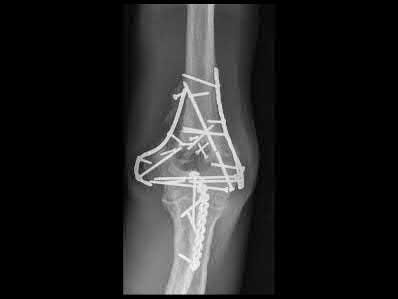
2. Skeletal Stabilization (Osteosynthesis)
Following débridement, the bony architecture must be reestablished immediately if possible, or within a few days once the wound bed is optimized.
- Rationale: Delaying bone repair allows soft tissues to contract, making subsequent reduction and fixation exceedingly difficult, often necessitating intercalary bone grafting. Furthermore, rigid skeletal fixation provides a stable scaffold that protects subsequent delicate vascular and neural repairs.
- Functional Priorities: When reconstructing the hand, the surgeon must prioritize stabilizing specific digits for their primary biomechanical roles:
- Thumb: Must be stabilized to restore opposition.
- Index and Long Fingers: Must be stabilized to restore precision pinch and fine manipulation.
- Ring and Small Fingers: Must be stabilized to restore power grasp.
Surgical Warning: In the setting of a profoundly ischemic limb, the traditional "bone-first" sequence may be altered. A temporary intravascular shunt should be placed to restore perfusion before proceeding with osteosynthesis, thereby minimizing warm ischemia time.
3. Tendon and Nerve Repair
If the injury mechanism and wound conditions permit (e.g., sharp, clean lacerations), tendons and nerves should be repaired at the time of primary or secondary skin closure.
- Timing: It is highly preferable to achieve definitive repair and close the wound within the first 5 days.
- Nerve Retraction: While awaiting delayed repair, transected nerves will rapidly contract, especially within the anatomical confines of the fingers and palm.
- Tagging Technique: If primary neurorrhaphy is contraindicated due to contamination or severe crush, the surgeon must identify the proximal and distal nerve stumps and tag them with a non-absorbable, brightly colored suture (e.g., 6-0 Prolene) anchored to adjacent stable soft tissues. This prevents retraction and drastically simplifies future identification during secondary reconstruction.
MANAGEMENT OF ARTERIAL INJURIES
The approach to vascular trauma in the upper extremity varies significantly depending on the anatomical level of the injury, the status of collateral circulation, and the presence of concomitant nerve injuries.
Major Upper Extremity Arteries
Injuries to the subclavian, axillary, and brachial arteries threaten the viability of the entire limb.
* Protocol: The gold standard of treatment includes immediate clinical diagnosis (hard signs of vascular injury), emergent angiography (or on-table arteriography), and urgent surgical exploration.
* Technique: Repair typically involves resection of the damaged intimal segment and primary end-to-end anastomosis or interposition reversed saphenous vein grafting.
Radial and Ulnar Arteries: The Single-Vessel Controversy
The optimal management of isolated injuries to either the radial or ulnar artery in the forearm and wrist remains a subject of intense academic debate.
Because the hand is supplied by a dual arterial system that anastomoses via the superficial and deep palmar arches, survival and basic function of the hand are usually maintained even if one artery is transected. However, long-term functional deficits can occur.
- The Case for Ligation: If an injury involves only one artery in a young, healthy patient without concomitant nerve injury, and the Allen test or digital oximetry confirms robust perfusion via the intact artery, ligation remains a safe and satisfactory option. Lee et al. suggested that wound healing complications might actually be higher in patients undergoing complex repair versus simple ligation in contaminated beds.
- The Case for Repair: Unrepaired single-artery injuries are not entirely benign.
- Cold Intolerance and Pain: Gelberman et al. demonstrated that while isolated single-artery injuries result in insignificant changes to baseline hand circulation, combined arterial and nerve injuries result in highly disabling symptoms of pain and severe cold intolerance.
- Patency Rates: In a subsequent study, Gelberman et al. reported a high occlusion rate of 53% after single-artery laceration repairs in the forearm, questioning the long-term utility of the repair. Conversely, Stricker et al. achieved a 64% patency rate, arguing that modern microsurgical techniques yield better outcomes.
- The "Lifeboat" Theory: Wilgis strongly advocates for the repair of isolated injuries. Restoring both vessels not only normalizes hemodynamics but serves as a critical circulatory reserve should the contralateral artery sustain a future injury.
Anatomical Pitfall: Never assume the palmar arch is complete. In approximately 20% of patients, the radial or ulnar artery lacks a competent connection to the superficial palmar arterial arch. In these patients, single-vessel ligation will result in catastrophic digital ischemia. Intraoperative pulse volume measurements, Doppler ultrasound, and digital oximetry are mandatory to assess the adequacy of collateral circulation before committing to ligation.
Indications for Mandatory Arterial Repair
Regardless of the controversies surrounding isolated injuries, the following scenarios mandate microsurgical exploration and repair:
1. Bilateral Transection: If both the radial and ulnar arteries are injured, at least one (preferably both) must be repaired to ensure hand survival.
2. Inadequate Collateral Flow: If clamping the injured artery results in a loss of digital plethysmography or Doppler signals.
3. Concomitant Nerve Injury: Repair is highly recommended to optimize the vascular bed for nerve regeneration and reduce cold intolerance.
4. Palmar Arch and Digital Arteries: Injuries distal to the wrist require exploration and microvascular repair if circulatory impairment threatens the viability of the digits.
CONSIDERATIONS FOR SKIN CLOSURE AND SOFT TISSUE COVERAGE
The ultimate success of bone, nerve, and tendon reconstruction relies entirely on the provision of a stable, well-vascularized soft tissue envelope. The decision-making process regarding skin closure requires a deep understanding of wound biology.
Primary Skin Closure
Primary closure is highly desirable and is the standard of care for sharply incised, clean wounds (e.g., knife lacerations, clean glass cuts).
* Objectives: The purpose of primary closure is to achieve rapid epithelialization, prevent secondary bacterial colonization, minimize edema, and halt the production of excessive, restrictive granulation tissue and scar.
* Technique: Closure must be completely tension-free. Misjudgment regarding tissue tension will inevitably lead to hematoma formation, venous congestion, wound breakdown, and deep infection, requiring a return to the operating room for reopening and further débridement.
Contraindications to Primary Closure
Certain mechanisms of injury dictate that the wound must never be closed primarily. Attempting primary closure in these scenarios traps anaerobic and virulent aerobic bacteria in a hypoxic environment, leading to catastrophic infections (e.g., gas gangrene, necrotizing fasciitis).
Absolute contraindications to primary closure include:
* Agricultural Injuries: Wounds caused by farm machinery, augers, or contaminated with soil and fertilizer.
* Bites: Human bites (e.g., "fight bites" over the MCP joints) and animal bites, which are heavily inoculated with Eikenella corrodens and Pasteurella multocida, respectively.
* High-Energy Trauma: High-velocity missile wounds, combat injuries, and tornado-generated missile wounds, which feature massive zones of cavitation and unpredictable tissue necrosis.
* Severe Crush Injuries: Where evolving tissue necrosis is expected over the ensuing 48 to 72 hours.
Surgical Warning: When in doubt, leave the wound open. A delayed closure is an inconvenience; a premature closure can result in limb loss.
Delayed Primary Closure and Negative Pressure Wound Therapy (NPWT)
For contaminated wounds, the standard protocol involves careful débridement under regional or general anesthesia, followed by packing or the application of a Negative Pressure Wound Therapy (NPWT) or Vacuum-Assisted Closure (VAC) system.
- Role of NPWT: VAC systems have revolutionized upper extremity trauma management. They reduce wound surface area through macro-deformation, remove inhibitory wound exudate, decrease interstitial edema, and promote robust angiogenesis (micro-deformation).
- Timing: The wound should be reinspected in the operating room within 24 to 48 hours. If the wound bed is sufficiently clean and viable, it can be closed by direct suture, local flap, or skin graft. Ideally, definitive closure should be achieved within 5 days of the initial injury.
- Secondary Intention: Generally, upper extremity wounds should not be left open to granulate and heal by secondary intention. This leads to severe myofibroblast-mediated contracture, joint stiffness, and tethering of gliding structures (tendons).
Timing of Microvascular Free Flap Coverage
When local tissue is insufficient to cover exposed bone, joints, tendons, or neurovascular bundles, microvascular free tissue transfer (e.g., Anterolateral Thigh flap, Radial Forearm flap, Latissimus Dorsi flap) is required. The timing of this coverage has evolved based on landmark microsurgical literature.
- The Acute Coverage Paradigm (Godina): In a seminal paper, Godina demonstrated that early radical excision of the wound and microsurgical free flap coverage within 72 hours of injury resulted in a remarkably low infection rate of 1.5%. Conversely, delayed coverage (beyond 72 hours) was associated with a staggering 17.5% infection rate and higher flap failure rates due to the onset of subacute inflammation and fibrosis of the recipient vessels. Lister and Scheker reported similarly excellent outcomes using free flap coverage within 24 hours for severe hand injuries.
- The Urgent/Delayed Paradigm (Brenner): More recent literature has challenged the absolute necessity of the 72-hour window, provided that modern NPWT is utilized. Brenner et al. found no statistically significant difference in infection rates when comparing acute (<72 hours) versus urgent/delayed free tissue transfer.
- Advantages of the Delayed Approach: Proponents of the delayed approach cite the ability to perform a "second look" débridement, allowing for a more accurate demarcation of necrotic tissue. It also affords the surgical team time for precise operative planning, optimization of the patient's systemic status, and better logistical control over scheduling a complex, multi-hour microsurgical procedure.
Ultimately, the success of either approach relies heavily on the presence of an experienced, multidisciplinary microsurgical team capable of executing complex reconstructions while adhering to strict principles of wound bed preparation.
CONCLUSION
The operative management of upper extremity trauma is a complex orchestration of orthopedic, vascular, and plastic surgery principles. By adhering to a strict order of tissue repair—prioritizing rigid osteosynthesis, meticulously evaluating and repairing arterial injuries based on collateral flow, and respecting the biological timing of soft tissue coverage—the surgeon can maximize the potential for limb salvage and restore meaningful function to the severely injured upper extremity.
You Might Also Like