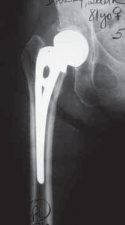
Total Hip Arthroplasty: Principles, Biomechanics, and Surgical Techniques
Key Takeaway
Total hip arthroplasty (THA) remains one of the most successful orthopedic interventions. This comprehensive guide details the biomechanical principles, implant tribology, and step-by-step surgical approaches essential for optimizing patient outcomes. From Charnley’s foundational low-friction arthroplasty to modern uncemented biologic fixation, mastering these techniques ensures implant longevity and minimizes complications such as dislocation or aseptic loosening.
Introduction to Total Hip Arthroplasty
Total hip arthroplasty (THA) is widely regarded as the operation of the century, providing unparalleled pain relief and functional restoration for patients with end-stage hip pathology. The modern era of THA was pioneered by Sir John Charnley in the 1960s with the introduction of the "low-friction arthroplasty." Charnley’s revolutionary triad—a small-diameter femoral head to reduce volumetric wear, polymethylmethacrylate (PMMA) bone cement for implant fixation, and high-density polyethylene as a bearing surface—established the foundation upon which contemporary joint replacement is built.
Over the ensuing decades, extensive research into biomechanics, tribology, and biologic fixation has driven the evolution of THA. The transition from purely cemented constructs to uncemented, porous-coated, and hydroxyapatite-augmented implants has dramatically improved long-term survivorship, particularly in younger, higher-demand patients.
Clinical Pearl: The primary goal of THA is not merely the replacement of the articular surfaces, but the precise restoration of hip biomechanics—specifically the center of rotation, femoral offset, and leg length—to optimize the abductor lever arm and minimize joint reaction forces.
Indications and Patient Selection
The primary indication for THA is debilitating pain and functional impairment secondary to joint destruction that has failed exhaustive conservative management (e.g., NSAIDs, physical therapy, intra-articular injections, activity modification).
Common underlying pathologies include:
* Primary Osteoarthritis (OA): The most frequent indication, characterized by asymmetric joint space narrowing, subchondral sclerosis, osteophytosis, and cyst formation.
* Inflammatory Arthropathies: Rheumatoid arthritis, ankylosing spondylitis, and systemic lupus erythematosus. These patients often present with symmetric joint space loss, osteopenia, and protrusio acetabuli.
* Avascular Necrosis (AVN): Often secondary to trauma, corticosteroid use, or alcohol abuse, leading to subchondral collapse.
* Post-Traumatic Arthritis: Following acetabular fractures or femoral neck nonunions.
* Developmental Dysplasia of the Hip (DDH): Requires careful preoperative planning due to altered anatomy, deficient acetabular bone stock, and excessive femoral anteversion.
Age and Demand Considerations
Historically, THA was reserved for elderly patients due to concerns regarding implant longevity and polyethylene wear. However, advancements in highly cross-linked polyethylene (HXLPE) and ceramic-on-ceramic bearings have expanded the indications to younger, active patients. Conversely, in the extremely elderly (octogenarians and nonagenarians), cemented femoral fixation is often preferred to mitigate the risk of periprosthetic fractures associated with osteoporotic bone.
Biomechanics and Tribology
A profound understanding of hip biomechanics is mandatory for the reconstructive surgeon. The hip functions as a class I lever. The fulcrum is the center of the femoral head, the effort is the abductor musculature, and the load is the body weight.
Joint Reaction Force and Offset
To minimize the joint reaction force (JRF), the surgeon must aim to medialise the center of rotation (bringing the load closer to the fulcrum) and restore or slightly increase the femoral offset (lengthening the abductor lever arm).
* Femoral Offset: Defined as the perpendicular distance from the center of the femoral head to the anatomical axis of the femur. Failure to restore offset leads to abductor weakness, a positive Trendelenburg gait, and increased JRF, which accelerates bearing wear.
* Leg Length: Must be managed concurrently with offset. High-offset stems allow the surgeon to lateralize the femur and tension the abductors without inadvertently lengthening the leg.
Tribology and Wear
Wear of the polyethylene liner is the primary catalyst for osteolysis and aseptic loosening. Wear is a function of contact stress, sliding distance, and material properties.
* Volumetric Wear: Increases with larger femoral head sizes (due to increased sliding distance). However, larger heads (e.g., 32mm or 36mm) are increasingly utilized to maximize the jump distance and reduce dislocation rates.
* Highly Cross-Linked Polyethylene (HXLPE): Irradiation of polyethylene creates cross-links between polymer chains, drastically reducing wear rates and allowing the safe use of larger femoral heads without the historical penalty of catastrophic osteolysis.
Surgical Warning: While larger heads improve stability, they require thinner polyethylene liners. A minimum liner thickness of 4 to 5 mm in the weight-bearing zone is critical to prevent catastrophic material failure and elevated contact stresses.
Principles of Implant Fixation
Cemented Fixation
Cemented THA relies on the mechanical interlock between PMMA and cancellous bone. Modern (third-generation) cementing techniques are imperative for long-term success:
1. Pulsatile Lavage: Removes marrow, fat, and debris, allowing cement to penetrate the cancellous interstices (micro-interlock).
2. Distal Restrictor: Placed 1 to 2 cm distal to the planned stem tip to allow for cement pressurization.
3. Retrograde Filling: Using a cement gun to fill the canal from distal to proximal, avoiding blood and air entrapment.
4. Pressurization: Sustained pressure forces cement into the trabecular bone.
5. Centralization: Proximal and distal centralizers ensure a uniform cement mantle (ideal thickness: 2 to 4 mm).
Uncemented Biologic Fixation
Uncemented components rely on initial mechanical press-fit stability, followed by secondary biologic fixation (osseointegration).
* Acetabular Components: Typically hemispherical titanium shells with a porous coating. They are under-reamed by 1 to 2 mm to achieve an equatorial press-fit. Supplemental screw fixation may be used if initial stability is suboptimal.
* Femoral Components: Designs vary widely (e.g., fully porous-coated cylindrical stems, tapered wedge stems, modular stems). Hydroxyapatite (HA) coatings are frequently applied to accelerate bone ingrowth by providing an osteoconductive scaffold.
Preoperative Planning and Templating
Digital or analog templating is a non-negotiable step in THA. It establishes the blueprint for the reconstruction.
1. Determine Leg Length Discrepancy (LLD): Measure from the inter-teardrop line to the lesser trochanters on an AP pelvis radiograph.
2. Acetabular Templating: Position the template at a 40-degree inclination. The medial border should rest against the radiographic teardrop, and the center of rotation should be marked.
3. Femoral Templating: Align the stem axis with the femoral canal. Determine the neck resection level, the required offset, and the head length needed to restore the center of rotation and equalize leg lengths.
Surgical Approaches
The choice of surgical approach depends on surgeon experience, patient anatomy, and the specific pathology.
The Posterolateral Approach
The posterolateral approach is the most widely utilized globally. It provides excellent, extensile exposure of both the acetabulum and the femur without violating the abductor mechanism.
* Internervous Plane: There is no true internervous plane. The approach splits the gluteus maximus (inferior gluteal nerve) and detaches the short external rotators.
* Advantage: Unparalleled exposure, preservation of the abductors (minimizing postoperative limp).
* Disadvantage: Historically associated with higher dislocation rates. However, meticulous posterior soft-tissue repair (capsule and short external rotators) has reduced dislocation rates to levels comparable to the anterior approach.
The Direct Anterior Approach (DAA)
Gaining immense popularity, the DAA utilizes the internervous plane between the tensor fasciae latae (superior gluteal nerve) and the sartorius/rectus femoris (femoral nerve).
* Advantage: True internervous and intermuscular plane. Lower early dislocation rates. Patients may experience faster early mobilization.
* Disadvantage: Steep learning curve. Risk of lateral femoral cutaneous nerve (LFCN) neuropraxia. Femoral exposure can be challenging, increasing the risk of intraoperative calcar fractures.
Pitfall: Minimally invasive surgery (MIS) techniques, such as the two-incision approach, have been associated with higher complication rates, including unrecognized muscle damage and component malposition. The primary goal must always be accurate component positioning, not the length of the skin incision.
Step-by-Step Surgical Technique: Posterolateral Approach
1. Patient Positioning and Preparation
The patient is placed in the lateral decubitus position. Rigid pelvic fixation using anterior and posterior supports is critical to prevent intraoperative pelvic roll, which can lead to catastrophic miscalculation of acetabular version and inclination. Bony prominences are meticulously padded to prevent neuropraxia.
2. Exposure and Capsulotomy
- A curved incision is made centered over the greater trochanter.
- The fascia lata is incised longitudinally, and the gluteus maximus is split bluntly in line with its fibers.
- A Charnley retractor is placed. The bursa is excised to expose the short external rotators (piriformis, superior gemellus, obturator internus, inferior gemellus) and the quadratus femoris.
- The short external rotators and the posterior capsule are tagged with heavy non-absorbable sutures and detached from the greater trochanter as a single continuous flap. This protects the sciatic nerve and preserves the tissue for later repair.
3. Dislocation and Femoral Neck Resection
- The hip is internally rotated, flexed, and adducted to dislocate the femoral head posteriorly.
- Using the preoperative template as a guide, the distance from the lesser trochanter to the planned neck cut is measured.
- An oscillating saw is used to resect the femoral neck.
4. Acetabular Preparation and Component Insertion
- Retractors are placed anteriorly, inferiorly (beneath the transverse acetabular ligament), and posteriorly to expose the acetabulum.
- The labrum and pulvinar are excised. The transverse acetabular ligament is identified as a key landmark for version.
- Sequential reaming is performed, starting with a small reamer directed medially to establish the true floor (cotyloid fossa), followed by progressively larger reamers to expand the periphery.
- The uncemented acetabular shell is impacted into place. The target orientation is 40 to 45 degrees of operative inclination and 15 to 20 degrees of operative anteversion.
- Screw fixation is utilized if press-fit stability is questionable. The polyethylene liner is then impacted into the shell.
5. Femoral Preparation and Component Insertion
- The femur is elevated and delivered into the wound.
- A box osteotome is used to open the femoral canal laterally, ensuring neutral alignment and avoiding varus positioning.
- Sequential broaching is performed until rotational stability and cortical chatter are achieved.
- The trial neck and head are placed.
6. Trialing and Assessment of Stability
- The hip is reduced. Leg length is assessed by comparing the level of the medial malleoli or by evaluating the relationship of the greater trochanter to the center of the femoral head.
- Tissue tension is evaluated via the "shuck test" (distraction of the joint).
- Stability Testing: The hip is taken through a full range of motion. Posterior stability is tested in 90 degrees of flexion, adduction, and internal rotation. Anterior stability is tested in extension and external rotation. Any impingement (bony or implant) must be identified and resected.
7. Implantation and Closure
- The trial components are removed, and the definitive femoral stem and head are implanted.
- The hip is reduced and stability is re-confirmed.
- Enhanced Posterior Repair: The tagged posterior capsule and short external rotators are securely repaired to the greater trochanter through transosseous drill holes. This step is paramount in preventing posterior dislocation.
- The fascia lata, subcutaneous tissues, and skin are closed in layers.
Postoperative Protocol and Complication Management
Venous Thromboembolism (VTE) Prophylaxis
THA carries a high risk of deep vein thrombosis (DVT) and pulmonary embolism (PE). Prophylaxis is mandatory and typically involves a combination of mechanical (sequential compression devices, early mobilization) and pharmacological agents (low-molecular-weight heparin, direct oral anticoagulants, or aspirin in low-risk patients) for 2 to 6 weeks postoperatively.
Dislocation
Dislocation occurs in 1% to 3% of primary THAs. Most occur within the first 3 months. Management begins with closed reduction under conscious sedation. Recurrent instability requires a thorough workup to identify the etiology (e.g., component malposition, abductor deficiency, impingement) and often necessitates revision surgery.
Infection
Periprosthetic joint infection (PJI) is a devastating complication occurring in approximately 1% of cases. Prevention relies on strict sterile technique, prophylactic intravenous antibiotics (e.g., cefazolin) administered within one hour of incision, and optimization of host factors (glycemic control, smoking cessation). Acute infections may be treated with debridement, antibiotics, and implant retention (DAIR), whereas chronic infections typically require a two-stage revision arthroplasty.
Rehabilitation
Modern THA protocols emphasize rapid recovery. Patients are typically allowed immediate weight-bearing as tolerated. Physical therapy focuses on gait training, abductor strengthening, and restoration of functional range of motion. With meticulous surgical technique and adherence to biomechanical principles, patients can expect a durable, pain-free joint that restores their quality of life for decades.
📚 Medical References
- total hip arthroplasty, J Arthroplasty 3:267, 1988.
- Letournel E: Les fractures du cotyle: étude d’une s’erie de 75 cas, J Chir 82:47, 1961.
- Letournel E, Judet R: Fractures of the acetabulum , New York, 1981, Springer-Verlag. Matta JM: Anterior exposure with the ilioinguinal approach. In Mears DC, Rubash HE, eds: Pelvic and
You Might Also Like