
Comprehensive Master Guide · Medically Reviewed

AAOS Basic Science MCQs (Set 4): Bone Physiology, Biomechanics & Ortho Pharmacology | ABOS Board Prep

Ace your ABOS board prep with AAOS Basic Science MCQs Set 4. Practice bone physiology, biomechanics, and ortho pharmacology with our interactive timer.

9 Detailed Chapters
51 min read
Updated: Apr 2026
Dr. Mohammed Hutaif
Medically Reviewed by
Prof. Dr. Mohammed Hutaif
Verified Content Expert Reviewed

Quick Medical Answer

This high-yield Basic Science MCQ set (Set 4) for the AAOS/ABOS exams rigorously tests core orthopedic knowledge. Questions cover essential bone physiology, including metabolism and healing, fundamental musculoskeletal biomechanics principles, and clinical applications of orthopedic microbiology and pharmacology. Ideal for comprehensive board review.

Basic Science 2006 MCQs - Part 4

AAOS Basic Science MCQs (Set 4): Bone Physiology, Biomechanics & Ortho Pharmacology | ABOS Board Prep

Comprehensive 100-Question Exam


00:00

Start Quiz

Question 1

Osteopenia is defined by the World Health Organization (WHO) as a bone mineral density (BMD) that is


Explanation

Osteopenia, decreased bone mass without fracture risk as defined by the WHO criteria for diagnosis of osteoporosis, is when a woman's T-score is within -1 to -2.5 SD. The T-score represents a comparison to young normals or optimum peak density. The Z-score represents a comparison of BMD to age-matched normals. Measurements of bone mineral density (BMD) at various skeletal sites help in predicting fracture risk. Hip BMD best predicts fracture of the hip, as well as fractures at other sites.

Question 2

Which of the following best describes the mechanism of action of gentamycin?


Explanation

Gentamycin and the aminoglycosides (ie, streptomycin, tobramycin, amikacin, and neomycin) work by binding to the 30s ribosome subunit, leading to the misreading of mRNA. This misreading results in the synthesis of abnormal peptides that accumulate intracellularly and eventually lead to cell death. These antibiotics are bactericidal. Cephalosporins, vancomycin, and penicillins interfere with cell wall synthesis by inhibiting the transpeptidase enzyme. Polymyxin, nystatin, and amphotericin increase cell membrane permeability by disrupting the functional integrity of the cell membrane. The quinolones inhibit the enzyme, DNA gyrase. Lastly, metronidazole forms oxygen radicals that are toxic to anaerobic organisms because they lack the protective enzymes, superoxide dismutase and catalase.

Question 3

What type of muscle contraction occurs while the muscle is lengthening?


Explanation

A muscle that lengthens as it is activated is an eccentric contraction. Isometric contraction involves no change in length. Concentric contraction occurs while the muscle is shortening. In isotonic contraction, the force remains constant through the contraction range. Isokinetic muscle contraction occurs at a constant rate of angular change of the involved joint. Garrett WE, Speer KP, Kirkendall DT (eds): Principles & Practice of Orthopaedic Sports Medicine. Philadelphia, PA, Lippincott Williams & Wilkins, 2000, pp 12-13.

Question 4

Osteoclasts originate from which of the following cell types?


Explanation

Osteoclasts originate from the monocyte/macrophage lineage. Fibroblasts and osteoprogenitor cells originate from mesenchymal stem cells and do not form osteoclasts. Plasma cells reside in the bone marrow and are derivatives of the hematopoietic system. Megakaryocytes are also in the bone marrow and synthesize platelets. Zaidi M, Blair HC, Moonga BS, et al: Osteoclastogenesis, bone resorption, and osteoclast-based therapeutics. J Bone Miner Res 2003;18:599-609. Brinker MR: Bone (Section 1), in Miller M (ed): Review of Orthopaedics, ed 2. Philadelphia, PA, WB Saunders, 1996, pp 1-35.

Question 5

A study is being designed to compare the effectiveness of an antibiotic. The choice of the number of patients (ie, the sample size) depends on several factors. What type of calculation assesses the potential of the study to successfully address the effectiveness of the antibiotic?


Explanation

Power analysis is used to determine the minimum number of specimens (sample size) such that, if a difference is found that is large enough to be clinically important, the associated level of statistical reliability will be high enough (ie, the P-value will be small enough) for the investigators to conclude that the difference observed in the study also holds in general. For the statistician to do a power analysis, the investigators must first decide on the minimum difference that they consider to be clinically important, for example, a reduction of 3% in the rate of infection. It is important to recognize that the choice of what constitutes the minimum difference in the rate of infection that is clinically (ie, medically) important cannot and should not be done by the statistician. Rather, this is a clinical-medical issue and must be done by the physician researcher based on a comprehensive assessment of the medical risks and benefits. The power analysis also requires an estimate of the variance in the data, which may be based on previous similar studies, if available. A statistician can then calculate the minimum sample size (number of patients) required such that, if a clinically important difference does, in fact, exist between the full populations, there is a reasonable probability or power (typically 80% to 90%) that a difference this large also will occur between the sample populations at the desired level of statistical significance (usually, but not necessarily, P < 0.05). The other answers refer to types of analyses that are usually conducted after the data are collected.

Question 6

What is the most common cause of mechanical failure of an orthopaedic biomaterial during clinical use?


Explanation

In most orthopaedic applications, the materials are strong enough to withstand a single cycle of loading in vivo. However, these loads may be large enough to initiate a small crack in the implant that can grow slowly over thousands or millions of cycles, eventually leading to gross failure. Such fatigue failure has occurred with virtually every type of implant, including stainless steel fracture plates and screws, bone cement in joint arthroplasty, and polyethylene inserts in total knee arthroplasty. Lewis G: Fatigue testing and performance of acrylic bone-cement materials: State-of-the-art review. J Biomed Mater Res Br 2003;66:457-486. Stolk J, Verdonschot N, Huiskes R: Stair climbing is more detrimental to the cement in hip replacement than walking. Clin Orthop 2002;405:294-305.

Question 7

Which of the following body positions is associated with the highest intradiskal pressure?


Explanation

Intradiskal pressure is lowest when the patient is in the supine position. Sitting is associated with higher intradiskal pressures than standing. Flexion also increases intradiskal pressure. The combination of flexion and sitting produces the highest intradiskal pressure. Nachemson and Morris found that intradiskal pressure increases as position changes from lying supine, lying prone, standing, leaning forward, sitting, and sitting leaning forward. Twisting or straining in positions of relatively high intradiskal pressure may predispose patients to herniation of the intervertebral disk. Patients with a herniated disk may also notice their pain worsens with activities that increase the disk pressure, including the positions mentioned, or activities that increase intra-abdominal pressure (coughing, sneezing, straining). Nachemson A, Morris JM: In vivo measurements of intradiscal pressure. J Bone Joint Surg Am 1964;46:1077-1092.

Question 8

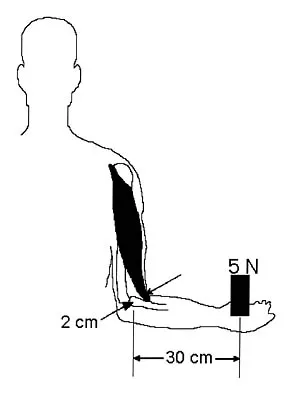
Figure 6 shows an object being held in an outstretched hand. To offset the moment created by the object (ignoring the weight of the forearm), the biceps must generate a force of

Basic Science Board Review 2006: High-Yield MCQs (Set 4) - Figure 1


Explanation

Answering this question requires understanding of two important biomechanics concepts. First, because neither the object being held in the hand nor the body is moving and, hence, their accelerations are zero, the problem is one of static equilibrium in which the sum of the moments acting on the body is zero. Second, a moment is the action of a force that causes an object to rotate about any point away from its line of action. The magnitude of the moment is the magnitude of the force multiplied by the perpendicular distance between the line of action and the point (often called the moment arm or lever arm). In this problem, two forces are causing moments about the elbow. The magnitude of the moment caused by the object in the hand is 5 N times 30 cm or 150 N-cm. To maintain equilibrium, the moment caused by the biceps force must also have a magnitude of 150 N-cm. Its moment arm is 2 cm, so the magnitude of the biceps force is 150 N-cm divided by 2 cm, which equals 75 N. In general, functional loads such as the object are always at a mechanical advantage (ie, have a longer moment arm) over the muscle. Therefore, muscles must generate large forces to overcome the moments caused by even small functional loads. An KN, Chao ES, Kaufman KR: Analysis of muscle and joint loads, in Mow VC, Hayes WC (eds): Basic Orthopaedic Biomechanics, ed 2. New York, NY, Lippincott-Raven, 1997, pp 1-14.

Question 9

Which of the following best describes the function of the notochord?


Explanation

The notochord is the anatomic structure that defines the phylum Chordata. The notochord plays a fundamental role in the development of the skeleton, and it exists only for a short period of time. During its temporary existence, the notochord serves as a transient axis of support, provides for the initial axis of orientation of the developing embryo, and most importantly, plays a vital role in the induction of the tissues that eventually form the vertebral column.

Question 10

A patient undergoes a proximal tibial resection that is reconstructed with a fresh frozen osteoarticular allograft. Eleven months later, the graft is retrieved. Histologically, the articular cartilage and subchondral bone retrieved would be expected to show evidence of


Explanation

Osteoarticular allografts are devoid of host chondrocytes but do contain "mummified" cellular debris left over from donor processing. The cartilage architecture is preserved in the first 2 to 3 years after transplantation. The articular surface is covered with a pannus of fibrocartilage maintaining the joint space radiographically; this pannus later contains islands of fibrocartilage containing host mesenchymal stem cells. Degenerative changes to the joint surface occur earlier and are more severe in joints that are unstable. Only with degenerative changes at the surface is there histologic evidence of subchondral revascularization. Often degenerative changes involving the articular cartilage reach the tidemark, but the tidemark itself remains structurally intact. Enneking WF, Campanacci DA: Retrieved human allografts: A clinicopathological study. J Bone Joint Surg Am 2001;83:971-986.

Question 11

Stiffness relates the amount of load applied to a structure like a long bone or an intramedullary nail to the amount of resulting deformation that occurs in the structure. What is the most important material property affecting the axial and bending stiffness of a structure?


Explanation

The amount of deformation resulting in response to an applied load depends on the stress distribution that the load creates in the structure and the stress versus strain behavior of the material that makes up the structure. Axial and bending loads create stress distributions that involve normal stresses and normal strains. Although all five responses are indeed material properties, only one, elastic modulus, relates normal stresses to normal strains. In fact, axial and bending stiffness are directly proportional to modulus, so that a nail made from stainless steel will have nearly twice the stiffness of a nail made from titanium alloy (because their respective elastic moduli differ by about a factor of two). Hayes WC, Bouxsein ML: Analysis of muscle and joint loads, in Mow VC, Hayes WC (eds): Basic Orthopaedic Biomechanics, ed 2. New York, NY, Lippincott-Raven, 1997, pp 74-82. Buckwalter JA, Einhorn TA, Simon SR (eds): Orthopaedic Basic Science: Biology and Biomechanics of the Musculoskeletal System, ed 2. Rosemont, IL, American Academy of Orthopaedic Surgeons, 2000, pp 159-165.

Question 12

Which of the following accurately defines changes in Vitamin D requirements as the result of aging?


Explanation

Older individuals ingest less Vitamin D and are unable to generate as much as younger people via the skin in response to ultraviolet exposure; thus, there is a decrease in the levels of serum 25(OH) D. This reduction in 25(OH)D leads to a reduction in calcium absorption. There is also decreased conversion in the kidney of 25(OH)D to 1,25(OH)D. This all leads to an increase in the daily requirements of both calcium and Vitamin D. It also results in a responsive increase in PTH secretion in the elderly, as well as renal function impairment and possible renal resistance to PTH. Dawson-Hughes B, Harris SS, Krall EA, et al: Effect of calcium and vitamin D supplementation on bone density in men and women 65 years of age and older. N Engl J Med 1997;337:670-676. Recker RR, Hinders S, Davies M, et al: Correcting calcium nutritional deficiency prevents spine fractures in elderly women. J Bone Miner Res 1996;11:1961-1966.

Question 13

Osteoclasts are primarily responsible for bone resorption of malignancy. Which of the following stimulates osteoclast formation?


Explanation

Bone destruction is primarily mediated by osteoclastic bone resorption, and cancer cells stimulate the formation and activation of osteoclasts next to metastatic foci. Increasing evidence suggests that receptor activator of NF-kB ligand (RANKL) is the ultimate extracellular mediator that stimulates osteoclast differentiation into mature osteoclasts. In contrast, OPG inhibits osteoclast development. IL-8 but not IL-5 is known to play a role in osteoclastogenesis. MMP-2 and collagen type I do not have a direct role in osteoclastogenesis. Kitazawa S, Kitazawa R: RANK ligand is a prerequisite for cancer-associated osteolytic lesions. J Pathol 2002;198:228-236.

Question 14

Which of the following statements best describes synovial fluid?


Explanation

Synovial tissue is composed of vascularized connective tissue that lacks a basement membrane. Two cell types (type A and type B) are present: type B cells produce synovial fluid. Synovial fluid is made of hyaluronic acid and lubricin, proteinases,and collagenases. It is an ultrafiltrate of blood plasma added to fluid produced by the synovial membrane. It does not contain erythrocytes, clotting factors, or hemoglobin. It lubricates articular cartilage and provides nourishment via diffusion. Synovial fluid exhibits non-Newtonian flow characteristics. The viscosity coefficient is not a constant, the fluid is not linearly viscous, and its viscosity increases as the shear rate decreases.

Question 15

Collagen orientation is parallel to the joint surface in what articular cartilage zone?


Explanation

The collagen orientation changes from parallel in the superficial zone to a more random pattern in the middle zone and finally to perpendicular in the calcified zone. Koval KJ (ed): Orthopaedic Knowledge Update 7. Rosemont, IL, American Academy of Orthopaedic Surgeons, 2002, pp 498-499.

Question 16

Which of the following agents increases the risk for a nonunion following a posterior spinal fusion?


Explanation

Nonsteroidal anti-inflammatory drugs (NSAIDs) have been shown to increase the risk of pseudarthrosis. In a controlled rabbit study, nonunions were reported with the use of toradol and indomethacin. NSAIDs are commonly used medications with the potential to diminish osteogenesis. Studies clearly have demonstrated inhibition of spinal fusion following the postoperative administration of several NSAIDs, including ibuprofen. Cigarette smoking is another potent inhibitor of spinal fusion. Glassman SD, Rose SM, Dimar JR, et al: The effect of postoperative nonsteroidal anti-inflammatory drug administration on spinal fusion. Spine 1998;23:834-838.

Question 17

What is the primary benefit of using rhBMP-2 instead of autogenous bone graft inside an anterior spinal fusion cage?


Explanation

Radiographic fusion success rates are best described as slightly rather than substantially improved. Hospital stay and time to fusion also are not substantially decreased. Use of BMP does eliminate the need for autograft harvest for anterior lumbar interbody fusion/cage. The need for postoperative bracing is not altered based on graft choice. Early studies of posterolateral fusion applications appear to show a greater potential benefit of rhBMP-2 over autograft. Not all BMP formulations perform the same with regard to safety and effectiveness. Other osteoinductive proteins in clinical trials (BMP-7, GDF-5) will require individual analysis of these properties.

Question 18

Cell signaling through the activation of a transmembrane receptor complex formed by serine/threonine kinase receptors occurs with which of the following growth factors?


Explanation

Cell activation and transcription varies with the target cell, the growth factor-receptor combination, and the biologic state of the cell. The growth factors in the transforming growth factor-beta (TGF-ß) superfamily signal through serine/threonine kinase receptors. Fibroblast growth factors, insulin-like growth factors, and platelet-derived growth factors signal through tyrosine kinase receptors. Growth hormone is released by the pituitary and circulates to the liver where target cells are stimulated to release insulin-like growth factor. Lieberman J, Daluiski A, Einhorn TA: The role of growth factors in the repair of bone: Biology and clinical applications. J Bone Joint Surg Am 2002;84:1032-1044.

Question 19

A 67-year-old woman has persistent anterior thigh and knee pain after undergoing total knee arthroplasty 1 year ago. Examination and radiographs reveal no problems in the knee, mild hip flexor weakness (grade 4+), and decreased sensation over the anterior thigh including and proximal to the incision. MRI of the lumbar spine will most likely reveal which of the following findings?


Explanation

Degenerative spondylolisthesis at L3-4 is the most likely diagnosis. This spondylolisthesis would result in foraminal stenosis affecting the third lumbar root and leading to anterior thigh and knee pain and hip flexor weakness. L4-5 spondylolisthesis would impinge on the L4 root in the foramen. Degenerative disk disease without hypertrophy is unlikely to have root impingement. Posterolateral herniations typically affect the inferior root and are less common in this age group. Hoppenfeld S: Physical Examination of the Spine and Extremities. Upper Saddle River, NJ, Prentice Hall, 1976, p 250.

Question 20

Decreased activity of which of the following proteins may be predictive of an aggressive soft-tissue sarcoma?


Explanation

It has been proposed that an imbalance in the proteolytic cascade involving matrix metalloproteinases (MMPs) and their inhibitors (TIMPs) may play a role in the development or progression of malignancy. TIMP activity has been shown to be weak or nonexistent and MMP activity to be high in patients with soft-tissue sarcoma. The level of vascular endothelial growth factor is shown to be a negative prognostic indicator because the expression of this factor is associated with angiogenesis and aggressive growth of many tumors including Ewing' s sarcoma and chondrosarcoma. Stromelysin is a type of MMP. The biology of cytokines in malignancy is complex. A low level of interleukin-1 is not known to be associated with high-grade tumors.

Question 21

Passive glycation of articular cartilage results in


Explanation

Passive glycation of articular cartilage occurs over decades. One of the consequences of this glycation appears to be the stiffening of collagen. This phenomenon appears to be associated with an increased collagen degradation and development of osteoarthrosis. Passive glycation also results in a relatively yellow appearance. Passive glycation does not directly influence chondrocyte proliferation. DeGroot J, Verzijl N, Wenting-van Wijk MJ, et al: Accumulation of advanced glycation end products as a molecular mechanism for aging as a risk factor in osteoarthritis. Arthritis Rheum 2004;50:1207-1215.

Question 22

A study was conducted in 500 patients to measure the effectiveness of a new growth factor in reducing healing time of distal radial fractures. The authors reported that average healing time was reduced from 9.2 to 8.9 weeks (P < 0.0001). Because the difference was highly statistically significant, they recommended routine clinical use of this drug despite its high cost. A more appropriate interpretation of these results is that they are


Explanation

The results are statistically significant (at the arbitrary level of P < 0.05). That is, they indicate a probability of only 1/10,000 that the observation that the drug is effective in reducing healing time by 0.3 weeks occurred by chance selection of the study subjects. However, because the statistical power of a study increases with the number of subjects included (sample size), a difference that is trivial clinically can occur with a very high level of statistical significance (a very small P-value) if enough patients are included in the study. Because of this, the P-value alone, no matter how small, does not establish clinical significance or importance. Rather, the clinical significance of the observed difference must be assessed taking into consideration the medical importance of the difference if it is, in fact, true in the general population. In this example, the reduction in healing time of only a few days is probably clinically unimportant, particularly if the use of the new growth factor is expensive, complex, and/or has substantial side effects.

Question 23

In patients with suspected hepatitis C, which of the following tests is commonly used to confirm the diagnosis after a positive ELISA screening test?


Explanation

The basic diagnostic test for hepatitis C (HCV) is detection of an antibody to epitopes on an enzyme-linked immunosorbent anti-HCV assay (ELISA). The currently used ELISA has high sensitivity (92%) and specificity (95%). False positives, however, still occur. The currently used supplemental test for HCV is strip immunoblot assay, which is based on detection of several HCV epitopes on nitrocellulose paper by antibody-capture techniques. Molecular amplification by PCR technology is very sensitive, but difficult to standardize and susceptible to contamination. Microarray and proteomics are relatively recent molecular techniques used for analysis of genes or proteins, respectively. A Northern blot is used to detect mRNA levels of specific genes but is not used in this situation. de Medina M, Schiff ER: Hepatitis C: Diagnostic assays. Semin Liver Dis 1995;15:33-40.

Question 24

What type of multiple lesions is associated with Maffucci's syndrome?


Explanation

Maffucci's syndrome is a form of enchondromatosis associated with subcutaneous and deep hemangiomas. Similar to Ollier's disease, the risk of malignant transformation of the enchondromas is much higher than that of a solitary enchondroma. Multifocal nonossifying fibromas associated with other clinical findings such as mental retardation and café-au-lait spots is known as Jaffe-Campanacci syndrome. There are two types of multifocal forms of histiocytosis: Letterer-Siwe and Hand-Schüller-Christian disease. Schwartz HS, Zimmerman NB, Simon MA, et al: The malignant potential of enchondromatosis. J Bone Joint Surg Am 1987;69:269-274. Frassica F: Orthopaedic pathology, in Miller M (ed): Review of Orthopaedics, ed 2. Philadelphia, PA, WB Saunders, 1996, pp 292-335.

Question 25

Joint contact pressure in normal or artificial joints can best be minimized by what mechanism?


Explanation

Joint contact pressure is a stress and as such is defined as the load transferred across the joint divided by the contact area between the joint surfaces (the area over which the joint load is distributed). Therefore, any mechanism that decreases the load across the joint (eg, a walking aid) will decrease the stress. Similarly, any mechanism that increases the area over which the load is distributed (eg, using a more conforming set of articular surfaces in a knee joint arthroplasty) will also decrease the stress. Other mechanisms that influence joint contact pressure include the elastic modulus of the materials (cartilage in the case of natural joints and polyethylene in joint arthroplasty) and the thickness of the structures through which the joint loads pass. Bartel DL, Bicknell VL, Wright TM: The effect of conformity, thickness, and material on stresses in UHMWPE components for total joint replacement. J Bone Joint Surg Am 1986;68:1041-1051.

Question 26

Which of the following genetic mutations results in high bone mass due to decreased inhibition of the Wnt/beta-catenin signaling pathway?


Explanation

Sclerostin (encoded by SOST) normally inhibits Wnt signaling by binding LRP5/6 receptors. Loss-of-function mutations in SOST lead to conditions like sclerosteosis, characterized by an uninhibited Wnt pathway and abnormally high bone mass.

Question 27

On a typical stress-strain curve for a ductile orthopedic implant material, what term describes the point where the material begins to deform plastically rather than elastically?



Explanation

The yield point marks the end of elastic deformation and the beginning of plastic deformation. Beyond this stress level, the material will sustain permanent deformation and will not return to its original shape.

Question 28

Which of the following best describes the mechanism of action of denosumab in the treatment of osteoporosis?


Explanation

Denosumab is a fully human monoclonal antibody that binds to RANKL. This neutralizes RANKL, preventing it from activating RANK on osteoclasts, which profoundly inhibits osteoclast differentiation and bone resorption.

Question 29

When a stainless steel plate is fixed with titanium screws in a fracture construct, which of the following electrochemical processes is most likely to cause early implant failure?


Explanation

Galvanic corrosion occurs when two dissimilar metals are placed in an electrolytic solution, such as bodily fluids. The less noble metal acts as an anode and undergoes accelerated corrosion.

Question 30

Intermittent administration of recombinant human parathyroid hormone (teriparatide) achieves its anabolic effect on bone primarily by preventing the apoptosis of which cell type?


Explanation

Intermittent PTH administration (teriparatide) exerts a net anabolic effect primarily by stimulating osteoblast activity and prolonging their lifespan by inhibiting osteoblast apoptosis. Continuous PTH exposure, conversely, promotes net bone resorption.

Question 31

The acidification of the resorption pit by osteoclasts requires the secretion of protons across the ruffled border. Which intracellular enzyme primarily generates these protons?


Explanation

Carbonic anhydrase II catalyzes the conversion of carbon dioxide and water into carbonic acid, which rapidly dissociates into protons and bicarbonate. The protons are then actively pumped into the resorption lacuna to dissolve bone mineral.

Question 32

The bending stiffness of a solid titanium intramedullary nail is proportional to its radius raised to which power?


Explanation

The area moment of inertia for a solid cylinder, which governs its resistance to bending (bending stiffness), is proportional to the radius to the fourth power (r^4). Therefore, even a small increase in nail diameter drastically increases its stiffness.

Question 33

Recombinant human bone morphogenetic protein-2 (rhBMP-2) signals through transmembrane serine-threonine kinase receptors. Which intracellular signaling molecules are directly phosphorylated following this activation?


Explanation

BMPs bind to specific serine-threonine kinase receptors that directly phosphorylate receptor-regulated Smads (Smads 1, 5, and 8). These phosphorylated Smads form a complex with Smad 4, translocate to the nucleus, and drive osteogenic gene transcription.

Question 34

A patient presents with osteomalacia. Laboratory testing reveals low calcium, low phosphorus, and elevated parathyroid hormone (PTH) levels. Which of the following best explains the mechanism of low serum phosphorus in this patient?


Explanation

In vitamin D deficiency (osteomalacia), secondary hyperparathyroidism develops to maintain serum calcium. The elevated PTH decreases phosphate reabsorption in the proximal renal tubule, causing phosphaturia and subsequent hypophosphatemia.

Question 35

Which of the following modifications to a cortical bone screw most significantly increases its pullout strength?


Explanation

Screw pullout strength is directly proportional to the major diameter, thread engagement length, and bone density, and inversely proportional to thread pitch. Decreasing pitch means more threads per unit length are engaged in the bone, increasing pullout strength.

Question 36

Tranexamic acid (TXA) is widely used in orthopedic surgery to minimize perioperative blood loss. Which of the following best describes its primary mechanism of action?


Explanation

Tranexamic acid is a synthetic analog of the amino acid lysine. It reversibly and competitively binds to the lysine-binding sites on plasminogen, preventing its conversion to plasmin and thus inhibiting fibrin clot degradation.

Question 37

During endochondral ossification at the physis, in which histologic zone do chondrocytes undergo apoptosis as the extracellular matrix begins to calcify?


Explanation

In the zone of provisional calcification, the cartilage matrix undergoes calcification and the hypertrophic chondrocytes undergo apoptosis. This calcified matrix provides a temporary scaffold for osteoblasts to lay down primary woven bone.

Question 38

When a ligament is subjected to a constant, sustained sub-failure load, it experiences a progressive increase in length over time. What is this time-dependent biomechanical property called?


Explanation

Creep is defined as the time-dependent increase in strain (deformation) under a constant applied stress (load). This viscoelastic property is characteristic of tendons and ligaments.

Question 39

Nonsteroidal anti-inflammatory drugs (NSAIDs) are thought to impair fracture healing primarily through the inhibition of which of the following?


Explanation

NSAIDs inhibit cyclooxygenase (COX) enzymes, resulting in decreased synthesis of prostaglandins, particularly PGE2. PGE2 is essential for early inflammatory signaling, osteoblast differentiation, and normal fracture callus formation.

Question 40

In total joint arthroplasty, which of the following manufacturing processes is most commonly used to decrease the adhesive and abrasive wear rates of ultra-high-molecular-weight polyethylene (UHMWPE)?


Explanation

High-dose gamma irradiation induces cross-linking between polymer chains, drastically reducing the wear rate of UHMWPE. Subsequent thermal treatment (remelting or annealing) extinguishes residual free radicals to prevent oxidative degradation in vivo.

Question 41

Which cell is considered the primary mechanosensor in bone tissue, responsible for orchestrating the remodeling process in response to changes in mechanical loading?


Explanation

Osteocytes, embedded deep within the bone matrix, are the primary mechanosensors of bone. They sense fluid shear stress within their canalicular networks during mechanical loading and direct osteoblast and osteoclast activity accordingly.

Question 42

Nitrogen-containing bisphosphonates, such as alendronate, inhibit bone resorption primarily by inhibiting which of the following enzymes?


Explanation

Nitrogen-containing bisphosphonates inhibit FPP synthase in the mevalonate pathway within osteoclasts. This prevents the prenylation of critical small GTP-binding proteins (e.g., Rab, Rho, Rac), leading to osteoclast apoptosis and loss of function.

Question 43

Cortical bone is stronger in longitudinal compression than it is in transverse loading or tension. What is the biomechanical term for a material that exhibits different mechanical properties depending on the direction of loading?


Explanation

Anisotropy refers to a material having directionally dependent mechanical properties. Because of its osteonal structure, cortical bone is highly anisotropic, being strongest when loaded parallel to its longitudinal axis.

Question 44

Which of the following is the primary histological finding that distinguishes osteomalacia from osteoporosis?


Explanation

Osteomalacia is characterized by a defect in bone mineralization, resulting in a classic histological appearance of thickened, unmineralized osteoid seams. Osteoporosis, by contrast, shows normal mineralization but a quantitatively decreased total bone mass.

Question 45

Which of the following best describes the mechanism of action of vancomycin, an antibiotic frequently mixed into polymethylmethacrylate (PMMA) bone cement for infection prophylaxis?


Explanation

Vancomycin is a glycopeptide antibiotic that inhibits Gram-positive bacterial cell wall synthesis. It binds tightly to the D-alanyl-D-alanine portion of cell wall precursors, effectively preventing their cross-linking and weakening the cell wall.

Question 46

Which of the following best describes the cellular mechanism of action of nitrogen-containing bisphosphonates (e.g., alendronate)?


Explanation

Nitrogen-containing bisphosphonates inhibit farnesyl pyrophosphate synthase in the mevalonate pathway. This prevents prenylation of small GTPase proteins (like Ras and Rho), ultimately leading to osteoclast apoptosis and decreased bone resorption.

Question 47

According to biomechanical principles, the bending rigidity of a solid cylindrical intramedullary nail is directly proportional to which of the following?


Explanation

The bending rigidity of a solid cylindrical structure is proportional to the area moment of inertia, which scales with the radius to the fourth power (r^4). Therefore, a small increase in the nail's radius significantly increases its resistance to bending.

Question 48

Denosumab is a potent antiresorptive agent used in the treatment of osteoporosis and giant cell tumor of bone. What is its primary mechanism of action?


Explanation

Denosumab is a fully human monoclonal antibody that binds directly to Receptor Activator of Nuclear factor Kappa-B Ligand (RANKL). By binding RANKL, it prevents interaction with the RANK receptor on osteoclasts, thus inhibiting osteoclast formation and function.

Question 49

A patient undergoing treatment for an implant-associated orthopedic infection develops sudden Achilles tendon pain. The antibiotic utilized is known to inhibit DNA gyrase. Which medication was most likely prescribed?


Explanation

Fluoroquinolones, such as ciprofloxacin, work by inhibiting bacterial DNA gyrase (topoisomerase II) and topoisomerase IV. They carry a black box warning for tendinopathy and tendon rupture, which most commonly affects the Achilles tendon.

Question 50

In the biomechanical evaluation of orthopedic implants, the total area under a material's stress-strain curve represents which of the following properties?


Explanation

The total area under the stress-strain curve represents the toughness of the material, which is the total amount of energy absorbed before structural failure. Stiffness, by contrast, is represented by the slope of the linear elastic region (Young's modulus).

Question 51

Which of the following combinations correctly identifies the predominant collagen type and its synthesizing cell in normal hyaline articular cartilage?


Explanation

Normal hyaline articular cartilage is primarily composed of water and Type II collagen, which is synthesized exclusively by chondrocytes. Type X collagen is localized to the calcified zone and is produced by hypertrophic chondrocytes.

Question 52

Teriparatide is an anabolic agent utilized for the treatment of severe osteoporosis. How does its administration lead to increased bone mineral density?


Explanation

Teriparatide is a recombinant human parathyroid hormone (PTH 1-34) analog. While continuous PTH exposure primarily drives osteoclast-mediated bone resorption, daily intermittent administration paradoxically stimulates robust osteoblastic bone formation.

Question 53

Which of the following best defines the viscoelastic property of 'creep' in orthopedic biomaterials such as ultra-high-molecular-weight polyethylene (UHMWPE)?


Explanation

Creep is the progressive, time-dependent deformation of a viscoelastic material when it is subjected to a constant load. Stress relaxation, conversely, is the decrease in internal stress when a material is held at a constant deformation.

Question 54

According to Perren's strain theory, primary bone healing (osteonal remodeling without callus formation) occurs only when the interfragmentary strain is maintained below what specific threshold?


Explanation

Perren's strain theory states that primary (absolute) bone healing occurs when interfragmentary strain is kept below 2%. Strains between 2% and 10% promote secondary bone healing via callus formation, while strains above 10% result in nonunion.

Question 55

Tranexamic acid (TXA) is frequently used in orthopedic surgery to reduce perioperative blood loss. Which of the following describes its primary mechanism of action?


Explanation

Tranexamic acid is a synthetic analog of the amino acid lysine. It competitively binds to the lysine-binding sites on plasminogen, preventing its activation to plasmin and thus effectively inhibiting fibrinolysis.

Question 56

Review the provided biomechanical graphic.

On a standard stress-strain curve for cortical bone, what represents the point beyond which the material will no longer return to its original shape upon unloading?


Explanation

The yield point marks the end of the elastic region and the beginning of the plastic region on a stress-strain curve. Once loaded beyond the yield point, the material sustains permanent (plastic) deformation and cannot completely return to its original shape.

Question 57

Osteoprotegerin (OPG) plays a critical regulatory role in bone remodeling. Which of the following accurately describes its cellular source and function?


Explanation

Osteoprotegerin (OPG) is a glycoprotein secreted primarily by osteoblasts. It acts as a decoy receptor that competitively binds RANKL, preventing RANKL from activating RANK on osteoclasts and thereby inhibiting bone resorption.

Question 58

Which of the following geometric properties of a standard cortical bone screw has the greatest direct influence on its pullout strength?


Explanation

Screw pullout strength is most heavily influenced by the outer (major) diameter of the screw. While increasing thread engagement and bone quality also contribute, the major diameter is directly and most significantly proportional to pullout resistance.

Question 59

A 65-year-old male is treated with a specific antibiotic adjunct due to a staphylococcal prosthetic joint infection, chosen for its unique ability to penetrate mature biofilm. What is the mechanism of action of this drug?


Explanation

Rifampin is highly effective against biofilm-producing organisms like Staphylococcus species in prosthetic joint infections. Its primary mechanism of action is the inhibition of bacterial DNA-dependent RNA polymerase, thereby halting RNA transcription.

Question 60

Which of the following cells is the primary source of receptor activator of nuclear factor kappa-B ligand (RANKL) in bone metabolism?


Explanation

Osteoblasts and bone marrow stromal cells express RANKL on their surface in response to various stimuli. RANKL binds to RANK on osteoclast precursors, promoting their differentiation and activation.

Question 61

A 65-year-old female is prescribed alendronate for osteoporosis. What is the specific cellular mechanism of action of this medication?


Explanation

Nitrogen-containing bisphosphonates like alendronate inhibit farnesyl pyrophosphate synthase (FPPS) in the mevalonate pathway. This prevents protein prenylation, leading to osteoclast apoptosis and decreased bone resorption.

Question 62

A polymer undergoes continued progressive deformation over time when subjected to a constant load. This biomechanical phenomenon is best described as:


Explanation

Creep is the time-dependent permanent deformation of a viscoelastic material under a constant stress. Stress relaxation, in contrast, is the decrease in stress over time when a material is held at a constant strain.

Question 63

Which of the following antibiotics exerts its bactericidal effect by binding to the D-alanyl-D-alanine terminus of cell wall precursor peptides and is commonly used in heat-stable polymethylmethacrylate (PMMA) cement?


Explanation

Vancomycin inhibits bacterial cell wall synthesis by binding to the D-alanyl-D-alanine terminus of peptidoglycan precursors. It is heat-stable, making it highly suitable for elution from the exothermic PMMA bone cement environment.

Question 64

Romosozumab is an anabolic agent used for the treatment of severe osteoporosis. It exerts its effect primarily by neutralizing which of the following molecules?


Explanation

Romosozumab is a monoclonal antibody that binds and neutralizes sclerostin. By inhibiting sclerostin, it unblocks the Wnt/beta-catenin signaling pathway, leading to increased osteoblastic bone formation.

Question 65

To reduce stress shielding around a femoral stem, an implant designer wishes to use a material whose modulus of elasticity most closely approximates that of cortical bone. Which of the following materials has a Young's modulus closest to cortical bone?


Explanation

Cortical bone has a modulus of elasticity around 15-20 GPa. Titanium alloy (approx. 110 GPa) is closer to cortical bone than stainless steel (200 GPa) or cobalt-chromium (220-240 GPa), resulting in less stress shielding.

Question 66

A patient taking daily high-dose celecoxib sustains a tibial shaft fracture. How might this medication impair fracture healing?


Explanation

NSAIDs inhibit cyclooxygenase (COX) enzymes, reducing prostaglandin synthesis. Prostaglandins (especially PGE2) are required for the differentiation of mesenchymal stem cells into osteoblasts during endochondral ossification.

Question 67

According to Perren's strain theory, what is the maximum interfragmentary strain that will permit primary (direct) bone healing to occur without callus formation?


Explanation

Perren's strain theory states that primary bone healing requires an environment of absolute stability with interfragmentary strain of less than 2%. Strains between 2% and 10% allow secondary bone healing with callus formation.

Question 68

Rivaroxaban is utilized for venous thromboembolism (VTE) prophylaxis following total joint arthroplasty. What is its exact mechanism of action?


Explanation

Rivaroxaban is an oral anticoagulant that directly inhibits Factor Xa. This interrupts both the intrinsic and extrinsic pathways of the blood coagulation cascade, preventing thrombin formation.

Question 69

When designing a cortical bone screw, which of the following dimensional changes will most significantly increase its pullout strength?


Explanation

Pullout strength is most heavily influenced by the outer thread diameter. The formula for pullout strength is directly proportional to the shear strength of the bone, the outer diameter, and the length of thread engagement.

Question 70

A patient receives daily subcutaneous injections of teriparatide for severe osteoporosis. This treatment primarily relies on which of the following physiological principles?


Explanation

Teriparatide is a recombinant human parathyroid hormone (PTH 1-34) analog. While continuous PTH exposure favors bone resorption, intermittent administration stimulates osteoblast activity and new bone formation.

Question 71

Highly cross-linked polyethylene (HXLPE) is used in total hip arthroplasty to reduce wear rates. What biomechanical trade-off is most commonly associated with increasing the cross-linking of polyethylene?


Explanation

Cross-linking polyethylene significantly decreases abrasive wear rates. However, it alters the mechanical properties, resulting in reduced ductility, fracture toughness, ultimate tensile strength, and fatigue resistance.

Question 72

Tranexamic acid (TXA) is commonly administered intravenously to reduce perioperative blood loss in orthopedic surgery. Its mechanism of action involves:


Explanation

Tranexamic acid is an antifibrinolytic agent. It competitively and reversibly binds to the lysine receptor sites on plasminogen, preventing its activation to plasmin and thereby inhibiting fibrin clot degradation.

Question 73

A patient with chronic kidney disease presents with a pathologic fracture. Laboratory tests show hypocalcemia and hyperphosphatemia. A deficiency in which specific renal enzyme contributes most directly to this altered bone mineral homeostasis?


Explanation

The kidneys produce 1-alpha-hydroxylase, which converts inactive 25-hydroxyvitamin D into the active 1,25-dihydroxyvitamin D. Deficiency in chronic kidney disease leads to decreased intestinal calcium absorption and secondary hyperparathyroidism.

Question 74

A typical stress-strain curve for cortical bone is being analyzed.

What term is used to describe the area under the entire stress-strain curve before the point of complete failure?


Explanation

Toughness is defined as the amount of energy a material can absorb before it fractures, represented by the total area under the stress-strain curve. The modulus of elasticity is the slope of the linear elastic region.

Question 75

A patient exhibits perioral numbness, tinnitus, and arrhythmias immediately following a large-volume local anesthetic block with bupivacaine. Toxicity from this class of medication is primarily due to:


Explanation

Bupivacaine is an amide local anesthetic that works by blocking voltage-gated sodium channels. Systemic toxicity occurs when it causes overwhelming sodium channel blockade in the brain (seizures) and heart (arrhythmias and cardiac arrest).

Question 76

When evaluating the ultrastructure of articular cartilage, which zone is characterized by the highest concentration of proteoglycans, the lowest water content, and collagen fibers oriented perpendicular to the joint surface?


Explanation

The deep (radial) zone of articular cartilage provides the greatest resistance to compressive forces. It contains the highest concentration of proteoglycans, the lowest water content, and thick collagen fibrils aligned perpendicular to the articular surface.

Question 77

In locked plating constructs used for bridge plating of comminuted diaphyseal fractures, increasing the "working length" of the plate has what primary biomechanical effect?


Explanation

The working length of a plate is the distance between the two closest screws on either side of the fracture. Increasing this distance decreases the stiffness of the construct, allowing for more elastic deformation and promoting secondary bone healing.

Question 78

Recombinant human bone morphogenetic protein-2 (rhBMP-2) is utilized as a bone graft substitute. Intracellular signaling of BMPs is primarily mediated by which of the following pathways?


Explanation

BMPs bind to serine/threonine kinase receptors on the cell surface. This binding results in the phosphorylation and activation of intracellular Smad proteins (Smad 1, 5, and 8), which translocate to the nucleus to regulate osteogenic gene transcription.

Question 79

Which of the following best describes the molecular mechanism of action of nitrogen-containing bisphosphonates such as alendronate?


Explanation

Nitrogen-containing bisphosphonates inhibit farnesyl pyrophosphate synthase in the mevalonate pathway. This prevents prenylation of small GTP-binding proteins essential for osteoclast function and survival, ultimately inducing osteoclast apoptosis.

Question 80

In a stress-strain curve of a cortical bone specimen under tension, the area under the entire curve represents which of the following mechanical properties?


Explanation

Toughness is defined as the amount of energy a material can absorb before failure, which is represented by the total area under the stress-strain curve. Stiffness is represented by the slope of the linear elastic region.

Question 81

Which of the following best describes the process of "creeping substitution" observed during the incorporation of cortical bone grafts?


Explanation

Creeping substitution in cortical grafts involves osteoclasts boring cutting cones through dead bone, immediately followed by osteoblasts laying down new lamellar bone. This process is slow and can temporarily weaken the mechanical strength of the graft.

Question 82

A patient develops a methicillin-resistant Staphylococcus aureus (MRSA) osteomyelitis. Vancomycin is initiated. What is the specific mechanism of action of this antibiotic?


Explanation

Vancomycin is a glycopeptide antibiotic that inhibits bacterial cell wall synthesis by binding to the D-alanyl-D-alanine terminus of cell wall precursors. This prevents the cross-linking of peptidoglycan chains, unlike beta-lactams which bind directly to PBPs.

Question 83

The pull-out strength of a cortical screw is most heavily dependent on which of the following design parameters?


Explanation

Pull-out strength is directly proportional to the outer (thread) diameter of the screw, the length of thread engagement, and the shear strength of the bone. In contrast, the bending strength of a screw is proportional to the core diameter to the third power.

Question 84

Continuous high-dose administration of parathyroid hormone (PTH) results in which of the following primary cellular effects in bone?


Explanation

While intermittent PTH stimulates bone formation, continuous high-dose PTH promotes bone resorption. PTH binds to receptors on osteoblasts, upregulating RANKL expression, which subsequently stimulates osteoclast differentiation and activation.

Question 85

A patient is prescribed enoxaparin for deep vein thrombosis prophylaxis following total hip arthroplasty. Which of the following best describes its mechanism of action?


Explanation

Low-molecular-weight heparins (LMWH) like enoxaparin bind to antithrombin III to enhance its activity. Due to their shorter chain length compared to unfractionated heparin, they preferentially inhibit Factor Xa over thrombin (Factor IIa).

Question 86

Which of the following combinations of orthopedic metals is most likely to result in significant galvanic corrosion when placed in direct contact within the body?


Explanation

Galvanic corrosion occurs when two dissimilar metals are in contact in an electrolytic environment. Mixing 316L stainless steel with titanium or cobalt-chromium leads to severe galvanic corrosion of the less noble metal (stainless steel).

Question 87

Nonsteroidal anti-inflammatory drugs (NSAIDs) are thought to negatively impact early fracture healing primarily by inhibiting the synthesis of which of the following?


Explanation

NSAIDs inhibit cyclooxygenase (COX) enzymes, leading to decreased production of prostaglandins, particularly PGE2. PGE2 is essential for early fracture healing as it stimulates osteoblast and osteoclast activity as well as local angiogenesis.

Question 88

Which of the following proteins, secreted primarily by osteocytes, acts as a negative regulator of bone formation by inhibiting the Wnt/beta-catenin signaling pathway?


Explanation

Sclerostin is a glycoprotein secreted by osteocytes that binds to LRP5/6 receptors on osteoblasts, inhibiting the Wnt signaling pathway. This results in decreased osteoblast differentiation and bone formation.

Question 89

When transitioning from a two-legged stance to a single-leg stance, the resultant force across the weight-bearing hip joint typically increases to approximately what multiple of body weight?


Explanation

In a single-leg stance, the abductor muscles must forcefully contract to balance the body weight acting on the longer lever arm of the pelvis. This muscle force adds to the body weight vector, resulting in a joint reaction force of approximately 2.5 to 3 times body weight.

Question 90

A defect in the substitution of glycine by bulkier amino acids in the triple helix formation of type I collagen is the primary pathophysiologic mechanism for which of the following conditions?


Explanation

Osteogenesis imperfecta is most commonly caused by mutations in the COL1A1 or COL1A2 genes. This leads to the substitution of glycine, which is essential for the tight spatial packing of the collagen triple helix, resulting in mechanically weakened bone.

Question 91

What is the primary cause of the severe cardiac toxicity associated with an accidental intravascular injection of bupivacaine during a regional block?


Explanation

Bupivacaine binds strongly to fast voltage-gated sodium channels in the myocardium and dissociates very slowly. This leads to a cumulative blockade during successive cardiac cycles, which can cause refractory arrhythmias and cardiovascular collapse.

Question 92

Ligaments and tendons exhibit stress relaxation, which is a viscoelastic property defined as:


Explanation

Stress relaxation is the decrease in stress (internal force) required to maintain a tissue at a constant strain (length) over time. In contrast, creep is the increasing deformation (lengthening) over time under a constant load.

Question 93

Consider the biomechanical principles of fracture fixation shown in typical mechanical testing scenarios

. When utilizing a locked plating construct compared to conventional non-locked plating, which of the following best describes the structural mechanism of the locked construct?


Explanation

Locked plating systems function as fixed-angle constructs, creating a single-beam mechanism where screws lock directly into the plate, eliminating toggle. This provides stability independent of bone-plate friction and does not require perfect contouring.

None

Detailed Chapters & Topics

Dive deeper into specialized chapters regarding basic-science-2006-set-4-mcqs-4003

9 Chapters
01
Chapter 1 12 min

Decoding Von Willebrand Factor: Fundamental Basic Science Principles

Basic Sciences Tissues 1     Bone Take-Home Message •      Bone regeneration depends on an osteoinductive stimulus, ost…

02
Chapter 2 26 min

Ace Your Basic Science Oral: Essential Embryology Topics

The basic science oral Basic science oral core topics Embryology Limb embryology At 3 weeks in utero (wiu) Gastrulation…

03
Chapter 3 66 min

Mastering Orthopedic Basic Science: FRCS Exam MCQ Engine & Revision

Ace your FRCS exam with our Orthopedic Basic Science MCQ engine. Use study and exam modes, track real-time scores, and …

04
Chapter 4 60 min

Mastering Meniscus Basic Science & Biomechanics: Orthopedic Board Prep MCQs

Ace your orthopedic board prep with interactive MCQs on meniscus basic science and biomechanics. Practice in study or e…

05
Chapter 5 186 min

Orthopedic Basic Science MCQs: Comprehensive Study & Exam Prep

Ace your board exams with our interactive Orthopedic Basic Science MCQs. Test your knowledge, track your score, and pre…

06
Chapter 6 14 min

Electrodiagnostic Studies in Orthopedic Surgery: Comprehensive NCS & EMG Guide

Discover the role of electrodiagnostic studies like NCS and EMG in orthopedic surgery. Learn how they evaluate nerve an…

07
Chapter 7 13 min

The Biomechanics of Motion: Understanding Degrees of Flexion

Basic concepts Definitions Biomechanics—science of forces, internal or external, on the living body Statics—action of f…

08
Chapter 8 26 min

Comprehensive Bone Histology: Microscopic Anatomy, Biomechanics & Orthopedic Significance

Master bone histology with our comprehensive guide. Explore microscopic anatomy, biomechanics, and orthopedic significa…

09
Chapter 9 19 min

Bioabsorbable Materials in Orthopaedic Surgery: Biomechanics, Biomaterials, and Clinical Application

Explore the role of bioabsorbable materials in orthopaedic surgery. Discover how PGA, PLA, and PDS implants degrade and…

Dr. Mohammed Hutaif
Medically Verified Content by
Prof. Dr. Mohammed Hutaif
Consultant Orthopedic & Spine Surgeon
Guide Overview