Fundamental Principles of Operative Hand Surgery: Anatomy, Anesthesia, and Surgical Techniques
Key Takeaway
Operative hand surgery demands a profound understanding of intricate anatomy, precise surgical incisions, and meticulous tissue handling. This comprehensive guide explores the foundational principles of hand surgery, including biomechanics, regional anesthesia techniques, tourniquet physiology, and advanced skin closure methods like Z-plasty. Designed for orthopedic surgeons and fellows, it provides evidence-based protocols for preoperative planning, intraoperative execution, and postoperative splinting to optimize functional outcomes and minimize complications.
Introduction to Operative Hand Surgery
The hand is an unforgiving anatomical region where form and function are inextricably linked. Operative hand surgery requires a meticulous approach, combining a profound understanding of microanatomy, biomechanics, and tissue physiology. A successful outcome depends not only on the technical execution of the procedure but also on rigorous preoperative planning, appropriate anesthesia, judicious use of a tourniquet, precise incision design, and evidence-based postoperative splinting.
This comprehensive guide synthesizes the foundational principles of hand surgery, drawing upon decades of anatomical studies, anesthetic advancements, and biomechanical research to provide a textbook-level masterclass for orthopedic residents, fellows, and practicing consultants.
Surgical Anatomy and Biomechanics
A thorough mastery of hand anatomy is the bedrock of safe surgical practice. The intricate arrangement of neurovascular bundles, tendinous apparatuses, and intrinsic musculature dictates every surgical approach.
Neurovascular Anatomy and Variations
The arterial vascularization of the hand relies on the superficial and deep palmar arches, which exhibit significant anatomical variability. The superficial arch is predominantly supplied by the ulnar artery, while the deep arch is supplied by the radial artery.
Surgical Warning: Always perform an Allen’s test prior to any procedure that may compromise the radial or ulnar arteries. Incomplete superficial palmar arches are present in approximately 20% of the population, making the digits highly susceptible to ischemia if the dominant feeding vessel is injured.
The cutaneous innervation of the palm requires special attention during surgical approaches:
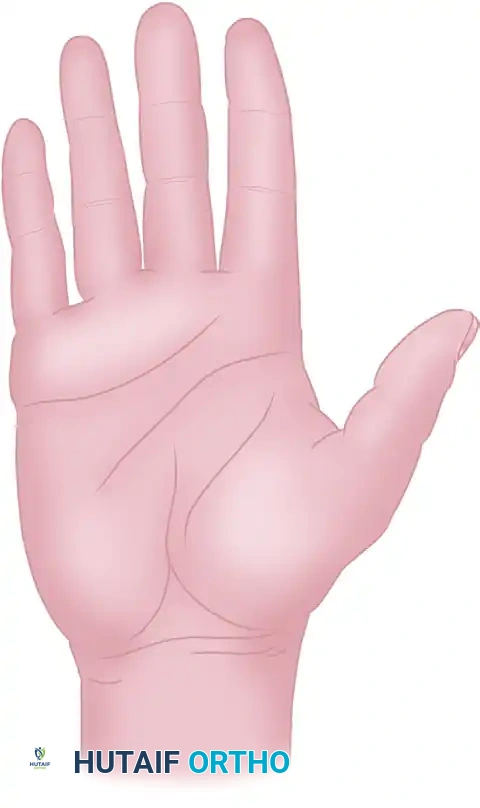
* Palmar Cutaneous Branch of the Median Nerve (PCBMN): Arises approximately 5 cm proximal to the wrist crease, traveling between the flexor carpi radialis (FCR) and palmaris longus (PL) before crossing the transverse carpal ligament. Incisions for carpal tunnel release must remain ulnar to the inter-thenar crease to avoid painful neuromas of this branch.
* Palmar Cutaneous Branch of the Ulnar Nerve: Arises proximal to the wrist and supplies the proximal ulnar palm. It is at risk during Guyon’s canal releases.
The Extensor Mechanism
The finger extensor mechanism is a highly complex, interconnected web of tendons and ligaments. As described by Littler, the central slip inserts on the middle phalanx to extend the proximal interphalangeal (PIP) joint, while the lateral bands converge to form the terminal tendon, extending the distal interphalangeal (DIP) joint. The delicate balance between the intrinsic (lumbricals and interossei) and extrinsic (extensor digitorum communis) muscles must be preserved during any dorsal approach to the digits.
Regional Anesthesia in Hand Surgery
Regional anesthesia has revolutionized operative hand surgery, offering superior intraoperative hemodynamic stability, excellent postoperative analgesia, and facilitating day-case (outpatient) surgery.
Brachial Plexus Blockade
For extensive hand and wrist procedures, brachial plexus blocks (axillary or infraclavicular) are the gold standard.
* Axillary Block: Targets the terminal branches of the brachial plexus (median, ulnar, radial, and musculocutaneous nerves). Ultrasound guidance has significantly improved the success rate and safety profile, allowing for precise perineural deposition of local anesthetic (e.g., 0.5% Ropivacaine or 0.5% Bupivacaine).
* Infraclavicular Block: Provides excellent coverage for the distal arm, forearm, and hand. It is particularly advantageous for procedures requiring a proximal arm tourniquet, as it reliably blocks the intercostobrachial nerve, reducing tourniquet pain.
Intravenous Regional Anesthesia (Bier Block)
The Bier block is highly effective for short procedures (under 60 minutes) such as carpal tunnel release, trigger finger release, or closed reduction of distal radius fractures.
* Technique: A double pneumatic tourniquet is applied to the proximal arm. The limb is exsanguinated using an Esmarch bandage, and the proximal cuff is inflated. Lidocaine (typically 0.5%, 40-50 mL) is injected intravenously.
* Safety Protocol: If the patient experiences tourniquet pain, the distal cuff (now overlying anesthetized tissue) is inflated, and the proximal cuff is subsequently deflated.
Clinical Pearl: Never use Bupivacaine for a Bier block due to its high potential for severe, refractory cardiotoxicity if premature tourniquet deflation occurs.
Digital Blocks and the Epinephrine Myth
Historically, the use of epinephrine in digital blocks was strictly contraindicated due to fears of digital ischemia and necrosis. However, extensive prospective studies have definitively debunked this myth. The use of Lidocaine with 1:100,000 epinephrine is safe, provides a bloodless surgical field without a tourniquet (WALANT technique), and prolongs the duration of anesthesia.
Tourniquet Physiology and Application
The pneumatic tourniquet is indispensable in hand surgery, providing a bloodless field that is critical for identifying microscopic neurovascular structures. However, tourniquet application induces ischemia and mechanical compression, necessitating strict adherence to safety protocols.
Biomechanics of Tourniquet Ischemia
Prolonged tourniquet inflation leads to progressive cellular hypoxia, acidosis, and depletion of ATP stores in skeletal muscle. Ultrastructural changes in muscle mitochondria and nerve myelin sheaths begin to occur after 2 hours of continuous ischemia.
Safe Application Guidelines
- Exsanguination: The limb should be elevated and exsanguinated with an Esmarch bandage prior to inflation. In cases of infection or malignancy, exsanguination by elevation alone (for 3-5 minutes) is preferred to prevent proximal seeding.
- Inflation Pressure: The pressure should be set to 50–75 mmHg above the patient’s systolic blood pressure for the upper extremity. Wide tourniquets are preferred as they eliminate blood flow at lower inflation pressures, reducing mechanical trauma to the underlying nerves.
- Time Limits: The absolute maximum continuous tourniquet time is 2 hours. If surgery exceeds this duration, the tourniquet must be deflated for 15–20 minutes to allow for reperfusion and clearance of metabolic byproducts before reinflation.
Forearm vs. Upper Arm Tourniquets
For procedures confined to the hand and distal wrist, a forearm tourniquet is significantly better tolerated by awake patients under local anesthesia. It requires lower inflation pressures and causes substantially less ischemic pain compared to an upper arm tourniquet.
Surgical Incisions and Approaches
The skin of the hand is highly specialized. The palmar skin is thick, glabrous, and tethered to the underlying palmar aponeurosis by vertical septa, providing a stable gripping surface. Incisions must be meticulously planned to avoid postoperative flexion contractures.
Principles of Hand Incisions
- Never cross a flexion crease perpendicularly: A longitudinal incision across a joint crease will inevitably heal with a hypertrophic scar, leading to a severe flexion contracture (the "bowstring" effect).
- Brunner’s Volar Zigzag Incision: This is the workhorse incision for volar access to the flexor tendon sheath. The apices of the flaps must end at the lateral margins of the flexion creases, creating a series of V-shaped flaps that do not restrict longitudinal extension.
- Mid-Axial Incision: Used for lateral access to the digits. The incision connects the apices of the flexion creases on the lateral aspect of the finger. This line represents the neutral axis of motion, meaning the scar will not change in length during flexion or extension.
Pitfall: When elevating a Brunner flap, ensure the neurovascular bundles are identified and protected. The bundles lie immediately volar to the Cleland’s ligaments and can be inadvertently injured if the flap apex is dissected too deeply.
Skin Closure and Flap Techniques
Wound closure in hand surgery must be tension-free to prevent marginal necrosis and subsequent infection. When skin shortages or contractures exist, local tissue rearrangement is required.
The Z-Plasty
The Z-plasty is a fundamental plastic surgery technique utilized extensively in hand surgery to lengthen a contracted scar or change the direction of a scar line.
* Biomechanics: A standard Z-plasty consists of a central limb (the scar to be lengthened) and two parallel lateral limbs of equal length, creating two triangular flaps.
* Mathematical Principles: The degree of lengthening is directly proportional to the angle of the lateral limbs. A 60-degree Z-plasty provides approximately 73% theoretical lengthening of the central limb and rotates the axis of the scar by 90 degrees.
* Execution: The flaps are elevated at the level of the subcutaneous fat, preserving the subdermal plexus. The flaps are then transposed and sutured into their new positions using non-absorbable monofilament sutures (e.g., 5-0 or 6-0 Nylon).
Web Space Deepening
Syndactyly release or post-burn web space contractures often require complex flap arrangements. The four-flap and five-flap (jumping man) Z-plasties are highly effective for deepening the first web space, restoring the critical span required for thumb opposition and grasp.
Postoperative Management and Splinting
The success of an elegant surgical procedure can be entirely undone by poor postoperative management. Edema control, early mobilization, and proper splinting are paramount.
Edema Control and Wound Healing
Postoperative edema is the enemy of hand function. Protein-rich exudate can rapidly organize into dense fibrotic adhesions, tethering tendons and stiffening joints.
* Elevation: The hand must be strictly elevated above the level of the heart for the first 48–72 hours.
* Medications: Patients on chronic anticoagulation (e.g., Warfarin) can safely undergo elective hand surgery without cessation of therapy, provided their INR is within the therapeutic range (typically 2.0–3.0). Furthermore, studies indicate that patients on methotrexate for rheumatoid arthritis should not stop their medication, as the risk of disease flare outweighs the negligible risk of wound complications.
Principles of Splinting
Immobilization must be applied judiciously and in the correct anatomical position to prevent irreversible joint stiffness.
The "Safe Position" (Intrinsic-Plus Position)
When the hand must be immobilized, it should be placed in the "Safe Position" (also known as the James position or Edinburgh position):
1. Wrist: 20–30 degrees of extension.
2. Metacarpophalangeal (MCP) Joints: 70–90 degrees of flexion.
3. Interphalangeal (PIP and DIP) Joints: Full extension (0 degrees).
Biomechanical Rationale:
The collateral ligaments of the MCP joints are eccentric; they are loose in extension and maximally taut in flexion due to the cam shape of the metacarpal head. Splinting the MCP joints in flexion prevents collateral ligament contracture. Conversely, the volar plates of the PIP joints will rapidly contract if splinted in flexion; therefore, the PIP joints must be splinted in full extension.
Dynamic Splinting
For flexor tendon repairs, dynamic splinting (e.g., the Kleinert or modified Duran protocols) is utilized. These splints maintain the hand in a dorsal blocking configuration (preventing wrist and MCP extension) while allowing active extension and passive flexion of the digits. This controlled stress promotes intrinsic tendon healing, increases tensile strength, and prevents restrictive peritendinous adhesions.
Conclusion
Operative hand surgery is a discipline defined by precision. From the initial anatomical dissection to the final application of a thermoplastic splint, every step must be executed with a deep respect for the biomechanical harmony of the upper extremity. By adhering to these foundational principles—optimizing regional anesthesia, respecting tourniquet physiology, designing intelligent incisions, and enforcing rigorous postoperative protocols—the orthopedic surgeon can consistently achieve superior functional outcomes and restore the intricate mechanics of the human hand.
📚 Medical References
- operative hand surgery, ed 4, New York, 1999, Churchill Livingstone. Hastings H II, Weiss AP, Quenzer D, et al: Arthrodesis of the wrist for post-traumatic disorders, J Bone Joint Surg 78A:897, 1996.
- Heim U, Pfeiffer KM: Internal fi xation of small fractures: technique recommended by the AO-ASIF group, ed 3, Berlin, 1988, SpringerVerlag. Hoffer MM, Zeitzew S: Wrist fusion in
You Might Also Like