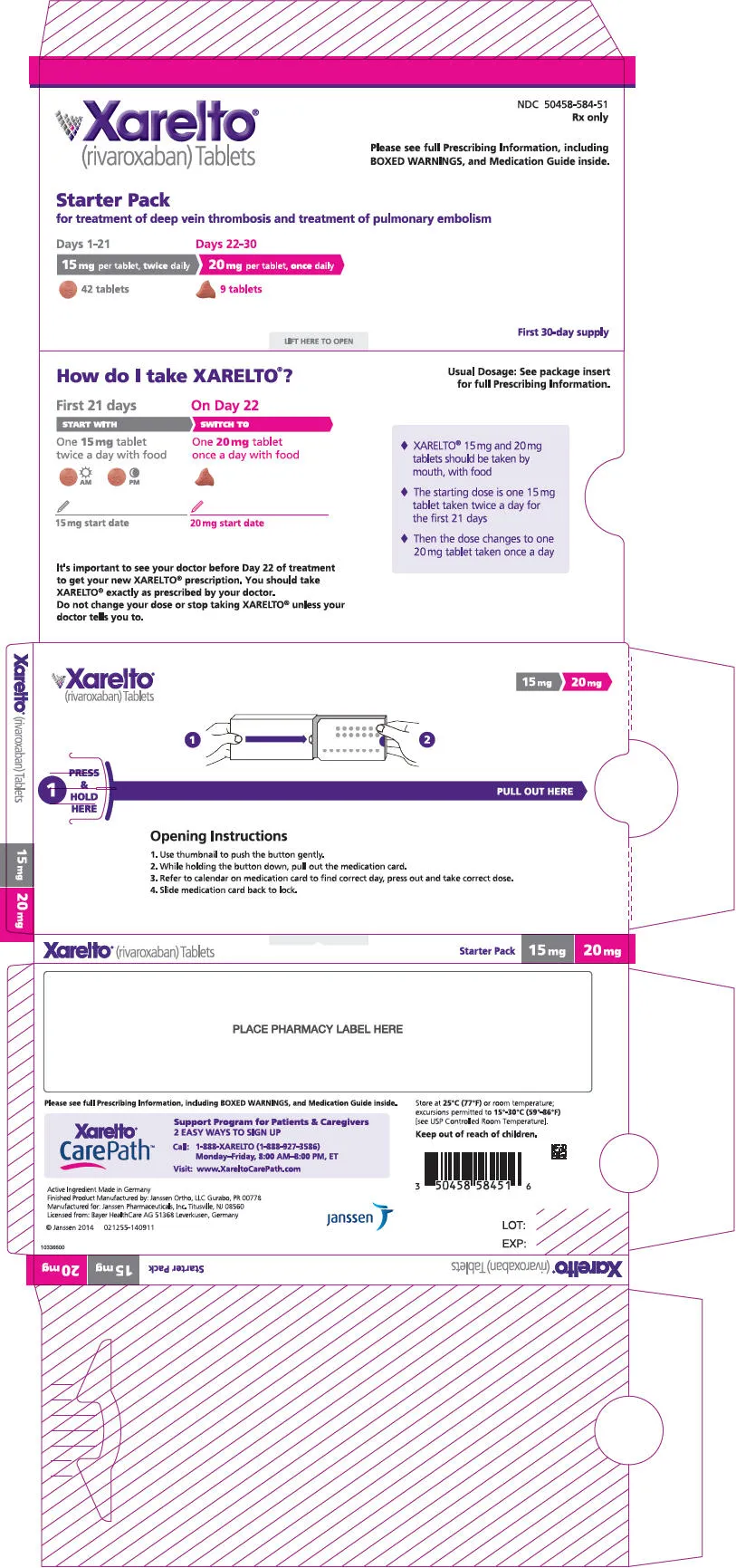
Introduction to Xarelto (Rivaroxaban)
Xarelto, with its generic name Rivaroxaban, stands as a cornerstone in modern anticoagulation therapy. It belongs to a class of medications known as Direct Oral Anticoagulants (DOACs), specifically a direct Factor Xa inhibitor. Since its introduction, Xarelto has revolutionized the management and prevention of various thromboembolic conditions, offering a predictable dosing regimen and fewer drug-food interactions compared to older anticoagulants like warfarin.
Blood clots, while essential for wound healing, can pose severe health risks when they form inappropriately within blood vessels, leading to conditions such as deep vein thrombosis (DVT), pulmonary embolism (PE), and stroke in patients with atrial fibrillation. Xarelto's primary role is to prevent the formation and growth of these dangerous blood clots, thereby reducing the risk of life-threatening cardiovascular events. This comprehensive guide delves into the intricate details of Xarelto, from its molecular mechanism to its clinical applications, safety profile, and management considerations.
Understanding Xarelto: Mechanism of Action and Pharmacokinetics
To truly grasp the efficacy and safety profile of Xarelto, it's crucial to understand how it interacts with the body's complex coagulation cascade and how the body, in turn, processes this medication.
Mechanism of Action: A Direct Factor Xa Inhibitor
The coagulation cascade is a finely tuned series of enzymatic reactions that culminates in the formation of a stable fibrin clot. Central to this cascade is Factor Xa, an activated enzyme that plays a critical role in both the intrinsic and extrinsic pathways of coagulation. Factor Xa is responsible for converting prothrombin into thrombin, which then converts fibrinogen into fibrin, forming the structural meshwork of a clot.
Rivaroxaban exerts its anticoagulant effect by directly inhibiting Factor Xa. Unlike indirect Factor Xa inhibitors (such as fondaparinux) that require antithrombin as a cofactor, rivaroxaban binds directly and reversibly to Factor Xa. This direct inhibition prevents the generation of thrombin, thereby significantly reducing the formation of fibrin clots. Because it targets Factor Xa, it inhibits both free and clot-bound Factor Xa, offering a potent and specific anticoagulant effect. This targeted action allows for a more predictable anticoagulant response compared to Vitamin K antagonists like warfarin, which broadly interfere with the synthesis of several clotting factors.
Pharmacokinetics: What the Body Does to Rivaroxaban
Understanding the pharmacokinetics of rivaroxaban is essential for appropriate dosing and managing potential interactions.
- Absorption: Rivaroxaban is rapidly absorbed from the gastrointestinal tract. Peak plasma concentrations are typically reached 2 to 4 hours after tablet intake. Bioavailability is high (80-100%) for 2.5 mg and 10 mg doses, but it decreases to 66% for the 20 mg dose when taken in the fasted state. To optimize absorption and ensure consistent drug levels, doses of 15 mg and 20 mg must be taken with food.
- Distribution: Rivaroxaban is highly bound to plasma proteins, primarily serum albumin, with a binding percentage of approximately 92-95%. The volume of distribution is moderate.
- Metabolism: Approximately two-thirds of the administered dose undergoes metabolic degradation, primarily in the liver. This metabolism occurs via two main pathways:
- CYP3A4 and CYP2J2 mediated oxidative degradation: These cytochrome P450 enzymes are crucial for metabolizing a significant portion of the drug.
- CYP-independent hydrolysis: This pathway also contributes to the drug's breakdown.
- The remaining one-third of the dose is excreted unchanged.
- Excretion: Rivaroxaban exhibits dual-route excretion. Approximately two-thirds of the dose is excreted, with half eliminated renally (about half of which is unchanged drug, the other half as inactive metabolites) and the other half excreted via the fecal/biliary route (primarily as inactive metabolites). The terminal elimination half-life is typically 5 to 9 hours in healthy young adults and 9 to 13 hours in elderly individuals. Renal and hepatic impairment can significantly alter these parameters, necessitating dose adjustments.
Clinical Indications and Dosage Guidelines for Xarelto
Xarelto's broad spectrum of approved indications underscores its versatility and importance in various medical specialties, particularly orthopedics and cardiology.
Approved Indications
Xarelto is approved for several critical conditions, each with specific dosing regimens:
- Prevention of Stroke and Systemic Embolism in Patients with Nonvalvular Atrial Fibrillation (NVAF): Atrial fibrillation is an irregular heart rhythm that can lead to blood clot formation in the atria, which can then travel to the brain, causing a stroke. Xarelto significantly reduces this risk.
- Treatment of Deep Vein Thrombosis (DVT) and Pulmonary Embolism (PE): DVT is a blood clot in a deep vein, usually in the leg, while PE occurs when a part of this clot breaks off and travels to the lungs. Xarelto is used for both the acute treatment and long-term prevention of recurrence.
- Reduction in the Risk of Recurrence of DVT and PE: After initial treatment, Xarelto can be continued at a lower dose to prevent future clot formation.
- Prophylaxis of DVT and PE in Patients Undergoing Hip or Knee Replacement Surgery: Orthopedic surgeries carry a high risk of DVT/PE due to immobility and tissue trauma. Xarelto is used post-operatively to prevent these complications.
- Reduction in the Risk of Major Adverse Cardiovascular Events (MACE) in Patients with Chronic Coronary Artery Disease (CAD) or Peripheral Artery Disease (PAD): In combination with aspirin, a low dose of Xarelto can reduce the risk of heart attack, stroke, and cardiovascular death in patients with stable CAD or symptomatic PAD.
Dosage Guidelines
Dosage varies significantly based on the indication, patient's renal function, and other clinical factors. Adherence to prescribed dosages is paramount for efficacy and safety.
| Indication | Standard Adult Dosage