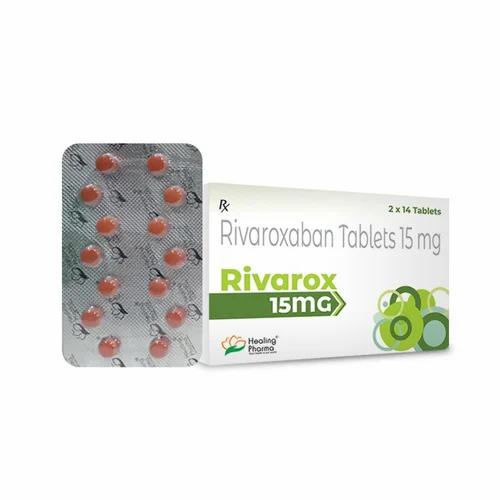
Rivarox: An Expert's Guide to Anticoagulation and Thrombosis Management
Introduction & Overview of Rivarox
Welcome to this authoritative medical guide on Rivarox, a potent direct oral anticoagulant (DOAC) widely utilized in the prevention and treatment of various thrombotic conditions. As an expert in orthopedic care and medical SEO copywriting, this guide is meticulously crafted to provide comprehensive, evidence-based information for patients, caregivers, and healthcare professionals alike.
Rivarox belongs to a class of medications known as Factor Xa inhibitors. Its primary function is to prevent blood clot formation, thereby reducing the risk of life-threatening events such as stroke, pulmonary embolism (PE), and deep vein thrombosis (DVT). Unlike older anticoagulants like warfarin, Rivarox offers several advantages, including a predictable pharmacokinetic profile, fewer drug-food interactions, and typically no requirement for routine coagulation monitoring.
This guide will delve into the intricate details of Rivarox, covering its mechanism of action, pharmacokinetic properties, extensive clinical indications, precise dosage guidelines, critical contraindications, potential drug interactions, warnings for pregnancy and lactation, and strategies for overdose management. Our aim is to empower you with a deep understanding of this crucial medication, ensuring its safe and effective use.
Disclaimer: This guide provides general medical information and is not a substitute for professional medical advice, diagnosis, or treatment. Always consult with your healthcare provider for any health concerns or before making any decisions related to your health or treatment.
Deep-Dive into Technical Specifications & Mechanisms
Mechanism of Action: How Rivarox Works
Rivarox exerts its anticoagulant effect by directly and selectively inhibiting Factor Xa (FXa), a pivotal enzyme in the coagulation cascade. To understand its action, it's essential to briefly review the clotting process:
- Initiation: Injury exposes tissue factor, activating Factor VII to VIIa.
- Amplification: VIIa activates Factor X to Xa. Factor IX to IXa.
- Propagation: Factor Xa, in complex with Factor Va (the prothrombinase complex), converts prothrombin (Factor II) into thrombin (Factor IIa). Thrombin then converts fibrinogen into fibrin, forming the meshwork of a clot. Thrombin also activates platelets and other clotting factors, amplifying the process.
Rivarox directly binds to and inhibits both free Factor Xa and Factor Xa bound in the prothrombinase complex. By inhibiting Factor Xa, Rivarox effectively blocks the common pathway of the coagulation cascade, preventing the generation of thrombin. This results in a potent reduction in clot formation, without directly affecting thrombin activity itself (unlike direct thrombin inhibitors).
- Key advantages of Factor Xa inhibition:
- Targets a central point in the coagulation cascade.
- Offers a predictable anticoagulant response.
- Minimizes the need for routine laboratory monitoring compared to Vitamin K antagonists (VKAs) like warfarin.
Pharmacokinetics: Absorption, Distribution, Metabolism, and Excretion
Understanding Rivarox's journey through the body is crucial for effective prescribing and patient management.
-
Absorption:
- Rivarox is rapidly absorbed from the gastrointestinal tract.
- Oral bioavailability is high, but it is dose-dependent. For doses of 10 mg, absolute bioavailability is approximately 80-100%, meaning it can be taken with or without food.
- For doses of 15 mg and 20 mg, bioavailability is reduced to 66% if taken in the fasted state; therefore, these doses should be taken with food to ensure optimal absorption.
- Peak plasma concentrations are typically reached 2-4 hours after administration.
-
Distribution:
- Rivarox is highly bound to plasma proteins, primarily albumin (approximately 92-95%).
- The volume of distribution is moderate.
-
Metabolism:
- Approximately two-thirds of the administered dose undergoes metabolic degradation.
- Metabolism occurs mainly via cytochrome P450 enzymes (CYP3A4 and CYP2J2) and also via CYP-independent mechanisms.
- The remaining one-third is excreted unchanged.
-
Elimination:
- Approximately two-thirds of the dose is eliminated renally (about 36% as unchanged drug, 30% as inactive metabolites).
- The remaining one-third is eliminated via the hepatobiliary route (about 7% as unchanged drug, 28% as inactive metabolites).
- The terminal elimination half-life is typically 5-9 hours in healthy young adults and 9-13 hours in elderly individuals. This allows for once-daily dosing in many indications.
-
Impact of Organ Impairment:
- Renal Impairment: Clearance is significantly reduced in patients with moderate to severe renal impairment (creatinine clearance <50 mL/min), leading to increased drug exposure. Dose adjustments are often necessary.
- Hepatic Impairment: Rivarox is contraindicated in patients with severe hepatic disease associated with coagulopathy, due to impaired clotting factor production and reduced drug metabolism.
Extensive Clinical Indications & Usage
Rivarox is approved for a broad spectrum of indications, reflecting its versatility and efficacy in managing various thromboembolic disorders.
Approved Indications for Rivarox
-
Prevention of Stroke and Systemic Embolism in Non-valvular Atrial Fibrillation (NVAF):
- NVAF is a common arrhythmia that significantly increases the risk of clot formation in the heart, leading to stroke. Rivarox is highly effective in reducing this risk.
-
Treatment of Deep Vein Thrombosis (DVT) and Pulmonary Embolism (PE):
- DVT involves clot formation in deep veins, usually in the legs. PE occurs when a part of this clot breaks off and travels to the lungs, potentially being life-threatening. Rivarox is used for acute treatment and subsequent secondary prevention.
-
Prophylaxis of DVT and PE in Patients Undergoing Major Orthopedic Surgery:
- Patients undergoing elective hip or knee replacement surgery are at high risk of DVT/PE due to immobility and surgical trauma. Rivarox is used to prevent these complications post-surgery.
-
Prevention of Recurrent DVT and PE:
- After an initial DVT or PE event, patients are at risk for recurrence. Rivarox is used for extended therapy to prevent future events.
-
Reduction in the Risk of Major Adverse Cardiovascular Events (MACE) in Patients with Coronary Artery Disease (CAD) or Peripheral Artery Disease (PAD):
- In combination with aspirin, a low dose of Rivarox can reduce the risk of heart attack, stroke, and cardiovascular death in patients with established CAD or PAD, a population at high thrombotic risk.
Dosage Guidelines for Rivarox
Dosage varies significantly based on the indication and patient-specific factors, particularly renal function. Always refer to the prescribing information and consult with a healthcare professional.
| Indication | Standard Recommended Dosage