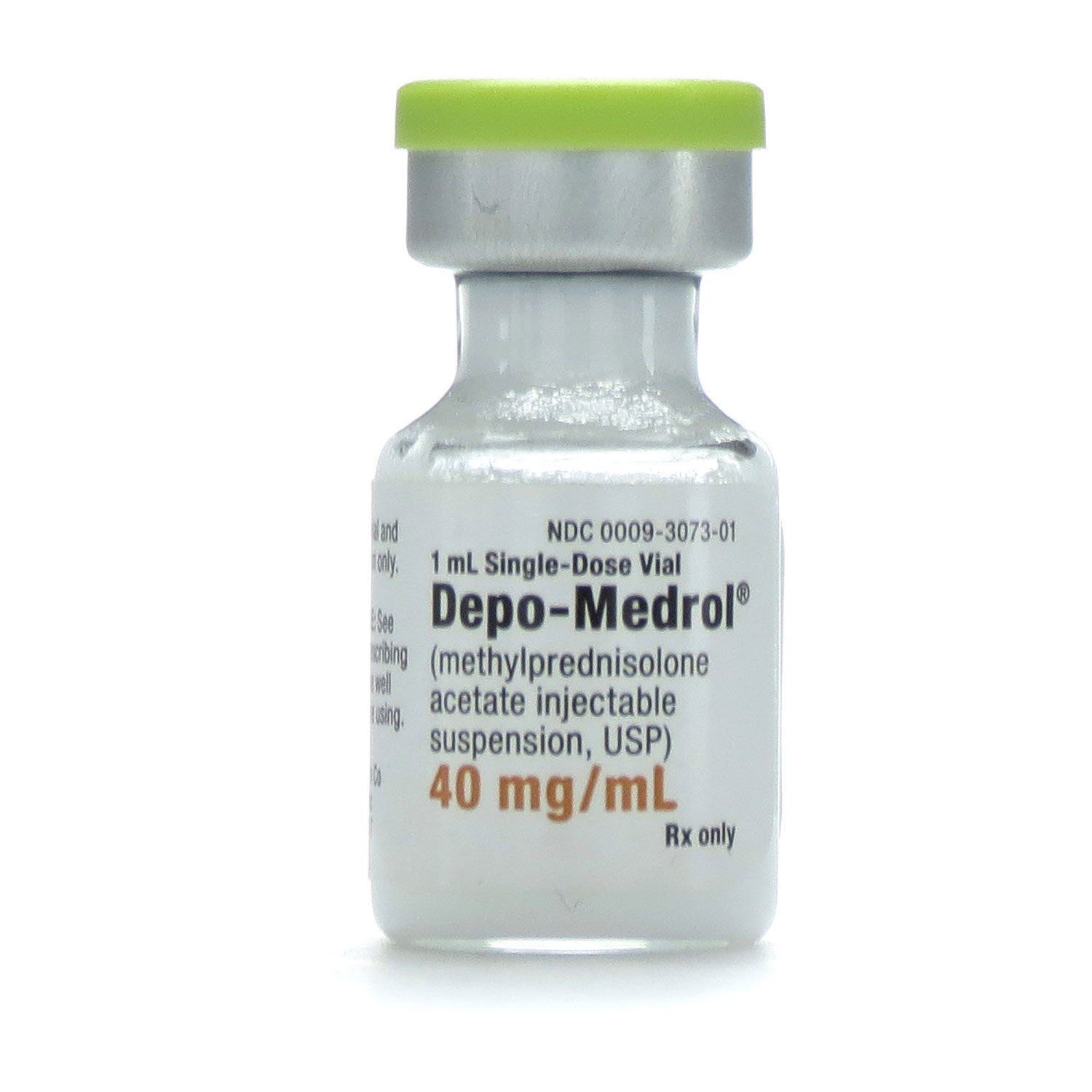
Methylprednisolone Acetate (Depo-Medrol): An Expert Medical SEO Guide
Comprehensive Introduction & Overview
Methylprednisolone acetate, widely recognized by its brand name Depo-Medrol, is a potent synthetic glucocorticoid corticosteroid. As an expert in orthopedic medicine and medical SEO, we understand the critical role this medication plays in managing a wide array of inflammatory, allergic, and autoimmune conditions. Administered primarily via intramuscular (IM), intra-articular (IA), or soft tissue injection, Depo-Medrol is formulated for a prolonged local and systemic effect due to its acetate ester, which slows its absorption from the injection site.
Corticosteroids, in general, are powerful anti-inflammatory and immunosuppressive agents, mimicking the effects of cortisol, a hormone naturally produced by the adrenal glands. Depo-Medrol's targeted delivery allows for concentrated action at specific sites of inflammation, such as joints affected by arthritis or bursae, while also providing systemic relief when indicated. This guide will delve into the intricate details of Depo-Medrol, covering its mechanism of action, pharmacokinetics, extensive clinical indications, appropriate dosage guidelines, critical contraindications, potential drug interactions, considerations for pregnancy and lactation, and management of overdose. Our aim is to provide an exhaustive resource for healthcare professionals and informed patients seeking a deeper understanding of this vital medication.
Deep-Dive into Technical Specifications / Mechanisms
Mechanism of Action (MOA)
Methylprednisolone acetate exerts its therapeutic effects primarily through its potent anti-inflammatory and immunosuppressive properties, mediated by binding to intracellular glucocorticoid receptors (GRs).
-
Glucocorticoid Receptor Binding:
- Upon entering target cells, methylprednisolone acetate dissociates from its carrier proteins and binds to cytosolic GRs.
- This binding induces a conformational change in the receptor, leading to its translocation into the cell nucleus.
-
Genomic Effects (Transactivation and Transrepression):
- Transactivation: The activated GR complex binds to specific DNA sequences known as glucocorticoid response elements (GREs) in the promoter regions of target genes. This binding upregulates the transcription of anti-inflammatory genes, leading to increased synthesis of proteins such as:
- Lipocortin-1 (Annexin A1): Inhibits phospholipase A2 (PLA2), thereby reducing the release of arachidonic acid, a precursor to prostaglandins and leukotrienes (key inflammatory mediators).
- Neutral endopeptidase (NEP): Involved in the breakdown of inflammatory peptides.
- Transrepression: More significantly, the activated GR complex can directly or indirectly inhibit the transcription of pro-inflammatory genes. This occurs through several mechanisms:
- Interference with transcription factors: The GR complex can interact with and inhibit the activity of key pro-inflammatory transcription factors, such as Nuclear Factor-kappa B (NF-κB) and Activator Protein-1 (AP-1).
- Reduced production of inflammatory mediators: This leads to a decrease in the synthesis and release of a broad spectrum of inflammatory cytokines (e.g., TNF-α, IL-1, IL-6), chemokines, adhesion molecules, and inducible enzymes like cyclooxygenase-2 (COX-2) and inducible nitric oxide synthase (iNOS).
- Transactivation: The activated GR complex binds to specific DNA sequences known as glucocorticoid response elements (GREs) in the promoter regions of target genes. This binding upregulates the transcription of anti-inflammatory genes, leading to increased synthesis of proteins such as:
-
Non-Genomic Effects:
- Some rapid glucocorticoid effects occur independently of gene transcription, likely involving direct interactions with cell membranes or cytoplasmic proteins. These effects are less well-understood but may contribute to the immediate anti-inflammatory response.
-
Immunosuppressive Effects:
- Lymphocyte Reduction: Glucocorticoids induce apoptosis (programmed cell death) of lymphocytes (T and B cells), particularly T helper cells. They also inhibit the proliferation and differentiation of lymphocytes.
- Interference with Antigen Presentation: They can suppress the function of antigen-presenting cells (APCs) like macrophages and dendritic cells.
- Reduced Antibody Production: High doses can suppress antibody production.
- Migration Inhibition: They inhibit the migration of leukocytes (e.g., neutrophils, monocytes) to sites of inflammation.
Pharmacokinetics
The pharmacokinetics of methylprednisolone acetate are influenced by its esterification, which provides a depot effect.
| Parameter | Description |
| Absorption | Slowly and completely absorbed from the site of intramuscular (IM) injection, providing a sustained systemic effect. The acetate ester makes it a "depot" preparation. Intra-articular (IA) and soft tissue injections lead to local retention and slow systemic absorption. |
| Absorption (cont.): For systemic effect, IM route is used. For local effect, IA or soft tissue injection is used. Depo-Medrol is never administered intravenously.