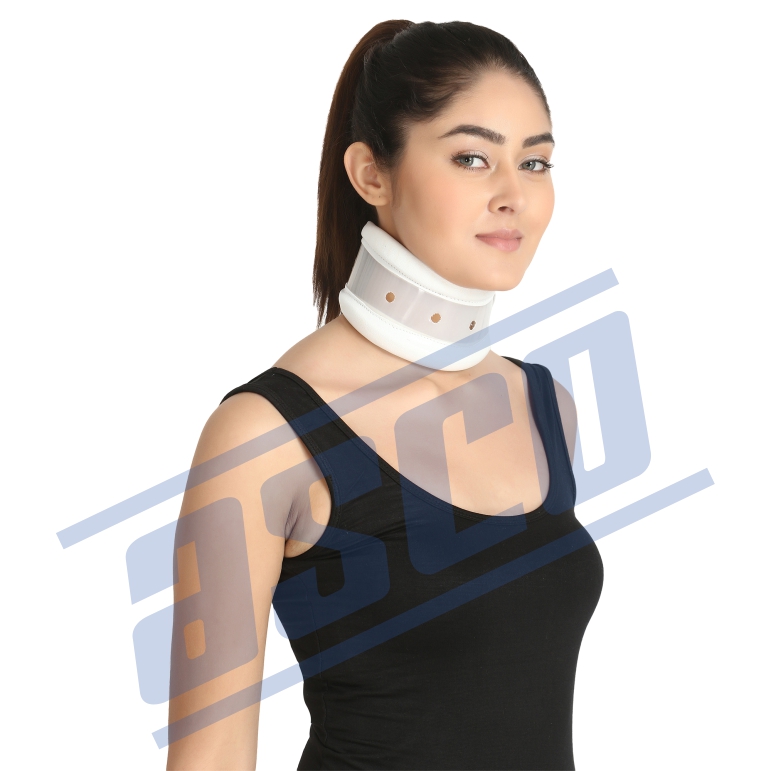
Hard Cervical Collar: A Comprehensive Medical SEO Guide
1. Comprehensive Introduction & Overview
A hard cervical collar is a vital medical device used to immobilize and support the cervical spine (neck). Unlike soft collars that offer minimal support and are primarily for comfort or proprioceptive feedback, hard cervical collars are rigid structures designed to significantly restrict neck movement. They play a critical role in orthopedic, neurosurgical, and emergency medicine settings, providing stability to the neck following injury, surgery, or in conditions requiring strict immobilization.
This comprehensive guide, crafted by an expert Medical SEO Copywriter and Orthopedic Specialist, will delve into the intricate details of hard cervical collars. We will explore their biomechanical "mechanism of action," detailed clinical indications, proper usage guidelines, potential risks, and contraindications. Our aim is to provide an exhaustive resource that is both authoritative and accessible, ensuring patients, caregivers, and healthcare professionals understand the critical role these devices play in cervical spine management and recovery.
Key functions of a hard cervical collar include:
* Immobilization: Minimizing movement to prevent further injury or allow healing.
* Support: Bearing some of the head's weight, thereby reducing the load on the cervical vertebrae and muscles.
* Pain Reduction: By limiting motion that can exacerbate pain, especially in acute phases of injury.
* Protection: Shielding the neck from external forces or accidental movements.
Common types of hard cervical collars include the Philadelphia collar, Miami J collar, and Aspen collar, each offering slightly different designs and levels of immobilization but sharing the core principle of rigid support.
2. Deep-dive into Technical Specifications / Biomechanical Mechanisms
While a hard cervical collar is not a medication, understanding its "mechanism of action" is crucial from a biomechanical perspective. This refers to how the device achieves its therapeutic effect on the cervical spine.
Biomechanical Mechanism of Action
The primary biomechanical "mechanism of action" of a hard cervical collar is rigid external immobilization. This is achieved through several key design principles:
- Three-Point Fixation: Hard collars typically employ a three-point system to restrict movement:
- Chin Support: An anterior component rests under the chin, preventing excessive neck flexion (bending forward).
- Occipital Support: A posterior component cups the back of the head (occiput), preventing excessive neck extension (bending backward).
- Shoulder/Chest Support: Both anterior and posterior components extend down to rest on the shoulders and upper chest, providing a stable base and limiting lateral bending and rotation.
- Kinematic Restriction: By rigidly connecting the head to the torso, the collar significantly limits the physiological ranges of motion of the cervical spine:
- Flexion/Extension: Restricted by the chin and occipital rests.
- Lateral Bending (Side-bending): Limited by the side walls of the collar extending from the chin/occiput to the shoulders.
- Rotation: Restricted by the overall rigid structure preventing the head from turning independently of the torso.
- Axial Load Reduction: While not completely offloading the cervical spine, the collar provides some support, distributing the weight of the head over a larger surface area (shoulders/chest), thereby reducing direct axial compression on the injured or healing spinal segments.
- Proprioceptive Feedback: The constant tactile presence of the collar provides strong proprioceptive input, reminding the patient to keep their neck still and avoid abrupt movements.
Technical Specifications and Design Principles
Hard cervical collars are engineered for specific functions and patient comfort:
- Materials: Typically constructed from rigid plastics (e.g., polyethylene, polypropylene) that are lightweight yet strong. The interior is lined with soft, often removable, hypoallergenic foam padding for comfort and to prevent skin irritation.
- Construction: Composed of anterior and posterior shells that are secured together, usually with Velcro straps. These straps allow for adjustment to ensure a snug, yet not overly tight, fit.
- Anatomical Contouring: Designed to conform to the natural curves of the chin, mandible, clavicles, sternum, and occiput, maximizing immobilization while minimizing pressure points.
- Ventilation: Many designs incorporate fenestrations or openings to allow for air circulation, reducing heat buildup and moisture, which can contribute to skin breakdown.
- Tracheal Opening: A prominent opening in the anterior shell allows for access to the trachea, crucial for emergency airway management (e.g., tracheostomy, intubation) without removing the collar.
- Sizing: Available in various sizes (e.g., small, medium, large, pediatric) and often with adjustable height features to ensure an optimal fit for diverse patient anatomies. Proper sizing is paramount for effective immobilization and patient safety.
3. Extensive Clinical Indications & Usage
The decision to prescribe a hard cervical collar is made by a physician based on a thorough assessment of the patient's condition, imaging studies, and clinical presentation. The "dosage guidelines" for a medical device translate into precise usage protocols and duration.
Detailed Indications for Hard Cervical Collar Use
Hard cervical collars are indicated for a range of conditions requiring moderate to severe cervical spine immobilization:
| Clinical Indication | Description |
|---|---|
| Acute Cervical Spine Trauma | Stable Fractures: Fractures of the cervical vertebrae (e.g., stable compression fractures, spinous process fractures, odontoid fractures Type I and II) that do not demonstrate significant instability or neurological compromise. Ligamentous Injuries: Severe sprains or tears of cervical ligaments (e.g., whiplash-associated disorders grade III or IV) requiring strict immobilization to facilitate healing. |
| Post-Surgical Stabilization | Following cervical spine surgery such as: Cervical Fusion: To maintain alignment and promote bony fusion. Laminectomy/Laminoplasty: To protect the surgical site and prevent excessive motion during the initial healing phase. Discectomy: To provide support and reduce stress on the operated segment. |
| Cervical Sprains & Strains | Moderate to severe acute soft tissue injuries of the neck where significant pain and muscle spasm necessitate immobilization beyond what a soft collar can provide. |
| Cervical Radiculopathy | In acute exacerbations where immobilization can reduce nerve root irritation and pain by limiting movements that compress the nerve. |
| Degenerative Disc Disease (DDD) | For acute flare-ups of chronic DDD or cervical spondylosis, providing support and limiting painful movements. |
| Rheumatoid Arthritis (RA) | In patients with RA affecting the cervical spine, particularly those with atlantoaxial instability, to provide support and protect against neurological compromise. |
| Metastatic Disease | To provide palliative support and prevent pathological fractures or neurological compromise in patients with metastatic tumors involving the cervical spine. |
| Emergency Pre-hospital Care | Used in suspected cervical spine injuries following trauma (e.g., motor vehicle accidents, falls) to stabilize the neck and prevent further injury during transport to a medical facility. |
| Chronic Neck Pain | Occasionally used for short periods in chronic pain conditions to provide temporary relief and support, though long-term use is generally discouraged due to the risk of muscle atrophy. |
Usage Guidelines and Duration ("Dosage")
The "dosage" for a hard cervical collar refers to the duration and specific instructions for its wear and care. This is always determined by the treating physician and may vary significantly based on the underlying condition.
- Prescription and Fitting: A hard cervical collar is a prescription device. It must be professionally fitted by a healthcare provider (physician, nurse, orthotist, or physical therapist) to ensure proper immobilization and patient comfort. An ill-fitting collar can be ineffective or cause complications.
- Duration of Wear:
- Acute Trauma: Often worn continuously (24/7) for several weeks (e.g., 6-12 weeks for stable fractures), with specific instructions for hygiene and skin care.
- Post-Surgery: Typically worn continuously for an initial period (e.g., 2-6 weeks), followed by a gradual weaning process as directed by the surgeon.
- Acute Exacerbations: May be worn intermittently or for shorter durations (e.g., 1-4 weeks) until symptoms subside.
- Emergency Care: Worn until definitive diagnosis and treatment plan are established.
- Continuous Wear vs. Intermittent: Most indications require continuous wear, with removal only for hygiene or specific therapeutic exercises as permitted by the physician.
- Hygiene and Skin Care:
- The collar should be cleaned regularly according to manufacturer guidelines (usually with mild soap and water).
- The skin under the collar must be inspected daily for redness, irritation, or pressure sores.
- Padding should be changed or cleaned regularly.
- Activities: Patients are usually advised to limit strenuous activities, heavy lifting, and any movements that could compromise cervical stability. Driving is generally contraindicated due to restricted field of vision and neck mobility.
- Sleeping: Patients must sleep with the collar on, often with specific pillow recommendations (e.g., firm, flat pillow) to maintain neutral spine alignment.
- Weaning Protocol: As healing progresses, the physician will prescribe a gradual weaning process, transitioning from continuous wear to intermittent wear, and eventually to no collar. Abrupt discontinuation can be detrimental.
4. Risks, Side Effects, and Contraindications
While hard cervical collars are essential for many conditions, their use is not without potential risks and contraindications. Understanding these is crucial for safe and effective patient management.
Contraindications
Certain situations preclude or limit the use of a hard cervical collar:
- Unstable Cervical Spine Fractures Requiring Immediate Surgical Fixation: In cases of severe instability or neurological deficit, a hard collar alone may be insufficient and could delay definitive treatment. More rigid immobilization methods like halo vests or surgical stabilization are often required.
- Severe Skin Breakdown or Infection in the Collar Area: The presence of open wounds, severe rashes, or active infections under the collar can be exacerbated by its pressure and lack of ventilation.
- Airway Compromise: In rare instances, an improperly fitted or excessively tight collar, particularly in patients with pre-existing respiratory issues or swelling, could potentially compromise the airway. The tracheal opening is designed to mitigate this, but vigilance is required.
- Patient Intolerance/Non-compliance (Relative Contraindication): While not an absolute contraindication, significant patient discomfort, claustrophobia, or refusal to wear the collar can severely limit its effectiveness. Alternative strategies or increased patient education may be necessary.
- Conditions Requiring Range of Motion: Certain post-surgical protocols or rehabilitation phases may actively require controlled range of motion exercises, making continuous hard collar wear inappropriate.
Potential Risks and Side Effects
Wearing a hard cervical collar, especially for prolonged periods, can lead to several adverse effects:
- Skin Irritation and Pressure Sores: The most common complication. Pressure points, friction, heat, and moisture can lead to redness, blistering, and even skin breakdown, particularly over bony prominences (e.g., chin, occiput, clavicles).
- Muscle Atrophy and Stiffness: Prolonged immobilization can lead to weakening of the neck and shoulder muscles, reduced range of motion, and joint stiffness. This necessitates a structured rehabilitation program after collar removal.
- Discomfort and Pain: While designed to reduce pain from injury, the collar itself can cause discomfort, especially during the initial adjustment period or if improperly fitted.
- Difficulty Eating and Swallowing (Dysphagia): The chin support can make it challenging to open the mouth fully, chew, and swallow, potentially leading to nutritional issues or aspiration risk.
- Psychological Impact: Patients may experience anxiety, claustrophobia, depression, or a feeling of isolation due to the physical restriction and visible nature of the collar.
- Increased Intracranial Pressure (Rare): An overly tight collar, particularly if it compresses the jugular veins, can theoretically impede venous outflow from the brain, leading to a slight increase in intracranial pressure. This is extremely rare with proper fitting.
- Restricted Field of Vision: The collar limits peripheral vision, particularly downwards, which can increase the risk of falls and make daily activities challenging.
- Hygiene Challenges: Maintaining personal hygiene, including showering and hair washing, becomes difficult with a collar on.
- Nerve Compression: Improper fit can potentially compress superficial nerves, leading to numbness or tingling.
Drug Interactions and Pharmacokinetics: As a medical device, a hard cervical collar does not have "drug interactions" or "pharmacokinetics" in the traditional sense. Its effect is purely biomechanical. Similarly, "overdose management" is not applicable; misuse would relate to improper fitting or duration, leading to the risks outlined above rather than a pharmacological overdose.
Pregnancy/Lactation Warnings: There are no direct "pregnancy/lactation warnings" for the device itself. However, special considerations are necessary for pregnant patients:
* Fit and Comfort: Changes in body shape and weight during pregnancy may necessitate adjustments to collar fit for comfort and effectiveness.
* Skin Sensitivity: Increased skin sensitivity during pregnancy may make skin irritation more likely.
* Positioning: Lying positions may need modification for comfort.
* Diagnostic Imaging: Any necessary imaging to assess the cervical spine injury should be performed with appropriate shielding to protect the fetus.
5. Massive FAQ Section
Frequently Asked Questions About Hard Cervical Collars
1. What is a hard cervical collar used for?
A hard cervical collar is used to immobilize and support the neck (cervical spine) after an injury, surgery, or in conditions requiring strict limitation of neck movement. This helps prevent further injury, reduce pain, and promote healing.
2. How long do I need to wear my hard cervical collar?
The duration of wear is highly individualized and determined by your doctor. It depends on the specific injury or condition, its severity, and your healing progress. It could range from a few weeks to several months. Always follow your doctor's specific instructions for wear time and weaning protocols.
3. Can I shower or bathe with my hard cervical collar on?
Generally, you should not get your hard cervical collar wet, as this can compromise the materials, harbor bacteria, and lead to skin breakdown. Your doctor or healthcare team will provide specific instructions for hygiene. Often, you'll be taught how to safely remove the collar for quick cleaning and skin inspection, or how to sponge bathe without getting it wet. Some collars have removable, washable padding.
4. How do I clean my hard cervical collar?
Most hard cervical collars can be cleaned with mild soap and water. The foam padding often detaches and can be hand-washed and air-dried. Always refer to the manufacturer's instructions and your healthcare provider's advice for specific cleaning procedures to maintain hygiene and prevent skin irritation.
5. What are the signs of a poorly fitting hard cervical collar?
Signs of a poor fit include:
* Excessive movement of your head/neck within the collar.
* Gaps between the collar and your skin, especially under the chin or at the back of the head.
* Redness, blistering, or skin breakdown at pressure points.
* Difficulty breathing or swallowing.
* Increased pain or new neurological symptoms (numbness, tingling).
* The collar digging into your throat or jaw.
If you experience any of these, contact your healthcare provider immediately for adjustment.
6. Can I drive while wearing a hard cervical collar?
No, driving is generally not recommended and often prohibited while wearing a hard cervical collar. The collar severely restricts your ability to turn your head, limiting your peripheral vision and making it unsafe to operate a vehicle.
7. Is it normal to feel discomfort or stiffness while wearing the collar?
Some initial discomfort, particularly in the first few days, is common as you adjust to the collar. However, persistent or severe pain, new numbness, tingling, or significant stiffness should be reported to your doctor. Muscle stiffness can develop with prolonged wear and is often addressed with physical therapy after the collar is removed.
8. What activities should I avoid while wearing a hard cervical collar?
You should avoid any activity that could compromise your neck stability or cause undue stress on your cervical spine. This typically includes:
* Heavy lifting.
* Bending, twisting, or rotating your neck.
* Strenuous exercise.
* Contact sports.
* Driving (as mentioned above).
* Any activity that causes pain or dislodges the collar.
Always follow your doctor's specific activity restrictions.
9. How do I sleep with a hard cervical collar on?
Sleeping with a hard cervical collar requires some adjustment. Most doctors recommend sleeping on your back, often with a relatively flat or firm pillow that supports the natural curve of your neck without pushing your chin into the collar. Avoid sleeping on your stomach. Your physical therapist or doctor may offer specific advice on optimal sleeping positions.
10. When can I remove my hard cervical collar permanently?
You should only remove your hard cervical collar permanently when your doctor explicitly instructs you to do so. They will assess your healing progress through clinical examination and possibly imaging studies. Often, removal is a gradual process, known as "weaning," where you wear the collar for progressively shorter periods each day before complete discontinuation.
11. Are there alternatives to a hard cervical collar?
Yes, depending on the severity and type of injury, alternatives may include:
* Soft cervical collars: For less severe injuries, providing comfort and proprioceptive feedback but minimal immobilization.
* Halo vests: For severe, unstable cervical spine injuries, offering maximum external immobilization.
* Surgical stabilization: In cases of significant instability or neurological compromise, surgery may be the primary treatment.
* Physical therapy and rehabilitation: For chronic conditions or after the initial healing phase, focusing on strengthening and range of motion.
12. What should I do if my skin gets irritated under the collar?
Daily skin inspection is crucial. If you notice redness, tenderness, blisters, or skin breakdown:
* Inform your healthcare provider immediately.
* Ensure the collar is not too tight and is properly aligned.
* Clean the skin gently with mild soap and water, ensuring it's completely dry before reapplying the collar.
* Do not apply lotions or powders unless specifically instructed by your doctor, as they can trap moisture.
* Your doctor may recommend specific padding or skin protectants. Never attempt to modify the collar yourself.