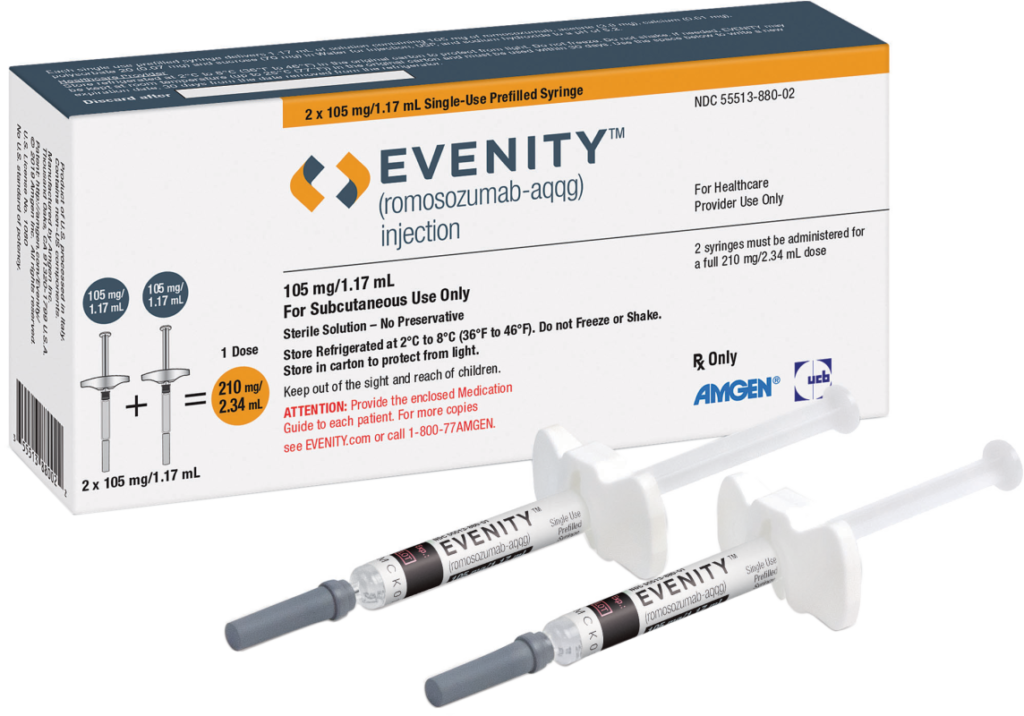
1. Introduction & Overview: Evenity (Romosozumab) - A Breakthrough in Osteoporosis Treatment
Osteoporosis is a debilitating skeletal disorder characterized by compromised bone strength, leading to an increased risk of fractures. Affecting millions worldwide, particularly postmenopausal women, it significantly impacts quality of life and can lead to serious morbidity and mortality. While numerous treatments aim to slow bone loss, a truly anabolic agent that robustly builds new bone has long been sought. Enter Evenity (romosozumab), a groundbreaking medication that offers a unique dual-effect mechanism, simultaneously increasing bone formation and decreasing bone resorption.
Evenity represents a novel therapeutic approach for postmenopausal women with severe osteoporosis who are at a high risk of fracture. Developed as a humanized monoclonal antibody, romosozumab targets sclerostin, a protein that plays a crucial role in regulating bone metabolism. By inhibiting sclerostin, Evenity unleashes a powerful cascade of events that rapidly increases bone mineral density (BMD) and significantly reduces the incidence of fractures, including vertebral, non-vertebral, and hip fractures. This guide provides an exhaustive overview of Evenity, detailing its intricate mechanisms, clinical applications, safety profile, and practical considerations for healthcare professionals and patients alike.
2. Deep-Dive into Technical Specifications & Mechanisms: How Evenity Rebuilds Bone
What is Romosozumab?
Romosozumab is a humanized monoclonal antibody (IgG2) that specifically binds to and inhibits sclerostin. Sclerostin is a protein produced by osteocytes (bone cells) that acts as a negative regulator of bone formation by inhibiting the Wnt signaling pathway. By neutralizing sclerostin, romosozumab effectively removes this brake on bone growth.
Mechanism of Action: The Dual-Effect Advantage
Evenity's mechanism of action is distinct from other osteoporosis therapies due to its dual effect on bone remodeling: it simultaneously increases bone formation and, to a lesser extent, decreases bone resorption.
- Sclerostin Inhibition: Sclerostin, primarily secreted by osteocytes, normally suppresses bone formation by binding to and inhibiting the Wnt/β-catenin signaling pathway in osteoblasts (bone-forming cells). By binding to sclerostin, romosozumab prevents sclerostin from interacting with its receptors, thereby disinhibiting the Wnt pathway.
- Activation of Wnt Signaling Pathway: The Wnt/β-catenin pathway is a crucial signaling cascade involved in skeletal development and bone homeostasis. Its activation leads to:
- Increased Osteoblast Activity: Enhanced proliferation and differentiation of osteoblasts.
- Increased Bone Matrix Deposition: Promotion of new bone formation.
- Reduced Osteoblast Apoptosis: Extended lifespan of bone-forming cells.
- Decreased Bone Resorption: While its primary effect is anabolic, romosozumab also has a modest antiresorptive effect. This is thought to be an indirect consequence of sclerostin inhibition, which can influence osteoclast (bone-resorbing cells) differentiation and activity, leading to a reduction in bone breakdown.
Summary of Evenity's Dual Action:
| Effect | Mechanism | Outcome |
|---|---|---|
| Bone Formation | Inhibits sclerostin -> Activates Wnt pathway -> Stimulates osteoblasts | Rapid and significant increase in BMD |
| Bone Resorption | Indirectly modulates osteoclast activity | Modest decrease in bone breakdown |
| Net Result | Rapid, substantial increase in bone mineral density and bone strength. | Reduced fracture risk across multiple sites. |
Pharmacokinetics: The Journey of Romosozumab in the Body
Understanding the pharmacokinetics of Evenity helps in appreciating its clinical profile and administration.
- Absorption: Following subcutaneous (SC) administration, romosozumab exhibits a bioavailability of approximately 50-75%. Peak serum concentrations (Cmax) are typically reached in 5 to 7 days.
- Distribution: The volume of distribution at steady state is approximately 3.9 L, suggesting limited distribution into tissues beyond the plasma and interstitial fluid.
- Metabolism: As a humanized monoclonal antibody, romosozumab is expected to be catabolized into small peptides and amino acids via general proteolytic pathways, similar to endogenous IgGs. It is not metabolized by cytochrome P450 enzymes.
- Elimination: The terminal half-life of romosozumab is approximately 12.8 days. Clearance is not significantly impacted by mild-to-moderate renal or hepatic impairment, and dose adjustments are generally not required for these conditions. However, data in severe renal or hepatic impairment are limited.
3. Extensive Clinical Indications & Usage: Who Benefits from Evenity?
Approved Indications
Evenity (romosozumab) is approved for the treatment of postmenopausal women with osteoporosis at high risk for fracture. The definition of "high risk" typically includes:
- A history of osteoporotic fracture.
- Multiple risk factors for fracture (e.g., advanced age, low body weight, history of falls, prolonged corticosteroid use).
- Patients who have failed or are intolerant to other available osteoporosis therapies (e.g., bisphosphonates, denosumab).
The decision to initiate Evenity should be made after a comprehensive assessment of the patient's individual fracture risk profile and consideration of the potential benefits and risks, particularly the cardiovascular safety profile.
Dosage Guidelines: Precision in Treatment
Accurate dosing and administration are crucial for optimizing Evenity's efficacy and safety.
- Recommended Dose: The recommended dose of Evenity is 210 mg administered once monthly.
- Administration: This 210 mg dose is given as two separate subcutaneous injections of 105 mg each. These injections should be administered consecutively at different injection sites.
- Frequency: Evenity is administered once monthly for a total duration of 12 doses (one year).
- Route: Subcutaneous (SC) injection.
- Administration Instructions:
- Evenity should be administered by a healthcare professional in a clinical setting.
- Recommended injection sites include the thigh, abdomen, or upper arm.
- Injection sites should be rotated with each monthly dose to minimize injection site reactions.
- The pre-filled syringes should be allowed to warm to room temperature for at least 30 minutes before injection. Do not warm in any other way (e.g., microwave).
- Do not shake the syringe.
- Missed Dose: If a monthly dose is missed, it should be administered as soon as possible. Subsequent doses should then be scheduled monthly from the date of the last injection.
- Transitioning from Evenity: Following the 12-month course of Evenity, it is critical to transition to an antiresorptive agent (e.g., a bisphosphonate such as alendronate, risedronate, zoledronic acid, or denosumab) to maintain the bone mineral density gains achieved with romosozumab and prevent rapid bone loss. Failure to follow up with an antiresorptive therapy can lead to a reversal of BMD gains and increased fracture risk.
Clinical Efficacy
Clinical trials (e.g., FRAME, ARCH) have demonstrated Evenity's robust efficacy:
- Fracture Reduction: Significant reduction in new vertebral fractures (up to 73% vs. placebo), non-vertebral fractures, and hip fractures compared to placebo or alendronate.
- BMD Increase: Rapid and substantial increases in BMD at the lumbar spine, total hip, and femoral neck, often exceeding those observed with antiresorptive agents alone.
4. Risks, Side Effects, & Contraindications: Understanding the Safety Profile
Like all medications, Evenity carries potential risks and side effects that must be carefully considered.
Boxed Warning: Potential Risk of Myocardial Infarction, Stroke, and Cardiovascular Death
Evenity carries a Boxed Warning regarding the potential risk of myocardial infarction (heart attack), stroke, and cardiovascular death.
- Risk Profile: In a controlled clinical trial, there was an observed increase in the incidence of serious cardiovascular events (cardiovascular death, nonfatal myocardial infarction, and nonfatal stroke) in patients treated with Evenity compared to those treated with alendronate.
- Patient Selection: Evenity should not be initiated in patients who have had a myocardial infarction or stroke within the preceding year.
- Risk Assessment: Healthcare providers should carefully consider the patient's cardiovascular risk factors before prescribing Evenity and during treatment. If a patient experiences a myocardial infarction or stroke during therapy, Evenity should be discontinued.
Contraindications
- Hypocalcemia: Evenity can cause transient decreases in serum calcium. It is absolutely essential to correct pre-existing hypocalcemia before initiating Evenity therapy. Patients should have adequate calcium and vitamin D intake during treatment.
- Hypersensitivity: Known hypersensitivity to romosozumab or any component of the Evenity formulation. Reactions may include angioedema, erythema multiforme, dermatitis, rash, and urticaria.
Common Side Effects (incidence ≥ 5% and greater than placebo)
- Arthralgia (joint pain)
- Headache
- Injection site reactions (pain, erythema, swelling, bruising)
- Back pain
- Nasopharyngitis
- Influenza-like illness
- Peripheral edema
Serious or Less Common Side Effects
- Hypocalcemia: Although often transient, severe hypocalcemia requiring hospitalization has been reported. Monitor calcium levels, especially in patients with impaired renal function.
- Osteonecrosis of the Jaw (ONJ): This rare but serious adverse event, characterized by exposed bone in the jaw that fails to heal, has been reported with Evenity. Risk factors for ONJ include invasive dental procedures, poor oral hygiene, cancer, concomitant therapies (e.g., corticosteroids, chemotherapy), and pre-existing dental disease. A dental examination with preventive dentistry should be considered prior to initiating Evenity, especially in patients with risk factors.
- Atypical Femur Fractures (AFF): These are rare, low-trauma fractures of the femoral shaft, distinct from typical osteoporotic fractures. AFFs have been reported with antiresorptive agents, and while causality with Evenity is still being fully elucidated, patients presenting with new or unusual thigh, hip, or groin pain should be evaluated for a possible AFF.
- Hypersensitivity Reactions: Serious hypersensitivity reactions, including angioedema and anaphylaxis, have been reported. If such a reaction occurs, discontinue Evenity and initiate appropriate medical management.
- Cardiovascular Events: As highlighted in the Boxed Warning, an increased risk of myocardial infarction, stroke, and cardiovascular death has been observed.
Drug Interactions
- No formal drug-drug interaction studies have been conducted with Evenity.
- As a monoclonal antibody, romosozumab is not expected to be metabolized by cytochrome P450 enzymes, and thus is unlikely to interact with drugs metabolized via these pathways.
- Calcium and Vitamin D: Adequate intake of calcium and vitamin D is essential for the efficacy and safety of Evenity. Patients should be advised to maintain appropriate supplementation if dietary intake is insufficient.
- Other Osteoporosis Medications: Evenity is generally not used concurrently with other anabolic osteoporosis agents. Following the 12-month course, transition to an antiresorptive agent is standard practice.
Pregnancy & Lactation Warnings
- Pregnancy: Evenity is not recommended for use in pregnant women. There are no human data on romosozumab use in pregnancy. Animal studies have shown that romosozumab may cause fetal harm, including skeletal abnormalities, due to its effect on bone formation.
- Lactation: It is unknown whether romosozumab is excreted in human milk. Because of the potential for serious adverse reactions in a breastfed infant, women should be advised against breastfeeding during treatment with Evenity and for 5 months after the last dose.
- Women of Reproductive Potential: Women of reproductive potential should be advised to use effective contraception during treatment with Evenity and for at least 5 months after the last dose.
Overdose Management
There is no specific antidote for an overdose of Evenity. In the event of an overdose, treatment should be supportive and directed at managing any clinical signs and symptoms. Monitoring for signs of hypocalcemia and other adverse events is advisable.
5. Frequently Asked Questions (FAQ) about Evenity
1. What is Evenity used for?
Evenity (romosozumab) is used to treat postmenopausal women with severe osteoporosis who are at a high risk for fractures. This includes women with a history of osteoporotic fracture, multiple risk factors for fracture, or those who have failed other osteoporosis therapies.
2. How is Evenity administered?
Evenity is administered as two separate subcutaneous injections of 105 mg each (total 210 mg) once a month. These injections are typically given by a healthcare professional into the thigh, abdomen, or upper arm.
3. How long do I take Evenity?
Evenity is taken for a fixed duration of 12 consecutive monthly doses (one year). It is a short-term anabolic therapy designed to rapidly build bone.
4. What happens after 12 doses of Evenity?
After completing the 12-month course of Evenity, it is crucial to transition to an antiresorptive osteoporosis medication (such as a bisphosphonate or denosumab). This follow-up therapy helps to maintain the bone mineral density gains achieved with Evenity and prevent rapid bone loss.
5. What are the most serious side effects of Evenity?
The most serious side effects include an increased risk of myocardial infarction (heart attack), stroke, and cardiovascular death. Other serious but less common side effects include hypocalcemia, osteonecrosis of the jaw (ONJ), and atypical femur fractures.
6. Can Evenity be used in men?
Evenity is currently approved only for postmenopausal women with osteoporosis at high risk for fracture. Its use in men is not indicated, and studies in men are limited.
7. Who should not take Evenity?
Evenity should not be used in patients who have had a heart attack or stroke within the past year. It is also contraindicated in patients with uncorrected hypocalcemia or a known hypersensitivity to romosozumab. Pregnant or breastfeeding women should also avoid Evenity.
8. Do I need to take calcium and vitamin D with Evenity?
Yes, it is essential to ensure adequate intake of calcium and vitamin D throughout your Evenity treatment. Your doctor may recommend supplements if your dietary intake is insufficient, as this is crucial for the medication's effectiveness and to prevent hypocalcemia.
9. How quickly does Evenity work?
Evenity works rapidly to increase bone mineral density. Significant increases in BMD can be observed within the first few months of treatment, making it a powerful option for patients needing rapid bone rebuilding.
10. Is Evenity a bisphosphonate?
No, Evenity is not a bisphosphonate. Bisphosphonates are antiresorptive agents that primarily slow down bone breakdown. Evenity is a novel anabolic agent that primarily works by increasing bone formation and secondarily decreasing bone resorption, offering a dual mechanism of action.
11. How does Evenity compare to other osteoporosis treatments?
Evenity is unique due to its dual mechanism, which leads to rapid and robust increases in bone mineral density and significant fracture reduction. Unlike antiresorptives (e.g., bisphosphonates, denosumab) that primarily prevent bone loss, Evenity actively builds new bone. Compared to other anabolic agents (e.g., teriparatide, abaloparatide), Evenity's dual action and monthly injection schedule offer a distinct therapeutic profile.
12. What should I do if I miss a dose?
If you miss a monthly dose of Evenity, contact your healthcare provider. The missed dose should be administered as soon as possible. Subsequent doses should then be scheduled monthly from the date of the last injection. Do not double your dose.