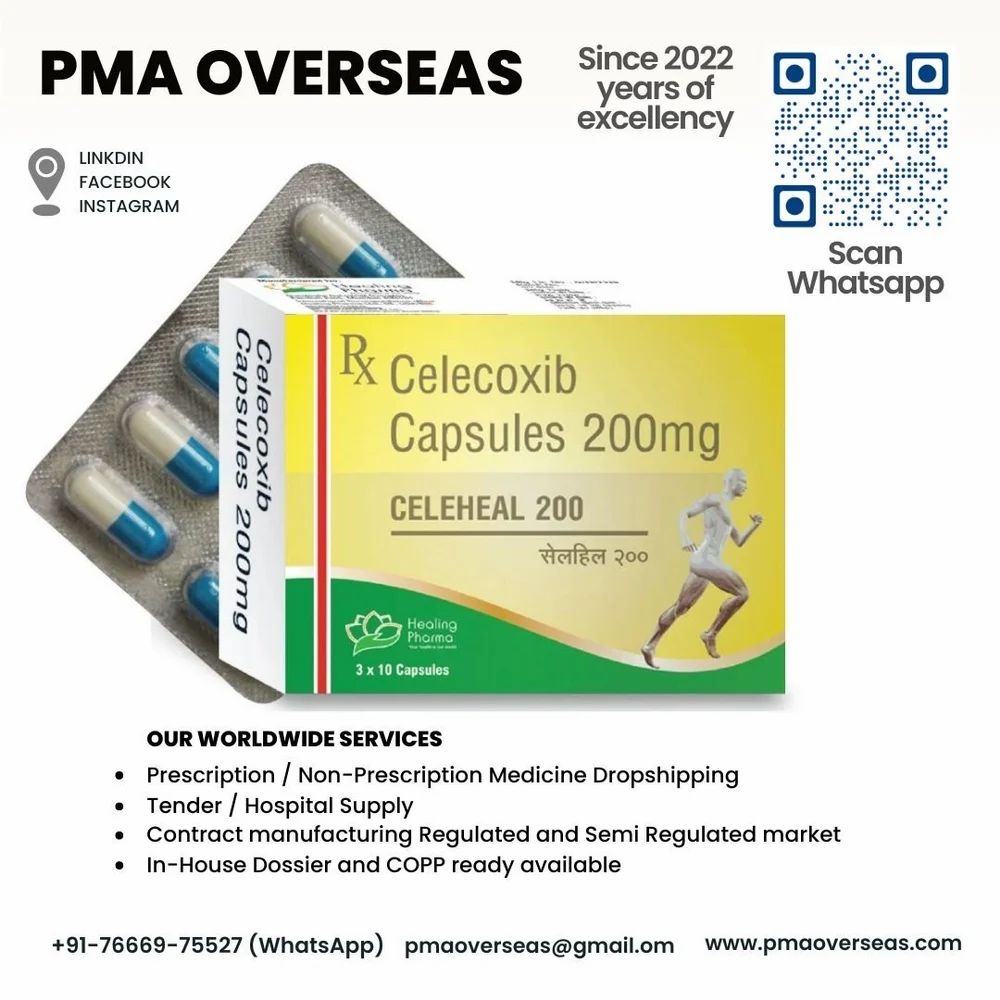
Celecoxib (Celebrex): An Expert Medical SEO Guide
Comprehensive Introduction & Overview
Celecoxib, marketed predominantly under the brand name Celebrex, is a widely prescribed non-steroidal anti-inflammatory drug (NSAID) distinguished by its selective inhibition of the cyclooxygenase-2 (COX-2) enzyme. Unlike traditional, non-selective NSAIDs such as ibuprofen or naproxen, which inhibit both COX-1 and COX-2 enzymes, celecoxib's selectivity offers a unique therapeutic profile.
Developed to provide effective relief from pain and inflammation while potentially reducing the gastrointestinal (GI) side effects commonly associated with non-selective NSAIDs, celecoxib plays a crucial role in the management of various musculoskeletal and inflammatory conditions. As an expert medical SEO copywriter and orthopedic specialist, this guide aims to provide an exhaustive, authoritative resource for patients, caregivers, and healthcare professionals seeking in-depth information on celecoxib, covering its mechanism of action, pharmacokinetics, detailed indications, dosage guidelines, contraindications, drug interactions, pregnancy/lactation warnings, and overdose management.
Understanding celecoxib's specific properties is vital for optimizing its therapeutic benefits while mitigating potential risks. This guide delves into the intricate details of how celecoxib works within the body, for whom it is indicated, and the essential precautions that must be taken to ensure its safe and effective use.
Deep-Dive into Technical Specifications / Mechanisms
Mechanism of Action
To understand celecoxib's action, it's essential to first grasp the role of cyclooxygenase (COX) enzymes in the body. There are two primary isoforms:
- COX-1 (Constitutive): This enzyme is physiologically important and is constitutively expressed in most tissues. It plays a vital role in maintaining normal bodily functions, including gastric mucosal protection, renal blood flow regulation, and platelet aggregation. Prostaglandins produced by COX-1 are often referred to as "housekeeping" prostaglandins.
- COX-2 (Inducible): While also constitutively expressed in some tissues (e.g., kidney, brain), COX-2 is primarily an inducible enzyme. Its expression is significantly upregulated at sites of inflammation, injury, and infection by cytokines and growth factors. Prostaglandins generated by COX-2 are largely responsible for mediating pain, inflammation, and fever.
Celecoxib is a selective COX-2 inhibitor. This means it preferentially binds to and inhibits the COX-2 enzyme over the COX-1 enzyme. By selectively blocking COX-2, celecoxib reduces the synthesis of pro-inflammatory prostaglandins at the site of inflammation, thereby alleviating pain and swelling. The rationale behind this selectivity is to minimize the inhibition of COX-1, which is responsible for protective functions, particularly in the gastrointestinal tract. This selective inhibition is intended to reduce the incidence of GI adverse events (such as ulcers, bleeding, and perforation) that are common with non-selective NSAIDs.
The inhibition of COX-2 leads to:
* Analgesia: Reduction in pain sensation.
* Anti-inflammatory effects: Decrease in swelling and redness.
* Antipyresis: Reduction in fever.
Pharmacokinetics
The pharmacokinetics of celecoxib describe how the body absorbs, distributes, metabolizes, and eliminates the drug.
- Absorption:
- Celecoxib is rapidly and well-absorbed after oral administration.
- Peak plasma concentrations (Tmax) are typically reached within approximately 2-3 hours.
- Co-administration with a high-fat meal can delay Tmax by about 1-2 hours and increase bioavailability by 10-20%. However, it can be taken with or without food.
- Distribution:
- Celecoxib is highly bound to plasma proteins, primarily albumin (approximately 97%).
- Its volume of distribution is relatively low, suggesting limited distribution into tissues beyond the plasma.
- Metabolism:
- Celecoxib is primarily metabolized in the liver by the cytochrome P450 2C9 (CYP2C9) enzyme system.
- The main metabolic pathways involve hydroxylation, oxidation, and glucuronidation.
- Three inactive metabolites have been identified: a primary alcohol, the corresponding carboxylic acid, and its glucuronide conjugate.
- Genetic polymorphism in CYP2C9 can affect celecoxib metabolism. Patients who are poor CYP2C9 metabolizers may have significantly elevated plasma concentrations of celecoxib, necessitating dosage adjustments.
- Elimination:
- Elimination of celecoxib occurs predominantly through hepatic metabolism, with less than 1% of the dose excreted unchanged in the urine.
- Approximately 57% of the dose is excreted in the feces and 27% in the urine, mainly as inactive metabolites.
- The elimination half-life (t½) is approximately 8-12 hours, allowing for once or twice-daily dosing.
Extensive Clinical Indications & Usage
Celecoxib is approved for a range of inflammatory and pain conditions. The goal is always to use the lowest effective dose for the shortest duration consistent with individual patient treatment goals.
Detailed Indications
- Osteoarthritis (OA): For the relief of signs and symptoms of osteoarthritis, a degenerative joint disease characterized by cartilage breakdown.
- Rheumatoid Arthritis (RA): For the relief of signs and symptoms of rheumatoid arthritis, a chronic autoimmune inflammatory disorder affecting joints.
- Ankylosing Spondylitis (AS): For the relief of signs and symptoms of ankylosing spondylitis, a chronic inflammatory disease primarily affecting the spine.
- Acute Pain: For the management of acute pain, such as post-surgical pain, dental pain, or musculoskeletal injuries.
- Primary Dysmenorrhea: For the treatment of primary dysmenorrhea (menstrual cramps).
- Juvenile Rheumatoid Arthritis (JRA): For the relief of signs and symptoms of JRA in patients 2 years and older weighing 10 kg (22 lbs) or more.
Dosage Guidelines
Dosages must be individualized based on the patient's condition, response, and tolerability, with careful consideration of potential risks.
| Indication | Recommended Adult Dosage | Maximum Daily Dose |
|---|---|---|
| Osteoarthritis (OA) | 200 mg once daily OR 100 mg twice daily | 200 mg |
| Rheumatoid Arthritis (RA) | 100 mg or 200 mg twice daily | 400 mg |
| Ankylosing Spondylitis (AS) | 200 mg once daily OR 100 mg twice daily; may increase to 400 mg daily if needed | 400 mg |
| Acute Pain | 400 mg initially, followed by 200 mg if needed on the first day. Subsequent days: 200 mg twice daily. | 400 mg |
| Primary Dysmenorrhea | 400 mg initially, followed by 200 mg if needed on the first day. Subsequent days: 200 mg twice daily. | 400 mg |
| Juvenile Rheumatoid Arthritis (JRA) (2 years and older, ≥10 kg) | 10-25 kg: 50 mg twice daily. >25 kg: 100 mg twice daily. | 100 mg (for 10-25kg), 200 mg (for >25kg) |
Special Population Considerations:
- Elderly Patients: No specific dose adjustment is usually required based on age alone, but caution is advised due to increased risk of adverse events, particularly GI and renal.
- Hepatic Impairment:
- Mild (Child-Pugh Class A): No dosage adjustment.
- Moderate (Child-Pugh Class B): Reduce dose by 50% (e.g., 200 mg once daily for OA/AS, 100 mg twice daily for RA).
- Severe (Child-Pugh Class C): Contraindicated.
- Renal Impairment:
- Mild to Moderate: No specific dosage adjustment.
- Severe (CrCl < 30 mL/min): Use with caution, monitor renal function.
- Advanced Renal Disease: Contraindicated.
- Poor CYP2C9 Metabolizers: Initiate at half the lowest recommended dose.
Administration:
Celecoxib can be taken with or without food. For patients who have difficulty swallowing capsules, the capsule contents can be mixed with applesauce or other soft foods.
Risks, Side Effects, and Contraindications
While celecoxib offers benefits, it is not without risks. Patients and prescribers must be aware of potential side effects, severe warnings, and absolute contraindications.
Common Side Effects
These are generally mild and temporary:
* Gastrointestinal: Abdominal pain, diarrhea, dyspepsia (indigestion), nausea, flatulence.
* Central Nervous System: Headache, dizziness.
* Respiratory: Upper respiratory tract infection, pharyngitis, rhinitis, sinusitis.
* Other: Peripheral edema (swelling of ankles/feet).
Serious Side Effects & Warnings (Black Box Warnings)
The FDA has issued Black Box Warnings for all NSAIDs, including celecoxib, regarding serious cardiovascular and gastrointestinal risks.
- Cardiovascular Thrombotic Events:
- Increased risk of serious cardiovascular (CV) thrombotic events, including myocardial infarction (MI) and stroke, which can be fatal.
- This risk may occur early in treatment and may increase with duration of use and higher doses.
- Patients with pre-existing cardiovascular disease or risk factors are at greater risk.
- Celecoxib is contraindicated for the treatment of peri-operative pain in the setting of coronary artery bypass graft (CABG) surgery.
- Gastrointestinal Risk:
- Increased risk of serious GI adverse events including bleeding, ulceration, and perforation of the stomach or intestines, which can be fatal.
- These events can occur at any time during use and without warning symptoms.
- Elderly patients and those with a history of peptic ulcer disease and/or GI bleeding are at greater risk. Although celecoxib has a lower GI risk than non-selective NSAIDs, the risk is still present.
Other Serious Side Effects:
- Renal Effects: NSAID use, including celecoxib, can lead to new onset or worsening of pre-existing renal disease, acute renal failure, interstitial nephritis, and papillary necrosis. Monitor renal function, especially in elderly patients, those with impaired renal function, heart failure, or liver dysfunction, and those taking diuretics or ACE inhibitors/ARBs. Fluid retention and edema may occur.
- Hepatic Effects: Elevations in liver enzymes (ALT, AST) can occur. Rarely, severe hepatic reactions including fulminant hepatitis, liver necrosis, and hepatic failure, some fatal, have been reported. Discontinue celecoxib if signs or symptoms of liver disease develop.
- Hypertension: NSAIDs can lead to new onset hypertension or worsening of pre-existing hypertension, which may contribute to an increased incidence of CV events. Blood pressure should be monitored closely.
- Heart Failure and Edema: Fluid retention and edema have been observed. Use with caution in patients with fluid retention or heart failure.
- Anaphylactoid Reactions: As with other NSAIDs, anaphylactoid reactions may occur in patients without known prior exposure to celecoxib.
- Skin Reactions: Serious skin reactions, including exfoliative dermatitis, Stevens-Johnson syndrome (SJS), and toxic epidermal necrolysis (TEN), have been reported. Discontinue celecoxib at the first appearance of skin rash or any other sign of hypersensitivity.
- Hematologic Effects: Can cause anemia, and may decrease platelet aggregation (though less than non-selective NSAIDs).
- Masking of Infection: The anti-inflammatory effect of celecoxib may mask signs of infection.
Contraindications
Celecoxib is contraindicated in patients with:
* Known hypersensitivity to celecoxib, sulfonamides, or any component of the formulation.
* History of asthma, urticaria, or other allergic-type reactions after taking aspirin or other NSAIDs (due to potential for cross-reactivity).
* For the treatment of peri-operative pain in the setting of coronary artery bypass graft (CABG) surgery.
* Severe heart failure.
* Advanced renal disease without dialysis.
* Severe hepatic impairment (Child-Pugh Class C).
* Third trimester of pregnancy (due to risk of premature closure of the fetal ductus arteriosus).
Drug Interactions
Celecoxib can interact with several medications, potentially altering its efficacy or increasing the risk of adverse events.
| Interacting Drug/Class | Potential Interaction | Management/Recommendation | Celecoxib is a COX-2 selective NSAID. Its metabolism by CYP2C9 can be affected by inhibitors or inducers of this enzyme.
| CYP2C9 Inhibitors (e.g., fluconazole, amiodarone, metronidazole, fluoxetine, sertraline, sulfamethoxazole, zafirlukast) | Can significantly increase celecoxib plasma concentrations due to reduced metabolism. | If co-administration is necessary, consider reducing the celecoxib dose to half the recommended dose. Monitor for adverse effects. |
| CYP2C9 Inducers (e.g., rifampin, carbamazepine, phenytoin) | May decrease celecoxib plasma concentrations, potentially reducing efficacy. | Monitor for reduced efficacy; dose adjustment may be required. |
| Warfarin and other Anticoagulants | Increased risk of serious, sometimes fatal, bleeding events. NSAIDs impair platelet function and disrupt gastric mucosal integrity. | Concomitant use is generally not recommended. If unavoidable, monitor INR closely, especially upon initiation or discontinuation of celecoxib. Adjust anticoagulant dose as needed. |
| Aspirin | Concomitant aspirin increases the risk of GI ulceration and other complications compared to celecoxib alone. Celecoxib does not provide anti-platelet effects like low-dose aspirin. | Avoid concomitant use if possible. If low-dose aspirin is medically necessary for cardiovascular prophylaxis, monitor for GI bleeding. Celecoxib does not substitute for aspirin's cardio-protective effects. |
| ACE Inhibitors, Angiotensin Receptor Blockers (ARBs) | Reduced antihypertensive effect of these drugs. Increased risk of renal impairment, especially in elderly, volume-depleted, or renally impaired patients. | Monitor blood pressure and renal function. Advise adequate hydration.