The Orthopedic Specialist's Guide to Calcium Carbonate/Vitamin D3
1. Comprehensive Introduction & Overview
In the realm of musculoskeletal health, few nutrient combinations are as critical and widely recommended as Calcium Carbonate and Vitamin D3. Often prescribed together, these two essential components form the bedrock of strong bones, playing pivotal roles in bone formation, maintenance, and overall skeletal integrity. As expert orthopedic specialists, we understand that maintaining optimal bone density and preventing debilitating conditions like osteoporosis is paramount for long-term mobility and quality of life.
Calcium, the most abundant mineral in the human body, is not only a structural component of bones and teeth but also vital for numerous physiological processes, including nerve transmission, muscle function, and blood clotting. However, calcium absorption and utilization are highly dependent on the presence of Vitamin D. Vitamin D3 (cholecalciferol), often dubbed the "sunshine vitamin," is a fat-soluble vitamin crucial for regulating calcium and phosphate levels in the body. Without adequate Vitamin D3, dietary or supplemental calcium cannot be effectively absorbed from the gut, rendering efforts to strengthen bones largely ineffective.
This comprehensive guide delves into the intricate science behind Calcium Carbonate and Vitamin D3, providing authoritative insights into their mechanisms of action, pharmacokinetic profiles, detailed clinical indications, appropriate dosage guidelines, potential risks, and crucial management strategies for adverse events or overdose. Our aim is to empower patients and healthcare providers with the knowledge necessary to optimize bone health and mitigate the risks associated with calcium and vitamin D deficiencies.
2. Deep-dive into Technical Specifications / Mechanisms
Understanding how Calcium Carbonate and Vitamin D3 function at a cellular and systemic level is key to appreciating their therapeutic value.
Mechanism of Action
Calcium Carbonate
Calcium carbonate is a calcium salt commonly used as a dietary supplement. Its primary mechanism of action revolves around providing a readily available source of elemental calcium to the body.
- Bone Mineralization: Calcium is the principal mineral component of hydroxyapatite crystals, which give bone its strength and rigidity. Adequate calcium intake ensures sufficient substrate for osteoblasts (bone-building cells) to form new bone tissue and repair micro-fractures.
- Physiological Functions: Beyond bone, calcium ions (Ca²⁺) are critical intracellular messengers and extracellular regulators. They are involved in:
- Neuromuscular Function: Facilitating nerve impulse transmission and muscle contraction.
- Cardiac Function: Regulating heart rhythm and contractility.
- Blood Coagulation: Acting as a cofactor in several steps of the clotting cascade.
- Absorption: Calcium carbonate requires an acidic environment for optimal dissolution and absorption in the gastrointestinal tract. It is typically absorbed in the small intestine via both active transport (saturable, vitamin D-dependent) and passive paracellular diffusion.
Vitamin D3 (Cholecalciferol)
Vitamin D3 is a prohormone that must be metabolized into its active form to exert its effects.
- Synthesis and Activation:
- Skin Synthesis: 7-dehydrocholesterol in the skin is converted to pre-vitamin D3 upon exposure to UV-B radiation, which then isomerizes to Vitamin D3.
- Dietary Intake: Vitamin D3 can also be obtained from diet or supplements.
- Hepatic Hydroxylation: Vitamin D3 is transported to the liver, where it undergoes 25-hydroxylation by 25-hydroxylase to form 25-hydroxyvitamin D (25-OH D), also known as calcifediol. This is the main circulating form and the best indicator of vitamin D status.
- Renal Hydroxylation: Calcifediol is then transported to the kidneys, where it undergoes 1-alpha-hydroxylation by 1-alpha-hydroxylase to form 1,25-dihydroxyvitamin D (1,25-(OH)₂ D), also known as calcitriol, the biologically active form. This step is tightly regulated by parathyroid hormone (PTH), calcium, and phosphate levels.
- Role of Calcitriol:
- Intestinal Calcium Absorption: Calcitriol is the primary regulator of intestinal calcium and phosphate absorption. It stimulates the synthesis of calcium-binding proteins (e.g., calbindin) in enterocytes, facilitating the active transport of calcium across the intestinal wall.
- Bone Remodeling: Calcitriol works in concert with PTH to regulate bone remodeling. It promotes calcium and phosphate mobilization from bone when serum levels are low, and also plays a role in osteoblast differentiation and function.
- Parathyroid Hormone (PTH) Regulation: Calcitriol directly suppresses PTH synthesis and secretion, preventing excessive bone resorption.
- Synergistic Effect: The combination of Calcium Carbonate and Vitamin D3 is synergistic. Vitamin D3's primary role is to ensure the efficient absorption of the calcium provided by Calcium Carbonate, thereby maximizing its availability for bone mineralization and other physiological functions.
Pharmacokinetics
Absorption
- Calcium Carbonate: Absorption is variable, typically 20-30% of an ingested dose. It is best absorbed when taken with food due to increased stomach acid production, which aids in its dissolution. Divided doses are often recommended to maximize absorption as calcium absorption is saturable.
- Vitamin D3: Being fat-soluble, Vitamin D3 is absorbed from the small intestine primarily via chylomicrons and requires the presence of bile salts. Its absorption is enhanced when taken with fatty meals.
Distribution
- Calcium: Approximately 99% of total body calcium is found in bones and teeth. The remaining 1% is in extracellular fluid and soft tissues. Plasma calcium exists in three forms: ionized (physiologically active), protein-bound (primarily albumin), and complexed with anions (e.g., citrate, phosphate).
- Vitamin D3: Circulating Vitamin D3 and its metabolites are primarily bound to Vitamin D-binding protein (DBP). It is stored extensively in adipose tissue, muscle, and other organs.
Metabolism
- Calcium: Calcium itself is not metabolized in the traditional sense; it participates in dynamic equilibrium between bone, extracellular fluid, and intracellular compartments, regulated by hormones like PTH, calcitriol, and calcitonin.
- Vitamin D3: Undergoes extensive metabolism. The liver converts Vitamin D3 to 25-OH D. The kidneys then convert 25-OH D to 1,25-(OH)₂ D (active form) or to inactive metabolites like 24,25-(OH)₂ D, which are then excreted.
Excretion
- Calcium: Primarily excreted via the kidneys (glomerular filtration and tubular reabsorption). A smaller amount is excreted in feces, largely representing unabsorbed dietary calcium.
- Vitamin D3: Both active and inactive metabolites of Vitamin D3 are primarily excreted in bile and subsequently in feces. A minor amount is excreted renally.
3. Extensive Clinical Indications & Usage
The combined therapeutic power of Calcium Carbonate and Vitamin D3 makes them indispensable in managing a wide array of conditions related to bone health and mineral metabolism.
Detailed Indications
- Osteoporosis Prevention and Treatment:
- Postmenopausal Osteoporosis: Women are particularly susceptible due to estrogen decline, which accelerates bone loss. Supplementation helps reduce fracture risk.
- Senile Osteoporosis: Age-related bone loss affecting both men and women.
- Glucocorticoid-Induced Osteoporosis: Long-term corticosteroid use is a significant risk factor for bone loss.
- Male Osteoporosis: Increasingly recognized, often linked to hypogonadism or other secondary causes.
- Osteopenia: A precursor to osteoporosis, characterized by bone density lower than normal but not yet meeting osteoporosis criteria. Supplementation can help prevent progression.
- Hypocalcemia: Conditions leading to abnormally low serum calcium levels.
- Chronic Kidney Disease (CKD): Patients often develop secondary hyperparathyroidism and vitamin D deficiency, leading to hypocalcemia and renal osteodystrophy.
- Hypoparathyroidism: Insufficient PTH production leads to impaired calcium regulation.
- Vitamin D Deficiency Rickets (children) and Osteomalacia (adults): Characterized by inadequate mineralization of bone, leading to soft and weak bones.
- Nutritional Supplementation:
- Dietary Insufficiency: Individuals with inadequate dietary intake (e.g., lactose intolerance, vegan diets, malabsorption syndromes like celiac disease or Crohn's).
- Increased Demand: During periods of rapid growth (adolescence), pregnancy, and lactation, calcium and vitamin D requirements increase significantly.
- Elderly Individuals: Reduced dietary intake, decreased sun exposure, and diminished skin synthesis of Vitamin D contribute to higher needs.
- Adjunct Therapy: In conditions leading to bone loss or impaired calcium metabolism, such as certain endocrine disorders, gastric bypass surgery, or long-term use of specific medications (e.g., anti-epileptics, certain HIV medications).
Dosage Guidelines
Dosage must be individualized, considering age, sex, existing medical conditions, dietary intake, and baseline vitamin D levels. The goal is to achieve adequate calcium and vitamin D status without exceeding tolerable upper intake levels.
Recommended Daily Allowances (RDAs) for Calcium (Elemental Calcium)
| Age Group | Recommended Daily Allowance (RDA) | Tolerable Upper Intake Level (UL) |
|---|---|---|
| Children 1-3 years | 700 mg | 2,500 mg |
| Children 4-8 years | 1,000 mg | 2,500 mg |
| Adolescents 9-18 years | 1,300 mg | 3,000 mg |
| Adults 19-50 years | 1,000 mg | 2,500 mg |
| Women 51-70 years | 1,200 mg | 2,000 mg |
| Men 51-70 years | 1,000 mg | 2,000 mg |
| Adults 71+ years | 1,200 mg | 2,000 mg |
| Pregnant/Lactating | 1,000-1,300 mg | 2,500-3,000 mg |
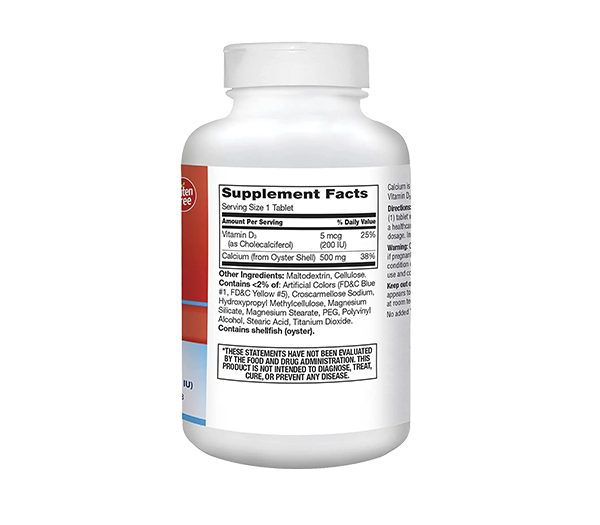
Note: Calcium carbonate typically contains 40% elemental calcium. For example, a 1250 mg tablet of calcium carbonate provides 500 mg of elemental calcium.
Recommended Daily Allowances (RDAs) for Vitamin D
| Age Group | Recommended Daily Allowance (RDA) | Tolerable Upper Intake Level (UL) |
|---|---|---|
| Children 0-12 months | 400 IU (10 mcg) | 1,000-1,500 IU |
| Children 1-18 years | 600 IU (15 mcg) | 2,500-4,000 IU |
| Adults 19-70 years | 600 IU (15 mcg) | 4,000 IU |
| Adults 71+ years | 800 IU (20 mcg) | 4,000 IU |
| Pregnant/Lactating | 600 IU (15 mcg) | 4,000 IU |
Note: For therapeutic purposes (e.g., treating severe deficiency), much higher doses of Vitamin D (e.g., 50,000 IU weekly or daily for a period) may be prescribed by a physician.
Administration
- Calcium Carbonate: Should be taken with food to enhance absorption, as stomach acid aids in its dissolution. Splitting the daily dose (e.g., 500-600 mg elemental calcium per dose) is recommended, as the body can only absorb a limited amount of calcium at one time.
- Vitamin D3: Being fat-soluble, it is best absorbed when taken with a meal containing some fat, although it can be taken with or without food.
4. Risks, Side Effects, and Contraindications
While generally safe and beneficial, Calcium Carbonate/Vitamin D3 supplementation is not without potential risks. It's crucial to be aware of contraindications, potential drug interactions, and possible side effects.
Contraindications
- Hypercalcemia: Pre-existing elevated levels of calcium in the blood. Supplementation would exacerbate this condition.
- Hypercalciuria: Excessive calcium excretion in the urine. This increases the risk of kidney stone formation.
- Known Hypersensitivity: To calcium salts, vitamin D metabolites, or any component of the formulation.
- Severe Renal Impairment: Patients with severe kidney disease require careful monitoring of calcium, phosphate, and vitamin D levels, and may need specific forms of vitamin D (e.g., calcitriol) rather than cholecalciferol.
- Nephrolithiasis (Kidney Stones): A history of calcium-containing kidney stones is a relative contraindication. Supplementation should be approached cautiously and under strict medical supervision, with adequate hydration.
- Active Vitamin D Toxicity: Manifests as severe hypercalcemia.
Drug Interactions
The absorption and metabolism of calcium and vitamin D can be affected by various medications, and vice-versa.
| Drug Class/Specific Drug | Interaction Mechanism | Clinical Consequence | Management |
|---|---|---|---|
| Tetracycline & Quinolone Antibiotics | Calcium chelates with antibiotics, reducing absorption. | Decreased efficacy of antibiotics. | Separate administration by at least 2-4 hours. |
| Bisphosphonates | Calcium can interfere with bisphosphonate absorption. | Reduced efficacy of bisphosphonates (e.g., alendronate). | Take bisphosphonates first thing in the morning with plain water, wait 30-60 mins before food/other meds. |
| Thyroid Hormones (Levothyroxine) | Calcium can impair levothyroxine absorption. | Reduced thyroid hormone efficacy. | Separate administration by at least 4 hours. |
| Iron Supplements | Calcium can reduce non-heme iron absorption. | Decreased iron absorption. | Separate administration by at least 2 hours. |
| Thiazide Diuretics | Decrease renal calcium excretion. | Increased risk of hypercalcemia. | Monitor serum calcium levels closely. |
| Proton Pump Inhibitors (PPIs) & H2 Blockers | Reduce stomach acid, impairing calcium carbonate absorption. | Decreased calcium carbonate absorption. | Consider calcium citrate (less acid-dependent) or take calcium carbonate with food. |
| Anticonvulsants (e.g., Phenytoin, Carbamazepine) | Increase vitamin D metabolism in the liver. | Risk of vitamin D deficiency and osteomalacia. | May require higher doses of vitamin D. Monitor vitamin D levels. |
| Corticosteroids | Reduce intestinal calcium absorption, impair vitamin D metabolism. | Increased risk of bone loss and vitamin D deficiency. | Ensure adequate calcium/vitamin D intake; may require higher doses. |
| Cholestyramine, Orlistat | Impair absorption of fat-soluble vitamins (including D). | Decreased vitamin D absorption. | Take vitamin D at a different time or consider parenteral vitamin D. |
| Cardiac Glycosides (e.g., Digoxin) | Hypercalcemia can potentiate digoxin toxicity. | Increased risk of cardiac arrhythmias. | Monitor serum calcium and digoxin levels carefully. |
Side Effects
Most side effects are mild and gastrointestinal in nature.
- Common (usually mild):
- Constipation
- Bloating
- Gas
- Stomach upset/discomfort
- Nausea
- Less Common/Serious (often associated with excessive intake or pre-existing conditions):
- Hypercalcemia Symptoms: Nausea, vomiting, anorexia, excessive thirst (polydipsia), frequent urination (polyuria), muscle weakness, fatigue, confusion, headache, bone pain, and in severe cases, cardiac arrhythmias.
- Kidney Stones: Especially in individuals predisposed to them, or with very high calcium intake without adequate hydration.
- Milk-Alkali Syndrome: A rare but serious condition resulting from very high intake of calcium (typically from supplements) and absorbable alkali (e.g., antacids), leading to hypercalcemia, metabolic alkalosis, and renal insufficiency.
Pregnancy and Lactation Warnings
- Pregnancy: Calcium and Vitamin D are crucial for fetal skeletal development and maternal bone health. Recommended daily allowances are often similar or slightly higher during pregnancy. However, excessive intake can lead to maternal hypercalcemia, which can potentially have adverse effects on the fetus. Supplementation should be undertaken under the guidance of a healthcare provider.
- Lactation: Both calcium and vitamin D pass into breast milk. At recommended doses, supplementation is generally considered safe and beneficial for both mother and infant. However, excessive maternal intake could theoretically lead to hypercalcemia in the breastfed infant. Always consult with a physician.
Overdose Management
Overdose of Calcium Carbonate/Vitamin D3 typically results in hypercalcemia, which can range from mild to life-threatening.
- Symptoms of Overdose/Hypercalcemia:
- Acute: Severe gastrointestinal upset (nausea, vomiting, constipation), dehydration, muscle weakness, lethargy, confusion, stupor, cardiac arrhythmias (bradycardia, shortened QT interval), and acute kidney injury.
- Chronic: Nephrocalcinosis (calcium deposition in kidneys), vascular calcification, bone demineralization, and chronic renal failure.
- Treatment:
- Discontinuation: Immediately stop all calcium and vitamin D supplements and any other medications that might contribute to hypercalcemia (e.g., thiazide diuretics).
- Hydration: Aggressive intravenous hydration with normal saline is the cornerstone of treatment to promote renal calcium excretion and correct dehydration.
- Loop Diuretics: Once euvolemic, loop diuretics (e.g., furosemide) can be administered to further enhance renal calcium excretion, but electrolyte levels must be closely monitored.
- Bisphosphonates: For severe or symptomatic hypercalcemia, intravenous bisphosphonates (e.g., zoledronic acid, pamidronate) can be used to inhibit osteoclastic bone resorption and lower serum calcium. Their effect is not immediate (takes 2-4 days).
- Calcitonin: Can provide a more rapid, albeit transient, reduction in serum calcium by inhibiting osteoclast activity and increasing renal calcium excretion.
- Corticosteroids: May be used in cases where hypercalcemia is due to increased vitamin D sensitivity or granulomatous diseases.
- Dialysis: In life-threatening hypercalcemia, especially in patients with renal failure, hemodialysis with a low-calcium dialysate may be necessary.
- Monitoring: Close monitoring of serum calcium, phosphate, magnesium, potassium, renal function (creatinine, BUN), and electrocardiogram (ECG) is essential.
5. Massive FAQ Section
Q1: What is the primary role of Calcium Carbonate and Vitamin D3 together?
A1: Their primary role is to support and maintain strong bones. Calcium carbonate provides the essential mineral for bone structure, while Vitamin D3 is crucial for the efficient absorption of that calcium from the diet into the bloodstream, as well as for regulating bone remodeling processes. They work synergistically to prevent and treat bone loss.
Q2: How do I know if I need to take Calcium Carbonate/Vitamin D3?
A2: Many individuals, especially older adults, postmenopausal women, those with limited sun exposure, certain medical conditions (e.g., osteoporosis, kidney disease), or dietary restrictions (e.g., veganism, lactose intolerance) may benefit. A healthcare provider can assess your dietary intake, risk factors, and conduct blood tests (e.g., 25-hydroxyvitamin D levels, serum calcium) to determine if supplementation is necessary.
Q3: What is the best way to take Calcium Carbonate for absorption?
A3: Calcium carbonate is best absorbed when taken with food, as stomach acid helps break it down. It's also recommended to take it in divided doses (e.g., no more than 500-600 mg of elemental calcium at a time) throughout the day, as the body's ability to absorb calcium is limited per dose.
Q4: Can I get enough calcium and vitamin D from my diet alone?
A4: While it's ideal to obtain nutrients from food, many people struggle to meet the recommended daily allowances for calcium and vitamin D through diet alone. Dairy products, fortified foods, and some leafy greens are good sources of calcium. Fatty fish (salmon, mackerel), fortified milk, and certain cereals provide vitamin D. Sun exposure is also a natural source of vitamin D. However, dietary gaps and lifestyle factors often necessitate supplementation.
Q5: Are there any foods or medications I should avoid while taking this supplement?
A5: Yes. Avoid taking calcium supplements at the same time as certain antibiotics (tetracyclines, quinolones), bisphosphonates, thyroid hormones, and iron supplements, as calcium can interfere with their absorption. Also, proton pump inhibitors (PPIs) and H2 blockers can reduce stomach acid, making calcium carbonate less absorbable. Foods high in oxalic acid (spinach, rhubarb) or phytic acid (whole grains, beans) can also slightly inhibit calcium absorption. Consult the detailed drug interactions section above for comprehensive information.
Q6: What are the signs of too much calcium or vitamin D (hypercalcemia)?
A6: Symptoms of hypercalcemia can include nausea, vomiting, loss of appetite, excessive thirst, frequent urination, constipation, muscle weakness, fatigue, confusion, and in severe cases, kidney problems or heart rhythm disturbances. If you experience these symptoms, stop taking the supplement and seek immediate medical attention.
Q7: Is Calcium Carbonate/Vitamin D3 safe during pregnancy and lactation?
A7: Both calcium and vitamin D are essential during pregnancy for fetal development and maternal health, and during lactation for the infant. However, supplementation should always be guided by a healthcare provider to ensure appropriate dosing and avoid excessive intake, which can be harmful.
Q8: How long does it take to see the benefits of these supplements?
A8: The benefits of calcium and vitamin D supplementation, particularly for bone density, are gradual. It can take several months to years of consistent use to see measurable improvements in bone mineral density. However, improvements in vitamin D levels (if deficient) can be seen within weeks to months. Regular monitoring by your doctor is important.
Q9: Can these supplements cause kidney stones?
A9: For most healthy individuals taking recommended doses, the risk of kidney stones is low. However, individuals with a history of calcium-containing kidney stones or those with certain metabolic conditions may be at increased risk, especially with high doses. Adequate hydration is crucial. If you have a history of kidney stones, discuss supplementation with your doctor.
Q10: What is the difference between Vitamin D2 and D3?
A10: Vitamin D2 (ergocalciferol) is plant-derived, while Vitamin D3 (cholecalciferol) is animal-derived and produced in the skin upon sun exposure. Both forms are converted to 25-hydroxyvitamin D in the liver. Current research suggests that Vitamin D3 is more effective at raising and maintaining adequate 25-hydroxyvitamin D levels in the body compared to Vitamin D2.
Q11: Should I take calcium citrate instead of calcium carbonate?
A11: Calcium citrate does not require stomach acid for absorption and can be taken with or without food. It may be a better option for individuals taking acid-reducing medications (PPIs, H2 blockers), those with achlorhydria, or older adults who naturally produce less stomach acid. However, calcium citrate contains less elemental calcium per tablet, meaning you might need to take more tablets to get the same amount of elemental calcium as calcium carbonate. Discuss with your doctor which form is best for you.
Q12: Is it safe for children to take Calcium Carbonate/Vitamin D3?
A12: Yes, calcium and vitamin D are crucial for bone growth and development in children and adolescents. However, dosages vary significantly by age. It is vital to consult a pediatrician or healthcare professional to determine the appropriate dosage and formulation for children to avoid under-dosing or over-dosing.
Q13: Can these supplements interact with blood thinners?
A13: While direct interactions between calcium/vitamin D and common blood thinners like warfarin are generally not a major concern, it's important to discuss all supplements with your doctor if you are on anticoagulant therapy. Vitamin K, which plays a role in bone health and blood clotting, can interact with warfarin, but this is a separate consideration from calcium/vitamin D directly.
Q14: What lifestyle factors can impact calcium and vitamin D levels?
A14: Several lifestyle factors are important. Regular weight-bearing exercise helps build and maintain bone density. Avoiding excessive alcohol intake and smoking are crucial, as both can negatively impact bone health. Adequate sun exposure (while being mindful of skin cancer risks) contributes to natural vitamin D synthesis. A balanced diet rich in calcium-containing foods is also key.
Q15: How often should my vitamin D levels be checked if I'm supplementing?
A15: If you are taking therapeutic doses of vitamin D for a deficiency, your doctor will likely recheck your 25-hydroxyvitamin D levels after 2-3 months to ensure levels are in the optimal range (typically 30-60 ng/mL or 75-150 nmol/L). For maintenance doses, annual checks might be sufficient, depending on your risk factors and overall health status.