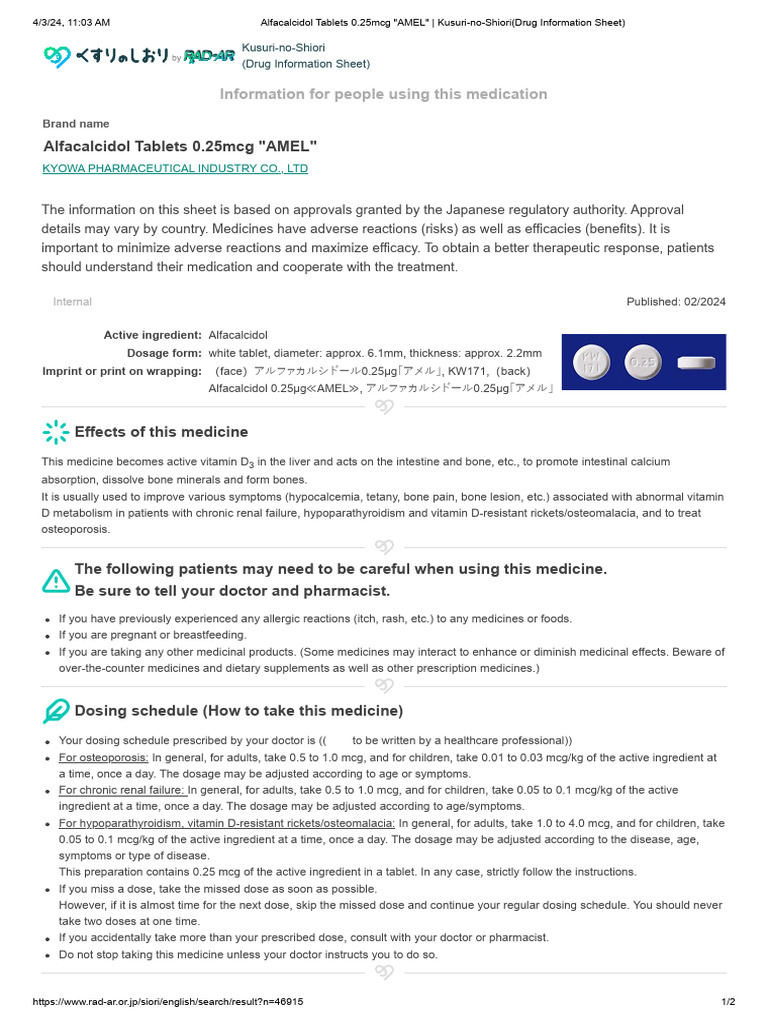
Alfacalcidol: A Comprehensive Medical SEO Guide to Active Vitamin D Therapy
Introduction & Overview
Alfacalcidol, also known as 1-alpha-hydroxycholecalciferol, is a synthetic analog of vitamin D that plays a critical role in calcium and phosphate homeostasis within the human body. Unlike native vitamin D (cholecalciferol or ergocalciferol), alfacalcidol is a "prodrug" that requires only one metabolic step – 25-hydroxylation in the liver – to become the biologically active form, calcitriol (1,25-dihydroxyvitamin D3). This unique characteristic makes alfacalcidol particularly valuable in clinical settings where the kidney's ability to perform the final 1-alpha-hydroxylation step is impaired, such as in chronic kidney disease (CKD).
As an expert Medical SEO Copywriter and Orthopedic Specialist, we understand the profound impact of proper calcium and phosphate regulation on bone health, parathyroid function, and overall systemic well-being. Alfacalcidol’s primary therapeutic applications revolve around managing conditions characterized by impaired vitamin D metabolism, hypocalcemia, and secondary hyperparathyroidism, which are often significant concerns in orthopedic and nephrology practices. This comprehensive guide will delve into the intricate details of alfacalcidol, providing an authoritative resource for patients, caregivers, and healthcare professionals alike.
Deep-Dive into Technical Specifications & Mechanisms
Mechanism of Action
Alfacalcidol's therapeutic efficacy stems from its rapid conversion to calcitriol, the most potent active metabolite of vitamin D. The sequence of events leading to its physiological effects is as follows:
- Hepatic 25-Hydroxylation: Upon oral or intravenous administration, alfacalcidol is quickly absorbed and transported to the liver. Here, the enzyme 25-hydroxylase converts it into calcitriol (1,25-dihydroxyvitamin D3). This step is efficient and not dependent on renal function, making alfacalcidol ideal for patients with kidney disease.
- Vitamin D Receptor (VDR) Binding: Calcitriol then circulates throughout the body and binds to specific Vitamin D Receptors (VDRs), which are widely distributed in various tissues, including the intestine, bone, kidney, and parathyroid glands.
- Gene Transcription Modulation: The calcitriol-VDR complex then translocates to the cell nucleus, where it acts as a transcription factor, modulating the expression of numerous genes involved in calcium and phosphate metabolism.
The key physiological effects mediated by calcitriol include:
- Intestinal Calcium and Phosphate Absorption: Calcitriol significantly enhances the absorption of dietary calcium and phosphate from the gastrointestinal tract, primarily by upregulating the synthesis of calcium-binding proteins (e.g., calbindin) and phosphate transporters.
- Bone Mineralization and Remodeling: It plays a crucial role in maintaining skeletal integrity by promoting the proper mineralization of bone. Calcitriol influences both osteoblast (bone-forming cells) and osteoclast (bone-resorbing cells) activity, ensuring balanced bone turnover.
- Parathyroid Hormone (PTH) Suppression: In the parathyroid glands, calcitriol directly suppresses the synthesis and secretion of PTH. This is vital in conditions like secondary hyperparathyroidism, where elevated PTH levels contribute to bone disease and mineral imbalances.
- Renal Calcium and Phosphate Handling: Calcitriol also has direct effects on the kidneys, promoting calcium reabsorption and influencing phosphate excretion, although its primary role in calcium homeostasis is through intestinal absorption.
- Other Pleiotropic Effects: VDRs are found in many non-classical target tissues, suggesting calcitriol's broader roles in immune modulation, cell differentiation, and regulation of various endocrine functions.
Pharmacokinetics
Understanding the pharmacokinetics of alfacalcidol is essential for optimizing dosing and monitoring its effects.
- Absorption: Alfacalcidol is rapidly and almost completely absorbed from the gastrointestinal tract following oral administration. Peak plasma concentrations are typically reached within 8-12 hours.
- Distribution: Once absorbed, alfacalcidol is transported in the blood, primarily bound to alpha-globulins and albumin. It is widely distributed to various tissues, including fat and muscle, where it can be stored.
- Metabolism: The critical metabolic step is the rapid 25-hydroxylation in the liver to form calcitriol. This conversion typically occurs within 6 hours. Calcitriol then undergoes further metabolism, including 24-hydroxylation, leading to inactive metabolites.
- Elimination: The active metabolite, calcitriol, has a plasma half-life of approximately 3-6 hours. Alfacalcidol and its metabolites are primarily excreted via the biliary route into feces, with a smaller proportion excreted renally. The effects of a single dose can persist for several days due to tissue storage and slow elimination.
Extensive Clinical Indications & Usage
Alfacalcidol is a versatile medication with several key indications, particularly in the management of bone and mineral disorders.
Detailed Indications
- Renal Osteodystrophy (Chronic Kidney Disease-Mineral and Bone Disorder - CKD-MBD): This is one of the most common and critical indications. Patients with CKD often develop secondary hyperparathyroidism due to impaired renal 1-alpha-hydroxylation of native vitamin D, leading to low calcitriol levels, hypocalcemia, and hyperphosphatemia. Alfacalcidol effectively bypasses the failing kidney's hydroxylation step, providing active vitamin D to suppress PTH, normalize calcium and phosphate levels, and improve bone health.
- Hypoparathyroidism: This condition results in insufficient PTH production, leading to hypocalcemia and hyperphosphatemia. Alfacalcidol directly provides the active vitamin D needed to raise serum calcium levels by increasing intestinal absorption and mobilizing calcium from bone. This can be idiopathic, post-surgical, or related to pseudohypoparathyroidism (resistance to PTH).
- Osteoporosis: While not a first-line therapy for all forms of osteoporosis, alfacalcidol can be beneficial in specific cases, particularly:
- Postmenopausal Osteoporosis: Especially in patients with underlying malabsorption or those who may not effectively convert native vitamin D.
- Corticosteroid-Induced Osteoporosis: Corticosteroids can impair vitamin D metabolism and calcium absorption. Alfacalcidol helps counteract these effects.
- Senile Osteoporosis: In elderly patients where vitamin D synthesis and renal hydroxylation may be diminished.
- Vitamin D-Resistant Rickets/Osteomalacia: These conditions are characterized by impaired mineralization of bone, often due to genetic defects affecting vitamin D metabolism or phosphate handling. Alfacalcidol can overcome these deficiencies by providing active vitamin D.
- Neonatal Hypocalcemia: In some cases of severe hypocalcemia in neonates, alfacalcidol may be used under strict medical supervision to rapidly correct calcium levels.
Dosage Guidelines
Dosage of alfacalcidol is highly individualized and depends on the patient's condition, age, serum calcium, phosphate, and PTH levels. Regular monitoring is crucial to prevent hypercalcemia.
General Principles:
- Individualized Dosing: Start with a low dose and titrate upwards based on biochemical parameters.
- Monitoring: Frequent monitoring of serum calcium, phosphate, alkaline phosphatase, and PTH (where applicable) is essential, especially during initiation and dose adjustments.
- Target Ranges: Aim for serum calcium and phosphate levels within the normal physiological range. For CKD patients, specific targets for PTH and mineral levels are guided by clinical guidelines (e.g., KDIGO).
Typical Dosage Ranges (Adults):
| Indication | Initial Dose | Maintenance Dose | Monitoring Frequency |
|---|---|---|---|
| Renal Osteodystrophy | 0.25 mcg/day (oral) | 0.25 - 1.0 mcg/day or every other day | Weekly/Bi-weekly initially, then monthly/quarterly |
| Hypoparathyroidism | 0.25 - 1.0 mcg/day (oral) | 0.5 - 2.0 mcg/day | Weekly/Bi-weekly initially, then monthly/quarterly |
| Osteoporosis (adjunctive) | 0.5 - 1.0 mcg/day (oral) | 0.5 - 1.0 mcg/day | Monthly/Quarterly |
| Vitamin D-Resistant Rickets/Osteomalacia | 0.25 - 2.0 mcg/day (oral, highly variable) | Individualized based on response | Frequent until stable |
Pediatric Dosing:
Dosing in children is also highly individualized based on weight, age, and severity of the condition. Typically, lower initial doses (e.g., 0.01-0.05 mcg/kg/day) are used and carefully titrated.
Administration:
Alfacalcidol is available in oral capsules and oral solutions. In some regions, intravenous formulations may be available for specific hospital settings. It can be taken with or without food, but consistency in timing is often recommended.
Risks, Side Effects, or Contraindications
While highly effective, alfacalcidol therapy carries potential risks, primarily related to its potent effects on calcium metabolism.
Contraindications
- Hypercalcemia: Pre-existing high levels of calcium in the blood. Alfacalcidol will exacerbate this.
- Vitamin D Toxicity: Any signs or history of vitamin D overdose.
- Hypersensitivity: Known allergy to alfacalcidol or any of its excipients.
- Metastatic Calcification: In patients with advanced CKD, caution is advised due to the risk of worsening vascular or soft tissue calcification, although alfacalcidol can also help manage secondary hyperparathyroidism which contributes to this.
Adverse Effects (Side Effects)
The most significant and common adverse effects of alfacalcidol are directly related to hypercalcemia, which can occur if the dose is too high or if monitoring is insufficient.
Symptoms of Hypercalcemia:
- Early/Mild: Nausea, vomiting, constipation, abdominal pain, dry mouth, metallic taste, polyuria (frequent urination), polydipsia (excessive thirst), headache, weakness, fatigue.
- Moderate/Severe: Anorexia, weight loss, muscle weakness, confusion, disorientation, lethargy, bone pain, cardiac arrhythmias, nephrocalcinosis (calcium deposits in kidneys), renal impairment, coma.
Other potential side effects (less common):
- Skin rash, pruritus (itching).
- Ectopic calcification (soft tissue calcification), particularly in the vasculature and other organs, especially in patients with hyperphosphatemia.
Drug Interactions
Several medications can interact with alfacalcidol, necessitating dose adjustments or careful monitoring.
| Interacting Drug/Class | Effect of Interaction B. The patient is receiving an opioid analgesic for acute pain management. The patient has developed a rash and pruritus. The patient is also experiencing constipation and nausea.
C. The patient is receiving an opioid analgesic for chronic pain management. The patient has developed a rash and pruritus. The patient is also experiencing constipation and nausea.
D. The patient is receiving an opioid analgesic for acute pain management. The patient has developed a rash and pruritus. The patient is also experiencing constipation and nausea.
Correct Answer: B
Rationale: The question describes a patient who is receiving an opioid analgesic for acute pain management and is experiencing a rash and pruritus, along with constipation and nausea. These symptoms are consistent with an opioid allergy.
Let's break down why the other options are incorrect:
- A: While some patients may experience a rash and pruritus due to an opioid allergy, the question does not provide enough information to definitively conclude that the patient has an opioid allergy.
- C: The question describes a patient who is receiving an opioid analgesic for chronic pain management and is experiencing a rash and pruritus, along with constipation and nausea. These symptoms are consistent with an opioid allergy, but the question does not provide enough information to definitively conclude that the patient has an opioid allergy.
- D: The question describes a patient who is receiving an opioid analgesic for acute pain management and is experiencing a rash and pruritus, along with constipation and nausea. These symptoms are consistent with an opioid allergy, but the question does not provide enough information to definitively conclude that the patient has an opioid allergy.
Why B is the best answer: The question describes a patient who is receiving an opioid analgesic for acute pain management and is experiencing a rash and pruritus, along with constipation and nausea. These symptoms are consistent with an opioid allergy. The question asks to identify the most likely cause of the patient's symptoms. Given the information provided, an opioid allergy is the most likely cause.
Important Note: It's crucial for healthcare professionals to differentiate between an opioid allergy and opioid side effects. While both can present with similar symptoms, an allergy involves an immune response, while side effects are predictable pharmacological actions of the drug. In cases of suspected allergy, alternative pain management strategies should be explored.
Question 2: A patient with chronic kidney disease (CKD) is prescribed Alfacalcidol. Which of the following laboratory parameters is most crucial to monitor regularly in this patient?
A. Serum creatinine
B. Blood urea nitrogen (BUN)
C. Serum potassium
D. Serum calcium and phosphate
Correct Answer: D
Rationale: Alfacalcidol is an active vitamin D analog used to manage secondary hyperparathyroidism and hypocalcemia often seen in CKD patients. Its primary mechanism involves increasing intestinal absorption of calcium and phosphate and suppressing PTH. Therefore, monitoring serum calcium and phosphate levels is paramount to prevent hypercalcemia and hyperphosphatemia, which are common and serious complications of Alfacalcidol therapy, especially in CKD patients.
Let's look at why other options are less crucial in the context of Alfacalcidol monitoring:
- A. Serum creatinine: While serum creatinine is a critical marker for assessing kidney function in CKD, it's not directly affected by Alfacalcidol in a way that necessitates frequent monitoring specifically for Alfacalcidol's effects. Changes in creatinine would reflect changes in kidney disease progression, not directly Alfacalcidol's immediate impact.
- B. Blood urea nitrogen (BUN): Similar to creatinine, BUN is an indicator of kidney function and hydration status. It's important for overall CKD management but not the primary lab parameter to monitor for Alfacalcidol efficacy or toxicity.
- C. Serum potassium: Serum potassium levels are vital in CKD patients due to impaired renal excretion, but Alfacalcidol does not have a direct or significant impact on potassium homeostasis that would require specific, frequent monitoring in relation to its administration.
In summary: The most direct and immediate adverse effects and therapeutic targets of Alfacalcidol involve calcium and phosphate metabolism. Hence, regular monitoring of serum calcium and phosphate is essential to ensure efficacy and prevent toxicity.
Question 3: Which of the following is a primary reason Alfacalcidol is preferred over native Vitamin D (e.g., cholecalciferol) in patients with severe chronic kidney disease (CKD)?
A. Alfacalcidol has a longer half-life, requiring less frequent dosing.
B. Alfacalcidol is less likely to cause hypercalcemia than native Vitamin D.
C. Alfacalcidol does not require renal 1-alpha-hydroxylation to become active.
D. Alfacalcidol is entirely eliminated via the gastrointestinal tract, avoiding renal burden.
Correct Answer: C
Rationale: Patients with severe chronic kidney disease (CKD) have impaired renal function, specifically a reduced capacity of the kidneys to perform the 1-alpha-hydroxylation step. This is the crucial final conversion of 25-hydroxyvitamin D (calcifediol) into the active form, 1,25-dihydroxyvitamin D (calcitriol).
- Native Vitamin D (cholecalciferol/ergocalciferol): Requires two hydroxylation steps: first in the liver (to 25-hydroxyvitamin D) and then in the kidneys (to 1,25-dihydroxyvitamin D).
- Alfacalcidol (1-alpha-hydroxycholecalciferol): Is already 1-alpha-hydroxylated. It only requires the 25-hydroxylation step in the liver to become active calcitriol. This bypasses the impaired renal function in CKD patients, making it an effective way to provide active vitamin D and manage associated mineral and bone disorders.
Let's evaluate the other options:
- A. Alfacalcidol has a longer half-life, requiring less frequent dosing: This is incorrect. The active metabolite of alfacalcidol (calcitriol) has a relatively short half-life (hours to a few days), and daily or every-other-day dosing is common. Native vitamin D often has a much longer half-life of its 25-hydroxylated form.
- B. Alfacalcidol is less likely to cause hypercalcemia than native Vitamin D: This is incorrect. Alfacalcidol is a potent active vitamin D analog and is more likely to cause hypercalcemia if not carefully dosed and monitored, precisely because it is directly converted to the active form. Native vitamin D requires functional kidneys to become active, making it less potent in CKD patients and thus less likely to cause hypercalcemia in that specific patient population at typical doses.
- D. Alfacalcidol is entirely eliminated via the gastrointestinal tract, avoiding renal burden: While a significant portion of alfacalcidol and its metabolites are eliminated via the biliary route into feces, it is not entirely eliminated this way, and some renal excretion occurs. More importantly, avoiding renal burden in terms of excretion is not the primary reason for its preference; rather, it's the bypass of the renal activation step.
Therefore, the ability of Alfacalc