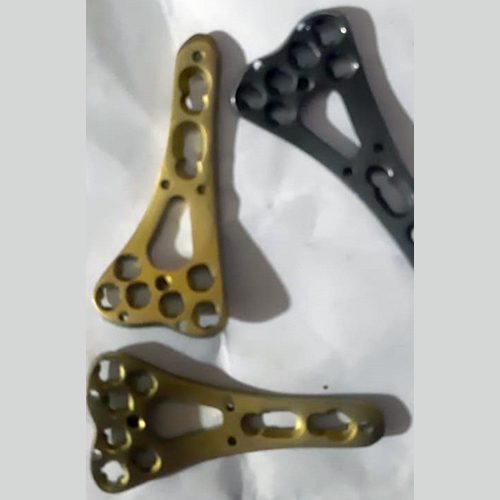
Understanding the Variable Angle LCP Distal Radius Plate (2.4mm / 3.5mm): An Advanced Solution for Wrist Fractures
Comprehensive Introduction & Overview
A distal radius fracture, commonly known as a broken wrist, is one of the most frequent bone injuries, often resulting from falls onto an outstretched hand. While some less severe fractures can be managed with casting, many displaced or unstable fractures require surgical intervention to restore proper anatomy and function. For these complex cases, advanced orthopedic implants are essential, and among the most sophisticated solutions available is the Variable Angle Locking Compression Plate (LCP) Distal Radius Plate.
This guide delves deeply into the Variable Angle LCP Distal Radius Plate (available in 2.4mm and 3.5mm screw sizes), explaining its innovative design, surgical applications, biomechanical advantages, and the significant improvements it offers in patient outcomes. Designed for comprehensive patient education, this information aims to empower individuals facing a wrist fracture with a thorough understanding of this state-of-the-art treatment option, ensuring they are well-informed partners in their recovery journey. It is crucial to remember that this content is for informational purposes only and does not constitute medical advice. Always consult with a qualified orthopedic specialist for diagnosis and treatment.
Deep-Dive into Technical Specifications & Mechanisms
The Variable Angle LCP Distal Radius Plate represents a significant advancement in fracture fixation technology, combining the benefits of locking plate systems with enhanced surgical flexibility.
Design and Materials
- Material Composition: These plates are typically manufactured from high-grade titanium or stainless steel alloys. These materials are chosen for their exceptional biocompatibility, meaning they are well-tolerated by the human body, and their superior mechanical strength, which is vital for stable bone fixation.
- Anatomical Contouring: The plates are pre-contoured to closely match the complex anatomy of the distal radius. This anatomical shape minimizes the need for extensive intraoperative bending, preserving the material's strength and ensuring a low-profile fit that reduces soft tissue irritation.
- Locking Plate Concept (LCP): The core of the LCP system is the ability of screws to "lock" into the plate, creating a fixed-angle construct. Unlike traditional screws that compress the plate against the bone, locking screws act like small internal fixators. This provides angular stability, which is particularly beneficial in osteoporotic bone or comminuted (fragmented) fractures where screw purchase might otherwise be compromised.
- Variable Angle (VA) Technology: This is a hallmark feature. Traditional locking plates have fixed-angle screw holes. Variable Angle technology allows the surgeon to insert locking screws at a range of angles (typically up to +/- 15-20 degrees from the plate's axis) while still achieving locking stability. This flexibility is critical for:
- Optimizing screw placement to capture small bone fragments.
- Avoiding joint surfaces or existing hardware.
- Achieving the best possible bone purchase in complex fracture patterns.
- Screw Types:
- Variable Angle Locking Screws: These screws engage with the plate in a unique way that allows for angulation while maintaining a secure, locked interface.
- Fixed Angle Locking Screws: Some plates may also incorporate fixed-angle locking holes for specific anatomical regions or when a precise, non-variable angle is desired.
- Non-Locking (Compression) Screws: These screws function traditionally, drawing the plate closer to the bone and providing compression, which can be useful for reducing simple fracture lines or achieving initial plate positioning.
- Plate Sizes (2.4mm / 3.5mm): These numbers refer to the primary screw diameter designed for use with the plate.
- 2.4mm System: Generally used for smaller bones, smaller patients, or when dealing with highly comminuted fragments where smaller screws are necessary to capture bone. It offers a lower profile.
- 3.5mm System: Provides stronger fixation and is typically used for larger bones, more robust patients, or fractures requiring greater stability. The choice depends on fracture characteristics, bone quality, and patient anatomy.
- Combi-Holes: Many LCP plates feature "combi-holes" that allow for the insertion of either a locking screw (fixed or variable angle) or a non-locking compression screw in the same hole. This versatility enables the surgeon to apply both locking and compression principles as needed during the procedure.
Biomechanics
The biomechanical advantages of the Variable Angle LCP Distal Radius Plate are paramount to its success:
* Internal Fixator Principle: By creating a fixed-angle construct, the plate acts as an internal splint, bypassing the need for direct plate-to-bone compression for stability. This is crucial in osteoporotic bone where compression might lead to screw pullout.
* Angular Stability: The locked screw-plate interface provides superior resistance to collapse, rotation, and shear forces, which are common challenges in distal radius fractures.
* Load Sharing vs. Load Bearing: While the plate initially bears a significant portion of the load, the goal is for the bone to gradually take on more load as it heals (load sharing), promoting natural bone regeneration.
* Enhanced Primary Stability: The robust and stable fixation achieved allows for earlier initiation of physical therapy and range-of-motion exercises, which are critical for preventing stiffness and improving long-term functional outcomes.
* Optimized Fragment Fixation: The variable angle capability allows screws to be precisely directed into the strongest bone stock or to capture specific small articular fragments, maximizing stability and anatomical reduction even in complex, multi-fragmentary fractures.
Extensive Clinical Indications & Usage
The Variable Angle LCP Distal Radius Plate is indicated for a broad spectrum of distal radius fractures, particularly those that are unstable, displaced, or involve the joint surface.
Primary Clinical Indications
- Displaced Intra-Articular Fractures: Fractures that extend into the wrist joint, requiring precise anatomical reduction to prevent post-traumatic arthritis.
- Unstable Extra-Articular Fractures: Fractures outside the joint capsule that are prone to displacement even after reduction.
- Comminuted Fractures: Fractures with multiple bone fragments, especially those involving the metaphysis and epiphysis.
- Osteoporotic Fractures: In patients with weakened bone quality, the locking plate system provides superior screw purchase and stability compared to traditional non-locking plates.
- Fracture-Dislocations: Combined fractures and dislocations of the wrist.
- Malunion or Nonunion: In certain cases, these plates may be used in revision surgeries for fractures that have healed incorrectly or failed to heal.
Surgical Applications & Procedure Overview (Patient-Friendly)
The surgical procedure, typically performed under regional or general anesthesia, involves meticulous steps to ensure optimal fracture reduction and plate placement.
1. Anesthesia and Positioning: The patient's arm is prepared, and anesthesia is administered.
2. Incision: A small incision is typically made on the volar (palm side) aspect of the wrist, allowing access to the distal radius. This approach minimizes disruption to the dorsal (back) tendons.
3. Fracture Reduction: The orthopedic surgeon carefully manipulates the bone fragments to restore the anatomical alignment of the distal radius and, if applicable, the joint surface. This often involves traction and direct visualization.
4. Plate Placement: The Variable Angle LCP Distal Radius Plate is then positioned precisely on the bone, matching its pre-contoured shape to the bone's anatomy. Temporary pins or clamps may be used to hold it in place.
5. Screw Insertion: Using specialized instruments, the surgeon inserts locking screws (variable angle or fixed) and/or non-locking compression screws through the plate into the bone. The variable angle feature allows for precise targeting of bone fragments, optimizing fixation.
6. Confirmation: Throughout the procedure, fluoroscopy (real-time X-ray imaging) is used to confirm accurate fracture reduction, plate position, and screw placement.
7. Wound Closure: Once optimal fixation is achieved, the incision is carefully closed in layers.
Fitting/Usage Instructions (Post-Operative for Patients)
Post-operative care is crucial for successful recovery.
* Immediate Post-Op: Expect some pain and swelling, managed with medication and elevation. A splint or cast may be applied for initial protection.
* Rehabilitation: A structured physical therapy program is paramount. Early, gentle range-of-motion exercises are often encouraged to prevent stiffness and promote healing, as dictated by your surgeon and therapist.
* Weight-Bearing Restrictions: Your surgeon will provide specific instructions on weight-bearing and activity restrictions. It's vital to adhere to these to protect the healing bone and implant.
* Wound Care: Keep the incision clean and dry. Follow instructions for dressing changes and watch for signs of infection.
* Follow-Up: Regular follow-up appointments with your surgeon will monitor healing progress through X-rays and clinical examination.
Risks, Side Effects, or Contraindications
While highly effective, surgical treatment with any implant carries potential risks. It's important for patients to be aware of these.
General Surgical Risks
- Infection: As with any surgery, there is a risk of infection at the surgical site.
- Bleeding/Hematoma: Accumulation of blood under the skin.
- Nerve or Vessel Damage: Injury to nearby nerves (e.g., median, radial, ulnar nerves) or blood vessels, potentially leading to numbness, weakness, or circulatory problems.
- Anesthesia Risks: Risks associated with general or regional anesthesia.
Plate-Specific Risks & Side Effects
- Hardware Irritation: The plate and screws can sometimes cause irritation to surrounding tendons or nerves, leading to pain or discomfort. This may necessitate hardware removal.
- Loss of Reduction: In rare cases, the fracture fragments may shift after surgery, leading to a loss of the initially achieved reduction.
- Nonunion or Malunion: The bone may fail to heal (nonunion) or heal in an improper position (malunion), potentially requiring further intervention.
- Complex Regional Pain Syndrome (CRPS): A rare but severe chronic pain condition that can affect the limb after injury or surgery.
- Tendon Rupture: Although less common with modern low-profile plates and careful surgical technique, tendons (especially extensor tendons) can sometimes be irritated or rupture.
- Implant Failure: While rare, the plate or screws can break, especially if post-operative weight-bearing restrictions are not followed.
Contraindications (General considerations)
- Active Infection: Presence of an active infection in the surgical area.
- Severe Soft Tissue Compromise: Insufficient healthy soft tissue to cover the implant, increasing infection risk.
- Allergy to Implant Materials: Known allergy or hypersensitivity to titanium or stainless steel.
- Patient Non-Compliance: Unwillingness or inability to follow post-operative instructions, including rehabilitation protocols.
Expert Tips from Dr. Mohammed Hutaif
"As an orthopedic specialist, I've seen firsthand the transformative impact of advanced fixation techniques for distal radius fractures. The Variable Angle LCP Distal Radius Plate is a cornerstone of modern wrist fracture management, but its success hinges on several critical factors:
- Personalized Treatment is Key: Every fracture is unique, as is every patient. The choice between a 2.4mm or 3.5mm system, and even the specific plate design, is tailored to the individual's fracture pattern, bone quality, activity level, and overall health. There's no one-size-fits-all solution.
- Meticulous Surgical Technique: The variable angle technology offers incredible flexibility, but it demands precise surgical execution. Proper fracture reduction, optimal plate positioning, and careful screw insertion are paramount to leveraging the plate's full potential and minimizing complications.
- The Power of Early Rehabilitation: While the plate provides exceptional stability, it's not a substitute for active recovery. I cannot overstate the importance of a structured, guided physical therapy program. Early, controlled motion, initiated under the guidance of a therapist, is vital for preventing stiffness, restoring range of motion, and achieving the best possible functional outcome.
- Realistic Expectations and Patience: Healing takes time. Patients should understand that while these plates facilitate a faster return to function, full recovery can take several months. It's a journey, and patience combined with consistent effort in rehabilitation is crucial.
- Patient Education and Compliance: An informed patient is an empowered patient. Understanding your injury, the surgical process, and especially your role in post-operative care is fundamental. Adhering to weight-bearing restrictions, wound care, and rehabilitation exercises directly impacts your long-term success. Your commitment to your recovery is as important as the surgery itself."
Massive FAQ Section
1. What is a distal radius fracture?
A distal radius fracture is a break in the radius bone of the forearm, specifically at its end near the wrist joint. It is a very common injury, often caused by falling onto an outstretched hand. The severity can range from a simple crack to a complex break with multiple fragments and displacement of the bone.
2. Why might my doctor recommend a plate for my wrist fracture?
Your doctor might recommend a plate if your wrist fracture is displaced (bones are out of alignment), unstable (likely to shift even if set), involves the joint surface, or if the bone quality is poor (e.g., osteoporosis). Plates, especially locking plates like the Variable Angle LCP, provide strong internal fixation, allowing for more precise anatomical reduction and earlier mobilization, which is crucial for good long-term outcomes.
3. What does "Variable Angle LCP" mean?
"LCP" stands for Locking Compression Plate, meaning the screws can lock into the plate, creating a very stable, fixed-angle construct. "Variable Angle" means that the surgeon has the flexibility to insert these locking screws at a range of angles (typically up to +/- 15-20 degrees) relative to the plate. This allows for optimal screw placement to capture small bone fragments, avoid critical structures, and maximize bone purchase, especially in complex fracture patterns.
4. What are the materials used in these plates? Are they safe?
Variable Angle LCP Distal Radius Plates are typically made from high-grade titanium or stainless steel alloys. These materials are chosen for their excellent biocompatibility, meaning they are well-tolerated by the human body and rarely cause allergic reactions. They are also incredibly strong and durable, designed to withstand the forces of daily life while the bone heals.
5. How long does the surgery take?
The duration of the surgery can vary depending on the complexity of the fracture and individual patient factors, but it typically ranges from 45 minutes to 2 hours. This includes preparation, anesthesia, the surgical procedure itself, and wound closure.
6. What is the recovery time after surgery?
Initial recovery, involving pain management and protection, usually lasts a few weeks. However, full recovery of strength and range of motion can take several months, often 3-6 months, and sometimes up to a year for complete restoration of pre-injury function, especially for demanding activities. Adherence to physical therapy is key to optimizing this timeline.
7. Will the plate stay in my wrist forever?
In most cases, the plate is designed to be a permanent implant and is left in place unless it causes problems. Reasons for removal might include hardware irritation (e.g., tendons rubbing against the plate), infection, or if the plate becomes loose. Removal surgery is typically a simpler procedure than the initial fixation.
8. Can I go through airport security with a plate in my wrist?
Yes, you can safely go through airport security with a metal implant like a distal radius plate. While it's possible the metal detector might be triggered, it's generally not an issue. You can inform security personnel about your implant if it happens. Carrying a doctor's note detailing your implant is rarely necessary but can provide peace of mind.
9. What are the potential complications?
Potential complications include general surgical risks like infection, bleeding, or nerve damage. Plate-specific risks can include hardware irritation (requiring removal), loss of reduction, nonunion (failure of bone to heal), malunion (healing in an incorrect position), or, rarely, Complex Regional Pain Syndrome (CRPS) or tendon rupture. Your surgeon will discuss these risks with you.
10. How important is physical therapy?
Physical therapy is critically important. The plate provides stability, but rehabilitation restores motion, strength, and function. Early, guided exercises prevent stiffness, improve circulation, and help you regain the full use of your wrist and hand. Skipping or neglecting therapy can lead to long-term stiffness, weakness, and reduced functional outcomes.
11. What's the difference between 2.4mm and 3.5mm plates?
The 2.4mm and 3.5mm designations refer to the diameter of the screws used with the plate systems. The 2.4mm system uses smaller screws and generally has a lower profile plate, often chosen for smaller patients, smaller bones, or when dealing with very small bone fragments. The 3.5mm system uses larger, stronger screws and plates, typically for larger patients, more robust bones, or fractures requiring maximum stability. The choice depends on the specific fracture characteristics and patient anatomy.
12. Can I return to sports after this surgery?
Returning to sports and strenuous activities depends on the individual's healing progress, the complexity of the fracture, and the demands of the sport. Your surgeon and physical therapist will guide you. Generally, non-contact sports might be resumed after several months, while contact sports or activities involving high impact on the wrist may require a longer recovery period, often 6 months to a year, and sometimes protective bracing. Full clearance will be given only when sufficient bone healing and strength are confirmed.
Patient Outcome Improvements
The adoption of Variable Angle LCP Distal Radius Plates has significantly elevated the standard of care for complex wrist fractures, leading to notable improvements in patient outcomes:
* Restoration of Anatomical Alignment: The ability to achieve precise reduction and stable fixation helps restore the natural anatomy of the distal radius and wrist joint, which is crucial for preventing long-term complications like post-traumatic arthritis.
* Enhanced Stability and Early Mobilization: The robust, fixed-angle construct provides immediate stability, allowing patients to begin gentle range-of-motion exercises much earlier than with traditional casting or less stable fixation methods. This early mobilization is key to preventing stiffness and accelerating recovery.
* Reduced Risk of Post-Traumatic Arthritis: By meticulously restoring articular congruity, the risk of developing painful arthritis in the wrist joint years after the injury is significantly diminished.
* Improved Range of Motion and Grip Strength: Patients typically achieve a better range of motion and greater grip strength compared to historical treatment methods, leading to superior functional outcomes.
* Faster Return to Daily Activities and Work: The stability provided by the plate and the ability for early rehabilitation often translates to a quicker and more confident return to activities of daily living, hobbies, and work.
* Better Long-Term Functional Outcomes: For suitable fracture patterns, Variable Angle LCP Distal Radius Plates offer a reliable solution for achieving excellent long-term functional results, minimizing pain, and maximizing the patient's quality of life.
This advanced orthopedic technology, combined with expert surgical technique and dedicated rehabilitation, offers patients the best possible chance for a successful recovery from a challenging wrist injury.