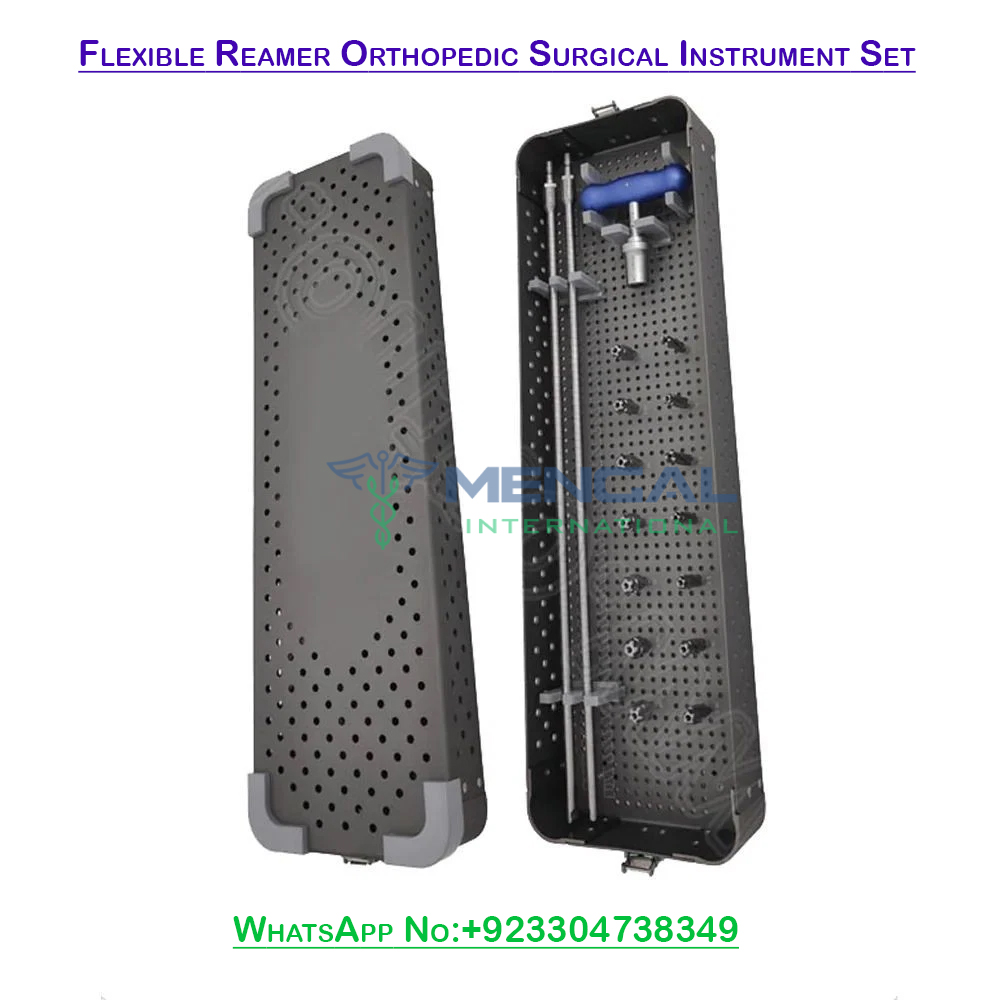
Trephine Reamer Sets: Mastering Precision in Orthopedic Bone Management
Comprehensive Introduction & Overview
In the intricate world of orthopedic surgery, precision and efficiency are paramount. Trephine Reamer Sets represent a cornerstone of advanced instrumentation, playing a critical role in procedures requiring meticulous bone harvesting, precise cavity preparation, and diagnostic core biopsies. These specialized instruments are engineered to create cylindrical bone cores or precisely ream bone cavities, offering surgeons unparalleled control and accuracy.
A trephine, at its core, is a cylindrical cutting instrument designed to remove a circular section of bone. When combined with reaming capabilities, a Trephine Reamer Set provides a versatile solution for numerous orthopedic challenges. From facilitating autologous bone grafting, where a patient's own bone is used to promote healing, to obtaining high-quality diagnostic samples, the utility of these sets is expansive. Their evolution reflects a continuous drive towards minimizing surgical invasiveness, enhancing patient safety, and optimizing long-term outcomes. This guide delves into the multifaceted aspects of Trephine Reamer Sets, from their sophisticated design and material science to their detailed clinical applications, maintenance protocols, underlying biomechanics, and ultimate impact on patient recovery and success.
Deep-dive into Technical Specifications & Mechanisms
The efficacy of Trephine Reamer Sets lies in their sophisticated design and the advanced materials used in their construction. Understanding these technical elements is crucial for appreciating their surgical utility.
Design and Components
A typical Trephine Reamer Set comprises several key components, each meticulously engineered for specific functions:
- Trephine Barrel (Outer Cutter): This is the primary cutting component, featuring a sharp, cylindrical cutting edge. Diameters vary widely (e.g., 4mm to 20mm or more) to accommodate different surgical needs, while lengths dictate the depth of bone core that can be harvested. Many trephines feature depth markings or adjustable depth stops for precise control.
- Reamer (Inner Cutter/Milling Component): Some sets include an internal reamer or milling tool that fits within the trephine barrel. This component is designed to further refine the bone cavity, remove additional bone, or help extract the bone core. It may have fluted or serrated edges.
- Handle: Ergonomically designed for comfortable grip and efficient force transmission. Handles can be universal, allowing attachment of various trephine sizes, or integrated. They often feature quick-connect mechanisms (e.g., AO, Hudson, Jacobs, quick-release) for secure attachment to power drills or manual operation.
- Ejector Pins/Pusher Rods: Essential for carefully extracting the harvested bone core from the trephine barrel without damage.
- Depth Stops: Removable or adjustable rings that limit the penetration depth of the trephine, preventing accidental over-penetration and protecting underlying structures.
Material Selection
The choice of materials is critical for the performance, durability, and biocompatibility of trephine reamer sets.
- Surgical Grade Stainless Steel (e.g., 316L, 17-4 PH):
- Properties: Excellent corrosion resistance, high strength, good machinability, sterilizable.
- Application: Primary material for most trephine barrels, reamers, and handles.
- Titanium Alloys (e.g., Ti-6Al-4V):
- Properties: Superior strength-to-weight ratio, excellent biocompatibility, non-magnetic, lower thermal conductivity.
- Application: Used for specific components where reduced weight or enhanced biocompatibility is desired, though less common for the cutting edges themselves due to cost.
- Ceramic Coatings (e.g., TiN, DLC):
- Properties: Increase surface hardness, reduce friction, enhance wear resistance, improve cutting edge longevity.
- Application: Applied as a coating to cutting edges of trephines and reamers to maintain sharpness over time and reduce heat generation during bone cutting.
Mechanisms of Action
Trephine Reamer Sets function by a precise cutting and coring action:
- Initial Engagement: The sharp, circular cutting edge of the trephine is placed onto the bone surface at the desired location.
- Penetration and Coring: With controlled rotational force (manual or powered) and axial pressure, the trephine cuts through the cortical and cancellous bone, creating a cylindrical bone core.
- Reaming/Enlargement (Optional): If a reamer is used, it can further enlarge or shape the cavity created by the trephine, or assist in removing the core.
- Core Extraction: Once the desired depth is reached, the trephine is carefully withdrawn, and the bone core is extracted using an ejector pin or other specialized instruments.
- Irrigation: Throughout the process, saline irrigation is crucial to cool the cutting site, prevent thermal necrosis of bone, and flush away bone debris.
Table: Key Technical Specifications
| Feature | Description | Importance |
|---|---|---|
| Diameter Range | 4mm to 20mm+ (common for trephines) | Matches graft size or biopsy need, minimizes donor site morbidity. |
| Working Length | 20mm to 100mm+ (common) | Accommodates varying bone thicknesses and depths. |
| Cutting Edge Type | Serrated, smooth, fluted, single/double bevel | Influences cutting efficiency, bone debris removal, and core quality. |
| Connection Type | AO, Hudson, Jacobs, Quick-Release | Ensures compatibility with various power drills and handles. |
| Depth Markings | Etched lines at specific intervals (e.g., 5mm, 10mm) | Allows precise depth control during bone penetration. |
| Sterilization | Autoclavable (steam sterilization) | Essential for infection control and reusability. |
Extensive Clinical Indications & Usage
Trephine Reamer Sets are indispensable across a broad spectrum of orthopedic procedures, offering precision and versatility.
Detailed Surgical and Clinical Applications
- Bone Graft Harvesting:
- Autograft: The gold standard for bone grafting, trephines are used to harvest cylindrical bone plugs from donor sites such as the iliac crest, proximal tibia, distal femur, or olecranon. This technique minimizes donor site morbidity compared to traditional open harvesting.
- Osteochondral Autograft Transplantation (OATS): Used to harvest osteochondral plugs (bone and cartilage) from a less weight-bearing area to repair defects in weight-bearing joints, commonly in the knee or ankle.
- Core Bone Biopsy:
- Diagnostic: Critical for obtaining high-quality, intact bone samples for histological examination in cases of suspected bone tumors (benign or malignant), osteomyelitis (bone infection), metabolic bone diseases (e.g., osteoporosis, osteomalacia), or unexplained bone pain.
- Minimally Invasive: Allows for percutaneous or small-incision biopsies, reducing patient discomfort and recovery time.
- Implant Site Preparation:
- Total Hip Arthroplasty (THA): While dedicated acetabular reamers are standard, trephines can be used for initial pilot hole creation or precise removal of localized osteophytes or sclerotic bone within the acetabulum to prepare for reaming.
- Ligament Reconstruction: For certain techniques in ACL or PCL reconstruction, trephines can be used to create precise bone tunnels or harvest bone blocks for fixation.
- Spinal Surgery:
- Vertebral Body Biopsy: To diagnose vertebral lesions or infections.
- Fusion Site Preparation: To prepare bone surfaces for interbody fusion or graft placement.
- Trauma and Debridement:
- Removing devitalized or sclerotic bone in non-union cases to promote healing.
- Debridement of infected bone segments.
Fitting and Usage Instructions
Proper fitting and usage are critical for successful outcomes and patient safety.
- Pre-operative Planning:
- Identify the target bone, desired diameter, and depth of the bone core/cavity.
- Select the appropriate trephine reamer set components (trephine size, handle, depth stop).
- Review patient imaging (X-ray, CT, MRI) to identify anatomical landmarks and avoid critical structures (nerves, vessels, joints).
- Assembly:
- Ensure all components are sterile and intact.
- Securely attach the selected trephine barrel to the appropriate handle or power drill coupling. If using a depth stop, place it correctly and lock it at the desired depth.
- Surgical Site Preparation:
- Establish a sterile field.
- Infiltrate local anesthetic if appropriate. Make a small skin incision if necessary for percutaneous access.
- Technique for Bone Coring/Reaming:
- Initial Cortical Penetration: Position the trephine perpendicularly to the bone surface. Apply gentle, consistent axial pressure. Begin rotation (manual or powered) slowly to engage the cortex.
- Controlled Advancement: Once the cortex is penetrated, maintain steady rotation and pressure. Advance the trephine to the pre-determined depth, observing depth markings or stopping at the depth stop.
- Continuous Irrigation: Crucially, irrigate the cutting site continuously with sterile saline to dissipate heat generated by friction and prevent thermal necrosis of the bone. This also clears bone debris, improving visibility and cutting efficiency.
- Core Extraction: Once the desired depth is reached, stop rotation and carefully withdraw the trephine. Use an ejector pin or similar instrument to gently push the harvested bone core out of the trephine barrel. Avoid damaging the core.
- Post-Procedure:
- Inspect the harvested core/reamed cavity.
- Address hemostasis at the donor/recipient site.
- Close the incision if applicable.
Risks, Side Effects, or Contraindications
While highly effective, the use of Trephine Reamer Sets carries inherent risks and contraindications that surgeons must consider.
Risks
- Instrument Breakage: Although rare with proper use and high-quality instruments, excessive force, dull instruments, or misuse can lead to breakage, potentially requiring retrieval of fragments.
- Thermal Necrosis: Insufficient irrigation during drilling can cause localized overheating of bone, leading to osteocyte death (thermal necrosis), which can compromise graft viability or bone healing.
- Perforation of Vital Structures: Inadvertent over-penetration or misdirection can damage nerves, blood vessels, joints, or internal organs, especially in areas with thin cortical bone or proximity to critical anatomy (e.g., pelvic brim, spinal canal).
- Incomplete Core Harvest: If the trephine is not advanced deep enough or encounters very dense bone, an incomplete or fragmented bone core may result.
- Infection: As with any surgical procedure, there is a risk of surgical site infection if sterile protocols are compromised.
- Donor Site Complications (for bone harvesting):
- Pain, hematoma, seroma formation.
- Nerve injury (e.g., lateral femoral cutaneous nerve with iliac crest harvest).
- Fracture of the donor site (e.g., iliac crest fracture).
- Cosmetic deformity.
Side Effects
- Post-operative pain at the surgical and/or donor site.
- Localized swelling and bruising.
- Temporary numbness or paresthesia if nerve irritation occurs.
Contraindications
- Active Infection: Absolute contraindication for elective bone grafting or biopsy at the site of active infection.
- Severe Osteopenia/Osteoporosis: Increased risk of donor site fracture or poor quality graft harvest.
- Coagulopathy/Anticoagulation: Increased risk of significant bleeding; requires careful management or temporary cessation of anticoagulants.
- Insufficient Bone Stock: If the chosen donor site does not have adequate bone volume or quality for the required graft size.
- Anatomical Variations: Unfavorable anatomy that makes safe access or harvesting difficult.
- Previous Radiation Therapy: Bone in irradiated fields may have impaired healing capacity and increased fragility.
Maintenance & Sterilization Protocols
Proper maintenance and sterilization are paramount to ensure instrument longevity, prevent cross-contamination, and maintain patient safety.
Immediate Post-Use Care
- Rinsing: Immediately after use, rinse instruments thoroughly under running water to remove gross debris (blood, tissue, bone fragments) before they dry.
- Disassembly: Disassemble all separable components (trephine, reamer, handle, ejector pins) to allow for complete cleaning.
Cleaning
- Manual Cleaning:
- Use an enzymatic detergent solution and a soft brush to meticulously clean all surfaces, lumens, and cutting edges.
- Pay special attention to serrations, threads, and crevices where debris can accumulate.
- Rinse thoroughly with purified water.
- Automated Cleaning (Ultrasonic Cleaner/Washer-Disinfector):
- Follow manufacturer's instructions for loading instruments into appropriate trays.
- Use validated cycles and detergents.
- Ultrasonic cleaning helps remove microscopic debris from hard-to-reach areas.
- Rinse thoroughly after automated cleaning.
Inspection
- Visual Inspection: After cleaning, meticulously inspect each instrument for:
- Sharpness: Critical for trephines and reamers. Dull instruments increase cutting time, heat generation, and risk of bone damage.
- Damage: Cracks, dents, bends, or burrs on cutting edges or shafts.
- Corrosion: Rust spots or discoloration.
- Functionality: Ensure all moving parts (e.g., quick-connect mechanisms, depth stops) operate smoothly.
- Lubrication: Lubricate specific moving parts (if recommended by the manufacturer) with a surgical instrument lubricant.
Sterilization
- Packaging: Place cleaned, inspected, and dry instruments into appropriate sterile packaging (e.g., sterilization trays, wraps, pouches) according to facility protocols and manufacturer guidelines. Ensure proper spacing for steam penetration.
- Autoclave (Steam Sterilization): This is the most common and effective method for Trephine Reamer Sets.
- Parameters: Follow validated cycles (e.g., 270°F (132°C) for 4 minutes for unwrapped instruments, or specific times for wrapped/pouched instruments).
- Gravity Displacement vs. Pre-vacuum: Understand the type of sterilizer used and its specific cycle requirements.
- Flash Sterilization: Used only in urgent situations for unwrapped instruments, but generally discouraged due to reduced sterility assurance levels.
- Ethylene Oxide (EtO): Less common for metal instruments but may be used for heat-sensitive components if present. Requires aeration time.
- Storage: Store sterilized instrument sets in a clean, dry, and dust-free environment until ready for use, respecting the expiration date of the sterile package.
Biomechanics and Patient Outcome Improvements
Biomechanics of Trephine Reaming
The biomechanical principles governing trephine reaming are crucial for understanding cutting efficiency, minimizing bone damage, and optimizing graft quality.
- Cutting Edge Geometry: The design of the trephine's cutting edge (e.g., tooth configuration, rake angle) directly influences its ability to penetrate and cut bone cleanly. A sharp, optimally designed edge reduces the force required for cutting, minimizing stress on the bone and the surgeon.
- Torque and Axial Force: Efficient bone removal requires a balance of applied torque (rotational force) and axial force (downward pressure). Excessive axial force can lead to instrument binding or fracture, while insufficient force results in inefficient cutting.
- Heat Generation: Friction between the cutting instrument and bone generates heat. Without adequate irrigation, this heat can cause thermal necrosis, compromising osteocyte viability. The cutting speed, sharpness, and material properties all influence heat generation.
- Bone-Instrument Interaction: The interaction should be smooth and controlled to minimize microfractures in the surrounding bone, which could weaken the bone or compromise the integrity of a harvested graft.
- Precision: The rigid design of trephines ensures a consistent diameter and depth of cut, which is vital for creating precisely sized bone grafts or biopsy samples.
Patient Outcome Improvements
The meticulous design and application of Trephine Reamer Sets directly translate into significant improvements in patient outcomes:
- Enhanced Graft Quality and Viability:
- Precision cutting ensures intact, cylindrical bone cores, preserving the delicate cellular structure and biological activity of the graft.
- Reduced thermal necrosis due to efficient cutting and irrigation maintains osteocyte viability, which is critical for successful graft incorporation and healing.
- Reduced Donor Site Morbidity:
- Minimally invasive harvesting techniques, facilitated by trephines, result in smaller incisions, less soft tissue dissection, and reduced post-operative pain at the donor site compared to traditional open methods.
- Lower incidence of complications like hematoma, nerve injury, or fracture at the donor site.
- Improved Diagnostic Accuracy:
- High-quality, intact core biopsies provide pathologists with superior samples for accurate diagnosis of bone tumors, infections, or metabolic diseases, leading to more targeted and effective treatment plans.
- Faster Recovery and Rehabilitation:
- Less invasive procedures generally lead to reduced post-operative pain, shorter hospital stays, and quicker return to function.
- Optimized Fusion and Healing Rates:
- Precisely prepared recipient sites and high-quality bone grafts contribute to higher rates of arthrodesis (fusion) in spinal or joint procedures and faster healing of bone defects.
- Reduced Operative Time:
- Efficient and precise bone removal streamlines surgical procedures, potentially reducing overall operative time and exposure to anesthesia.
Massive FAQ Section
Q1: What is a Trephine Reamer Set primarily used for in orthopedics?
A1: Trephine Reamer Sets are primarily used for harvesting precise cylindrical bone grafts (autograft or osteochondral plugs), obtaining core bone biopsies for diagnostic purposes, and preparing specific bone cavities for implant placement or fusion procedures.
Q2: What materials are Trephine Reamer Sets typically made from?
A2: They are typically made from high-grade surgical stainless steel (e.g., 316L, 17-4 PH) for durability and corrosion resistance. Some specialized components may incorporate titanium alloys for strength-to-weight ratio or ceramic coatings (e.g., TiN) to enhance cutting edge hardness and longevity.
Q3: How do I ensure proper sizing for a bone graft using these instruments?
A3: Proper sizing is determined pre-operatively through imaging and surgical planning. The trephine barrel diameter is selected to match the desired graft size. Many trephines also have depth markings or adjustable depth stops to ensure the correct graft length is harvested.
Q4: What's the main difference between a trephine and a standard orthopedic reamer?
A4: A trephine is designed to cut and retrieve a cylindrical core of bone, leaving a circular hole. A standard reamer, often hemispherical or conical, is designed to enlarge and shape a cavity or surface, typically in preparation for an implant (e.g., acetabular reamer for hip sockets). Some trephine sets include an inner reamer component to refine the cavity or aid core extraction.
Q5: How are Trephine Reamer Sets sterilized?
A5: The most common and recommended method is steam sterilization in an autoclave. Instruments must be thoroughly cleaned, inspected, and properly packaged before undergoing a validated steam sterilization cycle.
Q6: Can Trephine Reamer Sets be reused?
A6: Yes, Trephine Reamer Sets are designed for multiple uses. However, they must undergo rigorous cleaning, inspection, and sterilization protocols after each use. Regular inspection for sharpness and damage is crucial to ensure continued safe and effective performance.
Q7: How can thermal necrosis of bone be prevented during bone harvesting?
A7: Preventing thermal necrosis is critical. This is achieved by ensuring the trephine's cutting edges are sharp, using controlled cutting speed (especially with power drills), applying consistent but not excessive pressure, and most importantly, using continuous and abundant sterile saline irrigation throughout the cutting process to cool the bone and clear debris.
Q8: What are some common complications associated with using Trephine Reamer Sets?
A8: Potential complications include instrument breakage, thermal necrosis of bone, perforation of vital structures (nerves, vessels, organs) due to over-penetration, incomplete bone core harvest, infection, and donor site complications such as pain, hematoma, or fracture.
Q9: How often should the cutting components of Trephine Reamer Sets be replaced?
A9: There isn't a fixed replacement schedule; it depends on the frequency of use, bone density encountered, and adherence to maintenance protocols. Regular inspection for dullness, burrs, or damage is paramount. Any trephine or reamer that shows signs of wear impacting its cutting efficiency or integrity should be immediately removed from service and replaced.
Q10: Are there different types of connection mechanisms for Trephine Reamer Sets?
A10: Yes, common connection mechanisms include AO (Synthes), Hudson, Jacobs, and various quick-release systems. It's crucial to ensure compatibility between the trephine/reamer and the chosen handle or power drill.
Q11: How does the design of a trephine impact surgical precision?
A11: The design, including the exact diameter, cutting edge geometry, and the presence of depth markings or stops, directly dictates surgical precision. A well-designed trephine ensures a perfectly cylindrical, consistently sized bone core, which is vital for successful grafting or accurate biopsy results.
Q12: What role does irrigation play during the use of trephine reamers?
A12: Irrigation is absolutely critical. It serves two main purposes: first, to cool the bone and instrument, preventing heat-induced thermal necrosis of bone tissue, which could compromise graft viability. Second, it flushes away bone debris, maintaining clear visibility of the surgical field and preventing clogging of the cutting edges, thereby improving cutting efficiency.