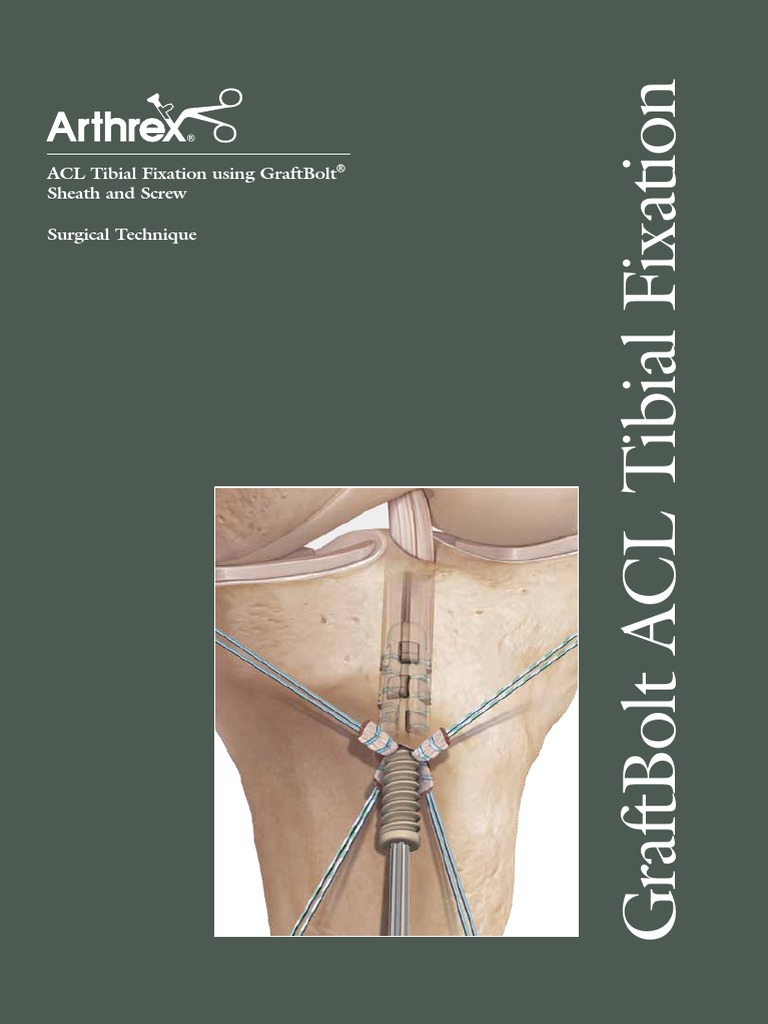
Tibial Inlay Graft Fixation for ACL Reconstruction: A Comprehensive Guide
Comprehensive Introduction & Overview
The anterior cruciate ligament (ACL) is a crucial ligament in the knee, connecting the thigh bone (femur) to the shin bone (tibia). It plays a vital role in stabilizing the knee joint, preventing the tibia from sliding too far forward and limiting excessive rotation. An ACL tear is a common and often debilitating injury, particularly prevalent in athletes participating in sports that involve sudden stops, changes in direction, and jumping.
When the ACL is torn, surgical reconstruction is often recommended to restore knee stability and allow patients to return to their desired activity levels safely. ACL reconstruction involves replacing the torn ligament with a new tissue graft, which can be harvested from the patient's own body (autograft) or from a donor (allograft). A critical aspect of successful ACL reconstruction is the secure fixation of this graft within the bone tunnels created in the femur and tibia. The strength and stability of this fixation directly impact the healing process, the success of the surgery, and the long-term outcomes for the patient.
Among various fixation techniques, Tibial Inlay Graft Fixation represents an advanced and biomechanically favorable method, particularly for certain graft types like the Bone-Patellar Tendon-Bone (BPTB) graft. Unlike traditional methods where the graft is secured within a drilled tunnel, the inlay technique involves creating a shallow trough or "inlay" on the posterior aspect of the tibia where the bony block of the graft is seated and fixed directly to the bone surface. This approach aims to mimic the natural anatomical insertion of the ACL more closely, offering superior primary stability and promoting robust bone-to-bone healing. It is often favored for its potential to reduce complications such as tunnel widening and improve overall graft integrity and long-term knee function.
Deep-dive into Technical Specifications / Mechanisms
Design and Materials
The core principle of Tibial Inlay Graft Fixation revolves around a direct bone-to-bone interface at the tibial attachment site.
- Graft Type: This technique is predominantly used with grafts that include a bone block, such as the Bone-Patellar Tendon-Bone (BPTB) autograft or allograft, and sometimes quadriceps tendon grafts with a bone block. The presence of a bone block is essential as it is designed to be seated directly into the tibial inlay.
- Inlay Bed: A precisely shaped trough or bed is surgically prepared on the posterior aspect of the tibia. This bed is typically rectangular or trapezoidal, matching the dimensions of the graft's bone block. The goal is to create a snug fit, maximizing contact between the graft bone block and the recipient tibial bone.
- Fixation Devices: Once the bone block is seated in the inlay, it is secured using various fixation devices. Common options include:
- Screws: Typically cancellous screws, often with washers, are driven through the bone block and into the underlying tibial bone. These provide strong compression and rigid fixation.
- Staples: Surgical staples can be used to secure the bone block to the tibia, particularly useful for broader bone blocks.
- Sutures: Heavy non-absorbable sutures can be passed through drill holes in the bone block and tied over a bone bridge or through additional drill holes in the tibia, providing additional stability.
- Plates: In some complex revision cases or specific scenarios, small plates designed for ligament fixation might be utilized, though less common for primary inlay fixation.
- Materials: Fixation devices are typically made from biocompatible materials such as titanium, stainless steel, or resorbable polymers (PLLA, PEEK). The choice of material depends on surgeon preference, patient factors, and desired long-term outcomes.
Mechanism of Fixation
The mechanism of Tibial Inlay Graft Fixation offers several biomechanical advantages:
- Direct Bone-to-Bone Healing: By seating a bone block directly into a bone trough, the technique promotes direct bone-to-bone healing. This process is generally stronger and faster than soft tissue-to-bone healing, which occurs with hamstring grafts fixed in tunnels. This direct healing creates a robust connection, integrating the graft bone block seamlessly into the tibia.
- Reduced "Bungee Cord" Effect: In traditional tunnel fixation, especially with suspensory devices, there can be a small amount of graft motion (micro-motion) within the tunnel before full incorporation. This is sometimes referred to as the "bungee cord" effect. Tibial inlay fixation, with its rigid compression and direct bone-to-bone contact, significantly minimizes this micro-motion, leading to superior primary stability.
- Mimicking Native Anatomy: The posterior tibial insertion of the ACL is relatively broad and fans out. The inlay technique allows for a broader attachment footprint on the tibia, more closely replicating the natural anatomical insertion of the native ACL compared to a cylindrical tunnel. This can lead to more physiological load distribution and improved biomechanics.
- Resistance to Cyclic Loading: The rigid fixation provided by screws or staples directly into the tibial bone ensures excellent resistance to cyclic loading, which is crucial during the early phases of rehabilitation and for preventing graft loosening over time.
Extensive Clinical Indications & Usage
Clinical Indications
Tibial Inlay Graft Fixation is a versatile technique with specific indications:
- Primary ACL Reconstruction: It is an excellent option for patients undergoing their first ACL reconstruction, particularly when a BPTB autograft or allograft is chosen.
- Revision ACL Reconstruction: In cases where a previous ACL reconstruction has failed, and there are concerns about existing tibial tunnel widening or malposition, the inlay technique can provide a fresh, strong fixation point on the posterior tibia, avoiding compromised bone.
- High-Demand Athletes: Patients requiring robust and stable fixation to return to high-impact sports often benefit from the inherent strength and stability of this method.
- Addressing Tunnel Widening: For patients predisposed to or already exhibiting significant tunnel widening, the inlay technique offers an alternative to traditional intra-tunnel fixation, mitigating further bone loss around the graft.
- Certain Anatomical Considerations: In specific anatomical variations or cases where a very posterior tibial tunnel placement is desired (e.g., for double-bundle reconstruction or specific single-bundle techniques), the inlay approach can facilitate optimal graft positioning.
Detailed Surgical Application (Patient-Friendly Overview)
The procedure is typically performed arthroscopically, meaning small incisions are made around the knee, and a camera (arthroscope) is used to visualize the inside of the joint.
- Graft Harvesting: If an autograft (e.g., BPTB) is used, it is harvested from the patient's knee through a small incision. The graft consists of the central third of the patellar tendon, with a bone block from the patella and another from the tibia.
- Femoral Tunnel Creation: A tunnel is drilled into the femur (thigh bone) at the anatomically correct position for the ACL's femoral attachment.
- Tibial Inlay Bed Preparation: Instead of drilling a full tunnel through the tibia, a precise, shallow trough or "inlay bed" is created on the posterior surface of the tibia. This is typically done using specialized chisels, osteotomes, or burrs. The aim is to make this bed exactly match the size and shape of the tibial bone block of the graft.
- Graft Passage: The graft is then passed through the femoral tunnel and brought out towards the posterior aspect of the tibia, where the inlay bed has been prepared.
- Graft Seating and Fixation: The tibial bone block of the graft is carefully seated into the prepared inlay bed. Once properly positioned and aligned, it is secured with strong fixation devices, typically two or more screws (often with washers) driven through the bone block and into the underlying tibial bone. The femoral end of the graft is then secured within the femoral tunnel using a suspensory device, interference screw, or other chosen method.
- Tensioning and Assessment: The graft is tensioned appropriately to ensure optimal knee stability without overtightening. The surgeon then assesses the knee's stability and range of motion.
- Closure: The incisions are closed, and a sterile dressing is applied.
Fitting/Usage Instructions (Post-Operative for Patient Understanding)
While "fitting/usage instructions" primarily apply to the surgeon during the procedure, for the patient, this translates into the post-operative rehabilitation protocol, which is influenced by the secure fixation.
- Early Weight-Bearing: Due to the strong primary fixation achieved with the tibial inlay technique, patients may often be able to begin early, controlled weight-bearing as advised by their surgeon and physical therapist. This is typically a gradual progression.
- Range of Motion: Controlled range of motion exercises are initiated early to prevent stiffness and promote healing.
- Bracing: A knee brace may be prescribed to protect the knee during the initial healing phase, especially during ambulation.
- Physical Therapy: Adherence to a structured physical therapy program is paramount. This program will guide the patient through strengthening exercises, balance training, and eventually sport-specific drills. The robust fixation allows for progressive loading of the graft within safe limits.
Maintenance/Sterilization Protocols (Implant & Instrument Context)
For the patient, "maintenance" of the implant refers to its long-term integration and function within the body, rather than external cleaning.
- Surgical Instruments: All surgical instruments used during the procedure undergo rigorous sterilization protocols in accordance with hospital and regulatory standards. These typically involve high-temperature steam sterilization (autoclaving) or specific chemical sterilization methods to eliminate all microorganisms. Many fixation devices and some components are single-use and pre-sterilized by the manufacturer.
- Implant Longevity: Once implanted, the fixation devices (screws, staples) are designed for permanent residence unless they cause irritation and require removal (which is rare). The "maintenance" of the graft itself relies on:
- Bone Ingrowth: The bone blocks of the graft will heal and integrate directly with the host bone of the tibia and patella/femur. This biological process is crucial for long-term stability.
- Ligamentization: Over time, the patellar tendon portion of the graft undergoes a process called "ligamentization," where its cellular and structural properties gradually transform to resemble those of a native ACL. This process can take several months to years.
- Patient Compliance: The most critical "maintenance" factor for the patient is strict adherence to the post-operative rehabilitation program and avoiding activities that could re-injure the knee before full healing and strength are achieved.
Biomechanics
The biomechanical advantages of Tibial Inlay Graft Fixation are significant:
- Anatomical Footprint: The inlay technique allows for a broader and more anatomical attachment of the graft on the posterior tibia, more closely replicating the fan-like insertion of the native ACL. This can lead to a more physiological load distribution across the graft.
- Reduced Stress Shielding: By providing direct bone-to-bone contact and rigid fixation, the technique minimizes stress shielding, a phenomenon where the bone around an implant becomes weaker due to the implant bearing too much load. This promotes healthier bone remodeling around the graft.
- Enhanced Primary Stability: The direct compression and rigid fixation of the bone block into the tibial inlay provide superior primary stability against anterior tibial translation and rotational forces compared to some traditional tunnel fixation methods.
- Improved Graft-to-Bone Healing: The bone-to-bone interface promotes faster and stronger healing compared to soft tissue-to-bone healing, leading to earlier graft incorporation and maturation.
- Resistance to Tunnel Widening: By avoiding a full-length tibial tunnel, the inlay technique inherently reduces the risk of tunnel widening, a common complication in ACL reconstruction that can compromise graft stability.
- Rotational Stability: A well-placed tibial inlay, combined with appropriate femoral fixation, contributes significantly to restoring the knee's natural rotational stability, which is crucial for preventing pivot shift phenomena and improving functional outcomes.
Patient Outcome Improvements
Patients undergoing ACL reconstruction with Tibial Inlay Graft Fixation can experience several significant improvements:
- Superior Knee Stability: The robust and anatomical fixation typically leads to excellent objective and subjective knee stability, reducing feelings of "giving way."
- Reduced Risk of Re-Rupture: Stronger initial fixation and faster graft incorporation may contribute to a lower incidence of graft failure or re-rupture.
- Potentially Accelerated Rehabilitation: The enhanced primary stability can, in some cases, allow for a more aggressive or accelerated rehabilitation protocol, potentially leading to an earlier return to activities, under strict guidance from the surgeon and physical therapist.
- Lower Incidence of Tunnel Widening: As discussed, this technique is associated with a reduced risk of tibial tunnel widening, preserving bone stock and maintaining graft integrity.
- Improved Long-Term Functional Results: Patients often report better long-term functional outcomes, including greater satisfaction with their knee function and ability to participate in sports and daily activities.
- Reduced Post-Operative Pain (Related to Fixation): While surgical pain is expected, the secure and stable fixation can reduce pain associated with graft micromotion or instability during early recovery.
Risks, Side Effects, or Contraindications
While Tibial Inlay Graft Fixation offers many benefits, it's important to be aware of potential risks, side effects, and contraindications, similar to any surgical procedure.
General Surgical Risks:
- Infection: Risk of infection at the surgical site.
- Bleeding/Hematoma: Accumulation of blood around the surgical site.
- Nerve or Vascular Injury: Damage to nerves or blood vessels around the knee.
- Deep Vein Thrombosis (DVT): Blood clots in the leg, potentially leading to pulmonary embolism.
- Anesthesia Risks: Adverse reactions to anesthesia.
Specific to ACL Reconstruction:
- Graft Failure/Re-Rupture: The new graft may stretch, loosen, or tear.
- Arthrofibrosis/Stiffness: Excessive scar tissue formation leading to limited range of motion.
- Persistent Pain: Chronic knee pain despite successful surgery.
- Loss of Motion: Inability to fully extend or flex the knee.
- Patellar Tendon Complications (for BPTB grafts): Patellofemoral pain, patellar fracture (rare), numbness in the anterior knee.
Specific to Tibial Inlay Fixation:
- Technical Demanding: Requires a surgeon experienced with the specific technique due to the precision needed for inlay bed preparation.
- Larger Tibial Incision: The posterior inlay approach may sometimes require a slightly larger or different incision on the tibia compared to purely intra-articular tunnel drilling.
- Hardware Irritation: Though rare, the fixation screws or staples could potentially cause irritation, requiring removal in a second procedure.
- Posterior Neurovascular Risk: The posterior tibial approach necessitates careful attention to neurovascular structures behind the knee.
Contraindications:
- Active Infection: Any active infection in or around the knee is an absolute contraindication.
- Severe Osteoarthritis: Patients with advanced knee arthritis may not be suitable candidates for ACL reconstruction, as the underlying arthritis may limit functional improvement.
- Poor Bone Quality: Extremely osteoporotic bone may not provide adequate purchase for fixation devices, though this is a relative contraindication and can sometimes be managed with alternative fixation strategies.
- Patient Non-Compliance: Patients unwilling or unable to adhere to the rigorous post-operative rehabilitation protocol may have poorer outcomes.
- Unrealistic Expectations: Patients with unrealistic expectations about their return to activity or complete pain relief.
Expert Tips from Dr. Mohammed Hutaif
"As an orthopedic specialist, I've seen firsthand the evolution of ACL reconstruction techniques. Tibial Inlay Graft Fixation is a testament to our commitment to optimizing patient outcomes. My advice for patients considering this advanced approach:
- Seek an Experienced Surgeon: This technique, while highly effective, requires precision and expertise. Ensure your surgeon has extensive experience with tibial inlay fixation and can discuss its suitability for your specific case.
- Understand Your Graft Choice: The BPTB graft is often ideal for inlay fixation due to its bone blocks. Discuss with your surgeon why a particular graft type is being recommended for you.
- Commit to Rehabilitation: Surgery is only half the journey. The success of your ACL reconstruction, regardless of the fixation method, hinges on your dedication to a structured and progressive rehabilitation program. This is where your new, stable graft truly gets integrated and strengthened.
- Manage Expectations: While this technique offers excellent stability, full recovery takes time. Be patient with your body and follow your surgeon's and physical therapist's guidelines for returning to activities safely.
- Long-Term Knee Health: Consider your ACL reconstruction as an investment in your long-term knee health. Continue with strength and conditioning exercises even after formal physical therapy to maintain muscle balance and protect your knee."
Massive FAQ Section
Q1: What exactly is Tibial Inlay Graft Fixation for ACL reconstruction?
A1: Tibial Inlay Graft Fixation is an advanced surgical technique used during ACL reconstruction. Instead of placing the graft's bone block into a drilled tunnel through the front of the tibia, a shallow trough or "inlay" is created on the posterior (back) surface of the tibia. The bone block of the graft is then seated directly into this trough and secured with screws or staples, promoting strong bone-to-bone healing and superior stability.
Q2: How does this technique differ from traditional ACL fixation methods?
A2: Traditional methods often involve drilling a full tunnel through the tibia and securing the graft within this tunnel using interference screws, suspensory devices, or staples. The Tibial Inlay technique bypasses the need for a full tibial tunnel by creating a posterior bone bed, allowing for direct bone-to-bone healing at the graft's tibial attachment site. This design often leads to greater primary stability and reduced tunnel widening.
Q3: What type of graft is best suited for Tibial Inlay Fixation?
A3: This technique is ideally suited for grafts that include a bone block, such as the Bone-Patellar Tendon-Bone (BPTB) autograft (taken from your own body) or allograft (from a donor). The bone block is essential for seating securely into the prepared tibial inlay and achieving direct bone-to-bone healing.
Q4: Is Tibial Inlay Graft Fixation considered a more stable method?
A4: Yes, many studies and clinical experiences suggest that Tibial Inlay Graft Fixation provides superior primary stability compared to some traditional tunnel fixation methods. The direct bone-to-bone contact and rigid fixation minimize graft micromotion, often referred to as the "bungee cord" effect, leading to a very secure initial construct.
Q5: What are the main benefits for the patient undergoing this procedure?
A5: Patients often experience several benefits, including:
* Enhanced Knee Stability: A more stable knee joint, reducing feelings of "giving way."
* Reduced Risk of Re-Rupture: Stronger fixation may lead to a lower chance of the new graft failing.
* Faster Graft Integration: Direct bone-to-bone healing can accelerate the biological incorporation of the graft.
* Less Tunnel Widening: This technique helps preserve bone stock by avoiding a full tibial tunnel, reducing the risk of tunnel widening.
* Potentially Faster Return to Activities: The robust fixation can sometimes allow for a more aggressive rehabilitation protocol, under strict medical guidance.
Q6: Are there any specific risks associated with Tibial Inlay Fixation compared to other methods?
A6: While general surgical risks apply (infection, bleeding, nerve damage), specific considerations for inlay fixation include:
* It is a technically demanding procedure requiring an experienced surgeon.
* It might involve a slightly different or larger incision on the posterior tibia.
* There's a minimal risk of hardware irritation, though screws are usually well-tolerated.
The benefits generally outweigh these specific risks for appropriate candidates.
Q7: How long is the typical recovery period after Tibial Inlay ACL reconstruction?
A7: The overall recovery period for ACL reconstruction is typically 6-12 months, regardless of the fixation method, with full return to sports often taking 9-12 months. However, the strong initial fixation of the inlay technique can allow for a more confident and potentially accelerated start to weight-bearing and early rehabilitation exercises, always under the guidance of your surgeon and physical therapist.
Q8: Can I return to high-impact sports after this procedure?
A8: The primary goal of ACL reconstruction, especially with advanced techniques like tibial inlay, is to restore knee stability to allow for a safe return to sports and activities. With dedicated physical therapy and adherence to your surgeon's guidelines, many patients successfully return to high-impact sports. The strong fixation provides an excellent foundation for this.
Q9: Is Tibial Inlay Graft Fixation suitable for everyone needing an ACL reconstruction?
A9: While highly effective, it's not universally applied. It's particularly well-suited for patients receiving bone-block grafts (like BPTB) and is often considered for revision cases or when superior primary stability is paramount. Your orthopedic surgeon will evaluate your specific injury, bone quality, activity level, and graft choice to determine if this technique is the best option for you.
Q10: What is the role of rehabilitation after Tibial Inlay ACL reconstruction?
A10: Rehabilitation is absolutely crucial. It's a structured program designed to restore strength, flexibility, balance, and proprioception (your body's sense of position). Even with the strongest fixation, the graft needs time to heal and mature. A dedicated rehabilitation program, guided by a physical therapist, ensures proper healing, prevents stiffness, and safely progresses you back to your desired activities.
Q11: Will the hardware (screws/staples) used for fixation need to be removed?
A11: In most cases, the fixation hardware (screws or staples) used for tibial inlay fixation is made from biocompatible materials and is designed to remain permanently in your knee. They usually do not cause problems. However, if they cause irritation or discomfort, they can be surgically removed in a minor procedure, typically after the graft has fully healed (usually 12-18 months post-surgery).
Q12: How does Tibial Inlay Fixation potentially benefit revision ACL surgery?
A12: For revision ACL surgery, where a previous reconstruction has failed, existing bone tunnels can be enlarged or malpositioned. Tibial Inlay Fixation offers a significant advantage by allowing the surgeon to create a fresh, pristine bone bed on the posterior tibia, avoiding compromised bone from previous tunnels. This provides a new, strong attachment point for the revision graft, which is critical for successful outcomes.