Understanding the Tension Band Wiring Kit: An Orthopedic Specialist's Guide to Fracture Repair
1. Comprehensive Introduction & Overview
Welcome to this in-depth guide on the Tension Band Wiring Kit, a cornerstone orthopedic instrument vital in the precise repair of certain bone fractures. As medical SEO copywriters specializing in orthopedics, our goal is to provide patients with clear, authoritative, and comprehensive information about the tools and techniques used to restore their health. This content is for educational purposes only and should not be considered medical advice. Always consult with a qualified healthcare professional for any medical concerns.
The human skeletal system, while remarkably resilient, is susceptible to fractures from trauma or disease. When a bone breaks, especially in areas subjected to significant pulling (tensile) forces, a specialized approach is required to ensure stable healing. This is where the Tension Band Wiring Kit plays a crucial role. It's not merely a collection of wires; it's a sophisticated system designed to convert detrimental tensile forces into beneficial compressive forces across the fracture site, promoting robust healing and early mobilization.
Developed from principles of biomechanics, tension band wiring has been a reliable technique for decades. It's particularly effective for fractures involving joints, such as the elbow (olecranon), kneecap (patella), or ankle (medial malleolus), where muscle pull can displace bone fragments. By understanding how this kit works, patients can gain a deeper appreciation for the meticulous planning and execution involved in their orthopedic care, leading to improved confidence in their recovery journey.
2. Deep-dive into Technical Specifications / Mechanisms
Design and Materials of the Tension Band Wiring Kit
A standard Tension Band Wiring Kit comprises several essential components, each meticulously designed for precision and durability in the operating room.
- Kirschner Wires (K-wires): These are smooth, thin, pointed metallic pins, typically made of medical-grade stainless steel (e.g., 316L stainless steel) or titanium alloy. They serve as guides and internal splints, maintaining the alignment of bone fragments. Their diameters vary (e.g., 1.0mm to 2.0mm) depending on the bone size and fracture type.
- Cerclage Wires (Tension Band Wires): These are thinner, flexible wires, also made from biocompatible stainless steel (316L) or titanium. They are designed to be wrapped around the K-wires and bone fragments in a specific configuration, most commonly a figure-of-eight. Their typical diameters range from 0.8mm to 1.25mm.
- Wire Twisters/Tensioners: Specialized instruments used to carefully and precisely twist and tighten the cerclage wires to achieve the desired tension, ensuring stable fixation without overtightening.
- Wire Cutters: High-quality cutters designed to cleanly snip excess wire ends, which are then bent to prevent soft tissue irritation.
- Drill Bits and Guide Sleeves: Used for creating precise holes for K-wire insertion, ensuring accurate placement and minimizing damage to surrounding tissues.
Biocompatibility and Durability: The materials chosen for these implants (316L stainless steel and titanium alloys) are selected for their excellent biocompatibility, meaning they are well-tolerated by the human body and resist corrosion. They also possess high tensile strength and fatigue resistance, crucial for enduring the repetitive stresses of daily activities during the healing process.
Biomechanics: How Tension Banding Works
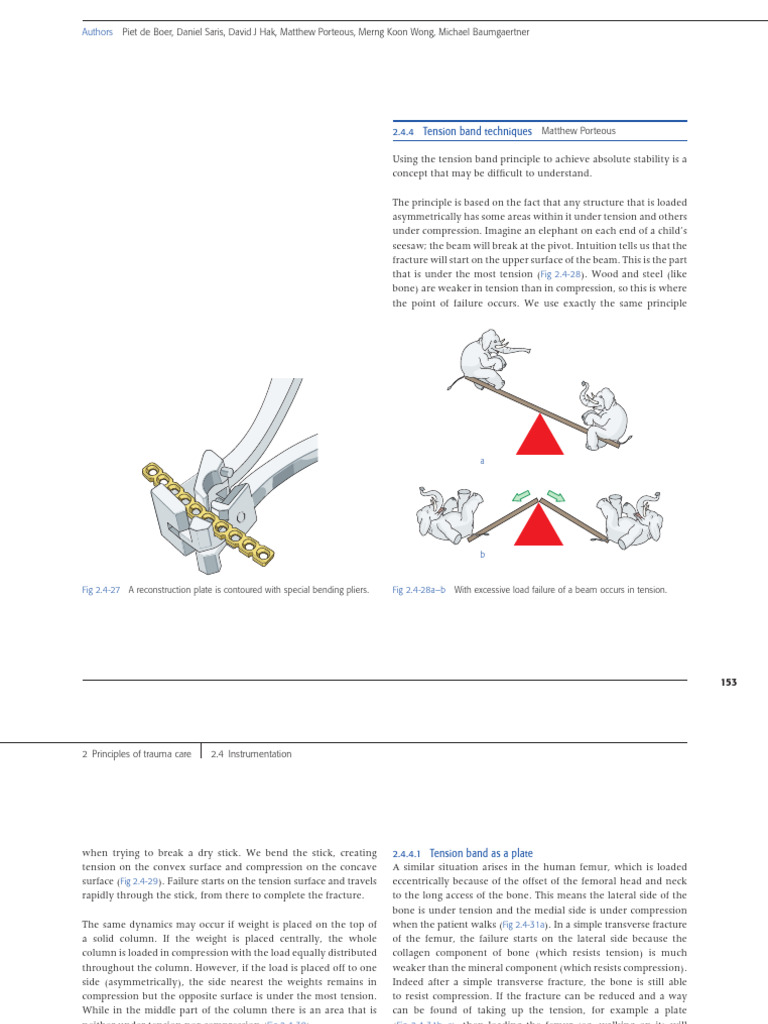
The genius of tension band wiring lies in its biomechanical principle: converting tensile forces into compressive forces.
-
Understanding Tensile Forces: Many fractures occur in areas where muscles or tendons exert a pulling force (tension) on the bone fragments. For example, the triceps muscle pulls on the olecranon (elbow tip), and the quadriceps pulls on the patella (kneecap). If left untreated, these forces would pull the fracture fragments apart, hindering healing.
-
The Tension Band Principle:
- Eccentric Loading: When a bone bends, one side is compressed (concave side), and the opposite side is stretched (convex side). Fractures on the convex side are under tension.
- Converting Tension to Compression: The tension band wiring technique places a strong, flexible wire (the cerclage wire) on the tension side of the bone. When the limb is loaded or muscles contract, the pulling force on the fracture fragments is transferred to the cerclage wire.
- Figure-of-Eight Configuration: The most common setup involves two K-wires inserted across the fracture, and a cerclage wire threaded around them in a figure-of-eight pattern. As the cerclage wire is tightened, it compresses the bone fragments together on the side opposite the tension. This compression is vital for bone healing, as it stimulates callus formation and provides stability.
- Load Sharing: The K-wires provide initial stabilization and resist shear forces, while the cerclage wire provides the dynamic compression. Together, they create a robust construct that shares the load, allowing for early, controlled movement.
By effectively neutralizing the distracting tensile forces and replacing them with beneficial compressive forces, the tension band technique creates a stable environment conducive to rapid and strong bone union, often allowing for earlier functional rehabilitation.
3. Extensive Clinical Indications & Usage
The Tension Band Wiring Kit is a versatile tool, primarily indicated for specific types of intra-articular (within a joint) or periarticular (around a joint) fractures where muscle pull is a significant factor in displacement.
Specific Clinical Indications
- Olecranon Fractures (Elbow): Fractures of the bony tip of the elbow, often caused by a direct fall onto the elbow or a forceful contraction of the triceps muscle. The triceps tendon attaches here, and its pull can displace fragments significantly. Tension banding is the gold standard for many of these fractures.
- Patella Fractures (Kneecap): Fractures of the kneecap, commonly resulting from direct trauma or forceful quadriceps contraction. The quadriceps tendon pulls on the patella, and tension banding helps maintain fragment alignment and allows for early knee motion.
- Medial Malleolus Fractures (Ankle): Fractures of the inner ankle bone, often occurring in conjunction with other ankle injuries. The deltoid ligament attaches here, and tension banding can provide stable fixation, especially for oblique or transverse fractures.
- Greater Trochanter Fractures (Hip): Fractures of the bony prominence on the upper part of the femur, where powerful hip muscles attach. Tension banding can be used to reattach displaced fragments.
- Avulsion Fractures: Fractures where a ligament or tendon pulls off a piece of bone. Tension banding can be used to reattach the bone fragment.
- Occasionally in Clavicle, Humerus, or Phalangeal Fractures: In specific cases, tension banding may be adapted for other bones, particularly when dealing with small fragments under tensile stress.
Surgical Procedure Overview (Simplified for Patients)
The surgical procedure using a Tension Band Wiring Kit is performed under strict sterile conditions, typically requiring general or regional anesthesia.
- Anesthesia and Incision: The patient is positioned, and appropriate anesthesia is administered. An incision is made over the fracture site to expose the bone.
- Fracture Reduction: The orthopedic surgeon meticulously realigns the broken bone fragments into their anatomical position. This step is critical for proper healing and function.
- K-wire Insertion: One or two K-wires are carefully drilled across the fracture site, usually parallel to each other or slightly divergent, to hold the reduced fragments in place temporarily and provide a pathway for the tension band wire. The K-wires are typically inserted through the bone and out the opposite cortex.
- Cerclage Wire Placement: A cerclage wire is then passed around the K-wires and through the soft tissues or a small drill hole in the bone, creating the figure-of-eight pattern. The ends of the wire are positioned on the side opposite the tension forces.
- Wire Tightening and Twisting: Using specialized wire tensioners, the surgeon carefully tightens the cerclage wire, gradually applying compression across the fracture site. The wire ends are then twisted together securely. The excess wire is cut, and the twisted end is bent down to lie flat against the bone, minimizing irritation to surrounding soft tissues.
- Wound Closure: The surgical site is irrigated, and the incision is closed layer by layer. A sterile dressing is applied, and often a splint or cast is used for initial post-operative support.
Fitting/Usage Instructions (Patient Perspective)
From a patient's perspective, understanding the "fitting/usage" involves knowing what to expect during and immediately after the procedure:
- Pre-operative: You will undergo imaging (X-rays, sometimes CT scans) to assess the fracture. Your surgeon will explain the procedure and answer your questions.
- During Surgery: You will be under anesthesia and will not feel pain. The surgical team will carefully perform the procedure as described above.
- Post-operative:
- Pain Management: You will receive medication to manage post-operative pain.
- Immobilization: The operated limb will likely be immobilized in a splint or cast to protect the repair in the initial healing phase.
- Weight-Bearing/Activity Restrictions: Your surgeon will provide specific instructions regarding weight-bearing status (e.g., non-weight-bearing, partial weight-bearing) and activity restrictions based on the fracture location and stability of the fixation.
- Rehabilitation: Early, controlled motion is often encouraged to prevent stiffness and promote healing, guided by a physical therapist.
4. Risks, Side Effects, or Contraindications
While tension band wiring is a highly effective procedure, like all surgeries, it carries potential risks and may not be suitable for every patient.
Potential Risks and Side Effects
- Infection: Any surgical procedure carries a risk of infection at the surgical site.
- Nerve or Blood Vessel Damage: Although rare, there is a risk of injury to nearby nerves or blood vessels during K-wire insertion or incision.
- Non-union or Malunion: Despite optimal technique, the bone may not heal properly (non-union) or may heal in an incorrect position (malunion), potentially requiring further surgery.
- Hardware Failure:
- Wire Breakage or Loosening: The wires can break or loosen over time due to repetitive stress, especially if post-operative instructions are not followed.
- K-wire Migration: K-wires can sometimes migrate or back out, requiring removal or repositioning.
- Skin Irritation/Prominence: The hardware, especially the twisted ends of the cerclage wire or the ends of the K-wires, can sometimes become prominent under the skin, causing irritation, pain, or discomfort. This is a common reason for hardware removal.
- Pain: Persistent pain at the fracture site or associated with the hardware.
- Stiffness/Limited Range of Motion: Despite rehabilitation, some patients may experience residual stiffness in the adjacent joint.
- Need for Hardware Removal: Due to prominence, irritation, or completed bone healing, the hardware is often removed in a second, smaller procedure, typically 6-12 months after the initial surgery.
Contraindications
Tension band wiring may not be the optimal treatment choice in certain situations:
- Severely Comminuted Fractures: Fractures with many small fragments may not be suitable for tension banding alone, as there may not be enough bone stock to hold the wires securely, or the fragments may be too small to achieve stable compression.
- Poor Bone Quality (Osteoporosis): In patients with severe osteoporosis, the bone may be too weak to hold the K-wires and cerclage wires securely, increasing the risk of hardware pull-out or failure.
- Active Infection: Tension band wiring should not be performed in the presence of an active infection at the surgical site.
- Extensive Soft Tissue Damage: Open fractures with significant soft tissue loss or contamination may require alternative fixation methods or staged procedures.
- Patient Non-compliance: Patients unable or unwilling to adhere to post-operative restrictions and rehabilitation protocols may be at higher risk for complications.
5. Expert Tips from Dr. Mohammed Hutaif
"As an orthopedic specialist, I've seen firsthand the transformative impact of meticulously performed tension band wiring. My advice to both patients and fellow practitioners emphasizes precision and vigilance:
- Patient Selection is Paramount: Not all fractures are created equal. Careful pre-operative assessment, including high-quality imaging, is crucial to determine if tension banding is the most appropriate and effective solution for a patient's specific fracture pattern and bone quality.
- Master the Biomechanics: A deep understanding of the tension band principle – how to convert tensile forces into compressive forces – is foundational. Incorrect wire placement or inadequate tension can compromise the entire construct.
- Precision in K-wire Placement: The Kirschner wires are the backbone of the fixation. They must be placed accurately, providing stable primary fixation and guiding the cerclage wire. Avoid violating joint surfaces unnecessarily.
- Optimal Wire Tightening: This is an art and a science. The cerclage wire must be tightened sufficiently to achieve stable compression without overtightening, which can lead to wire breakage or bone necrosis. Use a tensioner and feel the bone.
- Meticulous Wire Management: After tightening, the excess wire must be cut short and the twisted end bent flat against the bone. This seemingly small detail is critical to prevent soft tissue irritation and minimize the need for subsequent hardware removal.
- Early, Controlled Rehabilitation: While protection is necessary, early, guided mobilization is key to preventing stiffness and promoting healing. Work closely with physical therapists to design a progressive rehabilitation program tailored to the individual patient and fracture type.
- Patient Education: Empower your patients with knowledge. Explain the procedure, the expected recovery timeline, and the importance of adhering to post-operative instructions. A well-informed patient is an engaged and compliant patient, leading to superior outcomes.
- Regular Follow-up: Monitor the healing process with regular clinical assessments and X-rays. Be prepared to address any signs of complications promptly."
6. Massive FAQ Section
Q1: What is a Tension Band Wiring Kit used for?
A1: A Tension Band Wiring Kit is an orthopedic surgical tool used primarily to fix certain types of bone fractures, especially those in areas subjected to strong muscle pull (tensile forces), such as the elbow (olecranon), kneecap (patella), and ankle (medial malleolus). Its main goal is to convert these pulling forces into beneficial compressive forces across the fracture site, promoting stable healing.
Q2: How does the Tension Band Wiring technique work to heal a fracture?
A2: The technique works on a biomechanical principle. Two thin pins (K-wires) are inserted across the fracture to hold the fragments in place. Then, a flexible wire (cerclage wire) is threaded around these pins in a "figure-of-eight" pattern. When this cerclage wire is tightened, it pulls the bone fragments together, converting the distracting tensile forces into compressive forces. This compression stabilizes the fracture and encourages bone healing.
Q3: What materials are the wires and pins made of?
A3: The wires and pins in a Tension Band Wiring Kit are typically made from medical-grade stainless steel (like 316L stainless steel) or titanium alloys. These materials are chosen for their excellent biocompatibility (meaning they are well-tolerated by the body), high strength, and resistance to corrosion, ensuring durability during the healing process.
Q4: Which specific bones or joints are commonly treated with this method?
A4: The most common fractures treated with tension band wiring include:
* Olecranon fractures (tip of the elbow)
* Patella fractures (kneecap)
* Medial malleolus fractures (inner ankle bone)
* Greater trochanter fractures (part of the hip bone)
It can also be used for certain avulsion fractures where a tendon or ligament pulls off a piece of bone.
Q5: Is the hardware (wires and pins) left in my body permanently?
A5: In many cases, the hardware from tension band wiring is designed to be removed once the fracture has fully healed, typically 6 to 12 months after the initial surgery. This is often done because the wires can sometimes become prominent under the skin, causing irritation or discomfort. However, if the hardware is not causing any problems, it may be left in permanently, especially in older patients. Your surgeon will discuss the best approach for you.
Q6: What is the recovery process like after tension band wiring surgery?
A6: Recovery involves several stages:
1. Initial Immobilization: Your limb will likely be placed in a splint or cast immediately after surgery to protect the repair.
2. Pain Management: You will receive medication to manage post-operative pain.
3. Physical Therapy: Early, controlled movement, often guided by a physical therapist, is crucial to prevent stiffness and regain strength and range of motion.
4. Activity Restrictions: Your surgeon will provide specific instructions on weight-bearing and activity restrictions, which must be strictly followed to allow proper healing. Full recovery can take several months.
Q7: What are the potential risks or complications of this procedure?
A7: While generally safe, potential risks include infection, nerve or blood vessel damage, the bone not healing correctly (non-union or malunion), hardware failure (wires breaking or loosening), K-wire migration, skin irritation from prominent hardware, persistent pain, or stiffness. Many patients eventually undergo a second surgery for hardware removal due to discomfort.
Q8: Can I put weight on the operated limb immediately after surgery?
A8: This depends entirely on the location of the fracture and your surgeon's specific instructions. For lower limb fractures (like the patella or ankle), you will likely be instructed to remain non-weight-bearing or partial weight-bearing for a period to protect the healing bone. For upper limb fractures (like the olecranon), you may be able to start gentle, controlled movements earlier, but heavy lifting or stress will be restricted. Always follow your surgeon's guidance precisely.
Q9: How long does it take for the fracture to heal with tension band wiring?
A9: Bone healing is a biological process that varies from person to person and depends on factors like age, overall health, fracture severity, and adherence to post-operative instructions. Generally, initial healing can take 6-12 weeks, but full recovery, including regaining strength and mobility, can extend to several months. Your surgeon will monitor your progress with X-rays.
Q10: What should I look out for during my recovery that might indicate a problem?
A10: You should contact your doctor immediately if you experience any of the following:
* Signs of infection: increasing redness, swelling, warmth, severe pain, or pus around the incision site.
* Fever or chills.
* Sudden increase in pain that is not relieved by medication.
* Numbness, tingling, or weakness in the limb.
* Significant swelling or discoloration of the limb.
* Any signs of hardware loosening or migration (e.g., a wire end poking through the skin).
* Inability to move your limb as instructed or sudden loss of function.
Q11: Is tension band wiring suitable for all types of fractures?
A11: No, it is not suitable for all fractures. It is most effective for fractures where muscle pull is a significant factor in fragment displacement and where the bone fragments are large enough and strong enough to hold the wires securely. It is generally not used for severely comminuted (many small fragments) fractures or in patients with very poor bone quality (severe osteoporosis), where other fixation methods might be more appropriate.
Q12: What is the benefit of converting tensile forces into compressive forces?
A12: The primary benefit is improved stability and accelerated healing. Tensile forces pull bone fragments apart, hindering healing. By converting them into compressive forces, the technique essentially presses the bone fragments together. Compression at the fracture site is known to stimulate bone cell activity, promote callus formation, and create a more stable environment, which is crucial for faster and stronger bone union. This stability often allows for earlier, controlled mobilization, reducing joint stiffness and improving long-term functional outcomes.
Q13: How is the Tension Band Wiring Kit maintained and sterilized?
A13: The instruments within the kit (like wire tensioners, cutters, and guide sleeves) are reusable surgical instruments. They undergo rigorous cleaning, disinfection, and sterilization protocols after each use, typically through autoclaving (steam sterilization) at high temperatures and pressures. The wires and pins themselves are usually single-use, sterile implants, meaning they are used once and then discarded. Strict adherence to these protocols is essential to prevent infections and ensure patient safety.