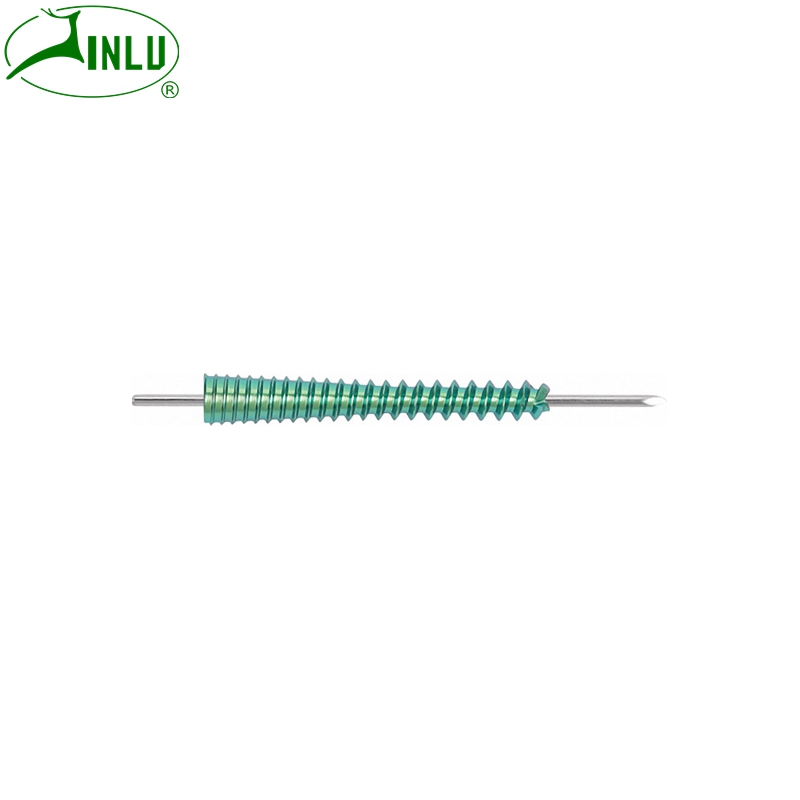
Understanding the Talar Neck Titanium Screw System (Headless): An Advanced Solution for Foot & Ankle Trauma
Welcome to an in-depth guide on the Talar Neck Titanium Screw System, specifically focusing on its innovative headless design. As an expert orthopedic specialist, Dr. Mohammed Hutaif understands the critical importance of precise and stable fixation for complex fractures within the foot and ankle, particularly those involving the talus bone. This comprehensive resource is designed to educate patients on the intricacies of this advanced surgical instrument, its applications, and how it contributes to superior patient outcomes. Please remember, this information is for educational purposes only and does not constitute medical advice. Always consult with a qualified healthcare professional for any medical concerns.
1. Comprehensive Introduction & Overview
The talus is a unique bone in the ankle, acting as a crucial link between the leg and the foot. It bears the entire body weight and is essential for ankle and subtalar joint motion. Due to its complex anatomy and precarious blood supply, fractures of the talar neck are particularly challenging injuries. These fractures often result from high-energy trauma, such as falls from height or motor vehicle accidents, and can lead to significant long-term complications if not managed appropriately.
The Talar Neck Titanium Screw System (Headless) represents a significant advancement in orthopedic trauma care. This specialized implant is meticulously designed to provide stable internal fixation for talar neck fractures, promoting optimal healing and restoring anatomical alignment. The term "headless" refers to the screw's design, where the threads extend along the entire length of the screw, eliminating a prominent screw head. This design offers distinct biomechanical and clinical advantages, particularly in areas with limited space or where soft tissue irritation is a concern. Made from medical-grade titanium alloy, these screws combine exceptional strength with excellent biocompatibility, making them an ideal choice for internal fixation.
Key Benefits of Headless Titanium Screws for Talar Neck Fractures:
- Stable Fixation: Provides strong compression across the fracture site.
- Reduced Soft Tissue Irritation: No prominent head to impinge on surrounding structures.
- Improved Cosmesis: Less palpable under the skin.
- Enhanced Biocompatibility: Titanium minimizes adverse tissue reactions.
- Facilitates Early Mobilization: Stable fixation can allow for a more aggressive rehabilitation protocol.
2. Deep-dive into Technical Specifications & Mechanisms
The efficacy of the Talar Neck Titanium Screw System lies in its sophisticated design and the properties of its material.
Design and Materials
- Material: The screws are fabricated from a high-strength, medical-grade titanium alloy, typically Ti-6Al-4V.
- Biocompatibility: Titanium is highly biocompatible, meaning it is well-tolerated by the human body, reducing the risk of allergic reactions or rejection.
- Corrosion Resistance: It exhibits excellent resistance to corrosion within the body's saline environment.
- Strength-to-Weight Ratio: Titanium offers an exceptional strength-to-weight ratio, providing robust fixation without adding excessive bulk.
- MRI Compatibility: Titanium alloys are non-ferromagnetic, allowing patients to safely undergo Magnetic Resonance Imaging (MRI) scans post-operatively, which is crucial for monitoring healing and diagnosing potential complications.
- Headless Design: This is the defining feature of the system.
- Cannulation: Most headless screws are cannulated, meaning they have a hollow core. This allows for precise insertion over a guidewire, ensuring accurate placement and minimizing surgical trauma.
- Differential Thread Pitch: The screw typically features a variable or differential thread pitch. The threads at the distal tip (far end) have a coarser pitch than the threads at the proximal end (near end). As the screw is inserted, the differential pitch draws the bone fragments together, creating powerful compression across the fracture site.
- Self-Drilling/Self-Tapping Features: Many modern headless screws incorporate features that allow them to create their own pilot hole and tap their own threads, simplifying the surgical procedure and potentially reducing operative time.
- Low Profile: The absence of a prominent head allows the screw to be fully buried within the bone, minimizing the risk of soft tissue irritation, impingement, or the need for subsequent hardware removal.
Biomechanics and Mechanism of Action
The headless titanium screw system works on the principle of lag screw fixation, a fundamental concept in fracture management aimed at achieving interfragmentary compression.
- Lag Screw Principle:
- A pilot hole is drilled through both main fragments of the fracture.
- A larger "gliding hole" is drilled only through the near cortex (the bone segment closer to the screw head, or in this case, the entry point).
- The screw is then inserted. The threads engage only the far cortex (the bone segment further away).
- As the screw is tightened, it pulls the far fragment towards the near fragment, creating compression across the fracture line.
- With headless screws, the differential thread pitch achieves this compression without the need for a separate gliding hole, as the wider pitch at the distal end engages the far fragment more effectively, while the narrower pitch at the proximal end allows it to "lag" through the near fragment.
- Cannulation for Precision: The guidewire-guided insertion ensures the screw traverses the talar neck in the optimal anatomical plane, crucial for complex, irregular bone structures.
- Rotational Stability: Multiple screws can be placed in different trajectories to provide multi-planar stability, resisting rotational forces that could disrupt healing.
- Load Sharing: The rigid fixation provided by the screws allows for controlled load sharing, encouraging the bone to bear some stress, which is vital for stimulating the natural bone healing process (Wolff's Law).
3. Extensive Clinical Indications & Usage
The Talar Neck Titanium Screw System (Headless) is a versatile tool in orthopedic surgery, primarily utilized for stabilizing fractures of the talar neck.
Clinical Indications
The primary indications for this system include:
- Talar Neck Fractures:
- Hawkins Type I: Non-displaced vertical fracture of the talar neck.
- Hawkins Type II: Displaced fracture with subtalar joint subluxation/dislocation.
- Hawkins Type III: Displaced fracture with subtalar and ankle joint dislocation.
- Hawkins Type IV: Displaced fracture with subtalar, ankle, and talonavicular joint dislocations.
- The headless design is particularly beneficial in Type II-IV fractures where precise reduction and stable fixation are paramount to prevent avascular necrosis (AVN) and achieve good functional outcomes.
- Non-unions or Mal-unions of the Talar Neck: Where previous fixation failed or healing occurred in a malaligned position, requiring revision surgery.
- Osteochondral Lesions: In specific cases, to fixate osteochondral fragments within the talus.
- Arthrodesis (Fusion) Procedures: In certain foot and ankle fusion surgeries (e.g., subtalar arthrodesis), where small bone fragments need stable compression.
- Other Small Bone Fractures: Occasionally used in other small bone fractures of the foot where a low-profile, compressive fixation is required.
Detailed Surgical Application (Patient's Perspective)
The surgical procedure involves meticulous planning and execution by a skilled orthopedic surgeon.
- Pre-operative Planning: This begins with a thorough clinical examination and advanced imaging, including X-rays and often a CT scan, to precisely map the fracture pattern and degree of displacement. This allows the surgeon to select the appropriate screw size, length, and number.
- Anesthesia: The procedure is typically performed under general anesthesia or regional anesthesia (e.g., spinal block) combined with sedation.
- Patient Positioning: The patient is positioned to allow optimal access to the ankle and foot, usually supine with a bump under the hip.
- Surgical Approach: The surgeon makes one or more incisions, typically on the medial (inner) or lateral (outer) side of the ankle, to expose the talar neck fracture. Care is taken to protect surrounding nerves, blood vessels, and tendons.
- Fracture Reduction: This is the most critical step. The surgeon carefully manipulates the bone fragments back into their correct anatomical position. Temporary fixation, often with K-wires, may be used to hold the reduction.
- Guidewire Insertion: For cannulated headless screws, a thin guidewire is carefully inserted across the fracture site, ensuring it is positioned optimally for the screw path. Fluoroscopy (real-time X-ray imaging) is used extensively to confirm accurate guidewire placement.
- Drilling and Tapping (if applicable): A cannulated drill bit is passed over the guidewire to create the pilot hole. If the screw is not self-tapping, a cannulated tap may be used to prepare the bone threads.
- Screw Insertion: The headless titanium screw is then advanced over the guidewire. As it is tightened, the differential thread pitch draws the bone fragments together, creating stable compression. Multiple screws may be used depending on the fracture pattern and stability required.
- Confirmation of Fixation: Fluoroscopy is used again to confirm optimal screw position, fracture reduction, and stability.
- Wound Closure: Once stable fixation is achieved, the surgical site is irrigated, and the incisions are carefully closed layer by layer. A sterile dressing is applied, and the foot is often placed in a splint or cast.
Post-operative Fitting & Usage Instructions (Patient Care)
Patient adherence to post-operative instructions is crucial for successful healing and recovery.
- Immobilization: The foot and ankle will typically be immobilized in a cast or protective boot for several weeks to protect the healing fracture.
- Non-Weight Bearing: Patients are usually advised to remain strictly non-weight bearing on the affected foot for an extended period (e.g., 6-12 weeks), using crutches or a knee scooter. Gradual, progressive weight-bearing will be introduced as healing progresses, guided by X-ray evidence.
- Pain Management: Pain medication will be prescribed to manage post-operative discomfort.
- Elevation and Ice: Elevating the foot above heart level and applying ice packs (as directed) helps reduce swelling and pain.
- Wound Care: Instructions will be provided for keeping the incision site clean and dry.
- Physical Therapy: Once approved by the surgeon, a structured physical therapy program is essential. This will focus on restoring range of motion, strength, and balance in the ankle and foot.
- Follow-up Appointments: Regular follow-up appointments with Dr. Mohammed Hutaif are vital to monitor healing progress with X-rays and adjust the rehabilitation plan as needed.
4. Risks, Side Effects, or Contraindications
While the Talar Neck Titanium Screw System offers significant benefits, as with any surgical procedure, there are potential risks and complications.
General Surgical Risks
- Infection: Risk of infection at the surgical site.
- Bleeding: Excessive bleeding during or after surgery.
- Nerve or Blood Vessel Damage: Injury to surrounding nerves or blood vessels.
- Deep Vein Thrombosis (DVT): Blood clots in the leg veins, which can sometimes travel to the lungs (pulmonary embolism).
- Anesthesia Risks: Adverse reactions to anesthesia.
Specific Risks Related to Talar Neck Fractures & Headless Screws
- Avascular Necrosis (AVN) of the Talus: This is a significant concern with talar neck fractures due to the precarious blood supply to the talus. Even with perfect fixation, AVN can occur, leading to collapse of the talus bone and severe arthritis. The risk varies with fracture severity (Hawkins type).
- Non-union or Mal-union: The fracture may fail to heal (non-union) or heal in an incorrect position (mal-union), potentially requiring further surgery.
- Screw Breakage or Loosening: Though rare with titanium, the screws can potentially break or loosen, especially if weight-bearing restrictions are not followed or if bone healing is delayed.
- Hardware Irritation: While less common with headless screws, some patients may still experience discomfort from the implanted hardware, potentially necessitating removal after healing.
- Post-traumatic Arthritis: Even after successful healing, the risk of developing arthritis in the ankle or subtalar joint is elevated due to the initial injury and potential cartilage damage.
- Chronic Pain and Stiffness: Some patients may experience persistent pain or stiffness in the ankle and foot despite successful surgery and rehabilitation.
- Complex Regional Pain Syndrome (CRPS): A rare but severe chronic pain condition that can develop after trauma or surgery.
Contraindications
Certain conditions may preclude the use of this system or necessitate alternative treatment approaches:
- Active Infection: Any active infection in the surgical area or systemic infection.
- Severe Comminution: Fractures with extreme fragmentation of the bone that prevent stable fixation with screws alone.
- Extremely Poor Bone Quality (Severe Osteoporosis): In cases of severe osteoporosis, the bone may not be strong enough to hold the screws securely, leading to early failure.
- Compromised Soft Tissues: Severe open wounds, significant skin loss, or poor vascularity around the ankle may contraindicate immediate internal fixation.
- Patient Non-compliance: Patients unwilling or unable to adhere to strict non-weight-bearing protocols and rehabilitation plans.
5. Expert Tips from Dr. Mohammed Hutaif
As an orthopedic specialist, Dr. Mohammed Hutaif emphasizes several key aspects when considering and managing talar neck fractures with the headless titanium screw system:
- Early and Accurate Diagnosis is Paramount: "Talar neck fractures are time-sensitive injuries. Prompt and accurate diagnosis, often relying on advanced imaging like CT scans, is crucial to assess fracture displacement and plan the optimal surgical approach. Delays can significantly increase the risk of complications like avascular necrosis."
- Precision in Surgical Technique: "The talus is a complex bone with a delicate blood supply. Achieving precise anatomical reduction and stable fixation with headless screws is an art. The cannulated design allows for guided placement, but meticulous surgical execution is key to minimizing further trauma and optimizing healing."
- Understanding the Headless Advantage: "For the talar neck, the headless design is a game-changer. It allows us to bury the screw completely within the bone, reducing the risk of impinging on surrounding soft tissues or cartilage in the joint. This translates to less post-operative irritation and potentially a lower need for hardware removal."
- Prioritizing Post-operative Rehabilitation: "Surgery is only half the battle. Patient adherence to a disciplined non-weight-bearing protocol, followed by a structured and progressive physical therapy program, is absolutely critical. Early, controlled motion, as prescribed, helps restore function and prevent stiffness, but never at the expense of fracture stability."
- Managing the Risk of Avascular Necrosis (AVN): "AVN remains a significant concern with talar neck fractures. While stable fixation helps, the initial trauma often compromises the blood supply. We monitor patients closely for signs of AVN, and it's a discussion every patient needs to have with their surgeon to understand the long-term implications."
- Customized Treatment Plans: "No two fractures are exactly alike, and no two patients are exactly alike. My approach is always to tailor the treatment plan, including the choice of implant and rehabilitation protocol, to the individual patient's fracture pattern, bone quality, lifestyle, and goals."
6. Massive FAQ Section
Here are some frequently asked questions regarding the Talar Neck Titanium Screw System (Headless):
Q1: What is the talus bone, and why are its fractures so serious?
A1: The talus is a vital bone located in the ankle, connecting your lower leg bones (tibia and fibula) to your foot bones. It plays a crucial role in ankle and subtalar joint movement and bears the entire weight of your body. Talar neck fractures are serious because the talus has a precarious blood supply. A fracture can disrupt this blood flow, leading to a condition called avascular necrosis (AVN), where bone tissue dies due to lack of blood, potentially causing collapse and severe arthritis.
Q2: What does "headless" mean in a screw system?
A2: A "headless" screw is designed without a prominent head. Instead, its threads extend along the entire length of the screw, often with a differential pitch (threads are tighter at one end than the other). This design allows the screw to be fully countersunk into the bone, meaning it's completely buried beneath the bone's surface. This minimizes soft tissue irritation, reduces the risk of impingement on adjacent joints or tendons, and often negates the need for future hardware removal.
Q3: Why is titanium chosen for these screws?
A3: Titanium alloy (specifically Ti-6Al-4V) is the material of choice due to its exceptional properties:
* Biocompatibility: It's highly compatible with the human body, reducing allergic reactions.
* Strength-to-Weight Ratio: Provides strong fixation without being heavy.
* Corrosion Resistance: Resists degradation in the body's environment.
* MRI Compatibility: Non-ferromagnetic, allowing safe MRI scans post-operatively.
Q4: How long does the recovery process typically take after talar neck fracture surgery?
A4: Recovery is a lengthy process, often taking several months to a year or more. Initial healing typically involves 6-12 weeks of strict non-weight bearing, followed by gradual weight-bearing and an intensive physical therapy program. Full return to strenuous activities can take 9-12 months, and sometimes longer, depending on the fracture severity, individual healing capacity, and presence of complications like AVN.
Q5: Will the titanium screws need to be removed eventually?
A5: In many cases, especially with headless screws, the hardware is designed to be permanent and does not require removal. The headless design reduces the risk of irritation that often necessitates removal of traditional headed screws. However, if irritation, infection, or other complications arise, removal may be considered. This decision is made on a case-by-case basis by your surgeon.
Q6: Can I undergo an MRI scan with titanium screws in my ankle?
A6: Yes, medical-grade titanium alloys are non-ferromagnetic. This means they are safe for MRI scans and will not be affected by the strong magnetic fields. This is a significant advantage, as MRI is often crucial for monitoring soft tissue healing and diagnosing potential complications in the long term.
Q7: What are the signs of a successful recovery?
A7: A successful recovery is characterized by:
* Absence of significant pain or swelling.
* Restoration of a good range of motion in the ankle and subtalar joints.
* Return to functional activities, including walking without a limp.
* X-ray evidence of complete fracture healing.
* Absence of complications like AVN or infection.
* Ultimately, the ability to return to pre-injury activity levels, as much as possible.
Q8: What is avascular necrosis (AVN), and why is it a major concern with talar neck fractures?
A8: Avascular necrosis (AVN) is a condition where bone tissue dies due to a loss of blood supply. The talus bone has a unique blood supply that can be easily disrupted by a fracture, particularly in the neck region. If AVN occurs, the talus bone can weaken, collapse, and lead to severe, debilitating arthritis in the ankle and subtalar joints, often requiring further complex surgeries like fusion or total ankle replacement.
Q9: How can I minimize post-operative complications?
A9: Minimizing complications involves strict adherence to your surgeon's instructions:
* Strict Non-Weight Bearing: Absolutely crucial in the initial healing phase.
* Physical Therapy: Diligently follow your rehabilitation program.
* Wound Care: Keep the surgical site clean and dry.
* Elevation and Ice: Manage swelling effectively.
* Avoid Smoking: Smoking significantly impairs bone healing.
* Healthy Diet: Support bone healing with proper nutrition.
* Report Concerns: Immediately report any signs of infection (fever, redness, pus), increasing pain, or numbness to your doctor.
Q10: What is the difference between a headless screw and a traditional headed screw?
A10: The primary difference is the presence of a head.
* Headed Screw: Features a distinct, prominent head that sits on the surface of the bone. This head can sometimes irritate surrounding soft tissues or be palpable under the skin.
* Headless Screw: Lacks a prominent head and is designed to be fully buried within the bone. This low-profile design minimizes irritation, is less palpable, and often provides better compression across the fracture site due to its differential thread pitch.
Q11: When can I return to sports or high-impact activities?
A11: Returning to sports or high-impact activities after a talar neck fracture is a gradual process and must be cleared by your surgeon and physical therapist. It typically takes 9-12 months, or even longer, after surgery. Your ability to return depends on complete fracture healing, restoration of strength and range of motion, and absence of pain. Premature return can lead to re-injury or long-term complications.
Q12: Are there any lifestyle changes I need to make long-term?
A12: Depending on the severity of your injury and any residual effects, you might need to make some long-term adjustments. This could include choosing lower-impact exercises, wearing supportive footwear, and continuing with ankle-strengthening exercises. Regular follow-up with your orthopedic specialist is advisable to monitor the long-term health of your ankle and address any developing issues.
Disclaimer: This guide provides general educational information and is not a substitute for professional medical advice. Always consult with a qualified healthcare provider for diagnosis and treatment of any medical condition.