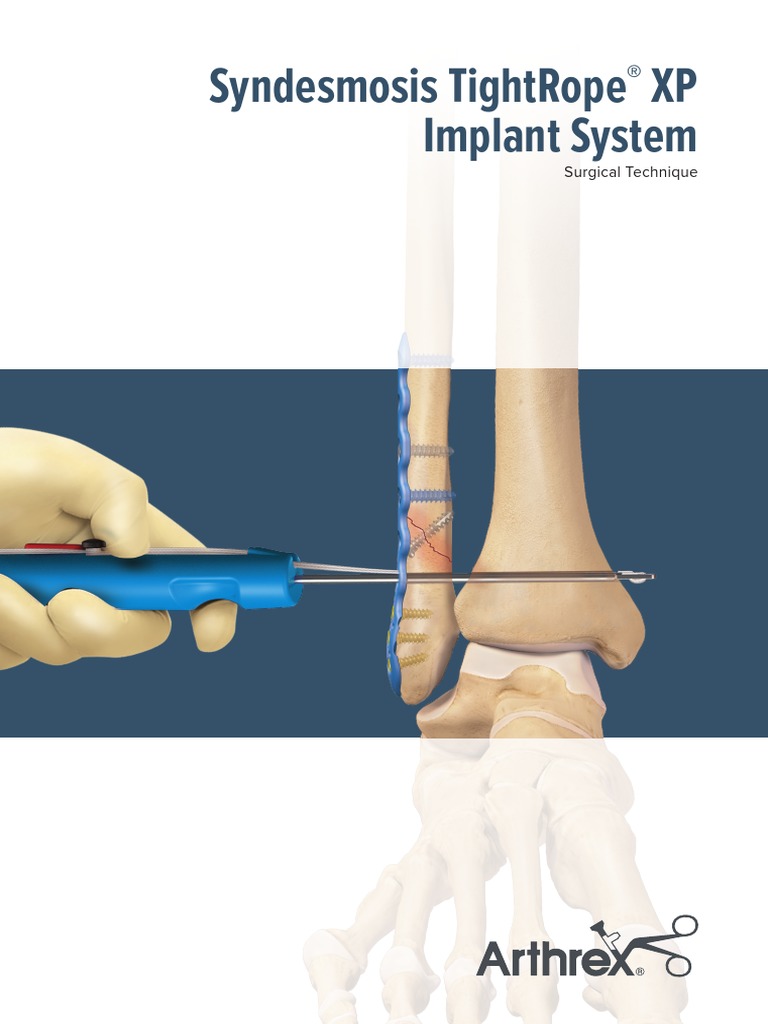
The Syndesmosis TightRope / Suture Button: Advanced Ankle Stabilization and Recovery
Comprehensive Introduction & Overview
The ankle joint is a marvel of human engineering, enabling a wide range of motion and bearing significant loads. Central to its stability are the syndesmotic ligaments, a group of strong fibrous tissues that connect the lower ends of the tibia (shin bone) and fibula (calf bone). These ligaments, located just above the ankle joint, form a crucial "mortise" that holds the ankle bones together, allowing for proper function.
An injury to these vital ligaments is commonly known as a "high ankle sprain," but can range from a mild stretch to a complete rupture, often accompanied by an ankle fracture. Unlike typical ankle sprains, syndesmosis injuries can be more severe, debilitating, and take longer to heal, potentially leading to chronic instability and pain if not treated correctly.
For decades, surgical treatment for unstable syndesmosis injuries often involved placing screws directly through the tibia and fibula to hold them together. While effective, this traditional method had limitations, primarily creating a rigid fixation that restricted natural ankle motion and often required a second surgery to remove the screws once healing occurred.
Enter the Syndesmosis TightRope / Suture Button system – a revolutionary advancement in orthopedic surgery. This innovative device offers a dynamic, flexible solution for stabilizing the syndesmosis, mimicking the natural movement of the ligaments while securely holding the bones in place. It represents a paradigm shift, providing patients with a faster, more comfortable recovery and often eliminating the need for a second surgery.
This comprehensive guide will delve deep into the mechanics, applications, benefits, and considerations surrounding the Syndesmosis TightRope / Suture Button, offering valuable insights for patients seeking to understand this cutting-edge treatment option for ankle injuries.
Deep-Dive into Technical Specifications & Mechanisms
The Syndesmosis TightRope / Suture Button system is a testament to modern biomedical engineering, designed to provide robust yet dynamic fixation.
Design and Materials: How it Works
The core of the TightRope system comprises several key components, meticulously engineered for strength, durability, and biocompatibility:
- High-Strength Suture Material: The central element is a specialized, non-absorbable suture, often made from ultra-high molecular weight polyethylene (UHMWPE) such as FiberWire®. This material is renowned for its exceptional tensile strength, minimal elongation, and resistance to degradation, making it ideal for long-term load bearing within the body.
- Cortical Buttons (or Metallic Buttons): At each end of the suture are small, low-profile buttons, typically made from titanium or stainless steel, or sometimes PEEK (polyether ether ketone), a high-performance polymer. These buttons are designed to sit flush against the outer surface of the bone (cortex), distributing the tension evenly and securely anchoring the suture.
- Connecting Loop/Segment: The suture is configured as a loop, connecting the two buttons. This loop is passed through pre-drilled bone tunnels in the tibia and fibula.
Mechanism of Action: Dynamic Stabilization
The TightRope system operates on a principle of dynamic stabilization, a significant departure from rigid screw fixation:
- Bone Tunnel Creation: During surgery, small tunnels are precisely drilled through the fibula and then through the tibia, ensuring they are aligned to replicate the natural anatomical reduction of the syndesmosis.
- Suture Assembly Passage: The TightRope suture assembly, with one button already attached, is passed through these tunnels. The trailing button is then attached to the suture and secured against the opposite bone cortex.
- Anatomical Reduction and Tensioning: With the syndesmosis anatomically reduced (meaning the tibia and fibula are brought back into their correct relationship), the surgeon carefully tensions the suture. This draws the buttons together, stabilizing the syndesmosis while allowing for a controlled amount of physiological micro-motion.
- Internal Brace Function: Once tensioned, the TightRope acts as an "internal brace." It holds the tibia and fibula in their correct proximity, preventing excessive separation or rotation, yet it allows for the subtle, natural movement required for normal ankle function, unlike a rigid screw that completely locks the bones.
Advantages of this Design:
- Dynamic Fixation: Allows physiological motion at the syndesmosis, promoting natural healing and reducing joint stiffness.
- Reduced Need for Hardware Removal: Because it's flexible and less prone to breaking or causing irritation, the TightRope often does not need to be surgically removed, saving patients from a second operation.
- Improved Biomechanics: Its design helps restore the natural biomechanics of the ankle, contributing to better long-term outcomes.
- Strong and Durable: The high-strength materials provide reliable long-term support.
Extensive Clinical Indications & Usage
The Syndesmosis TightRope / Suture Button has become a preferred treatment option for a specific range of ankle injuries due to its superior biomechanical properties and patient benefits.
Who Benefits from a Syndesmosis TightRope?
The primary candidates for this procedure are individuals with:
- Unstable Syndesmosis Injuries: This includes severe "high ankle sprains" (Grade II or III) where there is significant disruption or tearing of the syndesmotic ligaments, leading to instability of the tibiofibular joint. These injuries are often diagnosed through physical examination, stress X-rays, or MRI.
- Syndesmosis Disruption Associated with Ankle Fractures: Many ankle fractures, particularly those involving the fibula high up (e.g., Weber C fractures, Maisonneuve fractures), can lead to an unstable syndesmosis. In these cases, the TightRope is used in conjunction with internal fixation of the fracture itself to restore overall ankle stability.
- Chronic Syndesmosis Instability: Patients who have persistent pain, instability, or recurrent "giving way" of the ankle after a syndesmosis injury that was not adequately treated initially may also be candidates.
Surgical Procedure Overview (Patient Perspective): What to Expect
Understanding the surgical process can help alleviate patient anxiety. Here's a general overview of what a patient might experience:
- Anesthesia: The procedure is typically performed under general anesthesia, often combined with a regional nerve block (e.g., popliteal block) to provide extended pain relief post-operatively.
- Incision(s): The surgeon will make one or two small incisions on the outer aspect of the lower leg/ankle to access the syndesmosis. If an ankle fracture is also being repaired, additional incisions may be made.
- Reduction and Drilling: The surgeon will carefully reduce (realign) the tibia and fibula to their anatomical position. Then, precise bone tunnels are drilled through both bones to prepare for the TightRope.
- TightRope Placement: The TightRope suture assembly is guided through these tunnels. One button is anchored on the medial (inner) side of the tibia, and the other on the lateral (outer) side of the fibula, or vice versa, depending on the specific technique.
- Tensioning and Stabilization: Under fluoroscopic (real-time X-ray) guidance, the surgeon carefully tensions the suture to achieve optimal syndesmotic reduction and stability. The ankle is often put through a range of motion to confirm proper positioning and dynamic function.
- Closure: The incisions are closed with sutures, and a sterile dressing is applied.
Post-Operative Care & Rehabilitation: The Path to Recovery
Recovery is a critical component of successful outcomes and requires patient commitment.
- Immobilization: Immediately after surgery, the ankle will be immobilized in a cast or walking boot.
- Non-Weight Bearing (NWB): For the initial weeks (typically 2-6 weeks), patients are usually advised to be non-weight bearing on the affected leg, using crutches or a knee scooter.
- Gradual Weight Bearing (PWB to FWB): The surgeon will guide a progressive return to weight bearing, often starting with partial weight bearing (PWB) and advancing to full weight bearing (FWB) as tolerated and as healing progresses.
- Physical Therapy (PT): This is paramount. PT will focus on:
- Early Phase: Reducing swelling, pain management, gentle range of motion exercises (initially non-weight bearing).
- Mid Phase: Restoring full ankle range of motion, strengthening muscles around the ankle and leg, improving balance and proprioception (sense of joint position).
- Late Phase: Functional training, agility drills, and sport-specific exercises for athletes, gradually preparing for a return to full activity.
- Typical Recovery Timeline: While individual recovery varies, most patients can expect:
- 0-6 weeks: Immobilization, NWB, initial PT.
- 6-12 weeks: Gradual weight bearing, intensive PT focusing on strength and motion.
- 3-6 months: Return to light activities, continued PT, progression to sport-specific training.
- 6-12 months: Full return to high-impact activities and sports, with ongoing strength and stability.
Biomechanics & Patient Outcome Improvements
The biomechanical advantages of the Syndesmosis TightRope translate directly into superior patient outcomes.
Restoring Natural Ankle Function
- Dynamic Stability: Unlike rigid screws that restrict all movement, the TightRope allows for physiological micro-motion between the tibia and fibula. This dynamic stability is crucial for normal ankle function, preventing stiffness and promoting healthier cartilage.
- Load Sharing: The flexible nature of the TightRope allows for better load sharing across the ankle joint during weight-bearing activities, reducing stress concentrations that can occur with rigid fixation.
- Reduced Stiffness: By permitting subtle movement, the TightRope significantly reduces the incidence of post-operative ankle stiffness, a common complication with traditional screw fixation.
- Improved Proprioception: The ability to move naturally helps in the re-education of the ankle's proprioceptive pathways, improving balance and coordination, which is vital for preventing re-injury, especially in athletes.
- Faster Return to Activity: The dynamic nature and reduced need for hardware removal often lead to a quicker and safer return to daily activities and competitive sports. Athletes, in particular, benefit from this accelerated rehabilitation pathway.
- Long-Term Durability: Studies have shown excellent long-term results with the TightRope, maintaining syndesmotic reduction and providing stable ankle function over many years. The robust materials are designed to withstand the physiological stresses of daily life.
Risks, Side Effects, or Contraindications
While the Syndesmosis TightRope / Suture Button is a highly successful procedure, it's important for patients to be aware of potential risks and considerations, as with any surgical intervention.
Understanding Potential Considerations
- General Surgical Risks: These are common to almost any surgery:
- Infection: Though rare, any incision carries a risk of infection.
- Bleeding: Minor bleeding is expected, but excessive bleeding or hematoma formation can occur.
- Nerve Damage: Temporary or permanent damage to superficial nerves can lead to numbness or altered sensation around the incision site.
- Anesthesia Complications: Risks associated with general or regional anesthesia.
- Blood Clots: Deep vein thrombosis (DVT) or pulmonary embolism (PE) are rare but serious complications.
- Specific TightRope Risks:
- Malreduction: If the syndesmosis is not perfectly reduced and tensioned during surgery, it can lead to persistent pain, instability, or even early arthritis. This underscores the importance of an experienced surgeon.
- Hardware Irritation: Although less common than with screws, the buttons or suture material can sometimes cause irritation under the skin, potentially requiring removal.
- Suture Breakage: While the high-strength suture is incredibly durable, breakage is a rare possibility, especially with premature or excessive loading.
- Button Migration/Pull-Out: In very rare cases, the buttons could migrate or pull through compromised bone, especially in patients with poor bone quality.
- Re-injury: Despite successful surgery, a severe new injury could potentially damage the repaired syndesmosis or the TightRope.
- Stiffness: While less common than with screws, some degree of ankle stiffness can still occur, often managed with intensive physical therapy.
- Heterotopic Ossification: Abnormal bone formation around the hardware, which is rare but can cause pain or restrict movement.
Contraindications
The TightRope procedure may not be suitable for all patients. Relative contraindications include:
- Active Infection: Surgery should be postponed until any active infection is treated.
- Severe Osteopenia/Osteoporosis: Extremely poor bone quality might compromise the integrity of the button fixation, though this is often assessed on a case-by-case basis.
- Unrealistic Patient Expectations: Patients must understand the recovery process and potential limitations.
- Severe Peripheral Vascular Disease or Neuropathy: Conditions that significantly impair healing or sensation may increase surgical risks.
Expert Tips from Dr. Mohammed Hutaif
"As an orthopedic specialist, my primary goal is to restore my patients' mobility and quality of life. The Syndesmosis TightRope / Suture Button is a remarkable tool in achieving this, particularly for complex ankle injuries. However, successful outcomes extend beyond the operating room. Here are my key recommendations for patients considering or undergoing this procedure:
- Accurate Diagnosis is Paramount: Not all ankle pain is a high ankle sprain, and not all high ankle sprains require surgery. A thorough clinical examination, coupled with advanced imaging like stress X-rays or MRI, is crucial to accurately diagnose the extent of your syndesmosis injury and determine if a TightRope is the right solution for you.
- Choose an Experienced Surgeon: The precise placement and tensioning of the TightRope are critical for long-term success. Seek a surgeon with extensive experience in ankle trauma and specifically with this advanced technique.
- Commit Fully to Rehabilitation: Surgery is only half the battle. Your dedication to a structured physical therapy program is non-negotiable. Following your therapist's guidance for range of motion, strengthening, and balance exercises will directly impact your recovery speed and the quality of your long-term function.
- Listen to Your Body: Pain is your body's way of communicating. While some discomfort is normal during recovery and physical therapy, sharp or increasing pain, especially with activity, should be reported to your medical team. Don't push through pain that feels 'wrong.'
- Patience is a Virtue: Recovery from a syndesmosis injury, even with a TightRope, takes time. Resist the urge to rush back to activities too soon. A gradual, well-managed return will minimize the risk of re-injury and ensure a more complete recovery.
- Prevention for Athletes: For athletes, once recovered, focus on ankle strengthening, proprioceptive training, and appropriate footwear to reduce the risk of future injuries.
- Open Communication: Maintain an open dialogue with your surgeon and physical therapist. Ask questions, voice concerns, and ensure you understand every step of your treatment and recovery plan."
Frequently Asked Questions (FAQ)
Your Questions About Syndesmosis TightRope Answered
Q1: What exactly is a syndesmosis injury, and how is it different from a regular ankle sprain?
A1: A syndesmosis injury, often called a "high ankle sprain," affects the strong ligaments connecting the tibia and fibula just above the ankle joint. Unlike a regular ankle sprain, which typically involves the ligaments on the side of the ankle, a syndesmosis injury impacts the stability of the entire ankle mortise. It's often more severe, takes longer to heal, and can lead to chronic instability if not properly treated.
Q2: How does the Syndesmosis TightRope differ from traditional screw fixation?
A2: The primary difference lies in flexibility. Traditional screws provide rigid fixation, completely immobilizing the tibiofibular joint. This can lead to stiffness and often requires a second surgery to remove the screws once healing has occurred. The TightRope, conversely, uses a flexible suture and button system, allowing for natural, physiological micro-motion between the bones. This dynamic stability promotes better healing, reduces stiffness, and usually eliminates the need for a second surgery.
Q3: Is the TightRope hardware removed after surgery?
A3: In most cases, no. One of the significant advantages of the TightRope system is that it's designed to remain in place permanently. The materials are biocompatible and flexible enough to avoid causing significant irritation or restricting normal motion. Hardware removal is typically only considered if a patient experiences persistent irritation, pain directly related to the buttons, or a very rare complication.
Q4: What is the typical recovery time after a Syndesmosis TightRope procedure?
A4: Recovery varies among individuals but generally follows a phased approach:
* 0-6 weeks: Non-weight bearing, immobilization in a cast or boot.
* 6-12 weeks: Gradual progression to partial and then full weight-bearing, intensive physical therapy focused on range of motion and strengthening.
* 3-6 months: Return to light activities, continued advanced physical therapy, and sport-specific training.
* 6-12 months: Full return to high-impact sports and activities.
Your surgeon and physical therapist will provide a personalized timeline.
Q5: Will I be able to play sports again after this surgery?
A5: Yes, the goal of the Syndesmosis TightRope procedure is to restore full ankle function, allowing most patients, including athletes, to return to their previous level of activity. However, a successful return to sports requires diligent adherence to a comprehensive rehabilitation program and a gradual, supervised progression back to high-impact activities.
Q6: Is the TightRope procedure painful?
A6: You will experience some pain and discomfort after the surgery, which is normal for any surgical procedure. This pain is typically well-managed with prescription pain medication and often a regional nerve block administered during surgery to provide extended pain relief. As you recover, discomfort will lessen, but physical therapy can sometimes be challenging.
Q7: How long do the buttons stay in place?
A7: The buttons and suture are designed to remain in your body indefinitely. They are made from durable, biocompatible materials that are meant to provide long-term stability without breaking down or causing issues.
Q8: Can the TightRope break or fail?
A8: While the high-strength suture material is extremely robust, like any implant, failure is theoretically possible but exceedingly rare. It's designed to withstand the physiological forces of the ankle. Following your post-operative instructions, especially regarding weight-bearing restrictions, is crucial to prevent excessive stress on the implant during the initial healing phase.
Q9: What if I choose not to have surgery for a significant syndesmosis injury?
A9: For significant or unstable syndesmosis injuries, non-surgical management often leads to chronic pain, persistent ankle instability, and a significantly increased risk of developing early ankle arthritis. The syndesmosis is crucial for ankle stability, and without proper healing or stabilization, the joint can become misaligned and degenerate over time.
Q10: What are the signs of a successful recovery?
A10: Signs of a successful recovery include:
* Significant reduction or absence of pain.
* Restoration of full or near-full ankle range of motion.
* Good muscle strength around the ankle and leg.
* Improved balance and stability.
* Ability to return to daily activities and desired sports without pain or instability.
Q11: How do I choose the right surgeon for a Syndesmosis TightRope procedure?
A11: Look for an orthopedic surgeon specializing in foot and ankle surgery or sports medicine with extensive experience in treating ankle trauma and performing syndesmosis fixation, specifically with the TightRope technique. Don't hesitate to ask about their experience and success rates with this particular procedure.
Disclaimer: This information is for educational purposes only and is not intended as medical advice. Always consult with a qualified healthcare professional for diagnosis and treatment of any medical condition.