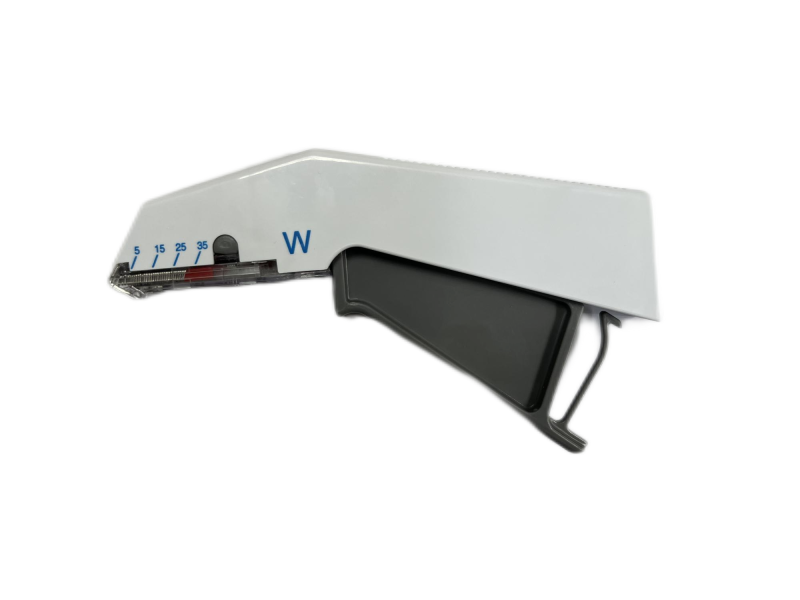
The Surgical Skin Stapler (35 Wide): An Orthopedic Patient's Comprehensive Guide
1. Comprehensive Introduction & Overview
Welcome to this in-depth guide on the surgical skin stapler, specifically focusing on the "35 Wide" variant, a critical tool in modern orthopedic surgery. For patients undergoing surgical procedures, understanding the tools and techniques used for wound closure is an important part of their recovery journey. While traditional sutures have been the cornerstone of wound closure for centuries, surgical staples have emerged as a highly effective, efficient, and often preferred alternative in many clinical scenarios, particularly in orthopedic practices.
A surgical skin stapler is a specialized medical device used by surgeons to quickly and securely close skin incisions and wounds. It works by placing medical-grade staples into the skin, approximating the wound edges to facilitate healing. The "35 Wide" designation typically refers to a stapler cartridge containing 35 staples, designed to create a wider crown staple. This wider staple design offers enhanced tissue approximation and stability, which can be particularly advantageous in orthopedic surgeries where incisions can be long and subject to various biomechanical stresses.
The evolution of wound closure techniques has moved towards methods that prioritize speed, minimize tissue trauma, reduce infection risk, and optimize cosmetic outcomes. Surgical staplers, with their precision and uniformity, address these priorities effectively. In orthopedic surgery, where incisions often involve significant skin tension (e.g., after joint replacement or spinal fusion), the robust closure provided by a stapler, especially one with wider staples, is highly valued.
2. Deep-dive into Technical Specifications / Mechanisms
Understanding the mechanics and materials behind the surgical skin stapler provides insight into its effectiveness and safety.
Design & Materials
Surgical skin staplers are meticulously engineered for precision and ease of use.
- Ergonomic Handle: Most staplers feature an ergonomic handle, often made from high-grade medical plastic or lightweight metal, designed for comfortable grip and precise control by the surgeon. This design minimizes hand fatigue during lengthy procedures.
- Staple Cartridge: The staples are pre-loaded into a sterile, disposable cartridge. This cartridge ensures that each staple is perfectly formed and delivered hygienically. The "35 Wide" variant specifically indicates a cartridge capacity of 35 staples, and crucially, the design of the staples themselves.
- Staple Material: The staples themselves are typically made from medical-grade stainless steel or, less commonly, titanium.
- Stainless Steel: The most common material, chosen for its strength, inertness, and biocompatibility. It is highly resistant to corrosion within the body.
- Titanium: Occasionally used, especially if there's a concern about metal allergies (though rare with stainless steel) or for patients who might undergo future MRI scans, as titanium is non-ferromagnetic.
- Staple Shape & Dimensions:
- Pre-Fired Shape: Before firing, staples are typically flat, rectangular wire segments.
- Post-Fired Shape: Upon firing, an internal anvil mechanism precisely forms the staple into a "B" shape, which perfectly approximates the skin edges.
- "Wide" Aspect: The "Wide" in "35 Wide" often refers to the crown width of the staple. A wider crown (the top part of the "B" shape) provides a larger surface area for tissue contact, distributing tension more broadly across the wound edges. This can lead to better eversion (where the skin edges roll slightly outwards), which is crucial for optimal cosmetic results and stronger wound healing. Typical crown widths might range from 5mm to 7mm, with "wide" potentially indicating the upper end of this range or even slightly larger. Leg length (the parts that penetrate the skin) is also standardized to ensure appropriate penetration depth without excessive tissue trauma.
- Mechanism of Action: The stapler operates on a spring-loaded, trigger-activated mechanism. When the trigger is squeezed, a pusher bar advances a single staple from the cartridge towards an internal anvil. The anvil then precisely bends the staple into its characteristic "B" shape, driving the legs through the skin and securing the wound edges together. This process is rapid and consistent, ensuring uniform closure.
Biomechanics of Staple Closure
The biomechanical advantages of surgical staples contribute significantly to improved patient outcomes.
- Even Tension Distribution: Unlike sutures, which can sometimes create localized points of high tension, staples distribute tension more evenly across the wound. The "B" shape, especially with a wider crown, helps to spread the mechanical load, reducing stress on individual points.
- Reduced Tissue Trauma: Each staple application involves two small punctures, significantly less tissue disruption than the multiple needle passes required for a continuous suture. This minimizes tissue edema and inflammation.
- Enhanced Eversion of Skin Edges: The precise formation of the "B" shape, particularly with wider staples, promotes optimal eversion of the skin edges. Everted edges heal with a flatter, less noticeable scar compared to inverted edges.
- Faster Healing Promotion: By minimizing trauma, distributing tension, and achieving excellent edge approximation, staples create an optimal environment for primary wound healing. This can lead to reduced healing times and a lower risk of wound complications.
3. Extensive Clinical Indications & Usage
The versatility and efficiency of the surgical skin stapler make it invaluable across a wide range of surgical disciplines, with particular prominence in orthopedics.
Orthopedic Applications
In orthopedic surgery, where incisions can be long and subject to significant post-operative stress, the "35 Wide" stapler is frequently utilized.
- Total Joint Replacements: For procedures like total hip arthroplasty (THA) and total knee arthroplasty (TKA), long incisions are common. Staples provide a fast, secure closure that can withstand the early mobilization required after these surgeries. The wider staples help manage the skin tension over large joints.
- Spinal Surgery Incisions: Lumbar, thoracic, or cervical spine surgeries often involve lengthy posterior incisions. Staples offer a quick closure method, reducing operating time and providing a strong closure for the back musculature and skin.
- Trauma Surgery (Fracture Fixation): After internal fixation of fractures (e.g., tibia, femur, humerus), the overlying skin needs robust closure. Staples are ideal for these often contaminated or emergency situations due to their speed and ease of application.
- Sports Medicine Procedures: While arthroscopic portals might use single sutures, larger incisions for ligament repairs (e.g., ACL reconstruction) or tendon repairs can benefit from stapled closure.
- Amputations: In cases of limb amputation, staples provide a rapid and secure closure of the skin flaps.
General Surgical Applications (Briefly)
Beyond orthopedics, surgical staplers are widely used for:
- Abdominal Surgery: Closure of laparotomy incisions.
- Cesarean Sections: Rapid closure of the abdominal wall.
- Emergency Wound Closure: In trauma centers, for quick and effective closure of lacerations or surgical wounds.
Fitting/Usage Instructions (for the surgeon, explained for patient understanding)
While the surgeon is responsible for the precise application, understanding the process can help patients appreciate the care taken.
- Preparation: After the underlying layers of tissue (muscle, fascia, subcutaneous tissue) are closed with absorbable sutures, the skin edges are meticulously cleaned and prepared.
- Skin Edge Approximation: The surgeon uses specialized forceps to gently evert (turn slightly outwards) the skin edges. This is crucial for optimal scar formation.
- Stapler Placement: The stapler is positioned perpendicular to the incision line, with the staple legs straddling the everted wound edges.
- Firing: The surgeon gently squeezes the trigger, which drives a single staple through the skin, forming its "B" shape and bringing the wound edges together.
- Spacing: Staples are applied at regular intervals, typically 0.5 to 1 cm apart, to ensure even tension and adequate blood supply to the wound edges. The "35 Wide" stapler allows for consistent application over longer incisions.
- Post-Stapling Care: Once all staples are placed, the wound is typically covered with a sterile dressing. Patients receive instructions on wound care, including keeping the area clean and dry, and when to return for staple removal.
4. Risks, Side Effects, or Contraindications
While generally safe and effective, like any medical procedure or device, surgical staples carry potential risks and considerations.
Risks & Side Effects
- Infection: Although staples generally have a lower infection rate than sutures (due to less foreign material left in the wound and fewer punctures), infection is still a possibility if proper wound care is not followed. Signs include redness, swelling, increased pain, warmth, or pus.
- Allergic Reaction: Extremely rare, but some individuals may have an allergy to the metal components (nickel in stainless steel, though medical-grade alloys minimize this).
- Scarring: While staples can lead to excellent cosmetic results, any skin incision will result in a scar. Improper technique (e.g., staples left in too long, too tight, or poor eversion) can lead to wider or more prominent scars. The "35 Wide" design, when used correctly, aims to minimize this by promoting better eversion.
- Dehiscence (Wound Opening): If the wound is subjected to excessive tension or if healing is impaired, the wound edges might separate, requiring further medical attention.
- Pain During Removal: Staple removal can cause minor discomfort or a brief pinching sensation, but it is generally well-tolerated.
- Staple Migration or Loosening: Very uncommon, but a staple could become loose or migrate slightly if the wound is stressed excessively.
Contraindications
Certain situations may make staples less suitable, prompting a surgeon to choose sutures or other closure methods.
- Areas of High Tension or Movement: While "35 Wide" staples are good for moderate tension, extremely high-tension wounds or areas with constant movement (e.g., joints that are frequently flexed) might benefit from deeper, stronger suture layers in addition to or instead of staples.
- Contaminated Wounds: While staples are quick, in heavily contaminated wounds, the surgeon might prefer sutures for more meticulous debridement and layered closure, or even leave the wound open to heal by secondary intention.
- Thin or Fragile Skin: In areas with very thin or fragile skin (e.g., eyelids, some pediatric cases, or elderly patients with compromised skin integrity), staples might cause excessive tearing or pressure necrosis.
- Known Metal Allergies: Although rare, a confirmed severe allergy to the specific metal in the staples would contraindicate their use. Titanium staples could be an alternative in such cases.
- Irregular Wound Edges: For very jagged or irregular lacerations, sutures often allow for more precise approximation of complex wound geometries.
5. Expert Tips from Dr. Mohammed Hutaif
As an orthopedic specialist, I frequently utilize surgical skin staplers, including the "35 Wide" variant, for their efficiency and excellent outcomes. Here are some key insights I share with my patients and colleagues:
- Precision is Paramount: While staplers offer speed, the art of wound closure still lies in meticulous tissue handling and precise staple placement. Proper eversion of the skin edges, achieved through careful technique, is crucial for minimizing scarring and promoting robust healing. This is particularly true for the "35 Wide" staple, where the broader crown provides an excellent opportunity for optimal eversion.
- Timely Removal is Critical: Patients often ask how long their staples will stay in. The timing of staple removal is vital. Leaving them in too long can lead to "track marks" (small scars where the staple legs penetrated the skin) and increase the risk of infection. We typically remove staples within 7-14 days, depending on the wound location, tension, and the patient's healing capacity. Always follow your surgeon's specific instructions.
- Patient Education is Key to Success: Your role in wound care post-surgery is as important as my role during the procedure. Keep the wound clean and dry as instructed. Watch for any signs of infection (increased redness, swelling, warmth, pus, fever) and report them immediately. Avoid unnecessary stretching or tension on the wound.
- Why We Choose Staples in Orthopedics: In many orthopedic procedures, especially large joint replacements or spinal surgeries, we face longer incisions and often higher skin tension. Staples, particularly the "35 Wide" type, provide a quick, strong, and cosmetically favorable closure. Their ability to evenly distribute tension across a wider surface area is a significant advantage, promoting better healing and reducing the risk of dehiscence. This efficiency allows us to reduce operative time, which can contribute to better overall patient safety.
- Understanding the "35 Wide" Advantage: The "35 Wide" stapler is not just about the number of staples; it's about the design of the staples themselves. The wider crown of these staples offers superior tissue approximation and eversion, which are critical for achieving a strong, aesthetically pleasing scar, especially in areas subjected to movement or tension in orthopedic recovery.
6. Massive FAQ Section
Here are some frequently asked questions regarding surgical skin staplers:
Q1: What is a surgical skin stapler?
A1: A surgical skin stapler is a medical device used by surgeons to close skin incisions and wounds quickly and efficiently. It uses medical-grade metal staples to bring the edges of the wound together, facilitating healing. It's often used as an alternative to traditional sutures (stitches).
Q2: Why did my surgeon use staples instead of stitches?
A2: Surgeons often choose staples for several reasons:
* Speed: Stapling is generally much faster than suturing, which can reduce operative time.
* Uniformity: Staples provide a consistent, even closure, distributing tension uniformly along the wound.
* Reduced Infection Risk: Staples introduce less foreign material into the wound compared to a continuous suture line, and the individual staple punctures may reduce the risk of infection.
* Cosmetic Outcome: When applied correctly and removed on time, staples can result in excellent cosmetic scars, especially with "wide" designs that promote good skin edge eversion.
* Strong Closure: They provide a robust closure, particularly beneficial for longer incisions or areas under tension, common in orthopedic surgery.
Q3: Are surgical staples painful?
A3: The application of surgical staples during surgery is not painful because it occurs while you are under anesthesia. After surgery, you might experience some mild discomfort or tightness around the wound, similar to what you would feel with sutures. The removal process might cause a brief pinching sensation with each staple, but it is generally well-tolerated and not severely painful.
Q4: How long do surgical staples stay in?
A4: The duration staples remain in place varies depending on the wound's location, the type of surgery, and your individual healing rate. Typically, staples are removed between 7 to 14 days after surgery. Your surgeon will provide specific instructions for your case. It's crucial not to leave them in longer than recommended, as this can lead to "track marks" and increase infection risk.
Q5: How are surgical staples removed?
A5: Surgical staples are removed by a healthcare professional (doctor or nurse) using a specialized staple remover tool. This tool is designed to gently lift the center of the staple, causing its legs to straighten and release from the skin without pulling. The process is usually quick and involves minimal discomfort.
Q6: Will I have a bigger scar with staples compared to stitches?
A6: Not necessarily. The final appearance of a scar depends on many factors, including surgical technique, individual healing characteristics, wound location, and post-operative care. When properly applied and removed, staples can result in a very fine, aesthetically pleasing scar. In fact, for certain wounds, especially those under tension, staples (like the "35 Wide" design) can promote better skin edge eversion, which is key to a flatter, less noticeable scar. However, if left in too long, they can leave small "track marks" at the staple entry points.
Q7: Can I be allergic to surgical staples?
A7: Allergic reactions to surgical staples are extremely rare. They are typically made from medical-grade stainless steel, which is highly biocompatible and hypoallergenic for most people. In very rare cases of confirmed metal allergy, titanium staples might be used as an alternative. If you have a known metal allergy, inform your surgeon prior to your procedure.
Q8: What special care do I need for a stapled wound?
A8: Follow your surgeon's specific post-operative wound care instructions meticulously. General guidelines include:
* Keep it Clean and Dry: Avoid soaking the wound in baths or swimming pools until cleared by your doctor. Showering may be permitted, but gently pat the wound dry afterward.
* Dressing Changes: Follow instructions for dressing changes, if applicable.
* Monitor for Infection: Watch for signs of infection such as increased redness, swelling, warmth, severe pain, pus, or fever.
* Avoid Tension: Try not to stretch or put undue tension on the wound area.
* Sun Protection: Once healed, protect the scar from direct sunlight for several months to prevent hyperpigmentation.
Q9: When should I contact my doctor about my stapled wound?
A9: You should contact your doctor immediately if you experience any of the following:
* Signs of infection: increased redness, swelling, warmth, or tenderness around the wound.
* Pus or foul-smelling discharge from the wound.
* Fever (over 100.4°F or 38°C).
* Increasing pain that is not relieved by medication.
* The wound edges separating (dehiscence).
* Bleeding that soaks through the dressing.
* Any staples coming out prematurely.
Q10: Can I get an MRI with surgical staples?
A10: Most surgical staples are made from non-ferromagnetic medical-grade stainless steel or titanium, which are generally considered safe for MRI scans. However, it's crucial to inform the MRI technician and your doctor that you have surgical staples. They will verify the exact material and ensure it's safe for the MRI machine. In rare cases where older, ferromagnetic staples might have been used, or if the material is unknown, an MRI might be contraindicated or require specific precautions.
Q11: What does "35 Wide" mean for a skin stapler?
A11: "35 Wide" typically refers to two key aspects:
* Staple Count: The stapler cartridge contains 35 staples.
* Staple Design (Wide Crown): More importantly, the "Wide" refers to the wider crown (the top part of the "B" shape) of the staples. This wider design provides a larger surface area for tissue contact, distributing tension more broadly across the wound edges. This enhances skin edge eversion, leading to a stronger closure and often a more aesthetically pleasing scar, particularly beneficial for longer incisions or areas under higher tension, common in orthopedic surgery.
Q12: Are there different types of surgical staples?
A12: Yes, there are several types of surgical staples beyond skin staples. These include:
* Skin Staples: Used for closing the outermost layer of skin.
* Fascial Staples: Used for closing deeper layers of tissue, such as fascia.
* Internal Staples: Used inside the body for organ resection, anastomosis (connecting two ends of an organ), or creating internal seals. These are often absorbable or designed to remain permanently.
* Linear Staplers: Create a linear row of staples.
* Circular Staplers: Used for creating circular connections, often in gastrointestinal surgery.
The "35 Wide" refers specifically to a type of skin stapler designed for external wound closure.
Disclaimer: This information is for educational purposes only and does not constitute medical advice. Always consult with a qualified healthcare professional for any medical concerns or before making any decisions related to your health or treatment.