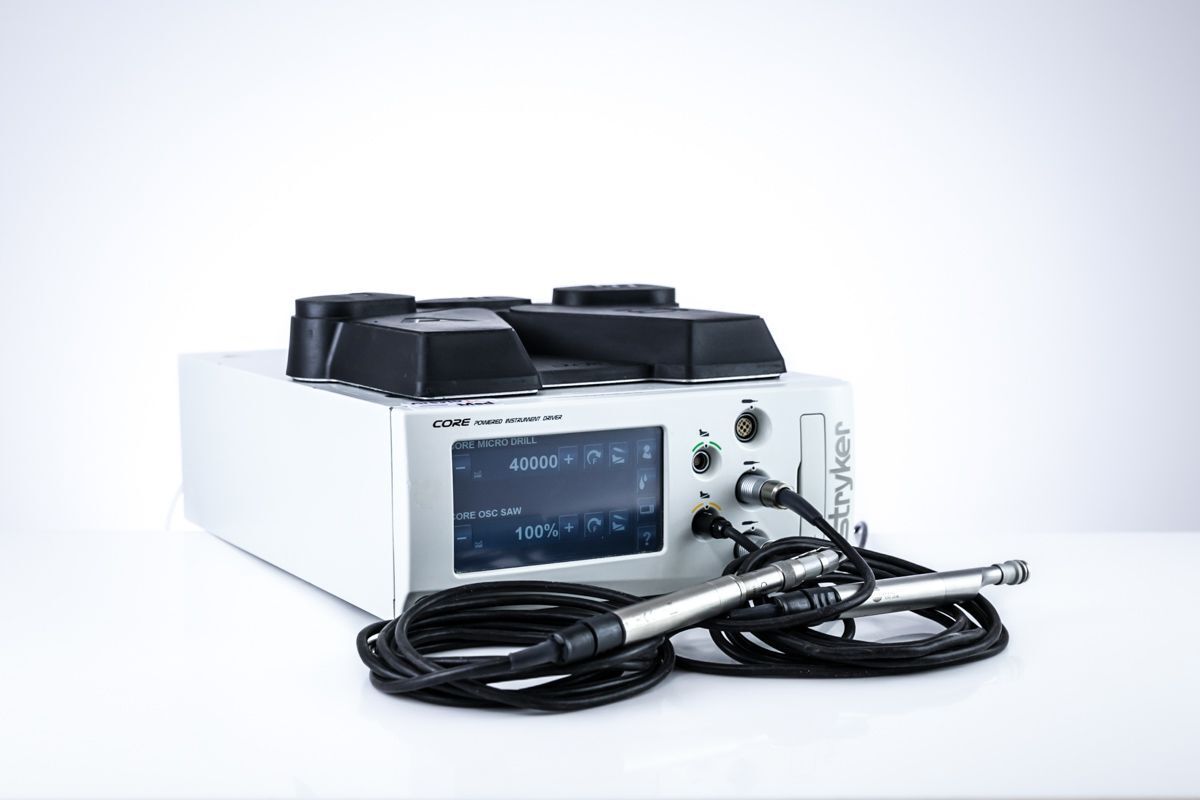
The Stryker Cast Saw: Precision, Safety, and Comfort in Orthopedic Care
For countless patients recovering from fractures or orthopedic injuries, a cast is a temporary necessity. However, the day comes when the cast must be removed, marking a significant step towards recovery. This process, while seemingly simple, requires specialized tools and expertise to ensure patient safety and comfort. Among the most trusted and widely used instruments for this task is the Stryker Cast Saw.
At Dr. Mohammed Hutaif's clinic, we prioritize patient well-being and utilize state-of-the-art equipment to deliver the best possible care. The Stryker Cast Saw exemplifies our commitment to employing advanced, reliable technology for optimal patient outcomes. This comprehensive guide will delve into the intricacies of the Stryker Cast Saw, explaining its design, function, applications, and the rigorous safety protocols surrounding its use, all designed to put our patients at ease.
Deep-dive into Technical Specifications & Mechanisms: Precision Engineering for Patient Safety
The Stryker Cast Saw is not just any saw; it's a meticulously engineered medical device designed with a singular focus: safe and efficient cast removal without harming the underlying skin. Its core innovation lies in its unique operating mechanism, which sets it apart from conventional saws.
Design and Materials
The design of the Stryker Cast Saw reflects decades of innovation in orthopedic instrument manufacturing.
* Ergonomics: The saw is designed for optimal comfort and control for the medical professional. Its balanced weight distribution and ergonomic grip reduce operator fatigue, allowing for more precise and steady movements during the cast removal process.
* Housing Materials: Constructed from durable, high-impact resistant plastics and medical-grade metals, the saw's housing is built to withstand the demanding clinical environment. These materials are also easy to clean and disinfect, adhering to stringent hygiene standards.
* Motor and Power: Stryker cast saws feature powerful, yet remarkably quiet motors. These motors deliver consistent power to the oscillating blade, ensuring smooth cutting through various cast materials. Models are available in both corded (for continuous power) and cordless (battery-operated for portability and flexibility) versions, each designed for high efficiency and reliability.
* Dust Collection Systems: Modern Stryker cast saws often incorporate or are compatible with integrated vacuum systems. This crucial feature minimizes airborne dust and debris generated during cast cutting, improving air quality for both the patient and the medical staff, and reducing the risk of respiratory irritation.
Blade Technology and Oscillating Mechanism
The heart of the Stryker Cast Saw's safety and effectiveness lies in its specialized blade technology and the unique oscillating mechanism.
* Types of Blades: Stryker offers a variety of blades tailored to different cast materials:
* Stainless Steel Blades: General-purpose, effective for plaster casts.
* Hardened Steel Blades: More durable, suitable for fiberglass casts.
* Titanium Nitride (TiN) Coated Blades: Offer enhanced durability and sharper cutting edges, ideal for tough fiberglass or synthetic casts, and extended blade life.
* Blade Shapes: Blades come in various shapes (e.g., flat, concave, convex, or specialized multi-edge designs) to allow for easier access and cutting through different contours of a cast.
* Oscillating Mechanism (The Key Safety Feature): Unlike a woodworking saw that rotates continuously, the Stryker Cast Saw blade oscillates – meaning it vibrates rapidly back and forth over a very small arc (typically less than 5 degrees). This rapid oscillation is what allows the blade to cut through rigid cast material without posing a significant risk to soft tissue.
* How it Works: When the oscillating blade encounters a hard, rigid material like plaster or fiberglass, the friction and rapid movement cause the material to break down. However, when it touches soft, pliable material like skin or cotton padding, the skin tends to move with the blade's oscillations rather than being cut. For a cut to occur, the skin would need to be held rigidly against the blade for an extended period, which is actively avoided during the removal process.
* Heat Generation Management: While the oscillating action itself generates less heat than a rotating blade, continuous friction can still cause localized heat buildup. Stryker saws are designed with efficient ventilation systems to dissipate heat. Furthermore, the "plunge and lift" technique used by medical professionals (explained below) ensures that the blade is only in contact with the cast for brief periods, further minimizing heat transfer to the patient's skin.
Biomechanics of Cast Removal
Understanding the biomechanics ensures a safe and effective procedure.
* Interaction with Cast Materials: The high-frequency, low-amplitude oscillation effectively pulverizes the rigid bonds of plaster or slices through the resin matrix of fiberglass, allowing for controlled and precise cuts.
* Skin Protection Principle: The inherent elasticity and mobility of human skin are key to its protection. As the blade oscillates, the skin yields and moves away from the blade's edge rather than being trapped and cut. This "skin bridge" effect is the fundamental safety principle of the cast saw.
* Vibration Transfer: While the saw vibrates rapidly, the design ensures minimal vibration is transferred to the patient's limb, preventing discomfort beyond the localized sensation of the saw touching the cast.
Extensive Clinical Indications & Usage: A Precise Tool in Orthopedic Care
The Stryker Cast Saw is an indispensable tool in any orthopedic setting, primarily indicated for the safe and efficient removal of various types of external immobilization devices.
Primary Indication: Safe Cast Removal
- Plaster of Paris Casts: Traditional casts, easily removed by the oscillating action.
- Fiberglass Casts: Modern, lightweight, and durable casts that require a more robust blade, which Stryker saws handle with ease.
- Synthetic/Waterproof Casts: Increasingly popular, these casts are also effectively removed using the appropriate Stryker blade.
Detailed Usage Instructions (Explained for Patient Understanding)
While the actual operation is performed by a trained medical professional, understanding the process can alleviate patient anxiety.
* Preparation:
1. Patient Positioning: The patient is comfortably positioned, ensuring the casted limb is stable and accessible.
2. Explanation: The medical professional explains the process to the patient, emphasizing the saw's safety features and what to expect (noise, vibration, warmth).
3. Skin Protection: The area around the cast may be protected with towels or drapes, and the skin beneath the cast is visually assessed where possible.
* Technique (for the Operator):
1. Holding the Saw: The saw is held firmly but comfortably, ensuring a stable grip and control.
2. Initial Cuts: Typically, the professional will make one or more longitudinal cuts along the length of the cast, often along areas with thicker padding or away from bony prominences.
3. "Plunge and Lift" Technique: This is the cornerstone of safe cast removal. The operator gently presses the blade into the cast, allowing it to cut through the rigid material, then immediately lifts the blade slightly, moves it a short distance, and plunges again. This intermittent contact prevents heat buildup and ensures the blade doesn't remain in contact with the skin for too long.
4. Cutting Through Padding: The outer rigid layers are cut first. The soft padding beneath (stockinette, cotton wool) is usually cut with scissors or a specialized cast spreader, avoiding the saw on the innermost layers directly against the skin.
5. Using a Cast Spreader: Once the longitudinal cuts are made, a specialized cast spreader is used to gently pry open the cast, allowing for safe removal without pulling or tugging on the limb.
* Key Safety Considerations:
* Never Force the Saw: The saw should do the work. Forcing it increases the risk of skin contact and blade wear.
* Monitor Patient Comfort: Constant communication with the patient helps identify any discomfort or heat sensation.
* Blade Selection: Using the correct blade type for the cast material is crucial for efficiency and safety.
* Regular Blade Changes: Dull blades are inefficient and can generate more heat. Blades are changed regularly to maintain optimal performance.
Risks, Side Effects, or Contraindications: Understanding the Safety Profile
While the Stryker Cast Saw is remarkably safe when used by trained professionals, it's important for patients to be aware of potential, albeit rare, occurrences.
Potential Risks (Rare with Proper Use)
- Skin Abrasions/Burns: Prolonged contact with the oscillating blade, especially if it becomes hot or dull, can cause minor skin abrasions or superficial burns. This is why the "plunge and lift" technique and regular blade changes are critical.
- Minor Cuts: Extremely rare, but possible if the saw is not used carefully over bony prominences, areas of thin skin, or in cases of sudden patient movement.
- Noise and Vibration: The saw produces a distinct buzzing noise and vibration, which can be startling or uncomfortable for some patients, particularly children. Ear protection or distraction techniques are often employed.
- Dust and Debris: Without an integrated vacuum system, cast removal can generate a significant amount of dust, which can be an irritant. Modern clinics utilize dust collection systems to mitigate this.
Contraindications/Precautions
- Open Wounds Beneath the Cast: While the saw is generally safe, extreme caution is exercised if there's an active, unhealed wound directly beneath the intended cut path. Alternative methods or careful modification of the technique might be considered.
- Extremely Fragile Skin: Patients with very thin, fragile skin (e.g., elderly, certain dermatological conditions) require extra gentle technique.
- Uncooperative Patients: For very young children or anxious patients, sedation or additional personnel may be needed to ensure the limb remains still during the procedure.
- External Fixators or Pins: If metal pins or external fixator components are present within or very close to the cast, the saw must be used with extreme caution to avoid contact with these metallic structures.
Expert Tips from Dr. Mohammed Hutaif: Enhancing Patient Experience and Safety
At our clinic, we believe that advanced technology combined with compassionate care leads to the best patient experience. Here are some expert tips we incorporate during cast removal:
- Open Communication is Key: "I always explain the entire process to my patients, especially children, before I even turn on the saw. Knowing what to expect significantly reduces anxiety."
- The "Feather Touch" Approach: "While the saw is powerful, the technique is gentle. I use a light, controlled touch, letting the oscillation do the work, never forcing the blade."
- Optimal Blade Selection: "Matching the blade to the cast material is crucial for efficiency and minimizing heat. A dull blade is a dangerous blade."
- Distraction Techniques for Children: "For our younger patients, we often use toys, videos, or engage them in conversation to distract them from the noise and vibration."
- Post-Removal Skin Care Advice: "After the cast is off, the skin underneath will be dry, flaky, and sometimes itchy. I always provide clear instructions on gentle washing, moisturizing, and avoiding harsh scrubbing to prevent irritation."
- Regular Equipment Maintenance: "Our Stryker saws undergo rigorous routine maintenance and inspection to ensure they are always in perfect working order, guaranteeing peak performance and patient safety."
Maintenance and Sterilization Protocols: Ensuring Longevity and Patient Safety
The longevity and safe operation of the Stryker Cast Saw depend heavily on adherence to strict maintenance and sterilization protocols. These procedures are critical for preventing cross-contamination and ensuring the device performs optimally.
Daily/Routine Maintenance
- Cleaning: After each use, the external surfaces of the saw are thoroughly wiped down with medical-grade disinfectants. Any visible dust or debris from cast material is carefully removed from the saw's housing and blade attachment area.
- Blade Inspection: The blade is inspected for dullness, damage, or excessive wear. Dull blades are immediately replaced as they are less efficient and can generate more heat.
- Cord/Battery Inspection: Power cords are checked for fraying or damage, and battery packs are inspected for proper function and charge level.
Advanced Maintenance
- Lubrication: Moving parts, where applicable, are lubricated according to Stryker's manufacturer guidelines to ensure smooth operation and prevent premature wear.
- Motor Brush Replacement: For certain models, carbon motor brushes may require periodic replacement to maintain motor efficiency.
- Calibration/Servicing: Periodically, the saws are sent for professional servicing and calibration by qualified technicians to ensure all components are functioning within manufacturer specifications. This includes checking motor speed, oscillation amplitude, and overall safety features.
Sterilization/Disinfection
- Blade Sterilization: While the saw itself is not a sterile instrument, the blades are often single-use disposable items or, if reusable (less common now), undergo high-level disinfection or sterilization (e.g., autoclaving) according to strict protocols.
- Handpiece Disinfection: The main handpiece of the saw is typically disinfected between patients using hospital-grade surface disinfectants. It is not usually sterilized, as it does not come into direct contact with sterile tissue.
- Preventing Cross-Contamination: Strict protocols are followed to ensure no cross-contamination occurs between patients. This includes proper handling of used blades, thorough cleaning of the device, and appropriate use of personal protective equipment.
Patient Outcome Improvements: Beyond Just Cast Removal
The use of a high-quality instrument like the Stryker Cast Saw contributes significantly to better patient outcomes, extending beyond the mere act of removing a cast.
- Reduced Patient Anxiety: Knowing that a specialized, safe tool is being used by experienced professionals can significantly reduce patient anxiety surrounding the cast removal process.
- Faster, More Efficient Removal: The power and precision of the Stryker saw allow for quicker removal times, meaning less time in the clinic and a faster transition to the next phase of recovery.
- Minimized Skin Irritation and Damage: The oscillating mechanism, combined with proper technique and dust management, greatly reduces the risk of skin abrasions, burns, or irritation, leading to healthier skin post-cast.
- Improved Comfort During Procedure: While there's noise and vibration, the absence of pulling, tugging, or the sensation of being cut makes the experience far more comfortable than older, less refined methods.
- Better Start to Rehabilitation: A smooth, pain-free cast removal ensures the patient is in a positive state, ready to embrace the rehabilitation phase without lingering discomfort or fear from the removal process. This positive psychological start can significantly impact adherence to physical therapy and overall recovery speed.
Massive FAQ Section: Your Questions Answered About Cast Removal
Q1: Is the cast saw dangerous? Will it cut my skin?
A1: No, the Stryker cast saw is specifically designed to be safe. Unlike a regular saw that rotates, the cast saw blade oscillates (vibrates back and forth) very rapidly. This action effectively cuts through rigid cast material but will not easily cut soft tissue like skin unless held rigidly against it for an extended period. With proper technique by a trained professional, it is extremely rare for the skin to be cut.
Q2: Does cast removal hurt?
A2: No, cast removal itself should not be painful. You will feel pressure, vibration, and hear a loud buzzing noise. Sometimes, a slight warmth might be felt on the cast surface due to friction, but this is carefully managed to prevent burns. The process is designed to be as comfortable as possible.
Q3: How long does it take to remove a cast?
A3: The time varies depending on the size, thickness, and material of the cast. A small arm cast might take only a few minutes, while a large leg or body cast could take 10-15 minutes or more. Your doctor or nurse will give you a better estimate.
Q4: What should I expect to see on my skin after the cast is off?
A4: It's common for the skin under a cast to appear dry, flaky, pale, and sometimes a bit wrinkled. Hair may also be matted. Your muscles might look smaller or weaker. This is all normal and temporary. We will provide instructions on how to care for your skin and limb.
Q5: How do you prevent all the dust from cast removal?
A5: Modern clinics like ours use Stryker cast saws that are often equipped with integrated vacuum systems. These systems actively collect the dust and debris generated during the cutting process, keeping the air cleaner and reducing irritation for both patients and staff.
Q6: Can all types of casts be removed with this saw?
A6: Yes, the Stryker cast saw is versatile and can remove most standard orthopedic casts, including traditional plaster of Paris casts, modern fiberglass casts, and synthetic/waterproof casts. Different blades are used for different materials to ensure efficiency and safety.
Q7: Why is the cast saw so noisy?
A7: The noise comes from the powerful motor and the rapid oscillation of the blade, which is necessary to effectively cut through tough cast materials. We understand it can be startling, especially for children, and we often offer ear protection or distraction techniques.
Q8: What if I have pins or an external fixator under my cast?
A8: If you have any metal pins, wires, or an external fixator, please inform your medical professional. They will take extra precautions, often using specialized techniques or cutting paths to avoid contact with these metallic components, ensuring your safety.
Q9: What happens after the cast is removed? What next?
A9: After cast removal, your limb may feel stiff, weak, and look different. Your doctor will assess your progress and often recommend physical therapy or specific exercises to regain strength, flexibility, and function. You'll also receive instructions on skin care.
Q10: How often are the blades on the cast saw changed?
A10: For optimal safety and efficiency, the blades are changed regularly. Dull blades require more pressure to cut, generate more heat, and are less safe. Our clinic adheres to strict protocols for blade replacement to ensure every cast removal is performed with a sharp, effective blade.
Q11: Is the Stryker cast saw better than other brands?
A11: Stryker is a globally recognized leader in medical technology, and their cast saws are renowned for their reliability, advanced safety features, ergonomic design, and consistent performance. While other brands exist, Stryker is often considered a benchmark for quality and patient safety in orthopedic cast removal.
Q12: Can I remove my cast at home with a regular saw?
A12: Absolutely NOT. Attempting to remove a cast at home with a regular saw or any other tool is extremely dangerous and can lead to severe injury, deep cuts, burns, or damage to the healing bone. Cast removal must always be performed by a trained medical professional using specialized equipment like the Stryker cast saw in a clinical setting.
Disclaimer: This information is for educational purposes only and is not intended as medical advice. Always consult with a qualified healthcare professional for any medical concerns or before making any decisions related to your health or treatment.