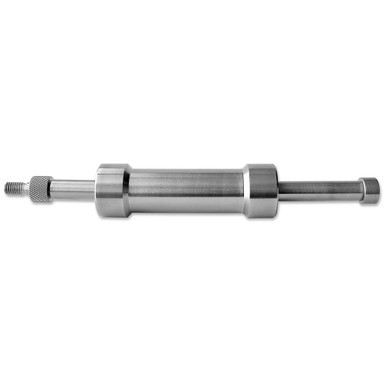
The Stem Extractor / Slap Hammer: An Indispensable Tool in Orthopedic Surgery
In the intricate world of orthopedic surgery, precision, control, and efficiency are paramount. Among the specialized instruments that enable surgeons to navigate complex procedures, the Stem Extractor, often colloquially known as a Slap Hammer, stands out as a critical device, particularly in revision arthroplasty. This comprehensive guide delves deep into the design, surgical applications, biomechanics, maintenance, and profound impact of this instrument on patient outcomes.
1. Comprehensive Introduction & Overview
The Stem Extractor / Slap Hammer is a specialized surgical instrument designed to facilitate the controlled removal of orthopedic implants, primarily femoral stems and other components, during revision surgeries. Unlike instruments that apply compressive or shear forces, the slap hammer utilizes an axial, percussive force to dislodge well-fixed implants with minimal collateral damage to surrounding bone and soft tissues.
Its importance has grown exponentially with the increasing number of primary joint replacements and, consequently, the rising need for revision procedures. As implants fail due to wear, loosening, infection, or periprosthetic fracture, their removal becomes a prerequisite for successful re-implantation. The challenge lies in safely separating a deeply integrated implant from the host bone, a task for which the controlled force of a stem extractor is uniquely suited.
The term "slap hammer" accurately describes its mechanism: a weighted sleeve slides along a central shaft, impacting a stop plate to generate a sharp, controlled pulling force. This force is transferred directly to the implant via a secure attachment, breaking the biological or cementitious bond without excessive torsion or widespread trauma.
2. Deep-dive into Technical Specifications / Mechanisms
The efficacy of the Stem Extractor / Slap Hammer is rooted in its ingenious design and the biomechanical principles it leverages.
2.1. Design and Components
A typical Stem Extractor / Slap Hammer comprises several key components, each engineered for durability, precision, and ease of use:
- Handle/Shaft: A robust, ergonomic handle provides the surgeon with a secure grip, while the central shaft guides the impaction weight. Made from high-grade stainless steel, it ensures rigidity and resistance to bending under force.
- Impactor/Weight (Slap Weight): This is the movable, weighted component that slides along the shaft. Its mass and the distance it travels determine the kinetic energy generated upon impact. Weights vary, allowing for different levels of force application.
- Stop Plate/Anvil: Positioned at the distal end of the shaft, this component receives the impact from the slap weight, transferring the force axially down the shaft.
- Attachment Mechanism: This is perhaps the most critical part, as it securely connects the extractor to the implant. Common mechanisms include:
- Threaded Adaptors: These screw directly into a corresponding threaded hole in the implant (common in femoral stems).
- Quick-Connect/Bayonet Adaptors: Allow for rapid attachment and detachment to specific implant designs.
- Jaw/Clamp Adaptors: Used for implants without threaded holes, gripping the implant's neck or body.
- Materials: Predominantly fabricated from medical-grade stainless steel (e.g., 316L, 17-4 PH) for its excellent strength, corrosion resistance, and biocompatibility. Some specialized components may use titanium or hardened alloys for specific wear resistance.
2.2. Mechanism of Action
The biomechanics of implant removal with a slap hammer relies on the principle of impulse and momentum transfer.
- Kinetic Energy Generation: The surgeon slides the heavy impaction weight rapidly towards the stop plate. As the weight accelerates, it builds kinetic energy (KE = 0.5 * mv²).
- Impact and Impulse: Upon impact with the stop plate, this kinetic energy is converted into a sudden, high-magnitude force (impulse) directed axially along the central shaft.
- Force Transfer: This axial force is then transmitted directly to the implant via the secure attachment mechanism.
- Bond Disruption: The sudden, sharp tensile force disrupts the interface between the implant and the bone or cement mantle. This typically involves fracturing the micro-interlocks of osseointegration, breaking the cement-bone or cement-implant bond, or overcoming fibrous tissue encapsulation.
- Controlled Extraction: The repetitive application of these controlled impacts gradually loosens and then dislodges the implant, allowing for its complete removal with minimal damage to the surrounding bone stock. This controlled approach is crucial for preserving bone, which is vital for subsequent revision implant fixation.
2.3. Types and Variations
While the core principle remains consistent, variations exist:
- Size and Weight: Different sizes are available, with heavier slap weights for more robustly fixed implants and lighter ones for smaller components or more fragile bone.
- Adaptor Systems: Universal slap hammers feature modular adaptor systems compatible with a wide range of implant manufacturers and designs, requiring a comprehensive set of threaded tips, hooks, and clamps.
- Integrated vs. Modular: Some systems are integrated units, while others allow for interchangeability of shafts and weights.
3. Extensive Clinical Indications & Usage
The Stem Extractor / Slap Hammer is a cornerstone instrument in revision arthroplasty, particularly for the removal of well-fixed components.
3.1. Primary Application: Revision Arthroplasty
-
Hip Arthroplasty Revision:
- Femoral Stem Removal: This is the most common indication. Whether cemented or uncemented, a well-fixed femoral stem can be incredibly challenging to remove. The slap hammer is invaluable for:
- Dislodging osseointegrated uncemented stems.
- Breaking the cement mantle around cemented stems.
- Extracting stems that have failed due to loosening, infection, or periprosthetic fracture.
- Broken Stem Fragments: Specialized adaptors can sometimes be used to engage and extract fractured portions of femoral stems, avoiding more extensive osteotomies.
- Acetabular Component Removal (Less Common): While osteotomes and specialized reamers are more common for acetabular cup removal, certain designs with extraction holes can sometimes utilize a slap hammer.
- Femoral Stem Removal: This is the most common indication. Whether cemented or uncemented, a well-fixed femoral stem can be incredibly challenging to remove. The slap hammer is invaluable for:
-
Knee Arthroplasty Revision:
- Tibial Tray/Stem Removal: Similar to femoral stems, well-fixed tibial trays or stemmed tibial components can be effectively removed.
- Femoral Component Removal: Less frequently used directly for femoral component removal, which often requires osteotomes and specialized tools to free the condylar boxes. However, if a stem extends from the femoral component, the slap hammer can be adapted.
-
Shoulder Arthroplasty Revision:
- Humeral Stem Removal: For total shoulder or hemiarthroplasty revisions, the slap hammer is crucial for extracting well-fixed humeral stems from the medullary canal.
3.2. Other Orthopedic Applications
- Removal of Broken Hardware: With appropriate adaptors, the slap hammer can be used to extract broken screws, pins, intramedullary rods, or other hardware that cannot be removed by conventional means.
- Difficult Hardware Removal in Trauma: In complex trauma cases where hardware is deeply embedded or malunited, the controlled force can be beneficial.
3.3. Step-by-Step Usage (General Principles)
- Surgical Exposure: Adequate surgical exposure of the implant is critical to visualize the attachment point and ensure safe operation.
- Implant Preparation: Remove any surrounding cement, bone overgrowth, or soft tissue that might impede the extractor's attachment or the implant's movement.
- Secure Attachment: Select the correct adaptor for the implant and ensure it is securely engaged (e.g., fully threaded, firmly clamped). A loose connection can lead to instrument failure or inefficient force transfer.
- Positioning: The surgeon should maintain a stable stance, holding the extractor firmly, ensuring the shaft is aligned coaxially with the implant's axis of insertion/removal.
- Controlled Impaction:
- Begin with gentle, controlled "slaps" to gauge the implant's fixation.
- Increase the force gradually as needed, allowing the weight to travel its full distance for maximum impact.
- Avoid excessive, uncontrolled force, which can lead to periprosthetic fracture.
- Listen for changes in sound or feel for movement, indicating the implant is loosening.
- Monitoring Bone Integrity: Continuously assess the surrounding bone for signs of fracture or damage. If resistance is extreme, re-evaluate the strategy (e.g., consider osteotomy, cement removal).
- Complete Extraction: Once loosened, the implant can usually be extracted fully by hand or with gentle traction.
3.4. Biomechanics of Extraction and Bone Preservation
The controlled axial force of the slap hammer is biomechanically superior to other methods for implant removal in many scenarios:
- Minimizing Torsional Stress: Unlike twisting or levering forces, which can induce significant torsional stress on the bone and lead to spiral fractures, the slap hammer applies a direct axial pull.
- Focused Force Application: The impact is concentrated at the implant-bone interface, effectively disrupting the bond without transmitting widespread damaging forces to the entire bone.
- Preservation of Bone Stock: By precisely targeting the implant-bone interface, the slap hammer helps preserve healthy surrounding bone. This is crucial in revision surgery, where bone stock is often compromised, and a stable foundation is needed for the new implant.
- Reduced Risk of Periprosthetic Fracture: While still a risk, the controlled nature of the force, when applied correctly, can reduce the incidence of iatrogenic fractures compared to less precise methods.
4. Risks, Side Effects, or Contraindications
Despite its advantages, the use of a Stem Extractor / Slap Hammer is not without potential risks and requires careful surgical judgment.
4.1. Intraoperative Risks
- Periprosthetic Fracture: This is the most significant risk. Excessive force, improper technique, or compromised bone quality can lead to fractures of the femur, tibia, or humerus during extraction.
- Soft Tissue Damage: Aggressive manipulation or uncontrolled movement can injure surrounding muscles, tendons, or ligaments.
- Neurovascular Injury: While less common, proximity to major nerves and blood vessels (e.g., femoral nerve/artery) means care must be taken to avoid injury, especially in revision fields with distorted anatomy.
- Incomplete Extraction/Retained Fragments: If the implant fractures during extraction or if the attachment point fails, fragments may be left behind, complicating the procedure.
- Instrument Failure: Bending, breaking, or stripping of the extractor's threads or adaptors can occur, especially with heavily fixed implants or if the instrument is damaged.
4.2. Postoperative Complications (Related to Extraction Trauma)
- Delayed Healing: Extensive bone trauma during extraction can prolong recovery.
- Infection: Compromised bone integrity or extensive soft tissue damage can increase the risk of infection.
- Increased Pain: More extensive intraoperative trauma can lead to greater postoperative pain.
- Need for Further Revision: If extraction leads to severe bone loss or complications, it may necessitate a more complex revision strategy or even further revision surgery.
4.3. Contraindications/Precautions
- Severely Osteoporotic Bone: In patients with severe osteoporosis, the bone may be too fragile to withstand even controlled impaction, increasing fracture risk.
- Significant Bone Loss/Defects: Pre-existing large bone defects around the implant may make it challenging to apply force safely.
- Active Infection: While the extractor can remove infected implants, the underlying infection needs to be addressed comprehensively, and sometimes a staged approach is preferred.
- Inadequate Surgical Exposure: Insufficient exposure prevents proper visualization and safe instrument application.
- Lack of Proper Training: Surgeons and surgical residents must be adequately trained in the correct use and potential pitfalls of the instrument.
5. Maintenance/Sterilization Protocols
Proper maintenance and sterilization are crucial to ensure the longevity, safety, and efficacy of the Stem Extractor / Slap Hammer.
5.1. Immediate Post-Use
- Gross Decontamination: Immediately after use, remove all visible blood, tissue, and bone fragments. This prevents drying and adherence, which can make subsequent cleaning difficult.
- Disassembly: If the instrument is modular, disassemble it according to the manufacturer's instructions. This allows for thorough cleaning of all surfaces.
5.2. Cleaning
- Manual Cleaning: Use sterile brushes and enzymatic detergents to thoroughly scrub all surfaces, paying close attention to threads, crevices, and articulation points. Rinse thoroughly with sterile water.
- Automated Cleaning: Utilize ultrasonic cleaners or washer-disinfectors following manufacturer guidelines. These systems are highly effective but must be validated for complex orthopedic instruments.
- Rinsing: Ensure all detergent residues are completely rinsed off, as they can interfere with sterilization or cause tissue reactions.
5.3. Inspection
- Visual Check: Carefully inspect the entire instrument for:
- Damage: Bending, cracks, chips, burrs, or signs of impact damage.
- Wear: Especially on threads, attachment points, and the impact surface.
- Corrosion: Rust spots or discoloration.
- Functionality: Ensure the slap weight slides freely and that adaptors attach securely.
- Lubrication: If recommended by the manufacturer, apply medical-grade lubricant to moving parts.
- Replacement: Any instrument showing significant wear, damage, or compromised functionality must be removed from circulation and replaced.
5.4. Sterilization
- Steam Sterilization (Autoclaving): This is the most common and effective method.
- Packaging: Instruments should be packaged in sterilization wraps or containers that allow steam penetration while maintaining sterility after processing.
- Parameters: Follow validated parameters for temperature (e.g., 121°C or 132°C), pressure, and exposure time, as specified by the manufacturer and relevant guidelines (e.g., AAMI, ISO).
- Other Methods: While less common for this type of instrument, other methods like low-temperature sterilization (e.g., ethylene oxide, hydrogen peroxide gas plasma) may be used for heat-sensitive instruments, though the slap hammer is typically heat-resistant.
5.5. Storage
- Store sterilized instruments in a dry, clean, and protected environment to prevent contamination or damage prior to use.
6. Patient Outcome Improvements
The judicious use of the Stem Extractor / Slap Hammer significantly contributes to improved patient outcomes in revision arthroplasty:
- Preservation of Bone Stock: By allowing for controlled, targeted removal of implants, the slap hammer minimizes iatrogenic bone loss. This is critical for creating a stable foundation for the new revision implant, leading to better long-term fixation and reduced risk of subsequent loosening.
- Reduced Operative Time: Efficient and safe implant removal reduces the overall duration of the revision surgery. Shorter operative times are associated with lower risks of infection, blood loss, and anesthesia-related complications.
- Lower Risk of Complications: When used correctly, the controlled nature of the slap hammer can lead to fewer periprosthetic fractures compared to more aggressive or less precise removal techniques. This directly translates to fewer complications and a smoother recovery.
- Enhanced Implant Fixation and Longevity: A well-preserved bone bed allows for optimal seating and fixation of the revision implant, improving its biomechanical stability and increasing its chances of long-term success.
- Faster Rehabilitation and Recovery: Less bone and soft tissue trauma during extraction means patients experience less pain, fewer complications, and can often begin rehabilitation earlier, leading to a quicker return to function and improved quality of life.
- Reduced Need for Complex Reconstruction: By preventing extensive bone damage, the slap hammer often obviates the need for complex and lengthy bone grafting or prosthetic reconstruction procedures, simplifying the surgery and improving patient recovery.
The biomechanical advantage of applying focused, axial tensile force directly to the implant, rather than diffuse or torsional forces, is the underlying mechanism by which the slap hammer achieves these superior patient outcomes. It represents a controlled disruption of the implant-bone interface, prioritizing bone preservation and setting the stage for a successful revision.
7. Massive FAQ Section
Q1: What is a Stem Extractor / Slap Hammer primarily used for?
A1: It is primarily used in orthopedic revision surgery to safely and efficiently remove well-fixed orthopedic implants, most commonly femoral stems, humeral stems, and tibial trays, by applying a controlled, axial percussive force.
Q2: How does a Stem Extractor / Slap Hammer differ from a surgical mallet?
A2: A surgical mallet applies a compressive force (pushing) to drive implants or osteotomes. A Stem Extractor / Slap Hammer, conversely, applies a tensile (pulling) force to dislodge implants, using a weighted sleeve that impacts a stop to generate a sharp, controlled pull.
Q3: What materials are these instruments typically made from?
A3: Stem Extractors are predominantly made from high-grade medical stainless steel (e.g., 316L, 17-4 PH) for its strength, corrosion resistance, and biocompatibility. Some specialized components may feature hardened alloys.
Q4: Can a Stem Extractor be used for all types of orthopedic implants?
A4: While highly versatile with various adaptors, it is most effective for implants with a secure attachment point (like a threaded hole) or a design that allows for firm gripping. It's less commonly used for components like acetabular cups or femoral condylar components, which often require osteotomes or reamers for removal.
Q5: What are the main risks associated with using a Stem Extractor?
A5: The primary risk is periprosthetic fracture (fracture of the bone surrounding the implant) due to excessive force or compromised bone quality. Other risks include soft tissue damage, neurovascular injury, incomplete implant removal, and instrument failure.
Q6: How is a Stem Extractor sterilized?
A6: Stem Extractors are typically sterilized using steam sterilization (autoclaving) after thorough manual and/or automated cleaning. They are packaged in sterilization wraps or containers and processed according to validated temperature, pressure, and time parameters.
Q7: Why is bone preservation important during implant removal?
A7: Preserving native bone stock during revision surgery is crucial because it provides a stronger, more stable foundation for the new revision implant. This improves the chances of successful fixation, reduces the risk of future loosening, and contributes to better long-term patient outcomes.
Q8: What training is required to use a Stem Extractor effectively?
A8: Surgeons and surgical residents require comprehensive training in orthopedic surgical techniques, including specific instruction on the proper use, biomechanics, and potential risks associated with the Stem Extractor / Slap Hammer. This includes understanding implant designs and bone quality assessment.
Q9: Are there different sizes or types of Stem Extractors?
A9: Yes, Stem Extractors come in various sizes and weights to accommodate different implant types and fixation strengths. They also feature modular adaptor systems that allow compatibility with a wide range of implant manufacturers and designs.
Q10: How does the Stem Extractor improve patient outcomes?
A10: It improves outcomes by allowing for controlled, bone-preserving implant removal, which leads to reduced intraoperative complications (like fractures), shorter operative times, better conditions for new implant fixation, and ultimately faster rehabilitation and better long-term function for the patient.
Q11: What should a surgeon look for when inspecting the instrument before use?
A11: Surgeons should inspect for any signs of damage such as bending, cracks, burrs, or corrosion. They must also check that all threads are intact, adaptors attach securely, and the slap weight moves freely. Any compromised instrument should not be used.
Q12: Is it possible to remove a fractured stem piece with this tool?
A12: Yes, in many cases, specialized adaptors or trephines can be used in conjunction with the slap hammer to engage and extract fractured stem pieces, often avoiding the need for more extensive and invasive surgical techniques like extended trochanteric osteotomy.