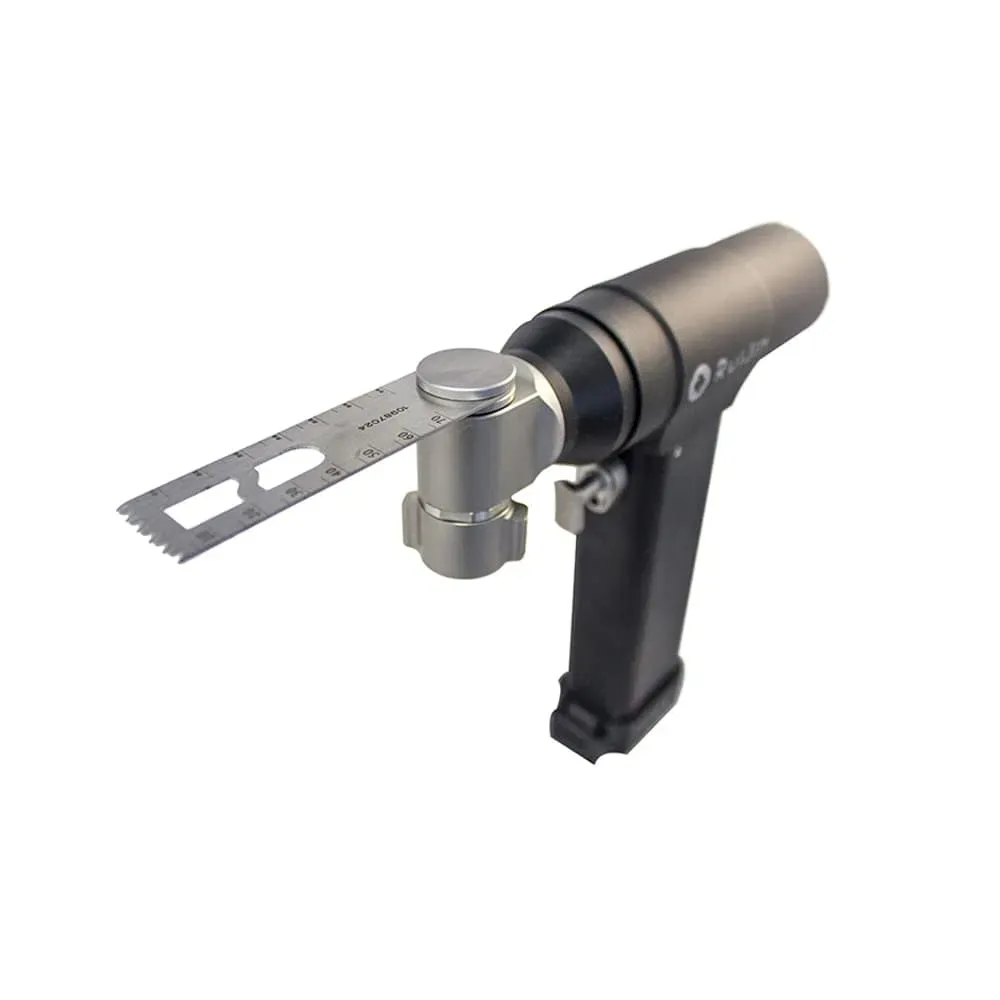
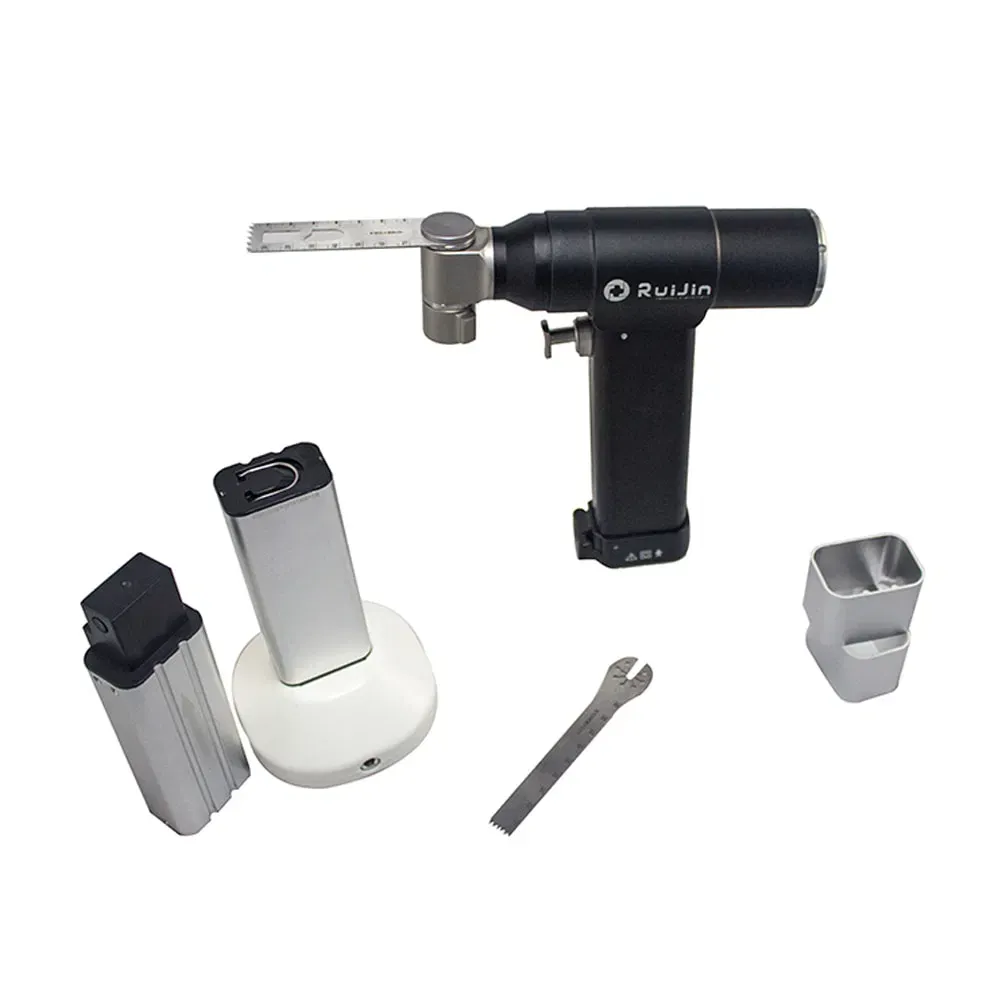


Sagittal Saw Blades (Reciprocating): The Foundation of Precision Orthopedic Surgery
Comprehensive Introduction & Overview
In the intricate world of orthopedic surgery, precision is paramount. Every cut, every shaping of bone, must be executed with unwavering accuracy to ensure optimal patient outcomes. Among the indispensable tools that empower orthopedic surgeons to achieve this level of exactitude is the sagittal saw blade, specifically the reciprocating type. This specialized instrument is at the heart of numerous bone-cutting procedures, allowing for controlled, clean, and predictable resections.
A sagittal saw blade operates with a linear, back-and-forth (reciprocating) motion, distinguishing it from oscillating saws that move in an arc. This specific mechanical action provides surgeons with exceptional control, particularly when making precise cuts in dense bone structures. From preparing bone surfaces for prosthetic implants in joint replacements to performing intricate osteotomies for deformity correction, the sagittal saw blade is a cornerstone of modern orthopedic practice. Its design, material science, and application techniques have evolved significantly, making it a sophisticated tool that directly contributes to reduced surgical time, minimized tissue trauma, and ultimately, superior patient recovery and functional improvement. Understanding this instrument is key to appreciating the meticulous nature of orthopedic surgery and the commitment to patient well-being.
Deep-dive into Technical Specifications / Mechanisms
The efficacy of a sagittal saw blade lies in its sophisticated design and the advanced materials used in its construction. These elements work in concert with the reciprocating saw handpiece to deliver controlled and precise bone excision.
Design & Materials
Sagittal saw blades come in a variety of configurations, each optimized for specific surgical tasks:
- Blade Geometry:
- Straight Blades: Most common, used for broad, flat bone resections (e.g., femoral or tibial cuts in knee arthroplasty).
- Curved Blades: Designed for accessing anatomically challenging areas or creating contoured cuts.
- Offset Blades: Allow the surgeon to cut close to soft tissues while maintaining a clear view and minimizing interference from the saw handpiece.
- Depth-Stop Blades: Incorporate a physical stop to prevent over-penetration, crucial for protecting vital underlying structures.
- Tooth Configuration:
- Tooth Pitch: The distance between teeth varies. Finer pitches are for smoother cuts and less aggressive bone removal, while coarser pitches are for faster, more aggressive cutting in dense bone.
- Tooth Geometry: Specialized tooth patterns (e.g., alternating bevels, raker teeth) enhance cutting efficiency, reduce clogging, and minimize heat generation.
- Materials:
- Medical-Grade Stainless Steel: The most common base material, offering excellent strength and corrosion resistance.
- High-Carbon Steel: Provides superior hardness and edge retention for prolonged sharpness.
- Coatings: Many blades feature advanced surface coatings to enhance performance:
- Titanium Nitride (TiN): Increases surface hardness, reducing wear and friction.
- Diamond-Like Carbon (DLC): Offers exceptional hardness, low friction, and biocompatibility, further improving cutting efficiency and blade longevity.
- Ceramic Coatings: Can also be used to improve wear resistance and reduce heat.
- Connection Mechanism: Blades are designed with specific coupling mechanisms (e.g., universal, proprietary quick-connect) to ensure secure and stable attachment to the corresponding reciprocating saw handpiece.
Mechanism of Action (Reciprocating)
The reciprocating sagittal saw operates on a simple yet highly effective principle:
- Linear Motion: The saw handpiece drives the blade in a rapid, straight back-and-forth motion along a single plane. This contrasts with oscillating saws, which move in an arc.
- Controlled Bone Removal: This linear movement allows for very precise and controlled cuts, making it ideal for creating flat or specific-angle resections crucial for implant seating.
- Reduced Heat Generation: Compared to rotary instruments, the reciprocating action, especially with proper technique and irrigation, tends to generate less localized heat. Excessive heat can lead to thermal necrosis of bone, impairing healing and implant integration.
- Blade Speed and Amplitude: The speed of reciprocation and the amplitude (distance of back-and-forth travel) are critical parameters, often adjustable on the saw handpiece, allowing surgeons to adapt to different bone densities and surgical requirements.
Extensive Clinical Indications & Usage
The versatility and precision of reciprocating sagittal saw blades make them indispensable across a broad spectrum of orthopedic and related surgical disciplines.
Key Surgical Applications
- Total Knee Arthroplasty (TKA): This is perhaps the most common application. Sagittal saw blades are used to make precise resections of the distal femur and proximal tibia to prepare the bone surfaces for the prosthetic components. Accuracy here is critical for implant alignment and long-term function.
- Total Hip Arthroplasty (THA): While reamers are primary for the acetabulum, sagittal saws are used for femoral osteotomies (e.g., for complex revisions or specific approaches) and for bone shaping around the proximal femur.
- Spinal Surgery:
- Laminectomy/Laminoplasty: For precise removal or reshaping of vertebral lamina to decompress neural structures.
- Osteotomies: Correcting spinal deformities (e.g., kyphosis, scoliosis) often involves wedge osteotomies of vertebral bodies, where sagittal saws provide controlled bone removal.
- Trauma Surgery:
- Fracture Reduction: Preparing bone ends for fixation or performing corrective osteotomies to realign malunited fractures.
- Limb Lengthening/Shortening: Precisely cutting bone for osteogenesis in limb deformity correction.
- Foot & Ankle Surgery:
- Bunion Correction (Osteotomies): Performing precise cuts in metatarsal bones to realign the toe.
- Ankle Fusion (Arthrodesis): Preparing articular surfaces for fusion.
- Maxillofacial Surgery: Orthognathic procedures involve precise cuts to reshape jaw bones for functional and aesthetic correction.
- Tumor Resection: Removing bone tumors with clear margins often requires controlled, precise bone cuts.
General Usage Instructions
Effective use of a sagittal saw blade requires skill, experience, and adherence to best practices:
- Blade Selection: Choose the appropriate blade based on:
- Procedure: Specific cuts require specific lengths and designs.
- Bone Density: Finer teeth for cortical bone, coarser for cancellous.
- Anatomy: Offset or depth-stop blades for proximity to neurovascular structures.
- Secure Attachment: Ensure the blade is securely fastened to the saw handpiece according to manufacturer guidelines to prevent dislodgement during surgery.
- Controlled Pressure: Apply steady, gentle pressure. Excessive force can lead to blade deflection, increased heat, and potential bone damage or blade breakage.
- Irrigation: Constant irrigation with sterile saline solution is crucial. This serves multiple purposes:
- Cooling: Dissipates heat generated by friction, preventing thermal necrosis.
- Clearing Debris: Washes away bone dust and small fragments, maintaining visibility and cutting efficiency.
- Lubrication: Reduces friction between the blade and bone.
- Steady Hand & Technique: Maintain a stable grip on the saw handpiece. Use smooth, controlled movements to guide the blade along the intended cutting path, often guided by cutting jigs or guides.
- Blade Sharpness: A sharp blade cuts efficiently with less force and heat. Surgeons must be vigilant for signs of dullness (increased resistance, smoke, excessive heat) and replace blades as needed.
Biomechanics of Bone Cutting
The interaction between the sagittal saw blade and bone is a complex biomechanical process:
- Cutting Efficiency vs. Heat Generation: Blade design (tooth geometry, material, coatings) directly influences how efficiently bone is removed versus the amount of heat generated. An ideal blade maximizes cutting efficiency while minimizing thermal load.
- Bone-Blade Interface: At a microscopic level, the blade creates microfractures and a kerf (the width of the cut). The quality of this interface impacts healing and implant integration. Excessive heat can lead to osteocyte death and impaired bone remodeling.
- Blade Deflection: Inaccurate cuts can result from blade deflection, especially with thin blades or excessive lateral force. Surgeons must account for this by using appropriate blade thickness and maintaining proper technique.
- Bone Quality: Different bone types (dense cortical vs. porous cancellous) respond differently to cutting. Blades are often optimized for these variations, with specialized tooth patterns for each.
Maintenance/Sterilization Protocols
Given the invasive nature of orthopedic surgery, strict protocols for maintenance and sterilization of surgical instruments, including sagittal saw blades, are non-negotiable.
- Single-Use Philosophy: The vast majority of sagittal saw blades are designed and packaged as single-use, sterile items. This is the safest and most common practice. They arrive in sterile packaging and are opened in the operating room immediately prior to use. After a single procedure, they are disposed of according to biohazard waste protocols. This eliminates any risk of cross-contamination or degradation in performance due to reprocessing.
- Pre-Sterilized Packaging: Manufacturers typically sterilize these blades using methods like gamma irradiation or ethylene oxide (EtO) sterilization, ensuring they are ready for immediate use upon opening. The sterile barrier packaging maintains sterility until the point of use.
- Reusable Components (Handpiece): While the blades are single-use, the powered saw handpiece and its attachments are reusable. These components undergo rigorous cleaning, disinfection, and sterilization processes (typically steam sterilization/autoclaving) after each use.
- Inspection: Even for single-use blades, a final visual inspection by the surgical scrub team before use is standard practice to ensure the integrity of the packaging and the blade itself.
- Disposal: Proper disposal of used blades as sharps waste is critical to prevent accidental injury and ensure compliance with medical waste regulations.
Risks, Side Effects, or Contraindications
While sagittal saw blades are powerful tools, their use is not without potential risks and considerations:
- Thermal Necrosis of Bone: The most significant risk. Excessive heat generated during cutting can damage or kill bone cells (osteocytes), leading to delayed healing, non-union, or loosening of implants. This is mitigated by proper irrigation, sharp blades, and controlled technique.
- Inaccurate Cuts: Can lead to malalignment of implants, joint instability, or improper bone reduction, potentially requiring revision surgery. Causes include blade deflection, surgeon error, or dull blades.
- Soft Tissue Damage: Accidental contact with surrounding nerves, blood vessels, muscles, or ligaments can lead to injury, bleeding, or neurological deficits. Careful surgical exposure and protection of vital structures are crucial.
- Blade Breakage: While rare with modern materials, a blade can break during aggressive or improper use, potentially leaving fragments in the surgical site or causing injury.
- Infection: Although blades are sterile, any breach in aseptic technique during surgery can introduce pathogens, leading to surgical site infection.
- Implant Loosening: Suboptimal bone preparation (e.g., due to thermal necrosis or inaccurate cuts) can compromise the primary stability and long-term integration of prosthetic implants.
- Contraindications: While there are no absolute contraindications to the use of a sagittal saw blade itself, certain patient conditions or bone pathologies might contraindicate the surgical procedure for which the saw would be used (e.g., severe osteopenia making bone cuts risky, or active infection in the surgical field).
Expert Tips from Dr. Mohammed Hutaif
"As an orthopedic surgeon, I've seen firsthand how the right tools, combined with meticulous technique, transform patient outcomes. The sagittal saw blade is a prime example. Here are my key recommendations for its optimal use:
- Blade Selection is Fundamental: Never underestimate the importance of choosing the correct blade. Consider the bone density, the depth of the cut, and the proximity to vital structures. A fine-toothed blade for cortical bone, an aggressive blade for cancellous, and always a depth-stop blade when near neurovascular bundles. This proactive choice prevents complications.
- Master the Handpiece Control: The saw should be an extension of your hand. Practice smooth, controlled movements. Avoid jerky motions or excessive force. Let the blade do the work.
- Irrigation is Your Best Friend: Constant, copious irrigation with sterile saline is not optional; it's essential. It's your primary defense against thermal necrosis, it clears debris for better visualization, and it lubricates the cutting action.
- Recognize Dullness Early: A dull blade requires more force, generates more heat, and cuts less efficiently. If you notice increased resistance, smoke, or a change in the sound of the saw, replace the blade immediately. Don't push a dull blade.
- Protect Soft Tissues: Always ensure adequate soft tissue retraction and protection. Use broad retractors and maintain constant vigilance to prevent inadvertent injury to nerves, vessels, and muscles.
- Respect the Biomechanics: Understand how the blade interacts with different bone qualities. Adjust your speed and pressure accordingly. This minimizes microfractures and optimizes the bone bed for healing or implant integration.
- Patient-Specific Approach: Every patient's bone quality and anatomy are unique. Adapt your technique and blade choice to the individual, ensuring the safest and most effective outcome."
Massive FAQ Section
Q1: What exactly is a sagittal saw blade, and how does it work?
A1: A sagittal saw blade is a specialized surgical instrument used in orthopedic procedures for precisely cutting and shaping bone. The "reciprocating" type moves in a rapid, linear back-and-forth motion (like a hand saw, but much faster and automated). This controlled, linear action allows surgeons to make very accurate cuts, essential for fitting prosthetic implants or correcting bone deformities.
Q2: How does a reciprocating sagittal saw blade differ from an oscillating saw blade?
A2: The key difference lies in their motion. A reciprocating saw blade moves in a straight line back and forth. An oscillating saw blade, conversely, moves in a small, rapid arc or oscillating motion. Reciprocating saws are often favored for long, straight, and precise cuts where control over the cutting plane is paramount, while oscillating saws can be useful for broader cuts or when working in tighter spaces with less risk of plunge cuts.
Q3: What materials are sagittal saw blades typically made from?
A3: Sagittal saw blades are primarily made from high-quality medical-grade stainless steel or high-carbon steel for strength and sharpness. Many blades also feature advanced coatings like Titanium Nitride (TiN) or Diamond-Like Carbon (DLC). These coatings enhance hardness, reduce friction, improve cutting efficiency, and extend the blade's functional life by making it more resistant to wear.
Q4: What types of surgeries commonly utilize these blades?
A4: Sagittal saw blades are crucial in a wide range of orthopedic surgeries. Most notably, they are extensively used in total knee arthroplasty (knee replacement) for precise bone resections. Other common applications include total hip arthroplasty, spinal surgeries (e.g., laminectomy, osteotomies), trauma surgery for fracture fixation, foot and ankle surgeries (e.g., bunion correction), and maxillofacial procedures.
Q5: How do surgeons ensure the precision of cuts made with a sagittal saw blade?
A5: Precision is achieved through a combination of factors:
* Blade Selection: Choosing the correct blade type (straight, offset, depth-stop) and tooth geometry for the specific cut.
* Cutting Guides/Jigs: Many procedures utilize specialized guides or jigs that precisely align the saw blade to ensure accurate angles and depths.
* Controlled Technique: Surgeons use a steady hand, apply gentle, consistent pressure, and avoid excessive force.
* Constant Irrigation: Sterile saline irrigation cools the bone, clears debris, and improves visibility, all contributing to a cleaner, more precise cut.
Q6: Are sagittal saw blades reusable, or are they single-use items?
A6: The vast majority of sagittal saw blades are designed and intended for single-use only. They come in sterile packaging and are disposed of as medical waste after a single procedure. This practice eliminates the risk of cross-contamination, ensures optimal sharpness for every patient, and removes any concerns about reprocessing effectiveness. The saw handpiece itself, however, is reusable and undergoes rigorous sterilization.
Q7: What are the main risks associated with using sagittal saw blades?
A7: The primary risks include:
* Thermal Necrosis: Damage to bone cells due to excessive heat during cutting.
* Inaccurate Cuts: Leading to poor implant fit or malalignment.
* Soft Tissue Injury: Accidental damage to nerves, blood vessels, or surrounding tissues.
* Blade Breakage: Though rare, a blade can break under extreme stress.
All these risks are minimized by proper surgical technique, appropriate blade selection, and constant irrigation.
Q8: How do sagittal saw blades contribute to improved patient outcomes?
A8: They significantly improve outcomes by:
* Enhancing Precision: Accurate bone cuts lead to better implant fit, improved joint mechanics, and greater stability in joint replacement surgeries.
* Minimizing Tissue Trauma: Controlled cutting reduces collateral damage to surrounding bone and soft tissues, potentially leading to less pain and faster recovery.
* Promoting Better Healing: Precise cuts with minimal thermal necrosis create an optimal bone bed for healing and integration, crucial for long-term success of osteotomies or fusions.
* Optimizing Functional Recovery: Correct alignment and stable fixation achieved through precise bone work translate into better long-term function and mobility for the patient.
Q9: What is thermal necrosis, and how is it prevented during bone cutting?
A9: Thermal necrosis refers to the death of bone cells (osteocytes) due to excessive heat generated during the cutting process. It can compromise bone healing and implant integration. Prevention strategies include:
* Copious Irrigation: Continuously flushing the surgical site with sterile saline to dissipate heat.
* Sharp Blades: Using sharp blades reduces friction and the force required to cut, thus generating less heat.
* Controlled Pressure: Applying gentle, consistent pressure rather than aggressive force.
* Intermittent Cutting: For very dense bone, making short, controlled cuts with pauses allows for cooling.
Q10: Can different types of sagittal saw blades be used with the same saw handpiece?
A10: Generally, yes, within a specific manufacturer's system or if the blades feature a universal coupling mechanism. Many saw handpieces are designed to accept various blade types (different lengths, widths, tooth patterns) from the same brand. However, it's crucial to ensure compatibility. Using a blade not designed for a particular handpiece can lead to improper attachment, instability, and potential hazards. Surgeons always verify compatibility before use.
Q11: What role does biomechanics play in the design of these blades?
A11: Biomechanics is central to blade design. Engineers consider factors like:
* Cutting Forces: Optimizing tooth geometry and material to efficiently overcome bone resistance with minimal force.
* Heat Dissipation: Designing blades to minimize friction and allow for effective cooling.
* Stress Distribution: Ensuring the blade can withstand the stresses of cutting without deflecting or breaking.
* Kerf Width: The width of the cut must be appropriate for the procedure and minimize bone loss while accommodating implant components. Understanding these principles leads to blades that are safer, more efficient, and contribute to better patient outcomes.
Q12: What should patients know about the instruments used in their surgery?
A12: Patients should be reassured that surgical instruments, including sagittal saw blades, are selected for their precision, safety, and effectiveness. They are designed and used by highly trained surgeons following strict protocols for sterilization and application. The goal is always to achieve the best possible surgical outcome with minimal risk. Your surgeon will discuss the overall plan and address any concerns you have about your procedure.
This content is for informational purposes only and is not medical advice. Always consult with a licensed healthcare professional for any medical concerns.