The Curved 3.5mm Reconstruction Plate: A Comprehensive Orthopedic Guide
Comprehensive Introduction & Overview
Welcome to this in-depth guide on the Curved 3.5mm Reconstruction Plate, a vital component in modern orthopedic and maxillofacial surgery. At Dr. Mohammed Hutaif's practice, we believe in empowering our patients with knowledge. This specialized plate represents a pinnacle of engineering and surgical precision, designed to address complex bone fractures, deformities, and non-unions where other fixation methods may fall short.
A reconstruction plate, by its very nature, is a robust implant used to provide stable internal fixation for bones. The "Curved 3.5mm" designation is crucial:
* Curved: Indicates its pre-contoured or malleable design, allowing it to adapt intimately to the intricate anatomical shapes of various bones, such as the mandible, pelvis, or clavicle. This anatomical fit is paramount for restoring original bone architecture.
* 3.5mm: Refers to the typical diameter of the screws used with the plate, which also broadly indicates the plate's thickness and strength profile. Plates of this size are generally suited for small to medium bones or specific regions of larger bones that require strong yet adaptable fixation.
The primary goal of employing a Curved 3.5mm Reconstruction Plate is to facilitate optimal bone healing by providing a stable, protective environment. This stability allows the bone fragments to unite correctly, restoring both function and form. This guide will delve into its design, applications, biomechanics, and what patients can expect regarding their journey to recovery.
Deep-dive into Technical Specifications & Mechanisms
The efficacy of the Curved 3.5mm Reconstruction Plate lies in its meticulously engineered design and material composition.
Design Features
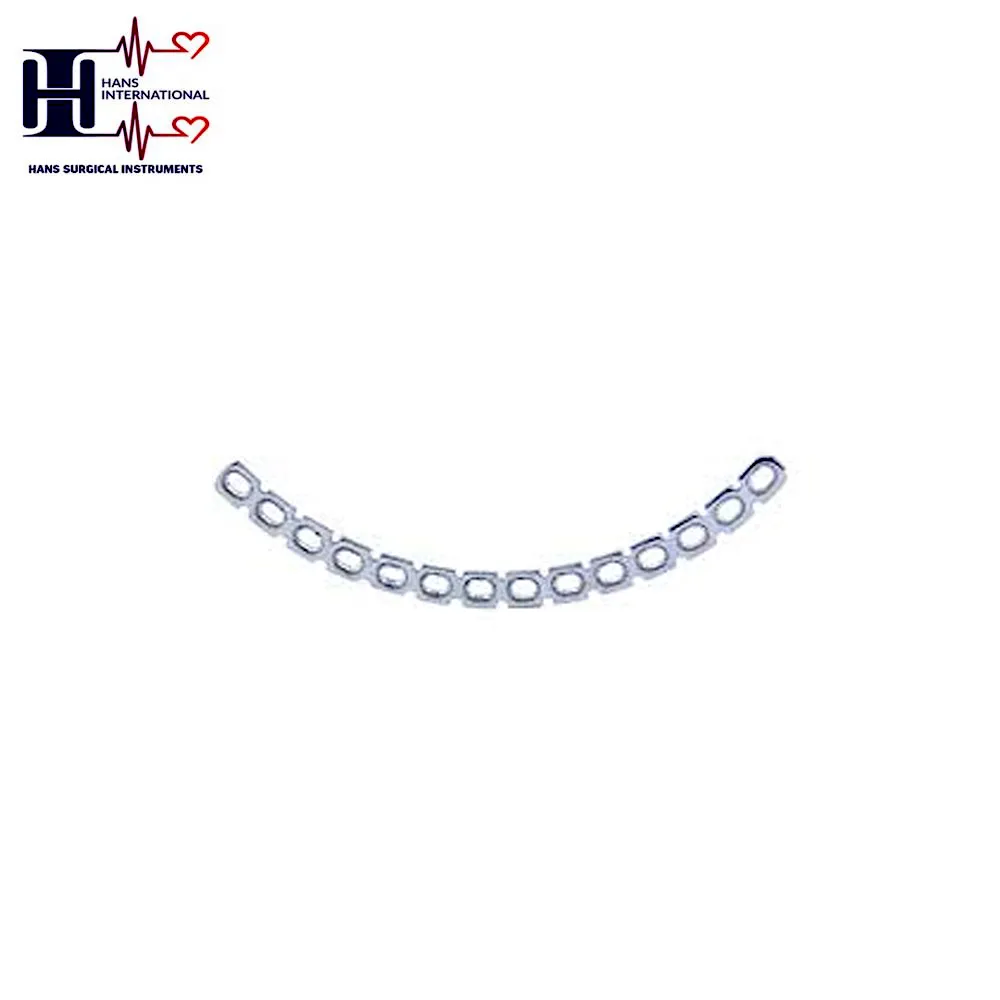
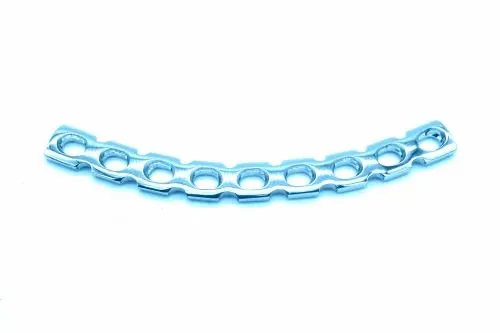
- Curved Profile: This is the defining characteristic. Unlike straight plates, the inherent curve or malleability of these plates allows surgeons to precisely match the natural contour of complex anatomical structures. This reduces stress on the bone, prevents soft tissue irritation, and optimizes load distribution.
- Hole Configuration:
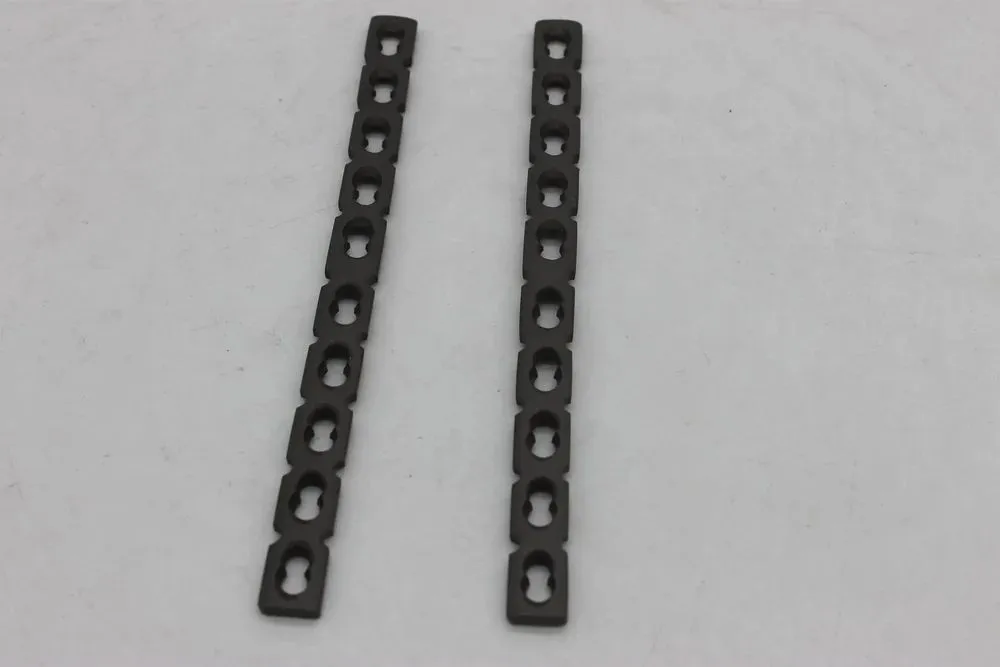
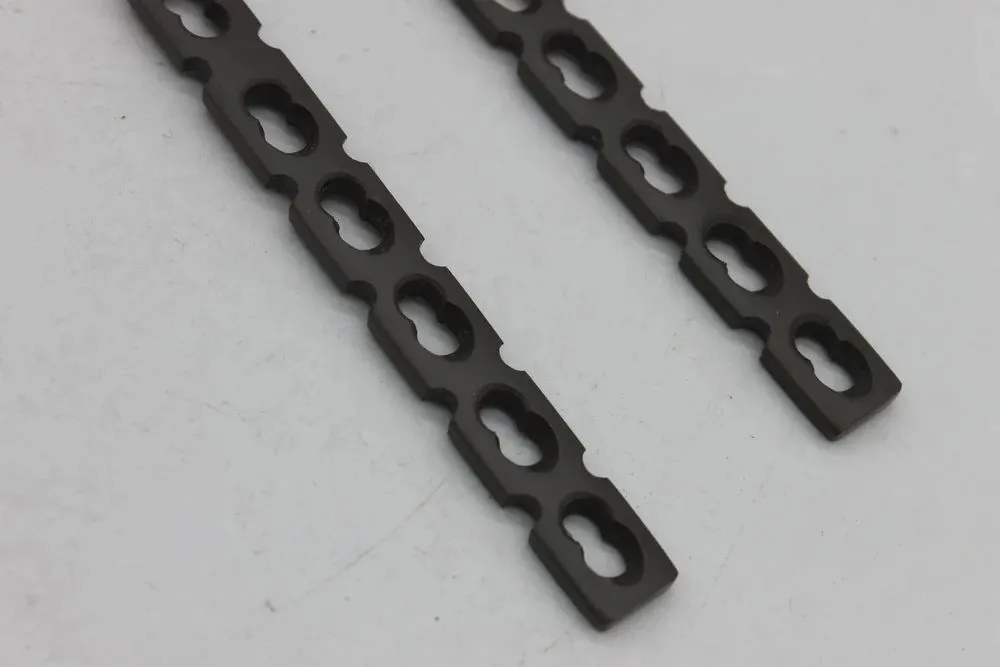
- Combi-holes: Many modern plates feature "combi-holes" that allow for both dynamic compression (for interfragmentary compression) and locking screw insertion (for angular stability).
- Locking Holes: These holes feature threads that engage with corresponding threads on locking screws, creating a fixed-angle construct. This "internal fixator" principle provides exceptional stability, especially in osteoporotic bone or comminuted fractures, by preventing screw pull-out and maintaining reduction.
- Non-Locking (Dynamic Compression) Holes: These allow for traditional lag screw placement or dynamic compression, pulling bone fragments together.
- Low-Profile Design: The plate is designed to be as thin as possible while maintaining strength, minimizing its prominence under the skin and reducing the risk of soft tissue irritation or impingement.
- Segmented or Scalloped Edges: Some designs incorporate features that allow for easier contouring without compromising strength, or to reduce the overall bulk.
Materials
- Medical-Grade Titanium Alloys (e.g., Ti-6Al-4V): This is the gold standard for orthopedic implants.
- Biocompatibility: Titanium is highly biocompatible, meaning it is well-tolerated by the body and minimizes adverse reactions.
- Strength-to-Weight Ratio: Offers excellent strength for its weight, crucial for load-bearing applications.
- Corrosion Resistance: Highly resistant to corrosion in the physiological environment.
- Modulus of Elasticity: Titanium's modulus of elasticity is closer to that of bone compared to stainless steel, which can lead to more physiological load sharing and reduce stress shielding (where the implant carries too much load, preventing the bone from strengthening).
- Stainless Steel (e.g., 316L): While still used, titanium is often preferred due to its superior properties. Stainless steel is also biocompatible and strong but has a higher modulus of elasticity, making it stiffer than bone.
Mechanism of Action (Biomechanics)
The Curved 3.5mm Reconstruction Plate functions through the principles of internal fixation, providing mechanical stability to allow the natural bone healing process to occur.
* Load Sharing vs. Load Bearing: Depending on the fracture pattern and surgical technique, the plate can either share the load with the healing bone (optimal for promoting bone strength) or bear the majority of the load (necessary for severely comminuted fractures or non-unions).
* Neutralization: The plate neutralizes or protects a lag screw or interfragmentary compression from bending, shear, or torsional forces.
* Bridging: In comminuted fractures, the plate acts as a bridge, spanning the fracture gap and maintaining length, alignment, and rotation without directly compressing the fragments. This allows for indirect bone healing (callus formation).
* Anatomic Reduction & Stable Fixation: By restoring the bone's original shape and holding fragments firmly, the plate creates the ideal environment for bone cells to bridge the gap and rebuild new bone tissue.
Extensive Clinical Indications & Usage
The versatility of the Curved 3.5mm Reconstruction Plate makes it indispensable in treating a wide array of complex orthopedic and trauma cases. Its ability to be contoured or its inherent curve allows it to adapt to very specific anatomical regions.
Primary Clinical Indications
- Mandibular Fractures (Maxillofacial Trauma): These plates are frequently used for complex fractures of the jawbone, including angle, body, and symphysis fractures. The curved nature is ideal for the mandible's arc.
- Pelvic Fractures: Particularly for acetabular (hip socket) fractures or complex sacral fractures, where precise anatomical reduction and robust fixation are essential to restore joint congruence and stability.
- Clavicle Fractures: For severely displaced, comminuted, or shortened clavicle fractures, especially those involving the lateral end, where a contoured plate can provide superior fixation compared to straight plates.
- Scapular Fractures: In specific intra-articular or highly displaced scapular body fractures, the plate can be contoured to match the complex curves of the scapula.
- Distal Humerus Fractures: Complex articular fractures of the elbow often require plates that can be contoured to the intricate anatomy of the distal humerus, enabling stable fixation and early range of motion.
- Proximal Tibia Fractures (Tibial Plateau): Certain complex tibial plateau fractures, especially those with metaphyseal involvement, may benefit from the contouring capabilities of these plates to support the joint surface.
- Non-Unions & Mal-Unions: When a bone fails to heal (non-union) or heals in an incorrect position (mal-union), these plates are used after corrective osteotomy to provide strong, stable fixation.
- Osteotomies: For planned surgical cuts in bone to correct deformities or realign limbs, the plate secures the bone segments in their new position.
Surgical Procedure Overview (Simplified for Patients)
The use of a Curved 3.5mm Reconstruction Plate involves a highly specialized surgical procedure, typically performed by an orthopedic or maxillofacial surgeon.
1. Pre-operative Planning: This involves detailed imaging (X-rays, CT scans, 3D reconstructions) to thoroughly understand the fracture pattern and plan the optimal surgical approach and plate placement.
2. Anesthesia: The patient receives general anesthesia.
3. Incision & Exposure: An incision is made to carefully expose the fractured bone while minimizing soft tissue damage.
4. Fracture Reduction: The surgeon meticulously realigns the bone fragments to their anatomical position. This is a critical step for successful healing and restoration of function.
5. Plate Contouring & Application: The Curved 3.5mm Reconstruction Plate is selected and, if necessary, further contoured by the surgeon to precisely match the bone's surface. It is then temporarily held in place.
6. Screw Insertion: Specialized screws are inserted through the plate's holes into the bone. The type and placement of screws (locking vs. non-locking) are chosen based on the fracture pattern and bone quality to achieve optimal stability.
7. Closure: Once stable fixation is confirmed, the surgical site is irrigated, and the incision is carefully closed in layers.
Risks, Side Effects, or Contraindications
While highly effective, surgical implantation of a Curved 3.5mm Reconstruction Plate, like any surgical procedure, carries potential risks and possible side effects. Understanding these is crucial for informed patient consent.
Potential Risks & Complications
- Infection: Despite sterile techniques, infection at the surgical site or around the implant is a risk, potentially requiring antibiotics or further surgery.
- Non-Union or Mal-Union: Although the plate is designed to promote healing, in some cases, the bone may still fail to heal (non-union) or heal in an incorrect position (mal-union), necessitating revision surgery.
- Hardware Failure: While rare with modern implants, the plate or screws can break, bend, or loosen, particularly if subjected to excessive stress before full bone healing.
- Nerve or Vessel Damage: During surgery, there is a small risk of damage to surrounding nerves or blood vessels, which can lead to numbness, weakness, or circulatory issues.
- Pain & Soft Tissue Irritation: The plate, especially if it's prominent or near superficial nerves, can cause persistent pain or irritation, sometimes requiring removal after bone healing.
- Allergic Reaction: While rare, some individuals may have an allergic reaction to the metal components, though medical-grade titanium is highly inert.
- Hematoma/Seroma: Accumulation of blood (hematoma) or fluid (seroma) under the skin, which may require drainage.
- Compartment Syndrome: In rare cases, swelling can lead to dangerous pressure buildup in muscle compartments, requiring emergency surgery.
Potential Side Effects (Often Temporary)
- Post-operative Pain: Managed with medication.
- Swelling & Bruising: Common around the surgical site, gradually subsiding over weeks.
- Limited Range of Motion: Initially due to pain and swelling, gradually improving with rehabilitation.
- Scarring: A permanent scar will be present at the incision site.
Contraindications
- Active Infection: The presence of an active infection at the surgical site is an absolute contraindication, as it significantly increases the risk of implant infection.
- Insufficient Bone Stock: If the bone is severely osteoporotic or there isn't enough healthy bone to securely anchor the screws, stable fixation may not be achievable.
- Severe Comorbidities: Patients with severe, uncontrolled medical conditions (e.g., uncontrolled diabetes, severe cardiovascular disease) that significantly increase surgical risk may be deemed unsuitable for elective procedures.
- Allergy to Implant Materials: Although rare with titanium, a documented allergy would contraindicate its use.
- Poor Patient Compliance: The success of the surgery heavily relies on patient adherence to post-operative instructions, including weight-bearing restrictions and rehabilitation. Lack of compliance can lead to complications.
Expert Tips from Dr. Mohammed Hutaif
As an orthopedic specialist with extensive experience, Dr. Mohammed Hutaif emphasizes several key aspects to ensure the best possible outcomes when utilizing a Curved 3.5mm Reconstruction Plate:
- Precision in Pre-operative Planning: "The success of complex fracture fixation begins long before the first incision. Detailed 3D imaging and meticulous pre-operative planning are paramount. We meticulously analyze the fracture pattern, bone quality, and surrounding anatomy to select the optimal plate and screw configuration. This foresight minimizes intraoperative surprises and ensures the most anatomically accurate reduction."
- Custom Contouring for Optimal Fit: "While many plates are pre-curved, often a degree of intraoperative contouring is necessary to achieve an absolutely perfect fit to the bone. This bespoke adaptation is crucial. A plate that fits intimately reduces stress concentrations, minimizes gaps between the plate and bone, and enhances overall stability, leading to better healing and reduced risk of hardware prominence or irritation."
- Respect for Soft Tissues: "Maintaining the integrity of the surrounding soft tissues, including muscles, nerves, and blood vessels, is vital. We employ careful surgical techniques, often utilizing minimally invasive approaches where appropriate, to preserve vascularity and minimize tissue trauma. This not only aids in faster recovery but also reduces the risk of infection and improves long-term functional outcomes."
- Strategic Screw Placement: "The number, length, and trajectory of screws are not arbitrary. Each screw serves a specific biomechanical purpose. Utilizing a combination of locking and non-locking screws, and understanding their interaction with the plate and bone, allows us to create a stable construct that promotes healing while allowing for appropriate load sharing."
- Adherence to Post-operative Rehabilitation: "Surgery is only half the battle. Your commitment to the prescribed post-operative rehabilitation protocol is critical. This includes specific weight-bearing restrictions, range-of-motion exercises, and physical therapy. Following these instructions diligently prevents complications, strengthens the surrounding muscles, and ensures you regain maximum function."
- Long-Term Follow-up: "Regular follow-up appointments are essential to monitor bone healing, assess implant integrity, and address any potential concerns. We track your progress with imaging and clinical evaluations to ensure your recovery is on the right track and to advise on when it's safe to return to full activities."
- Patient Education and Realistic Expectations: "Understanding your injury, the surgical procedure, and the recovery process is key. We take the time to explain everything thoroughly, setting realistic expectations for pain management, recovery timelines, and functional outcomes. An informed patient is an empowered patient on the path to successful recovery."
Massive FAQ Section
Q1: What exactly is a Curved 3.5mm Reconstruction Plate?
A Curved 3.5mm Reconstruction Plate is a specialized medical implant, typically made from medical-grade titanium. It's designed with an inherent curve or is highly malleable to be contoured by the surgeon, allowing it to conform precisely to the complex anatomical shapes of bones. The "3.5mm" refers to the diameter of the screws used to secure it, indicating its strength and suitability for specific bone sizes and fracture types, often in areas like the jaw, pelvis, or clavicle. Its purpose is to provide stable internal fixation, holding bone fragments together to facilitate healing.
Q2: What types of injuries or conditions does this plate treat?
This plate is primarily used for complex fractures, particularly those that are comminuted (shattered), highly displaced, or involve articular (joint) surfaces, where precise anatomical reduction is crucial. Common applications include fractures of the mandible (jaw), pelvis (especially acetabular fractures), clavicle, scapula, and certain complex fractures of the distal humerus or proximal tibia. It's also used for non-unions (bones that failed to heal) and osteotomies (surgical bone cuts to correct deformities).
Q3: Is the plate permanent? Will it need to be removed?
In most cases, the Curved 3.5mm Reconstruction Plate is intended to be a permanent implant, remaining in the body indefinitely. It is made from biocompatible materials designed to integrate with your body without causing issues. However, there are instances where removal might be recommended, such as if it causes persistent pain, soft tissue irritation, infection, or if it breaks. The decision to remove hardware is made on a case-by-case basis by your surgeon, usually after the bone has fully healed.
Q4: What materials are used to make these plates, and are they safe?
These plates are predominantly made from medical-grade titanium alloys (like Ti-6Al-4V) or, less commonly, surgical stainless steel. Both materials are rigorously tested and proven to be highly biocompatible, meaning they are safe and well-tolerated by the human body, minimizing the risk of allergic reactions or rejection. Titanium is particularly favored for its strength-to-weight ratio, corrosion resistance, and modulus of elasticity closer to that of bone.
Q5: How long is the recovery period after surgery with this plate?
The recovery period varies significantly depending on the specific bone fractured, the complexity of the injury, your overall health, and your adherence to post-operative instructions. Generally, initial bone healing can take 6-12 weeks, during which time you will likely have activity restrictions. Full functional recovery, including regaining strength and range of motion through physical therapy, can take anywhere from 3 months to over a year. Your surgeon will provide a personalized recovery timeline.
Q6: Can I feel the plate under my skin?
It is possible to feel the plate under your skin, especially if it's placed in an area with minimal soft tissue coverage, such as the clavicle, jaw, or certain parts of the pelvis. While designed to be low-profile, some patients report feeling a bump or a firm area. This sensation is usually harmless, but if it causes persistent discomfort, pain, or irritation, discuss it with your surgeon.
Q7: Will I set off metal detectors with this implant?
It is possible. Implants made of titanium or stainless steel can sometimes trigger metal detectors at airports or security checkpoints. The likelihood depends on the sensitivity of the detector and the size and location of the implant. It's advisable to carry a medical implant card (which your doctor can provide) or a letter explaining your implant when traveling.
Q8: What are the potential complications I should be aware of?
While surgery with a Curved 3.5mm Reconstruction Plate is generally successful, potential complications include infection, non-union (bone not healing), mal-union (bone healing incorrectly), hardware failure (plate or screws breaking/loosening), nerve or blood vessel damage, persistent pain, soft tissue irritation, and in rare cases, an allergic reaction to the metal. Your surgeon will discuss these risks with you in detail.
Q9: How do I care for myself after surgery involving this plate?
Post-operative care is crucial. It typically involves:
* Pain Management: Taking prescribed pain medication as directed.
* Wound Care: Keeping the incision clean and dry, following instructions for dressing changes.
* Activity Restrictions: Adhering strictly to weight-bearing, lifting, or movement restrictions provided by your surgeon.
* Physical Therapy: Engaging in a prescribed rehabilitation program to regain strength, flexibility, and function.
* Follow-up Appointments: Attending all scheduled appointments for wound checks, imaging, and progress assessment.
* Diet & Lifestyle: Maintaining a healthy diet rich in calcium and Vitamin D, and avoiding smoking, which can impair bone healing.
Q10: What is the specific benefit of a "curved" plate compared to a straight one?
The "curved" design is a significant advantage because it allows the plate to conform more accurately to the natural, complex anatomical contours of certain bones (like the jaw, pelvis, or clavicle). This precise fit offers several benefits:
* Optimal Load Distribution: Better distribution of forces across the bone, promoting healing.
* Reduced Stress Shielding: Less likelihood of the plate carrying too much load, allowing the bone to strengthen naturally.
* Minimized Soft Tissue Irritation: A low-profile, well-contoured plate is less likely to rub against or irritate surrounding muscles, tendons, or skin.
* Enhanced Stability: A plate that perfectly matches the bone surface provides superior stability and reduction of the fracture.
Q11: How does this plate actually help my bone heal?
The plate provides a stable mechanical environment for the bone to heal. By holding the fractured bone fragments in their correct anatomical position, it allows the body's natural healing processes to take over. Blood supply can be re-established, and specialized bone cells (osteoblasts and osteoclasts) can begin to bridge the gap and lay down new bone tissue. The stability prevents movement at the fracture site, which is critical for successful bone union.
Q12: Can I return to sports and strenuous activities after my bone heals with this plate?
Returning to sports and strenuous activities depends heavily on the specific injury, the bone involved, the success of healing, and your individual recovery. Most patients can gradually return to their previous activity levels. However, high-impact or contact sports may require a longer recovery period and a careful assessment by your surgeon and physical therapist. It's crucial not to rush back into activities before your bone is fully healed and strengthened, as this could lead to re-injury or complications. Your medical team will guide you on a safe return-to-activity plan.